Edible
How to Grow Saffron at Home (Full Corm-to-Harvest Guide)
Grow saffron at home from Crocus sativus corms — fall planting, correct depth, summer dormancy, and morning harvest of the 3 red stigmas. Full guide.
On this page
- Quick answer
- Warning: Know your crocus before you eat anything
- Why saffron is so expensive
- Table of contents
- 1. Choosing the right corms
- 2. Zone hardiness and indoor options
- 3. When to plant
- 4. Soil preparation
- 5. Planting depth and spacing
- 6. Summer dormancy — the most important thing most people get wrong
- 7. Autumn flowering and harvest
- 8. Drying and storing your saffron
- 9. Container growing
- 10. Expected yield year by year
- 11. Common mistakes
- 12. Troubleshooting
- Your saffron toolkit
- Related guides
- Sources
Watch the visual walkthrough
I Grew The World's Most Expensive Spice
Get free seeds, shipping, and returns: https://www.epicgardening.com/greenhouse/ Kevin tried his hand at growing saffron, the ...
Saffron is the most expensive spice in the world by weight — around $1,500 per pound (roughly $3,300 per kg) at retail — because every gram requires hand-harvested stigmas from around 150 flowers, each with exactly 3 red threads. There is no machine that can do it.
The good news: the plant itself is not particularly difficult. Crocus sativus wants gritty well-drained soil, a dry summer rest, and fall planting. Get those three things right and your patch produces real saffron — and multiplies year after year on its own.
This guide covers everything: corm selection, planting depth and timing, summer dormancy, autumn harvest, and drying and storage.
Quick answer
Plant Crocus sativus corms in late summer (August–September), 10–15 cm (4–6 in) deep and 10 cm (4 in) apart, in sharply drained gritty soil. Leave them completely dry through summer dormancy. Flowers appear October–November — harvest the 3 red stigmas from each bloom on the morning it opens. Dry the threads for 24–72 hours and store in a sealed glass jar. Expect 40–50 flowers per 100 corms in year one, scaling up each year as corms multiply.
Warning: Know your crocus before you eat anything
Only Crocus sativus is saffron. Ornamental crocus species are not edible — and some are toxic.
The Colchicum genus (sold as “autumn crocus” or “meadow saffron”) looks nearly identical to Crocus sativus in fall but contains colchicine, which causes severe organ damage. It has caused fatalities.
- Buy corms from a supplier where Crocus sativus appears on the label — not just “autumn crocus.”
- Never harvest stigmas from unlabelled garden bulbs.
- Colchicum is especially dangerous to children and pets in bulb form.
Why saffron is so expensive
Each Crocus sativus flower produces exactly 3 stigmas — the deep red threads you see in spice jars. A flower opens for 2–3 days and must be hand-picked on the morning it opens.
To produce 1 gram of dried saffron you need roughly 150 fresh flowers. A pound (450 g) requires around 70,000 flowers, all harvested by hand within a narrow autumn window. At home scale it is satisfying, meditative work — and you are producing something with genuine market value from a small patch of ground.
Table of contents
- Choosing the right corms
- Zone hardiness and indoor options
- When to plant
- Soil preparation
- Planting depth and spacing
- Summer dormancy
- Autumn flowering and harvest
- Drying and storing your saffron
- Container growing
- Expected yield year by year
- Common mistakes
- Troubleshooting
1. Choosing the right corms
Corm size is the single most important buying decision you will make. Crocus sativus corms are graded by circumference:
| Grade | Circumference | First-year flowering? |
|---|---|---|
| Premium / Grade 1 | 9 cm (3.5 in)+ | Yes — reliable |
| Grade 2 | 7–8 cm (2.75–3 in) | Possible but not guaranteed |
| Grade 3 / small | Under 7 cm (2.75 in) | Unlikely — needs one year to bulk up |
Buy 9 cm (3.5 in) circumference or larger if you want flowers this autumn. Smaller corms spend their first season building energy and will sit dormant all year with nothing to show for it.
Where to buy:
- Specialist saffron suppliers (search “saffron crocus corms” on a reputable seed and bulb site)
- Permaculture and heritage seed companies
- Local farm stores in regions where saffron is grown (parts of the US Pacific Northwest, New England, and UK)
Avoid buying corms from non-specialist garden centres where they may be mislabelled or stored incorrectly.
2. Zone hardiness and indoor options
Outdoors: Reliably hardy in USDA Zones 6–9. In Zone 6 (minimum −23°C / −10°F), plant deeper and mulch well. Zone 10+ winters are too warm for reliable dormancy.
Indoors: Container growing works anywhere. Saffron does not need artificial vernalization — just a warm dry summer rest followed by cooler autumn temperatures. Zone 11 or a Northern European flat can produce the same autumn flowers in a pot on a windowsill.
3. When to plant
Plant in late summer: August through September in the Northern Hemisphere. This is the tail end of the corm’s summer dormancy, just before the autumn rains and temperature drop that trigger flowering.
Exact timing by zone:
| Zone | Plant corms |
|---|---|
| Zone 6 | Early–mid August |
| Zone 7 | August–early September |
| Zone 8–9 | September |
| Indoor / container | August–September regardless of location |
If you receive corms in July, store them dry in a cool, airy spot (ideally 15–18°C / 60–65°F) until your planting window. Do not refrigerate — unlike spring bulbs, saffron corms do not need artificial chilling.
4. Soil preparation
Crocus sativus evolved on rocky, fast-draining hillsides in the Middle East and Mediterranean. It has almost zero tolerance for waterlogged roots. Wet, heavy clay soil is the number one killer of saffron corms in home gardens.
What saffron needs:
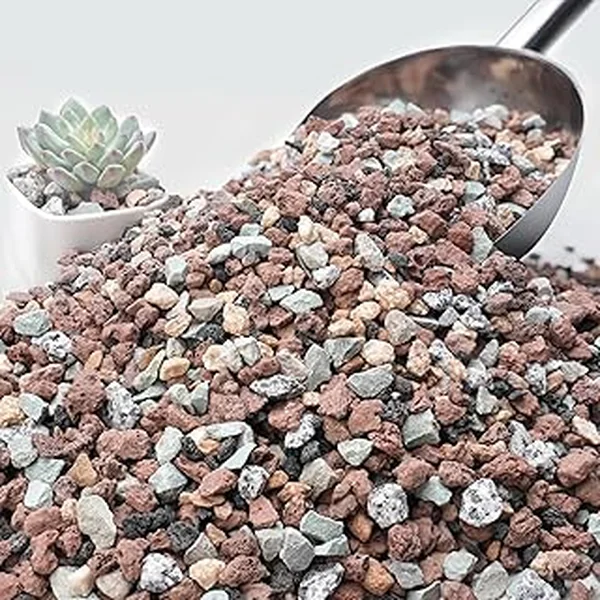
- Very well-drained, gritty or sandy soil
- Neutral to slightly alkaline pH: 6.5–8.0
- Moderate organic matter (not rich, composted beds — too much nitrogen pushes leaves over flowers)
- Dry summers (or artificially dry — more on that below)
How to prepare the bed:
- Dig to 30 cm (12 in) deep.
- In clay soil, backfill with a 50/50 mix of native soil and coarse horticultural grit or perlite.
- Add a small handful of bone meal per m² — phosphorus feeds corm development without pushing excessive leaf growth.
- Rake level and let settle before planting.
Raised beds are ideal: faster drainage, earlier autumn warm-up, and easy to keep dry in summer.
5. Planting depth and spacing
Depth: 10–15 cm (4–6 in) from the top of the corm to the soil surface.
- Zone 6 (coldest): 15 cm (6 in) deep, plus 5–8 cm (2–3 in) of mulch on top after planting
- Zone 7–9 (milder): 10 cm (4 in) is sufficient
The corm goes basal plate down, pointed tip up — same orientation as a crocus or tulip bulb. The pointed tip is where the shoot emerges. The flat or concave base is where roots form.
Spacing: 10 cm (4 in) apart. This is closer than many sources suggest, but Crocus sativus actually performs well in tight groups — the corms multiply by offsets each year, and starting at 10 cm (4 in) means the patch fills in beautifully rather than looking sparse in year one. After 3–4 years you can lift and divide the clump to extend the patch or share corms.
Row planting: If planting in rows, allow 15 cm (6 in) between rows and 10 cm (4 in) within the row.
After planting, water the bed once to settle the soil around the corms. Then leave it alone. Do not continue watering unless the autumn is completely dry — Crocus sativus in the ground does not need supplemental irrigation in most temperate climates.
6. Summer dormancy — the most important thing most people get wrong
Crocus sativus is completely deciduous in summer. From roughly May through August the plant is dormant: the leaves die back fully, the corm sits dry in the soil, and nothing visible happens above ground.
The corm must stay dry during this period. Wet corms in summer rot. If your garden gets summer rain (most of the US, UK, and northern Europe), you have two options:
Option A — Cover the bed: After leaves die back, lay a polycarbonate panel or cold-frame lid over the patch to shed rain. Remove in late August.
Option B — Lift and store: Dig corms after leaf die-back in May–June. Store dry in a paper bag in a cool airy shed (15–20°C / 60–68°F) until August, then replant.
Option C — Containers: Move pots under cover for summer; resume watering in September.
7. Autumn flowering and harvest
What to expect
Six to ten weeks after planting (October–November), pale lilac flowers push directly out of bare soil — leaves emerge later, after flowering. The flowers appear before any visible foliage, which surprises first-time growers.
The harvest window
Each flower is open for 2–3 days maximum. Harvest stigmas on the morning the flower opens, before warmth causes petals to close and stigmas to degrade. Check the patch every morning in October and November — do not skip days.
How to harvest
- Pinch the three red stigmas at the base with your thumbnail or fine tweezers and pull upward cleanly.
- Drop into a small dry glass jar or ceramic bowl.
- Do not take the yellow style below the red threads — it dilutes flavour.
- Leave petals and leaves to die back naturally — they feed next year’s corm.
8. Drying and storing your saffron
Fresh stigmas contain around 80% water by weight. They must be dried before storing.
Drying method:
- Spread stigmas in a single layer on a fine mesh tray or plain paper — not plastic.
- Place in a warm, dry spot out of direct sun (near a radiator, or in an oven below 50°C / 120°F with the door cracked).
- Dry for 24–72 hours until the threads snap cleanly and are deep red-orange, not brown.
Storage: Airtight glass or metal container, away from light and heat. Properly stored saffron holds full potency for 2–3 years.
9. Container growing
Saffron is highly container-friendly. Requirements:
- Pot depth: Minimum 20–25 cm (8–10 in) to allow full planting depth plus root room
- Pot width: As wide as you like — a 30 cm (12 in) diameter pot holds around 12–15 corms at 10 cm (4 in) spacing
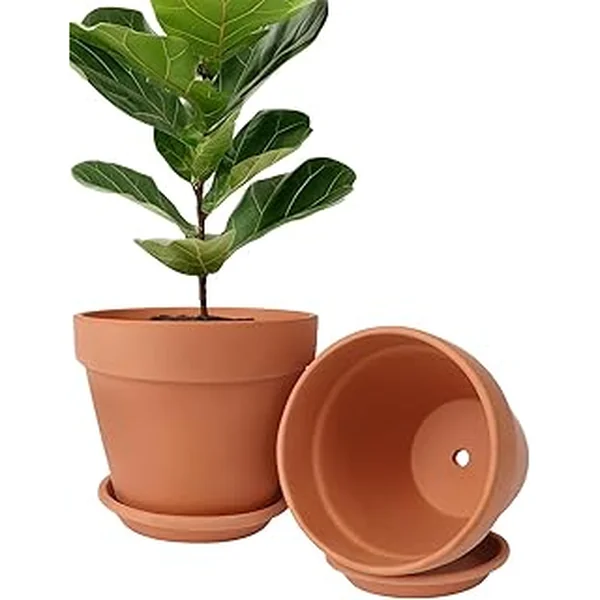
- Material: Terracotta is ideal — it breathes and dries faster than plastic, which suits saffron’s dislike of wet roots
- Drainage: Drainage holes are non-negotiable. Elevate the pot on pot feet to prevent the holes from blocking
Container soil mix: 50% loam-based compost + 50% coarse horticultural grit or perlite. Fast-draining and no stagnant moisture.
Summer dormancy: Move the pot under cover from June through August, stop watering completely. Resume in early September. Flowers follow 6–8 weeks later.
10. Expected yield year by year
Saffron patches grow and multiply. Here is what to expect:
| Year | Flowers per 100 corms planted | Approximate dry saffron |
|---|---|---|
| Year 1 | 40–50 | ~1–1.5 g |
| Year 2 | 80–120 | ~2–3 g |
| Year 3 | 150–250+ | ~5–8 g |
| Year 4+ | Divide and expand the patch | Scales indefinitely |
Corms produce 2–4 daughters per season. A 100-corm starter patch can become 300–400 corms within three years at no extra cost.
Lift and divide the clump every 4–5 years to maintain productivity. Overcrowded corms produce fewer flowers.
11. Common mistakes
Small corms: Anything under 8 cm (3 in) circumference will likely sit dormant in year one. Buy grade 1 (9 cm+) for first-year flowers.
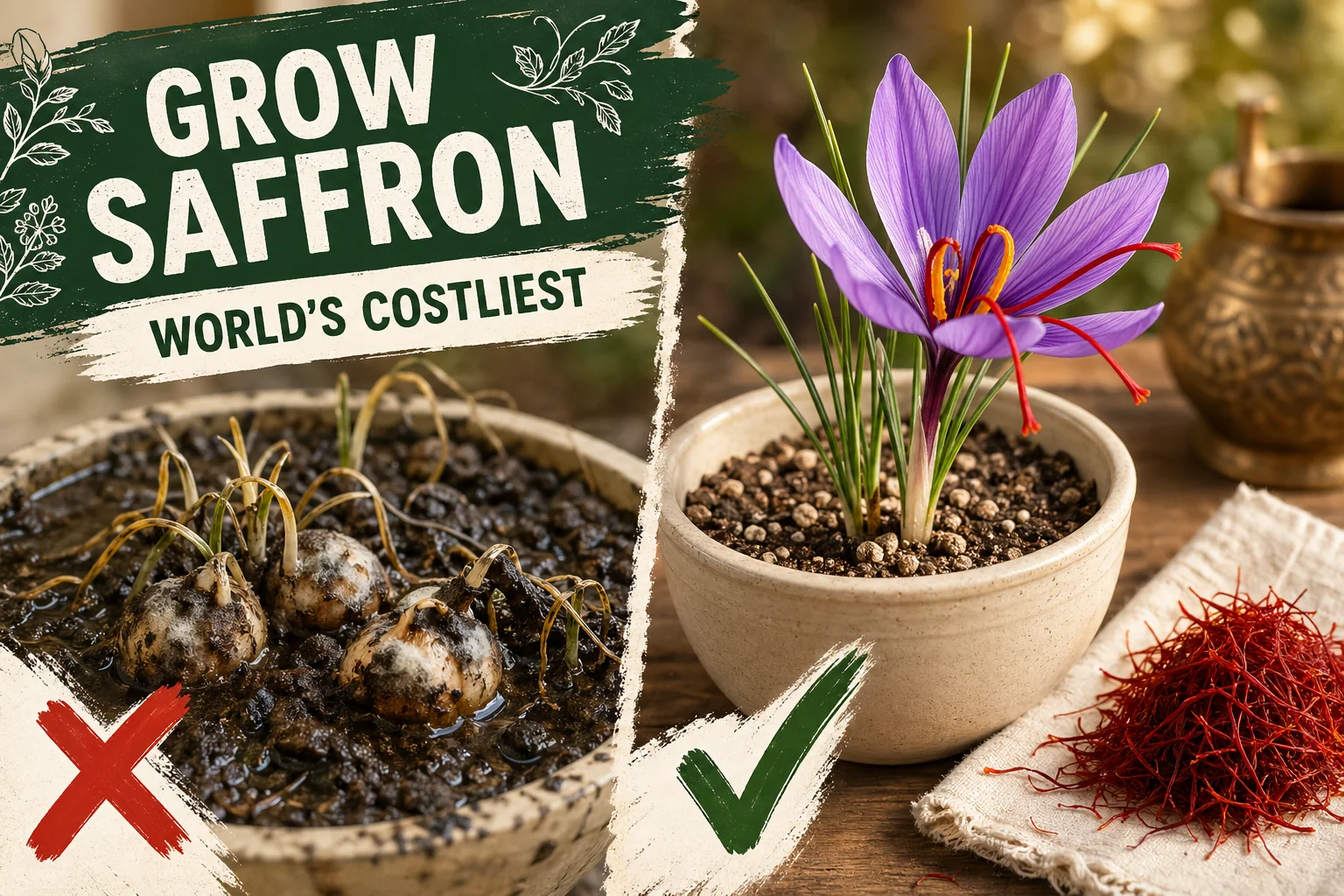
Clay or waterlogged soil: Saffron corms rot within weeks in poorly drained ground. Amend heavily or grow in containers.
Watering through summer dormancy: Wet corms in summer rot. Cover the bed, lift, or move containers under cover — this is the second most common cause of failure.
Harvesting too late: The stigmas peak on the morning the flower opens. By day three they curl, dry out, and lose crocin. Check the patch every morning in October and November.
Wrong crocus: Crocus vernus (spring, ornamental) and Colchicum (autumn, toxic) are not saffron. Only Crocus sativus produces edible stigmas.
12. Troubleshooting
| Problem | Likely cause | Fix |
|---|---|---|
| No flowers in year one | Corms too small or planted too late | Use 9 cm+ corms; plant August–September |
| Corms mushy or rotten | Waterlogged soil or wet summer dormancy | Improve drainage; lift and dry corms in summer |
| Leaves appear but no flowers | Corms stressed, too small, or poor summer rest | Let patch establish; ensure dry summer next year |
| Flowers open but stigmas are pale orange, not red | Harvested too early (buds not fully open) | Wait until petals are fully spread open |
| Saffron tastes weak or metallic | Harvested yellow style along with stigmas, or not dried properly | Harvest red stigmas only; dry fully before storing |
| Patch productivity declining after several years | Overcrowding of corm offsets | Lift, divide, replant every 4–5 years |
Your saffron toolkit
The four items below are the practical essentials for a successful saffron patch — from corm quality to drainage to drying.
Related guides
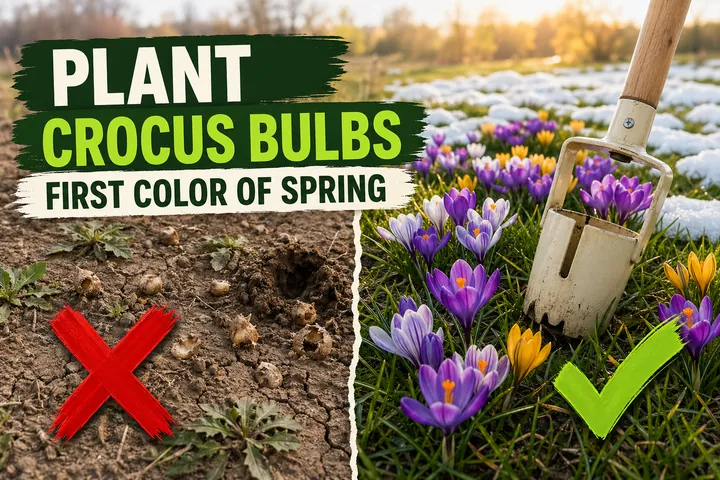
- How to plant crocus bulbs — ornamental crocus planting depth and timing
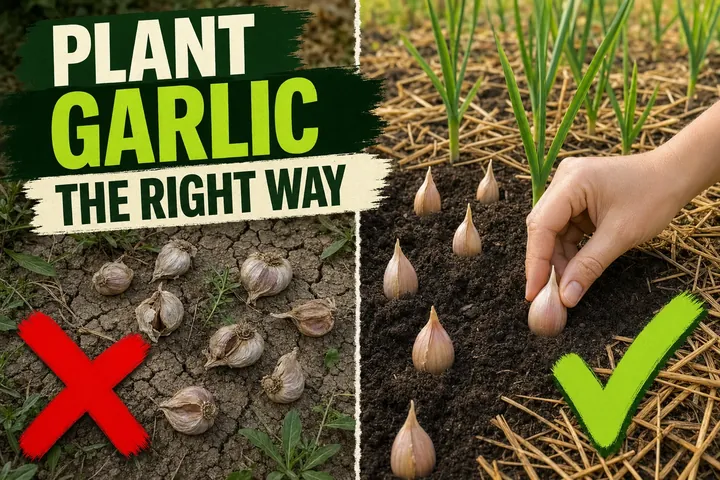
- How to plant garlic cloves — another fall-planted edible with dormancy logic
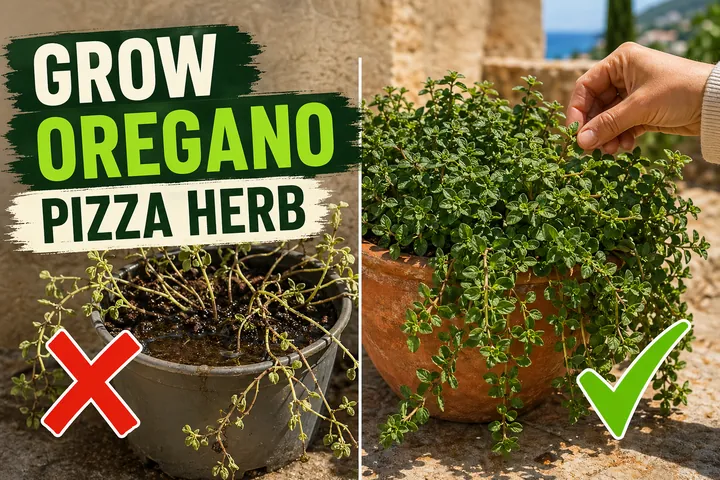
- How to grow oregano — Mediterranean herb that shares saffron’s gritty, low-water preference
Sources
Highly recommended
The supplies that make this guide work

Tazart is an Amazon Associate — we earn from qualifying purchases at no extra cost to you. Thank you for helping us keep these guides free.
Frequently asked questions
What is the correct depth for planting saffron corms?
Plant saffron corms 10–15 cm (4–6 in) deep, measured from the top of the corm to the soil surface. In cold climates (USDA Zone 6), plant at the deeper end — 15 cm (6 in) — and mulch over the top for extra frost protection. In warmer zones (8–9), the shallower end of that range is fine. Too shallow and the corm sits exposed to frost and temperature swings; too deep and the shoot can barely push through heavy soil.
When do saffron corms bloom?
Crocus sativus blooms in autumn — typically October through November in the Northern Hemisphere, roughly 6–10 weeks after you plant the corms in late summer. This surprises many gardeners who know spring-blooming ornamental crocus. The bloom window for each flower is only 2–3 days, so you need to check the patch daily once the first buds appear.
How much saffron does one plant produce?
Each Crocus sativus flower holds exactly 3 stigmas (the red saffron threads). In the first year, expect roughly 40–50 flowers per 100 corms planted — so about 120–150 stigmas, which dries down to around 1–2 grams of saffron. Yields climb year by year as corms multiply: by year 3–4 a well-established patch can produce 5–10 times the first-year output from the same ground.
Can you grow saffron indoors?
Yes. Saffron corms can be grown in containers indoors anywhere in the world, regardless of outdoor climate. Use a deep pot (at least 20–25 cm / 8–10 in), a gritty well-drained mix, and a cool bright spot — a south-facing windowsill in autumn works well. The corm still needs a summer dry rest period, so let the soil dry out completely from June through August, then resume watering in early September to trigger the bloom cycle.
What corm size do I need for saffron to flower in its first year?
Buy corms with a circumference of at least 9 cm (3.5 in). Corms smaller than 8 cm (3 in) are likely to spend the first year building up their energy reserves rather than flowering. Reputable saffron suppliers grade corms by circumference, so look for 9 cm+ or 'first-grade' on the label. Smaller corms are cheaper but typically need a full growing season before they produce a single stigma.
Is ornamental crocus edible? Can I harvest its stigmas?
No. Many common garden crocus are ornamental species such as Crocus vernus or Crocus tommasinianus, and these are NOT the same as Crocus sativus. Some ornamental crocus species are toxic if ingested. The Colchicum genus — often called autumn crocus or meadow saffron — is highly toxic and should never be confused with or used as a substitute for saffron. Only Crocus sativus produces true saffron, and it must be clearly labelled as such when you buy the corms.
How do you dry and store saffron stigmas?
Lay freshly picked stigmas in a single layer on a piece of paper or a fine mesh tray. Leave them in a warm spot away from direct sunlight for 24–72 hours — 48 hours is the sweet spot for most home conditions. They are fully dry when they feel slightly brittle and snap cleanly rather than bending. Store in an airtight glass jar or metal tin, away from light and heat. Properly dried and stored saffron retains full flavour for 2–3 years.