Edible
How to Plant Garlic Cloves (Step-by-Step Fall & Spring Guide)
Learn how to plant garlic cloves the right way — fall is best, spring works too. Exact depth, spacing, mulch, and harvest timing for hardneck and softneck garlic.
On this page
- Quick answer
- Why fall planting beats spring for garlic
- Hardneck vs softneck — which one fits you?
- What you’ll need
- Step-by-step: planting garlic cloves
- Care after planting
- When and how to harvest
- Common mistakes to avoid
- Troubleshooting
- Watch: planting garlic cloves
- Related reading
- A note on conditions
Watch the visual walkthrough
Watch This Before You Plant Garlic
A short visual walkthrough that pairs with the steps above.
Garlic is one of the most rewarding crops you can grow at home — plant once in fall, ignore it most of the winter, and lift fat fragrant bulbs the following summer. The catch is that garlic is fussy about timing, depth, and orientation, and getting any of those wrong leads to small, sad bulbs.
This guide walks you through it: when to plant, hardneck versus softneck, exact depth and spacing, mulch, and how to know it’s harvest day. Fall is the ideal window, but spring planting works too if you missed it.
Quick answer
Plant individual garlic cloves point-up, about 5 cm (2 inches) deep and 15 cm (6 inches) apart, roughly six weeks before your first hard frost. Mulch with 5–10 cm (2–4 in) of straw, water once to settle the soil, and wait. Harvest 8–9 months later, when the bottom 3–4 leaves have yellowed.
Why fall planting beats spring for garlic
Garlic needs a stretch of cold weather to trigger proper bulb formation — a process called vernalization. Without 4–8 weeks below about 10°C (50°F), the plant sends up leaves but never splits the single clove into a multi-clove bulb. You end up with what growers call a “round” — edible, but tiny.
Fall planting (roughly six weeks before your first frost) gives the cloves time to grow roots before the ground freezes, then winter does the vernalization work for free. Come spring, the plant is already established and races ahead of weeds.
Spring planting is the backup plan. It produces smaller bulbs and only works reliably with hardneck varieties in cooler regions. If you missed fall, plant as soon as the soil is workable and accept that the harvest will be modest.
Hardneck vs softneck — which one fits you?
There are two main types of garlic, and choosing the right one for your climate matters more than any other planting decision.
| Type | Best for | Traits |
|---|---|---|
| Hardneck | Cold winters (USDA zones 3–6) | Bigger cloves, stronger flavour, produces edible scapes, stores 4–6 months |
| Softneck | Mild winters (USDA zones 7–10) | Smaller but more numerous cloves, milder flavour, no scapes, stores 8–12 months, braidable |
Quick rule: if your winters reliably drop below freezing for weeks at a time, plant hardneck. If you live somewhere mild and want garlic that stores into next spring, plant softneck. Many gardeners grow a row of each.
What you’ll need
- Seed garlic — one bulb yields 5–10 cloves, so a head of seed garlic plants roughly half a metre of row
- A sunny bed with 6+ hours of direct sun and well-drained soil
- A trowel or dibber for making 5 cm (2 in) deep holes
- Compost or well-rotted manure (a bucketful per square metre)
- Mulch — straw, shredded leaves, or grass clippings
- Watering can
Skip the supermarket bulbs. Buy seed garlic from a nursery, garden centre, or seed catalogue — it’s certified disease-free and matched to climates like yours.
Step-by-step: planting garlic cloves
1. Break the bulb into individual cloves
Just before planting, gently pull the bulb apart with your fingers into separate cloves. Don’t peel them — the papery skin protects the clove underground. Do this on planting day, not weeks ahead, or the cloves dry out and lose vigour.
2. Pick the biggest cloves
Plant only the largest, firmest outer cloves. Big clove in, big bulb out — that’s the rule. Save the small inner cloves for cooking. Reject any clove that’s soft, mouldy, sprouting heavily, or shriveled.
3. Prepare the bed
Loosen the soil to a depth of 20 cm (8 in) and fork in a generous layer of compost. Garlic likes loose, fertile, well-drained ground. Heavy clay rots cloves over winter — if your soil is sticky, plant in a raised bed or mix in coarse sand and compost.
Rake the surface flat. Avoid beds where you grew onions, leeks, or other alliums in the last three years to dodge soil-borne diseases.
4. Set the depth and spacing
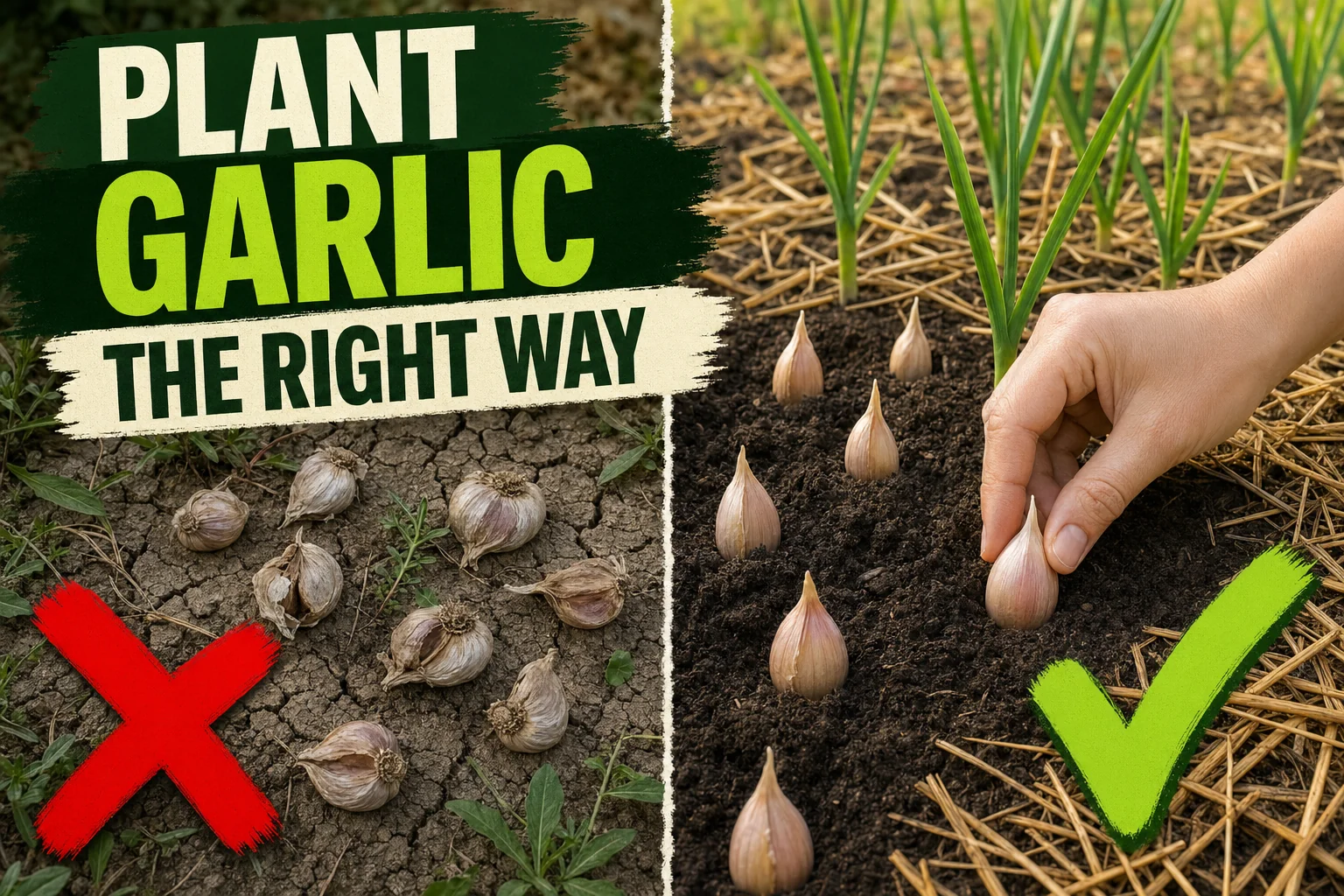
Make holes 5 cm (2 in) deep and 15 cm (6 in) apart, with rows about 25–30 cm (10–12 in) apart. In very cold zones (USDA 3–4), go 7 cm (3 in) deep and add extra mulch on top. Too shallow and freeze-thaw cycles will heave the cloves out of the ground; too deep and the shoots struggle in spring.
A garden dibber or even an old wooden spoon handle marks holes faster than a trowel.
5. Orient each clove point-up
Drop a clove into each hole with the pointy tip facing up and the flat root end down. This step is the one most beginners get wrong. Upside-down cloves still grow, but they waste weeks curling around to reach the surface and produce small, twisted bulbs.
6. Backfill and mulch
Cover the cloves with soil and firm gently with your hand. Water once to settle the soil around them — no need to drench. Then spread 5–10 cm (2–4 in) of straw, shredded leaves, or grass clippings over the whole bed.
Mulch does three jobs: it insulates against freeze-thaw heaving, suppresses winter weeds, and locks in moisture. Don’t skip it.
Care after planting
Garlic is famously low-maintenance, but a few small habits make a big difference.
| Task | When |
|---|---|
| Water | Only if the bed is bone dry — usually rainfall is enough through winter and early spring |
| Fertilize | Once in early spring, when shoots are 10–15 cm (4–6 in) tall — a balanced organic feed |
| Stop watering | Two weeks before harvest, once the lower leaves yellow |
| Remove scapes (hardneck only) | Snap off the curly flower stalks when they form — bigger bulbs that way |
A free plant care app like Tazart holds the watering and fertilizing schedule for you, adjusts it for your local weather, and sends a reminder when scapes are due — handy if you’ve planted multiple rows.
When and how to harvest
Garlic tells you when it’s ready. Watch the leaves: when the bottom three to four leaves have yellowed and dried but five or six green leaves remain on top, it’s harvest time. For fall-planted garlic that’s usually mid- to late summer, eight to nine months after planting.
Stop watering two weeks before harvest. Use a fork to gently lift bulbs — never yank by the stem, which tears the bulb. Brush off loose soil but don’t wash.
Cure the bulbs for two to three weeks in a dry, airy, shaded spot — a covered porch or open garage works. Once the necks are fully dry and papery, trim the roots and tops, and store at room temperature in a mesh bag or basket. Hardneck keeps 4–6 months; softneck keeps 8–12.
Common mistakes to avoid
- Planting supermarket garlic. It’s often treated with sprout inhibitor and rarely matched to your climate. Buy seed garlic.
- Planting too shallow. Cloves at 2 cm (0.75 in) heave out of the soil over winter. Stick to 5 cm (2 in) minimum.
- Skipping the mulch. Unmulched garlic in cold zones is a coin flip. Mulch every time.
- Planting cloves upside-down. A two-second mistake that costs you a third of your harvest size.
- Watering through harvest. Wet bulbs at lifting time mould in storage. Stop watering two weeks before.
- Saving small cloves to plant. Big clove in, big bulb out. Eat the small ones, plant the giants.
Troubleshooting
| Symptom | Likely cause | Fix |
|---|---|---|
| No shoots in spring | Cloves rotted (waterlogged soil) or planted upside-down | Replant in raised bed with compost; check orientation next time |
| Yellow leaves in early summer | Nitrogen shortage or overwatering | Side-dress with compost or balanced organic feed; let soil dry between waterings |
| Tall flower stalks (hardneck) | Normal — these are scapes | Snap them off at the base; eat them stir-fried |
| Bulb is one solid round, no cloves | Missed vernalization (planted too late or too warm) | Plant 6 weeks before first frost next time; pick a hardneck variety |
| Bulbs split or burst out of skin | Left in ground too long | Harvest sooner — when 3–4 lower leaves yellow |
| Mould on bulbs in storage | Cured in damp conditions or stored too humid | Cure 2–3 weeks in a dry, airy spot; store in mesh bag at room temperature |
Watch: planting garlic cloves
A short visual walkthrough pairs well with the steps above. If you’re a visual learner, watch a quick tutorial like How to Plant Garlic Cloves on YouTube and then come back to follow the timing and depth in this guide.
Related reading
- How to plant sprouted potatoes — another low-effort root crop that thrives on the “plant once, ignore mostly” principle.
- How to plant onions that have sprouted — garlic’s close cousin, and the same depth and orientation rules apply.
- How to plant potatoes in a bucket — perfect if you don’t have a garden bed but still want a real harvest.
- How to take care of a rosemary plant the right way — pair garlic with rosemary in the same Mediterranean bed and you’ve got most of an Italian kitchen sorted.
- Set up watering and harvest reminders with the free Tazart plant care app so you never miss the harvest window again.
A note on conditions
Every garden is different. Soil type, microclimate, mulch depth, your local frost date, and the variety you chose all change how garlic behaves over its long growing season. Treat the depths, spacings, and dates above as a strong starting point and adjust based on what your bed actually does in year one — that’s how every garlic grower dials in their patch.
Highly recommended
The supplies that make this guide work
Tazart is an Amazon Associate — we earn from qualifying purchases at no extra cost to you. Thank you for helping us keep these guides free.
Frequently asked questions
When is the best time to plant garlic cloves?
Fall is ideal — about six weeks before your first hard frost, usually mid-September to late October in most temperate climates. The cloves need a cold period (vernalization) to form proper bulbs, and fall planting lets the roots establish before winter dormancy. Spring planting works as a backup but produces smaller bulbs.
Can you plant garlic in spring?
Yes, but expect smaller bulbs. Spring-planted garlic skips most of its vernalization window, so it puts more energy into leaves and less into bulb sizing. Plant as soon as the soil is workable — late February to early April depending on your zone — and choose hardneck varieties, which handle short cold spells better.
How deep should garlic cloves be planted?
Plant each clove about 5 cm (2 inches) deep, measured from the tip of the clove to the surface of the soil. In very cold climates, go a bit deeper — up to 7 cm (3 in) — and add extra mulch on top. Too shallow and the cloves heave out of the soil over winter; too deep and the shoots struggle to break through in spring.
Do you plant garlic cloves point up or down?
Always point-up. The pointy tip is where the green shoot emerges, and the flat end is where roots form. Cloves planted upside-down still grow, but they waste energy curling around to find the surface and produce smaller, deformed bulbs. Take the extra second to orient each clove correctly.
Can I plant supermarket garlic?
It's not recommended. Most supermarket garlic is grown for shipping and storage, often treated with a sprout inhibitor, and frequently belongs to varieties poorly suited to your climate. Buy seed garlic from a local nursery, farm-supply store, or seed catalogue — you'll get bigger, healthier bulbs and far fewer disease problems.
When is garlic ready to harvest?
Harvest when the bottom three to four leaves have yellowed and dried but five or six green leaves remain on top — usually mid- to late summer, eight to nine months after fall planting. Lift the bulbs gently with a fork, brush off the soil, and cure them in a dry, airy spot out of direct sun for two to three weeks before storing.