Edible
How to Grow Oregano (Mediterranean Pizza Herb)
Grow pungent Greek oregano at home for pizza, pasta and roasts. Full guide to sun, soil, watering, harvesting and drying — plus how to keep flavour strong.
On this page
Watch the visual walkthrough
5 Tips How to Grow a Ton of Oregano in Containers
A short visual walkthrough that pairs with the steps above.
Oregano is the herb that makes pizza taste like pizza — and the dried supermarket version barely hints at how punchy a fresh-from-the-pot leaf actually is. Greek oregano (Origanum vulgare hirtum) is the variety Italian pizzerias and Greek tavernas use, and it grows happily in a sunny pot or a corner of any garden bed in temperate to warm climates.
This guide covers exactly how to plant Greek oregano, the lean dry growing conditions that build that intense flavour, and how to harvest and dry leaves for the kitchen all year round.
Quick answer
Plant Greek oregano (Origanum vulgare hirtum) in a 20 cm (8 in) wide, 20 cm (8 in) deep terracotta pot of gritty fast-draining Mediterranean herb mix — or a sunny well-drained corner of a bed. Give it at least 6 hours of direct sun, water deeply only when the top 2–3 cm (0.75–1 in) of soil is dry, pinch growing tips every 2–3 weeks, and harvest stems just before the plant flowers. One plant gives you fresh oregano spring to autumn and dries down enough to fill a spice jar for winter.
Why Greek oregano is the variety to grow
Garden centres often sell three plants under the name “oregano”:
| Variety | Latin name | Flavour | Best use |
|---|---|---|---|
| Greek oregano | Origanum vulgare hirtum | Strong, peppery, classic “pizza” oregano | Cooking — pizza, pasta, roasts, marinades |
| Common oregano | Origanum vulgare | Mild, sometimes tasteless | Ornamental ground cover, pollinator gardens |
| Sweet marjoram | Origanum majorana | Sweet, floral, gentle | Subtle herb butter, fish, eggs |
If you only buy one, make sure the label says Origanum vulgare hirtum or “Greek oregano”. The plain Origanum vulgare often sold as “oregano” can be almost flavourless. Pinch a leaf in the garden centre and smell it — Greek oregano hits you instantly with that warm peppery aroma. If it smells of nothing, walk away.
What you’ll need
- One Greek oregano plant in a 10 cm (4 in) nursery pot, or a packet of Greek oregano seeds
- A pot at least 20 cm (8 in) wide and 20 cm (8 in) deep, with drainage holes — terracotta is ideal because it dries faster than plastic
- A gritty Mediterranean-style potting mix — peat-free potting mix cut 1:1 with horticultural perlite or coarse sand
- A spot getting at least 6 hours of direct sun per day — the more the better
- A watering can or cup
That’s the entire list. No special fertilizer or grow light is needed for the first season outdoors.
Step-by-step: planting Greek oregano
1. Pick the right plant or seed
Choose a healthy nursery start with compact bushy growth, woody-ish stems near the base, and a strong peppery smell when you pinch a leaf. Avoid plants that are tall, spindly, pale, or showing flowers in the nursery pot — they’ve been grown too soft and will struggle outdoors.
If you’re starting from seed, sow indoors 6–8 weeks before the last frost. Oregano seed is tiny — sprinkle it on top of the gritty mix, press it in lightly, and don’t bury it. Germination takes 7–14 days at 18–22°C (65–72°F).
2. Prepare the right soil
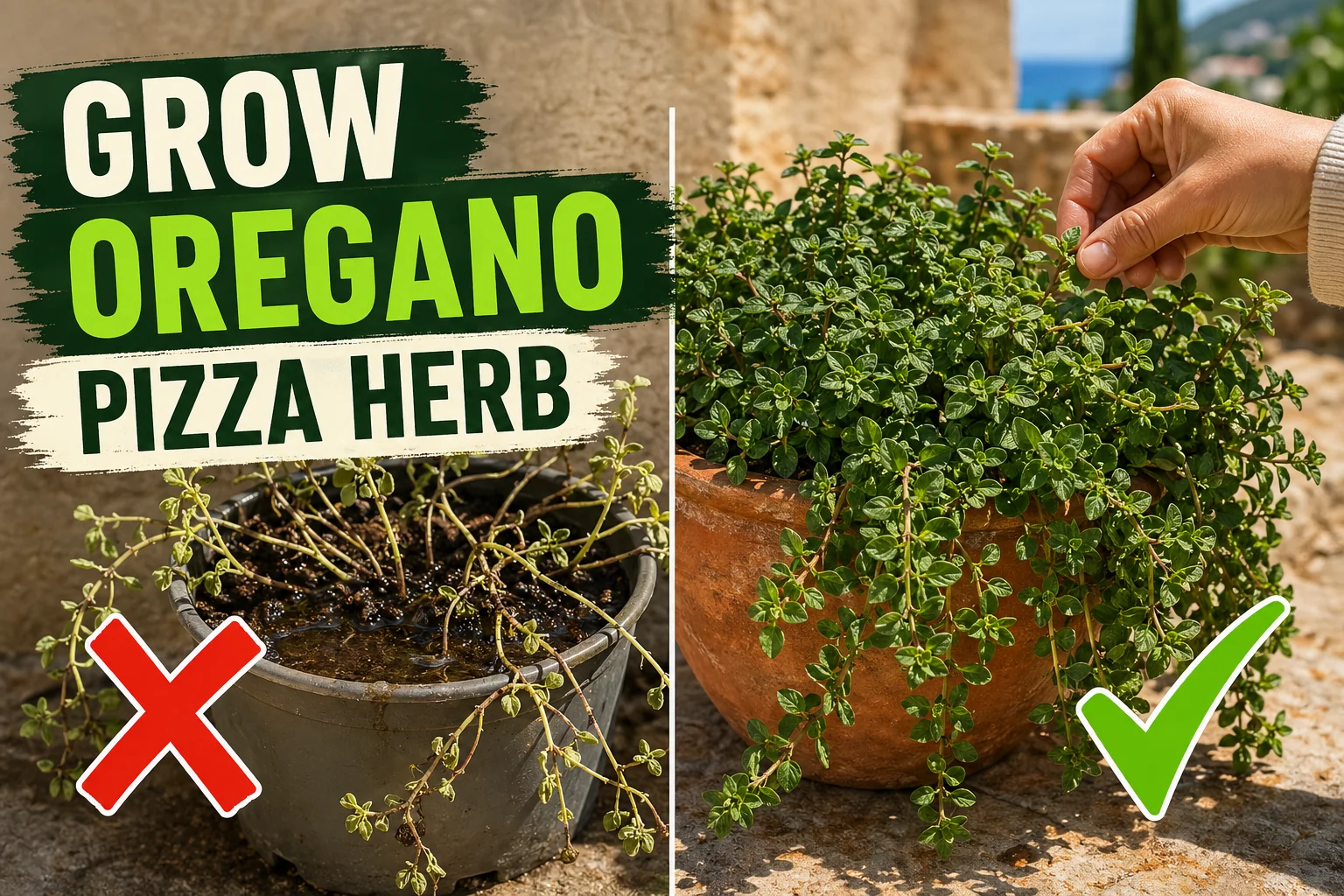
This is the step most people get wrong. Oregano evolved on rocky sun-baked Mediterranean hillsides — it wants lean, fast-draining, slightly poor soil. Standard potting compost is far too rich and moisture-retentive and produces lush soft tasteless leaves.
Mix your own gritty Mediterranean herb mix:
- 1 part general-purpose peat-free potting mix
- 1 part horticultural perlite or coarse horticultural grit/sand
Fill the pot to about 3 cm (1 in) below the rim. Tap once or twice on the table to settle, but don’t pack it down — roots need air pockets.
3. Plant it
If you’re transplanting a nursery start:
- Squeeze the sides of the nursery pot to loosen the rootball
- Tip it out and gently tease the roots loose if they’re circling
- Sit the rootball in the centre of the new pot at the same depth it was growing before — don’t bury the stem deeper than that
- Backfill with gritty mix and firm gently
If you’re planting in a garden bed instead, choose a sunny well-drained spot, loosen the top 20 cm (8 in) of soil, and mix in a generous handful of grit or perlite per planting hole. Space multiple plants 30 cm (12 in) apart — they spread sideways more than upwards.
4. Water it in
Pour water slowly around the base until you see drips coming from the drainage holes. This first watering settles the soil around the roots and removes air gaps.
After this, let the top 2–3 cm (0.75–1 in) of soil dry out fully before watering again. Outdoors in summer that’s usually every 5–10 days. Indoors and in cool weather it can be every 2 weeks. When in doubt, wait another day — oregano forgives neglect far better than overwatering.
5. Place it in full sun
Set the pot in the sunniest spot you have:
- Outdoors: south- or west-facing patio, balcony, or bed — 6+ hours of direct sun, ideally 8+
- Indoors: only a south-facing windowsill in summer, or a full-spectrum LED grow light bar 20–30 cm (8–12 in) above the plant on a 14-hour timer
Oregano grown in shade is the single most common reason people complain that “fresh oregano tastes like nothing”. The essential oils that carry the pungent flavour are the plant’s response to bright light and heat — without that stimulus, the leaves taste like grass.
Care after planting
Oregano is one of the lowest-maintenance herbs once it’s settled. The whole routine is:
| Task | When |
|---|---|
| Water | When the top 2–3 cm (0.75–1 in) of soil is dry — every 5–10 days outdoors in summer, less in cool weather |
| Pinch growing tips | Every 2–3 weeks once the plant is 10 cm (4 in) tall — keeps it bushy |
| Cut off flower buds (if growing for cooking) | The moment they appear — bolting tougher leaf flavour |
| Fertilize | Skip it, or use a gentle balanced organic feed once a month at most — heavy feeding kills flavour |
| Cut back hard | Once a year in early spring — to about 5 cm (2 in) above the soil — refreshes the plant |
| Repot or divide | Every 2–3 years in early spring when roots fill the pot |
A free plant care app like Tazart can hold the watering schedule for you, adjust it for your local weather, and ping you when it’s time to harvest — useful if you’re growing more than one or two herb pots.
How to harvest oregano
Start harvesting once the plant reaches at least 15 cm (6 in) tall and has plenty of leafy growth — usually 6–8 weeks after transplanting a nursery start.
For a few sprigs at a time: snip stems with scissors just above a pair of leaves. The plant will branch into two new shoots from that node within 7–10 days, so regular harvest actually makes the plant bushier.
For drying or making oregano oil: cut whole stems back to about 8 cm (3 in) above the soil. Don’t take more than one third of the plant in a single cut — leave enough leaves for it to keep photosynthesizing. The plant will regrow fully within 4–5 weeks.
Best flavour timing: harvest in the morning after the dew has dried but before the day heats up, just before flower buds open. That’s when essential-oil concentration peaks.
How to dry oregano leaves
Drying is what makes oregano truly useful — fresh leaves are great on a salad, but the dried herb is what you reach for for pizza, pasta sauce, and Mediterranean roasts.
- Cut whole stems on a dry sunny morning after the dew has evaporated.
- Don’t wash the leaves unless they’re visibly dirty — moisture invites mould during drying. If you must rinse, pat dry and air on a tea towel for an hour first.
- Bundle 5–8 stems together at the base with twine.
- Hang the bundle upside down in a warm dry shaded spot with good airflow — a kitchen cupboard, garage, or covered porch all work. Avoid direct sunlight, which bleaches the colour and burns off essential oils.
- After 1–2 weeks the leaves should crumble cleanly between your fingers. Strip them off the stems into a clean glass jar with a tight lid.
- Store the jar in a cool dark cupboard. Whole dried leaves keep flavour for about a year — only crush them just before cooking, never in advance.
Common mistakes to avoid
- Buying common Origanum vulgare and expecting pizza-shop flavour. Always look for Origanum vulgare hirtum or “Greek oregano” on the label.
- Using rich moisture-retentive potting compost. It produces lush soft leaves with almost no flavour. Cut it 1:1 with perlite or coarse grit.
- Watering on a fixed schedule. Oregano needs the soil to dry out between waterings. Stick a finger in before every water.
- Growing it in partial shade. No sun, no flavour. 6+ hours of direct sun is non-negotiable.
- Heavy fertilizing. More leaves, less flavour. Skip the feed or keep it light.
- Letting it sprawl unpinched. Oregano gets leggy and woody in the centre if you never pinch the tips. Regular pinching keeps it bushy and productive.
- Not cutting it back annually. Plants left untouched for years go woody, sparse, and flavour-poor. A hard early-spring cut to 5 cm (2 in) refreshes it.
Troubleshooting
| Symptom | Likely cause | Fix |
|---|---|---|
| Long pale leggy stems with big gaps between leaves | Not enough light | Move to a sunnier spot or add a strong grow light, then pinch every growing tip |
| Leaves taste of almost nothing | Too rich/wet soil, too little sun, or too much fertilizer | Repot in gritty mix, move to full sun, stop fertilizing — flavour returns within a few weeks |
| Yellowing lower leaves | Overwatering / soggy soil | Let the soil dry until the top 2–3 cm (0.75–1 in) is fully dry; check drainage holes are clear |
| Crispy brown lower stems | Underwatering or pot too hot | Water more deeply when watering; move to afternoon shade in extreme heat over 35°C (95°F) |
| Tall flower spikes shooting up | Bolting (normal in summer) | Pinch buds off for cooking, or leave a few stems for pollinators |
| Woody bare centre with leaves only at the tips | Not pruned annually | In early spring, cut whole plant back to 5 cm (2 in) above soil — it will regrow bushy |
| White powdery coating on leaves | Powdery mildew (poor airflow + humidity) | Cut affected stems off, dispose (don’t compost), thin growth, water at the base only |
| Leaves dropping in winter | Normal cold dormancy on outdoor plants | Don’t worry — Greek oregano is a hardy perennial down to about −18°C (0°F); leaves return in spring |
Watch: how to grow oregano
A short visual walkthrough pairs well with the steps above. If you’re a visual learner, find a quick tutorial like How to Grow Greek Oregano on YouTube and then come back to follow the timing in this guide.
Related reading
- How to take care of rosemary — another Mediterranean perennial that loves the same lean dry sunny conditions oregano does.
- How to grow mint without it taking over — the opposite end of the herb-watering spectrum: mint wants consistent moisture, oregano wants dry.
- How to grow basil indoors — pair basil and oregano on the same sunny windowsill for an instant Italian kitchen herb shelf.
- Track every herb’s watering schedule in one place with the free Tazart plant care app — it adjusts the schedule for your local weather automatically.
A note on conditions
Every garden is different. Light, pot size, soil mix, season, humidity, and your local weather all change how fast oregano grows and how often it needs water. Use the steps above as a starting point and adjust based on what your plant actually does in week two — that’s how every good gardener learns. The one rule that never changes: lean soil, full sun, and patience between waterings build the strong pizza-herb flavour you’re growing the plant for.
Highly recommended
The supplies that make this guide work
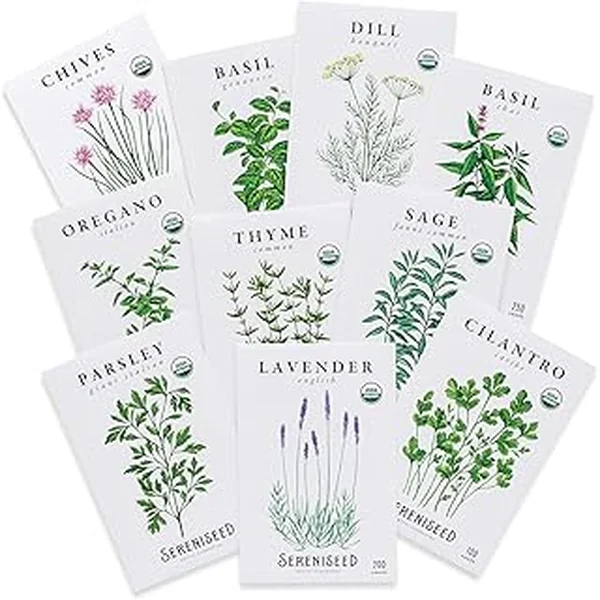
Tazart is an Amazon Associate — we earn from qualifying purchases at no extra cost to you. Thank you for helping us keep these guides free.
Frequently asked questions
How do you grow oregano?
Plant Greek oregano (Origanum vulgare hirtum) in a sunny spot with at least 6 hours of direct sun, in lean fast-draining gritty soil — never rich compost. Water deeply only when the top 2–3 cm (0.75–1 in) of soil is dry, and pinch the growing tips every few weeks to keep the plant bushy. Harvest sprigs once the plant reaches 15 cm (6 in) tall, and cut it back hard once a year to keep flavour strong.
Can you grow oregano in a pot?
Yes — pots are arguably the best way to grow oregano because you fully control the soil and drainage. Use a 20 cm (8 in) wide, 20 cm (8 in) deep terracotta pot with drainage holes, fill it with a gritty Mediterranean herb mix (potting mix cut 1:1 with perlite or coarse sand), and place it in full sun. One plant gives you fresh oregano from spring through autumn and dries down enough to fill a small spice jar.
How much sun does oregano need?
Oregano needs at least 6 hours of direct sun per day, and 8+ hours is ideal. It evolved on dry sun-baked Mediterranean hillsides, and the essential oils that give the leaves their pungent flavour develop in response to bright light and heat. In low light it grows leggy, pale, and weak-tasting. Indoors, only a south-facing windowsill or a strong full-spectrum LED grow light bar 20–30 cm (8–12 in) above the plant on a 14-hour timer will produce flavourful leaves.
How often should I water oregano?
Water deeply only when the top 2–3 cm (0.75–1 in) of soil is fully dry — usually every 5–10 days for outdoor pots in summer, much less in cool weather. Oregano is genuinely drought-tolerant once established and prefers to dry out between waterings. Soggy soil is the #1 killer of potted oregano: it causes root rot, washes essential oils out of the leaves, and turns the flavour bland and grassy. When in doubt, wait another day.
When do you harvest oregano?
Start harvesting once the plant is at least 15 cm (6 in) tall and has plenty of leafy growth — usually 6–8 weeks after planting from a nursery start, or 12–14 weeks from seed. Snip stems with scissors just above a pair of leaves, taking no more than one third of the plant at any one time. Flavour peaks just before flowering, so harvest hardest in late spring and again in midsummer right as the first flower buds form.
How do you dry oregano leaves?
Cut whole stems on a dry morning after the dew has evaporated. Bundle 5–8 stems together with twine and hang them upside down in a warm dry shaded spot with good airflow for 1–2 weeks, until the leaves crumble between your fingers. Strip the dried leaves off the stems into a clean glass jar with a tight lid, and store away from light and heat. Whole leaves keep flavour for about a year — only crush them just before cooking.
Why is my oregano leggy and tasteless?
Three causes, in order of likelihood. (1) Not enough sun — oregano needs 6+ hours of direct light to make essential oils. Move it to a brighter spot. (2) Soil too rich or too wet — oregano grown in fluffy moisture-retentive compost grows fast, soft, and bland. Repot in a gritty Mediterranean mix and water less. (3) Over-fertilizing — heavy feeding produces leafy growth at the expense of flavour. Skip fertilizer entirely or use a gentle balanced organic feed only once a month.
Should I let oregano flower?
It depends on your goal. For maximum leaf flavour, pinch the flower buds off as soon as they appear — once oregano flowers (bolts), the plant redirects energy from leaves to seeds and the existing leaves get a touch tougher. For pollinators, leave a stem or two to flower: bees, hoverflies and beneficial wasps love oregano flowers. The compromise most growers settle on is to let half the plant flower and keep the other half pinched for the kitchen.