Flowers
How Deep to Plant Dahlia Tubers (10-15 cm Depth Guide for Big Blooms)
Plant dahlia tubers 10-15 cm (4-6 in) deep with the eye facing up, after last frost in soil 15°C (60°F)+ — full guide to depth, spacing, staking, and watering.
On this page
- Quick answer
- Depth at a glance
- Why depth matters
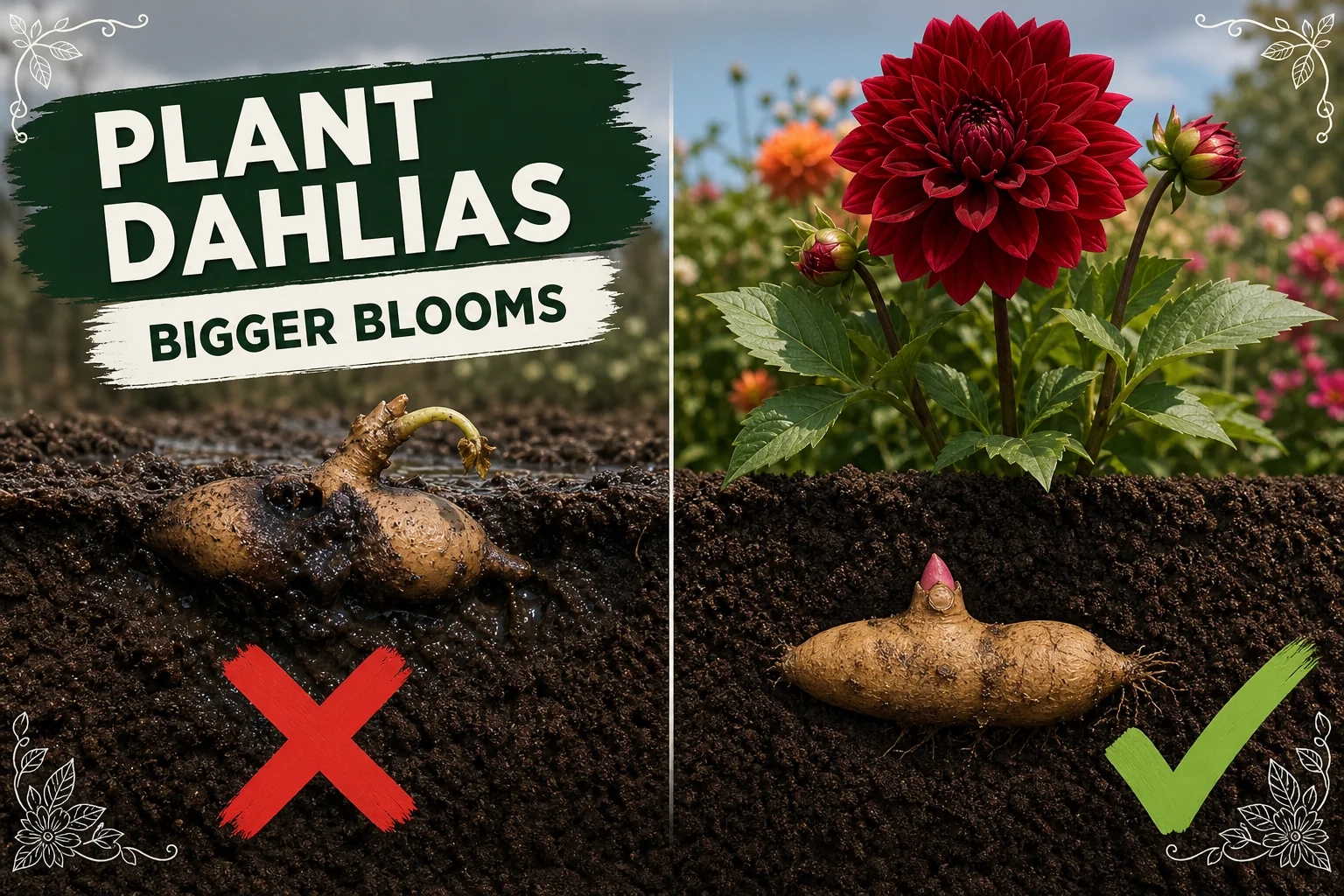
- Eye orientation: the most critical detail
- Spacing by variety size
- When to plant
- Soil preparation
- Planting step-by-step
- The no-water rule (most missed step)
- Staking at planting time
- Watering after sprouting
- Pinching for more blooms
- Container planting
- Common problems
- Lifting and storing tubers
- Related reading
- A note on conditions
Watch the visual walkthrough
Get started with dahlias 🌿 A guide to the basics
Don't be afraid of dahlias: They aren't the divas you might think they are. I'm sharing all the basics you need to know to start ...
Dahlia tubers are simple to plant if you get three things right: depth, eye orientation, and the no-watering rule for the first 2-3 weeks. This guide walks you through every detail from depth to staking to first bloom.
Quick answer
Plant dahlia tubers 10-15 cm (4-6 in) deep, laid horizontally with the eye (growing point) facing up. Spacing 45-90 cm (18-36 in) by variety. Plant after last frost in soil at least 15°C (60°F). Install stake at planting time. Do NOT water until green shoots emerge — typically 14-21 days. Then 2.5 cm (1 in) per week deep at the base.
Depth at a glance
The standard depth covers the entire range of dahlia varieties:
| Tuber size | Planting depth |
|---|---|
| Small border tubers | 10 cm (4 in) |
| Standard tubers | 12 cm (5 in) |
| Large dinnerplate tubers | 15 cm (6 in) |
Depth is measured from the top of the tuber to the soil surface — not from the eye, and not from the bottom of the hole.
Why depth matters
Three reasons the 10-15 cm (4-6 in) depth window is non-negotiable:
- Frost protection. Dahlias are tender perennials. A 10-15 cm (4-6 in) soil layer insulates the tuber from late spring cold snaps that would kill an exposed crown.
- Stem support. Deeper planting produces a longer underground stem section, which acts as natural support for the heavy above-ground stem at maturity.
- Tuber expansion. Dahlias grow new tubers off the original throughout the season — they need room above and around the original tuber to expand without pushing the crown out of the ground.
Plant too shallow (under 7 cm / 3 in) and the crown is exposed to frost and the plant becomes top-heavy. Plant too deep (over 20 cm / 8 in) and the tuber can rot before it has the energy to push a shoot all the way to the surface.
Eye orientation: the most critical detail
Dahlia tubers don’t grow shoots from anywhere on the surface. Shoots emerge from one specific point: the eye.
The eye is a small pink, white, or pale green nub on the central crown — the part of the tuber that was attached to the original stem. Look for it carefully:
- A swollen tuber with no visible eye will not sprout, ever. Set those aside or compost them.
- A tuber with a visible eye on top sprouts within 14-21 days in warm soil.
- An eye facing down or sideways still sprouts — the shoot finds its way up — but it takes longer and uses more energy.
Rule: lay the tuber horizontally in the hole with the eye facing up. Don’t stand the tuber on end like a daffodil bulb. Dahlia tubers are elongated and lay flat, with the eye on the upper crown.
Spacing by variety size
Spacing depends on mature plant size:
| Variety type | Examples | Mature height | In-row spacing |
|---|---|---|---|
| Border / dwarf | Gallery, Mystery Day | 30-60 cm (1-2 ft) | 30-45 cm (12-18 in) |
| Standard | Karma, Bishop of Llandaff | 90 cm-1.2 m (3-4 ft) | 60 cm (24 in) |
| Dinnerplate | Café au Lait, Kelvin Floodlight | 1.2-1.5 m (4-5 ft) | 75-90 cm (30-36 in) |
Wider spacing matters for two reasons: airflow (dahlias are prone to powdery mildew late summer), and bloom count (crowded plants produce fewer flowers per plant).
When to plant
Dahlias are tender. Frost kills emerging shoots and stunts the plant for the season.
Planting requirements:
- Last frost date passed
- Soil temperature at 10 cm (4 in) deep at least 15°C (60°F)
- Daytime temperatures consistently above 13°C (55°F)
- Typically 1-2 weeks after last frost
| Region | Typical planting window |
|---|---|
| Gulf Coast / Florida | February – March |
| Mid-South / Southwest | March – April |
| Mid-Atlantic / Midwest | Mid-May – early June |
| New England / Pacific NW | Late May – mid-June |
| Northern Plains / Zone 4 | Early June |
For an earlier start in cool zones, pot up tubers indoors 4-6 weeks before last frost in a 19 L (5 gal) container with potting mix. Keep at 16-21°C (60-70°F) indoors, water lightly only when shoots appear, then transplant the entire pot contents into the garden after frost risk passes.
Soil preparation
Dahlias reward soil prep with bigger, more saturated blooms.
What dahlias need:
- pH 6.5-7.0 — slightly acidic to neutral
- Loose, deep, well-draining — heavy wet soil rots tubers
- Moderate fertility with strong phosphorus — phosphorus drives bloom and tuber development
- Low nitrogen — too much nitrogen produces leaves at the expense of blooms
How to prepare:
- Test soil pH if you’ve never tested the bed.
- Work 5 cm (2 in) of finished compost into the top 30 cm (12 in) of soil.
- Add a handful of bone meal or balanced low-nitrogen fertilizer (e.g. 5-10-10) per planting hole.
- If your soil is heavy clay, amend the bed with coarse sand or perlite to lighten it — wet clay is the #1 cause of tuber rot.
Planting step-by-step
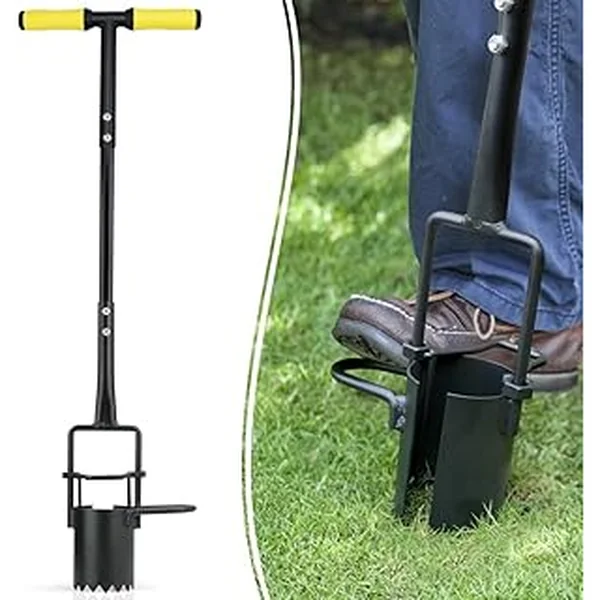
- Dig a 10-15 cm (4-6 in) deep hole, wide enough to lay the tuber horizontally.
- Add a handful of bone meal to the bottom of the hole and mix lightly with native soil.
- Lay the tuber on its side with the eye facing up. If no eye is visible, orient the crown side up.
- Install a 1.5-1.8 m (5-6 ft) stake about 5 cm (2 in) from the tuber. Driving stakes later damages roots.
- Backfill with soil to the original surface level. Do NOT mound or tamp aggressively.
- Mark the planting location with a small label so you don’t accidentally dig into it before sprouts appear.
- Do NOT water. Wait until shoots emerge.
The no-water rule (most missed step)
This is the single biggest source of dahlia failure: watering newly planted tubers.
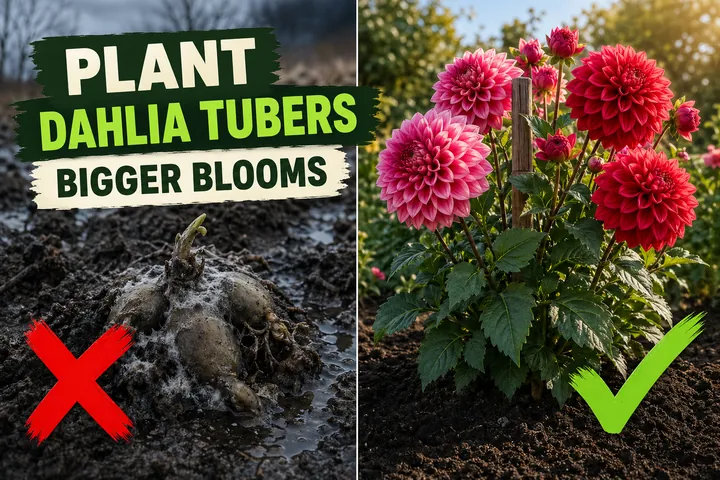
The tuber contains all the moisture it needs to push up the first shoot. Adding water to a tuber sitting in cool spring soil is the #1 cause of rot. Wet, cold conditions are exactly what soil-borne rot pathogens love.
Wait until you see 5-7 cm (2-3 in) of green shoot above the soil — typically 14-21 days after planting — then begin a normal watering schedule.
If your area gets heavy spring rain that saturates the bed, that’s unavoidable — but don’t add to it.
Staking at planting time
Dahlias grow 0.9-1.5 m (3-5 ft) tall with heavy flower-laden stems. Without support they fall over in summer storms and break.
Why stake at planting:
- Driving a stake into established roots later damages the developing tuber clump
- A stake placed 5 cm (2 in) from the planted tuber misses the central crown but provides full support
Setup:
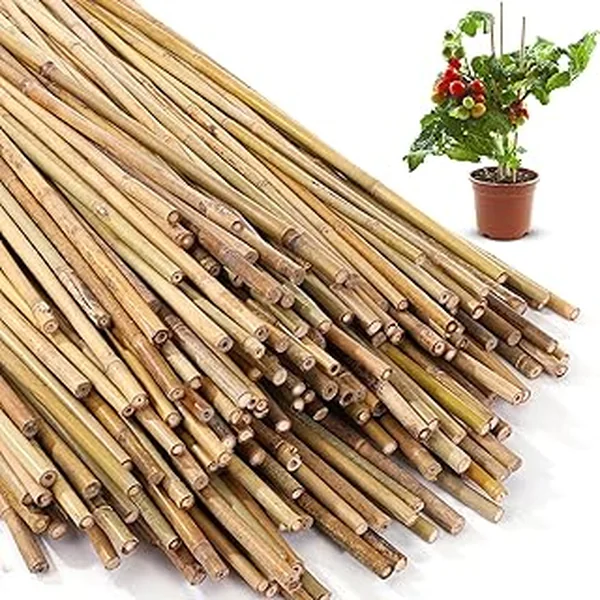
- Use 1.5-1.8 m (5-6 ft) stakes — bamboo, wood, or metal
- Drive 30 cm (12 in) into the ground for stability
- Tie plants every 30 cm (12 in) of growth with soft twine or stretchy tape
- Avoid wire or thin cord — they cut into stems as the plant grows
Watering after sprouting
Once sprouts are 5-7 cm (2-3 in) tall, start a regular watering schedule:
| Stage | Water needs |
|---|---|
| Early growth (weeks 4-8) | 2.5 cm (1 in) per week, deep |
| Active flowering (weeks 8-frost) | 2.5-5 cm (1-2 in) per week |
Always water at the base, never overhead. Wet foliage and flowers in summer heat invites powdery mildew. A drip line or soaker hose at the base of plants works perfectly.
Pinching for more blooms
When the main stem reaches 30-40 cm (12-16 in) tall and has 3-4 sets of leaves, pinch out the central growing tip. This forces side branches and dramatically increases the number of bloom stems per plant.
This works best on standard and dinnerplate varieties. Dwarf varieties branch naturally and don’t need pinching.
Container planting
Dahlias grow well in pots if the container is big enough:
| Variety size | Minimum container |
|---|---|
| Border / dwarf | 19 L (5 gal), 25 cm (10 in) deep |
| Standard | 38 L (10 gal), 30 cm (12 in) deep |
| Dinnerplate | 57-75 L (15-20 gal), 38 cm (15 in) deep |
Use quality potting mix (not garden soil) and stake at planting. Container dahlias need more frequent watering once shoots emerge — check daily in summer.
Common problems
Tuber didn’t sprout
After 4-5 weeks of warm soil with no shoots, dig and check:
- Soft, smelly tuber: rot from too-wet conditions or planting too deep. Discard.
- Firm tuber, no eye: the tuber will never sprout — it’s missing the growing point. Discard.
- Firm tuber with eye, but pointing down: re-plant with eye up.
Stems falling over
Either staking was skipped or installed too late, or the variety needed wider spacing for airflow and the plant got top-heavy reaching for light. Stake at planting, every time.
Powdery mildew on leaves
White powdery coating on leaf surfaces in late summer. Caused by humid nights and crowded plants. Improve airflow (remove lower leaves), water at base only, and apply potassium bicarbonate or neem oil spray as needed.
Few or small blooms
Usually too much nitrogen. Switch to a bloom-booster fertilizer (low N, higher P and K) once buds form. Also check sun exposure — under 6 hours of direct sun produces small blooms regardless of feeding.
Pests on flowers
Earwigs and slugs love dahlia blooms. Hand-pick at night (use a flashlight), or set out beer traps for slugs. Diatomaceous earth around the base helps deter both.
Lifting and storing tubers
In Zones 8 and warmer, dahlias overwinter in the ground with mulch. In Zone 7 and cooler, lift tubers after the first hard frost:
- Cut stems back to 10-15 cm (4-6 in) above ground.
- Wait 7-10 days — this triggers tuber dormancy and skin set.
- Dig the entire clump carefully with a fork.
- Brush off (don’t wash) loose soil.
- Cure in a frost-free space (10-13°C / 50-55°F) for 1-2 weeks.
- Store in vermiculite, peat, or sawdust at 4-10°C (40-50°F) in a dark, dry, well-ventilated space.
Properly stored tubers last through winter and can be replanted the following spring.
Related reading
- How to plant dahlia tubers — companion guide focused on the full planting workflow.
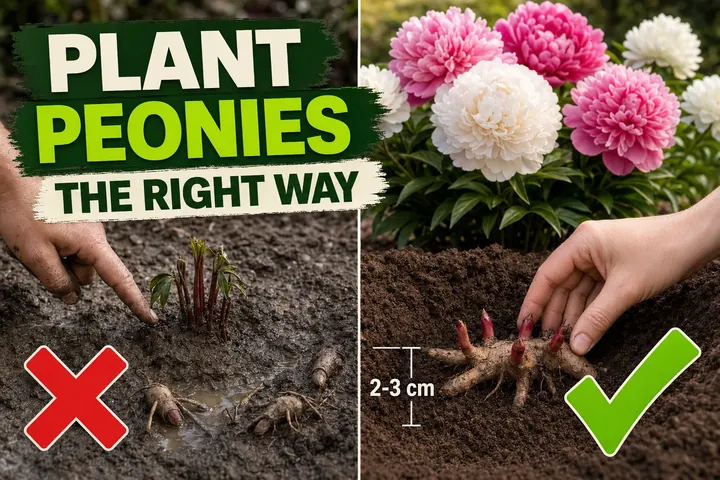
- How to plant peony bulbs — another tuberous flower with a similar depth-and-orientation discipline.
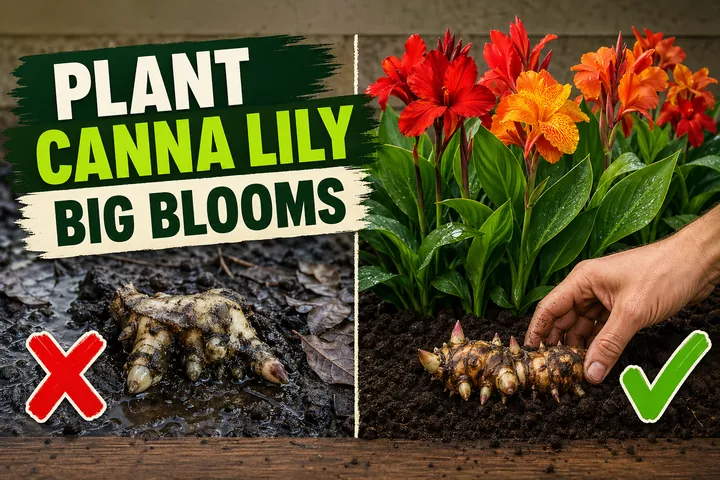
- How to plant canna lily bulbs — companion warm-season tuber that pairs well in mixed beds.
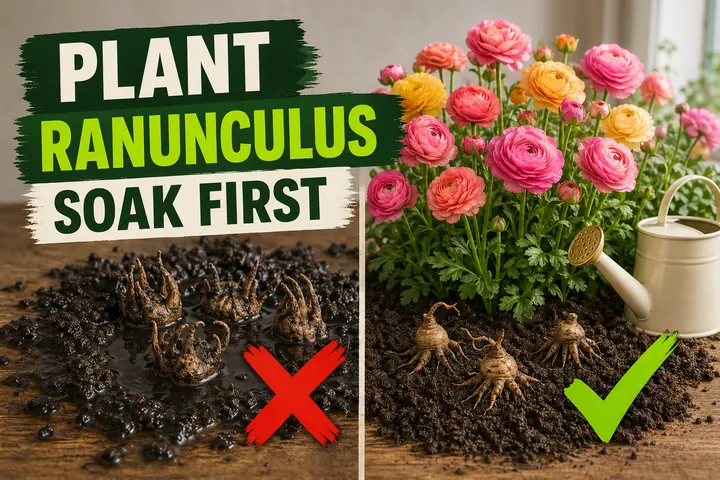
- How to plant ranunculus bulbs — cool-season tuber that finishes just as dahlias get going.
- Track your dahlia planting date, sprout timing, and pinch reminders with the free Tazart plant app — set alerts for first watering, staking checks, and bloom-booster feeding.
A note on conditions
Dahlia performance varies widely by region, variety, and weather. Cool damp climates extend bloom but raise rot risk; hot dry climates need consistent watering after sprouting. Use this guide as your baseline and adjust based on what your tubers show you in the first 4-5 weeks — that’s how every experienced cut-flower gardener calibrates a season.
Highly recommended
The supplies that make this guide work


Tazart is an Amazon Associate — we earn from qualifying purchases at no extra cost to you. Thank you for helping us keep these guides free.
Frequently asked questions
How deep should dahlia tubers be planted?
Plant dahlia tubers 10-15 cm (4-6 in) deep, measured from the top of the tuber to the soil surface. Standard spacing is 10 cm (4 in) deep for smaller tubers and 15 cm (6 in) deep for large dinnerplate types. Lay the tuber horizontally in the hole with the eye (the small pink or white growing point) facing up.
Which way is up on a dahlia tuber?
The eye is the growing point — a small pink, white, or pale green nub typically located on the central crown where the tuber connects to old stem material. The eye must face up. If you can't see an eye, lay the tuber horizontally with the side that connects to old stem material facing up. Sprouts will find their way to the surface from any orientation, but eye-up gives the fastest emergence.
When should I plant dahlia tubers?
Plant dahlia tubers outdoors after the last frost date, when soil temperature reaches at least 15°C (60°F) at 10 cm (4 in) deep. Dahlias are tender perennials and a single light frost kills emerging shoots. In most US zones, that's mid-May to early June. To get a head start, you can pot up tubers indoors 4-6 weeks before the last frost and transplant once frost risk has passed.
How far apart should dahlia tubers be planted?
Space dahlia tubers 45-90 cm (18-36 in) apart depending on variety. Border dahlias (60-90 cm / 2-3 ft tall) need 45 cm (18 in) spacing. Standard dahlias (1-1.2 m / 3-4 ft) need 60 cm (24 in). Large dinnerplate varieties (1.2-1.5 m / 4-5 ft) need 75-90 cm (30-36 in). Wider spacing reduces disease pressure and gives each plant room for full bloom production.
Should dahlia tubers be watered after planting?
No — do NOT water newly planted dahlia tubers until you see green shoots emerging at the soil surface (typically 14-21 days after planting). Watering wet tubers in cool spring soil is the #1 cause of tuber rot. The tuber has all the moisture it needs to push up the first sprout. Once shoots are 5-7 cm (2-3 in) tall, begin a normal watering schedule.
Do you need to stake dahlias at planting time?
Yes — install stakes at planting, not later. Driving a stake into established dahlia roots damages the tuber clump. Place a 1.5-1.8 m (5-6 ft) stake about 5 cm (2 in) from the planting hole at the same time you set the tuber. Tie the plant to the stake as it grows, every 30 cm (12 in) of height, with soft twine or stretchy tape that won't cut into stems.
Can dahlia tubers be planted in pots?
Yes — dahlias grow well in containers if the pot is big enough. Use a pot at least 38 L (10 gal) and 30 cm (12 in) deep for standard varieties; 57-75 L (15-20 gal) for dinnerplate types. Plant at the same 10-15 cm (4-6 in) depth and stake at planting. Container dahlias need more frequent watering and feeding than in-ground plants once established.
Why didn't my dahlia tubers sprout?
Common causes: tuber rot from being watered before sprouting, soil too cold (below 15°C / 60°F), planting upside down, or the tuber lacking an eye (no eye means no growing point — that tuber will not sprout no matter how long you wait). Wait until 4-5 weeks have passed; if no shoots appear, dig and check. Rotted tubers feel soft and smell sour; eyeless tubers look intact but have no growing point on the crown.