Edible
How to Plant Pole Beans (Trellis, Spacing, Soil Temp)
Plant pole bean seeds 2.5 cm (1 in) deep, 10–15 cm (4–6 in) apart at the base of a 2 m (7 ft) trellis, in 16°C (60°F) soil — for steady summer harvests.
On this page
Watch the visual walkthrough
A Farmer's Guide to Mastering Growing Green Beans
My uncle is a commercial bean farmer. He shared with me everything he does to get massive and consistent green beans and ...
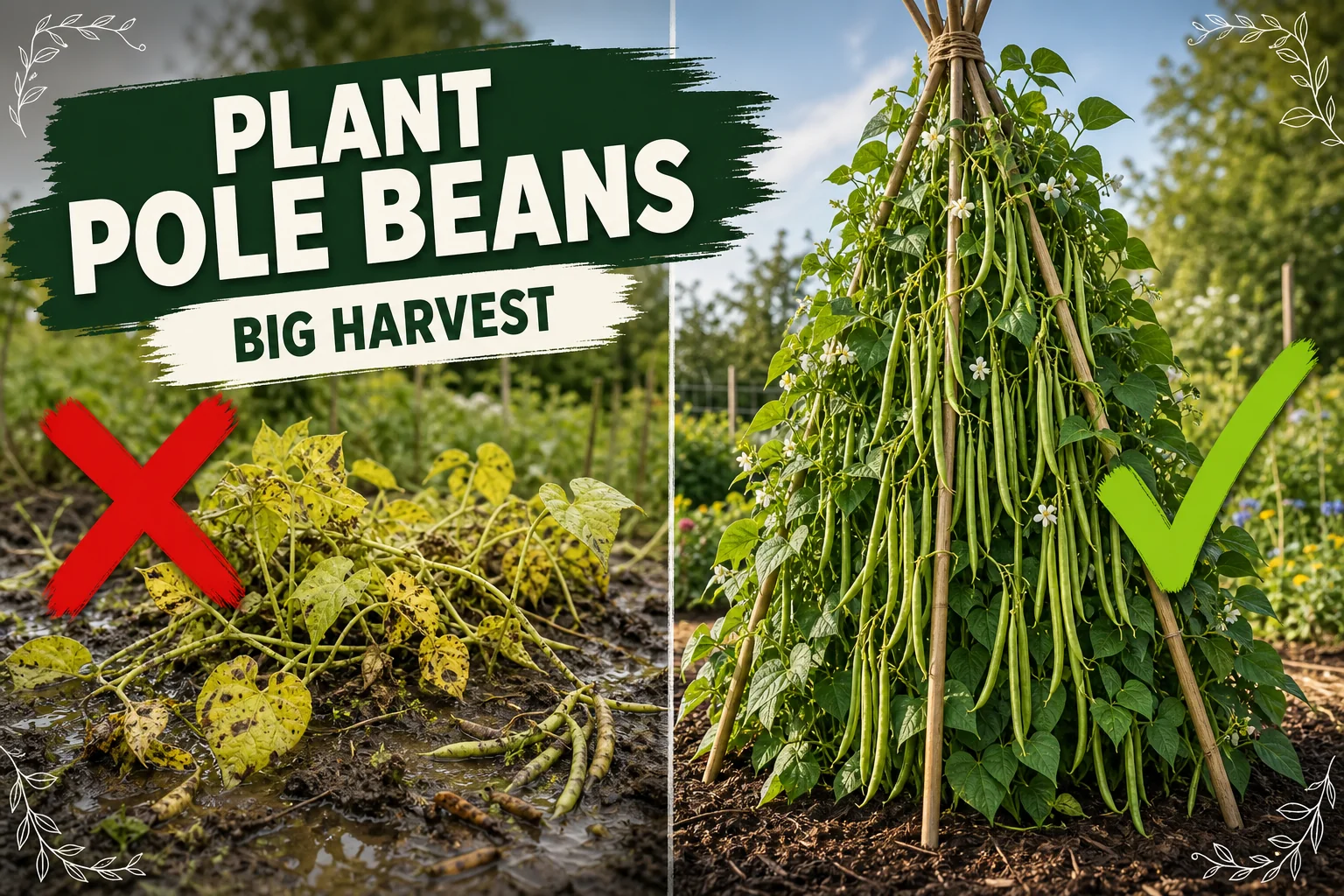
Pole beans are the highest-yielding bean type per square metre of any garden vegetable — a single 2 m (7 ft) teepee can throw out 4–5 kg (9–11 lb) of pods over an 8-week picking window. The trade-off is that they need three things bush beans don’t: warm soil, a tall trellis set before planting, and weekly picking. Skip any of those and yield collapses to a fraction of what bush beans give in the same bed.
This guide walks through the way pole beans actually want — direct-sown 2.5 cm (1 in) deep in 16°C (60°F) soil, 10–15 cm (4–6 in) apart at the base of a sturdy trellis you set before any seed goes in.
Quick answer
Plant pole bean seeds 2.5 cm (1 in) deep, 10–15 cm (4–6 in) apart, with 4–6 seeds per pole on a 2 m (7 ft) teepee or row trellis. Wait until soil reaches 16°C (60°F) — usually 2 weeks after last frost. Set the trellis BEFORE planting. Water once gently to settle the soil, then leave it alone until shoots emerge in 7–14 days. Pick pods every 2–3 days once they’re 15–18 cm (6–7 in) long for an 8–10 week harvest.
Pole beans vs bush beans
Both are Phaseolus vulgaris, but they grow in completely different ways:
| Trait | Pole beans | Bush beans |
|---|---|---|
| Growth habit | Climbing vine, 2–3 m (7–10 ft) tall | Compact bush, 30–60 cm (12–24 in) tall |
| Trellis needed | Yes — 2 m (7 ft) minimum | No |
| Yield per square metre | 4–5 kg (9–11 lb) over 8 weeks | 1–2 kg (2–4 lb) over 3 weeks |
| Picking frequency | Every 2–3 days | Once or twice |
| Time to first pick | 60–70 days from sowing | 50–55 days from sowing |
| Succession planting | Not needed — one sowing crops all summer | Needed every 3 weeks |
Pole beans win on yield and harvest window. Bush beans win on simplicity. Most garden plans use both — a row of bush beans for an early crop, then pole beans for the long summer harvest.
Why warmth and trellis matter
Bean seeds are large and fleshy. They contain enough food to push out a long radicle root and a fat pair of cotyledon leaves on their own — but only if the seed itself stays alive. Three things kill bean seeds before germination:
- Cold soil (below 13°C / 55°F): the seed sits dormant, then rots from soil bacteria before it can sprout
- Waterlogging: beans absorb water through cuts in the seed coat and rot from inside if soil stays saturated
- Deep planting (over 5 cm / 2 in): the cotyledons run out of stored energy before reaching the surface
Once vines emerge, the second issue is the trellis. Pole beans climb because that’s how they outcompete neighbours for sunlight in the wild. A 2 m (7 ft) vine left on the ground tangles, attracts slugs, and sets only 20–30% of the pods a trellised vine sets — most pods rot in soil contact before they’re harvestable.
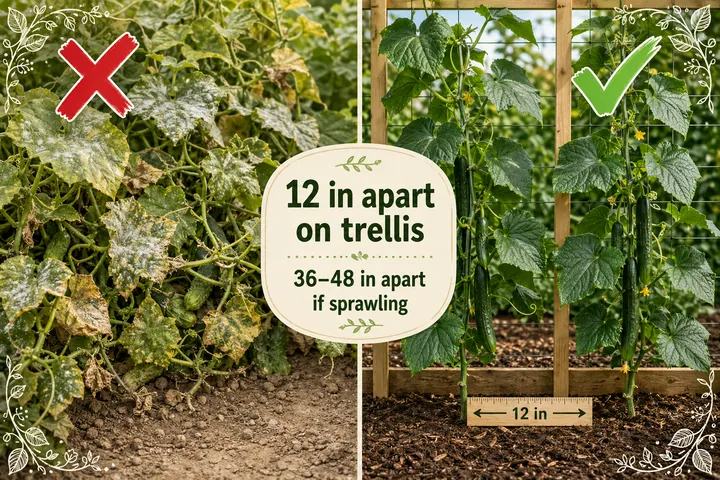
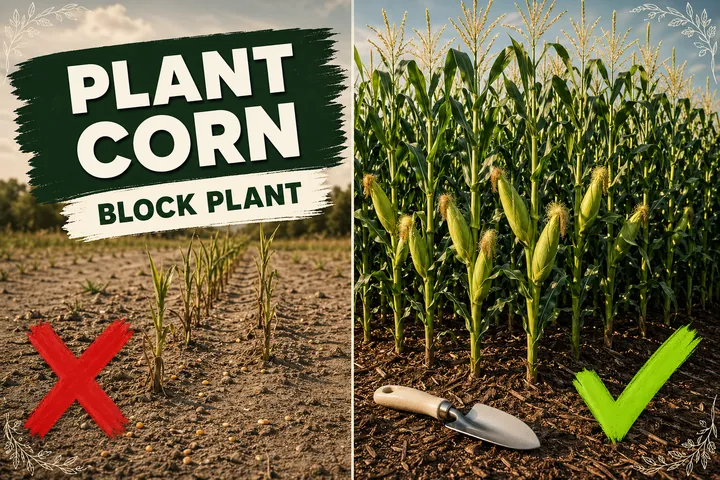
For row-crop spacing context, see how to plant corn and how far apart to plant cucumbers — both are warm-soil heavy feeders that pair well in a bed rotation with pole beans.
What you’ll need
- Fresh pole bean seeds (last year’s seed germinates fine; older seed drops to 50% germination)
- A trellis: 4–6 bamboo poles 2–2.5 m (7–8 ft) tall plus twine, OR two 2.5 m (8 ft) posts plus garden netting
- Sunny spot with 6–8 hours of direct sun
- Well-drained soil at pH 6.0–7.0, amended with compost
- A garden trowel or spade
- Soil thermometer (optional but useful)
- Rhizobium inoculant powder (only if soil has never grown legumes)
- 2.5–5 cm (1–2 in) of organic mulch
- Watering can with a fine rose
Step-by-step: planting pole beans
1. Wait for warm soil
Pole beans care more about soil temperature than the calendar. Test soil 5 cm (2 in) deep with a thermometer:
- Cold zones (USDA 3–5): mid-May through early June, 2 weeks after last frost
- Cool zones (USDA 6–7): early to late May
- Mild zones (USDA 8): late April through May
- Warm zones (USDA 9–10): March through May; second crop in August for fall harvest
Soil below 13°C (55°F) rots seeds. Soil at 16°C (60°F) gives slow but reliable germination in 14–18 days. Soil at 21–27°C (70–80°F) gives the fastest germination — 7–10 days.
A cheap soil thermometer takes the guesswork out, especially in a cool spring when air temperature feels warm but the ground is still cold underneath.
2. Set the trellis BEFORE planting
This is the rule that separates productive bean rows from tangles. Adding a trellis after the seeds sprout damages the shallow roots and breaks the fragile young vines.
Teepee trellis (best for round beds, 4–6 plants per pole):
- Cut or buy 4–6 bamboo poles 2–2.5 m (7–8 ft) tall
- Lash the top ends together with sturdy twine, leaving the bottom ends splayed in a circle 60–90 cm (24–36 in) wide
- Push the bottom 30 cm (12 in) of each pole into the soil for stability
- The teepee should resist a hard shake — beans get heavy at full pod load
Row trellis (best for long beds, plant every 10 cm / 4 in along a line):
- Drive two 2.5 m (8 ft) wooden or metal posts at the ends of the row, 30–60 cm (12–24 in) into the soil
- String 2–3 horizontal twine lines between the posts at 30 cm, 90 cm, and 1.5 m (12 in, 36 in, and 5 ft) heights
- Optional: hang vertical twine “drop lines” every 15 cm (6 in) for vines to climb individually
Single-pole (smallest gardens, 4 plants per pole):
A single 2.5 m (8 ft) bamboo pole pushed 45 cm (18 in) into the soil supports 4 vines. Tie the top to a fence or stake for extra stability.
3. Pick a sunny, well-drained spot
Beans need 6–8 hours of direct sun and well-drained soil at pH 6.0–7.0. Loosen the soil to 30 cm (12 in) deep and mix in 5 cm (2 in) of compost.
Avoid:
- Beds where beans, peas, or other legumes grew the previous year (rotates pest pressure)
- Spots that stayed wet after spring rains
- Beds amended with high-nitrogen fertilizer (beans fix their own nitrogen and over-fertilizing produces leaves not pods)
4. Inoculate the seeds (optional)
If your bed has never grown beans, peas, or other legumes, dust the seeds with rhizobium inoculant powder right before planting. Inoculant introduces the nitrogen-fixing bacteria that form root nodules — without them, bean roots can’t fix atmospheric nitrogen and yield drops 20–30%.
Skip this step if your soil has grown legumes in the last 3 years; the bacteria persist in the soil and re-colonize new bean roots automatically.
5. Plant the seeds 2.5 cm deep
Push each seed 2.5 cm (1 in) deep into the soil. The seed has a small dark scar called the eye on one side — orient the eye facing down so the radicle (first root) emerges in the right direction.
Space seeds 10–15 cm (4–6 in) apart around each pole, with 4–6 seeds per pole. Plant 2 extra seeds per pole as insurance — you can thin out the weakest seedlings later.
For a row trellis, plant one seed every 10 cm (4 in) along the row.
Soil-depth detail:
- Sandy soil: 4 cm (1.5 in) deep so the seed doesn’t dry out
- Clay or cold soil: 2 cm (0.75 in) deep so the seed warms up faster
- Average loam: 2.5 cm (1 in) deep
6. Water once gently — then leave it alone
Water once with a fine rose to settle the soil. Don’t soak the bed. Wet cold soil rots bean seeds before they sprout — the seed has enough internal moisture to start germination on its own.
Don’t water again until you see the first cotyledons clear the soil (7–14 days). At that point, water deeply once a week unless the bed dries out completely.
7. Mulch around the trellis base
Apply 2.5–5 cm (1–2 in) of organic mulch (shredded straw, leaf mould, or compost) around the trellis base. Mulch:
- Suppresses weeds in the crowded base where you can’t easily hoe
- Locks in summer moisture
- Keeps soil temperature stable
Keep mulch 5 cm (2 in) clear of where seeds were planted so the cotyledons can push through.
8. Thin to the strongest plants
Once true leaves appear (usually 2 weeks after germination), pinch off the weakest seedlings at soil level. Never pull them — pulling disturbs the roots of the surviving plants.
Keep:
- 4 strongest vines per teepee pole
- 1 vine every 15 cm (6 in) along a row trellis
Crowding past these numbers means vines tangle, lower leaves stay damp, and powdery mildew sets in by midsummer.
9. Train the vines as they climb
Pole beans are right-handed twiners — they climb counter-clockwise when viewed from above. Once vines reach 30 cm (12 in) tall, gently wrap them around the pole or twine in that direction.
If you wrap them clockwise, they’ll unwind themselves over a few days and start climbing in the opposite direction — wasting a week of growth.
Care after planting
| Task | When |
|---|---|
| Water | 2.5–4 cm (1–1.5 in) per week of deep watering; more in heatwaves above 30°C (86°F) |
| Fertilize | Avoid high-nitrogen feeds; apply a low-nitrogen, high-potassium feed once buds set |
| Pick pods | Every 2–3 days once pods reach 15–18 cm (6–7 in) long; missed pods stop new flowering |
| Mulch top-up | Add another 2.5 cm (1 in) of mulch in midsummer to retain moisture |
| Pest watch | Mexican bean beetle, aphids, slugs — check undersides of leaves weekly |
A free plant care app like Tazart tracks sowing dates, picking intervals, and your local weather so you don’t miss a 3-day picking window during a heatwave when pods grow fastest.
Succession planting
Pole beans don’t need succession planting the way bush beans do — a single sowing crops continuously for 8–10 weeks if you pick frequently. Missed pods on the vine signal the plant to stop flowering, which is the most common reason yield falls off mid-season.
If you want a longer harvest window, plant a second pole bean teepee 4 weeks after the first sowing.
Pole beans in containers
Pole beans grow well in containers with these constraints:
- Pot at least 35 cm (14 in) wide and 35 cm (14 in) deep with drainage holes
- 2–3 plants per 35 cm (14 in) pot, 4–5 per 50 cm (20 in) pot
- Trellis or teepee anchored IN the pot, not in the surrounding soil
- Rich peat-free potting mix mixed 80/20 with compost
- Place in 6+ hours of full sun
- Water every 1–2 days — pots dry fast
- Feed every 3 weeks with a balanced low-nitrogen vegetable fertilizer
Common mistakes to avoid
- Planting in cold soil. Below 13°C (55°F), seeds rot before they sprout. Wait for warmth even if it pushes you 2 weeks behind your neighbour.
- No trellis at planting time. Adding the trellis after vines emerge damages roots and breaks young stems.
- Planting too deep. More than 5 cm (2 in) and the cotyledons run out of stored energy. 2.5 cm (1 in) is the rule for average soil.
- Pulling thinnings instead of pinching. Pulling disturbs the roots of nearby seedlings.
- Skipping picking days. Pods that stay on the vine signal “go to seed” — flowering stops within a week.
- High-nitrogen fertilizer. Beans fix their own nitrogen and over-feeding produces all-leaf vines with few pods.
Troubleshooting
| Symptom | Likely cause | Fix |
|---|---|---|
| Seeds never sprouted | Cold soil, waterlogged bed, or planted too deep | Wait for soil ≥ 16°C (60°F); replant at 2.5 cm (1 in); don’t water at planting |
| Lots of leaves, few pods | Too much nitrogen | Stop fertilizing; switch to a low-N, high-K feed at bud set |
| Pods short and curled | Hot dry weather or under-watering | Water deeply 2× per week; mulch 5 cm (2 in) thick to retain moisture |
| Vines climbing the wrong way | Trained clockwise instead of counter-clockwise | Gently rewind in counter-clockwise direction or let the plant self-correct over 1 week |
| Holes in leaves with eaten edges | Mexican bean beetle or slugs | Hand-pick beetles into soapy water; use beer traps or copper tape for slugs |
| Powdery white film on leaves | Crowded planting + damp foliage | Thin to recommended spacing; avoid overhead watering after midday |
| Yellowing lower leaves | Soggy soil or nitrogen lockout | Improve drainage; add a single dose of compost tea; mulch heavier |
| Pods turning leathery | Picked too late — gone past prime | Pick every 2–3 days at 15–18 cm (6–7 in) long; over-mature pods stop new flowering |
Watch: building a pole bean teepee
A short visual walkthrough pairs well with the steps above. If you’re a visual learner, watch a quick step-by-step video that shows teepee construction, seed placement, and how vines climb counter-clockwise, then come back to the timing in this guide.
Related reading
- How to plant corn — depth and spacing for big harvests — corn is the original bean trellis in Three Sisters planting (corn, beans, squash) and shares the same warm-soil planting window.
- How far apart to plant cucumbers — another warm-soil climber that benefits from a trellis and similar soil prep.
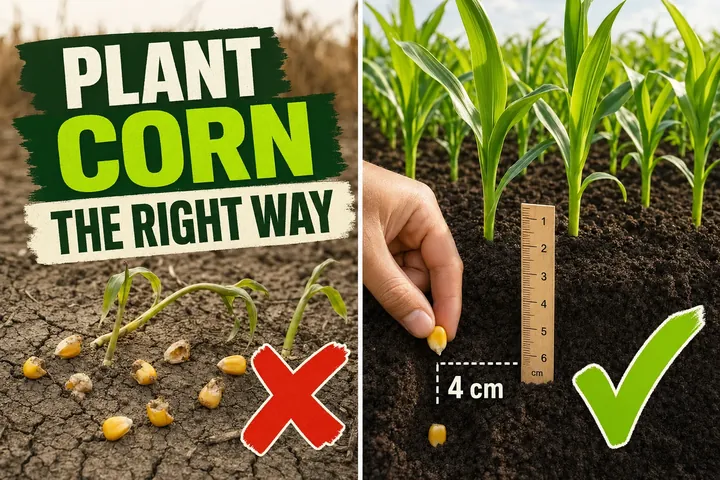
- How deep to plant corn for strong roots — depth principles overlap with bean planting and help you set up a Three Sisters bed.
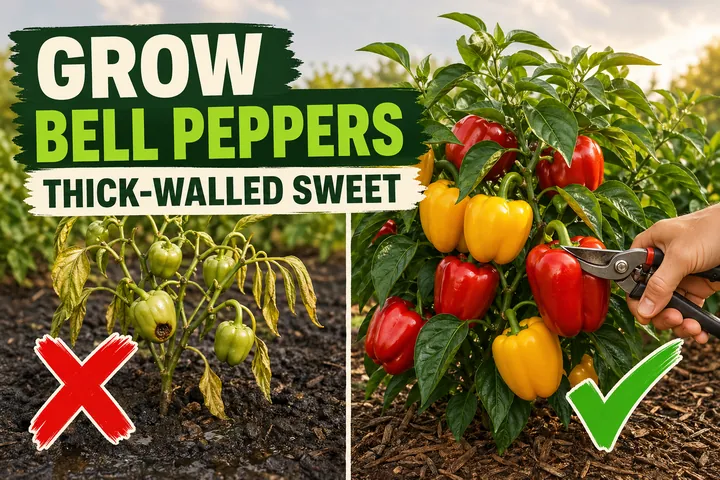
- How to grow bell peppers from seed — pairs well in a bean–pepper rotation since both are heavy summer feeders.
A note on conditions
Every garden is different. USDA zone, soil temperature, summer rainfall, and how exposed the bed is to wind all change how pole beans perform. Use the depth, spacing, and timing in this guide as a starting point and adjust based on how your seeds come up in their first season — that’s how every good vegetable gardener learns the bed.
Highly recommended
The supplies that make this guide work


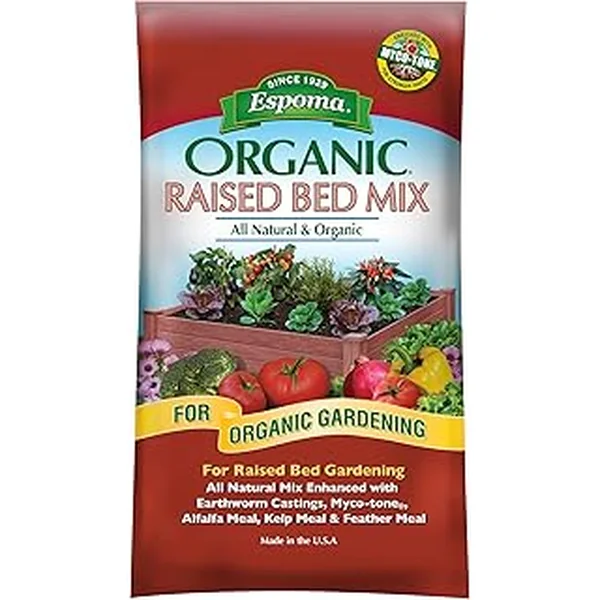
Tazart is an Amazon Associate — we earn from qualifying purchases at no extra cost to you. Thank you for helping us keep these guides free.
Frequently asked questions
How deep do you plant pole beans?
Plant pole bean seeds 2.5 cm (1 in) deep in average garden soil. In light sandy soil, go 4 cm (1.5 in) deep so the seed doesn't dry out. In heavy clay or cold zones, stay 2 cm (0.75 in) shallow so the seed warms up faster and the cotyledons can push through. Plant the seed with the eye (the small dark scar on the seed) facing down and the rounded end up — the radicle emerges from the eye.
How far apart do you plant pole beans?
Plant pole bean seeds 10–15 cm (4–6 in) apart at the base of a single trellis pole, with 4–6 seeds per pole in a teepee arrangement. For a row trellis, plant seeds 10 cm (4 in) apart in a row 75–90 cm (30–36 in) from the next row. Thin to the strongest 4 seedlings per pole once true leaves appear. Tighter than 10 cm (4 in) and the vines twist around each other in a tangle that's impossible to harvest.
When can you plant pole beans?
Plant pole bean seeds outdoors only after the last frost has passed and the soil temperature is reliably 16°C (60°F) or warmer at 5 cm (2 in) deep. Beans are tropical and rot in cold wet soil below 13°C (55°F). In USDA zones 3–6 that's mid-May through early June; in zones 7–8 it's late April through May; in zones 9–10 it's any time from March. Beans don't transplant well — direct-sow rather than starting indoors.
Do pole beans need a trellis?
Yes — pole beans are climbers that grow 2–3 m (7–10 ft) tall and produce 70–80% less if left to sprawl on the ground. Set the trellis BEFORE planting seeds. A teepee of 4–6 bamboo poles 2–2.5 m (7–8 ft) tall lashed at the top is the simplest option; a single-row trellis with twine strung between two posts works for longer rows. Without support, pole beans tangle on the soil, attract slugs, and most pods rot before harvest.
How long do pole beans take to germinate?
In warm soil at 21–27°C (70–80°F), pole bean seeds germinate in 7–10 days. Cooler soil at 16–18°C (60–65°F) stretches that to 14–18 days, which is why so many gardeners think their beans failed and replant unnecessarily. Soil below 13°C (55°F) usually rots the seed before it sprouts. Once the first true leaves appear, vines start climbing within a week and reach 2 m (7 ft) tall in 6–8 weeks.
Can you plant pole beans in pots?
Yes — pole beans grow well in containers if the pot is at least 35 cm (14 in) wide and 35 cm (14 in) deep with a trellis or teepee anchored in the pot. Use 2–3 plants per 35 cm (14 in) pot or 4–5 plants per 50 cm (20 in) pot. Container beans dry out fast — water every 1–2 days through summer and feed every 3 weeks with a low-nitrogen vegetable fertilizer.