Edible
How Far Apart to Plant Cucumbers (Spacing Guide)
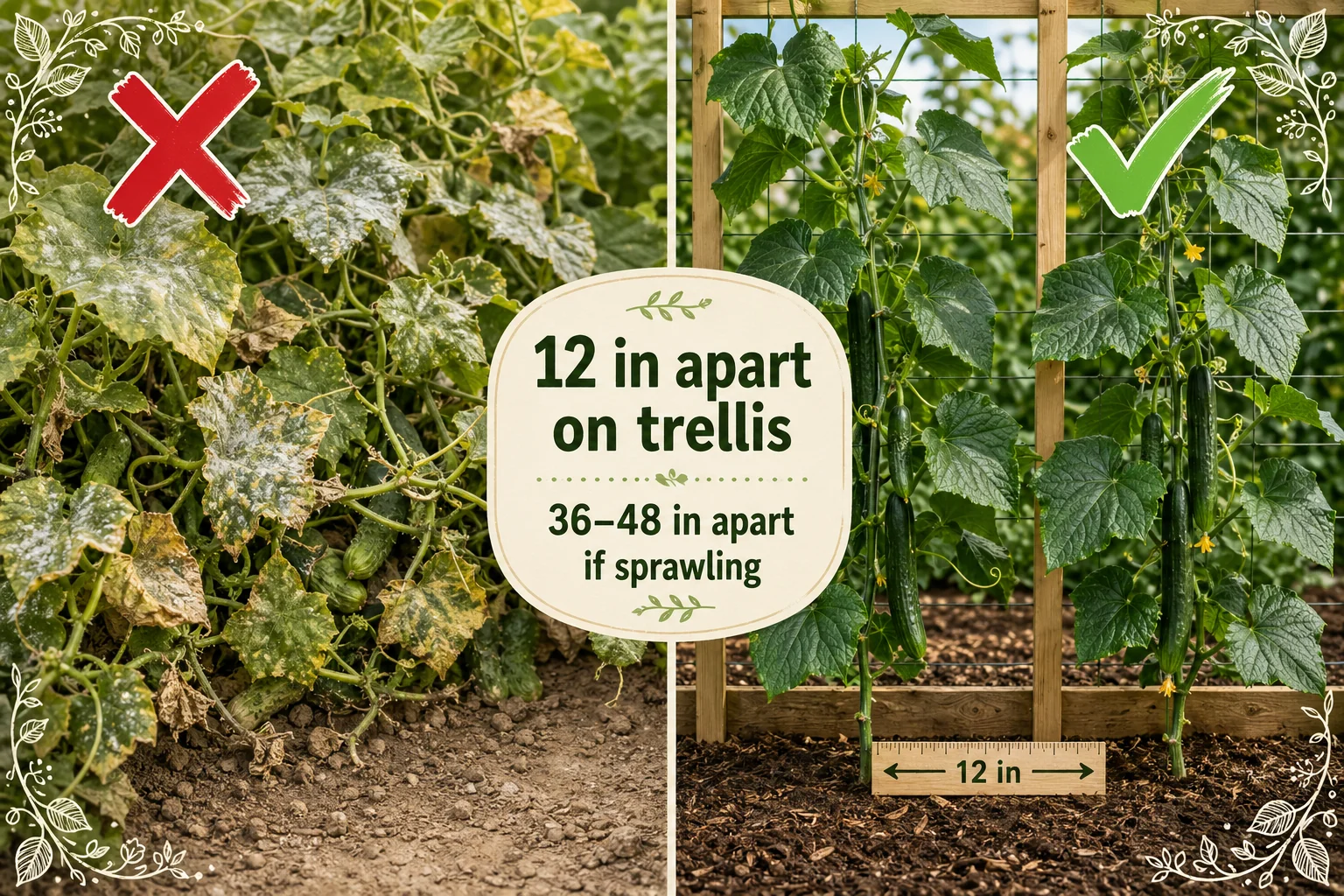
How far apart to plant cucumbers: 12 inches on a trellis, 36-48 inches for sprawling vines, rows 4-6 feet apart. Bush varieties need 3 ft. Container: 1 plant per
On this page
- Quick answer
- Vining vs. bush cucumbers — why it matters for spacing
- Trellis spacing — 12 inches apart
- Sprawl spacing — 36-48 inches apart
- Row spacing — 4 to 6 feet
- Bush variety spacing — 3 feet
- Container spacing — 1 plant per 5-gallon pot
- Companion planting for cucumbers
- Why spacing affects cucumber yield so directly
- Common mistakes to avoid
- Watch: cucumber spacing and trellis setup
- Related reading
- A note on conditions
Watch the visual walkthrough
Your Cucumber Plants Will DIE Every Time You Make This Mistake!
In this video, I discuss the top mistake gardeners make when growing cucumbers that causes cucumber plants to decline and die.
If your cucumber vines tangled into a green wall last season and still barely produced, spacing is almost certainly why. Vining cucumbers go 12 inches apart on a trellis, or 36-48 inches apart if they sprawl. Rows sit 4-6 feet apart. Bush varieties need 3 feet. Containers need one plant per 5-gallon pot minimum.
This guide covers every situation — trellis, sprawl, raised bed, container — with exact numbers, a variety chart, and the reasoning behind each measurement.
Quick answer
| Method | Plant spacing | Row spacing |
|---|---|---|
| Vining — on trellis | 30 cm (12 in) | 120 cm (4 ft) |
| Vining — sprawling | 90-120 cm (36-48 in) | 150-180 cm (5-6 ft) |
| Bush variety | 90 cm (36 in) | 120-150 cm (4-5 ft) |
| Container (5-gal+) | 1 plant per pot | — |
| Raised bed (trellised) | 30 cm (12 in) along back edge | — |
The single rule that covers most home gardens: trellis your vining cucumbers 12 inches apart, give bush varieties 3 feet, and grow one plant per 5-gallon pot in containers.
Vining vs. bush cucumbers — why it matters for spacing
Cucumbers (Cucumis sativus) come in two growth habits and the distinction drives every spacing decision you make.
Vining cucumbers — Marketmore, Straight Eight, Diva, English Long, Persian — send out long main vines that easily reach 180-240 cm (6-8 ft). Left unsupported they sprawl across the ground in every direction. Give them a trellis and they grow vertically, which dramatically reduces the ground footprint and improves airflow. Vining types are the most productive per plant and the best fit for raised beds with a back trellis.
Bush cucumbers — Spacemaster, Bush Pickle, Salad Bush, Picklebush — stay compact at 60-90 cm (2-3 ft) wide. They don’t need support but they also don’t climb. They produce over a shorter window than vining types and are the right choice for containers and small beds.
Knowing your variety type before you plant means you pick the right spacing from the start — bush and vining plants at the same spacing either starve each other (vining planted too tight) or waste bed space (bush planted too wide).
Trellis spacing — 12 inches apart
Trellising is the biggest yield upgrade you can make for cucumbers. Here’s what it changes:
If you’re planning a summer bed that pairs cucumbers with zucchini, the zucchini spacing guide covers the wide row and raised-bed layouts that work well for both crops side by side.
- Plant footprint shrinks. A vining cucumber on a trellis occupies 30 cm (12 in) of horizontal bed space instead of 90-120 cm (36-48 in) when sprawling.
- Airflow improves. Vertical vines dry faster after rain — the main defence against powdery mildew.
- Fruit hangs straight. Cucumbers that hang freely develop a uniform shape; cucumbers resting on soil curl and yellow on the underside.
- Harvesting is faster. You can spot every cucumber without lifting vines.
Space trellised vining cucumbers 30 cm (12 in) apart at the base of the trellis. In a 4x8 foot (120x240 cm) raised bed, you can fit 8 vining cucumbers along one end, trellised against the long back wall, and still have the front half of the bed for shorter crops.
Trellis height: minimum 150 cm (5 ft), ideally 180 cm (6 ft). Shorter trellises get overrun by midsummer.
Sprawl spacing — 36-48 inches apart
Without a trellis, each vining cucumber plant needs its full vine radius of ground space. Space sprawling vines 90-120 cm (36-48 in) apart in the row, with rows 150-180 cm (5-6 ft) apart.
Why so wide? A single vining cucumber vine reaches 180-240 cm (6-8 ft) long and branches laterally. Two plants at 60 cm (24 in) apart become one impenetrable tangle by week six, creating the dense, humid microclimate where powdery mildew thrives and fruit becomes almost impossible to find.
The sprawl method works fine in larger in-ground gardens where trellis installation isn’t practical. It’s a poor fit for raised beds — trellising is almost always better there.
Row spacing — 4 to 6 feet
Row spacing is about walking room as much as plant room.
- Trellised rows: 120 cm (4 ft) between rows. The trellis creates a vertical wall, so most of the canopy is above the ground. Four feet gives you enough room to walk the row and reach into the centre to harvest.
- Sprawling rows: 150-180 cm (5-6 ft) between rows. Vines extend outward from each plant, so the gap between rows must accommodate vine tips from both sides meeting in the middle.
In single-row home garden plantings, row spacing matters most for access. In multi-row commercial style beds, it also determines how much sun reaches lower leaves — closer rows cast shade that slows fruit set.
Bush variety spacing — 3 feet
Bush cucumbers stay compact but still need reasonable airflow. Space bush varieties 90 cm (36 in) apart with rows 120-150 cm (4-5 ft) apart.
Popular bush varieties and their typical spread:
| Variety | Mature spread | Notes |
|---|---|---|
| Spacemaster | 60-75 cm (24-30 in) | Best for containers |
| Bush Pickle | 60 cm (24 in) | High yield for pickling |
| Salad Bush | 60-75 cm (24-30 in) | Good disease resistance |
| Picklebush | 60 cm (24 in) | Compact, prolific |
Even at 90 cm (36 in) between plants, bush varieties will touch by late summer — this is fine as long as the spacing was right at planting and airflow was good through the early weeks.
Container spacing — 1 plant per 5-gallon pot
Cucumbers have deeper root systems than most people expect. A 5-gallon (19-litre) container is the absolute minimum — 10-15 gallons (38-57 litres) gives significantly better results because it holds more water and stays cooler on hot days.
One plant per container. Two plants in one pot compete for water and nutrients, produce less than a single well-fed plant, and die earlier. The math doesn’t work in favour of cramming two in.
Container cucumber requirements:
- Pot size: 19+ litres (5+ gallons) with drainage holes
- Variety: bush type (Spacemaster, Salad Bush) or compact vining with a stake or small cage
- Watering: daily in summer — containers dry out fast
- Feeding: liquid balanced fertilizer every 10-14 days once vines start running
- Support: a 90-120 cm (3-4 ft) stake or cage per pot for vining types
A free plant care app like Tazart can track container watering schedules and send reminders adjusted for temperature — useful when containers need daily attention during a heatwave.
Companion planting for cucumbers
Cucumber spacing decisions should account for what you plan to grow nearby. Cucumbers have a few companions that actively help them and a few that don’t mix.
Good companions:
- Radishes — deter cucumber beetles when planted at the base of the trellis
- Nasturtiums — act as a trap crop, luring aphids away from cucumber vines
- Dill and basil — may repel cucumber beetles and spider mites; keep them adjacent, not interplanted
- Beans — fix nitrogen in the soil that feeds heavy-feeding cucumber vines
Avoid planting near:
- Potatoes — compete for the same pests and diseases, and blight can spread between them
- Sage — some evidence suggests aromatic herbs inhibit cucurbit growth
- Other cucurbits (zucchini, pumpkin) in the same bed — shared pests and diseases concentrate, and vines tangle
Why spacing affects cucumber yield so directly
Cucumber spacing is not a nicety — it directly determines whether the plant can do its job.
Airflow prevents powdery mildew. Powdery mildew (Podosphaera xanthii) is the single most common reason cucumber seasons end in August instead of October. It thrives in stagnant, humid air around dense foliage. Correct spacing — especially on a trellis — keeps air moving around leaves and extends the productive season by weeks.
Root space determines fruit size. Each cucumber vine has a finite root zone. Plants spaced too closely share root space, and both suffer. Fruit on crowded plants is smaller, more bitter, and produced in fewer numbers than fruit on well-spaced plants.
Even moisture prevents bitter cucumbers. Stress — including the competition stress from overcrowding — triggers cucurbitacins, the compounds that make cucumbers bitter. Proper spacing combined with consistent watering (drip irrigation or deep base watering 2-3 times per week) keeps cucurbitacin levels low and cucumbers mild.
Harvesting visibility. A cucumber hidden under a dense tangle of vines becomes over-mature. An oversized cucumber on the vine signals the plant to stop producing new fruit. Correct spacing — especially vertical trellising — keeps every cucumber visible and harvestable at the right size.
Common mistakes to avoid
- Planting vining types too close without a trellis. The single most common cucumber mistake. Without a trellis, allow the full 36-48 inches.
- Skipping the trellis in a raised bed. Trellising turns 4 square feet of raised bed into a highly productive vertical garden. Sprawling vines in a raised bed waste the investment.
- Two plants per container. Always one per 5-gallon pot. Two plants produce less than one well-fed plant.
- Overhead watering on dense plantings. Wet foliage plus poor airflow from crowding = powdery mildew in 10 days. Water at the base.
- Leaving oversized cucumbers on the vine. One yellow cucumber stops the whole plant. Check vines every 1-2 days at peak season.
Watch: cucumber spacing and trellis setup
A short visual walkthrough pairs well with the steps above. If you’re a visual learner, search for how far apart to plant cucumbers trellis on YouTube, then come back to follow the timing in this guide.
Related reading
- How to grow zucchini — the same cucurbit family, same heat and compost needs, with its own spacing rules for bush plants.
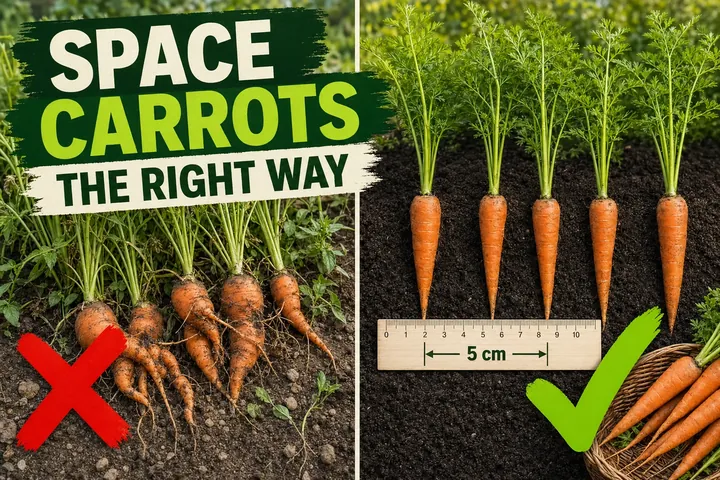
- How far apart to plant carrots — another crop where tight spacing directly causes the most common complaints.
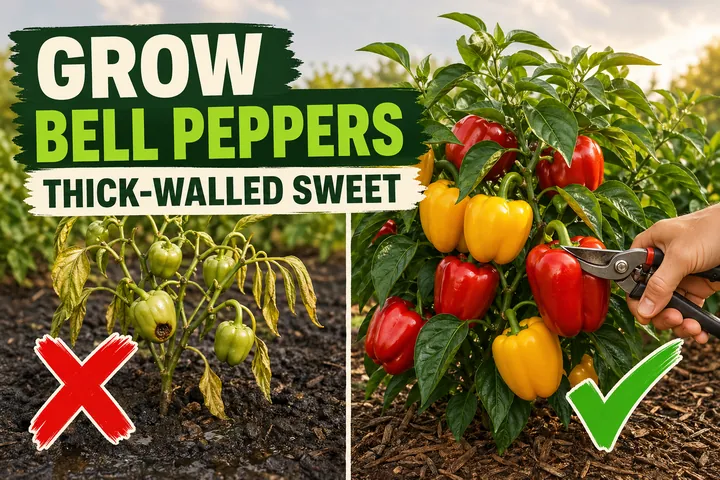
- How to grow bell peppers — the warm-season companion that fits well between cucumber rows.
- How far apart to plant tomatoes — full chart for indeterminate vining vs determinate bush types.
- How far apart to plant broccoli — head-size goals dictate spacing more than variety.
- Scan the next plant you bring home with the free Tazart plant identifier and let it set up the watering schedule for you.
A note on conditions
Every garden is different. Heat, humidity, soil drainage, and your local pest pressure all affect how cucumbers perform at any given spacing. Use the numbers above as a firm starting point — the 12-inch trellis rule and the 36-48-inch sprawl rule are not negotiable — and adjust watering frequency and feeding based on what your vines actually do in week four.
Highly recommended
The supplies that make this guide work
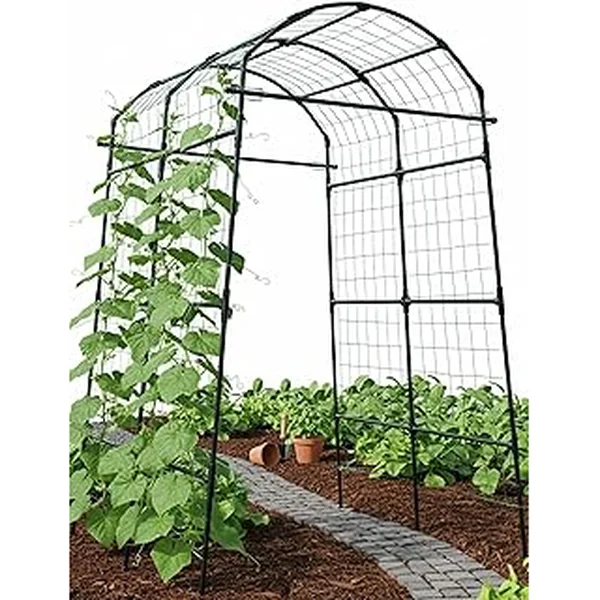
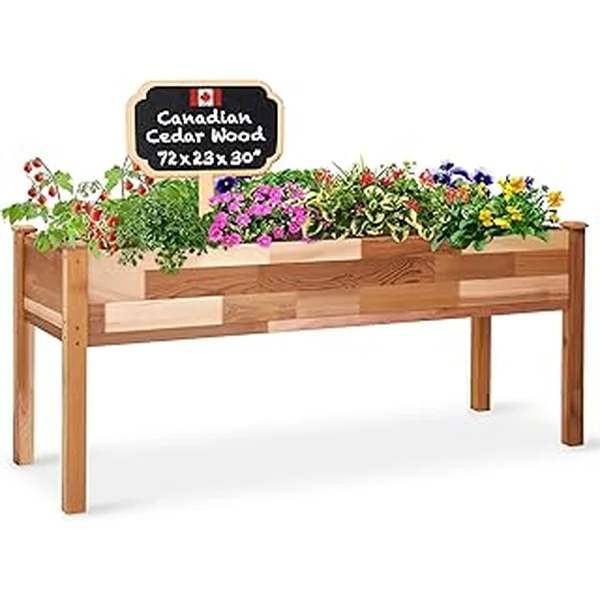
Tazart is an Amazon Associate — we earn from qualifying purchases at no extra cost to you. Thank you for helping us keep these guides free.
Frequently asked questions
How far apart should I plant cucumbers?
It depends on your growing method. On a trellis, space vining cucumbers 12 inches (30 cm) apart in the row. For sprawling vines with no support, allow 36-48 inches (90-120 cm) between plants. Bush varieties need at least 36 inches (90 cm). Rows should be 4-6 feet (120-180 cm) apart regardless of method.
How far apart should cucumber rows be?
Space rows 4 feet (120 cm) apart for trellised vines and 5-6 feet (150-180 cm) apart for sprawling vines. The extra width between sprawl rows is essential — cucumber vines reach 6 feet long and need the ground space to produce without tangling with the next row.
How many cucumbers can I grow in a 5-gallon bucket?
One plant per 5-gallon (19-litre) container is the rule. A single vining variety needs support — a stake or small cage in the pot — and daily watering in summer. Bush varieties like Spacemaster or Bush Pickle are better choices for containers because their compact vines stay manageable.
Can cucumbers be planted too close together?
Yes. Crowded cucumbers compete for water, nutrients, and light. Poor airflow between dense plants accelerates powdery mildew — the main disease that ends cucumber seasons early. Plants spaced too tightly also produce fewer, smaller fruit because the vines spend energy competing rather than setting cucumbers.
Do cucumbers need a trellis?
Vining cucumbers do not strictly require a trellis, but trellising dramatically improves air circulation, makes fruit easier to spot and harvest, keeps cucumbers straight, and lets you plant at the tighter 12-inch spacing — fitting more plants into less ground. Bush varieties are naturally compact and can sprawl without support.
What is the best spacing for cucumbers in a raised bed?
In a raised bed, trellis vining cucumbers along the back edge at 12 inches (30 cm) apart to maximize space. For bush varieties without a trellis in a raised bed, give each plant a 36-inch (90 cm) square. A 4x8-foot raised bed can comfortably hold 6-8 trellised vining cucumbers in two staggered rows.
What companion plants grow well with cucumbers?
Radishes deter cucumber beetles. Nasturtiums lure aphids away. Dill and basil may repel cucumber beetles and spider mites. Beans fix nitrogen that feeds heavy-feeding cucumber vines. Avoid planting cucumbers near potatoes or aromatic herbs like sage — both can inhibit cucumber growth.
Why are my cucumbers bitter?
Bitterness in cucumbers is caused by cucurbitacins — stress compounds triggered by heat, drought, irregular watering, and overcrowding. The fix is consistent moisture (drip irrigation or deep watering 2-3 times per week), a thick mulch layer, and spacing plants far enough apart so roots do not compete.