Edible
How to Plant a Pineapple Top (Crown Rooting Guide)
Plant a pineapple top the right way — twist off the crown, strip lower leaves, dry 2–3 days, root in water or soil, and wait 18–24 months for fruit indoors.
On this page
- Quick answer + realistic expectations
- Choose the right pineapple
- Twist vs cut — why it matters
- Strip and dry
- Water rooting vs soil rooting
- Plant in soil
- Light and warmth requirements
- Watering routine
- How long until fruit
- Forcing flower with the apple + plastic bag trick
- Common mistakes to avoid
- Troubleshooting
- Related reading
- A note on conditions
Watch the visual walkthrough
Regrow Pineapples from Store Bought Pineapples!
In this video, I show you how to regrow pineapples from store-bought or supermarket pineapples! Birdies Raised Garden Beds ...
Yes — you can grow a pineapple from a grocery-store crown. The twist-off technique actually works, the rooting process is low-effort, and the plant itself makes a striking tropical houseplant while you wait.
Be realistic about timing first, though. Growing a pineapple indoors takes patience. Expect 18–24 months before you see a flower, and often 3 or more years before fruit ripens. The fruit you get indoors will probably be smaller than store-bought. You’re doing this for the experience, the learning, and the very genuine satisfaction of eating something you grew from a scrap.
This guide covers every step: how to remove the crown correctly, why drying matters, water vs soil rooting, what the plant needs to thrive indoors, and how to force it into flowering with a ripe apple and a plastic bag.
Quick answer + realistic expectations
Twist the crown off a ripe pineapple — don’t cut it. Strip the bottom 2.5 cm (1 in) of leaves to expose the stump. Dry upside-down for 2–3 days. Root in 2–3 cm (1 in) of water (roots in 3–5 weeks) or push the stump directly into moist tropical potting mix. Once rooted, pot into a 25–30 cm (10–12 in) well-draining pot in the brightest spot you have. Keep above 18°C (65°F), water when the top 2.5 cm (1 in) of soil is dry, and feed monthly. Expect a flower bud in 18–24 months indoors — sometimes 3+ years. Zones 9 and below: keep it indoors year-round.
Pineapples are bromeliads (Ananas comosus). They are epiphytic in nature, meaning they evolved to grow in thin, fast-draining soils with bright sun and warm temperatures. Replicate those conditions indoors and the plant will thrive.
Choose the right pineapple
The crown is everything — start with a bad one and no amount of technique saves it.
What to look for at the store:
- Fresh green crown — no yellow, brown, or dried-out leaves. The crown should look alive, not desiccated.
- Ripe golden fruit — a ripe pineapple has more energy stored in the crown. Under-ripe crowns root slowly.
- No mould at the crown base — press gently at the junction between crown and fruit. It should feel firm.
- Look down into the centre of the crown — the core should be pale tan or cream, never dark brown or hollow.
Avoid pineapples that have been sitting in a cold supermarket display for weeks. Like avocado pits, a cold-stored crown can be functionally dead before you even begin.
Twist vs cut — why it matters
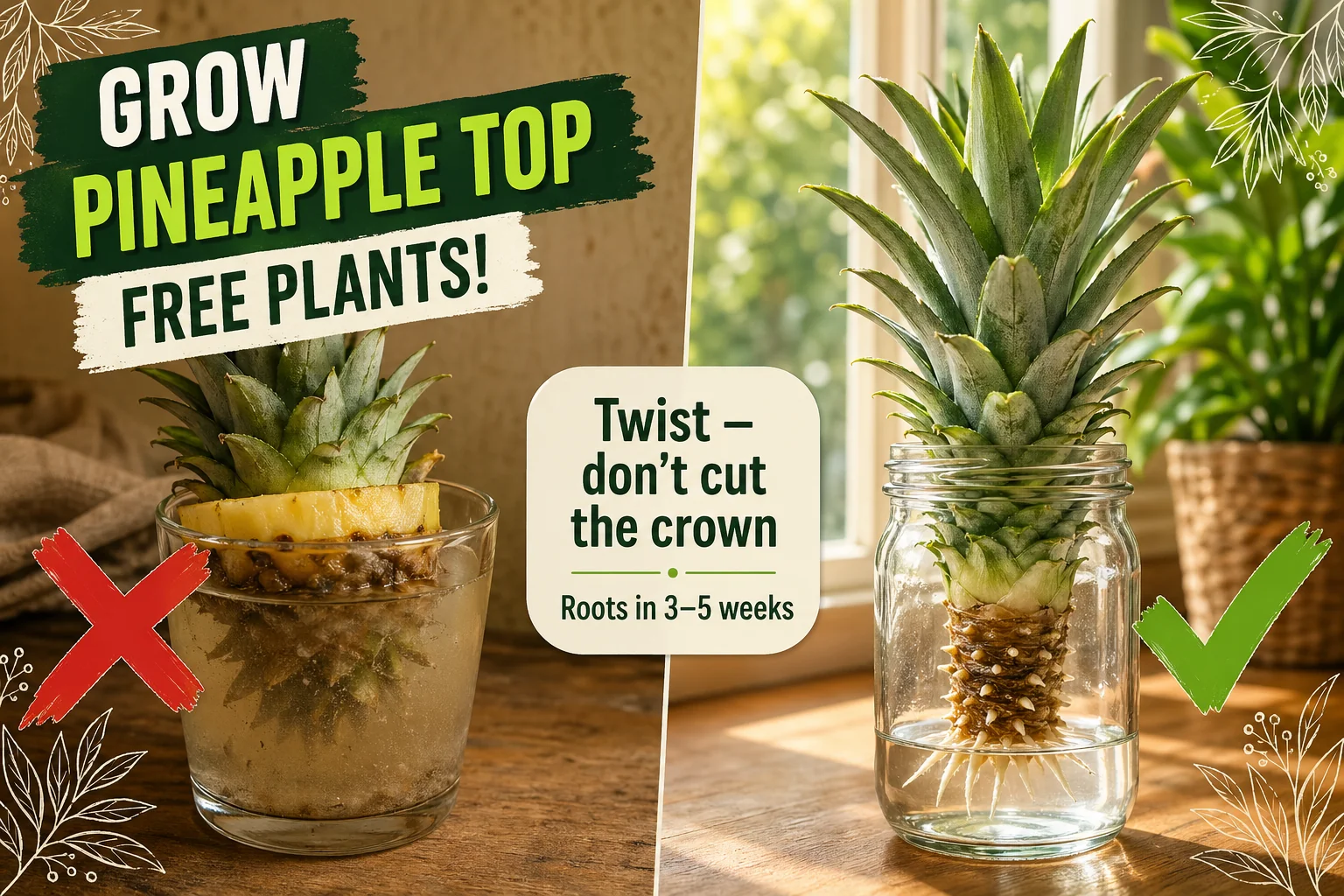
Most guides say “cut off the crown.” This is wrong. Cutting leaves a thick disc of soft fruit flesh attached to the stump. That flesh rots in water or soil before roots can form, often killing the crown in the first two weeks.
Twist instead. Hold the body of the pineapple firmly with one hand. Grip the crown at its base — not the leaves, but the thick woody connection point — with the other hand. Apply firm, steady rotational pressure while pulling upward. The crown detaches cleanly, bringing the central core with it.
If it won’t twist off, try rolling the pineapple on a hard surface first to loosen the fibres, then twist again. It takes a little force the first time.
The result: a clean stump with no residual fruit flesh, ready for drying and rooting.
Strip and dry
After twisting off the crown, remove the lowest 2.5–4 cm (1–1.5 in) of leaves by pulling them downward one at a time. Underneath you’ll find a rough brown stump — look closely and you’ll see tiny brown bumps already present. Those are root primordia: pre-formed root nodes waiting for moisture to trigger growth.
Then dry the crown. Stand it upside-down (stump pointing up) in a dry spot out of direct sun for 2–3 days. The stump needs to callous — a thin skin forms over the cut surface that prevents rot.
Skipping the drying step is the second most common reason crowns fail after cutting instead of twisting. A fresh-cut, undried stump placed in water almost always goes slimy within a week.
Water rooting vs soil rooting
Both methods produce rooted plants. Choose based on your temperament.
| Method | Time to roots | Pros | Cons |
|---|---|---|---|
| Water | 3–5 weeks | Watch roots form — satisfying feedback | Transplant shock when moving to soil; must not let leaves sit in water |
| Direct soil | 6–8 weeks | Stronger root system, no transplant shock | No visible progress until the plant resists a gentle tug |
Water method: Fill a glass with 2–3 cm (1 in) of room-temperature water — just enough to touch the stump, not so much that any leaves are submerged. Leaves sitting in water rot and pull the crown down with them. Change the water every 3–4 days. Place in bright indirect light above 21°C (70°F). Roots appear in 3–5 weeks.
Soil method: Fill a 15–20 cm (6–8 in) pot with lightly pre-moistened tropical potting mix. Push the stripped stump 4–5 cm (1.5–2 in) in and firm the soil gently so the crown stands upright. Water lightly to settle the mix around the stump, then let the soil dry slightly between waterings. Roots anchor the plant in 6–8 weeks — test by giving a gentle upward pull; resistance means roots.
Plant in soil
Once your water-rooted crown has roots 2–3 cm (1 in) long — or your soil-rooted crown passes the tug test — it’s time for the permanent home.
If you enjoy growing tropical fruit from seed indoors, the mango seed planting guide is a natural next project — it uses the same warm, bright conditions and peat-free fast-draining mix as a pineapple.
Pot size: A 25–30 cm (10–12 in) wide pot. Pineapples have a shallow but wide root system; too small a pot limits growth and dries out too fast.
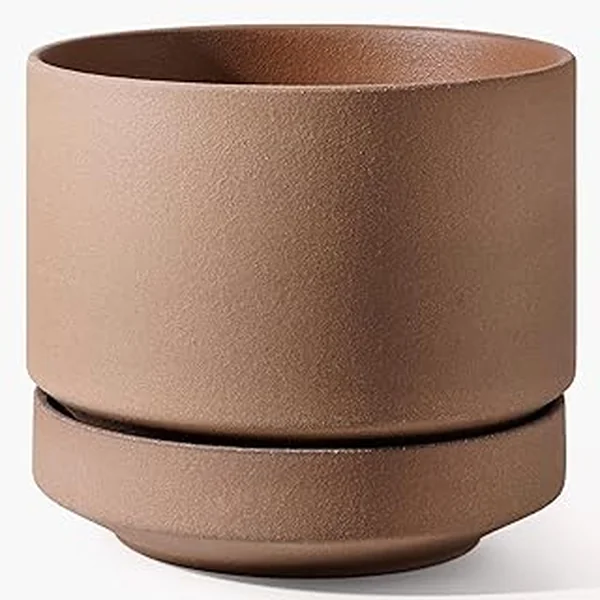
Pot material: Terracotta is ideal. It breathes, wicks excess moisture away from the roots, and its weight stops the plant tipping over when the crown gets large and heavy.
Potting mix: Fast drainage is non-negotiable. A ready-made tropical or bromeliad mix works, or make your own: two parts all-purpose potting soil, one part perlite, one part orchid bark. This combination holds enough moisture to feed roots without becoming waterlogged.
Planting depth: Bury the stump and the first 2–3 cm of stem so the plant stands firmly. Do not bury the lower leaves.
Light and warmth requirements
This is where most indoor pineapples fail. Pineapples need 6+ hours of bright direct or near-direct sunlight every day. A north-facing windowsill in winter does not cut it.
- Best indoor position: South-facing window with direct sun, supplemented by a full-spectrum grow light for 4–6 additional hours when natural light is weak.
- Minimum temperature: 18°C (65°F) at all times. Below this the plant stalls. Below 10°C (50°F) cold damage begins.
- Ideal temperature: 21–27°C (70–80°F) — tropical warmth accelerates every growth stage.
- Zones 9 and below: Keep the plant indoors year-round or bring it in before the first cold snap. In zones 10–11, it can spend summer outdoors in a sunny, sheltered spot.
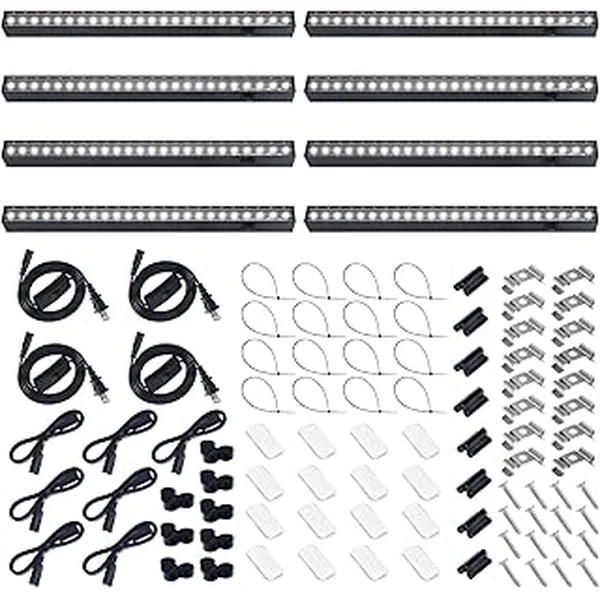
If you have a grow light, position it 20–30 cm (8–12 in) above the crown and run it for 14–16 hours per day to simulate tropical daylength.
Watering routine
Pineapples evolved in thin, fast-draining soils — they are adapted to drought between rains, not constant moisture.
- When: Water when the top 2.5 cm (1 in) of soil is dry. In summer, this is roughly every 7–10 days. In winter, every 12–14 days or longer.
- How: Water thoroughly until water runs freely from the drainage hole, then let it drain completely. Never let the pot sit in a saucer of standing water.
- Cup watering: Pineapples, as bromeliads, have a central rosette that can hold a small amount of water naturally. In high heat, you can pour a tiny amount of water directly into the cup at the centre of the leaves — flush it out monthly to prevent stagnation and mosquito breeding.
- Fertilizer: Monthly during the growing season (spring through summer) with a balanced liquid fertilizer at half strength. A fertilizer with a slightly higher potassium content (the third number on the NPK label) is helpful once the plant is established, as potassium supports fruiting.
How long until fruit
Honest answer: a long time.
Under genuinely good indoor conditions — maximum light, warm temperatures, consistent care:
- 18–24 months is achievable with a strong, healthy plant.
- 3+ years is more common for plants grown on a typical windowsill without supplemental lighting.
- Fruit size: Indoor pineapples often produce fruits smaller than grocery-store sizes — anywhere from a large orange to a small shop-bought pineapple. Still completely edible and sweeter than you expect.
The plant flowers once (the main crown), then produces side pups called ratoons. Each pup can produce its own fruit, usually within 12–15 months of the first harvest because the root system is already established. Leave one strong pup per cycle.
Forcing flower with the apple + plastic bag trick
If your pineapple is at least 12 months old, has 30+ leaves, and looks healthy but isn’t flowering, you can nudge it into blooming using ethylene gas — the same compound that causes fruit to ripen.
How to do it:
- Water the plant the day before.
- Place one or two ripe apples (the riper the better — they release more ethylene) on the soil at the base of the plant.
- Pull a large clear plastic bag over the entire plant and seal it loosely at the base. The bag traps the ethylene gas the apples emit.
- Leave the bag in place for 7–10 days, then remove it.
- Within 6–8 weeks, a red flower bud should emerge from the centre of the rosette.
For best results, do this in the evening when temperatures drop slightly — around 18°C (65°F) overnight. Cool temperatures combined with ethylene is the natural trigger pineapples use in the wild.
This trick works because Ananas comosus is ethylene-sensitive by nature — commercial pineapple growers use ethylene gas injections to synchronise flowering across entire fields. The apple method is the home version of the same principle.
Do not attempt this trick on a plant younger than 12 months or with fewer than 30 leaves — it won’t work, and the stress can delay natural flowering further.
Common mistakes to avoid
- Cutting instead of twisting. Always twist. The clean stump is what makes the difference between a rooting crown and a rotting one.
- Skipping the 2–3 day dry. The callous prevents rot. It is not optional.
- Submerging the leaves in water. Only the stump touches water. Leaves in water rot and drag the crown down.
- Too little light. The single biggest reason indoor pineapples sit for years without flowering. Add a grow light if your window is dim.
- Overwatering. Pineapple roots rot faster than most houseplants. Always let the top layer of soil dry between waterings.
- Impatience with the apple trick. The plant must be mature (12+ months, 30+ leaves). On a young plant, it simply won’t work.
Troubleshooting
| Symptom | Likely cause | Fix |
|---|---|---|
| Crown went slimy in water | Not dried before rooting; or too much water covering the stump | Discard and restart — dry next crown fully 2–3 days before rooting |
| No roots after 6 weeks in water | Room too cold or leaves submerged | Move to a warmer spot; lower the water level so only the stump is wet |
| Leaves yellowing at the base | Overwatering | Let soil dry more between waterings; check drainage hole isn’t blocked |
| Leaves pale green with red tinge | Too much direct sun at first, or low phosphorus | Acclimate to full sun gradually; feed with a balanced fertilizer |
| Plant not flowering after 2 years | Insufficient light or temperature | Add full-spectrum grow light; try the apple ethylene trick |
| Small brown spots on leaves | Cold damage or water sitting on leaves in cool temperatures | Keep above 18°C (65°F); pour water at the base, not over the leaves |
Related reading
- How to plant an avocado seed (toothpick and soil methods) — another grocery-store scrap that grows into a beautiful houseplant, with the same patience-required mindset.
- How to grow strawberries from seed — a rewarding edible project with a much faster payoff than pineapple.
- How to take care of a succulent plant — if you want a low-maintenance contrast to the pineapple on your windowsill.
- Track your pineapple’s watering schedule, feeding dates, and growth milestones with the free Tazart plant care app — it handles the long-game reminders so you don’t forget a monthly feed in month 17.
A note on conditions
Indoor pineapple growing results vary enormously between homes. A south-facing window in a warm flat produces a very different plant from a north-facing window in a cold climate. Use the timelines in this guide as starting points and adjust based on what your plant actually does. A slow-growing pineapple in dim light isn’t failing — it’s waiting for more sun.
Highly recommended
The supplies that make this guide work

Tazart is an Amazon Associate — we earn from qualifying purchases at no extra cost to you. Thank you for helping us keep these guides free.
Frequently asked questions
How long does it take a pineapple top to root?
In water, expect the first visible white roots in 3–5 weeks. Soil-rooted crowns take 6–8 weeks before they anchor firmly and begin growing new leaves. Either way, there is no visible change for the first 2–3 weeks — that is normal. Warmth accelerates rooting significantly; keep the crown above 21°C (70°F) and in bright light.
Should I root a pineapple crown in water or soil?
Both work. Water rooting lets you see exactly when roots form before committing to soil — useful for beginners. Soil rooting skips transplant shock and produces a stronger root system because the roots develop in the medium they will live in permanently. If your home is warm and bright, go straight to soil. If you want to watch the roots develop, use water first.
How long does a pineapple take to produce fruit indoors?
Realistically 18–24 months from crown planting under good indoor conditions — bright light, warmth, and consistent care. Many indoor pineapples take 3 or more years. Fruit size indoors is usually smaller than store-bought. You can accelerate flowering by 2–3 months using the ethylene gas trick (a ripe apple + plastic bag, covered below).
Why is my pineapple crown not rooting?
The most common causes are: the crown was cut rather than twisted (leaving a plug of soft flesh that rots), the lower leaves were not stripped back to expose the stump, the crown did not dry 2–3 days before rooting, water was too deep covering the leaves (only the base needs to touch water), or the room is too cold (below 18°C / 65°F). Strip the lower inch of leaves, dry the stump, keep only the base touching water, and move to a warmer spot.
Can I grow a pineapple indoors in any climate?
Yes — pineapples are tropical bromeliads (USDA zones 11–12 outdoors) but grow happily indoors in any climate as long as they get 6+ hours of bright direct or near-direct light, temperatures above 18°C (65°F) year-round, and good drainage. In zones 9 and below they must stay indoors or come in before the first frost. A south-facing window plus a grow light is the standard indoor setup.
Do pineapples fruit more than once?
The main plant fruits once. After harvest, side shoots called ratoons or pups grow from the base and each can produce a second (and third) fruit. Ratoon fruit often arrives faster — sometimes within 12–15 months of the first harvest — because the root system is already established. Leave one strong pup after the first harvest and continue caring for it normally.
How do I force a pineapple to fruit with an apple?
Once your pineapple is at least 12 months old and has 30+ leaves, enclose the entire plant in a large clear plastic bag with one or two ripe apples. The apples release ethylene gas, which triggers the pineapple to begin flowering. Seal the bag for 7–10 days, then remove it. The plant should begin forming a flower bud within 6–8 weeks. Do this in cool evening temperatures (around 18°C / 65°F) for best results.