Edible
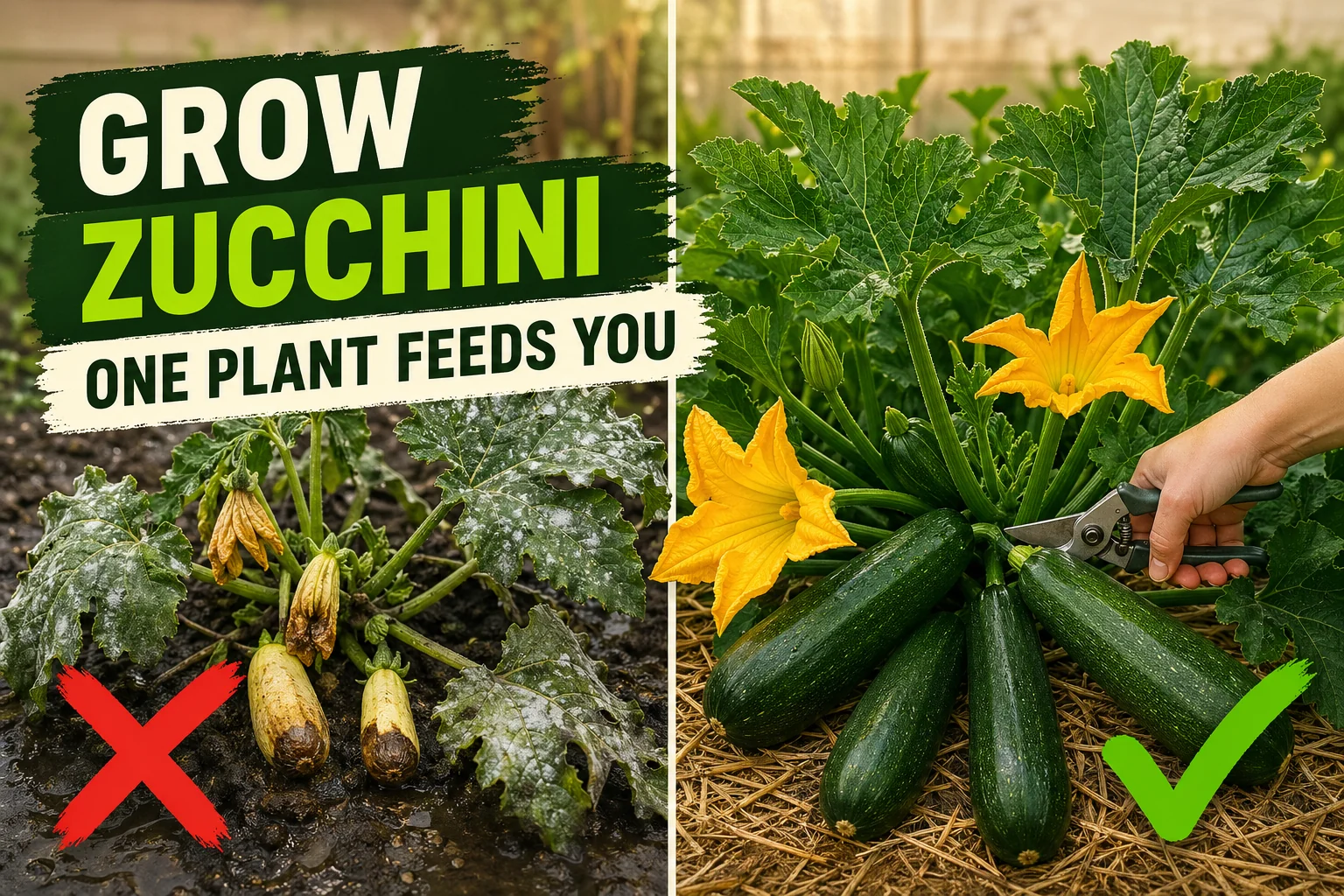
How to Grow Zucchini (One Plant Feeds the Block)
Grow huge dark-green zucchini in 50-60 days. Full guide to soil, sun, watering, pollination, and harvest — plus how to dodge powdery mildew and blossom-end rot.
On this page
Watch the visual walkthrough
Grow Zucchini Vertically to Save Space And Boost Harvests
A short visual walkthrough that pairs with the steps above.
Zucchini (Cucurbita pepo) is the warm-season squash that everyone jokes about for a reason: one healthy plant produces so much fruit you’ll be sneaking it onto neighbours’ porches by August. Get the soil, sun, and pollination right and a single plant gives you 4-9 kg (10-20 lb) of zucchini across 8-10 weeks.
This guide walks you through every stage — soil prep, sowing, watering, pollination, mulching, and how to dodge powdery mildew so the harvest doesn’t end early.
Quick answer
Sow zucchini seeds 2-3 cm (1 in) deep, in full sun (6-8+ hours), in rich well-drained soil enriched with compost. Space plants 90-120 cm (36-48 in) apart. Water deeply at the base 1-2 times per week, mulch 5-7 cm (2-3 in) thick, feed every 2 weeks once flowers appear, and harvest young — 15-20 cm (6-8 in) long — every 1-2 days. Expect first fruit 50-60 days after sowing.
Zucchini basics
Zucchini is a warm-season annual cucurbit grown for its tender immature fruit. It’s frost-tender, fast-growing, and absurdly productive once established. The same plant family as cucumbers, pumpkins, and winter squash, it shares their love of heat, water, and rich soil — and their problems with powdery mildew and squash pests.
Key conditions at a glance:
| Condition | Range |
|---|---|
| Sun | 6-8+ hours direct |
| Day temperature | 21-29°C (70-85°F) |
| Night temperature | Above 13°C (55°F) |
| Soil pH | 6.0-7.0 |
| Soil | Rich, deep, well-drained, high in organic matter |
| Spacing | 90-120 cm (36-48 in) between bush plants |
| Days to harvest | 50-60 days from seed; 35-45 days from transplant |
| Yield per plant | 4-9 kg (10-20 lb) across 8-10 weeks |
When to plant
Zucchini is killed by frost and stalls below 13°C (55°F). The right window is 2 weeks after your last frost, once the soil temperature is at least 18°C (65°F).
You have two options:
- Direct sow: drop seeds straight into the warm garden bed. This is the simplest method and zucchini germinates in 5-10 days.
- Transplant: start seeds indoors 3-4 weeks before your last frost in 10 cm (4 in) pots. Harden off for 5-7 days before planting out. Don’t start earlier — root-bound zucchini transplants sulk for weeks.
In long-summer climates (Zones 8-11), succession-plant a second batch 4-6 weeks after the first to keep fresh zucchini coming once the original plants get hammered by powdery mildew.
What you’ll need
- Zucchini seeds (bush varieties for small gardens; vining for trellising) — disease-resistant cultivars like Dunja, Anton, or Astia are worth the price
- Sunny garden bed, raised bed, or 38-litre (10-gallon) container per plant
- Quality compost — at least 5 cm (2 in) worked into the top 20 cm (8 in) of soil
- Balanced organic fertilizer (5-10-10 or similar — high nitrogen makes leafy plants with no fruit)
- Mulch — straw, shredded bark, or grass clippings
- Bypass pruning shears
- Soft cotton paintbrush or cotton swab (for hand pollination)
Step-by-step: how to grow zucchini
1. Prepare the soil deep and rich
Zucchini are heavy feeders with shallow but wide-spreading roots. Dig the bed at least 30 cm (12 in) deep and mix in 5-8 cm (2-3 in) of compost plus a handful of balanced fertilizer per planting station.
If your soil is heavy clay, build a small mound 15-20 cm (6-8 in) tall — zucchini roots rot fast in waterlogged ground. If it’s sandy, double the compost so the soil holds moisture.
2. Sow seeds 2-3 cm (1 in) deep
Drop 2-3 seeds per station, 2-3 cm (1 in) deep, then water gently. Once seedlings have 2 sets of true leaves, snip the weakest at soil level — don’t pull, you’ll disturb the survivor’s roots.
For transplants, set the seedling at the same depth it was in the pot. Do not bury the stem deeper — buried zucchini stems rot.
3. Space bush plants 90-120 cm (36-48 in) apart
This is the spacing rule almost every first-time grower breaks. Zucchini look like tidy little plants in May; by July they’re 1.5 m (5 ft) wide with leaves the size of dinner plates.
- Bush varieties: 90 cm (36 in) apart in rows 1.2 m (4 ft) apart
- Vining varieties: 60 cm (24 in) apart along a trellis or fence
- Containers: one bush plant per 38-litre (10-gallon) pot
Cramming plants closer cuts airflow, which is the #1 risk factor for powdery mildew — the disease that ends most zucchini seasons.
For a full comparison of spacing by raised bed vs. in-ground vs. container, including the airflow math behind each recommendation, the zucchini spacing guide covers it in one place.
4. Water deeply at the base, in the morning
Once seedlings are up, water deeply 1-2 times per week, aiming for 2.5-5 cm (1-2 in) of water per week including rain. Use a watering can or drip line at the base of the plant — never overhead.
Wet leaves overnight = powdery mildew within 10 days. Morning watering gives the foliage time to dry by evening.
In containers and during heatwaves above 32°C (90°F), water daily — the leaves will droop in afternoon heat even when the soil is moist (this is normal protective wilting; don’t overwater in response).
5. Mulch the bed 5-7 cm (2-3 in) thick
Once the soil is warm and seedlings are 10-15 cm (4-6 in) tall, lay 5-7 cm (2-3 in) of straw, shredded bark, or grass clippings around each plant — leave a 5 cm (2 in) gap around the stem. Mulch:
- Holds moisture even (preventing blossom-end rot)
- Keeps soil temperature stable through hot days
- Smothers weeds
- Adds organic matter as it breaks down
6. Feed every 2 weeks once flowers appear
When the first flowers open, start feeding with a balanced liquid fertilizer (5-10-10, fish emulsion, or kelp) every 2 weeks. Skip high-nitrogen fertilizers — they grow huge leaves and almost no fruit.
If leaves yellow between feeds, switch to a 1:1:1 product or top-dress with another 2-3 cm (1 in) of compost.
7. Hand-pollinate if fruit isn’t setting
The first 1-2 weeks of flowers are male only — they fall off without setting fruit. This is normal and not a problem.
Once female flowers appear (you’ll see a tiny zucchini already swelling behind the petals), they need a pollinator visit within 24 hours or they’ll abort. If your garden is pollinator-poor or it’s been raining, hand-pollinate in the morning:
- Find an open male flower (long thin stem, no fruit behind it)
- Snap it off and peel back the petals
- Dab the pollen-loaded centre directly into the open female flower
- One male covers 2-3 females; do it before 10 a.m.
8. Trim the lowest leaves once vines sprawl
Once plants are 60 cm (24 in) wide, snip off the lowest 2-3 leaves with bypass shears. This:
- Improves airflow at the soil line (mildew defence)
- Lets sun reach developing fruit
- Removes the leaves most likely to splash water onto the plant
A free plant care app like Tazart can hold the watering, feeding, and powdery mildew check schedule for you and ping you on Apple Watch when it’s time — useful when you’re juggling zucchini, bell peppers, and tomatoes all in different beds.
When and how to harvest
Harvest young. A 15-20 cm (6-8 in) zucchini is sweeter, more tender, and triggers the plant to produce more flowers. Once you let one fruit grow to the size of a baseball bat (it will happen — they double overnight), the plant slows new fruit set.
Cut fruit cleanly with bypass shears, leaving a 2-3 cm (1 in) stem. Pulling tears the brittle main vine. Check the plant every 1-2 days in peak season — fruit grows 2-5 cm (1-2 in) per day in hot weather.
You can also eat the male flowers — they’re a delicacy stuffed with cheese and fried. Leave at least one male flower per plant for pollination.
Common mistakes to avoid
- Planting too early. Cold soil rots seeds and stalls transplants for weeks. Wait until soil is 18°C (65°F).
- Overhead watering. Wet leaves at night = powdery mildew. Water at the base, in the morning.
- Crowding plants. Closer than 90 cm (36 in) and airflow drops, mildew spreads, yields collapse.
- High-nitrogen fertilizer. Big leaves, no fruit. Use 5-10-10 or similar.
- Letting fruit grow huge. A single oversized fruit shuts down flower production. Harvest young.
- Ignoring early mildew. A small white patch becomes a dead plant in 2-3 weeks. Spray at first sign.
- No mulch. Bare soil dries unevenly and triggers blossom-end rot on every other fruit.
Troubleshooting
| Symptom | Likely cause | Fix |
|---|---|---|
| White powdery patches on leaves | Powdery mildew | Remove worst leaves; spray weekly with 1:9 milk:water or potassium bicarbonate; improve airflow |
| Female flowers drop without forming fruit | Lack of pollination | Hand-pollinate before 10 a.m.; plant flowers nearby to draw bees |
| Fruit yellows and rots at blossom end | Blossom-end rot (uneven water + calcium) | Mulch deep; water consistently; foliar calcium spray every 10 days |
| Plant suddenly wilts and dies | Squash vine borer in main stem | Slit stem, remove white grub, mound soil over wound; use floating row cover next season |
| Tiny grey-brown bugs clustering on stems | Squash bugs | Hand-pick at dawn; squish egg clusters under leaves; neem oil at dusk |
| Yellow leaves with green veins | Iron / magnesium deficiency or waterlogged soil | Check drainage; foliar feed with kelp; reduce watering frequency |
| Misshapen, undersized fruit | Poor pollination | Hand-pollinate; the next fruits will be normal |
| Plant huge, almost no fruit | Too much nitrogen | Stop nitrogen feeds; switch to 5-10-10 or kelp; let some leaves yellow before feeding again |
| Holes in leaves, slimy trails | Slugs or snails | Remove mulch within 15 cm (6 in) of stem; iron phosphate slug bait; copper tape on container rims |
Watch: how to grow zucchini
A short visual walkthrough pairs well with the steps above. If you’re a visual learner, search for How to Grow Zucchini on YouTube and then come back to follow the timing in this guide.
Related reading
- How to plant pumpkin seeds — same cucurbit family, same soil prep, but spaced even wider for sprawling vines.
- How far apart to plant cucumbers — the trellised cousin that shares zucchini’s love of hot sun and rich beds.
- How to grow bell peppers — the warm-season companion that fits perfectly between zucchini hills.
- How to grow tomatoes from seed — the third pillar of the summer garden, with the same feeding rhythm.
- Scan the next plant you bring home with the free Tazart plant identifier and let it set up the watering schedule for you.
A note on conditions
Every garden is different. Light, soil, season, humidity, pollinator pressure, and your local weather all change how fast zucchini grows and how often it needs water. Use the steps above as a starting point and adjust based on what your plant actually does in week three — that’s how every good zucchini grower learns.
Highly recommended
The supplies that make this guide work
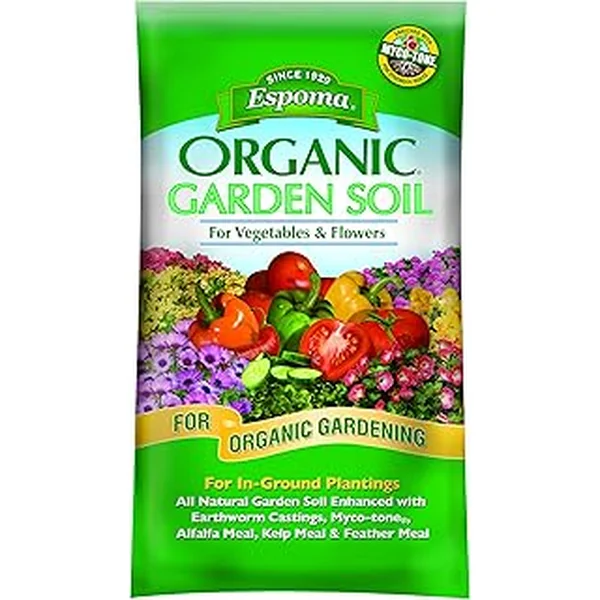
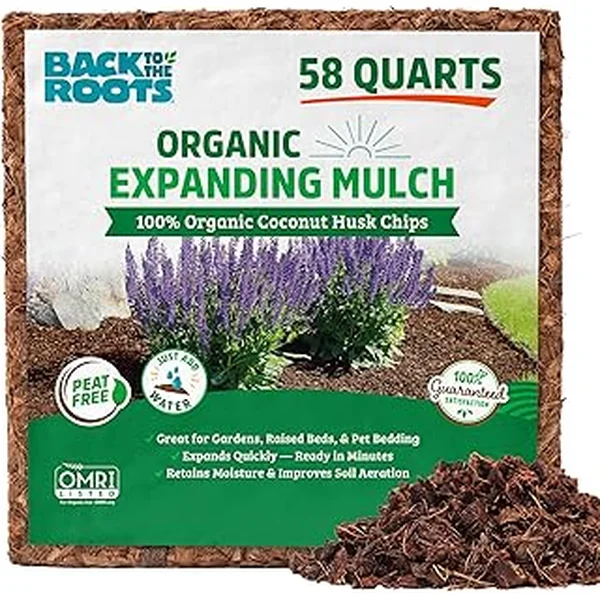

Tazart is an Amazon Associate — we earn from qualifying purchases at no extra cost to you. Thank you for helping us keep these guides free.
Frequently asked questions
How long does zucchini take to grow?
50-60 days from seed to first harvest, and 35-45 days from transplant. Once a plant starts producing it keeps cranking out fruit every 1-2 days for 8-10 weeks until powdery mildew, frost, or vine borers shut it down. A single plant typically yields 4-9 kg (10-20 lb) of zucchini across the season.
How much sun does zucchini need?
Full sun — at least 6-8 hours of direct sunlight per day. Less than 6 hours and you'll get a leggy plant with lots of leaves, few flowers, and undersized fruit. Pollinators also need sun and warmth to be active around the flowers, so a sheltered shady spot is the worst possible site.
How often should I water zucchini?
Deeply, 1-2 times per week — aim for 2.5-5 cm (1-2 in) of water per week including rain. Water at the base of the plant in the morning, never on the leaves. Wet leaves at night are the fast track to powdery mildew. In hot weather above 30°C (86°F) or in containers, you may need to water every other day.
Why are my zucchini flowers dropping off?
Three main causes. (1) The first 1-2 weeks of flowers are male only — they always drop, this is normal. (2) Lack of pollinators means female flowers never set fruit and drop. (3) Heat stress above 32°C (90°F) makes plants abort flowers. Hand-pollinate to fix poor pollinator visits and shade the plant in extreme heat.
Why are my zucchini turning yellow and rotting at the tip?
That's blossom-end rot — uneven moisture and calcium uptake, not a disease. The fix is consistent watering and a 5-7 cm (2-3 in) mulch layer. A calcium foliar spray every 10 days during fruit set helps. It usually clears up after the first few fruits as the plant settles.
Can zucchini grow in pots?
Yes. Use a 38-litre (10-gallon) container minimum per plant, with drainage holes. Choose a compact bush variety like Astia, Patio Star, or Bush Baby. Water more often than in-ground (often daily in summer), feed every 2 weeks with balanced liquid fertilizer once flowers appear, and stake the main stem to keep it upright.
How do you hand-pollinate zucchini?
In the morning, find an open male flower (long thin stem, no fruit behind it) and an open female flower (small zucchini already behind the petals). Snap off the male, peel back its petals, and dab the pollen-loaded centre directly into the female flower. One male can pollinate 2-3 females. Done by 10 a.m. for best results.
How do you stop powdery mildew on zucchini?
Space plants 90-120 cm (36-48 in) apart for airflow, water at the base only, never wet leaves at night, and remove the lowest 2-3 leaves once vines start sprawling. At first sign of white powder, spray weekly with a 1:9 mix of milk and water, or potassium bicarbonate. Resistant varieties (Dunja, Anton, Astia) shrug it off.