Houseplants
How to Care for a Calla Lily Plant (Indoor & Outdoor Guide)
Care for a calla lily with bright indirect light, evenly moist soil, monthly feeding in spring–summer, and dry winter dormancy. Hardy outdoors in USDA 8–10.
On this page
- Quick answer
- Meet Zantedeschia: not actually a lily
- Light: bright indirect indoors, morning sun outdoors
- Watering: moist not soggy, dry in dormancy
- Soil and pot
- Temperature and humidity
- Fertilizing on the right schedule
- The dormancy cycle: most growers’ missing piece
- Outdoor garden calla lilies
- Common mistakes
- Troubleshooting table
- Related reading
- A note on conditions
Watch the visual walkthrough
Stop Killing Your Peace Lily Houseplant - SPATHIPHYLLUM Care Guide
Today I have a special focus on a popular houseplant that often gets misunderstood, and mistreated, the humble yet elegant.
Calla lilies (genus Zantedeschia) look like a luxury florist plant, but they’re surprisingly forgiving once you understand their growth cycle. The trick isn’t keeping them alive — it’s giving them the strict dry winter dormancy they need to bloom properly the next season.
Get the seasonal rhythm right and a single rhizome will produce three to five elegant trumpet-shaped flowers every spring for years. Skip the dormancy and you’ll get a leggy, leaf-only plant that quietly disappoints season after season.
This guide covers the full care picture for both indoor potted and outdoor garden calla lilies — light, watering, fertilizer, dormancy timing, and zone-specific overwintering.
Quick answer
Place calla lilies in bright indirect light at 18–24°C (65–75°F). Water when the top 2.5 cm (1 in) of soil dries (every 5–7 days indoors, 2–3 times per week outdoors in summer). Feed half-strength balanced liquid fertilizer monthly from spring through early fall. In late fall, stop feeding and reduce watering to trigger a 2–3 month dry dormancy at 13–18°C (55–65°F). Hardy outdoors year-round in USDA zones 8–10 only — lift rhizomes for winter storage in zones 7 and colder.
Meet Zantedeschia: not actually a lily
Despite the name, calla lilies are not true lilies (genus Lilium). They are Zantedeschia — a small genus of South African rhizomatous perennials in the arum family (Araceae), the same family as peace lilies and philodendrons.
What looks like a single white “petal” is actually a modified leaf called a spathe, wrapped around a central yellow finger-like structure called the spadix. The spadix carries the actual tiny flowers. This is the same flower architecture as the peace lily’s cousin and the calla’s family relatives.
The two main types you’ll encounter:
- Zantedeschia aethiopica — the classic large white “florist” calla, hardy in USDA zones 8–10, can grow as a marginal aquatic in shallow ponds.
- Zantedeschia hybrids — smaller-bloomed, more colorful (orange, pink, purple, yellow), more often grown as houseplants or summer-only outdoor plantings.
Care is largely the same for both. The hybrids tend to want slightly less water and more light than the species Z. aethiopica.
Light: bright indirect indoors, morning sun outdoors
Calla lilies want bright light without direct hot afternoon sun.
Indoors:
- East-facing window: ideal — bright morning sun, gentle afternoon light
- South or west window: acceptable but pull back 1 m (3 ft) from the glass to avoid afternoon scorch
- North-facing window: too dim — flowers will be sparse and stems will stretch leggy
Outdoors (zones 8–10):
- Morning sun (4–6 hours) with afternoon shade is the sweet spot
- Full sun is tolerated only in cooler coastal climates
- Deep shade reduces flowering significantly
A practical indoor test: hold your hand 30 cm (12 in) above the leaves at midday. If the shadow has soft edges, the light is right. If it’s a sharp dark shadow, move the plant back from the window. If there’s barely any shadow, move it closer to the light source.
Watering: moist not soggy, dry in dormancy
The seasonal split is what trips up most growers.
Active growth (spring–early fall):
- Water when the top 2.5 cm (1 in) of soil is dry
- Indoor pots: typically every 5–7 days
- Outdoor garden plantings: every 2–3 days in hot weather, less in cool overcast spells
- Pour evenly across the soil surface until water drains out the bottom
- Empty the saucer 30 minutes after watering — calla lilies tolerate moist soil but rot in standing water
Dormancy (late fall–winter):
- Drastically reduce watering — every 3–4 weeks at most
- Some growers stop watering entirely for the dormancy period
- The soil should be barely damp, not bone-dry
- Resume normal watering when new shoots appear in late winter
The water-quality note: Calla lilies are slightly sensitive to chlorinated tap water. If you have heavily chlorinated municipal water, let it sit overnight before using, or use rainwater or distilled water for indoor pots.
Soil and pot
Both indoor and outdoor calla lilies need rich, moisture-retentive but well-draining soil.
Indoor potting mix recipe:
- 60% standard peat-free houseplant potting mix
- 30% finished compost
- 10% perlite or coarse horticultural sand for drainage
A standard moisture-retentive houseplant mix works fine straight out of the bag — you don’t need to over-engineer it. Avoid pure cactus mix (too dry) or pure peat (holds water without draining).
Pot requirements:
- Minimum 20 cm (8 in) wide for a single rhizome
- 30 cm (12 in) wide for groups of 3 rhizomes
- Drainage holes are non-negotiable
- Glazed ceramic or plastic both work — terracotta dries too fast for calla lilies’ moisture preference
Outdoor garden soil:
- Amend the planting bed with 5–8 cm (2–3 in) of compost worked into the top 30 cm (12 in)
- Soil pH 6.0–6.5 is ideal (slightly acidic)
- Heavy clay needs extra perlite or sharp sand for drainage
Temperature and humidity
Calla lilies are warm-temperate plants — they want neither extreme heat nor frost.
Active growth temperatures:
- Day: 18–24°C (65–75°F)
- Night: 13–18°C (55–65°F)
- Avoid sustained temperatures above 27°C (80°F) — flowering shuts down
Dormancy temperatures:
- 13–18°C (55–65°F) is ideal for the 2–3 month rest
- Below 4°C (40°F) damages the rhizome — frost kills it outright
- Above 21°C (70°F) prevents proper dormancy and weakens the next year’s bloom
Humidity:
- 50–60% is ideal
- Indoor winter heating often drops humidity to 20–30%, which causes brown leaf edges
- A pebble tray with water beneath the pot adds local humidity at no cost
- Group calla lilies with other moisture-loving houseplants for a humid microclimate
Fertilizing on the right schedule
Calla lilies respond well to consistent light feeding during their growth phase, then nothing during dormancy.
Active growth feed schedule:
- Use a balanced liquid houseplant fertilizer (10-10-10 or similar) at HALF the package strength
- Apply once a month from early spring (when new growth appears) through late summer
- Skip feeding in extreme heat (above 27°C / 80°F) — the plant isn’t actively growing then
- Stop feeding entirely by early September
Why half strength: Full-strength fertilizer pushes lush leaf growth at the expense of flowers and can burn the rhizome over time. Half strength applied monthly delivers steady nutrition without buildup.
Phosphorus for blooms: Some growers switch to a higher-phosphorus formula (like 5-10-5) just before the flowering period to encourage more blooms. This is optional but works well — apply twice in early spring at half strength.
The dormancy cycle: most growers’ missing piece
Calla lilies bloom best when allowed a full 2–3 month rest period each year. Skipping dormancy doesn’t kill the plant, but it produces fewer and smaller flowers each subsequent season.
Triggering dormancy (late September–early November):
- Stop fertilizing in early September
- Gradually reduce watering frequency over 4 weeks
- Move the pot to a cooler spot if possible (13–18°C / 55–65°F)
- Allow leaves to yellow and die back naturally — don’t cut green leaves prematurely
- Once foliage is fully dead, cut it back to soil level
Storing during dormancy:
- Keep the potted rhizome in a cool dim spot (basement, garage, cool spare room)
- Water sparingly — every 3–4 weeks just enough to keep soil barely damp
- Some growers lift the rhizome from the pot, dust it with sulfur, and store in barely-damp vermiculite or peat in a paper bag
Waking the plant (late January–early March):
- Watch for new shoots — pale green tips emerging from the rhizome
- Move back to bright indirect light at normal room temperature
- Resume normal watering once shoots are visible
- Apply the first half-strength fertilizer feed when leaves are 5 cm (2 in) tall
Outdoor garden calla lilies
In USDA zones 8–10, calla lilies can grow as permanent garden perennials.
Planting:
- Plant rhizomes in spring after the last frost when soil reaches 16°C (60°F)
- Plant 5–10 cm (2–4 in) deep with the growing eye facing up
- Space 30 cm (12 in) apart for individual plants, closer (15 cm / 6 in) for mass plantings
In-ground care:
- Water deeply 2–3 times per week in summer
- Mulch with 5–8 cm (2–3 in) of bark or compost to hold soil moisture
- Feed twice during the growing season with a balanced granular fertilizer
- In zone 8, mulch heavily over the rhizomes for the first winter for added freeze protection
Zones 7 and colder — lift and store: After the first hard frost kills the foliage, dig up the rhizomes, dust off soil, dry for a week in a cool dry spot, then store in barely-damp peat moss or vermiculite at 10–13°C (50–55°F) for the winter. Replant in spring after the last frost.
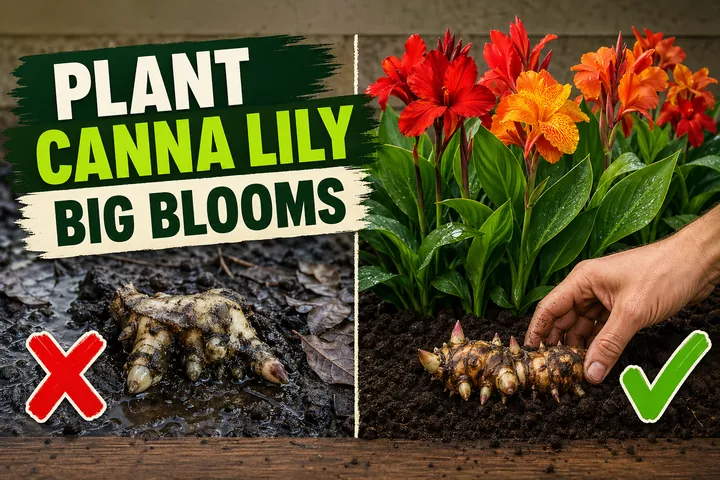
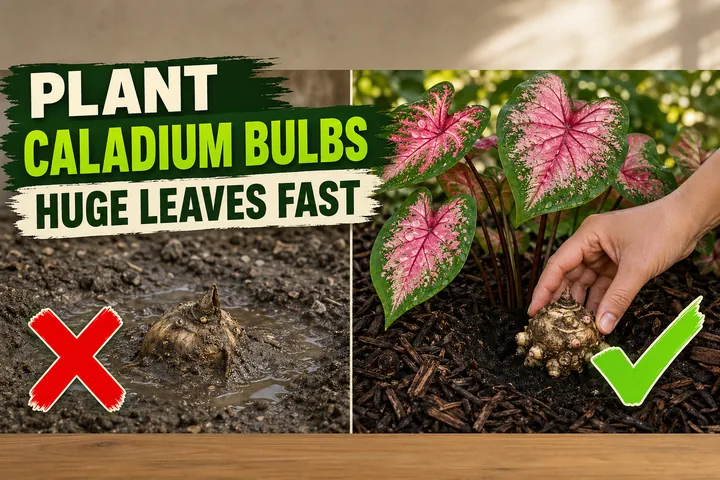
This same lift-and-store technique applies to other tender summer rhizomes/tubers — see how to plant canna lily bulbs and how to plant caladium bulbs for similar workflows.
Common mistakes
- No dormancy period. Calla lilies kept in active conditions year-round bloom worse each season. The 2–3 month rest is essential.
- Overwatering during dormancy. A wet rhizome in cool conditions rots fast. Keep storage soil barely damp, never wet.
- Direct hot afternoon sun. Scorches leaves and shortens flower life. Pull back from south/west windows.
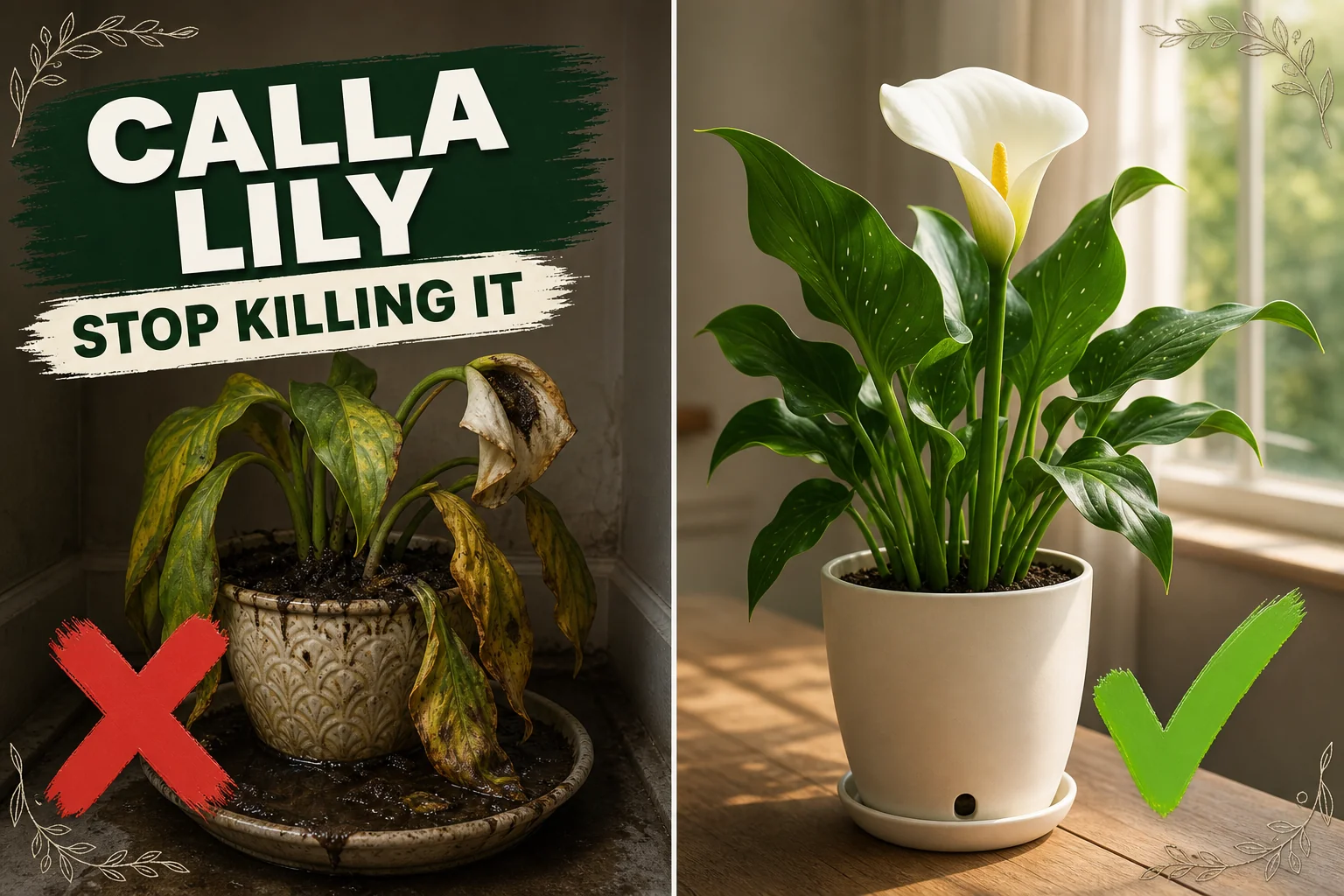
- Pots without drainage. Decorative ceramic pots without holes guarantee root rot eventually. Always use a drainage-hole pot, then place inside a decorative pot for display.
- Cold storage in zones 7 and colder without lifting. Garden rhizomes left in the ground freeze and turn to mush. Lift and store every fall.
- Wrong fertilizer ratio. High-nitrogen fertilizers (like lawn food) push leaves at the expense of blooms. Use balanced or slightly higher-phosphorus formulas.
- Cutting yellow leaves prematurely. Yellowing leaves in fall are how the plant moves nutrients back to the rhizome for next year’s growth. Wait until they’re fully brown and easily pulled away.
Troubleshooting table
| Symptom | Likely cause | Fix |
|---|---|---|
| All leaves yellow at once in fall | Natural dormancy | Reduce watering, stop fertilizing, allow rest |
| Yellow drooping leaves in summer | Overwatering | Let top 2.5 cm (1 in) dry between waterings, check drainage |
| Brown crispy leaf edges | Low humidity or fluoridated water | Use pebble tray, switch to filtered/rainwater |
| No flowers despite healthy leaves | Skipped dormancy or too much nitrogen | Allow proper dormancy; switch to balanced fertilizer |
| Mushy stem base, bad smell | Root rot from overwatering | Unpot, cut away rotted tissue, dry rhizome 1 week, repot in fresh soil |
| Pale washed-out leaves | Insufficient light | Move closer to light source, use grow light if needed |
| Spathe browns prematurely | Too much direct sun or low humidity | Move to indirect light, raise humidity |
Related reading
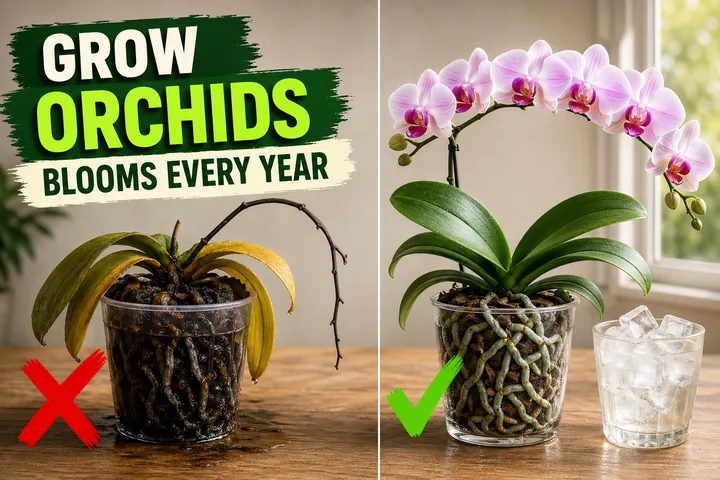
- How to care for an orchid plant — another high-impact flowering houseplant with specific dormancy and feeding needs.
- How to plant canna lily bulbs — companion summer rhizome with a similar lift-and-store winter workflow in cold zones.
- How to plant caladium bulbs — another tender tuberous plant in the arum family — same family as calla lilies, same warm-soil requirements.
- How to plant elephant ear bulbs — large arum-family relative with the same warm-soil and rich-moisture preferences.
- How to fix root rot — calla lily root rot is the most common cause of plant loss; this guide covers signs and recovery.
- Track watering schedules, dormancy start dates, and fertilizer reminders with the free Tazart plant care app — it adjusts care reminders for your local season and indoor humidity.
A note on conditions
Calla lily care varies based on climate, indoor humidity, light source, and species (florist aethiopica vs. colorful hybrids). Hybrids tolerate slightly drier soil than the species and prefer slightly more light. Indoor plants in dry winter air need extra humidity attention. Outdoor plantings in zone 8 benefit from heavy winter mulching even though the rhizomes are technically hardy. Adapt the schedule above to what your conditions actually deliver — the dormancy period and the bright indirect light are the two non-negotiables; everything else is fine-tuning.
Highly recommended
The supplies that make this guide work


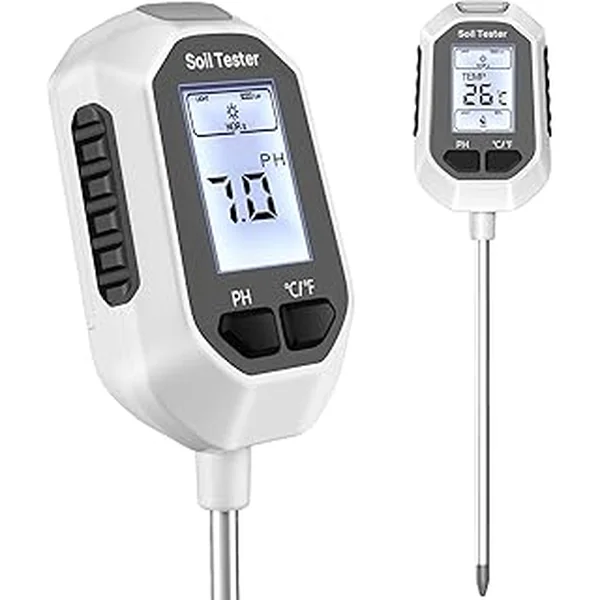
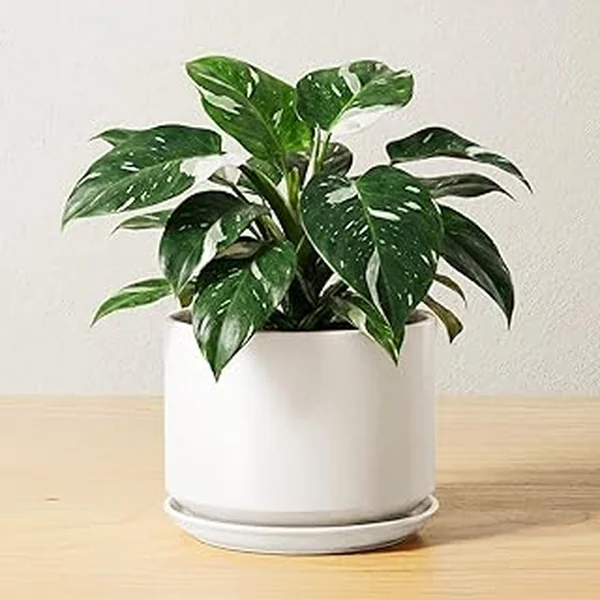
Tazart is an Amazon Associate — we earn from qualifying purchases at no extra cost to you. Thank you for helping us keep these guides free.
Frequently asked questions
How often should you water a calla lily?
During active growth (spring through early fall), water when the top 2.5 cm (1 in) of soil is dry — typically every 5–7 days for indoor potted plants and 2–3 times per week for outdoor garden plantings in warm weather. Calla lilies want consistently moist soil, but never waterlogged. During winter dormancy, reduce watering dramatically — let the soil dry out almost completely between waterings, or stop entirely for 2–3 months if the plant has gone fully dormant.
Do calla lilies need full sun or shade?
Calla lilies prefer bright indirect light indoors and morning sun with afternoon shade outdoors. Direct hot afternoon sun scorches the leaves and shortens flower life. In USDA zones 8–10 outdoor plantings, place them where they get 4–6 hours of morning sun and dappled shade in the afternoon. Indoors, an east-facing window or 1 m (3 ft) back from a south-facing window is ideal.
How do you care for a calla lily indoors?
Place the pot in bright indirect light at 18–24°C (65–75°F). Water when the top 2.5 cm (1 in) of soil dries during spring and summer. Feed monthly with a half-strength balanced liquid fertilizer from spring through early fall. Stop fertilizing and reduce watering in late fall to trigger dormancy. After 2–3 months of dry rest in a cool spot at 13–18°C (55–65°F), resume normal care to wake the plant for a new growth cycle.
When do calla lilies go dormant?
Calla lilies enter dormancy in late fall as day length shortens and temperatures drop. The leaves yellow and die back over 2–4 weeks. This is normal and not a sign of disease. During the 2–3 month dormancy period, store the rhizome in barely-moist soil at 13–18°C (55–65°F) with little to no watering. Resume normal watering and feeding when new shoots appear in late winter or early spring.
Why are my calla lily leaves turning yellow?
The most common causes are overwatering (soggy roots = yellow droopy leaves), natural dormancy in late fall (yellowing all leaves at once), nitrogen deficiency (older leaves yellow first while new growth stays green), or fungal root rot (yellowing accompanied by mushy stem base and bad smell). Check the soil — if it's wet, dry it out and reduce watering frequency.
Can calla lilies survive winter outdoors?
Calla lilies (Zantedeschia aethiopica) are hardy in USDA zones 8–10 outdoors year-round, with mulch protection in zone 8. In zones 7 and colder, lift the rhizomes after the first frost kills the foliage, dry them for a week, and store in barely-damp peat or vermiculite at 10–13°C (50–55°F) until spring. Replant outdoors after the last frost when soil reaches 16°C (60°F).