Edible
When to Fertilize Fruit Trees (Spring + Summer Schedule)
When to fertilize fruit trees — early spring 4–6 weeks before bud break is the primary feed, optional light mid-summer top-up, stop feeding by late July.
On this page
- Quick answer
- Table of contents
- Why timing matters more than amount
- The bud-break rule
- Why nitrogen at the wrong time hurts fruit set
- The right NPK ratio
- How much fertilizer per tree
- Drip-line broadcast technique
- Mulch and compost top-dress alternative
- Citrus, blueberries, and berries
- Signs of overfeeding
- Common mistakes
- Troubleshooting
- Related reading
- A note on conditions
Watch the visual walkthrough
5 Reasons Your Fruit Trees AREN'T GROWING [And How To FIX It]
In this video, I share 5 reasons your fruit trees aren't growing and how to fix it! Does your fruit tree seem like it isn't growing? This is ...
Deciduous fruit trees — apple, pear, peach, cherry, plum — have a much narrower feeding window than most gardeners realise. Unlike tomatoes or lawns, a fruit tree does not want a steady drip of fertilizer through summer. The tree uses a single early-spring nitrogen pulse to push leaves and set fruit, then spends the rest of the year ripening that fruit and hardening wood for winter. Feed it on the lawn schedule and you trade fruit for soft leafy growth that snaps in the first frost.
This guide walks through exactly when to fertilize fruit trees, how much per tree, what NPK ratio to pick, and the six common mistakes that cost gardeners a harvest every year. Every measurement is given in metric and US units so you can dose correctly whichever spreader or scoop you bought.
Quick answer
Fertilize deciduous fruit trees in early spring, 4–6 weeks before bud break, with a balanced 10-10-10 or fruit-specific 5-10-15 NPK at a rate of about ½ cup per inch of trunk diameter (100 g per cm). Add a light mid-summer feed only if growth is poor. STOP all feeding by late July to avoid pushing frost-tender shoots that won’t harden off before winter.
Table of contents
- Why timing matters more than amount
- The bud-break rule
- Why nitrogen at the wrong time hurts fruit set
- The right NPK ratio
- How much fertilizer per tree
- Drip-line broadcast technique
- Mulch and compost top-dress alternative
- Citrus, blueberries, and berries
- Signs of overfeeding
- Common mistakes
- Troubleshooting table
- FAQs
- Related reading
- A note on conditions
Why timing matters more than amount
A deciduous fruit tree pulls most of its annual nitrogen up in a single 4–6 week window from bud swell through full leaf-out. By the time the petals drop and tiny fruit are forming, the tree has already absorbed roughly 70% of the year’s nitrogen demand. Feeding outside that window does almost nothing useful — and a lot that is harmful.
Late feedings keep pushing soft vegetative growth when the tree should be ripening fruit and hardening wood. That tender new wood blackens in the first frost, splits, and becomes an entry point for fire blight, canker, and bacterial spot. A heavy autumn feed is even worse — it can override dormancy hormones and leave the tree partly active going into deep winter cold.
The bud-break rule
The single most important date for fruit-tree fertilizing is bud break — when the buds begin to swell and show green or pink tips. Apply fertilizer 4–6 weeks before bud break, not at it.
That means:
- Apple, pear (zone 6–7): late February to mid-March
- Apple, pear (zone 5): mid-March to early April
- Peach, cherry, plum (zone 6–7): mid-February to early March (they break bud earlier)
- Mild winter zones (8–9): late January to mid-February
The roots wake up before the buds do. Fertilizer applied 4–6 weeks ahead of visible bud activity has time to dissolve, move into the root zone, and be available exactly when the leaves and flowers start drawing on it.
A second, optional, lighter feed (about half the spring rate) can be applied in early to mid-summer if growth is visibly poor — pale leaves, short annual shoot extension under 20 cm (8 in), or sparse fruit set. Skip it if growth looks normal.
Hard cut-off: stop all feeding by late July, no matter the climate zone. After that the tree must be allowed to slow down.
Why nitrogen at the wrong time hurts fruit set
Nitrogen-heavy feeds push leaves at the expense of fruit. On a fruit tree, that’s a direct trade. Specifically:
- Heavy spring nitrogen on a vigorous mature tree causes “blossom blast” — flowers form but drop before pollination because the tree is investing in new leaves instead.
- Mid-to-late summer nitrogen keeps shoots growing past the point where they should be hardening. Those soft shoots are also prime targets for aphids and fire blight.
- Autumn nitrogen delays dormancy. Sap stays high in the wood. The first hard freeze splits bark, kills buds, and writes off next year’s crop.
This is why “fruit tree” fertilizers run lower nitrogen than lawn fertilizers — typically a 5-10-15 ratio rather than the 20-5-5 you’d see in turf feed. More phosphorus and potassium support roots, fruit, and winter hardiness without overdriving the leaves.
The right NPK ratio
Two ratios cover almost every backyard fruit tree:
- Balanced 10-10-10 — equal parts nitrogen, phosphorus, potassium. Safe, widely available, easy to dose. Fine for trees on average soil with normal vigour.
- Fruit-specific 5-10-15 (or similar low-nitrogen, high-potassium ratio) — the better choice for vigorous trees, sandy soils, or trees that already had a green flush last year. The lower nitrogen avoids excess shoot growth, the higher potassium boosts fruit size and winter hardiness.
A fruit-tree feed should also include chelated micronutrients — iron, magnesium, zinc, boron — as trace amounts. Cheaper feeds skip these and you’ll see yellow new leaves even with the right NPK numbers.
What N, P, K do for a fruit tree:
| Nutrient | What it builds |
|---|---|
| Nitrogen (N) | Leaves, shoot extension, canopy size |
| Phosphorus (P) | Roots, flower buds, fruit set |
| Potassium (K) | Fruit size, sugar content, winter hardiness, disease resistance |
Avoid pure “bloom booster” formulas (high P, very low N) for established trees — they’re for forcing flowers on annuals, not running a multi-decade fruit tree.
How much fertilizer per tree
Dose is set by trunk diameter, measured 30 cm (12 in) above the soil line. The rule of thumb that works for almost every backyard fruit tree:
½ cup of balanced granular fertilizer per inch of trunk diameter, or about 100 g per cm of trunk diameter.
| Trunk diameter | Approx. dose (10-10-10 granular) |
|---|---|
| 2.5 cm (1 in) | 100 g (½ cup) |
| 5 cm (2 in) | 200 g (1 cup) |
| 7.5 cm (3 in) | 300 g (1½ cups) |
| 10 cm (4 in) | 400 g (2 cups) |
| 15 cm (6 in) | 600 g (3 cups) |
| 20 cm (8 in) | 800 g (4 cups) |
Cap the maximum at about 4 lb (1.8 kg) of 10-10-10 per mature tree per year, even on a very large standard trunk. More than that pushes water sprouts and weak crotches without adding fruit.
For a 5-10-15 fruit-specific blend, use the same volumes — the lower nitrogen percentage is the safety margin built into the ratio.
If you’re using an organic feed (compost, composted manure, bone meal blend), apply roughly double the volume because organic feeds release more slowly and have lower analysis numbers.
Drip-line broadcast technique
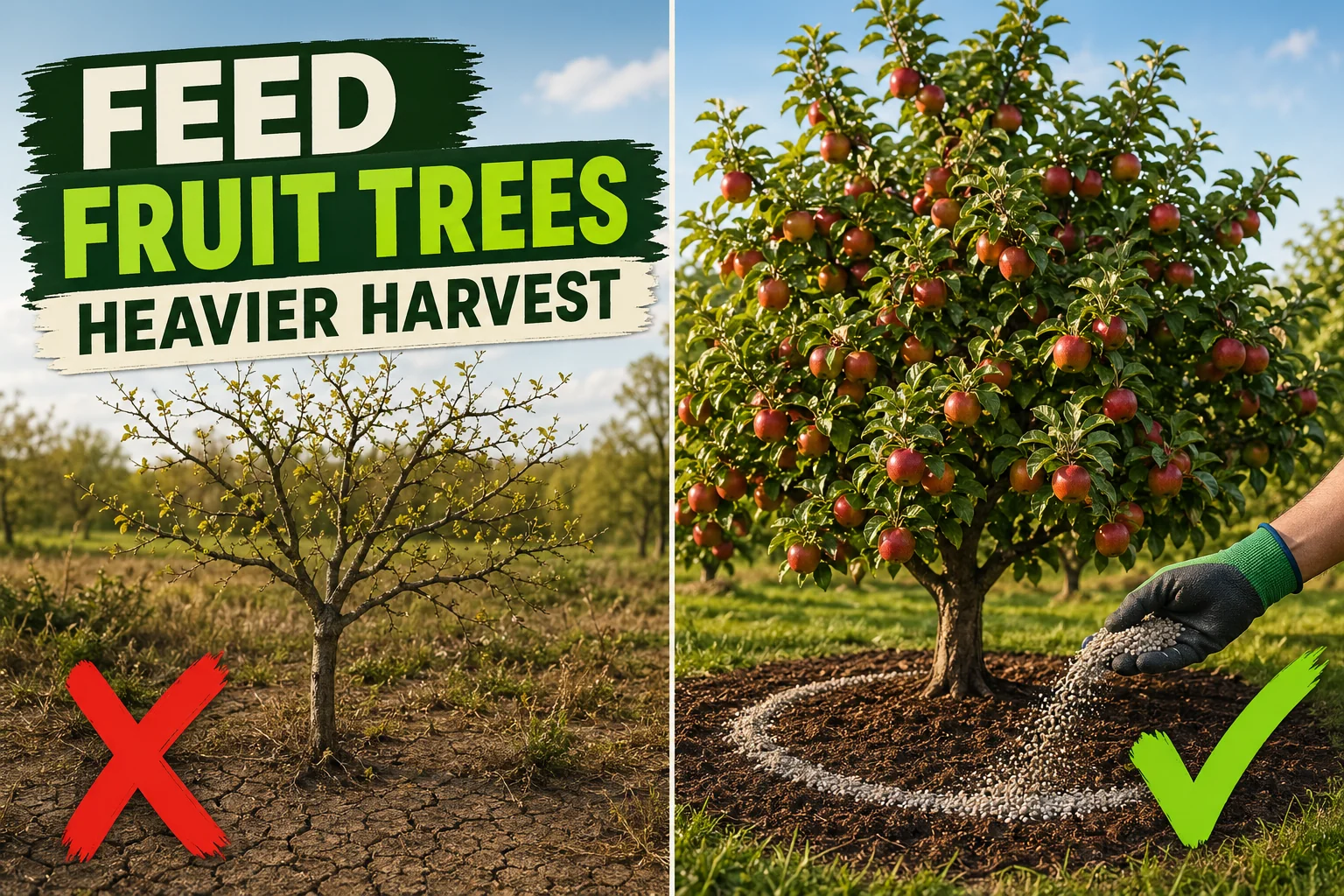
The drip line is the imaginary circle on the ground directly beneath the outermost branches — that’s where most of the active feeder roots are. Throwing fertilizer against the trunk wastes it on woody anchor roots that don’t absorb nutrients.
Steps:
- Measure the drip line. Stand under the outermost branches, look straight down. Mark the circle if it helps.
- Broadcast in a ring, about 30 cm (12 in) inside the drip line to 30 cm (12 in) outside. Keep the ring about 60–90 cm (24–36 in) wide.
- Stay at least 30 cm (12 in) away from the trunk. Granules touching bark cause cambium burn.
- Scatter evenly. Don’t pile. A handful, walk a step, another handful — until the dose is gone.
- Water it in. Apply at least 2.5 cm (1 in) of water across the ring after broadcasting — equivalent to about 15 L per m² (≈4 gal per 10 sq ft). A soaker hose laid in the ring is easiest. Without watering in, granules either blow away or sit on top and burn surface roots.
- Cover with mulch (next section).
For dwarf or semi-dwarf trees with a small canopy, the ring is much tighter — sometimes just 60 cm (2 ft) across. The principle is the same: feed where the feeder roots are, not at the trunk.
Mulch and compost top-dress alternative
For low-vigour soils or gardeners who’d rather skip granules entirely, an annual compost top-dress can replace synthetic fertilizer on most established backyard fruit trees.
Method:
- In early spring (same 4–6 week pre-bud-break window), spread 5–8 cm (2–3 in) of finished compost in a 60–90 cm (24–36 in) ring at the drip line.
- Stay 10 cm (4 in) clear of the trunk — no “mulch volcano” pile against the bark.
- Top with 5–8 cm (2–3 in) of shredded bark or wood chip mulch to lock in moisture and slow nitrogen leaching.
- Water in with at least 2.5 cm (1 in) of water.
A well-applied compost ring delivers slow-release nitrogen, phosphorus, potassium, and trace minerals, plus it builds the soil biology around the roots. On well-mulched, rich orchard soil, you may not need granular fertilizer at all in most years.
If growth is poor mid-summer, layer on a light half-rate granular feed over the compost. Stop by late July either way.
Citrus, blueberries, and berries
Not every fruit plant follows the deciduous schedule above. The most common exceptions:
- Citrus (orange, lemon, lime, mandarin) is evergreen and feeds far more frequently. Apply a citrus-specific high-nitrogen feed (often 6-3-3 or similar) 3–4 times per year — early spring, late spring, mid-summer, and early autumn in mild climates. Stop autumn feeding once nights drop below 12°C (54°F).
- Blueberries want acidic conditions (soil pH 4.5–5.5). Use an ammonium-sulfate-based or acid-mix fertilizer — never a balanced 10-10-10, which raises pH over time. Feed twice: once at bud break and again 6–8 weeks later. Stop by early July.
- Raspberries, blackberries prefer one annual spring feed of balanced 10-10-10 at about 300 g per 3 m (10 ft) of row, plus a 5 cm (2 in) compost mulch in autumn.
- Strawberries feed light and often — a balanced 10-10-10 at planting, then a side-dress after the first harvest, then nothing until renovation in late summer.
These exceptions matter because applying the deciduous schedule to citrus or blueberries gives you yellow leaves and stunted plants. Apply the wrong fertilizer to blueberries and you’ll see chlorosis within one season.
Signs of overfeeding
Catch these early and the tree recovers within a year. Ignore them and you trade fruit for shoot growth indefinitely.
- Excessive shoot extension — annual shoots over 75 cm (30 in) on a mature tree (under 30 cm / 12 in is normal)
- Lush dark-green leaves with very little fruit set despite good bloom
- Water sprouts — vertical whip-like shoots from the main scaffolds
- Leaf burn — brown crispy edges, especially on the lower canopy
- White or yellow crust on the soil surface — visible salt buildup
- Soft, succulent late-summer growth that hasn’t hardened by September
- Bark splits in the first hard frost on shoots that should have lignified
If you see two or more of these, skip fertilizer entirely next spring, water deeply through summer to leach salts, and resume feeding the following year at half the previous rate.
Common mistakes
-
Feeding at planting. A newly planted fruit tree should not be fertilized in year one. Disturbed roots can’t absorb concentrated salts. Top-dress with compost only and wait 12 months. Feeding at planting kills more young trees than drought.
-
Fall feeding. Autumn nitrogen is the single most damaging fertilizer mistake on fruit trees. It overrides dormancy, leaves wood unhardened, and writes off next year’s buds in the first hard freeze. The cut-off is late July, full stop.
-
Piling fertilizer against the trunk. Granules touching bark burn the cambium and create canker entry points. Stay 30 cm (12 in) clear of the trunk every time.
-
Skipping the watering-in step. Dry granules sitting on top of the soil don’t move into the root zone — they either blow off or build a salt crust that burns surface roots. Always water in with at least 2.5 cm (1 in) of water immediately after broadcasting.
-
Using lawn fertilizer. Lawn feeds run 20-5-5 or higher in nitrogen with weed-and-feed herbicides. Both push leafy shoots and many of the herbicides damage broadleaf trees. Always pick a balanced or fruit-specific blend.
-
Feeding by the calendar instead of the tree. A vigorous, dark-green, heavily-shooting tree does not need more fertilizer just because it’s April. Skip the spring feed if last year’s growth was over 60 cm (24 in) and the leaves were deep green. Vigour is a green light to lay off, not double down.
Troubleshooting
| Symptom | Likely cause | Fix |
|---|---|---|
| Pale yellowish leaves, very short annual shoots under 15 cm (6 in) | Under-fertilizing or nitrogen depletion in old soil | Apply spring feed at full rate; top-dress 5–8 cm (2–3 in) compost; water in deeply |
| Lush leaves, water sprouts, no fruit set | Too much nitrogen, especially in spring | Skip next spring feed; switch to 5-10-15 fruit-specific blend; thin water sprouts |
| Yellow leaves with green veins on a blueberry | Soil pH too high — iron locked out | Switch to acid-mix fertilizer (ammonium sulfate base); test pH, target 4.5–5.5 |
| Brown crispy leaf edges in midsummer | Fertilizer salt buildup | Stop feeding; water deeply (5 cm / 2 in) twice over 14 days to leach salts |
| Bark splits and dieback after first frost | Late-summer or autumn feeding pushed unhardened wood | Stop all feeding after late July; resume normal early-spring schedule next year |
| Heavy bloom but tiny fruit drop in late spring | Boron or potassium deficiency, or excess nitrogen | Switch to 5-10-15; foliar-spray seaweed/kelp at petal fall; reduce future N rate |
Related reading
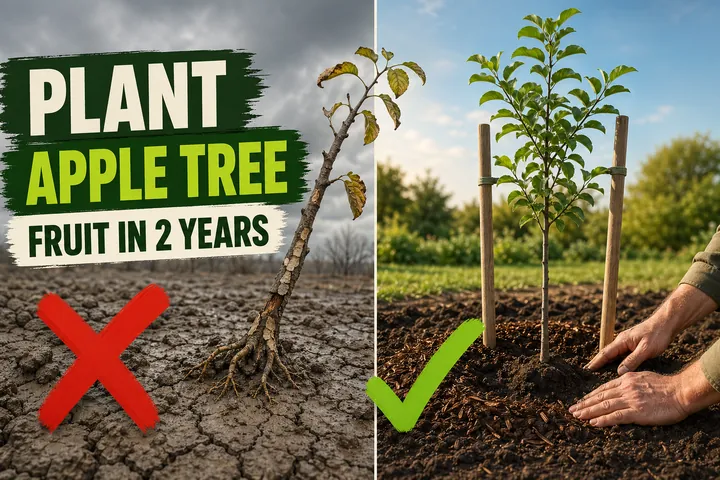
- How to plant an apple tree — the planting-year baseline this fertilizing schedule builds on, including why year-one feeding does more harm than good.
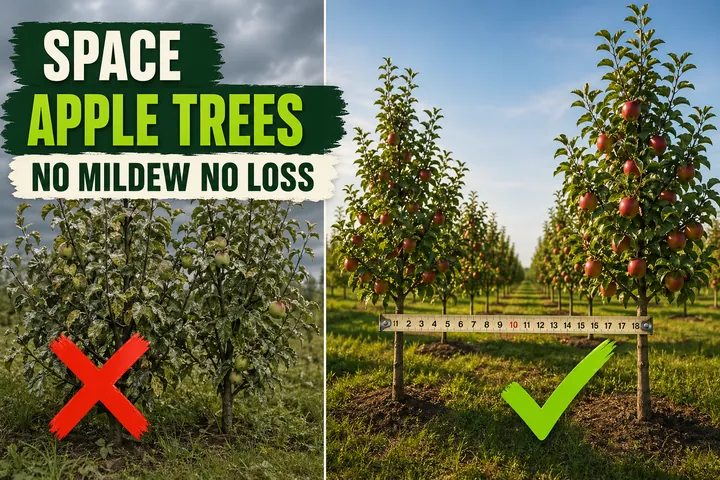
- How far apart to plant apple trees (by rootstock) — spacing sets canopy size, which sets the trunk diameter that drives the dose math in this guide.
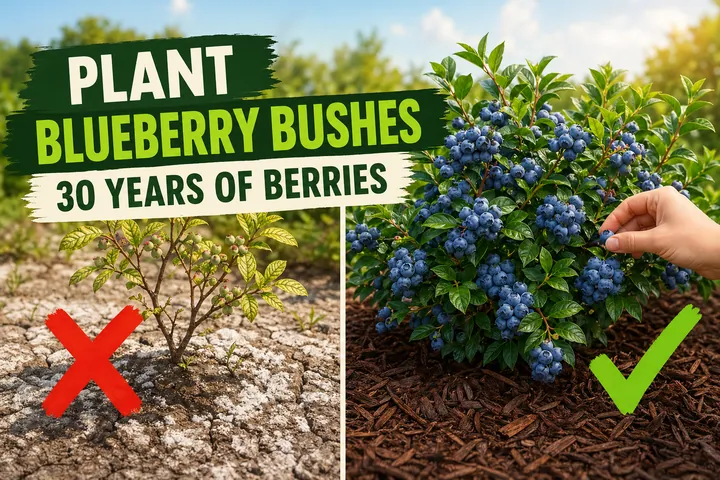
- How to plant blueberry bushes — the acid-loving exception to the fruit-tree fertilizing rules above, with its own pH and feed schedule.
Track your fruit trees’ bud-break dates and feed reminders automatically with the free Tazart plant care app. It logs each tree, fires the spring fertilizer reminder 4–6 weeks before bud break in your zone, and Dr. Afrao — the in-app AI plant assistant — can diagnose overfeeding from a leaf photo.
A note on conditions
Every orchard is different. The numbers in this guide — ½ cup per inch of trunk, 4–6 weeks before bud break, late-July cut-off — are solid starting points, but your specific climate zone, soil type, rainfall, tree age, rootstock, and last year’s growth all change how a fruit tree responds to feeding. Watch the tree for one full season after each fertilizer change. Annual shoot length, leaf colour, and fruit set will tell you what to adjust. That feedback loop — observe, adjust, observe again — is how every productive backyard orchard is built.
Highly recommended
The supplies that make this guide work
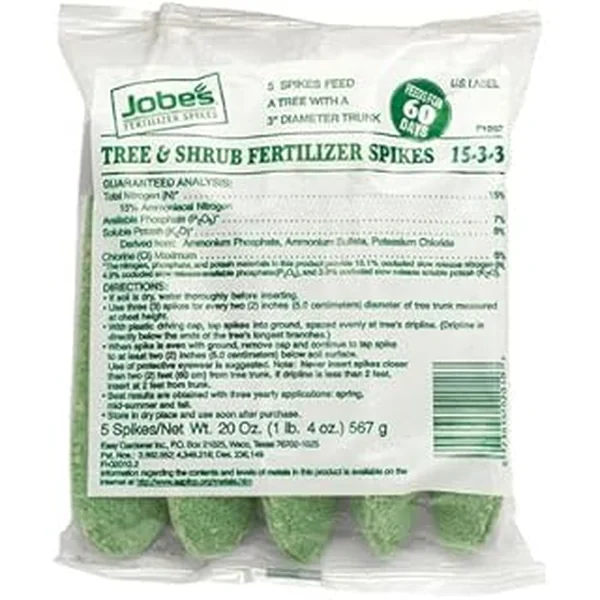
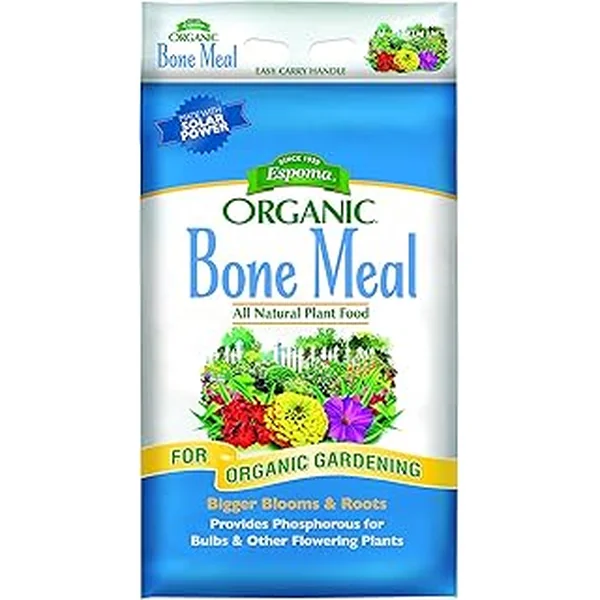
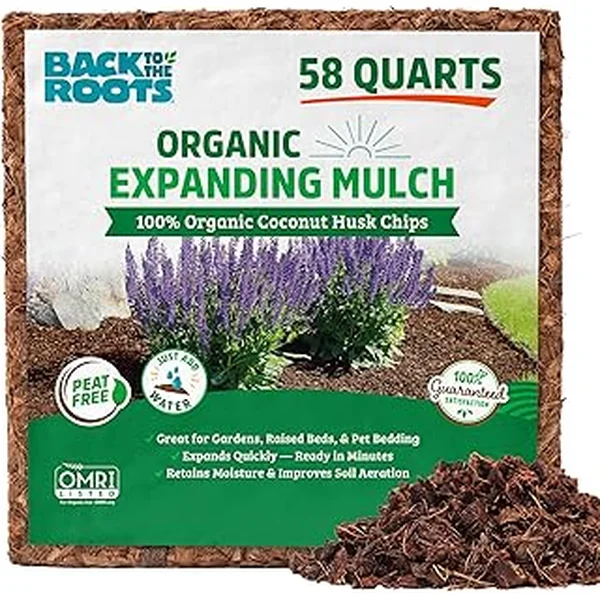
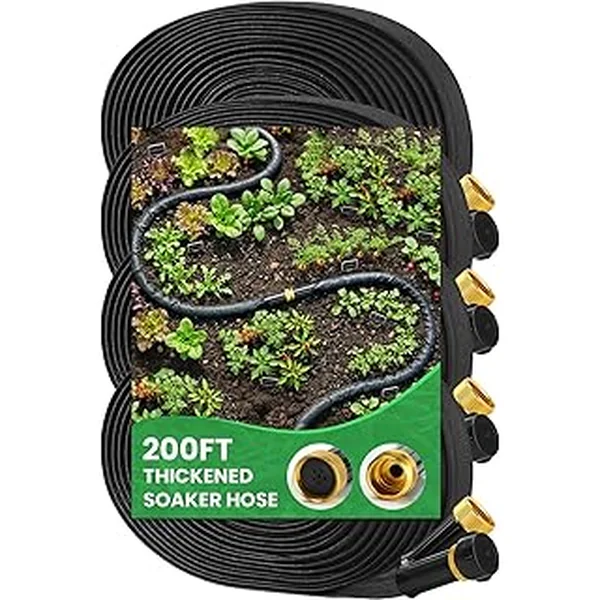
Tazart is an Amazon Associate — we earn from qualifying purchases at no extra cost to you. Thank you for helping us keep these guides free.
Frequently asked questions
Should I fertilize a newly planted fruit tree?
No — wait until the second spring to fertilize a newly planted fruit tree. The first growing season after planting is for root establishment, not top growth. Fertilizer applied at planting pushes weak leafy shoots that the disturbed root system cannot support, and high salt levels can burn freshly cut roots. Top-dress with 5–8 cm (2–3 in) of compost in a 60–90 cm (24–36 in) ring instead. Begin proper feeding 12 months later, 4–6 weeks before bud break in year two.
Can I use manure on fruit trees?
Yes — but only well-rotted manure, applied in autumn or very early spring as a 2–5 cm (1–2 in) top-dress around the drip line, never against the trunk. Fresh manure is too high in soluble nitrogen and ammonia, will burn surface roots, and pushes the soft frost-tender growth you are trying to avoid. Aged manure (6+ months old, dark and crumbly) acts more like compost and releases nutrients slowly through the season.
What are good organic fertilizer options for fruit trees?
Composted manure, finished garden compost, bone meal for phosphorus, kelp or seaweed meal for potassium and trace minerals, and feather or fish meal for slow-release nitrogen all work well on fruit trees. Mix them into a single broadcast band at the drip line in early spring, water in, and top with mulch. Organic feeds release more slowly than synthetic granules, so apply them 2–3 weeks earlier than the synthetic schedule.
Can I foliar feed fruit trees?
Foliar feeding works for emergency micronutrient correction — for example, a kelp or chelated-iron spray to fix yellow new leaves — but it is not a substitute for ground feeding. Spray early morning or late afternoon when temperatures are below 26°C (78°F) and the leaves are dry. Cover both sides of the leaves until they drip. Repeat once after 14 days. Stop foliar feeding by mid-summer, same as ground feeding.
How do I fertilize fruit trees grown in containers?
Container fruit trees need more frequent, lower-dose feeding than in-ground trees because the limited soil volume runs out of nutrients faster and rain leaches salts through the drainage holes. Use a balanced liquid fertilizer at half label strength every 3–4 weeks from bud break through mid-summer. Stop feeding by late July. Top-dress 2–3 cm (1 in) of fresh compost into the pot every spring.
When should I stop fertilizing fruit trees?
Stop feeding deciduous fruit trees by late July at the latest, regardless of climate zone. Late-summer or autumn nitrogen pushes a flush of soft new shoots that have no time to harden off before the first frost. Those tender shoots blacken in the first cold snap and become entry points for fire blight and canker. The tree needs to be slowing down, drawing carbohydrates back into the wood, not pushing new leaves.