Houseplants
Wandering Dude Plant Care (Tradescantia zebrina Made Easy)
Wandering dude plant care made simple — bring back the silver-and-purple stripes with the right light, watering, pinching, and easy propagation
On this page
- Quick answer
- Table of contents
- Why it loses its silver-and-purple stripes
- Light
- Watering
- Humidity and temperature
- Soil and potting
- Pinching to keep it bushy
- Propagation — easiest cuttings in the houseplant world
- Fertilizing
- Common mistakes
- Troubleshooting
- Watch: wandering dude care guide
- Related reading
- A note on conditions
Watch the visual walkthrough
Wandering Jew Plant Care: Growing Tradescantia Zebrina
Get free seeds, shipping, and returns: https://www.epicgardening.com/greenhouse/ Wandering Jew is the common name of a few ...
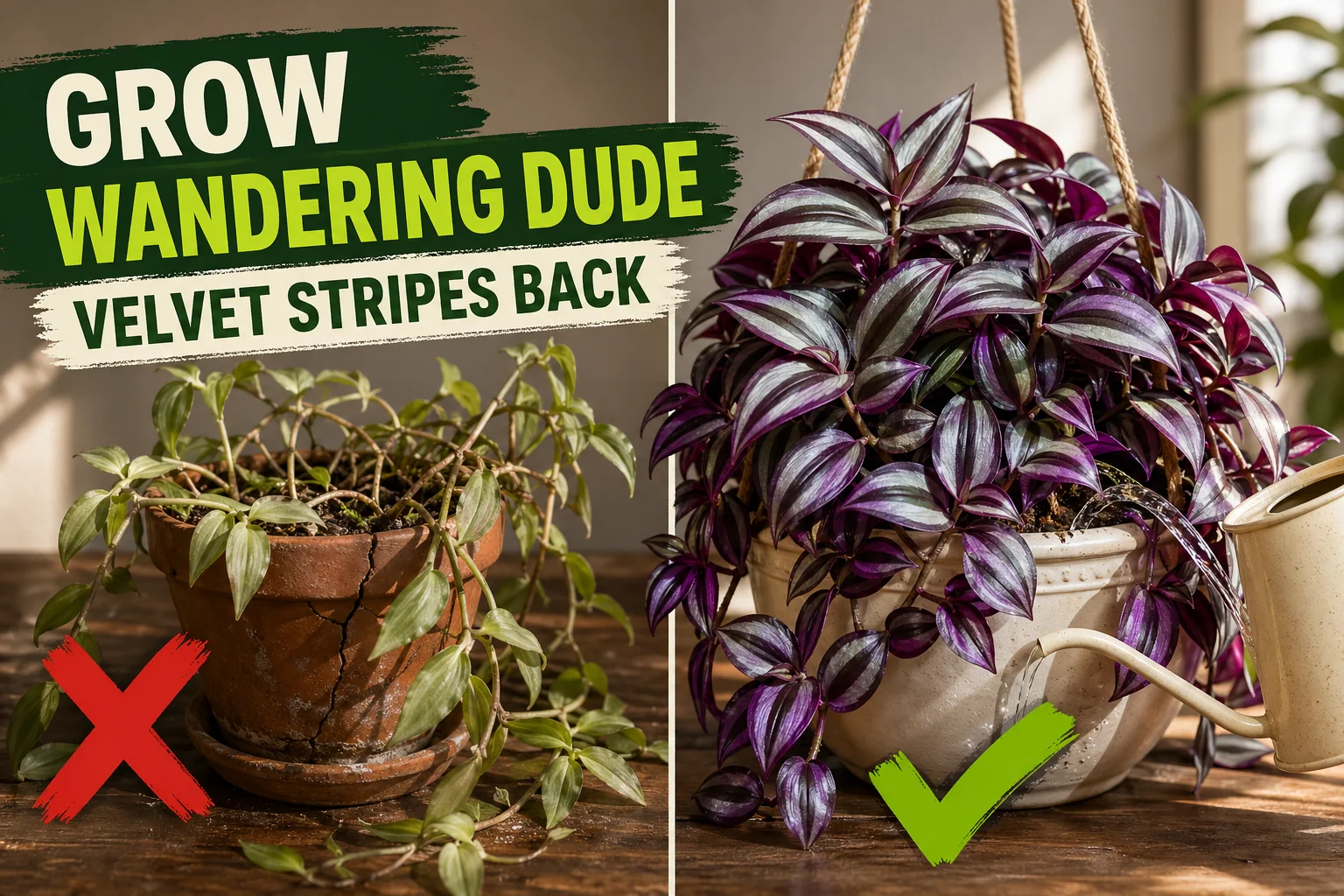
The wandering dude plant (Tradescantia zebrina) is one of the most striking trailing houseplants you can own — when it’s happy. Healthy leaves are striped with iridescent silver, deep purple, and a glowing magenta underside, and the stems cascade over the edge of the pot like a living curtain. Most people who fail with this plant fail in the same two ways: not enough light, and never pinching it back.
This guide covers everything Tradescantia zebrina actually needs — light, watering, pinching, propagation, and the most common ways the stripes disappear — so you can keep yours vibrant and bushy for years. (Note: this plant is widely sold under the legacy common name “wandering jew,” which has fallen out of use because it stems from an antisemitic legend; we use “wandering dude” or the Latin name throughout this guide.)
Quick answer
Wandering dude plant care: bright indirect light right next to a window with a few hours of gentle direct sun, water when the top 2–3 cm (0.75–1 in) of soil is dry, well-draining peat-free houseplant mix, 18–26°C (65–79°F), pinch the tips every 2–3 weeks to keep it bushy, and propagate fresh cuttings into the same pot every 6–12 months. The silver-and-purple stripes only appear in strong light — low light turns the plant plain green and leggy.
Table of contents
- Why it loses its silver-and-purple stripes
- Light requirements
- Watering
- Humidity and temperature
- Soil and potting
- Pinching to keep it bushy
- Propagation — easiest cuttings in the houseplant world
- Fertilizing
- Common mistakes
- Troubleshooting
- Watch: wandering dude care guide
- Related reading
- A note on conditions
Why it loses its silver-and-purple stripes
The dramatic silver-and-purple zebra striping on Tradescantia zebrina leaves comes from a combination of two things:
- Anthocyanin pigments in the leaf tissue, which produce the deep purple and magenta tones
- Reflective epidermal cells along the upper leaf surface, which bounce back light to create the silver bands
Both pigments are light-driven. In a dim corner the plant simply stops producing them, and the new leaves come in plain green with only faint purple shading. The hairs and cell structure are still there — the colour just isn’t.
Move the plant into strong, bright light and the new growth will come in fully striped again within 2 to 3 weeks. Existing faded leaves stay faded — only the new growth recolours.
Light
Wandering dude plants need bright indirect light all day, ideally with 2 to 4 hours of gentle direct sun (early morning or late afternoon).
Best positions indoors:
- East-facing window — the easiest match: gentle morning sun, no scorch risk, strong all-day brightness
- South-facing window — best stripes overall, but pull the plant back 30–60 cm (12–24 in) from the glass in summer or use a sheer curtain
- West-facing window — afternoon sun works in cooler months; in hot summers protect with a sheer curtain
- Hanging basket near a bright window — Tradescantia zebrina trails beautifully and the cascading stems get even light when hung 30 cm (12 in) below the top of the window
What to avoid:
- North-facing rooms with no other light source — the stripes vanish within weeks
- More than 1.5 m (5 ft) from a window — too dim for stripe production
- Harsh midday direct sun through summer glass — bleaches the leaves and crisps the edges
If you don’t have a bright window, a basic full-spectrum LED grow light bar 25–30 cm (10–12 in) above the plant for 12–14 hours per day will keep the stripes vivid year-round.
Rotate the pot a quarter turn every week so every side of the trailing plant gets even light — otherwise the stems all reach toward the window and the back of the pot goes bare.
Watering
Water your wandering dude when the top 2–3 cm (0.75–1 in) of soil feels dry to the touch. Probe with your finger — if the top layer is still damp, wait one more day.
When you water:
- Pour slowly at the base of the plant, aiming at the soil rather than the leaves
- Water until it drains freely from the bottom holes
- Tip out any water sitting in the saucer after 15–30 minutes — Tradescantia zebrina hates wet feet
- Wait until the top 2–3 cm (0.75–1 in) dries again before the next watering
Typical frequency: every 5 to 8 days in spring and summer indoors, every 10 to 14 days in autumn and winter.
This plant is unusually expressive when thirsty: the leaves wilt and droop within hours of the soil drying out, then perk back up within an hour of watering. That’s normal behaviour, not damage. But repeated severe wilt-then-rescue cycles weaken the plant, so try to water before it crashes.
The fastest way to kill a wandering dude is overwatering. The fleshy stems rot quickly when sitting in soggy soil — usually showing as black mushy patches at the soil line. Always err on the side of slightly too dry rather than slightly too wet.
Humidity and temperature
Ideal humidity: 40–60%. Wandering dude is forgiving of typical household air and rarely needs extra humidity. In very dry homes (below 30% — common near radiators in winter) the leaf tips can crisp; raise humidity with a pebble tray or a small humidifier in the room.
You don’t need to mist. The dense canopy can trap mist droplets and encourage fungal spots, especially in low light or cool rooms.
Ideal temperature: 18–26°C (65–79°F). Avoid:
- Temperatures below 10°C (50°F) — growth stops and stems can rot
- Cold draughts from open windows in winter
- Sudden swings of more than 5°C (9°F) overnight
- Spots directly above heating vents, which dry out the foliage fast
Tradescantia zebrina is not frost-tolerant. If you summer it outdoors, bring it back inside before night temperatures drop below 13°C (55°F).
Soil and potting
Use a light, well-draining peat-free houseplant mix — standard indoor potting mix amended with about 20% perlite works very well. The goal is a mix that holds enough moisture to stay damp for a few days after watering but drains freely and never stays sodden.
Avoid:
- Dense garden soil — compacts in pots, holds too much water, suffocates roots
- Pure cactus mix — drains too fast for this plant; it dries out within a day
- Old, broken-down potting mix from another houseplant — fresh mix every 12–18 months is much healthier
Pot choice: any pot with drainage holes works. A hanging ceramic or plastic pot 15–20 cm (6–8 in) wide is ideal once the plant is established. Terracotta is fine but dries out very quickly, so plan to water more often.
Repotting: every 12–18 months in spring, moving up one pot size only. Wandering dude likes being slightly root-bound — it grows more compactly and colours up better than in oversized pots full of damp soil.
Pinching to keep it bushy
Pinching is non-negotiable for this plant. Without it, every stem grows longer and longer at the tip and drops the lower leaves, leaving you with a few long bare vines and a bald crown — the classic “leggy” wandering dude look most owners end up with by month six.
How to pinch:
- Use clean fingertips or sterile snips
- Cut or pinch just above a leaf node (where a leaf joins the stem)
- Do this every 2 to 3 weeks during spring and summer
- Remove up to one-third of any stem in a single pinch — the plant rebounds within days
- Save every pinched piece for propagation (see next section)
Each cut forces the stem to branch into two new shoots from the node below the cut. Pinch consistently for two months and you’ll see the plant fill in dramatically.
If the plant is already leggy with long bare stems, don’t be shy — cut the bare stems back to within 5–8 cm (2–3 in) of the soil line. New growth will emerge from the cut point and from the soil-level nodes within 2 to 4 weeks.
Propagation — easiest cuttings in the houseplant world
Tradescantia zebrina is one of the easiest houseplants to propagate. Cuttings root in water or soil within 7 to 14 days, and almost every cutting takes.
How to propagate:
- Take a 10–15 cm (4–6 in) stem cutting, cutting just below a leaf node
- Strip the lower 2–3 leaves so the bottom 5 cm (2 in) of stem is bare
- Place the cut end in a glass of room-temperature water OR push it directly into moist potting mix
- Keep in bright indirect light, out of direct sun
- Water rooting: change the water every 5–7 days; pot up once roots are 3–5 cm (1–2 in) long
- Soil rooting: keep the mix evenly moist for the first 2 weeks while roots establish
Pro tip: pot 3 to 6 rooted cuttings together in one pot for a full, lush look from day one. A wandering dude pot of a single cutting always looks sparse for the first six months.
The app Tazart can remind you to take new cuttings every few months and keep your propagation jars on a watering schedule.
Fertilizing
Feed every 2 to 4 weeks during spring and summer with a balanced liquid houseplant fertilizer at half the recommended strength. Skip fertilizer entirely from late autumn through late winter when growth slows.
Wandering dude is a fast grower in good light, so it does respond to feeding — but full-strength fertilizer can burn the roots and cause leaf-tip browning. Half-strength once or twice a month is the sweet spot.
If the leaves are pale and growth has stalled even in good light, that’s the main fertilizer signal. If the plant looks vivid and is putting out new shoots, you don’t need to feed more.
Common mistakes
-
Putting it in low light. The number-one reason wandering dudes lose their stripes. The plant survives in dim corners but its colour and density don’t.
-
Never pinching. Skipping the every-2-to-3-week pinch is the number-one reason the plant goes leggy and bare-stemmed within 6 months.
-
Overwatering. Constantly damp soil rots the fleshy stems at the crown. Always wait until the top 2–3 cm (0.75–1 in) is dry.
-
Letting it sit in saucer water. Even if you water correctly, leaving the pot in a saucer of water for hours waterlogs the roots. Empty the saucer 15–30 minutes after watering.
-
Using a giant pot. Big pots full of damp soil rot wandering dude faster than almost anything else. Move up one pot size at a time only.
-
Throwing away pinched cuttings. Every cutting is a free new plant. Drop them straight into the parent pot to thicken it up.
-
Not rotating the pot. All the stems lean toward the window. The back of the pot goes bare. Quarter-turn weekly.
Troubleshooting
| Symptom | Likely cause | Fix |
|---|---|---|
| Leaves losing purple, going plain green | Insufficient light | Move within 30 cm (12 in) of a south, east, or west window; new growth will come in striped within 2–3 weeks |
| Long bare stems with leaves only at the tips | Not pinched regularly | Cut all leggy stems back to 5–8 cm (2–3 in); pinch growing tips every 2–3 weeks going forward |
| Black mushy patches at the base of stems | Stem rot from overwatering | Cut all rotted stems off well above the damage; let soil dry out fully; reduce watering frequency |
| Whole plant wilting and drooping | Severely dry soil | Water deeply once; recovery within an hour is normal |
| Crispy brown leaf tips | Low humidity, fertilizer burn, or scorching sun | Move out of direct midday sun; halve fertilizer dose; raise humidity if below 30% |
| Pale washed-out new growth | Underfed or too much hot direct sun | Feed half-strength balanced liquid fertilizer; move out of harsh afternoon sun |
| Tiny flying insects in the soil | Fungus gnats from staying too wet | Let soil dry fully between waterings; top with a 1 cm (0.5 in) layer of dry sand or fine gravel |
| Sticky residue on leaves | Aphids or mealybugs | Wipe leaves with a damp cloth; spray with diluted insecticidal soap weekly until clear |
Watch: wandering dude care guide
A short visual walkthrough is useful for seeing exactly what a healthy, well-pinched wandering dude looks like compared to a leggy faded one. Search YouTube for Tradescantia zebrina care or wandering dude plant pinching and look for channels that show real before-and-after results across several weeks.
Watch the visual guide, then come back to the timing and thresholds in this article — written guides give you the exact numbers (soil dryness, pinch intervals, temperature ranges) that videos often skip.
Related reading
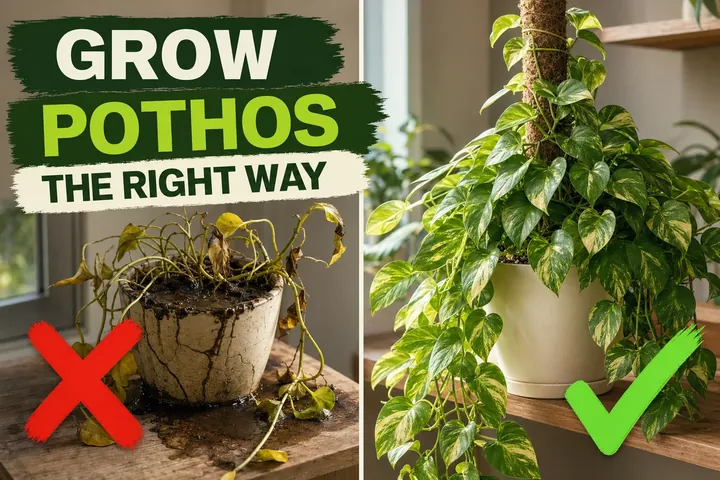
- How to care for a pothos plant — another easy trailing houseplant with similar light and watering rules; great companion in the same hanging basket setup.
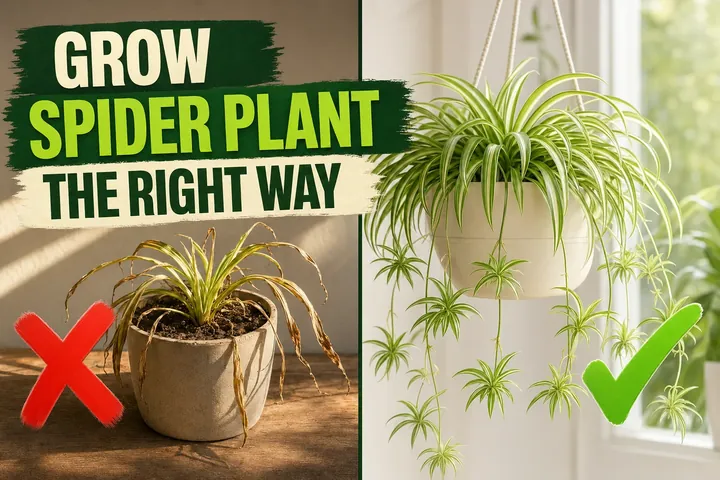
- How to take care of a spider plant — a low-maintenance trailing plant that thrives in similar conditions to a wandering dude.
- Purple passion plant care (Gynura aurantiaca) — another striking purple-leaved houseplant, but with very different rules around misting and watering.
- Set watering reminders, pinch schedules, and propagation alerts for your wandering dude in the free Tazart plant care app — and ask Dr. Afrao, the in-app AI plant assistant, if you’re seeing symptoms not covered here.
A note on conditions
Every home is different. The light at your window, the humidity in your rooms, your pot size and soil mix, and the season all change how fast a wandering dude grows and how often it needs water. Use the numbers in this guide as a starting point — then adjust based on what your specific plant shows you in the first two to three weeks. That’s how every experienced grower calibrates their care.
Highly recommended
The supplies that make this guide work
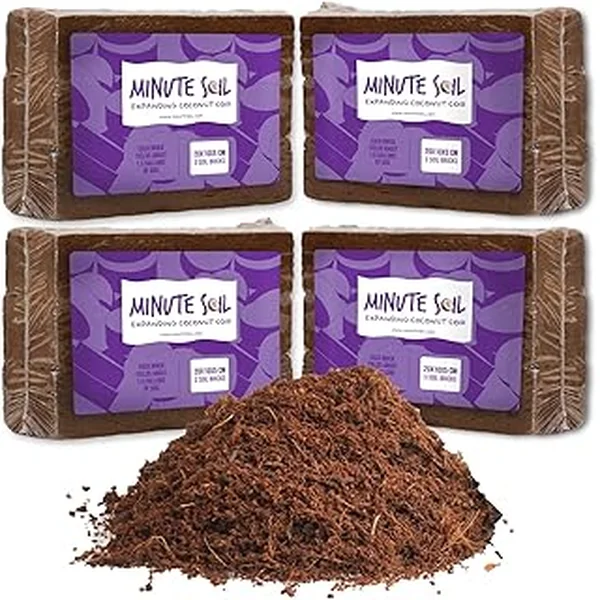
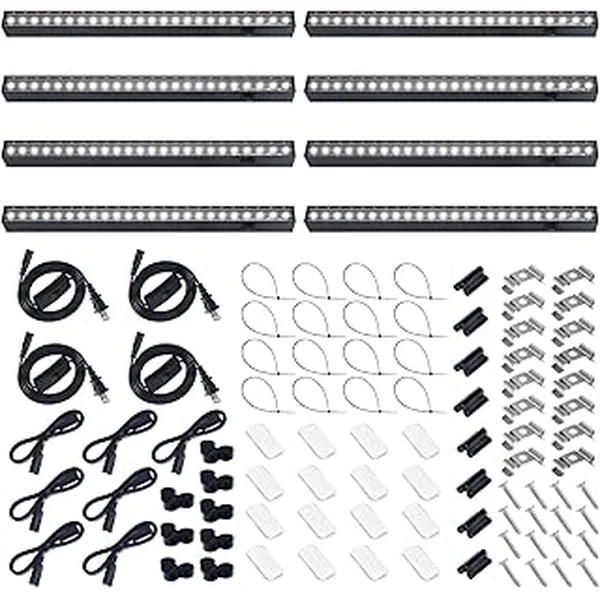
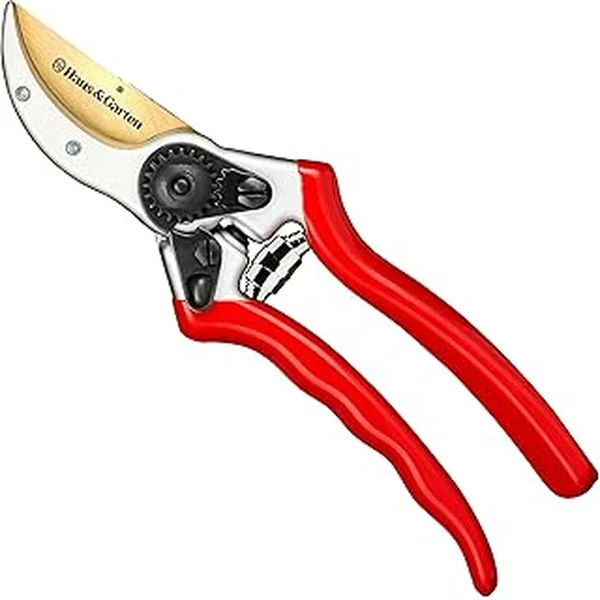
Tazart is an Amazon Associate — we earn from qualifying purchases at no extra cost to you. Thank you for helping us keep these guides free.
Frequently asked questions
Why is my wandering dude losing its purple stripes?
Almost always not enough light. Tradescantia zebrina produces its silver-and-purple stripes through anthocyanin and reflective leaf cells that only develop under bright light. Move the plant directly next to a south-, east-, or west-facing window — within 30 cm (12 in) of the glass — and the new growth will come in striped again within 2 to 3 weeks.
How often should I water a wandering dude plant?
Water when the top 2–3 cm (0.75–1 in) of soil feels dry — usually every 5 to 8 days indoors during spring and summer, longer in winter. The leaves wilt very quickly when thirsty, then perk back up within an hour of watering, so the plant will tell you if you're cutting it close. Always water until it drains freely and tip out any standing water in the saucer.
Does a wandering dude need direct sun?
A few hours of gentle direct sun (early morning or late afternoon) brings out the strongest stripes and the deep magenta undersides. Avoid harsh midday direct sun through glass in summer — it scorches the leaves. Bright indirect light right next to a window is the sweet spot for most homes.
How do I make my wandering dude bushy?
Pinch the growing tips every 2 to 3 weeks during spring and summer. Each cut just above a leaf node forces the stem to branch into two new shoots, building a dense plant instead of a few long bare vines. Don't throw the cuttings away — drop them straight back into the same pot or a glass of water and they'll root within 7 to 10 days.
Should I mist my Tradescantia zebrina?
Light occasional misting is fine, but it's not necessary. Wandering dude is much more forgiving of average household humidity than fuzzier plants like the purple passion plant. If your home is very dry, a pebble tray or a nearby humidifier raises humidity more reliably than misting and avoids fungal spots on dense foliage.
How do you propagate a wandering dude plant?
Take a 10–15 cm (4–6 in) stem cutting just below a leaf node, strip the lower leaves, and place the cut end in water or directly into moist potting mix. Keep it in bright indirect light. Roots appear in 7 to 14 days. Pot up several rooted cuttings together in one pot for a fuller-looking plant from day one.
Is the wandering dude plant toxic?
Yes, mildly. The sap can cause skin irritation in sensitive people and is mildly toxic if eaten by cats, dogs, or children — it can cause mouth irritation and stomach upset. It's not life-threatening, but place the plant out of reach of pets and small children. Wash your hands after pinching or pruning.