Care
Russian Sage Plant Care (Sun, Soil, Spring Pruning)
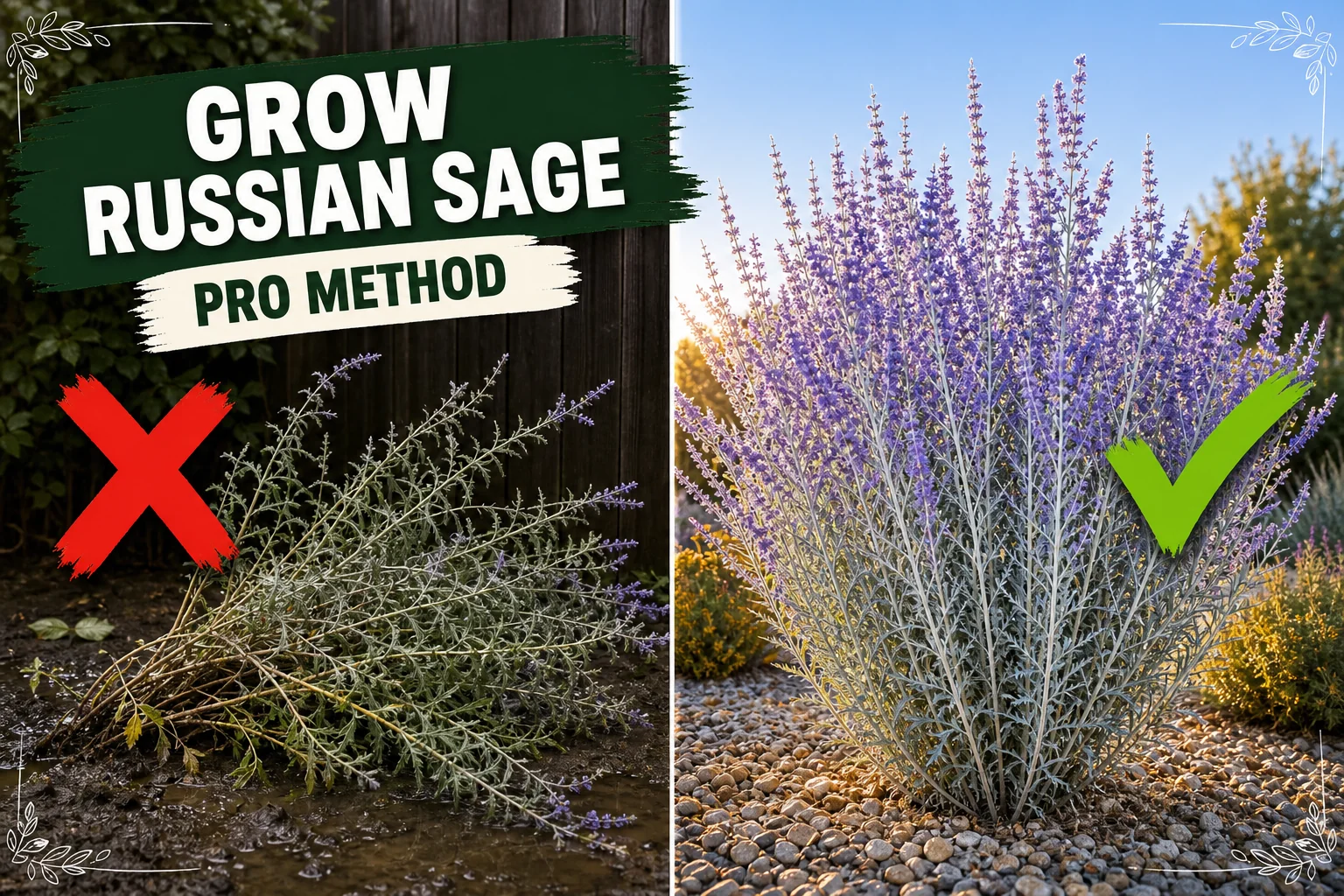
Russian sage (Perovskia atriplicifolia) needs full sun, well-drained soil, and a hard spring cut to 15 cm (6 in) — drought-tolerant in USDA zones 4–9.
On this page
- Quick answer
- What is Russian sage?
- Sunlight: full sun, no exceptions
- Soil: drainage matters more than fertility
- Watering: less is more
- Pruning: hard cut in early spring, never fall
- Spacing and planting
- Fertilizer: don’t
- Winter care
- Propagation
- Pest and disease tolerance
- Companion planting
- Common mistakes
- Troubleshooting
- Watch: pruning Russian sage in spring
- Related reading
- A note on conditions
Watch the visual walkthrough
Planting Sedum, Russian Sage & a Lilac Rose! 💚🌿💚 // Garden Answer
Affiliate/Sponsored Links Denim 'n Lace Russian Sage - https://bit.ly/2M6441h Midnight Velvet Sedum - https://bit.ly/46fcYAs ...
Russian sage (Perovskia atriplicifolia, recently reclassified by botanists as Salvia yangii) is one of the longest-blooming, easiest-care perennials in temperate gardens — a 1.2 m (4 ft) cloud of silvery foliage and lavender-blue spikes that flowers from June through October without fertilizer, deadheading, or coddling. The catch is that beginners often kill it with kindness — too much water, too rich soil, too little sun, or the wrong pruning timing.
This guide covers the four rules that decide whether your Russian sage thrives or flops: full sun, sharply drained soil, no fertilizer, and a hard spring cut to 15 cm (6 in). Get those right and the plant carries the perennial border from early summer to first frost.
Quick answer
Russian sage (Perovskia atriplicifolia) needs full sun (6+ hours daily), sharply drained low-fertility soil, and almost no water once established. Cut every stem to 15 cm (6 in) in early spring as new growth appears — never in fall. Skip fertilizer entirely. Hardy in USDA zones 4–9. Mature size: 1.2 m × 1.2 m (4 ft × 4 ft) by year three.
What is Russian sage?
Russian sage is a woody-based perennial subshrub native to the rocky steppes and dry slopes of Central Asia (Afghanistan, Iran, Pakistan, Tibet). It’s not actually Russian, and it’s not a true sage — it sits in the mint family (Lamiaceae) alongside catmint, lavender, and salvias. Recent DNA work moved the genus from Perovskia into Salvia, so you’ll see it sold under both names.
What gardeners get:
- Silvery-grey, deeply cut, aromatic leaves on woody white stems
- Tall airy panicles of small lavender-blue tubular flowers
- Bloom window from June to October — one of the longest of any hardy perennial
- Mature size 90 cm–1.2 m (3–4 ft) tall and wide; some cultivars reach 1.5 m (5 ft)
- Drought, heat, deer, and rabbit tolerance
- USDA hardiness zones 4–9 (some sources say 5–9 — zone 4 needs winter mulch)
Russian sage pairs beautifully with lavender, catmint, ornamental grasses, and any other dry-garden perennial. It’s a pillar of meadow-style and prairie planting schemes.
Sunlight: full sun, no exceptions
Russian sage needs at least 6 hours of direct sun per day, ideally 8 hours. This is non-negotiable.
What happens in less than 6 hours of sun:
- Stems grow leggy and flop — the plant stretches toward light and produces weak, thin branches
- Bloom count crashes — flowering depends on long days of direct light
- Silvery foliage turns dull green — the silvery hairs that protect leaves from intense sun are produced only when intense sun is present
- Powdery mildew appears — shaded foliage doesn’t dry quickly enough between dews
If you only have part-sun, plant catmint (Nepeta) instead — it has a similar lavender-blue flower spike and the same season-long bloom window but tolerates 4–6 hours of sun.
Soil: drainage matters more than fertility
Russian sage is drought-tolerant precisely because it evolved on sharply drained rocky scree slopes. Its biggest enemy in the garden is wet feet — particularly wet feet in winter when the plant is dormant.
Ideal soil:
- Texture: sandy loam, gravelly loam, or rocky soil
- Drainage: water should drain through the planting hole within an hour
- pH: 6.5–8.0 (alkaline-tolerant, doesn’t like acidic soil under 6.0)
- Fertility: low to moderate — Russian sage produces stronger stems and more flowers in poor soil
What kills Russian sage:
- Heavy clay that holds water after rain
- Rich compost-heavy beds — the plant grows lush and weak
- Bog-like spots, low-lying garden corners, irrigated lawn edges
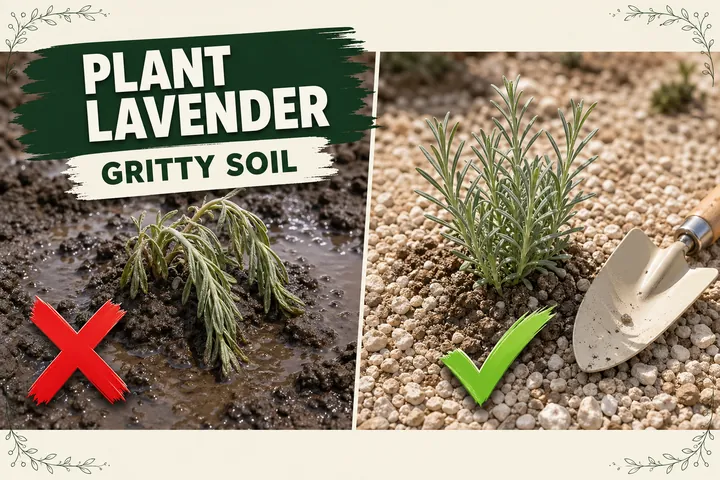
Fixing heavy clay: mix 30% coarse sand or fine gravel into the planting area to a depth of 30 cm (12 in), or plant on a small raised mound 15–20 cm (6–8 in) above the surrounding grade. Don’t try to amend pure clay to “rich loam” — the plant doesn’t want rich loam.
Watering: less is more
In the establishment year (the first 12 months after planting), water deeply once a week if rainfall is below 25 mm (1 in) per week. This builds the deep taproot that supports the plant for the next decade.
After year one, Russian sage rarely needs watering. Natural rainfall in most temperate climates is enough.
Signs you’re overwatering:
- Yellow lower leaves
- Flopping or sprawling habit
- Black soft spots on lower stems (crown rot)
- Loss of silvery foliage colour
Signs you’re underwatering (rare):
- Curled, dry leaves on top growth
- Buds dropping before opening
- Wilted appearance lasting past sundown
The rule of thumb: when in doubt, don’t water. Russian sage tolerates 30+ days without irrigation in mature plantings.
Pruning: hard cut in early spring, never fall
This is the single most important care task for Russian sage. Done correctly, it gives you a compact 1.2 m (4 ft) cloud of bloom. Skipped or done wrong, you get a leggy 1.5 m (5 ft) flopper that blooms only at the tips.
The rule:
- Wait until early spring (March or April depending on zone) — the moment you see fresh green shoots emerging at the base of the woody stems
- Use sharp bypass pruners to cut every stem back to 15 cm (6 in) above the ground
- Cut just above a visible new bud or set of leaves, never into bare wood without visible regrowth
- Don’t fertilize after cutting — the plant has the energy it needs in its taproot
Why early spring, not fall?
The dry standing stems insulate the crown through winter and provide architecture in the snowy garden. Fall pruning exposes the crown to winter wet, which is the most common cause of crown rot in zone 4 and 5 plantings.
What if I forgot to cut in spring?
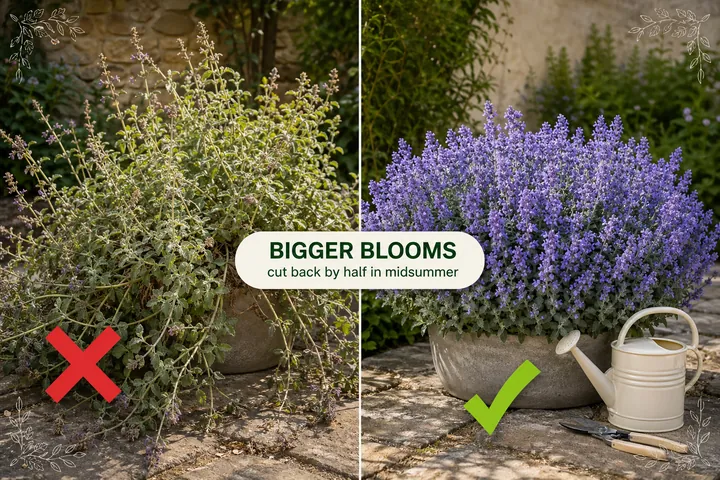
If you missed the early-spring cut and the plant has already grown 30 cm (12 in) of new growth, you can still cut by half in early summer. You’ll lose some of that year’s bloom but the plant will branch more compactly and bloom heavier in late summer.
Spacing and planting
Plant Russian sage in groups of three or more for the best visual effect. Space individual plants:
- Standard varieties: 60–90 cm (24–36 in) apart
- Compact varieties (‘Little Spire’, ‘Lacey Blue’): 45–60 cm (18–24 in) apart
- From walls or fences: 60 cm (24 in) — plant flops outward, doesn’t lean back
Plant at the original soil depth — don’t bury the crown. Backfill with native soil, not amended compost. Water in deeply once at planting, then leave alone unless soil is bone dry at 5 cm (2 in) depth.
Fertilizer: don’t
Russian sage produces stronger stems and more flowers in poor soil than in rich soil. Annual fertilizing produces leggy, floppy, mildew-prone plants with fewer blooms.
The only fertilizer Russian sage needs:
- At planting (in extremely poor soil only): a single light handful of balanced slow-release perennial fertilizer mixed into the planting hole
Beyond that — no annual feeding, no top-dress, no compost mulch. A 5 cm (2 in) gravel mulch is more useful than any fertilizer.
Winter care
In USDA zones 5–9, Russian sage needs no winter protection. Leave the standing stems in place — they insulate the crown.
In USDA zone 4 (the cold edge of its range):
- Apply 10–15 cm (4–6 in) of bark mulch around the base in late fall
- Don’t cover the crown — leave a clear ring around the stems for airflow
- Remove mulch in early spring as soon as new growth appears
In USDA zones 9 and warmer, Russian sage may stay semi-evergreen — adjust the spring cut to “remove dead wood and shape” rather than the hard 15 cm (6 in) cut.
Propagation
Russian sage propagates well from softwood cuttings taken in early summer:
- Cut a 10–15 cm (4–6 in) stem tip with no flowers, just below a leaf node
- Strip lower leaves from the bottom 5 cm (2 in)
- Dip the cut end in rooting hormone (optional but speeds rooting by a week)
- Plant in a 50/50 mix of perlite and seed compost, kept barely moist
- Cover with a clear plastic bag or propagator dome
- Roots form in 4–6 weeks at 18–22°C (65–72°F)
- Pot up individually once new growth appears, plant out the following spring
Russian sage doesn’t divide reliably — the woody crown resents disturbance. Cuttings or seed (slow, less reliable) are the propagation routes.
Pest and disease tolerance
Russian sage is one of the most pest-resistant perennials available:
- Deer: rarely browsed (the strong aromatic foliage repels them)
- Rabbits: rarely damaged
- Insects: generally pest-free, occasional spittlebug or aphid easily ignored
- Diseases: powdery mildew possible in shaded or crowded plantings; root rot in wet soil; otherwise clean
Plants in good drainage and full sun rarely have any issues for the entire 10–15 year lifespan.
Companion planting
Russian sage’s silvery foliage and airy lavender-blue spikes pair beautifully with:
- Lavender — same drought tolerance, similar colour palette
- Catmint (Nepeta) — front-of-border companion with longer bloom window
- Ornamental grasses (Stipa, Pennisetum, Calamagrostis) — texture and movement
- Coneflower (Echinacea) — bold magenta or orange contrast against the silver-blue
- Black-eyed Susan (Rudbeckia) — golden yellow contrast
- Russian sage with sedum ‘Autumn Joy’ — both peak in late summer
- Milkweed (Asclepias) — both attract pollinators and are drought-tolerant
A free plant care app like Tazart tracks pruning calendars, your local last-frost date, and watering reminders for newly-planted Russian sage in its establishment year — useful when you’re managing a mixed perennial border with different care schedules.
Common mistakes
- Watering too much. The most common Russian sage killer. After year one, leave the irrigation alone.
- Planting in shade. Less than 6 hours of sun produces a floppy, mildewy, sparsely blooming plant.
- Cutting in fall. Exposes the crown to winter wet and kills the plant in zones 4–5.
- Skipping the spring cut. Plants grow on top of last year’s woody stems and flop by midsummer.
- Fertilizing. Rich soil and feed produce leggy weak growth and fewer flowers.
- Planting in heavy clay without drainage amendment. Crown rots within one winter.
- Cutting too late in spring. Wait for the moment new growth appears at the base — cutting before then can leave you with bare wood that doesn’t regenerate.
Troubleshooting
| Symptom | Likely cause | Fix |
|---|---|---|
| Plant flopping or sprawling | Too much shade, too rich soil, or skipped spring cut | Move to full sun; stop fertilizing; cut hard next spring; cut by half in early summer as rescue |
| Yellow lower leaves | Overwatering or wet clay soil | Stop watering; improve drainage with sand or gravel; raise the planting bed |
| Few or no flowers | Insufficient sun or too much fertilizer | Move to a 6–8 hour sun spot; stop fertilizing |
| Powdery white film on leaves | Crowded planting, shade, or damp foliage | Thin neighbouring plants; move to full sun; avoid overhead watering |
| Plant didn’t regrow after spring cut | Cut into bare woody stems with no buds | Always cut just above visible new growth; replace plant if the entire crown is dead |
| Black soft spots on lower stems | Crown rot from wet soil | Improve drainage immediately; remove affected stems; plant may not recover |
| Leaves losing silvery colour | Insufficient sun | Move to full sun; silvery hairs only develop with intense direct light |
| Plant smaller than expected in year one | Normal — Russian sage takes 2–3 years to reach full size | Be patient; year three is typically when the plant reaches mature size |
Watch: pruning Russian sage in spring
A short visual walkthrough pairs well with the pruning steps above. If you’re a visual learner, watch a quick step-by-step video that shows the spring cut timing, the height to cut at, and how to identify new growth at the base, then come back to the schedule in this guide.
Related reading
- Lavender plant care — sun, drainage, and pruning — Russian sage’s closest companion in dry-garden plantings, with similar care needs.
- Catmint plant care for season-long blooms — a shade-tolerant alternative if you don’t have full sun for Russian sage.
- How to plant lavender for years of bloom — the planting walkthrough that pairs with Russian sage in a Mediterranean-style border.
- How to grow milkweed for monarch butterflies — pollinator companion that thrives in the same dry, sunny conditions.
A note on conditions
Every garden is different. USDA zone, soil texture, summer rainfall, and how much sun the bed actually gets all change how Russian sage performs. Use the timing and depth guidance in this guide as a starting point and adjust based on how your plant looks in its first three seasons — that’s how every good perennial gardener tunes a permanent planting.
Highly recommended
The supplies that make this guide work



Tazart is an Amazon Associate — we earn from qualifying purchases at no extra cost to you. Thank you for helping us keep these guides free.
Frequently asked questions
How do you care for Russian sage?
Russian sage (Perovskia atriplicifolia, recently reclassified as Salvia yangii) needs full sun (at least 6 hours of direct light), sharply drained soil with low to moderate fertility, and very little water once established. Cut the entire plant back to 15 cm (6 in) every spring, just as new growth appears at the base. Don't fertilize, don't deadhead, and don't water in winter. Hardy in USDA zones 4–9. Following these four rules — sun, drainage, hard spring pruning, no fuss — produces a 1.2 m (4 ft) cloud of silvery foliage and lavender-blue flowers that bloom from June through October.
When should I cut back Russian sage?
Cut Russian sage back hard in early spring, just as you see new green shoots emerging from the base of the woody stems — usually March or April depending on your zone. Cut every stem to 15 cm (6 in) above the ground. Don't cut in fall — the standing dry stems insulate the crown over winter and provide structure in the snowy garden. Don't cut into completely woody bases without visible new growth, or the plant won't regenerate that stem.
Does Russian sage need full sun?
Yes — Russian sage needs at least 6 hours of direct sun per day, ideally 8 hours. In less than 4 hours of sun the plant grows leggy, flops over, blooms sparsely, and loses its silvery foliage colour. Russian sage evolved in the dry steppes and rocky slopes of Central Asia where sun is intense and continuous, and it doesn't adapt well to even partial shade. If you only have part-sun, choose catmint (Nepeta) instead — it has a similar lavender-blue flower spike but tolerates shade better.
How often do you water Russian sage?
In year one (establishment), water deeply once a week if there's no rain. After year one, Russian sage rarely needs watering — natural rainfall in most temperate climates is enough. Established plants are drought-tolerant to the point that excess water is the most common cause of decline. Yellow lower leaves and a flopping habit usually mean the soil is too wet, not too dry. In a long heatwave above 35°C (95°F), a single deep weekly watering helps; otherwise leave it alone.
Why is my Russian sage flopping?
Three causes: too much shade (under 6 hours of direct sun), too rich or too wet soil (the plant grows lush and weak), or skipping the hard spring cut. Russian sage that wasn't cut to 15 cm (6 in) in spring grows on top of last year's woody stems and becomes top-heavy. Fix by moving to full sun, cutting hard the next spring, and avoiding fertilizer entirely. As a rescue, cut back by half in early summer to force shorter, sturdier branching for the autumn bloom.
Is Russian sage drought tolerant?
Yes — Russian sage is one of the most drought-tolerant perennials available. It survives 30+ days without water once established, and thrives in xeriscape, gravel garden, and prairie-style plantings. Its silvery hairy leaves reflect sunlight and reduce water loss; its deep taproot finds moisture metres down. The only situations where supplemental watering helps: the establishment year (first 12 months after planting) and extreme heatwaves above 35°C (95°F).