Edible
Raspberry Plant Care: Pruning, Trellising & Pest Guide
Master raspberry plant care — summer vs everbearing pruning, trellis setup, watering, mulching, fertilising, and how to beat spider mites and anthracnose.
On this page
- Quick answer
- Table of contents
- Light, soil, and site
- Watering raspberries correctly
- Mulching the raspberry row
- Fertilising raspberry canes
- Pruning: the rule that changes by variety
- Trellising and support
- USDA zones and climate
- Common pests and diseases
- Troubleshooting quick-reference table
- Watch: Raspberry plant care video guide
- Related reading
- Summary: raspberry plant care checklist
Watch the visual walkthrough
How to Prune Raspberries! 🤤✂️❤️ // Garden Answer
Affiliate/Sponsored Links Organic land and sea - https://bit.ly/2z7nAGg Berry Tone - https://bit.ly/2K6IKGI BRANDS WE ...
Raspberries reward the gardener who understands two things: which canes to cut, and when to cut them. Get those right and a single 3 m (10 ft) row will hand you several kilos of fruit every summer. Get them wrong and you are left with a thorny tangle and a few bitter berries.
This guide covers the whole annual cycle — light, soil, water, the pruning rules that differ between summer-bearing and everbearing types, trellis setup, fertilising, and how to beat the three pests and diseases that cause most of the trouble.
Quick answer
Raspberries (Rubus idaeus) need 6+ hours of sun, well-drained slightly acidic soil (pH 5.6–6.5), and about 2.5 cm (1 in) of water per week. The single biggest skill is pruning: summer-bearing canes fruit on second-year wood (floricanes) — cut spent brown canes to the ground right after harvest. Everbearing types fruit on first-year wood (primocanes) — the easiest method is to mow the whole patch flat in late winter. Trellis canes between wires at 75 cm (30 in) and 1.5 m (5 ft), mulch 5–7 cm (2–3 in) deep, and fertilise once in early spring. Hardy in USDA zones 3–9.
Table of contents
- Light, soil, and site
- Watering raspberries correctly
- Mulching the raspberry row
- Fertilising raspberry canes
- Pruning: the rule that changes by variety
- Trellising and support
- USDA zones and climate
- Common pests and diseases
- Troubleshooting quick-reference table
- FAQ
Light, soil, and site
Raspberries are a temperate-zone crop with simple soil and exposure needs.
- Sun: at least 6 hours of direct sun per day; 8+ hours produces the heaviest crops and the sweetest fruit.
- Soil: deep, loamy, well-drained. Heavy clay or boggy ground rots crowns. Add compost and grit to clay; in raised beds the problem mostly disappears.
- pH: 5.6 to 6.5 (slightly acidic). Test with an inexpensive soil pH meter before planting.
- Spacing: 60–90 cm (24–36 in) between canes within a row, 1.8–2.4 m (6–8 ft) between rows. Crowding kills airflow and invites disease.
- Wind: an exposed site dries leaves quickly (good for disease) but snaps brittle canes (bad for fruit) — moderate shelter is ideal.
Avoid planting where tomatoes, potatoes, peppers, or aubergines have grown in the last 3 years — they share Verticillium wilt with raspberries.
Watering raspberries correctly
Raspberries are shallow-rooted, so even moisture matters more for them than for most fruit crops.
Rule of thumb: 2.5 cm (1 in) of water per week during normal growth; 4–5 cm (1.5–2 in) per week while flowers, green berries, and ripening fruit are on the canes.
How to water:
- Apply at the base, not overhead. Wet leaves at dusk encourage fungal disease.
- Drip irrigation or a soaker hose laid along the row is ideal — once installed, it takes the guesswork out.
- Deep, slow watering twice a week beats daily shallow sprinkles. Deep watering pulls roots down where they are safer from heat and drought.
Drought during fruit set causes crumbly berries — small dry drupelets that fall apart when you pick them. If you cannot water during a heatwave, the mulch layer below is your insurance.
Mulching the raspberry row
A thick layer of mulch is non-negotiable for productive raspberries. It evens moisture, smothers weeds (whose roots compete fiercely with shallow raspberry roots), keeps soil temperatures stable, and slowly feeds the crowns as it decomposes.
- Depth: 5–7 cm (2–3 in)
- Material: wood chips, bark, straw, well-rotted leaves, or pine needles
- When to apply: late spring, after soil has warmed
- Top-up: add 2–3 cm (1 in) every spring as the previous layer breaks down
Keep mulch 5 cm (2 in) clear of the cane bases — piled-up mulch around crowns traps moisture against the stems and invites crown rot.
Fertilising raspberry canes
Raspberries are moderate feeders. The single most useful application is one shot of balanced fertiliser in early spring, just as new green shoots are pushing up.
- Rate: 280–340 g per 3 m of row (10–12 oz per 10 ft of row) of 10-10-10 balanced fertiliser
- Method: spread evenly along the row, scratch lightly into the soil with a rake, water in
- Optional second feed: for everbearing types, a light side-dressing of compost or half-strength fertiliser after the first crop
- Avoid: any feeding after mid-summer — late nitrogen produces soft growth that does not harden before winter and is more vulnerable to dieback
Compost-only feeding works too: a 2–3 cm (1 in) top-dressing of well-rotted compost each spring supplies plenty of slow nutrition.
Pruning: the rule that changes by variety
This is where most raspberry crops are lost — or saved. The wrong cuts at the wrong time can remove your entire harvest before it forms. Read this section twice.
Two cane types you need to recognise
- Primocane: a first-year cane. Green, soft, leafy. Grows from the crown this season.
- Floricane: a second-year cane. Brown, woody, with side-shoots. The same cane that grew last year as a primocane.
Every raspberry cane lives for exactly two years. The difference between varieties is which year the cane fruits.
Summer-bearing (floricane-fruiting) raspberries
Most red raspberries fall into this group. They fruit only on second-year canes (floricanes), in early to mid-summer.
Pruning plan:
- Right after fruiting (late summer): the brown floricanes that just produced fruit will never fruit again. Cut every one of them to the ground at soil level. Burn or bin them — do not compost diseased material.
- Late winter / very early spring: thin the remaining green primocanes to the 6 strongest per 30 cm (12 in) of row. Tip-prune them back to 1.5–1.8 m (5–6 ft) to encourage side branching. These will be next summer’s fruiting canes.
Everbearing (primocane-fruiting) raspberries
These fruit on the tips of first-year primocanes in autumn, and again on those same canes (now floricanes) the following summer.
Two pruning options:
Option A — Simplest (single big autumn crop): Mow the entire patch flat to the ground in late winter (February in cool zones). You lose the small summer crop but gain a heavier, easier-to-pick autumn crop on fresh new primocanes. Best for most home gardens.
Option B — Two crops per year: After the autumn harvest, cut only the top section of each cane that just fruited (the upper third). Leave the lower portion alive — it will fruit the following summer. After that summer crop, cut the whole cane to the ground.
Pruning tools and technique
- Tools: sharp bypass pruners; thick gloves; long sleeves (canes have thorns).
- Cuts: flush at the soil line for spent canes; angled cuts at the tips of overwintered primocanes.
- Clean between plants: dip blades in 10% bleach solution if you suspect disease.
- Burn or bin: never compost pruned raspberry canes — they harbour spores and borers.
Need to prune a different berry? Our guide to planting blueberry bushes and growing blueberries in pots cover those sister crops, which have very different pruning rules.
Trellising and support
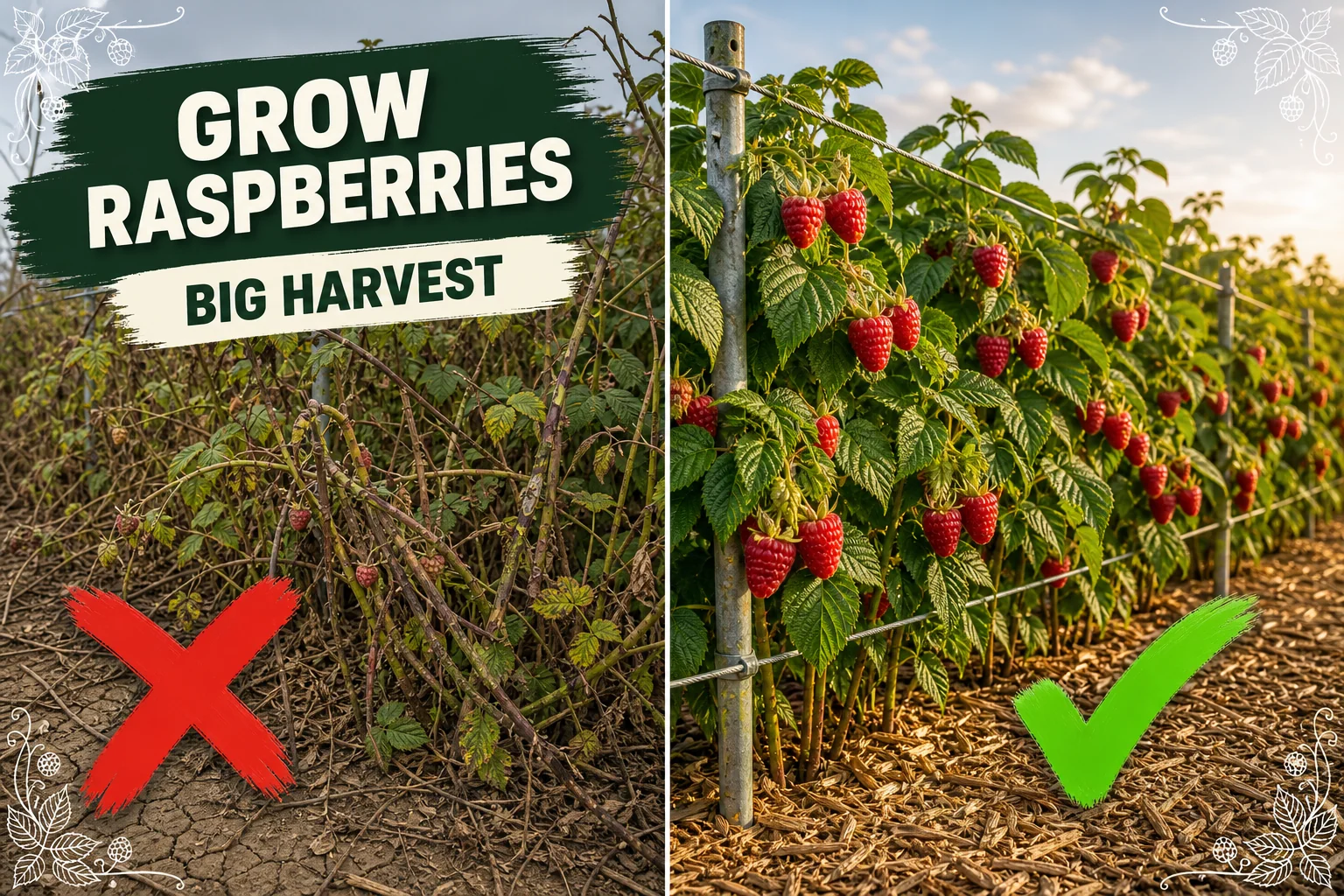
Unsupported raspberry canes flop sideways under their fruit load, dragging berries into mud and breaking under their own weight. A trellis fixes all of it.
Two-wire trellis (standard for home gardens)
- End posts: drive 2.4–3 m (8–10 ft) treated wooden posts or T-posts at each end of the row, 60–90 cm (24–36 in) deep.
- Middle posts: for rows longer than 6 m (20 ft), add a midline post every 3 m (10 ft).
- Lower wire: stretch a horizontal 12-gauge galvanised wire at 75 cm (30 in) above ground.
- Upper wire: a second wire at 1.5 m (5 ft).
- Tie loosely: as canes grow, tie them with soft jute twine or vine clips — never wire (which cuts into bark).
A trellis keeps the row narrow (40–50 cm / 16–20 in wide is ideal), opens up airflow, makes picking fast, and reduces the surface area where fungal spores land.
USDA zones and climate
| USDA zone | Notes |
|---|---|
| 3 | Hardy with mulching; choose extra-cold-tolerant cultivars like ‘Boyne’ |
| 4–5 | Ideal zones for most red raspberries — cold winters, mild summers |
| 6–7 | Excellent productivity; mulch heavily to keep summer soil cool |
| 8 | Productive but earlier harvest; afternoon shade helps in hot inland areas |
| 9 | Edge of range; needs winter chill below 7°C (45°F); avoid south-facing exposures in hot zones |
Raspberries are happiest where the winter brings reliable cold dormancy and summers do not exceed 32°C (90°F) for extended periods. In hot dry summer climates, mulch and consistent watering are decisive.
Common pests and diseases
Two-spotted spider mites (Tetranychus urticae)
Symptoms: Fine pale stippling on upper leaf surface; tiny webbing under leaves; yellowing and dropped leaves in mid-summer. Worst in hot dry weather.
Fix:
- Wash undersides of leaves with a strong jet of water early in the morning, twice a week.
- Encourage natural predators (ladybirds, predatory mites) — avoid broad-spectrum insecticides which kill them too.
- Severe infestations: apply horticultural oil or insecticidal soap to undersides of leaves.
Our full guide to getting rid of spider mites covers identification and treatment in much more depth.
Raspberry crown borer (Pennisetia marginata)
Symptoms: Canes wilt suddenly at the base in mid to late summer; small holes near the soil line; sawdust-like frass; entire canes snap off easily.
Fix:
- Cut affected canes well below the damaged tissue and burn them.
- Remove and destroy all spent canes after harvest — eggs are laid on cane bases in late summer.
- For repeated severe infestations, apply a soil drench labelled for crown borer in early spring (read local extension recommendations).
Anthracnose (Sphaerulina rubi)
Symptoms: Small purple spots on young canes that enlarge into oval grey-centred lesions with purple margins; leaves develop yellow spots and drop early; lesions girdle stems and reduce yield.
Fix:
- Prune out and destroy infected canes — do not compost.
- Improve airflow with proper trellising and spacing.
- Avoid overhead watering.
- Choose resistant cultivars when planting new rows (‘Latham’, ‘Killarney’, ‘Boyne’).
Other issues
- Cane blight: dark sunken cankers where canes are damaged by winter cold or insects; prune out infected tissue.
- Verticillium wilt: sudden wilting of one side of the plant; soil-borne; do not replant in the same spot for 4+ years.
- Birds: netting over rows during ripening is the only reliable control.
Troubleshooting quick-reference table
| Symptom | Most likely cause | Fix |
|---|---|---|
| Crumbly dry berries at picking | Drought during fruit set | Water deeply 2× per week; mulch |
| Sudden wilt at cane base | Crown borer | Cut and burn affected canes; destroy spent floricanes |
| Stippled, webbed leaves | Spider mites | Jet wash undersides; horticultural oil |
| Purple-grey lesions on canes | Anthracnose | Prune and destroy; improve airflow |
| Yellow leaves mid-row | Iron chlorosis (high pH) | Test soil pH; lower to 5.6–6.5 with sulphur |
| One side of plant wilts | Verticillium wilt | Remove plant; rotate site |
| No fruit on tall green canes | Pruned floricanes by mistake | Wait one year for those primocanes to fruit |
| Canes snap under fruit | No trellis | Install two-wire support |
Watch: Raspberry plant care video guide
A visual walkthrough is useful for seeing the cut points described above — pairs well with the pruning section.
Related reading
- How to Plant Blueberry Bushes — soil pH, spacing, and first-year care
- How to Grow Blueberries in Pots — container care for small spaces
- How Long Does a Strawberry Plant Take to Produce Fruit?
- How to Get Rid of Spider Mites — full identification and treatment
Summary: raspberry plant care checklist
- Sun: 6–8 hours of direct sun per day
- Soil: well-drained loam, pH 5.6–6.5
- Water: 2.5 cm (1 in) per week; 4–5 cm (1.5–2 in) during fruiting
- Mulch: 5–7 cm (2–3 in) wood chips, straw, or leaves; refresh annually
- Fertilise: 280–340 g per 3 m of row (10–12 oz per 10 ft of row) of 10-10-10 once in early spring
- Prune summer-bearing: cut floricanes to ground after fruiting; thin primocanes in winter
- Prune everbearing: mow flat in late winter for the simplest single autumn crop
- Trellis: two horizontal wires at 75 cm (30 in) and 1.5 m (5 ft)
- Watch for: spider mites, crown borer, anthracnose
- Zones: USDA 3–9; best in 4–7
Raspberries are a long-term planting — a well-tended row will keep cropping for 10–15 years. Set up the trellis properly the first year, learn which cane type you have, and the rest is a yearly rhythm of pruning, mulching, and picking.
Want raspberry-specific pruning and watering reminders tied to your local climate? The Tazart app builds a personalised care calendar and lets Dr. Afrao, our AI plant assistant, answer your specific raspberry questions in real time.
Highly recommended
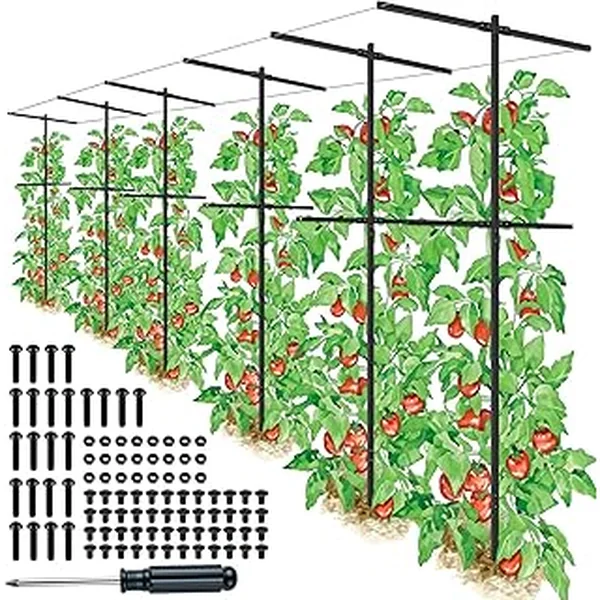
The supplies that make this guide work
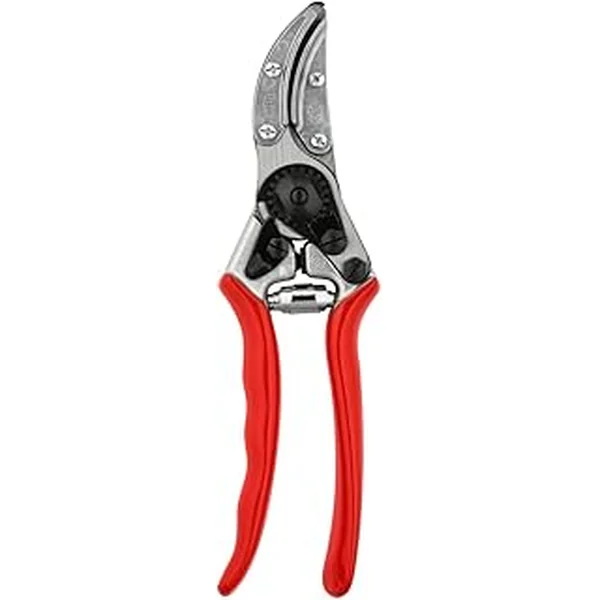


Tazart is an Amazon Associate — we earn from qualifying purchases at no extra cost to you. Thank you for helping us keep these guides free.
Frequently asked questions
How do you prune raspberry plants?
Pruning depends on the type. For summer-bearing raspberries, cut the brown second-year canes (floricanes) to the ground right after fruiting in late summer, and leave the green first-year canes (primocanes) for next year's crop. For everbearing raspberries, the simplest method is to mow the entire patch to the ground in late winter and harvest one large autumn crop on new primocanes. Always use clean sharp bypass pruners and cut canes flush at soil level.
What is the difference between summer-bearing and everbearing raspberries?
Summer-bearing (floricane-fruiting) raspberries produce one big crop on second-year canes in early to mid-summer. Everbearing (primocane-fruiting) types produce fruit on first-year canes in autumn, and a smaller second crop on those same canes the following summer. The two need completely different pruning, so identify your variety before cutting anything — pruning a summer-bearing raspberry the everbearing way removes your entire crop.
How much water do raspberry plants need?
Raspberries need about 2.5 cm (1 in) of water per week during the growing season, and 4–5 cm (1.5–2 in) per week while berries are forming and ripening. Water deeply at the base of the plant, never on the leaves, and use mulch to keep moisture even. In hot dry weather above 30°C (86°F), check soil daily — drought during fruit set leads to crumbly, dry berries.
When should I fertilise raspberry canes?
Apply a balanced fertiliser (10-10-10 or similar) once in early spring, just as new growth emerges. Use about 280–340 g per 3 m of row (10–12 oz per 10 ft of row), spread evenly along the row and watered in. A second light application after the first harvest is helpful for everbearing types. Never fertilise after mid-summer — late nitrogen pushes soft growth that does not harden off before winter.
How do you trellis raspberry plants?
Drive sturdy posts 2.4–3 m (8–10 ft) apart at the ends of the row and run two horizontal wires between them — one at 75 cm (30 in) and another at 1.5 m (5 ft) above ground. Tie canes loosely to the wires with soft twine as they grow. A trellis keeps canes upright, improves airflow (reducing fungal disease), makes picking easier, and prevents canes from snapping under the weight of fruit.
What pests and diseases attack raspberry plants?
The most common problems are two-spotted spider mites (tiny webbing on undersides of leaves), raspberry crown borers (canes wilting at the base), and anthracnose (purple-grey lesions on canes). Most issues are prevented by good airflow from proper pruning, watering at the base rather than overhead, and removing infected canes immediately. See the troubleshooting table below for a full symptom-fix matrix.
What USDA zones can I grow raspberries in?
Red raspberries (Rubus idaeus) grow well in USDA zones 3–9, with the best fruit quality in zones 4–7. They need a cold winter dormancy (below 7°C / 45°F for several weeks) to set fruit the following year, which is why they struggle in warmer parts of zone 9 and below. Black and purple raspberries are slightly less cold-hardy, generally suited to zones 4–8.