Diagnosis
Plant Health Care Services (Diagnose at Home or Call a Pro?)
When to diagnose a sick plant yourself, when to use Tazart's AI plant doctor, and when to call a certified arborist or plant clinic — with real costs and free options.
On this page
- Quick answer
- Table of contents
- The 4 levels of plant health care
- Level 1 — Home diagnosis (free, 10 minutes)
- Level 2 — AI plant doctor (free, 60 seconds)
- Level 3 — Free expert help (extension services, master gardeners)
- Level 4 — Paid professionals (arborists & plant clinics)
- Level 5 — Plant pathology lab (when nothing else works)
- What each service costs
- Decision flowchart
- Common mistakes
- Watch: how to triage a sick plant
- Related reading
- A note on conditions
Watch the visual walkthrough
Holganix - Pricing Your Tree and Shrub Plant Health Care Program
www.Holganix.com A tree and shrub plant health care truck should be billing $800-$1600 in revenue per day, depending on your ...
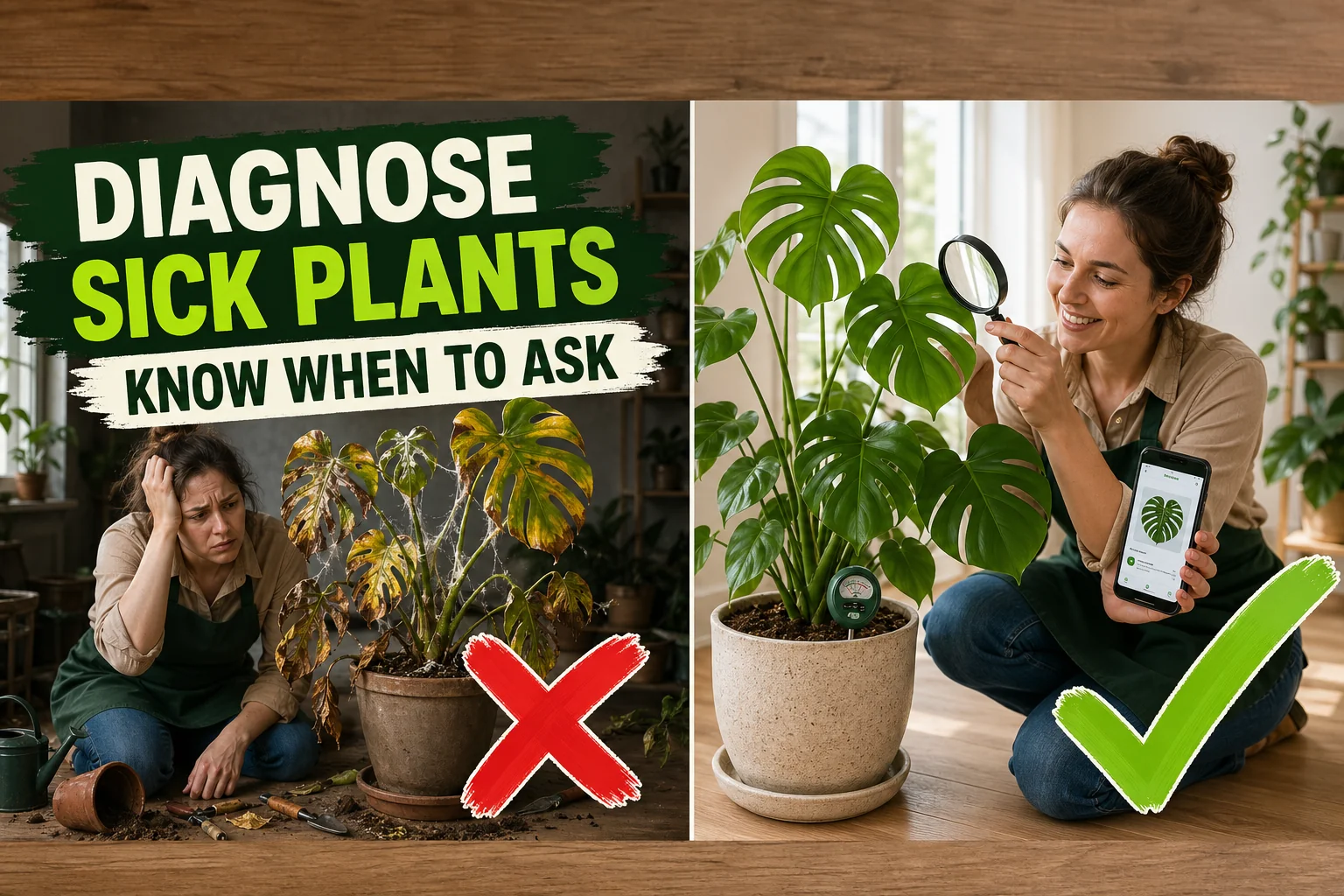
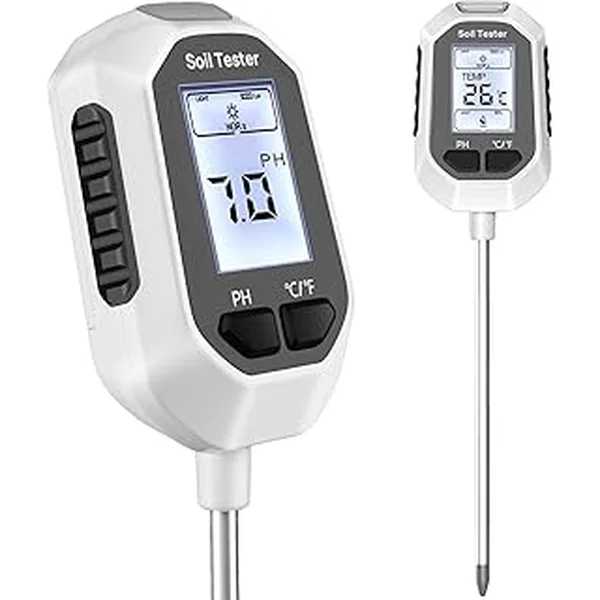
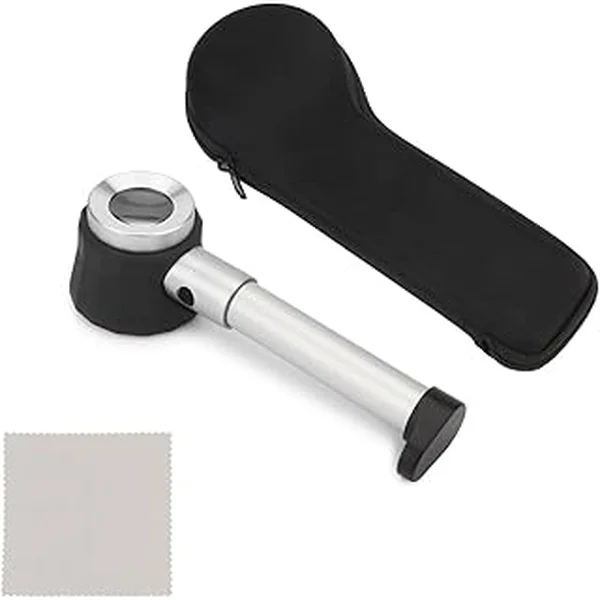
Sick plants almost always show their problem on the leaves, but the cause is usually somewhere else — the roots, the soil, the watering schedule, or a pest that hides on the underside. The good news: you can diagnose about 80% of plant problems at home in under 10 minutes with a moisture meter, a magnifying glass, and a clear photo.
This guide walks through exactly when to DIY a diagnosis, when to use Tazart’s AI plant doctor, and when to escalate to a certified arborist, an extension plant clinic, or a paid plant pathology lab — with real costs and the free options most people don’t know exist.
Quick answer
Triage at home first: photograph the plant, check the soil 5 cm (2 in) down, scan leaves under a 10x loupe, and run it through a free AI plant doctor like Tazart. Escalate to a paid pro when the plant is valuable, symptoms spread despite treatment, or it’s a tree taller than 6 m (20 ft). Free or near-free options exist — your state’s Cooperative Extension Service is the best-kept secret in plant care.
Table of contents
- The 4 levels of plant health care
- Level 1 — Home diagnosis (free, 10 minutes)
- Level 2 — AI plant doctor (free, 60 seconds)
- Level 3 — Free expert help (extension services, master gardeners)
- Level 4 — Paid professionals (arborists & plant clinics)
- Level 5 — Plant pathology lab (when nothing else works)
- What each service costs
- Decision flowchart
- Common mistakes
- FAQs
The 4 levels of plant health care
Most people skip straight from “I’ll Google it” to “the plant died.” There are actually five clear escalation levels, each cheaper and faster than the next one up. Climb only as far as you need to.
| Level | Service | Cost | Speed | Best for |
|---|---|---|---|---|
| 1 | DIY home diagnosis | Free | 10 min | Common houseplant issues |
| 2 | AI plant doctor (Tazart) | Free | 60 sec | Identifying species, ~400 diseases & pests |
| 3 | Cooperative Extension / master gardener | Free–$25 | 1–7 days | Garden, landscape, edible crops |
| 4 | Certified arborist or local plant clinic | $50–$400+ | Same day | Trees, valuable specimens |
| 5 | Plant pathology lab | $25–$150 | 5–14 days | Lab confirmation, regulated diseases |
Level 1 — Home diagnosis (free, 10 minutes)
A surprising number of “diseases” turn out to be light, water, or pH problems that you can fix without anyone’s help. Run this triage first.
The 5-minute checklist
- Soil moisture, 5 cm (2 in) down. Stick a finger or a moisture meter into the soil. Soggy = overwatering / root rot. Bone dry & shrinking from the pot = chronic underwatering.
- Lift the pot. Heavy = wet. Featherlight = dry. Gives you the answer in 2 seconds.
- Tip the plant out. White, firm roots = healthy. Brown, mushy, or black smell = root rot. Tightly circled root mass = pot-bound.
- Leaf inspection. Top side for spots, bottom side for pests. A 10x jeweler’s loupe makes spider mites and thrips obvious — they look like dust without one.
- Light audit. Stand where the plant stands. Can you read a book without a lamp at 11 a.m.? That’s the bare minimum for “bright indirect light.”
What home diagnosis solves on its own
| Symptom | Likely cause | Fix |
|---|---|---|
| Yellow lower leaves, soggy soil | Overwatering | Let soil dry, repot in fresh mix |
| Crispy brown leaf edges | Underwatering or low humidity | Deeper watering, group plants, run a humidifier |
| White cotton on stems & leaf joints | Mealybugs | Wipe with 70% isopropyl alcohol, follow with neem oil weekly for 4 weeks |
| Tiny black flies in soil | Fungus gnats | See our 3-step fungus gnat fix |
| Pale, leggy growth | Too little light | Move within 1 m (3 ft) of a south- or west-facing window |
| Brown bleached patches on the sun side | Sunburn from sudden direct light | Pull back 30–60 cm (12–24 in) from the window |
| Fine webbing on leaf undersides | Spider mites | Shower the plant, then weekly insecticidal soap for 3 weeks |
If you can match the symptom to one of these and the fix works in 7–14 days, you’re done. No service call needed.
Level 2 — AI plant doctor (free, 60 seconds)
When the symptom doesn’t match anything obvious, photograph it and run it through an AI plant doctor before paying anyone. The accuracy on common issues is now in the 85–95% range — better than most casual houseplant owners — and it costs nothing.
Tazart’s AI plant doctor identifies the species first, then scans for ~400 of the most common diseases and pests from a single clear photo. It returns:
- The likely diagnosis with a confidence score
- A step-by-step care plan tied to your watering and light setup
- A “when to escalate” flag if symptoms suggest something serious
How to take a photo the AI can actually read
- Bright indirect light (no direct sun, no flash glare on the leaf)
- Get the affected leaf or stem to fill ~70% of the frame
- One in-focus shot of the symptom, one wide shot showing the whole plant
- Clean phone lens — a smudge ruins automated diagnosis
The AI is honest about its limits. If a problem is fast-spreading, on multiple plants, or shows lab-confirmation-level symptoms (sudden vascular streaking, oozing cankers, wilting on a hot day with wet soil), it’ll tell you to escalate to Level 3 or higher.
Level 3 — Free expert help (extension services, master gardeners)
The best-kept secret in plant care: every US state has a Cooperative Extension Service funded by its land-grant university, and most of them will diagnose your plant problem for free or for a small lab fee of $5–$25.
How extension services work
- Take a fresh sample (or a clear photo for some offices)
- Drop it off at the county extension office or mail it in
- A plant pathologist or trained master gardener identifies the issue
- You get a written diagnosis and a recommended treatment plan in 1–7 days
Big networks to know:
- United States — UC Master Gardeners (CA), Cornell Cooperative Extension (NY), Texas A&M AgriLife, University of Florida IFAS, and one in every other state. Search “[your state] cooperative extension plant clinic”.
- United Kingdom — Royal Horticultural Society (RHS) members’ advisory service, plus regional plant pathology services through DEFRA.
- Canada — Provincial agriculture ministry plant clinics (e.g., OMAFRA in Ontario, BCMAFF in BC).
- Australia — State agriculture departments (e.g., NSW DPI, Agriculture Victoria) run plant pest and disease hotlines.
Master Gardener help lines
In the US, most extension offices also run a Master Gardener help line: a phone number, email, or walk-in desk staffed by trained volunteer gardeners. Wait time is usually a day or two. Free, usually unlimited use, and the people running it have hundreds of hours of accredited training.
If you grow vegetables, fruit trees, or anything in the ground outdoors, this is the first paid-or-pro level you should ever try. It’s almost always free.
Level 4 — Paid professionals (arborists & plant clinics)
Two kinds of paid pros exist for plant problems: certified arborists for trees, and local plant clinics or “plant doctors” for everything else.
Certified arborists (for trees)
For trees taller than 6 m (20 ft), or for any tree that’s a property liability, hire an ISA-certified arborist — the International Society of Arboriculture certification is the global gold standard. Find one through the ISA’s “Find an Arborist” directory.
What they do:
- Visual tree assessment from ground and canopy
- Tree disease diagnosis (oak wilt, fire blight, anthracnose, Dutch elm disease, etc.)
- Soil and root collar exam
- Treatment recommendations (pruning, injections, soil amendment)
- Risk assessment for storm-damaged or leaning trees
Always ask for the ISA certification number before booking. Verify it on the ISA website. A general “tree guy” with a chainsaw is not the same thing.
Local plant clinics & “plant doctors”
In larger cities, independent plant shops and botanical gardens increasingly run paid plant clinics for houseplants and ornamentals. Examples include the Chicago Botanic Garden Plant Information Service and Brooklyn Botanic Garden’s plant info help line. Cost is usually $25–$75 per consultation, sometimes free for botanical garden members.
These are best for:
- Houseplants over $100 in retail value (rare aroids, mature ficus, bonsai)
- Sentimental plants (Grandma’s African violet)
- Plant collections that started losing multiple plants at once
Level 5 — Plant pathology lab (when nothing else works)
If a Level 3 or 4 expert can’t ID the problem visually, they’ll usually refer you to a plant pathology lab — a university or private lab that grows the pathogen out in culture and identifies it under a microscope or with PCR.
How to ship a plant sample
- Download the lab’s submission form first. It tells you what tissue to collect.
- Collect a leaf or stem showing both healthy and diseased tissue (the boundary is where the lab can see the active organism).
- If the issue is below soil, include 10–15 cm (4–6 in) of stem with intact roots.
- Wrap in a dry paper towel — never wet. Wet samples grow secondary mold that masks the real pathogen.
- Seal in a plastic bag.
- Ship overnight or 2-day in a padded envelope. Avoid Friday shipments.
- Include the form, a photo of the whole plant, and your growing conditions (location, watering, fertilizer).
Results typically take 5–14 business days depending on whether they need to grow a culture.
Reportable diseases
Some plant diseases are legally reportable. If a lab confirms one (citrus greening, sudden oak death, fire blight in some states), you may be required to follow specific destruction or quarantine protocols set by your state agriculture department. The lab will explain the next steps in writing.
What each service costs
| Service | Typical US cost | Who pays |
|---|---|---|
| Tazart AI plant doctor | Free | You — but no money |
| Cooperative Extension diagnosis | Free–$25 | You + tax dollars |
| Master Gardener help line | Free | Volunteers |
| Local plant clinic (botanical garden) | $25–$75 | You |
| ISA-certified arborist single visit | $50–$150 | You |
| Full property arborist assessment | $150–$400 | You |
| Tree treatment (injection, soil drench, pruning) | $200–$1,500 | You |
| Plant pathology lab (basic ID) | $25–$75 | You |
| Plant pathology lab (PCR/culture) | $75–$150 | You |
Prices vary by region. UK and EU prices tend to land in similar ranges in their local currencies; Australian arborist visits are typically AU$120–$250 per hour.
Decision flowchart
Use this to decide where to escalate:
- Is it a houseplant under $50 and you can see the problem on the leaf or in the soil? → Level 1 home diagnosis. Don’t pay anyone.
- Can’t find the cause in 10 minutes? → Level 2 AI plant doctor (Tazart, free).
- AI is unsure or symptoms are spreading on multiple plants? → Level 3 extension service or master gardener line. Almost always free.
- It’s a tree taller than 6 m (20 ft) or a structurally risky tree? → Level 4 ISA-certified arborist. Skip everything below.
- Plant is high-value (rare aroid, mature bonsai) or sentimental? → Level 4 local plant clinic for houseplants, arborist for trees.
- Two pros said “I don’t know” or “send it to a lab”? → Level 5 plant pathology lab.
Common mistakes
- Paying an arborist before checking the soil. A surprising number of “tree dying” calls turn out to be a buried root flare or chronic over-mulching. Free fix.
- Skipping the extension service. Most US homeowners don’t know it exists. It’s the single highest-value plant care resource you can use.
- Wet plant samples in a sealed bag. Mold takes over in 24 hours and ruins the diagnosis. Always ship dry tissue.
- Calling a “tree guy” instead of a certified arborist. Misdiagnosis on a mature tree can mean either expensive over-treatment or losing the tree.
- Treating multiple plants at once. If three plants are sick, isolate them first and diagnose one at a time. Treating them all the same way usually makes things worse.
- Believing a 100% confidence AI score. No AI is 100% accurate on plants. Treat AI output as a strong hypothesis, not a final answer.
Watch: how to triage a sick plant
A short visual walkthrough pairs well with this guide. Watch a tutorial on plant disease triage on YouTube — look for one from a state extension service or a botanical garden, both of which post free educational content on common houseplant and tree diseases. Then come back here to find the right level of help.
Related reading
- How to get rid of plant gnats fast — the most common Level 1 home diagnosis you’ll ever do.
- How to find a good plant nursery near you — buying healthy plants is the best disease prevention.
- Pothos plant care — the species most people accidentally diagnose as “dying” when it’s just thirsty.
- How to fix root rot on houseplants — the most common Level 1 problem you can rescue at home before it escalates into a Level 2 callout.
- Scan a sick plant in 60 seconds with the free Tazart AI plant doctor for an instant diagnosis and care plan.
A note on conditions
Plant disease pressure varies enormously by region, season, humidity, soil type, and the specific cultivar you grow. A symptom that points to root rot in a 21°C (70°F) Pacific Northwest living room can point to bacterial leaf spot in a 32°C (90°F) Florida greenhouse. Always cross-reference at least two sources — your local extension service is the highest-signal one — before treating with anything stronger than water and patience.
Highly recommended
The supplies that make this guide work

Tazart is an Amazon Associate — we earn from qualifying purchases at no extra cost to you. Thank you for helping us keep these guides free.
Frequently asked questions
How do I diagnose a sick plant at home?
Start with a 5-minute triage: check soil moisture 5 cm (2 in) deep, lift the pot to inspect roots, scan leaves and stems with a 10x loupe for pests, and rule out light or pH issues. If the cause is obvious — overwatering, pests you can see, sunburn — fix it yourself. If you can't find the cause in 10 minutes, photograph the plant and run it through Tazart's AI plant doctor (free) before paying anyone.
When should I call a professional plant doctor?
Call a pro when (1) the plant is high-value or sentimental, (2) symptoms keep spreading after one round of home treatment, (3) multiple plants in your collection are dying, (4) you suspect a regulated disease like fire blight, citrus greening, or oak wilt, or (5) it's a tree taller than 6 m (20 ft) — that becomes a safety job, not a plant problem. Trees almost always go to a certified arborist, indoor plants go to a local plant clinic or extension service.
How much does a certified arborist cost?
An ISA-certified arborist typically charges $50–$150 for a written diagnosis visit on a single tree in the US, and $150–$400 for a full property assessment. Treatment (trunk injections, soil drenches, pruning) is billed separately and often runs $200–$1,500 depending on tree size. Always ask for the ISA certification number and a quote in writing before any treatment begins.
Can I get plant diseases diagnosed for free?
Yes — most US states fund a Cooperative Extension Service plant clinic through their land-grant university (e.g., UC Master Gardeners in California, Cornell in NY, Texas A&M AgriLife). They identify pests, weeds, and diseases for free or for a small lab fee, usually $5–$25 per sample. Many UK counties have Royal Horticultural Society advice lines, and Australia's state agriculture departments offer the equivalent. Search '[your state] cooperative extension plant clinic'.
How do I send a plant sample to a pathology lab?
Ask the lab for their submission form first — it tells you what tissue to collect (usually a leaf showing both healthy and diseased tissue, plus 10–15 cm (4–6 in) of stem with roots if the issue is below soil). Wrap the sample in a dry paper towel — never wet, which causes secondary mold — seal it in a plastic bag, and ship overnight in a padded envelope. Include the form, a photo of the whole plant, and the location it's growing in. Results usually come back in 5–14 business days.
Is there an AI app that diagnoses plant diseases?
Yes. Tazart's AI plant doctor identifies the species, scans for ~400 common diseases and pests from a photo, and gives a step-by-step care plan, all free. It's accurate enough for the routine 80% — overwatering, fungus gnats, sunburn, common pests, nutrient deficiency. For unusual or fast-spreading symptoms, it tells you to escalate to a pro and points you at the nearest extension service.
What does a plant clinic do?
A plant clinic is a walk-in or mail-in service (usually run by an extension office or botanical garden) that diagnoses sick plants. You bring a fresh sample, fill out a short form about how the plant is grown, and a trained pathologist or master gardener identifies the issue, often using a microscope and lab cultures. Most clinics also recommend treatment options and tell you whether the disease is regulated and needs to be reported.