Houseplants
Pink Princess Philodendron Care (Keep the Pink, Avoid Reverting)
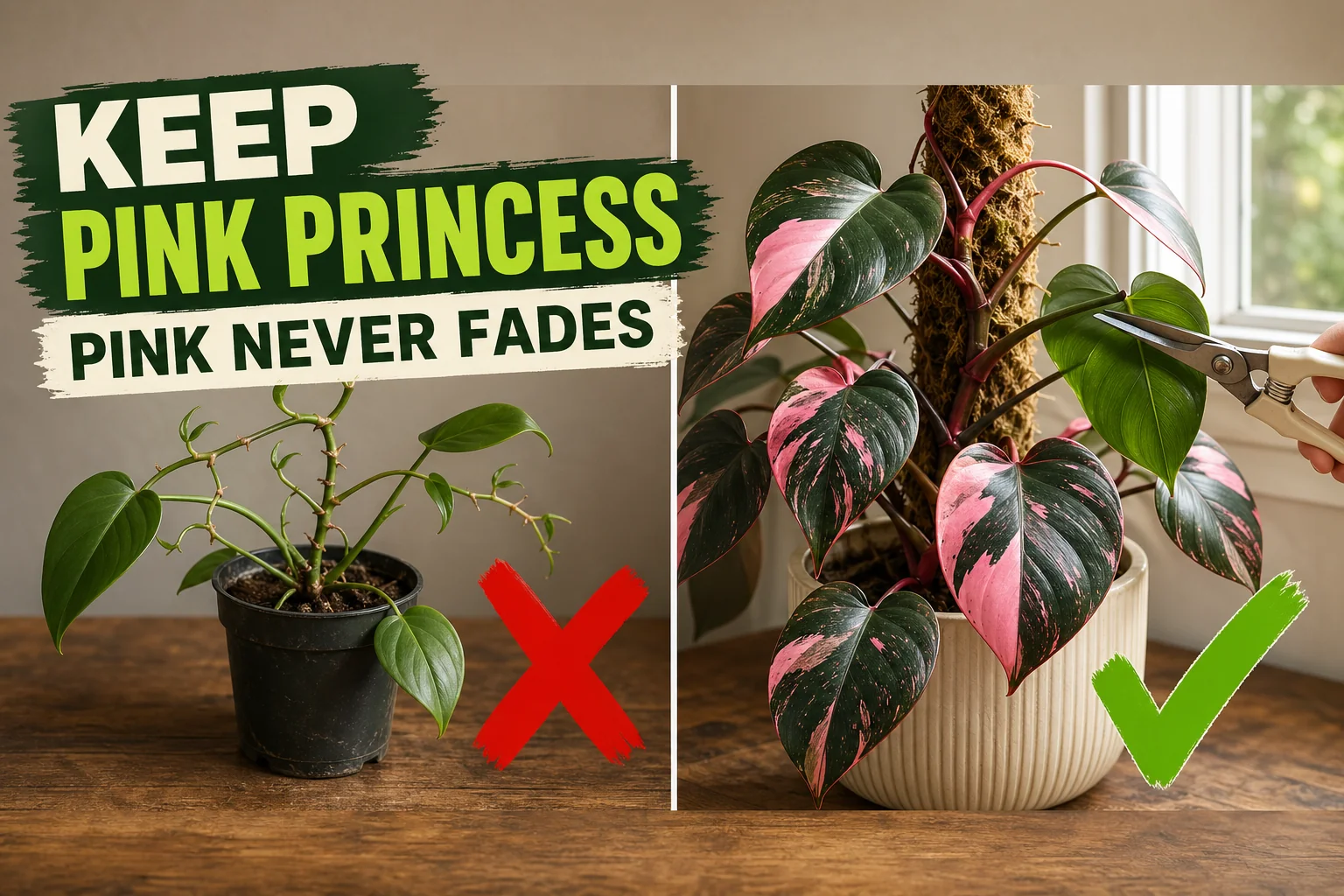
Pink Princess Philodendron care made simple — bring out the hot-pink variegation and stop your Philodendron erubescens from reverting to plain green leaves.
On this page
- Quick answer
- Why Pink Princess loses its pink (and how to fix it)
- What you’ll need
- Step-by-step: setting up a Pink Princess for maximum pink
- Care after planting
- How to prune a Pink Princess that’s reverting
- Propagation: keep the pink alive in cuttings
- Common mistakes to avoid
- Troubleshooting
- Watch: Pink Princess Philodendron care
- Related reading
- A note on conditions
Watch the visual walkthrough
How I Grew My Pink Princess HUGE In Just One Year 💗🌿 Pink Princess Philodendron Tips
How I grew my pink princess huge in just one year - pink princess philodendron tips - how i grew my pink princess philodendron ...
The Pink Princess Philodendron (Philodendron erubescens ‘Pink Princess’) is one of the most chased houseplants of the last decade — when its leaves come in striped with hot pink and deep glossy green, nothing else looks like it. The catch is that the pink is chimerically variegated, which means each leaf is a roll of the dice: it can come in fully green, fully pink, or a perfect half-and-half split.
This guide covers everything Pink Princess actually needs — light, water, soil, climbing support, and the pruning trick that pushes the plant back into pink whenever it starts reverting — so you can keep yours showy and bushy for years instead of watching it slowly turn green.
Quick answer
Give your Pink Princess Philodendron bright indirect light for 8–12 hours a day, water it only when the top 2–3 cm (0.75–1 in) of soil is dry, plant it in a chunky aroid mix in a 15 cm (6 in) pot with drainage holes, and let it climb a moss pole. The moment a stem produces two or more fully-green leaves in a row, prune it back to the last node with pink — that’s how you keep the variegation from disappearing for good.
Why Pink Princess loses its pink (and how to fix it)
There are two completely different reasons a Pink Princess goes green, and the fix is different for each.
1. Not enough light. Pink leaves contain less chlorophyll than green ones, so the plant only “spends” energy on pink variegation when it has light to spare. In a dim corner, every new leaf comes in mostly green to keep the plant alive. The fix is light: move the plant to within 60–90 cm (2–3 ft) of a bright window, or add a full-spectrum grow light.
2. Reversion. Even with perfect light, a Pink Princess will sometimes produce a fully-green leaf. Because it’s chimerically variegated, that single leaf often signals the growth point has lost its pink “stripe” — every new leaf on that stem is now likely to be green too. The fix is pruning, not light: cut the stem back to the last node that still shows pink, and force the plant to regrow from a variegated bud.
If you ignore reversion, a once-stunning Pink Princess can be 100% green within a year. The good news: it’s almost always reversible if you act early.
What you’ll need
- A juvenile Pink Princess Philodendron with at least one pink-marked leaf (skip plants where every leaf is the same uniform pink — that’s a Pink Congo)
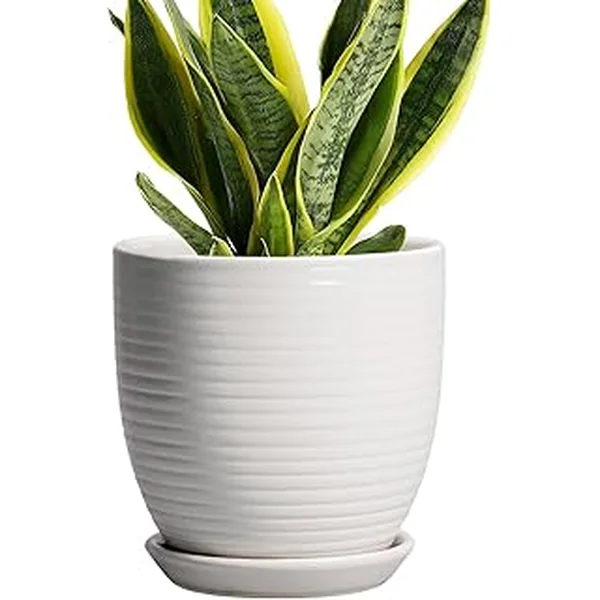
- A pot 15 cm (6 in) wide with drainage holes — terracotta or ceramic both fine
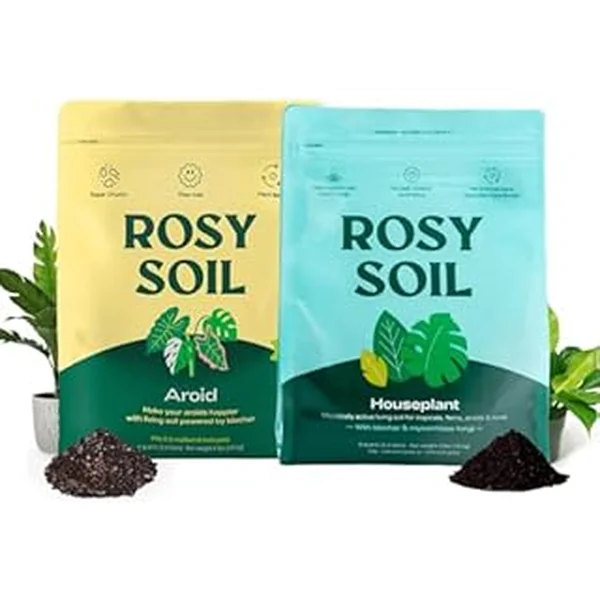
- Chunky aroid mix (potting soil + perlite + orchid bark, roughly 1:1:1) — never plain houseplant soil, which compacts and rots aroid roots
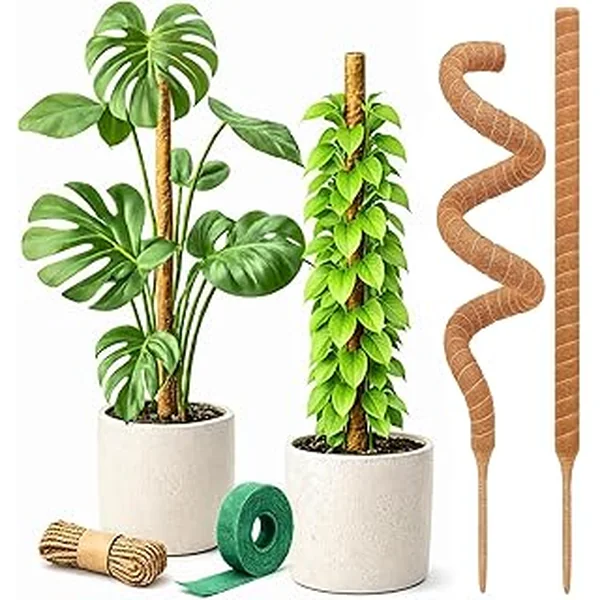
- A 60–90 cm (24–36 in) moss pole for the plant to climb
- Sterile bypass pruning snips
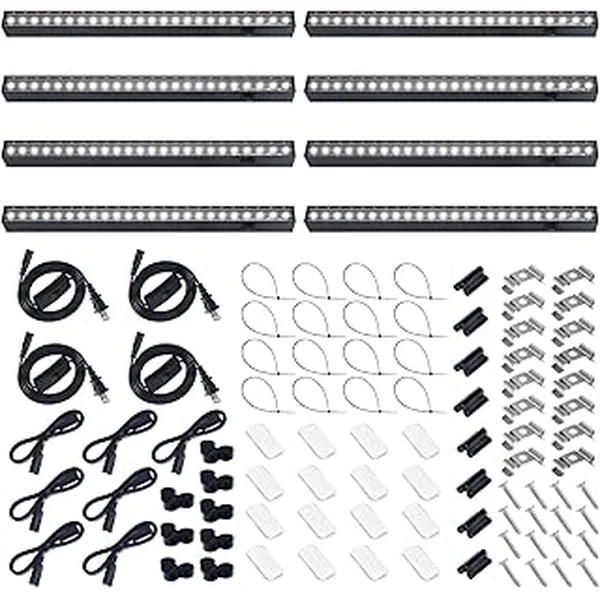
- A bright window — south, east, or west — or a full-spectrum LED grow light if your window is dim
- A spray bottle or humidity tray (optional but helpful in dry homes)
That’s it. No special fertilizer needed for the first 6 to 8 weeks after potting.
Step-by-step: setting up a Pink Princess for maximum pink
1. Pick a healthy, genuinely variegated plant
Look for at least one leaf with a clear pink-and-green pattern — half-pink/half-green is ideal, because it tells you the chimera is split evenly between both tissue types. Avoid plants where every leaf is uniformly bubble-gum pink (that’s a chemically-induced Pink Congo and the pink will fade permanently within a year) and avoid plants with no pink at all (those have already fully reverted).
Check the stem too: dark soft spots near the soil line mean root rot — pass.
2. Choose the right pot and aroid mix
Pink Princess hates wet feet. Use a 15 cm (6 in) pot with drainage holes — slightly snug, because aroids actually push more roots and more leaves when they’re a bit pot-bound.
Mix your own aroid soil:
- 1 part general houseplant potting mix
- 1 part coarse perlite
- 1 part orchid bark or coco chips
The chunky mix lets water drain through in seconds and gives the roots air pockets to breathe. Bagged “aroid mix” works too if you don’t want to mix your own.
3. Add a moss pole before you plant
Pink Princess is a climbing aroid in the wild, and leaf size and pink variegation both increase dramatically once the plant starts climbing. Insert a 60–90 cm (24–36 in) moss pole into the back of the pot before you add the plant — you’ll damage the roots if you push it in later.
Tie the main stem loosely to the pole with soft plant ties or velcro tape. Within a few weeks the aerial roots will grip the pole on their own.
4. Plant at the same depth as the original pot
Place the root ball in the pot so the top of the soil sits about 2–3 cm (1 in) below the rim. Backfill around it, press lightly, and water until you see drips out the drainage holes.
5. Place it in bright indirect light
Pink Princess wants 8–12 hours of bright, indirect light per day:
- Within 60–90 cm (2–3 ft) of a south-, east-, or west-facing window
- Behind a sheer curtain if direct midday sun hits the leaves
- Under a full-spectrum LED grow light placed 30–45 cm (12–18 in) above the plant, on a 10–12 hour timer, if your window is dim
A north-facing window is rarely enough on its own — the plant won’t die, but new leaves will come in mostly green.
Care after planting
Pink Princess is fussier than a pothos but easier than a calathea. Three things keep it pink and healthy:
| Task | When |
|---|---|
| Water | When the top 2–3 cm (0.75–1 in) of soil is dry — usually every 7–10 days indoors |
| Fertilize | Balanced liquid fertilizer at half strength every 3–4 weeks in spring & summer |
| Rotate the pot | Quarter turn weekly so the climbing stem grows straight up the moss pole |
| Wipe the leaves | Every 2–3 weeks with a damp cloth to keep dust off the variegation |
Aim for 18–27°C (65–80°F) and 50–60% humidity. Pink Princess tolerates average household humidity, but new leaves unfurl bigger and more colorful in slightly humid air. A pebble tray or a small humidifier nearby is enough — you don’t need a glass cabinet.
A free plant care app like Tazart can hold the watering schedule for you, adjust it for your local weather, and ping you on Apple Watch when it’s time — useful if you’re growing more than one or two pots.
How to prune a Pink Princess that’s reverting
This is the single most important Pink Princess skill.
The rule: if a stem produces two or more fully-green leaves in a row, that growth point has likely lost its pink. Don’t wait for a third — prune it now.
The cut: with sterile bypass snips, cut the stem about 1 cm (0.5 in) above the last node that has at least some pink on its leaf. The node is the slightly swollen ring on the stem where a leaf and aerial root come out.
What happens next: the plant pushes a new growth bud from a dormant node further down the stem — usually within 4 to 8 weeks. That new growth often comes in with strong pink because the plant is regrowing from a deeper part of the chimera.
Don’t throw the cutting away. A green-leaved cutting can still produce a half-pink leaf later, and a cutting with even a sliver of pink in the stem is worth rooting. Drop it into water or sphagnum moss and follow the propagation steps below.
Propagation: keep the pink alive in cuttings
Pink Princess propagates easily from stem cuttings, but only cuttings taken from a stem that already has pink will reliably produce pink leaves. A fully-green cutting almost always grows into a fully-green plant.
Steps:
- Take a 10–15 cm (4–6 in) cutting that includes at least one node with a visible aerial root and a leaf with pink on it.
- Strip the lowest leaf so a node sits bare.
- Place the cutting in water, sphagnum moss, or coarse perlite. Keep it warm at 21–24°C (70–75°F) with high humidity (a clear plastic bag loosely over the top works).
- Roots appear in 2 to 4 weeks. When the longest root is 5 cm (2 in), pot the cutting up in chunky aroid mix.
- Don’t let the new plant dry out completely for the first month — it’s transitioning from water to soil and the variegated tissue is fragile.
Common mistakes to avoid
- Leaving reverted stems on too long. Once a stem is producing all-green leaves, it stays green. Prune early.
- Watering on a fixed schedule. Pink Princess rots fast in soggy soil. Always check the top 2–3 cm (0.75–1 in) is dry first.
- Using plain houseplant soil. It compacts and suffocates aroid roots. Use a chunky mix with perlite and bark.
- Pot too big. A 25 cm (10 in) pot for a small plant holds too much wet soil — the roots rot before they fill the pot. Step up one size at a time.
- Skipping the moss pole. A trailing Pink Princess on a shelf rarely produces big colorful leaves; a climbing one does.
- Buying a Pink Congo by mistake. If every leaf is uniform bubble-gum pink and there’s no green-and-pink mix, walk away. The pink fades within a year and never comes back.
Troubleshooting
| Symptom | Likely cause | Fix |
|---|---|---|
| New leaves come in fully green | Not enough light, or reversion of that growth point | Move closer to a bright window; if light is good, prune back to the last pink node |
| Pink patches turn brown and crispy | Direct sun scorched the chlorophyll-free tissue | Move out of harsh midday direct sun; trim damaged leaves |
| Yellow lower leaves with mushy stems | Overwatering / no drainage | Lift the plant, check the roots, repot in dry chunky mix, water less often |
| Tiny black flying insects in the soil | Fungus gnats from staying too wet | Let the soil dry fully, top with 1 cm (0.5 in) of dry sand, and add yellow sticky traps |
| Long bare stem with tiny leaves | Light is too dim — stem is etiolating | Move to bright indirect light or add a grow light; cut the leggy section to force a fresh bud |
| Brown crispy leaf edges | Low humidity, hard water, or fertilizer salts buildup | Raise humidity to 50–60%, flush the soil with plain water every 2–3 months |
| Roots circling the pot, plant tipping over | Pot-bound — needs repotting | Repot one size up (no more) in fresh chunky aroid mix; do this in spring |
Watch: Pink Princess Philodendron care
A short visual walkthrough pairs well with the steps above. If you’re a visual learner, search YouTube for Pink Princess Philodendron care and pick a tutorial from a credible houseplant channel — then come back here for the timing, pruning, and reversion fix.
Related reading
- Pothos plant care: the easiest trailing aroid for beginners — same family, same “let the soil dry between waterings” rule, no reversion to worry about.
- How to take care of a prayer plant — another patterned-leaf houseplant where light and water timing decide whether the markings stay vibrant.
- How to propagate a rubber plant — the same node-cut + warmth + humidity approach used for Pink Princess cuttings.
- Scan the next plant you bring home with the free Tazart plant identifier and let it set up the watering schedule for you.
A note on conditions
Every home is different. Light, pot size, soil mix, season, humidity, and your local weather all change how fast a Pink Princess grows and how often it pushes a new pink leaf. Use the steps above as a starting point and adjust based on what your plant actually does in week two — that’s how every good plant grower learns.
Highly recommended
The supplies that make this guide work
Tazart is an Amazon Associate — we earn from qualifying purchases at no extra cost to you. Thank you for helping us keep these guides free.
Frequently asked questions
Why is my Pink Princess Philodendron losing its pink?
The most common cause is too little light. Pink Princess needs bright indirect light — a spot within 60–90 cm (2–3 ft) of a south-, east-, or west-facing window — to push pink variegation. The other cause is reversion: if the plant produces a fully-green leaf, every new leaf on that stem will likely be green too. Prune the stem back to the last node that has any pink and let it regrow from there.
How much light does a Pink Princess Philodendron need?
Bright, indirect light for 8–12 hours a day. A few minutes of soft morning sun is fine, but harsh midday direct sun through glass scorches the pink patches because they have no chlorophyll to protect them. If your window is dim, a full-spectrum LED grow light placed 30–45 cm (12–18 in) above the plant for 10–12 hours daily reliably brings out new pink leaves.
Should I cut off all-green leaves on a Pink Princess?
Yes, when there are several in a row. Fully-green leaves photosynthesize more efficiently than variegated leaves, so the plant naturally favors them and will keep producing green-only growth on that stem. Prune the stem back to the most recent node that has at least some pink, and the plant will usually push a new variegated leaf within 4 to 8 weeks.
How often should I water a Pink Princess Philodendron?
Water when the top 2–3 cm (0.75–1 in) of soil feels dry — usually every 7 to 10 days indoors during spring and summer, longer in winter. Soggy soil is the fastest way to kill a Pink Princess: the variegated tissue rots before the green tissue does. Always use a chunky aroid mix in a pot with drainage holes, and tip out any water that collects in the saucer.
Is the Pink Princess the same as a Pink Congo?
No. Pink Congo leaves start out pink because the plant has been treated with ethylene gas before sale, and within 6 to 12 months every leaf reverts to plain green permanently. Pink Princess is genetically (chimerically) variegated and the pink is real for the life of the plant — provided you give it enough light and prune back any reversion. If your 'Pink Princess' was cheap and every new leaf is the same uniform pink, it's almost certainly a Pink Congo.
How do you propagate a Pink Princess Philodendron?
Take a stem cutting 10–15 cm (4–6 in) long that includes at least one node with a visible aerial root and a leaf with pink on it — propagating an all-green stem will only give you all-green plants. Place the cutting in water, sphagnum moss, or perlite and keep it warm at 21–24°C (70–75°F) with high humidity. Roots appear in 2 to 4 weeks; pot up once roots are 5 cm (2 in) long.
Is the Pink Princess Philodendron toxic?
Yes. Like all philodendrons, the sap contains calcium oxalate crystals that cause mouth and throat irritation if chewed by cats, dogs, or children, and skin irritation in sensitive people. Place the plant out of reach of pets and small children, and wash your hands after pruning or repotting.