Flowers
Peony Plant Care: The Complete Guide (Paeonia)
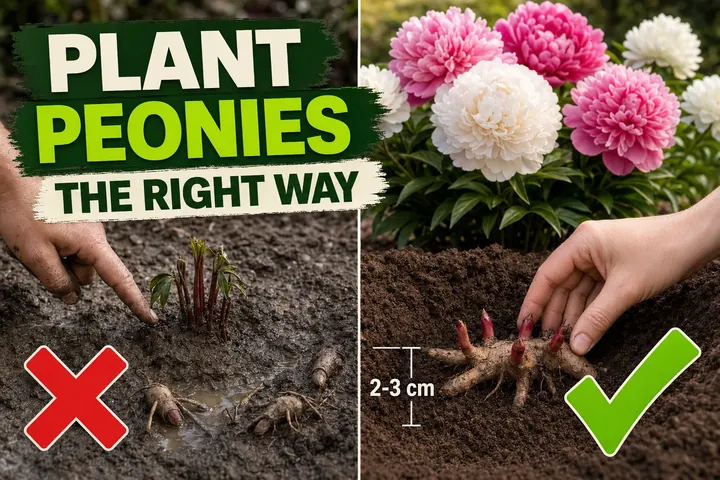
Master peony plant care — full sun, well-draining soil, eyes 1-2 inches deep, and zero excess nitrogen. Peonies thrive for 50+ years with the right setup.
On this page
Watch the visual walkthrough
10 Things You Need to Know About Growing Peonies!
Learn 10 essential tips for growing peonies successfully, including how deep to plant, how much sun they need, and why peonies ...
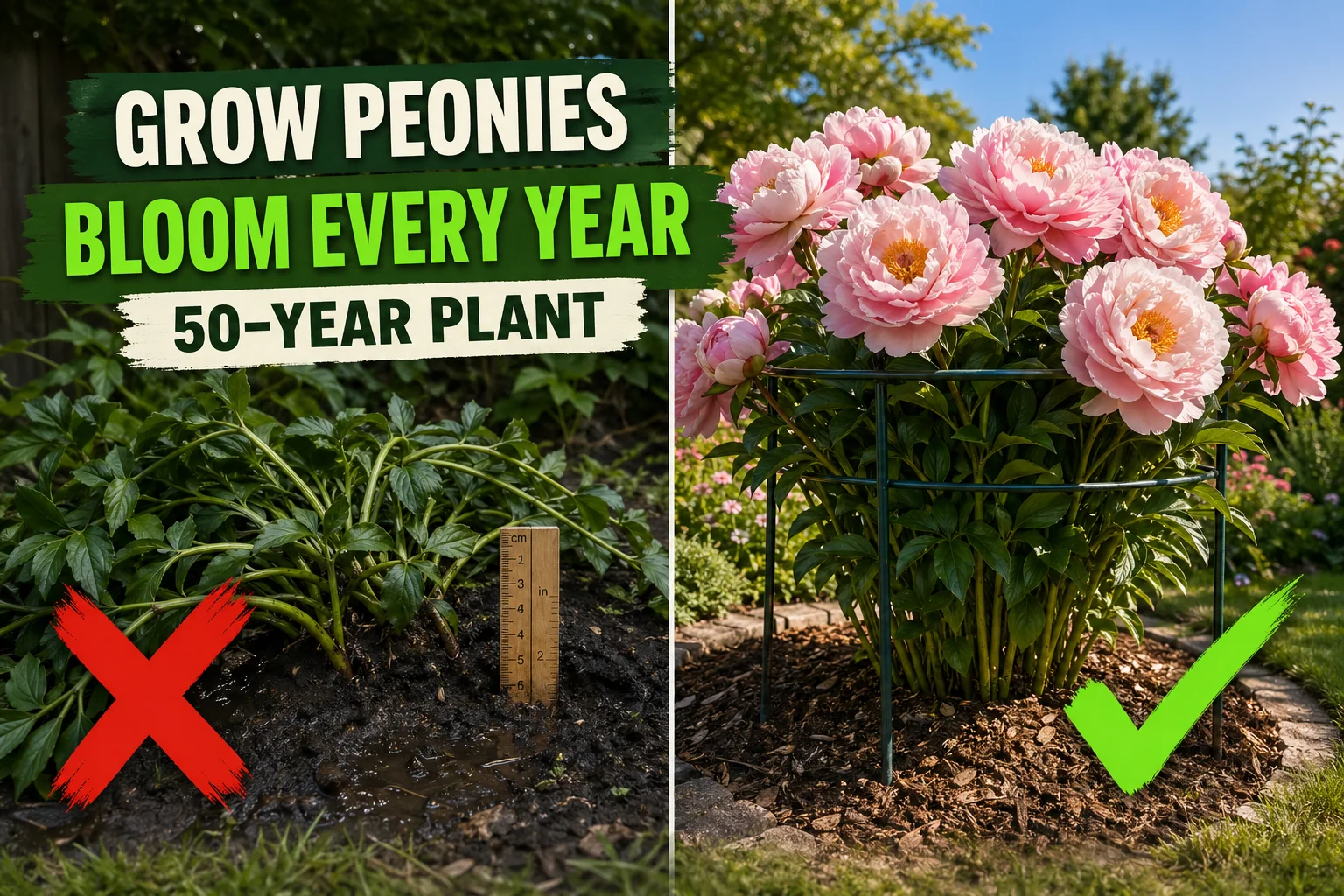
Peonies are one of the most rewarding perennials in the garden — and one of the most misunderstood. Gardeners assume they’re delicate because they see them fail. The truth is the opposite: given the right conditions, a peony is nearly indestructible and will flower in the same spot for 50 years or more without intervention. The failures almost always come from a handful of avoidable mistakes, with planting depth at the top of the list.
This guide covers everything you need: the three types of peony, light, water, soil, feeding, staking, common problems, dividing, and the best varieties to grow.
Quick answer
Plant peonies in full sun (6-8 hours daily) in deep, well-draining soil with a pH of 6.5–7.0. Keep the eyes no more than 1-2 inches (2.5-5 cm) below the surface — deeper than that and the plant will never bloom. Water consistently in year 1, then leave them alone. Feed with a low-nitrogen fertilizer in spring. Support double-flowered varieties before they reach 12 inches. Hardy in USDA zones 3-8, drought tolerant once established, and capable of living 50-100 years.
The three types of peony
Not all peonies behave the same way. Knowing which type you have changes how you care for it.
Herbaceous peonies (Paeonia lactiflora and hybrids) are the classic garden peony. They grow 2-4 feet tall in spring and summer, produce enormous fragrant flowers in May-June, and then die back completely to the ground in fall. The crown overwinters underground. This is the easiest type to grow and the most common in garden centres. USDA zones 3-8.
Tree peonies (Paeonia suffruticosa and hybrids) are woody shrubs that keep a permanent above-ground framework year-round — they do not die back. They grow 3-5 feet tall and wide, often flower earlier than herbaceous types, and have very large plate-like blooms. They are more drought tolerant once established but resent transplanting even more than herbaceous types. USDA zones 4-9, depending on the cultivar.
Intersectional (Itoh) peonies are hybrids between herbaceous and tree peonies, developed in the 1940s by Japanese breeder Toichi Itoh. They have the large tree-peony flower shape and colour range on a plant that dies back to the ground in winter like a herbaceous type. They’re considered the most disease-resistant of the three and produce more flowers per plant than either parent. USDA zones 4-9.
Light
Peonies are full-sun plants. Six hours of direct sun is the minimum; eight hours is better. In strong light, stems are thicker and more upright, flowers are larger and more saturated, and the plant is far less susceptible to fungal disease because the foliage dries faster after rain.
In hot southern climates (zones 7-8), gentle afternoon shade can extend the life of the flowers — they won’t bleach as fast — but morning sun is non-negotiable. In zones 3-6, give them as much sun as possible; the flowering season is already short.
The single most common non-depth reason for a non-blooming peony is shade. If the plant is under or near a large tree or a fence that blocks afternoon sun, move it in fall.
Water
Peonies have a contradictory reputation: they need regular watering while young, and almost none once established.
Year 1: Water deeply once a week during dry spells, aiming for about 1 inch of water per session. The goal is root establishment, not leaf production. Consistent moisture in the first season gives the crown the resources it needs to build a root system that will sustain the plant for decades.
Year 2 onward: Established peonies are genuinely drought tolerant. In most of USDA zones 3-7, normal rainfall is sufficient. If summer goes more than three weeks without rain and temperatures are above 80°F (27°C), give a deep soak once every 10-14 days — water the soil, not the foliage. Keeping the leaves dry is important for preventing botrytis.
What peonies cannot tolerate is waterlogged soil. Crowns sitting in water rot. If your soil holds water after rain, raised beds or heavy amendment with coarse grit and compost are essential before you plant.
Soil and pH
Target pH: 6.5 to 7.0 — neutral to very slightly acidic. This is the opposite of acid-lovers like azaleas: peonies prefer near-neutral conditions. They will grow at 6.0 and limp along at 7.5, but the sweet spot is 6.5-7.0. Test before planting if you’re unsure of your native soil.
Texture matters as much as pH. Peonies grow deep, fleshy roots that need:
- Good drainage — soggy soil in winter rots crowns. Amend clay with coarse grit and compost, or plant on a slight mound.
- Depth — roots go 18-24 inches down in a mature plant. Don’t plant in shallow, compacted subsoil.
- Fertility — peony roots are long-lived and benefit from a rich soil at planting time. Mix compost or aged manure into the planting hole; a tablespoon of bonemeal added to the base provides slow-release phosphorus for root development.
Avoid very sandy, fast-draining soils without amendment — they dry out too fast during the summer establishment period and are nutrient-poor. Peonies do best in loamy, deep, well-structured soil.
Fertilizing
Less is more with peonies. They are light feeders and easy to over-fertilize.
What to use: A low-nitrogen, phosphorus-forward slow-release granular fertilizer — something in the range of 5-10-10 or a dedicated bulb and perennial formula. Phosphorus supports root development and flower production. Potassium supports overall plant health and disease resistance.
When to feed:
- Early spring as the first red shoots push through the soil — a handful of granular fertilizer scratched into the surface around the drip line.
- After flowering — a second light feed encourages root development and helps the plant build energy reserves for the following year’s blooms.
- Autumn — a top-dress of compost or well-rotted manure is optional but beneficial, especially for young plants building their root system.
What to avoid: High-nitrogen fertilizers (including general-purpose 20-20-20 and lawn feeds). Excess nitrogen produces huge, dark-green, lush foliage and almost no flowers. This is a very common mistake. If a peony is leafy and non-blooming in year 3 or later, audit its fertilizer history first.
Support and staking
Double-flowered herbaceous peonies produce flowers so large and heavy that the stems cannot support them without help, especially after rain. A 4-inch double flower full of water will pull stems flat to the ground if unsupported.
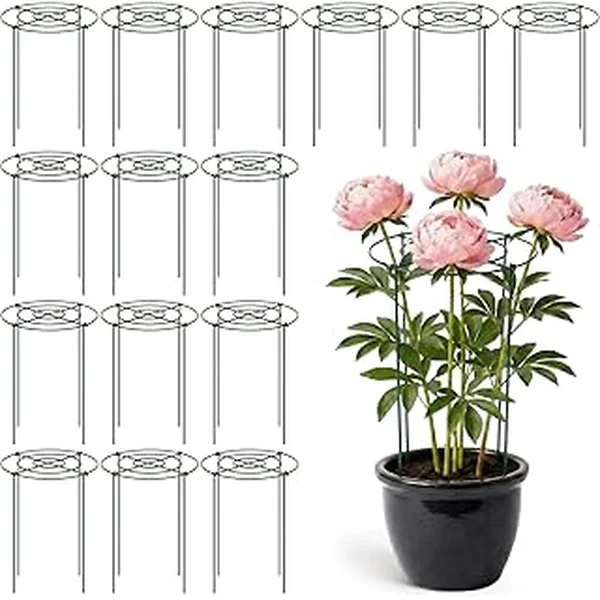
Install a peony support hoop or ring cage in early spring, as soon as the shoots emerge and before they reach 12 inches (30 cm). Push the legs of the cage fully into the soil around the crown so the ring sits at about the height the foliage will reach. As the stems grow up through the grid, they are supported naturally and won’t flop. Retrofitting a cage to tall stems risks snapping them — get it in early.
Single-flowered and semi-double varieties, and most intersectional peonies, have stronger, more upright stems and may not need support. Tree peonies are self-supporting shrubs and never need caging.
Common problems
Botrytis (grey mould)
Botrytis cinerea is the most serious disease problem for peonies, particularly in cool, wet springs. Infected stems wilt and collapse suddenly, and you’ll see fluffy grey spore masses on the affected tissue. Buds turn brown and fail to open.
Prevention is the main strategy: good airflow around the plant (don’t crowd peonies), morning watering that allows foliage to dry during the day, and removing any dead or dying stem tissue promptly. At the first sign of infection, cut the affected stem to the ground, bag it immediately, and bin it — never compost. Do not leave debris around the crown over winter; remove all foliage in fall and dispose of it.
Fungicide applications (copper-based) can help in chronically wet seasons, applied preventatively from when shoots emerge.
The ant myth
Ants on peony buds are one of the most common gardening questions. Peonies produce a sticky nectar on the surface of their buds that attracts ants by the hundreds. Ants are completely harmless to peony buds — they do not cause them to open and do not cause any damage. They are eating the nectar and nothing else.
You do not need to spray, wash, or remove the ants. If you’re cutting flowers to bring indoors, give the stems a gentle shake outside and most ants will fall off. The nectar is gone within a day of the flower opening indoors.
No blooms — and it’s not the ants
A peony that produces lush green foliage every year but never flowers is telling you something specific. The causes in rough order of frequency:
- Eyes planted too deep. If the eyes are more than 2 inches (5 cm) below the surface, the plant will grow indefinitely without flowering. The fix is to dig the crown in fall, find the eyes, and replant at the correct 1-2 inch depth.
- Insufficient sun. Less than 6 hours per day produces leaves but not flowers. Relocate in fall.
- Plant too young. Year 1 often produces no flowers; year 2-3 is the first real bloom season. Be patient.
- Recent transplanting. Any peony that was moved or divided takes 1-3 years to re-establish before flowering again.
- Over-fertilization with nitrogen. Dial back the feed and switch to a low-N formula.
Dividing peonies
Peonies do not need dividing the way many perennials do. A well-sited plant grows better and better for decades without disturbance and typically reaches its peak around years 10-15. Dividing prematurely is a common way to lose two or three seasons of flowering for no benefit.
Divide peonies when:
- The clump has been in the same spot for 10-15+ years and flowering is declining
- You want to propagate and share plants
- The crown is clearly too large for the space
When: Early fall (September-October), after the foliage yellows and dies back but before hard frost.
How: Dig the entire clump with a fork, working well outside the drip line to avoid cutting major roots. Shake or wash off soil so you can see the crown clearly. Using a clean, sharp knife or spade, cut the crown into sections — each section must have a minimum of 3-5 eyes and a healthy portion of fleshy root. Sections with only 1-2 eyes will take an extra 1-2 years to bloom. Dust cut surfaces with garden sulphur or powdered charcoal to discourage rot. Replant immediately at the correct 1-2 inch depth.
Expect reduced or no flowering in the first 1-2 seasons after division. This is normal — give the divisions time to rebuild their root system.
Best varieties
The range of peonies available is enormous. These are consistently high-performers across the common growing zones:
If you want a shade-friendly early-bloomer to fill the gap before peonies open, the bleeding heart plant care guide covers a graceful spring perennial that overlaps perfectly with mid-season peony varieties.
For a delicate early-season companion that thrives in the same cool, part-shade edges of a mixed border, columbine flower care is worth reading before you finalise your planting plan.
Herbaceous:
- ‘Sarah Bernhardt’ — the classic. Large, fragrant, soft pink double flowers. Widely available, reliable, and one of the best cut flowers in the garden. USDA 3-8.
- ‘Festiva Maxima’ — white double with occasional red flecks. Very fragrant. One of the oldest cultivars still widely grown, dating to 1851. USDA 3-8.
- ‘Karl Rosenfield’ — deep crimson double. Strong stems, long flowering period, very hardy. USDA 3-8.
- ‘Bowl of Beauty’ — Japanese form with pale pink guard petals and a cream-yellow centre. More upright and self-supporting than most doubles. USDA 3-8.
Intersectional (Itoh):
- ‘Bartzella’ — large yellow double flowers, rare in peonies and very sought-after. Excellent disease resistance. Blooms a week or two after most herbaceous types. USDA 4-9.
- ‘Cora Louise’ — white petals with a lavender-purple centre. Very floriferous with 30-50 blooms per plant in a mature season. USDA 4-9.
Tree peony:
- ‘Renkaku’ (‘Flight of Cranes’) — pure white semi-double with golden stamens. Classic Japanese cultivar. USDA 4-8.
- ‘High Noon’ — clear yellow semi-double with a spicy fragrance. One of the most popular tree peonies in North American gardens. USDA 5-9.
Related reading
- How to plant peony bulbs (tubers) for big spring blooms — the exact depth, timing, and hole preparation that determines whether your peony ever flowers.
- Azalea plant care (acid-loving beauty done right) — if you’re pairing peonies with shrubs in a mixed border, note that azaleas want acid soil (pH 4.5-6.0) while peonies want near-neutral (6.5-7.0) — plan the bed layout before you amend.
- How to plant tulip bulbs — for spring-flowering companions that bloom slightly earlier than peonies and extend the cutting-garden season from March through June.
Track your peony support installation date, spring fertilizer window, and fall cleanup reminders with the free Tazart plant care app. Set a reminder in early spring to install the support hoop before stems outgrow it — it’s the single step most gardeners miss until it’s too late.
A note on conditions
Every garden is different. USDA zone, soil type, drainage, rainfall pattern, and microclimate all affect how a peony performs. The rules in this guide — full sun, near-neutral well-draining soil, eyes no deeper than 1-2 inches, no excess nitrogen — are the constants. Everything else is a variable you adjust by watching what the plant does in its first two seasons. Peonies are honest: poor flowering tells you exactly which variable is wrong.
Highly recommended
The supplies that make this guide work


Tazart is an Amazon Associate — we earn from qualifying purchases at no extra cost to you. Thank you for helping us keep these guides free.
Frequently asked questions
How much sun do peonies need?
Peonies need a minimum of 6 hours of direct sun per day — 8 hours is better. In warm climates (USDA zones 7-8), a little afternoon shade can prevent the flowers from fading too fast, but anything less than 6 hours of sun will produce leafy, non-blooming plants year after year. Pick the sunniest permanent spot in the garden and don't move the plant once it's established.
Why are my peonies not blooming?
The most common cause is planting the eyes too deep. If the eyes (the small red-pink buds on top of the crown) are buried more than 2 inches (5 cm) below the soil surface, the plant will grow beautiful foliage indefinitely but refuse to flower. Other causes include too much shade, recent transplanting (peonies sulk for 1-3 years after being moved), over-fertilizing with nitrogen, or a plant that is simply too young — most peonies take 2-3 years to bloom properly.
Do peonies need to be staked or supported?
Yes — especially double-flowered varieties, whose enormous heads become top-heavy with rain. Install a peony support hoop or ring cage in early spring before the stems reach 12 inches (30 cm). If you push it in once the plant is already tall, you risk snapping stems. Single and semi-double varieties are more self-supporting but still appreciate a low ring for windy sites.
How often should I water a peony?
During the first growing season, water deeply once a week in the absence of rain — about 1 inch of water per session — to encourage root establishment. Once established (year 2 onward), peonies are drought tolerant and rarely need supplemental watering except during prolonged dry spells in summer. Soggy or waterlogged soil is far more dangerous than drought; always prioritize good drainage.
What is the best fertilizer for peonies?
A low-nitrogen, phosphorus-rich slow-release granular fertilizer applied in early spring as the red shoots emerge, and again right after flowering. Look for formulations labelled for flowering perennials or bulbs — something like 5-10-10. Avoid high-nitrogen feeds: excess nitrogen pushes leafy green growth at the direct expense of flower buds. A top-dress of compost in autumn is excellent and keeps things simple.
How long do peonies live?
Peonies are exceptional long-lived perennials. A well-sited plant that is never transplanted can live and bloom reliably for 50 to 100 years. There are documented garden peonies still flowering after more than a century in the same spot. The key requirements for longevity are full sun, excellent drainage, and not disturbing the crown unnecessarily.
When and how should I divide peonies?
Divide peonies only when necessary — they dislike disturbance and may skip blooming for 2-3 years after division. The right time is every 10-15 years in early fall, after the foliage has yellowed. Dig the entire clump, shake off soil, and cut the crown into sections with at least 3-5 eyes and a healthy portion of root. Replant with the eyes only 1-2 inches (2.5-5 cm) deep. Division is the primary way to propagate and rejuvenate an overcrowded clump.