Houseplants
Peace Lily Care (Why It's Drooping and How to Save It)
Why a peace lily droops, how to revive it in hours, and the light, watering, and humidity routine that keeps Spathiphyllum wallisii blooming reliably indoors.
On this page
Watch the visual walkthrough
Ultimate SPATHIPHYLLUM (Peace Lily) CARE Guide — Ep 205
This episode is brought to you by one of my new sponsors—Squarespace. My websites such as houseplantmasterclass.com, ...
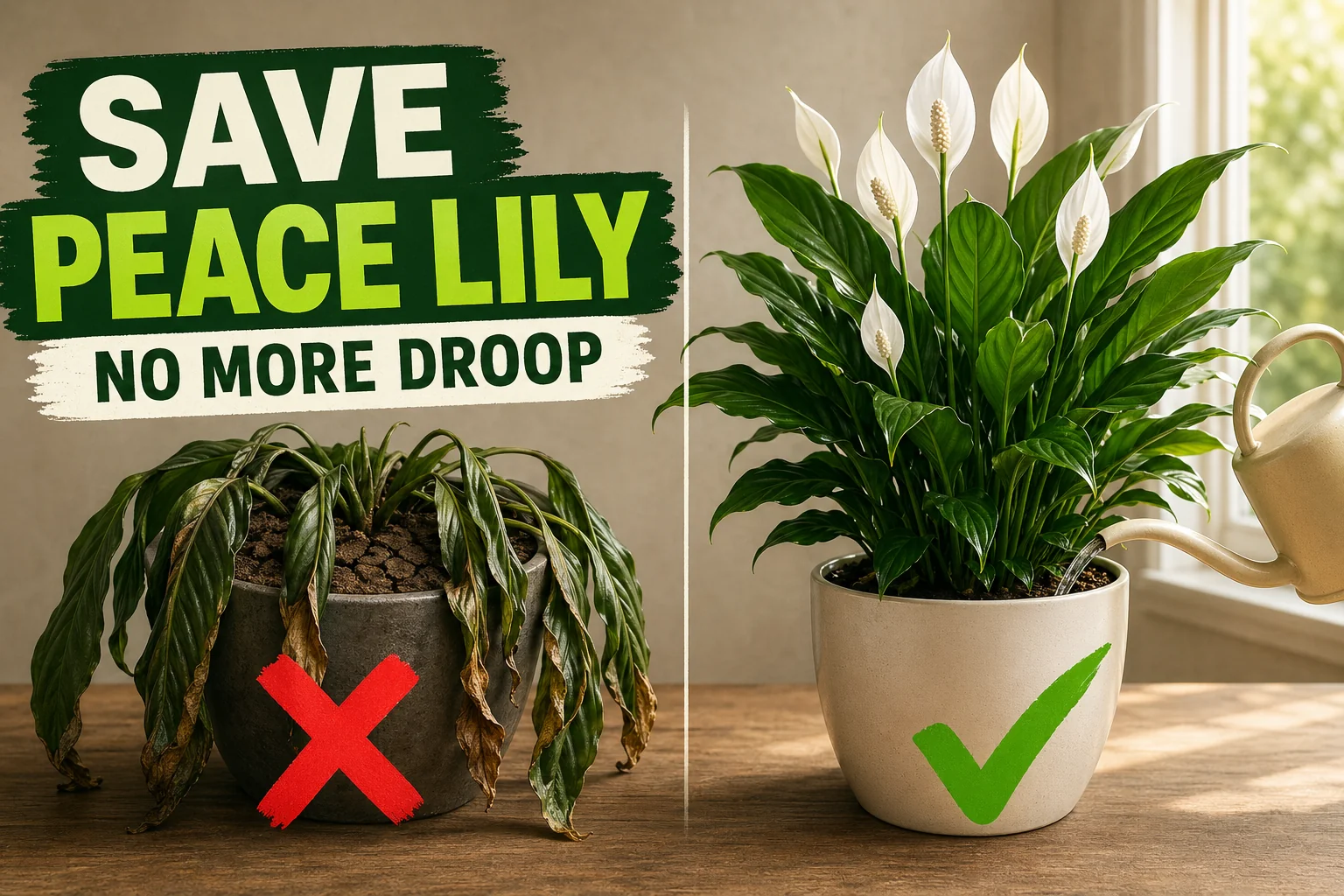
A peace lily that’s flopped over the side of its pot looks alarming the first time it happens, but it’s usually the most fixable problem in houseplant care. Spathiphyllum wallisii is a tropical understory plant with a useful party trick: when it’s thirsty, every leaf droops dramatically — and within a few hours of a deep watering, it lifts back up like nothing happened.
This guide covers exactly why a peace lily droops, how to revive it, and the light, water, humidity, and feeding routine that keeps it producing those signature pure-white spathe flowers indoors.
Quick answer
A drooping peace lily is almost always thirsty. Water it deeply until water drains from the bottom of the pot, and the plant lifts back up within 2 to 4 hours. Long-term, give it bright indirect light, water when the top 3 cm (1 in) of soil is dry (every 5 to 14 days), keep it at 18–27°C (65–80°F), and feed half-strength fertilizer every 6 to 8 weeks in spring and summer to keep the white blooms coming.
Why is my peace lily drooping?
Nine times out of ten, a drooping peace lily is thirsty. This species evolved in humid tropical understory and uses leaf droop as a built-in alarm: the leaves go limp the moment the soil dries out, then snap back upright once you water them.
Before doing anything else, run the finger test:
- Push a finger 3 cm (1 in) into the soil.
- If it feels dry and dusty, the plant is thirsty. Water it deeply and watch it perk up within 2–4 hours.
- If it feels wet or muddy, the cause is the opposite — root rot from soggy soil. The plant droops because dead roots can’t move water.
The soggy-and-drooping case is rarer but more serious. Skip ahead to the troubleshooting table for the fix.
Other less common causes of droop:
- A sudden temperature drop below 13°C (55°F) — peace lilies hate cold drafts and AC vents.
- Repotting shock for the first 7–10 days after moving the plant.
- A pot-bound root system that has filled the soil and can’t hold water long enough between drinks.
How to revive a drooping peace lily fast
If the soil is dry and the plant is wilting, here’s the rescue routine:
- Move the pot to the kitchen sink.
- Pour room-temperature water slowly all over the soil surface until it runs steadily out of the drainage hole.
- Let the pot sit and drain for 10 minutes. Pour off any water still in the saucer.
- Set it back in its usual bright indirect-light spot — out of direct sun while it recovers.
- Check on it in 2–4 hours. The leaves should be visibly lifting.
Within 24 hours, a thirsty peace lily looks completely normal again. The very oldest leaves on a bad dry-out may stay yellow or crispy — snip those off at the base. New leaves grow back fast.
Light
Peace lilies are bright-indirect-light plants. Imagine a few feet back from an east- or north-facing window, or a south/west window filtered through a sheer curtain. That’s the sweet spot for steady growth and reliable flowering.
What to avoid:
- Direct midday sun — bleaches the flowers and scorches the leaves with brown patches.
- Deep low light — the plant survives but stops blooming and grows slowly.
- Frequent moves between light levels — peace lilies acclimate slowly.
Quick check: if you can comfortably read a book in the spot during the day without turning on a lamp, your peace lily will be happy there. If the same spot makes you reach for a light switch, move the plant closer to a window.
Water
This is the part most people overthink. Forget weekly schedules — peace lilies tell you when they want water by drooping. Use that signal with a finger check, not the calendar.
The rule:
- Water deeply when the top 3 cm (1 in) of soil is dry.
- Pour until you see drips from the drainage hole, then stop.
- Empty the saucer 15 minutes later. The plant should never sit in standing water.
In a warm bright room, that usually lands around every 5–7 days. In a cool low-light room or in winter, it can stretch to every 10–14 days. A soil moisture meter takes the guesswork out if you’re new to houseplants.
If your tap water is hard or heavily chlorinated, switch to filtered or rainwater — peace lilies are sensitive to fluoride and chlorine, which show up as brown crispy leaf tips over months.
Soil and pot
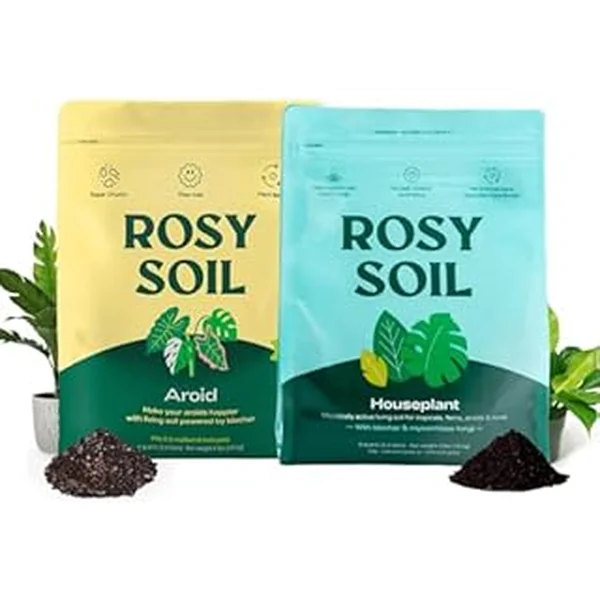
Peace lilies want a light, airy potting mix that drains within seconds. Plain dense topsoil holds water too long and is the most common indoor cause of root rot.
A good mix:
- 60% peat-free indoor potting mix
- 30% perlite or coarse pumice for drainage
- 10% orchid bark or coco husk for air pockets
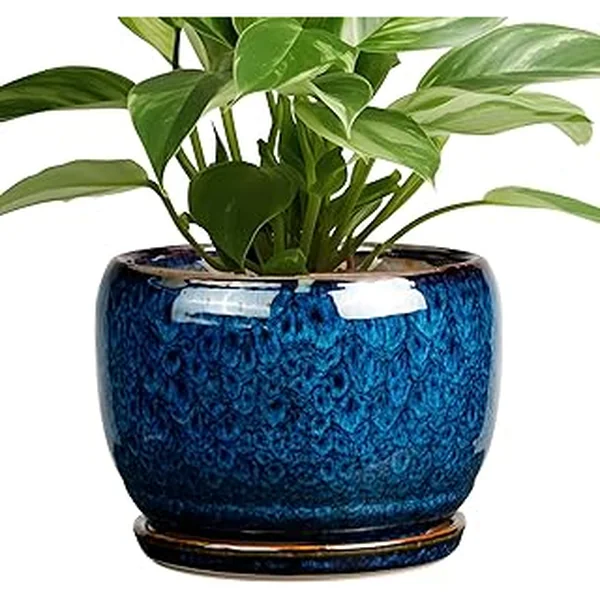
Any pot works as long as it has a drainage hole. Ceramic, plastic, terracotta — all fine. Skip pots with no drainage, even decorative ones — they’re the fastest way to kill a peace lily.
Repot every 2 years or when the roots circle the inside of the pot. Step up just one pot size at a time — going from a 15 cm (6 in) pot straight to a 25 cm (10 in) pot leaves too much wet soil around the roots.
Temperature and humidity
Peace lilies are tropical and prefer.
If you want a second humidity-loving plant that thrives in similar conditions and fills a hanging basket or shelf with arching fronds, the Boston fern care guide covers a classic companion that shares almost identical temperature and moisture requirements.
- Temperature: 18–27°C (65–80°F) year-round.
- Avoid: anything below 13°C (55°F), and cold drafts from AC vents, exterior doors, and single-pane winter windows.
- Humidity: 40% is the floor; 50–60% is ideal. Higher humidity means glossier leaves and more flowers.
If your home is dry (winter heating drops indoor humidity to 25–30%), a pebble tray under the pot, a small humidifier, or grouping plants together all help. Misting once or twice a day is a small bonus but isn’t enough on its own.
Fertilizing
Peace lilies are light feeders. Too much fertilizer burns the roots and shows up as brown leaf tips fast.
The rhythm:
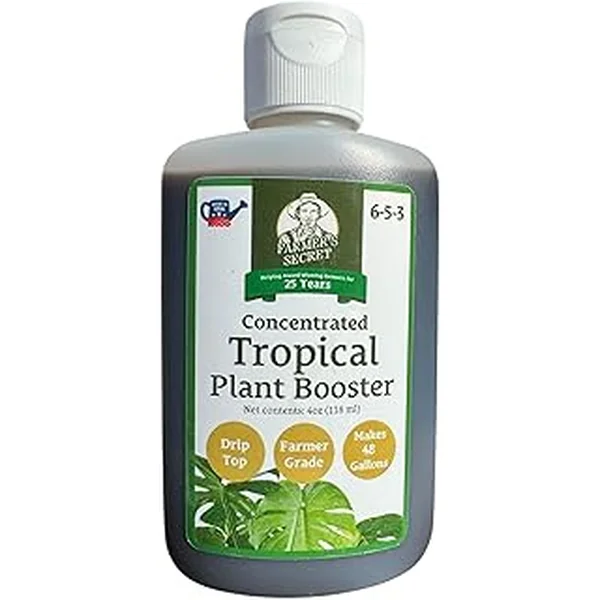
- Spring and summer: a balanced houseplant fertilizer at half the label strength, once every 6–8 weeks.
- Fall and winter: skip feeding entirely.
- Flush the pot with plain water for 5 minutes every 3–4 months to leach out fertilizer salt buildup.
A peace lily that has never been fertilized will still grow — just slowly and with fewer flowers. A peace lily that has been over-fertilized turns the tips of every leaf brown.
How to make a peace lily bloom
The plant has to be mature (usually 12–15 months from a starter pot) and the conditions have to be right. The big four triggers:
- Bright indirect light — bloom counts drop sharply in low light.
- Mature root mass — slightly pot-bound peace lilies bloom more than freshly repotted ones.
- Half-strength fertilizer every 6–8 weeks during spring and summer.
- A small temperature drop at night — 3–5°C (5–9°F) lower than daytime is what they get in nature, and it cues flowering.
The white “flower” is technically a spathe — a modified leaf — surrounding a small cream-coloured spadix that holds the actual tiny flowers. Each spathe lasts 2–4 weeks before turning green and then brown. Snip spent flowers off at the base to keep the plant tidy and energy directed at new ones.
Some florist peace lilies are forced into bloom with gibberellic acid before sale and may not flower again for 6–12 months even in perfect conditions. Don’t panic — once it’s settled, normal flowering returns.
Troubleshooting
| Symptom | Likely cause | Fix |
|---|---|---|
| Whole plant drooping, soil bone-dry | Underwatering | Deep water in the sink, drain, return to bright indirect light. Recovers in 2–4 hours. |
| Drooping with wet soggy soil | Root rot | Unpot, rinse roots, trim soft brown roots, replant in fresh airy mix in a smaller pot. Water sparingly for 2 weeks. |
| Brown crispy leaf tips | Dry air, tap water (fluoride/chlorine), or fertilizer salt buildup | Raise humidity to 50%+, switch to filtered or rainwater, flush the pot with plain water every 3–4 months. |
| Yellow lower leaves | Old leaves shedding, or chronic overwatering | Trim 1–2 yellow leaves and check soil moisture. If wet 2 days after watering, reduce watering frequency. |
| No flowers for months | Too little light, or plant is too young | Move closer to a bright (but not direct-sun) window. Wait — most peace lilies bloom from 12–15 months old in good light. |
| Pale washed-out leaves | Direct sun scorch | Move out of direct sunlight. New leaves will come in deep green again. |
| Tiny black flying insects in soil | Fungus gnats from staying too wet | Let the soil dry out fully between waterings; top with a 1 cm (0.5 in) layer of dry sand or yellow sticky traps. |
| Sticky residue on leaves | Mealybugs or scale | Wipe leaves with diluted insecticidal soap or a 50/50 isopropyl alcohol/water solution; repeat weekly for 3 weeks. |
Common mistakes to avoid
- Watering on a fixed weekly schedule. Peace lilies use leaf droop as a built-in thirst signal — listen to it. Calendar watering causes most root rot cases.
- Pots without drainage holes. Even with the perfect soil mix, a closed pot traps water. Use a drainage pot inside a decorative cover instead.
- Direct sun on a sunny windowsill. Peace lilies are understory plants. A south-facing windowsill in summer scorches them within days.
- Over-fertilizing. Half strength is the maximum. Full-strength fertilizer burns the roots within one feeding.
- Repotting up two pot sizes. Too much fresh wet soil around small roots means slow soggy decline. Step up just one size.
- Ignoring brown tips. They almost always mean tap water salts or low humidity, not pest damage.
Watch: peace lily care walkthrough
A short visual walkthrough pairs well with the steps above. If you’re a visual learner, search YouTube for peace lily care for beginners and follow along with the watering, light, and pruning routines while reading this guide.
Related reading
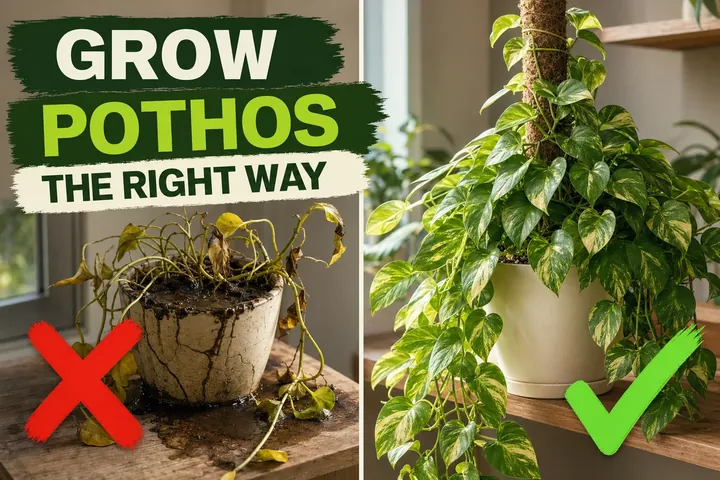
- Pothos plant care: the complete guide for lush vines — the same “let the soil tell you when to water” rule that works for peace lilies.
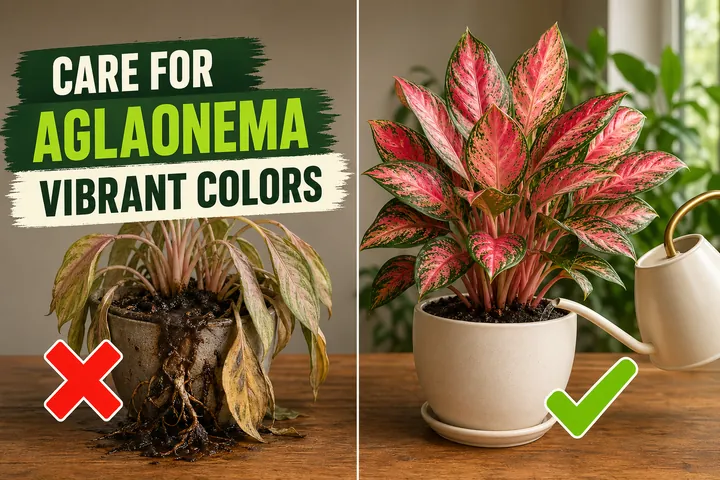
- Aglaonema plant care — another low-maintenance tropical foliage plant that thrives in similar bright indirect light.
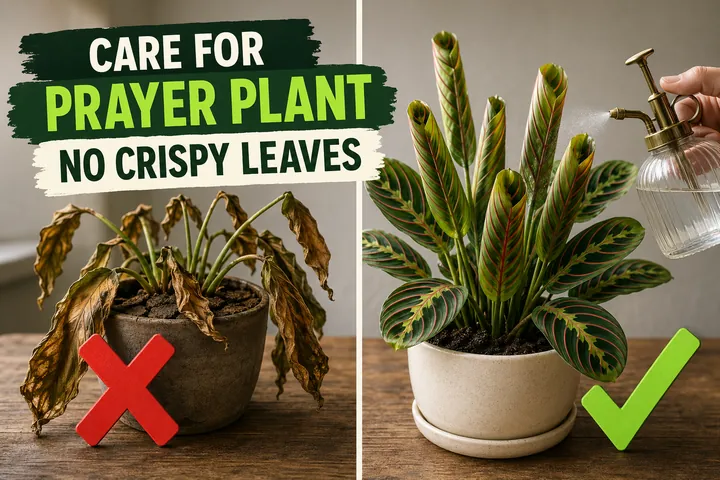
- How to take care of a prayer plant — humidity-loving relative that pairs well on the same shelf as a peace lily.
- Identify the next plant you bring home with the free Tazart plant identifier and let it set up the watering schedule for you automatically.
A note on conditions
Every home is different. Light, pot size, soil mix, season, humidity, and your local weather all change how often a peace lily droops, drinks, and blooms. Use the rules in this guide as a starting point, then adjust based on what your specific plant actually does in week two and three — the plant always has the final word.
Highly recommended
The supplies that make this guide work

Tazart is an Amazon Associate — we earn from qualifying purchases at no extra cost to you. Thank you for helping us keep these guides free.
Frequently asked questions
Why is my peace lily drooping?
Almost every drooping peace lily is thirsty. Stick a finger 3 cm (1 in) into the soil — if it's dry, give the plant a deep watering and it usually perks back up within 2 to 4 hours. If the soil is soggy and the plant is still drooping, root rot is the cause and the plant needs to be unpotted, trimmed, and replanted in fresh soil instead.
How often should I water a peace lily?
Water when the top 3 cm (1 in) of soil feels dry — that's typically every 5 to 7 days in a warm bright room and every 10 to 14 days in cooler conditions. Don't water on a fixed calendar. The peace lily droops dramatically as a built-in 'I'm thirsty' signal, so let the plant guide you instead of the schedule.
Does a peace lily need direct sunlight?
No. Peace lilies are tropical understory plants that thrive in bright indirect light. A few feet back from an east- or north-facing window is ideal. Direct midday sun scorches the leaves and bleaches the flowers. Too little light is also a problem — it stops the plant from blooming.
Why won't my peace lily flower?
Three reasons cover most cases: not enough light (move it closer to a bright window, but out of direct sun), not enough maturity (peace lilies usually need to be 12 to 15 months old to bloom), or it's still recovering from stress like repotting or a long dry-out. A balanced houseplant fertilizer at half strength every 6 to 8 weeks during spring and summer also nudges blooming.
Why are the tips of my peace lily turning brown?
Brown crispy leaf tips usually mean dry air, fluoride or chlorine in tap water, or salt buildup from fertilizer. Switch to filtered or rainwater, raise humidity to 50 percent or higher with a pebble tray, and flush the pot with plain water every few months to leach out salts.
Is a peace lily safe for cats and dogs?
No. Peace lilies contain calcium oxalate crystals that cause mouth irritation, drooling, and vomiting if a pet chews the leaves. Keep the plant out of reach of cats, dogs, and small children. If a pet has chewed it, rinse their mouth with water and contact a vet — symptoms are usually mild but uncomfortable.