Houseplants
Parlor Palm Care: The Complete Chamaedorea elegans Guide
Master parlor palm care — low to medium light, even watering, humidity, fertilizing, spider mite prevention, brown tip fixes, and pet-safe placement tips.
On this page
- Quick answer
- Table of contents
- What is a parlor palm?
- Light requirements
- Watering parlor palms correctly
- Humidity and the brown tip problem
- Soil and potting
- Fertilising
- Temperature and placement
- Growth rate and size
- Pet safety
- Spider mites and other pests
- Troubleshooting table
- Watch: Parlor palm care video guide
- Related reading
- Summary: parlor palm care checklist
Watch the visual walkthrough
PARLOUR PALM CARE | Chameadorea Elegans Tips & Tricks
For bonus content, subscribe to my Patreon ›› https://www.patreon.com/goodgrowing Parlour Palms are the perfect plant to make ...
The parlor palm has been the indoor palm of choice since the Victorians put it on every parlor table — hence the name. Over 150 years later it is still the easiest palm to keep alive in a typical home: it tolerates low light, modest neglect, and dry rooms better than almost any other palm species.
But getting a parlor palm to truly thrive — full lush fronds, no brown tips, steady slow growth year after year — takes a handful of specific habits. This guide covers them.
Quick answer
Parlor palms (Chamaedorea elegans) thrive in low to medium indirect light, evenly moist (never bone dry) well-draining soil, 50–60% humidity, and a monthly half-strength feeding during spring and summer. Water when the top 2–3 cm (0.75–1 in) of soil is dry — typically every 7–10 days. Their main enemy is spider mites, encouraged by dry air. Mature indoor size is 1–1.2 m (3–4 ft) over many years. Pet-safe (ASPCA non-toxic).
Table of contents
- What is a parlor palm?
- Light requirements
- Watering parlor palms correctly
- Humidity and the brown tip problem
- Soil and potting
- Fertilising
- Temperature and placement
- Growth rate and size
- Pet safety
- Spider mites and other pests
- Troubleshooting table
- FAQ
What is a parlor palm?
Chamaedorea elegans is a small clumping palm native to the rainforest understories of southern Mexico and Guatemala. In its natural habitat it grows in the deep shade beneath the rainforest canopy, where filtered light, high humidity, and steady moisture are the norm.
That ecology explains everything about its care indoors: it accepts low light because it evolved in low light; it dislikes dry rooms because the rainforest floor is permanently humid; and it grows slowly because it never had to compete for light in the way canopy-reaching plants did.
Indoors, parlor palms produce gracefully arching feather-shaped fronds on slender green stems. A mature specimen will form a clump of multiple stems and look like a miniature tropical thicket — exactly the effect Victorian decorators loved.
Light requirements
| Light level | Result |
|---|---|
| Direct sun | Avoid — scorches fronds, bleaches green |
| Bright indirect light | Excellent — fastest growth, lushest fronds |
| Medium indirect light | Ideal — what most rooms provide naturally |
| Low indirect light | Good — slower growth but plant stays healthy |
| Deep shade | Tolerable for months at a time, but eventually weakens |
Best position in most homes: 2–3 m (6–10 ft) from a south or east-facing window, or right next to a north-facing window. Filtered light through a sheer curtain is perfect.
What to avoid: an unshaded south or west window in summer — direct mid-afternoon sun will burn brown patches on fronds within days.
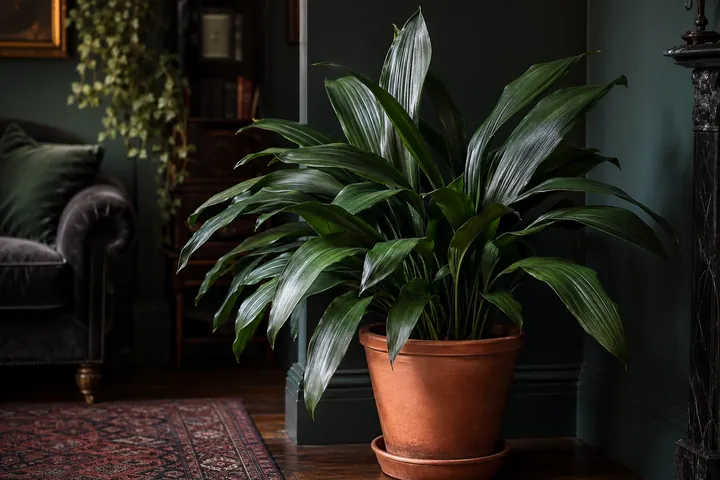
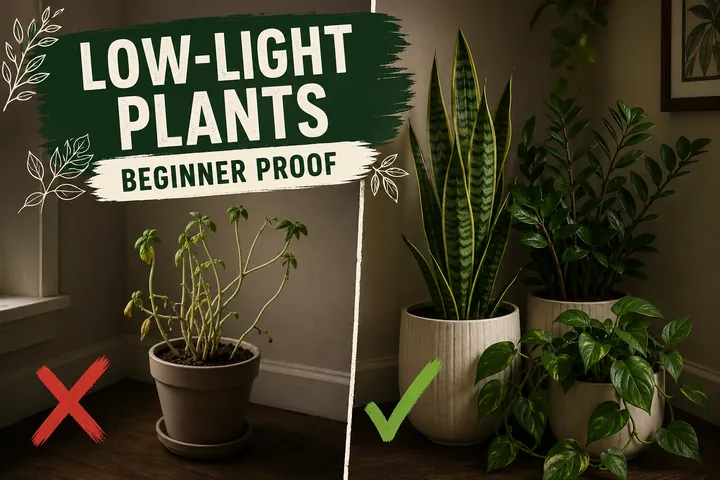
If your room is unusually dim, our guide to the best low-light houseplants for beginners and the cast iron plant care guide cover other reliable options for genuinely dark spots.
Watering parlor palms correctly
Parlor palms sit at a slightly different point on the watering spectrum from succulents and cacti. They should never dry out completely.
The rule: Water when the top 2–3 cm (0.75–1 in) of soil feels dry. The deeper soil should still feel slightly damp at that point.
In practice:
- Spring and summer (active growth): every 7–10 days
- Autumn and winter (slow growth): every 10–14 days
- Hot dry indoor air or strong AC: check every 5–7 days
How to water: Soak deeply from the top until liquid runs freely from the drainage holes. Let the pot drain fully. Empty the saucer — never leave a parlor palm sitting in water.
Water quality matters. Parlor palms are sensitive to fluoride and chlorine in tap water. Brown leaf tips are often a sign of fluoride buildup. Use:
- Rainwater (best)
- Tap water left in an open container overnight (chlorine dissipates)
- Distilled water (an option for stubborn cases)
Humidity and the brown tip problem
Indoor humidity is the single biggest source of frustration with parlor palms. Most homes sit at 25–40% indoor humidity — far below the 50–60% the plant prefers. The most common symptom of low humidity is crispy brown frond tips.
How to raise humidity around a parlor palm:
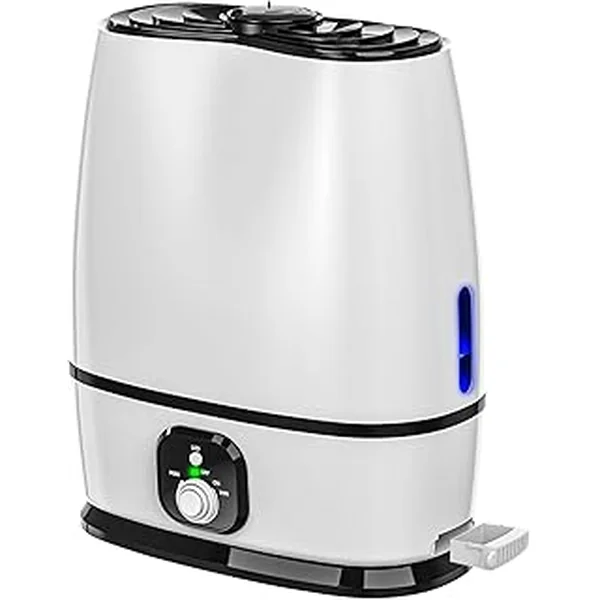
- Run a small ultrasonic humidifier nearby — the most effective fix. A 2–4 L tank in a typical room handles a single plant easily.
- Group plants together — collective transpiration raises humidity in the immediate area.
- Pebble tray: a shallow tray of pebbles + water under the pot raises humidity slightly through evaporation. Keep the pot above the waterline.
- Mist daily — helps temporarily but only for an hour or two; not a complete solution on its own.
- Avoid placement near radiators, vents, or fireplaces — these dry the air drastically.
Should you trim brown tips? Yes, for cosmetic reasons. Use clean sharp scissors and follow the natural taper of the frond tip — cut at an angle, not straight across. Trimmed tips will not regrow but will not get worse if humidity is fixed.
Soil and potting
Parlor palms want a soil mix that holds moisture without becoming soggy.
- Texture: loose, well-draining
- Recipe: standard peat-free indoor potting mix + perlite (mix 1 part perlite to 4 parts potting mix)
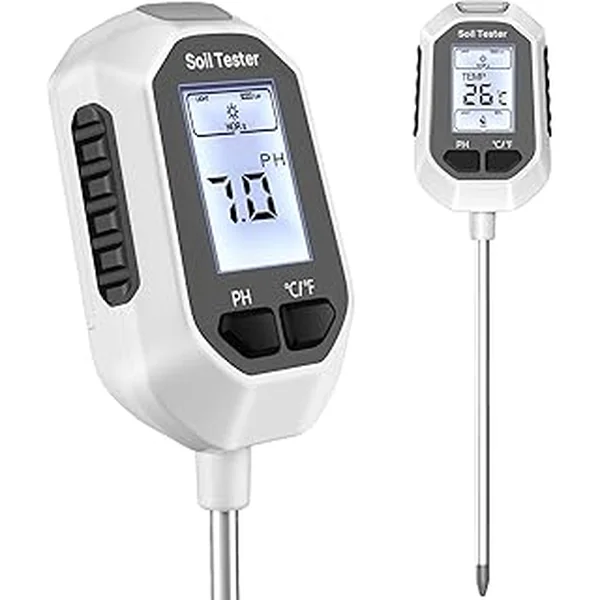
- pH: 6.0 to 7.0
- Avoid: heavy water-retentive mixes, garden soil, pure peat
Pot choice:
- Material: ceramic, plastic, or glazed terracotta all work. Unglazed terracotta dries out a bit too quickly for parlor palms.
- Drainage hole: essential — never skip
- Size: parlor palms prefer to be slightly root-bound; only upsize when roots are visibly circling and pushing up through the surface
Repotting frequency: every 2–3 years, in spring. Increase pot size by no more than 2.5 cm (1 in) in diameter at each repot.
Fertilising
Parlor palms are very light feeders.
- What: balanced liquid houseplant fertiliser (e.g. 20-20-20 or similar)
- Rate: diluted to half strength
- When: once a month, March through September only
- Skip: all feeding through autumn and winter — root activity slows to almost nothing
Signs of overfeeding: crusty white buildup on soil surface; brown patches on fronds; sudden frond yellowing. Flush the pot with plain water several times to wash out salt buildup if you suspect overfeeding.
Temperature and placement
- Ideal range: 18–24°C (65–75°F) — typical room temperature
- Minimum: 13°C (55°F) — protect from cold draughts and unheated winter rooms
- Maximum: 30°C (86°F) before stress begins
- Avoid: air-conditioning vents, fireplaces, radiators, draughty single-glazed windows in winter
A parlor palm placed near a single-pane window in winter can suffer leaf damage from cold radiating off the glass — pull pots back 30 cm (12 in) during the coldest months.
Growth rate and size
Parlor palms are slow growers. A young plant from a nursery will gain 7–15 cm (3–6 in) per year under good conditions, and reach a final indoor height of 1–1.2 m (3–4 ft) over 5–10 years. They never form the tall trunk-and-canopy structure of outdoor palms — instead, mature plants throw up multiple stems from the base, forming a clump.
If you want a faster, taller indoor palm, the parlor palm is the wrong choice. If you want a long-lived, undemanding, modest-sized clumping palm that handles low light, it is the perfect choice.
Pet safety
The parlor palm is one of the larger pet-safe houseplants. The ASPCA lists Chamaedorea elegans as non-toxic to cats, dogs, and horses.
This is a significant advantage over similar-looking but toxic species like the Sago palm (Cycas revoluta), which is deeply toxic to pets. If you have a curious dog or cat that grazes on houseplants, a parlor palm is a safe choice.
(That said — any plant chewed in quantity can cause mild stomach upset. Place plants out of constant reach if you have a confirmed plant-eater.)
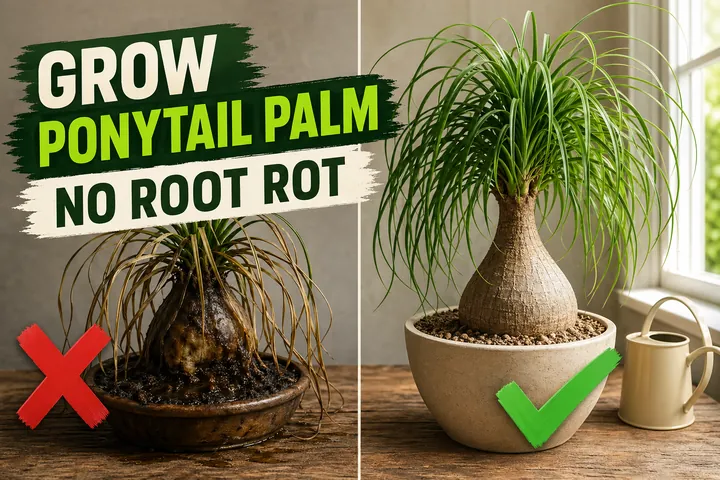
For other reliably pet-safe options, the ponytail palm is another low-toxicity, low-care option — though it has very different watering needs (it stores water in its swollen base and prefers to dry out).
Spider mites and other pests
Spider mites (Tetranychus urticae) — the main enemy
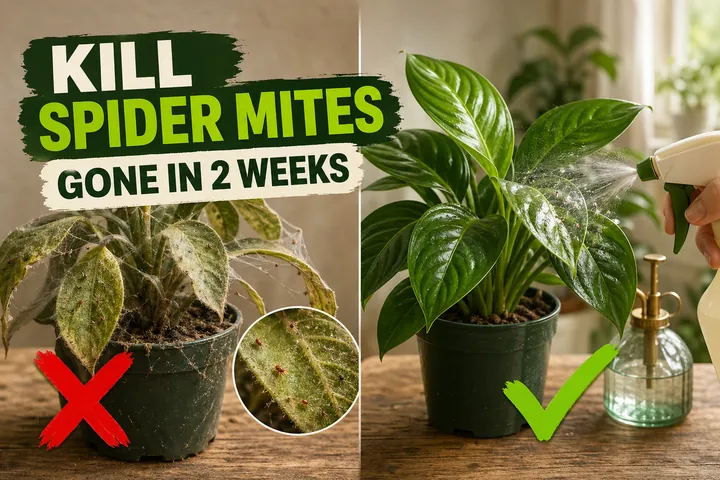
Spider mites love the same dry warm conditions that parlor palms hate, and they are by far the most common pest of indoor palms.
Symptoms:
- Fine pale stippling on upper frond surface
- Faint webbing between leaflets (visible if you peer closely)
- Yellowing and dropping leaflets
- General dullness — fronds lose their gloss
Fix:
- Take the plant to a sink or shower and rinse all surfaces (especially the undersides of fronds) with lukewarm water.
- Repeat every 5–7 days for 3 weeks — this catches successive generations as eggs hatch.
- For severe infestations: apply insecticidal soap or horticultural oil, ensuring full coverage on undersides.
- Raise ambient humidity to prevent recurrence.
Our full guide to getting rid of spider mites covers identification and treatment in much more depth.
Mealybugs
Symptoms: small white cottony clusters in leaf axils and along stems.
Fix: dab affected spots with a cotton swab dipped in 70% isopropyl alcohol; repeat weekly until clear.
Scale insects
Symptoms: small brown waxy bumps along stems and undersides of fronds.
Fix: scrape off gently with a fingernail or soft brush; apply horticultural oil for full coverage.
Fungus gnats
Symptoms: small dark flies hovering around the soil surface.
Fix: let the top 2–3 cm (0.75–1 in) of soil dry between waterings; add a layer of fine grit on top; yellow sticky traps catch adults.
Troubleshooting table
| Symptom | Most likely cause | Fix |
|---|---|---|
| Brown crispy tips | Low humidity or fluoride water | Run humidifier; switch water source |
| Yellow fronds (whole frond) | Overwatering | Reduce frequency; check drainage |
| Yellow fronds (just one) | Natural aging of oldest frond | Trim at base; no action needed |
| Pale washed-out colour | Too much direct sun | Move away from south-facing window |
| Brown patches mid-frond | Sunburn | Filter light with sheer curtain |
| Webbing on fronds | Spider mites | Rinse weekly; raise humidity |
| Sticky residue / white spots | Mealybugs or scale | Alcohol swab; horticultural oil |
| Soft mushy base | Root rot from waterlogging | Repot in fresh dry mix; remove rotted roots |
| No growth at all in 6 months | Low light or winter dormancy | Wait until spring; assess if pale |
| Limp fronds despite moist soil | Cold damage | Move from cold draught; warm spot |
Watch: Parlor palm care video guide
A visual walkthrough of frond trimming and humidity setup pairs well with the written guide.
Related reading
- Ponytail Palm Care — another pet-safe low-maintenance palm with very different watering needs
- Cast Iron Plant Care — the classic low-light Victorian houseplant
- Best Low-Light Houseplants for Beginners — reliable picks for dim rooms
- How to Get Rid of Spider Mites — full identification and treatment
Summary: parlor palm care checklist
- Light: low to medium indirect; avoid direct sun
- Water: when top 2–3 cm (0.75–1 in) of soil dry; every 7–10 days in summer
- Humidity: 50–60% — humidifier strongly recommended
- Soil: loose peat-free potting mix with extra perlite
- Fertilise: half-strength balanced liquid monthly, March–September only
- Temperature: 18–24°C (65–75°F); minimum 13°C (55°F)
- Repot: every 2–3 years in spring; modest size increase only
- Watch for: spider mites, brown tips, sunburn
- Pet safety: non-toxic (ASPCA-listed)
- Mature size: 1–1.2 m (3–4 ft) over many years
A parlor palm rewards patience. Get the humidity right, water on a steady rhythm, and check for spider mites every couple of weeks — and you can have the same plant on your living room table 20 years from now.
Want personalised watering reminders and humidity alerts for your parlor palm? The Tazart app builds a care calendar tied to your local climate and lets Dr. Afrao, our AI plant assistant, answer your specific palm questions in real time.
Highly recommended
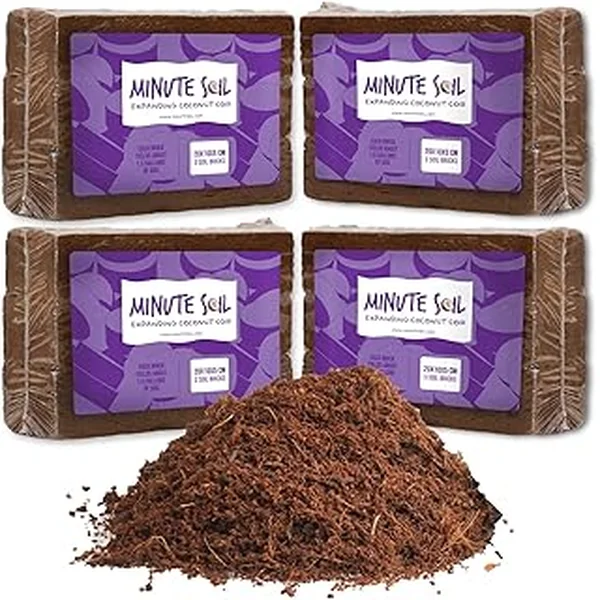
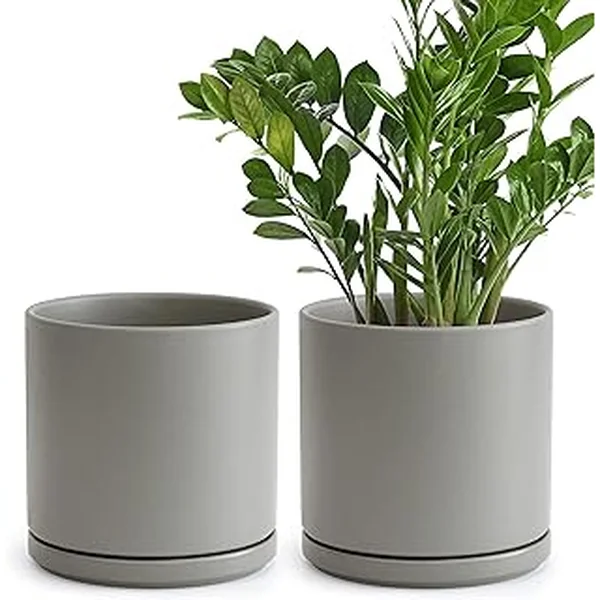
The supplies that make this guide work
Tazart is an Amazon Associate — we earn from qualifying purchases at no extra cost to you. Thank you for helping us keep these guides free.
Frequently asked questions
How often do you water a parlor palm?
Water a parlor palm when the top 2–3 cm (0.75–1 in) of soil feels dry — typically every 7–10 days in spring and summer, and every 10–14 days in winter. Unlike many succulent-style houseplants, parlor palms should never dry out completely. Bone-dry soil causes brown crispy frond tips and may kill the plant. Water deeply until liquid runs from drainage holes, then let the pot drain fully — never leave it sitting in a saucer of water.
Can a parlor palm tolerate low light?
Yes — Chamaedorea elegans is one of the very few palms that genuinely thrives in low to medium indirect light. It evolved on the dim rainforest floor of southern Mexico and Guatemala where almost no direct sun reaches. A north-facing window, a spot 2–3 m (6–10 ft) from any window, or a dim hallway are all acceptable. It will grow slower in low light but will not weaken or stretch the way most palms do.
Why are my parlor palm fronds turning brown at the tips?
Brown frond tips on a parlor palm are almost always caused by one of three things: dry air (humidity below about 40%), inconsistent watering (cycles of bone-dry then soaked), or fluoride and chlorine in tap water. Fix by misting, grouping with other plants, or using a small humidifier; water on a regular schedule that keeps soil evenly moist; and switch to rainwater or let tap water sit overnight before using. Cut off the brown tips at an angle for a tidier look — they will not regrow.
Is a parlor palm safe for cats and dogs?
Yes — the parlor palm (Chamaedorea elegans) is listed as non-toxic to cats, dogs, and horses by the ASPCA. This makes it one of the most popular larger houseplants for pet households. However, any plant material can cause mild stomach upset if a curious pet chews and swallows it, so placement out of constant reach is still sensible.
How fast does a parlor palm grow?
Slowly. Indoors, a parlor palm typically grows 7–15 cm (3–6 in) per year. Mature indoor plants reach a maximum height of 1–1.2 m (3–4 ft) over many years, never the towering tree-form palms you see outdoors. This slow growth is part of why parlor palms make such reliable, long-lived indoor specimens — a healthy plant can easily last 10–20 years in the same pot.
Do parlor palms need misting and high humidity?
Parlor palms strongly prefer 50–60% humidity, which is higher than most indoor environments — especially in winter when central heating drops indoor humidity below 30%. Daily misting helps temporarily but is not enough on its own. A small humidifier, grouping plants together, or a pebble tray with water beneath the pot are all far more effective. Low humidity is the single most common cause of the brown tip problem.
How do I get rid of spider mites on a parlor palm?
Spider mites are the most common pest of parlor palms — they thrive in the dry warm air the plant otherwise dislikes. At the first sign of fine stippling on fronds or faint webbing, take the plant to a sink or shower and rinse all surfaces (especially undersides) with lukewarm water. Repeat every 5–7 days for three weeks. For severe infestations, spray with insecticidal soap or horticultural oil. Raising humidity prevents recurrence.