Flowers
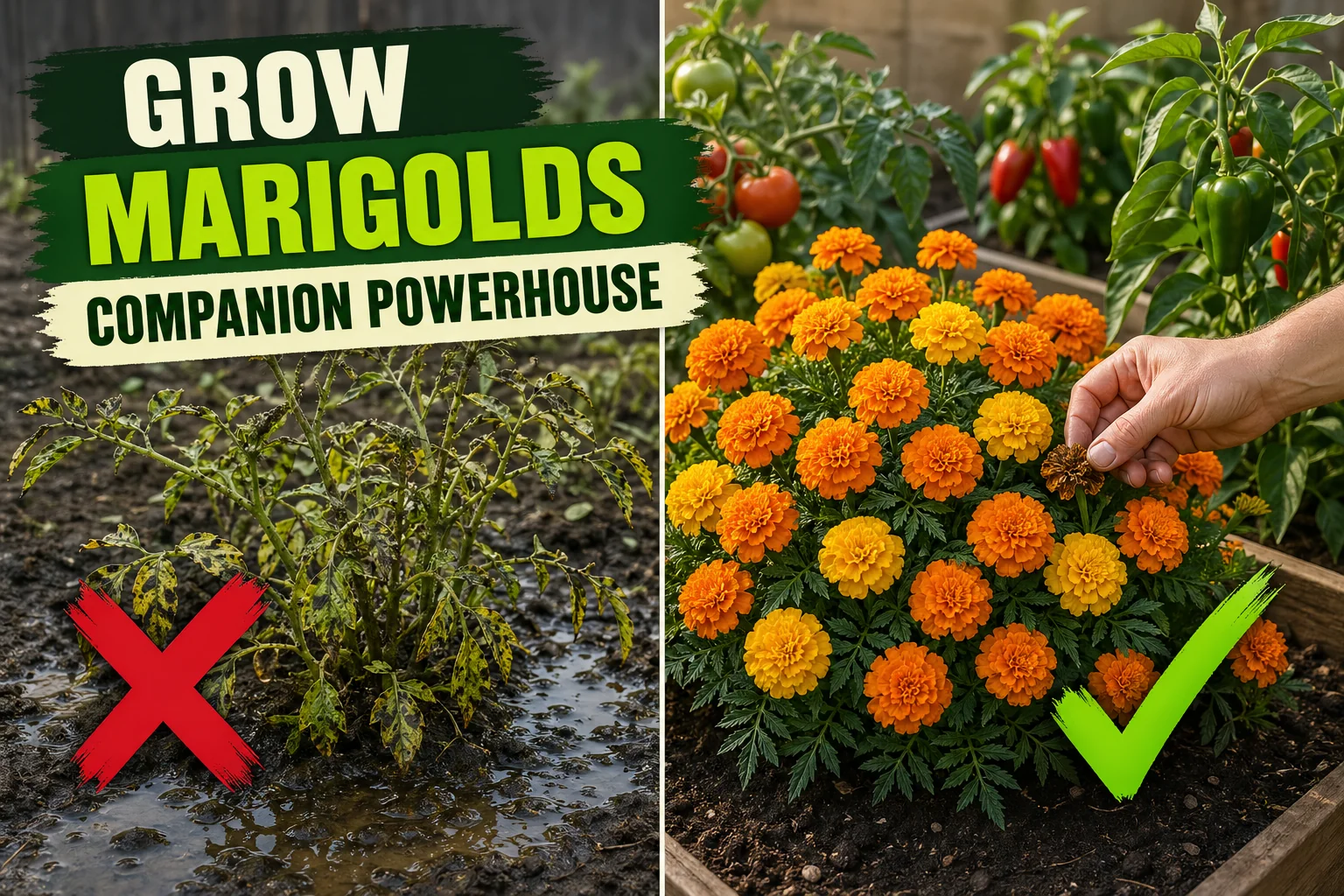
Marigold Plant Care (Companion Plant Powerhouse)
Marigolds (Tagetes spp.) repel nematodes, pull in pollinators, and bloom non-stop. Sun, soil, watering, deadheading, and companion-planting — the full guide.
On this page
Watch the visual walkthrough
Why YOU Should Plant Marigolds. EVERYWHERE.
Marigolds are used in the garden to return a number of different things. This can range from deterring, rabbits, dear, and even ...
Marigolds are the easiest annual flower you can grow — and they pull double duty as one of the most effective companion plants for a vegetable garden. Sun, decent soil, a weekly watering, and a quick deadhead is the entire job.
This guide covers the two species you’ll see at the garden centre (French and African marigolds), exactly how to plant and care for them, and how to use them to protect tomatoes, peppers, and other veg from soil pests.
Quick answer
Plant marigolds in full sun (6+ hours) in well-drained soil, water only when the top 2–3 cm (1 in) of soil is dry, and deadhead spent flowers every 3 to 5 days. Skip the high-nitrogen fertilizer. Tuck French marigolds (Tagetes patula) between tomatoes, peppers, and squash to suppress root-knot nematodes and confuse flying pests. Expect non-stop blooms from June until the first hard frost.
Meet the marigolds
Most “marigolds” sold at garden centres are one of two species:
| Species | Common name | Habit | Best use |
|---|---|---|---|
| Tagetes patula | French marigold | Bushy, 20–40 cm (8–16 in) tall | Borders, edging, vegetable companion (best for nematode control) |
| Tagetes erecta | African / American marigold | Upright, 60–120 cm (24–48 in) tall | Back of border, cut flowers, large-scale plantings |
There’s also Tagetes tenuifolia (Signet marigold) — small lacy plants with edible citrus-flavoured petals — and Calendula officinalis (pot marigold), which is a different genus entirely despite the shared common name.
For vegetable-garden companion planting, French marigolds do the heaviest work.
What you’ll need
- Marigold seeds or starter plants (French for vegetable beds, African for borders)
- Full-sun spot — 6+ hours of direct sun per day
- Well-drained soil (loosen compacted soil with a 5 cm / 2 in layer of compost)
- Watering can or hose with a gentle nozzle
- Garden mulch (bark, straw, or leaf mould)
- Bypass pruners or scissors for deadheading
That’s it. No fertilizer needed for the first 4 to 6 weeks if your soil has any compost in it.
Step-by-step: planting marigolds
1. Choose the right spot
Marigolds need at least 6 hours of direct sun and prefer 8+ hours. They tolerate poor soil but hate wet feet — avoid low spots that pool after rain.
If you’re using marigolds as a vegetable-garden companion, plant them inside or along the edge of the bed where the vegetables grow, not in a separate border. Roots have to be in the same soil for the nematode-suppressing chemistry to reach the crop.
2. Prepare the soil
Loosen the top 15–20 cm (6–8 in) of soil with a fork or trowel. Mix in a thin layer (about 5 cm / 2 in) of compost. Skip rich manure or high-nitrogen lawn fertilizer — too much nitrogen pushes leafy growth at the cost of flowers.
3. Sow seeds or transplant
Direct sowing: plant marigold seeds 5 mm (¼ in) deep after your last frost date, when soil temperature is at least 18°C (65°F). Space French marigolds 20–25 cm (8–10 in) apart, and African marigolds 30–45 cm (12–18 in) apart. Water gently and expect germination in 5 to 7 days.
Transplants: harden off nursery starts for 3 to 5 days outdoors before planting. Dig a hole the same depth as the root ball, set the plant in so the soil line on the stem matches the bed soil, backfill, and water in.
4. Mulch and water in
Spread 5 cm (2 in) of organic mulch around the plants — keep it 2 cm (1 in) clear of the stem itself to prevent rot. Water deeply once at planting until the soil 10 cm (4 in) down is moist.
Care after planting
Marigolds are low-maintenance once established. The whole care list is short:
| Task | When |
|---|---|
| Water | When the top 2–3 cm (1 in) of soil is dry — usually every 5–7 days, more in heat |
| Fertilize | Optional. Balanced 5-10-5 every 3–4 weeks if blooms slow down |
| Deadhead | Every 3 to 5 days through the season |
| Pinch | Once at 15 cm (6 in) tall to encourage bushiness |
A free plant care app like Tazart can hold the watering schedule for you, adjust it for local heat waves, and remind you when it’s time to deadhead — useful if you’re growing more than a single border.
Watering
Deep and infrequent beats shallow and frequent. A long slow soak once a week trains roots to grow down, where the soil stays cooler and damper. Wet leaves invite powdery mildew, so water at the base of the plant in the morning whenever you can.
Light
Full sun is non-negotiable for heavy bloom. In shaded spots you’ll still get foliage, but flowering drops 50% or more and powdery mildew risk goes up sharply.
Fertilizer
Marigolds do best in slightly lean soil. Skip fertilizer entirely for the first month after planting. If midsummer growth slows, side-dress with a balanced 5-10-5 (low nitrogen) granular fertilizer or apply a diluted liquid feed every 3 to 4 weeks.
Deadheading
Snip or pinch off every faded flower at the first set of leaves below the bloom. The plant redirects energy from making seed into making new flowers — that’s the entire trick to non-stop summer colour.
How marigolds work as companion plants
The companion-plant reputation is real, but the science is specific.
Root-knot nematodes (Meloidogyne spp.): French marigolds (Tagetes patula) release a compound called alpha-terthienyl from their roots that suppresses root-knot nematode populations in the surrounding soil. Multiple field trials have documented 50–90% reductions when marigolds are interplanted or grown as a cover crop the season before. African marigolds also work, but French is the most studied and consistently effective.
Above-ground pests: the strong scent of marigold foliage and flowers can mask the smell of nearby vegetables, making it harder for pests like whiteflies and some moths to find their host crop. The effect is real but modest — treat it as a supportive layer, not a substitute for monitoring or row covers.
Pollinators and beneficials: marigolds pull in hoverflies, lacewings, and parasitic wasps that prey on aphids and caterpillars. This is one of the strongest indirect benefits of including them in a vegetable bed.
What to plant marigolds with
Strong pairings:
- Tomatoes — French marigolds underneath tomato cages reduce nematode pressure and pull in pollinators.
- Peppers and aubergines — same nematode suppression, same pollinator boost. See how to grow bell peppers for layout ideas.
- Squash, courgette, melon, cucumber — marigolds along the row edges help mask host scent from vine borers and squash bugs.
- Lettuce, brassicas, root vegetables — fine to interplant; benefits are modest but never harmful.
Avoid planting marigolds directly in or next to:
- Beans (bush, pole) — the root chemistry can suppress legume germination and growth.
- Cabbage in tight blocks — minor antagonism in some plantings; keep at least 30 cm (12 in) apart.
For broader layout planning, see how to start a vegetable garden for a beginner-friendly bed plan that includes marigolds along the borders.
Watch: marigold care and companion planting
A short visual walkthrough pairs well with the steps above. If you’re a visual learner, find a quick Marigold Care and Companion Planting tutorial on YouTube and then come back to follow the timing in this guide.
Common mistakes to avoid
- Planting in shade. Marigolds bloom heavily only in full sun. Less than 6 hours and the plant goes leggy with few flowers.
- Overwatering. Wet soil rots the crown and invites mildew. Water deeply, then let the top 2–3 cm (1 in) dry before the next round.
- Fertilizing with high-nitrogen feed. Nitrogen-rich lawn or vegetable fertilizers grow lush leaves and almost no flowers. Use a balanced or bloom-boosting blend instead.
- Skipping the deadhead. Without it, most marigold varieties slow down or stop flowering by mid-July.
- Wetting the foliage at night. A wet leaf surface plus warm humid air equals powdery mildew. Water at soil level in the morning.
- Planting next to beans. Beans and marigolds don’t get along — separate by at least 60 cm (24 in).
Troubleshooting
| Symptom | Likely cause | Fix |
|---|---|---|
| Leggy plant, few flowers | Not enough sun, or never pinched | Move to full sun next season; pinch or cut back by a third now to force bushier regrowth |
| Lots of leaves, almost no flowers | Too much nitrogen | Stop fertilizing; switch to bloom-boost (low-N, high-P) or wait it out |
| White powdery coating on leaves | Powdery mildew from wet foliage and crowding | Water at the base in morning; thin to 25–30 cm (10–12 in) spacing; cut affected leaves off |
| Yellow lower leaves, soggy soil | Overwatering or compacted soil | Let soil dry out; add 5 cm (2 in) of mulch; skip the next 2 waterings |
| Holes chewed in petals | Earwigs or slugs at night | Hand-pick at dusk; place a 2–3 cm (1 in) ring of dry sand or crushed eggshell around the plant |
| Tiny webs and pale stippled leaves | Spider mites in dry hot weather | Spray foliage off with water in the morning for 3 days; mulch deeper to keep roots cooler |
| Black sticky residue, ants on plant | Aphids feeding on new shoots | Spray off with a strong jet of water; if persistent, use insecticidal soap on the affected tips |
Saving seed for next year
Marigolds are open-pollinated and reseed easily — the simplest way to keep your favourite variety going.
- Stop deadheading 4 to 6 flowers in late summer. Let them fade and turn brown on the plant.
- Once the back of the flower head is fully dry and tan-coloured, snip it off into a paper bag.
- Pull apart the dried head — the long thin black-and-white seeds fall out easily.
- Store seeds in a labelled paper envelope in a cool dry drawer. Germination stays strong for 2 to 3 years.
Note that hybrid varieties (look for “F1” on the seed packet) won’t grow true from saved seed — the next generation reverts to a mix of the parent traits.
Related reading
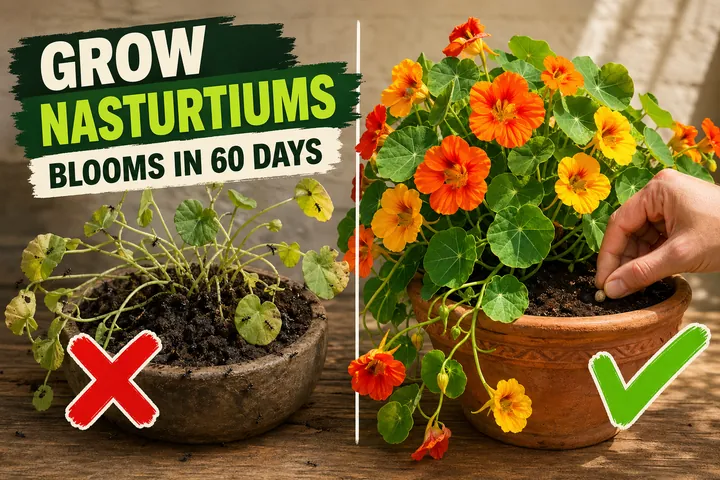
- How to plant nasturtium seeds — another easy edible companion flower for vegetable beds, with a similar full-sun, lean-soil approach.
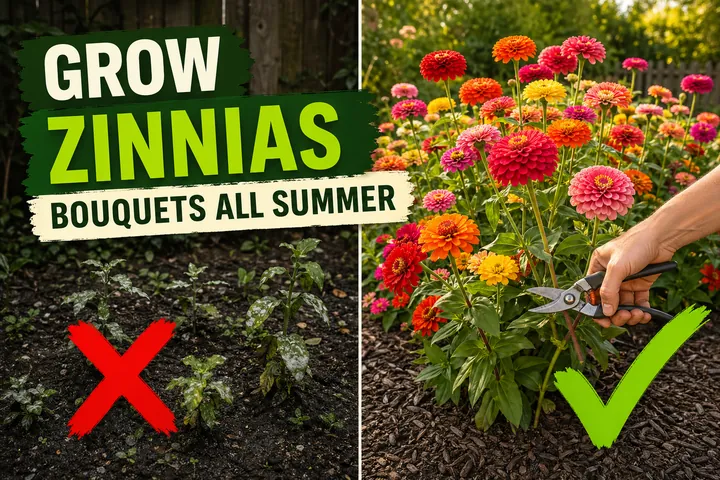
- How to grow zinnias from seed — direct-sow cutting flowers that pair perfectly with marigolds in the same bed.
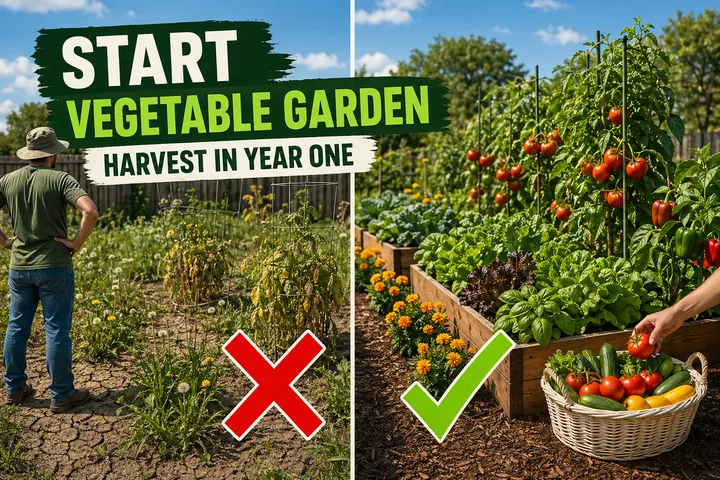
- How to start a vegetable garden — beginner layout that includes companion flowers along the borders.
- Scan the next plant you bring home with the free Tazart plant identifier and let it set up the watering schedule for you.
A note on conditions
Every garden is different. Light hours, soil drainage, summer temperatures, humidity, and rainfall all change how marigolds grow and how often they need water. Use the steps above as a starting point and adjust based on what your plants actually do in week two — that’s how every good gardener learns.
Highly recommended
The supplies that make this guide work
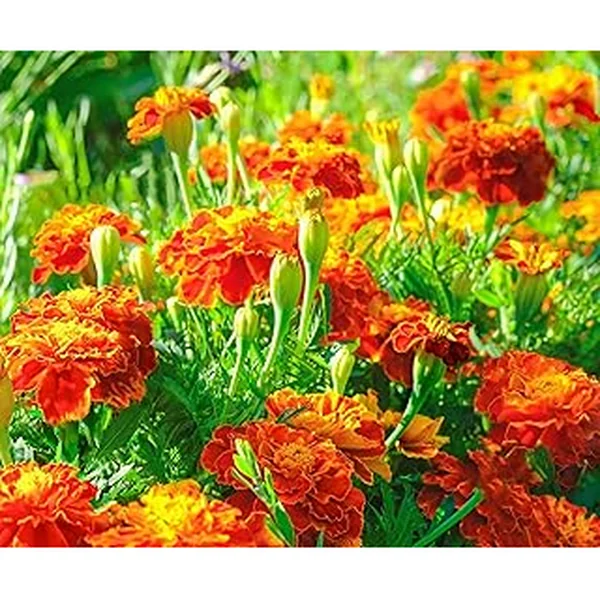


Tazart is an Amazon Associate — we earn from qualifying purchases at no extra cost to you. Thank you for helping us keep these guides free.
Frequently asked questions
How do you take care of marigolds?
Plant marigolds in full sun (6+ hours), in well-drained soil, and water them deeply only when the top 2–3 cm (1 in) of soil is dry. Deadhead every 3 to 5 days to keep flowers coming. Skip rich nitrogen fertilizer — it makes leaves at the cost of blooms.
Do marigolds need full sun?
Yes. Marigolds bloom best with at least 6 hours of direct sun, and 8+ hours gives the heaviest flowering. In partial shade you'll still get plants, but they grow leggy with far fewer flowers and a higher risk of powdery mildew.
How often should I water marigolds?
Water established marigolds deeply about once a week — more in hot dry weather, less in cool or humid stretches. The right test is the soil itself: water only when the top 2–3 cm (1 in) is dry. Marigolds are drought-tolerant once their roots take hold, and overwatering causes more problems than underwatering.
Do marigolds really repel pests?
Yes, but specifically. French marigolds (Tagetes patula) release a compound called alpha-terthienyl from their roots that suppresses root-knot nematodes in the soil — confirmed by multiple agricultural studies. The flowers and foliage also confuse some flying pests by masking the scent of nearby vegetables. They are not a guarantee against aphids, whiteflies, or cabbage moths, but they help.
Should you deadhead marigolds?
Yes — it is the single biggest thing you can do for non-stop blooms. Pinch or snip off every spent flower at the first leaf node below the bloom. The plant redirects energy from making seed to making more flowers. Skip deadheading and most varieties slow down or stop flowering by midsummer.
What plants should not be planted near marigolds?
Avoid planting marigolds next to beans and cabbage-family crops. The same root chemistry that repels nematodes can mildly inhibit legume germination, and beans don't appreciate the company. Otherwise marigolds pair well with most vegetables and herbs.
Why are my marigolds not blooming?
The three usual causes are too little sun (under 6 hours), too much nitrogen (rich compost or lawn-runoff feeds leaves not flowers), or skipping deadheading. Move them to full sun, switch to a balanced or bloom-boosting fertilizer, and snip off every spent flower.
Do marigolds come back every year?
In most of North America and Europe, no — marigolds are tender annuals killed by the first hard frost. They reseed readily, though, and you'll often find volunteer seedlings popping up in the same spot the next spring. In USDA zones 9–11 they can survive year-round as short-lived perennials.