Edible
Lemon Balm Plant Care: Grow Melissa officinalis Like a Pro
Master lemon balm plant care — light, soil, watering, controlling its spread, harvesting, drying for tea, and how it differs from common mint.
On this page
- Quick answer
- Table of contents
- Light requirements
- Soil and pH
- Watering lemon balm correctly
- USDA zones and climate
- Container-growing to control spread
- How to harvest lemon balm
- Cutting before seed: the spread-control rule
- Drying lemon balm for tea
- Lemon balm vs common mint
- Pests and problems
- Troubleshooting table
- Watch: Lemon balm plant care video guide
- Related reading
- Summary: lemon balm plant care checklist
Watch the visual walkthrough
Why we're WASTING this beautiful Lemon Balm, and you should too!
Learn more about Herbal Medicine by joining our online program: https://homegrownherbalist.net/school Join this channel to get ...
Lemon balm is the herb everyone wishes they had planted years ago. Its tender lemon-scented leaves drop into iced tea, infuse into honey, and quietly soothe a stressed afternoon. But behind that gentle reputation is a vigorous self-seeder that will colonise your whole garden if you let it.
This guide covers exactly how to keep lemon balm productive, fragrant, and contained — and how to harvest and dry it for a year’s worth of homemade tea.
Quick answer
Lemon balm (Melissa officinalis) thrives in full sun to part shade, moist well-drained soil, and USDA zones 4–9. Water when the top 2–3 cm (0.75–1 in) of soil is dry. The single most important care task is cutting the entire plant back to 5–10 cm (2–4 in) just before flowering — this stops aggressive self-seeding, triggers tender regrowth, and keeps leaves fragrant all season. Harvest stems above a leaf node, take no more than one-third per cut, and grow in a container if you want to control its spread. Dry whole stems hanging upside down for 7–14 days for tea.
Table of contents
- Light requirements
- Soil and pH
- Watering lemon balm correctly
- USDA zones and climate
- Container-growing to control spread
- How to harvest lemon balm
- Cutting before seed: the spread-control rule
- Drying lemon balm for tea
- Lemon balm vs common mint
- Pests and problems
- Troubleshooting table
- FAQ
Light requirements
Lemon balm is unusually flexible for a Mediterranean herb. It does well in conditions where rosemary or thyme would struggle.
- Ideal: 6 hours of direct sun per day with a bit of afternoon shade
- Tolerates: full sun in cool climates; part shade in hot climates
- Avoid: deep shade — leaves pale, growth becomes leggy, citrus oils weaken
- Best position in a hot summer climate: morning sun, afternoon dappled shade
- Best position in a cool summer climate: full sun, sheltered from cold winds
A plant in full all-day sun in a 35°C (95°F) heatwave can wilt by midday even with moist soil — the leaves transpire faster than roots can refill. Light afternoon shade fixes this.
Soil and pH
Lemon balm is forgiving about soil but rewards good preparation.
- Texture: loose, well-drained loam
- pH: 6.0 to 7.5 (slightly acidic to neutral)
- Drainage: essential — boggy soil causes root rot fast
- Fertility: moderate; over-rich nitrogen-heavy soil produces large leaves with weaker citrus flavour
- Improvement: in heavy clay, dig in plenty of compost and grit before planting
A 5–7 cm (2–3 in) layer of organic mulch in late spring helps keep soil temperatures stable and moisture even — both important for tender leaves.
Watering lemon balm correctly
Lemon balm sits in the middle of the watering spectrum: not as drought-tolerant as lavender or rosemary, not as thirsty as basil.
Rule: Check the top 2–3 cm (0.75–1 in) of soil. Water deeply when dry; leave alone when still moist.
In practice:
- In-ground summer: every 4–6 days in average weather; every 2 days in a heatwave
- Containers in summer: every 2–3 days; daily above 30°C (86°F)
- Indoors: every 4–7 days; check more often under grow lights
Water at the base, not overhead — wet leaves at dusk can promote powdery mildew. Drip irrigation or a slow-fill watering can is ideal.
Drought stress accelerates bolting. If you go away and the plant looks ragged on return, cut it back hard (down to 5–10 cm / 2–4 in) and water deeply. Fresh growth returns within 2 weeks.
USDA zones and climate
Lemon balm is a hardy perennial across most of the temperate world.
| USDA zone | Notes |
|---|---|
| 4 | Hardy with winter mulch; dies back to crown |
| 5–7 | Ideal — perennial returns reliably each spring |
| 8 | Excellent; may stay semi-evergreen in mild winters |
| 9 | Productive but flowers and bolts faster; treat as a cool-season crop where summers exceed 35°C (95°F) |
| 10+ | Best grown as a cool-season annual; struggles in extended heat |
In zones 4–5, mulch crowns with 7–10 cm (3–4 in) of straw or leaves after the first hard frost to protect the root system over winter.
Container-growing to control spread
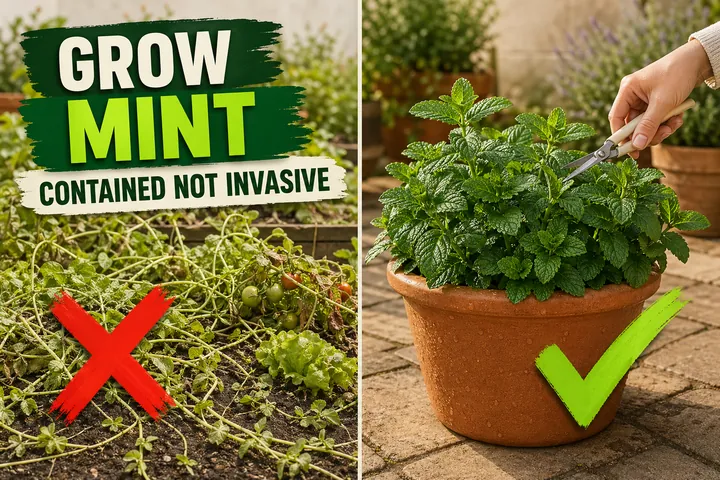
If you have ever grown common mint in a garden bed you already know the answer: pots. Lemon balm spreads slightly differently to mint — it travels by seed rather than underground runners — but a single plant can still self-sow hundreds of seedlings across a season.
Container recommendations:
- Size: 20–25 cm (8–10 in) diameter, 25 cm (10 in) deep minimum
- Drainage: drainage holes are essential
- Material: terracotta or unglazed clay (porous walls prevent soggy soil); plastic works too with careful watering
- Soil: a peat-free general potting mix with extra perlite (mix 1 cup perlite per 5 L of potting mix)
- Position: raised off the ground on pot feet to prevent roots escaping through drainage holes
Refresh container plants every 2–3 years by dividing the rootball in early spring — replant the most vigorous third in fresh mix and either gift or compost the rest.
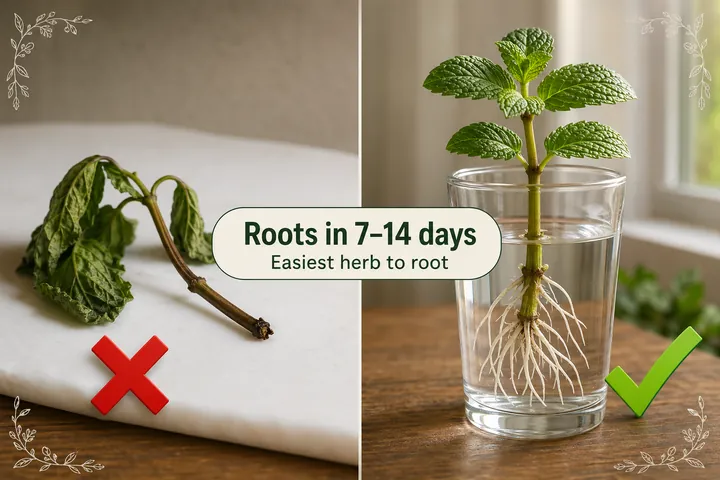
For a sister herb with similar growing habits, see our guide to how to grow mint — the same container approach applies, and the propagation principles in propagating mint from cuttings work for lemon balm too.
How to harvest lemon balm
Frequent harvesting is the secret to bushy lemon balm. Each cut triggers branching at the node below the cut, multiplying stem count over a season.
Step-by-step:
- Find a stem with at least 3–4 leaf-node pairs above the soil.
- Count down two node pairs from the top of the stem.
- Snip cleanly with scissors just above that node pair.
- Two new shoots will emerge from the cut node within 7–10 days.
- Repeat across the plant every 1–2 weeks during peak season.
Volume rule: Never remove more than one-third of the plant in a single session.
Best time of day: Morning, after dew has dried — leaf essential oils (citral, geraniol) peak then, and the cut surfaces dry quickly in daytime warmth.
For tea or drying: Cut whole stems just before any flower buds open — this is when leaf oil content is highest.
Cutting before seed: the spread-control rule
This is the most important single technique in lemon balm care, and the one that separates a tidy plant from a garden takeover.
Lemon balm flowers in mid to late summer — small white-cream blooms in whorls at the leaf axils. Once those flowers fade, each one drops dozens of viable seeds. One mature plant readily produces several thousand seeds per season. Most of them germinate.
The rule: the moment you see flower buds forming (small clustered green nubs at the top leaf axils), cut the entire plant back to 5–10 cm (2–4 in) above soil.
This achieves three things at once:
- Stops seed set entirely — no spreading
- Triggers a flush of fresh tender leaves for the late-summer harvest
- Resets the plant so it does not turn woody and bitter
Within 10–14 days, the plant pushes back vigorously with new pale-green growth. You can repeat this cycle 2–3 times per growing season.
Drying lemon balm for tea
Lemon balm tea is the easiest reason to grow this plant. Dried correctly, it keeps its bright citrus flavour for nearly a year.
Air-drying (traditional)
- Cut whole stems just before flowering, in the morning.
- Tie 5–10 stems together at the base with twine.
- Hang upside down in a warm (20–25°C / 68–77°F), dark, well-ventilated space.
- Wait 7–14 days until leaves are crisp and crumble between fingers.
- Strip leaves from stems and store in airtight jars away from light.
Dehydrator (faster)
- Strip leaves from stems.
- Spread in a single layer on dehydrator trays.
- Run at 35–40°C (95–105°F) for 4–6 hours, checking at 4 hours.
- Leaves should crumble cleanly when fully dry.
Storage: Airtight glass jars in a cool dark pantry. Properly dried lemon balm keeps its flavour for 9–12 months. After that, it is still safe but milder.
Avoid: drying in direct sun (bleaches and destroys oils), microwave drying (cooks the leaves), or storing while leaves are still flexible (encourages mould).
Lemon balm vs common mint
Both belong to the same family (Lamiaceae), share the family’s square stems and opposite leaves, and look similar at first glance. Telling them apart is straightforward once you know the cues.
| Feature | Lemon balm (Melissa officinalis) | Common mint (Mentha spp.) |
|---|---|---|
| Aroma when crushed | Clear lemon-citrus | Menthol, peppery |
| Spreads by | Self-seeding | Underground rhizomes |
| Leaf shape | Oval, slightly textured, soft | Variable; spearmint pointed, peppermint serrated |
| Flavour in tea | Sweet, mellow, gentle | Cooling, sharp, bracing |
| Invasiveness | High via seed | Very high via runners |
| Best companion herb | Basil, lemon verbena | Other mints — keep apart from non-mints |
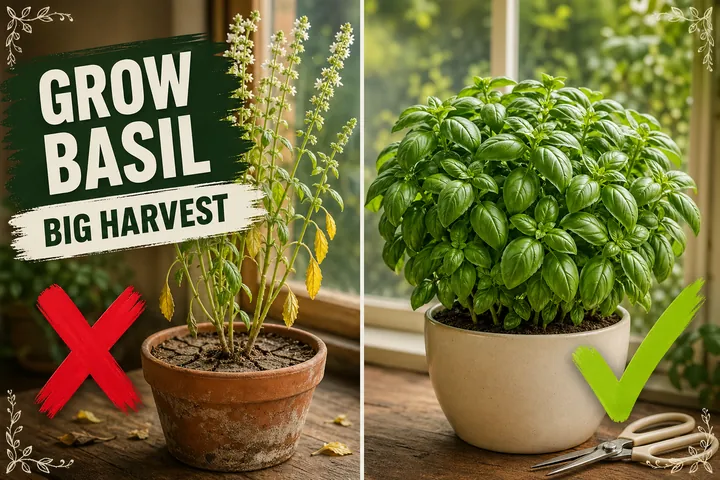
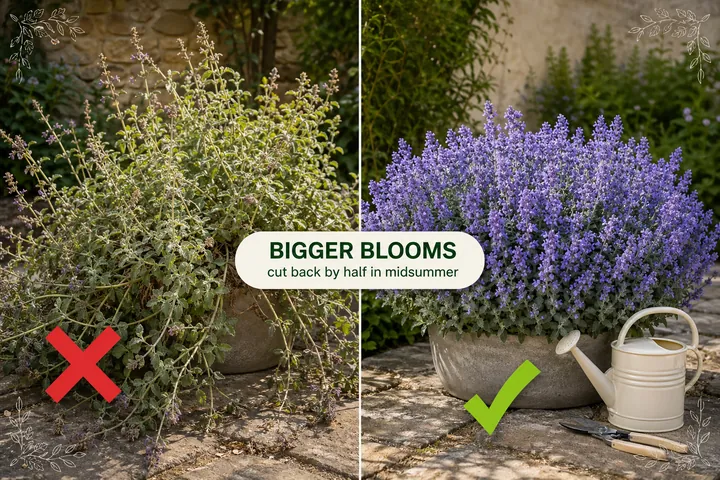
For comparison, our care guide on the related catmint plant shows a third Lamiaceae relative with its own quirks. For an entirely different culinary herb that pairs beautifully with lemon balm in the kitchen, see basil plant care.
Pests and problems
Lemon balm is unusually pest-resistant — its citrus oils repel many common chewing insects. The few problems you may see:
Powdery mildew
Symptoms: White powdery coating on upper leaf surfaces; yellowing and curling of affected leaves. Worst in humid still conditions.
Fix:
- Improve airflow — thin crowded stems
- Water only at the base, never overhead
- Remove badly affected leaves
- A milk spray (1 part milk to 9 parts water, sprayed on leaves weekly) is an effective folk remedy with research support
Whiteflies and aphids
Symptoms: Tiny white insects fluttering up when you brush the plant (whiteflies); clusters of soft green or black insects on new growth (aphids).
Fix:
- Strong jet of water early in the morning
- Insecticidal soap on undersides of leaves
- Encourage ladybirds and lacewings — natural predators
Spider mites
Symptoms: Fine stippling on upper leaf surfaces; tiny webbing under leaves; worst in hot dry weather.
Fix: Improve humidity around the plant; wash undersides of leaves with water; horticultural oil for severe cases.
Leaf yellowing
Causes:
- Overwatering / waterlogged soil (most common)
- Nitrogen deficiency in poor soil
- Late-season natural senescence on lower leaves
Fix: Check drainage; cut back hard; feed lightly with half-strength balanced liquid fertiliser.
Troubleshooting table
| Symptom | Most likely cause | Fix |
|---|---|---|
| Plant flowering early | Heat, stress, late cutting | Cut back to 5–10 cm (2–4 in); water and mulch |
| Leaves pale and leggy | Insufficient light | Move to brighter spot; reduce shade |
| Lower leaves yellowing | Overwatering | Check drainage; let soil dry between waterings |
| Weak lemon scent | Low light or over-fertilised | More sun; cut back nitrogen feed |
| Plant taking over the garden | Self-seeding | Cut before flowering every year |
| White powdery coating | Powdery mildew | Improve airflow; water at base only |
| Crispy curled leaves | Heat stress / underwatering | Deep water; add afternoon shade |
| Plant looks woody and bare at base | Mature growth pattern | Hard cutback to soil + new growth fills back |
Watch: Lemon balm plant care video guide
A visual walkthrough is useful for the cut-before-flowering step described above.
Related reading
- How to Grow Mint — controlling spread and propagation basics
- How to Propagate Mint from Cuttings — works for lemon balm too
- Basil Plant Care — pinching, harvest, and the other essential summer herb
- Catmint Plant Care — another Lamiaceae relative with its own quirks
Summary: lemon balm plant care checklist
- Sun: 6 hours direct sun; part shade welcome in hot climates
- Soil: loose, well-drained loam; pH 6.0–7.5
- Water: when top 2–3 cm (0.75–1 in) of soil is dry
- Containers: 20–25 cm (8–10 in) pot with drainage; refresh every 2–3 years
- Cut before flowering: down to 5–10 cm (2–4 in) — non-negotiable to control spread
- Harvest: above a leaf node; no more than one-third at once
- Dry for tea: hang stems upside down 7–14 days, or dehydrator at 35–40°C (95–105°F)
- Zones: USDA 4–9; mulch crowns in zone 4
- Pests: mostly resistant; watch for powdery mildew and aphids in humid summers
Lemon balm asks very little: a sunny corner, a sharp pair of scissors, and the discipline to cut it back before it tries to seed itself across the lawn. In return it gives you fragrant fresh leaves through summer and a winter’s worth of soothing tea.
Want lemon balm watering reminders and harvest-timing alerts tailored to your local climate? The Tazart app builds a personalised care calendar and lets Dr. Afrao, our AI plant assistant, answer your specific herb-care questions in real time.
Highly recommended
The supplies that make this guide work
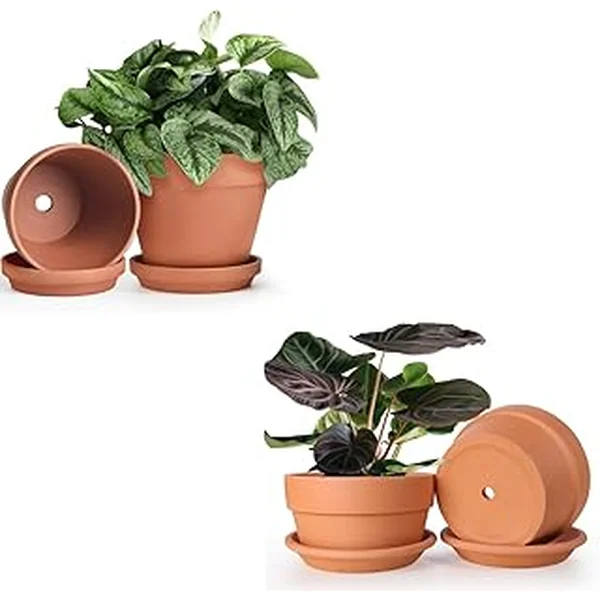
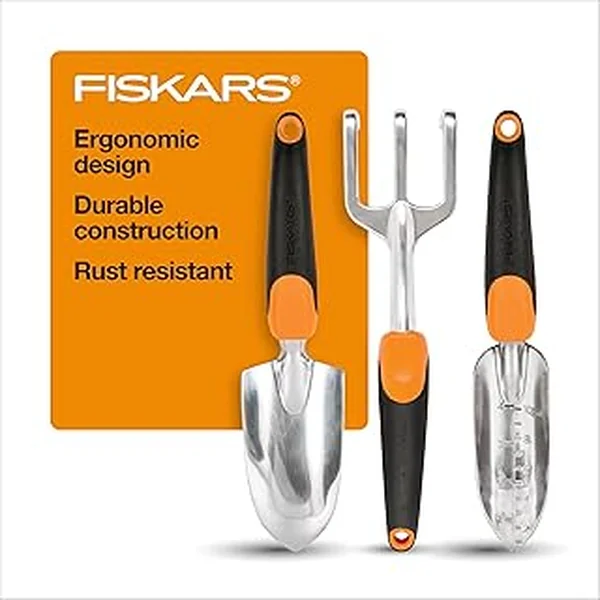
Tazart is an Amazon Associate — we earn from qualifying purchases at no extra cost to you. Thank you for helping us keep these guides free.
Frequently asked questions
How much sun does lemon balm need?
Lemon balm (Melissa officinalis) grows in full sun to part shade. Six hours of direct sun per day produces the most fragrant leaves with the strongest citrus oils, but in hot summer climates (above 30°C / 86°F regularly) some afternoon shade keeps leaves from scorching and bolting. In deep shade the plant survives but becomes pale, leggy, and weak in flavour.
How often should I water lemon balm?
Water lemon balm when the top 2–3 cm (0.75–1 in) of soil feels dry — typically every 3–5 days in average summer weather, and daily during heatwaves above 30°C (86°F) if grown in containers. The plant prefers consistently moist but never waterlogged soil. Lemon balm tolerates short dry spells better than most mint relatives, but prolonged drought causes leaves to crisp and the plant to bolt to seed.
Is lemon balm invasive and how do I control it?
Lemon balm spreads aggressively by self-seeding rather than by underground runners (the way true mint does). One mature plant can produce thousands of seeds and seedlings will pop up across your whole garden within 2–3 years. The single most effective control is cutting the entire plant back to 5–10 cm (2–4 in) above the ground just before flowering — usually in early to mid-summer. This prevents seed set and triggers fresh tender regrowth.
How do you harvest lemon balm?
Snip whole stems above a leaf node pair using clean scissors. Take no more than one-third of the plant at a time, and harvest in the morning after dew has dried — leaf oils are at their highest concentration. Frequent harvesting actually keeps the plant young, bushy, and full-flavoured. Once the plant tries to flower, cut it back hard (within 10 cm / 4 in of the soil) for a clean second flush of tender new growth.
What is the difference between lemon balm and mint?
Lemon balm (Melissa officinalis) and common mints (Mentha species) are both in the Lamiaceae family, share square stems and opposite leaves, and look strikingly similar. The biggest difference is scent — crush a leaf and lemon balm releases a clear lemon-citrus aroma, while mint smells of menthol. Lemon balm also spreads by seed rather than mint's invasive underground rhizomes. Flavour is sweeter and softer than any peppermint or spearmint.
Can I grow lemon balm indoors?
Yes, lemon balm grows reasonably well indoors with a south-facing window or a full-spectrum LED grow light running 12 hours a day. Indoor plants stay smaller (20–30 cm / 8–12 in tall) and tend to be slightly less fragrant than outdoor specimens, but they are very functional for fresh kitchen use. Use a 20 cm (8 in) pot with drainage and a quality peat-free potting mix.
How do I dry lemon balm for tea?
Cut whole stems just before flowering — this is when leaves are at peak oil content. Tie the stems in small bunches and hang upside down in a warm, dark, well-ventilated room for 7–14 days, or use a dehydrator at 35–40°C (95–105°F) for 4–6 hours. Once leaves are crisp and crumble easily, strip them from the stems and store in airtight jars away from light. Properly dried lemon balm keeps its flavour for about 9–12 months.