Houseplants
Ivy Plant Care: How to Grow English Ivy Indoors
Complete English ivy care guide — light, watering, humidity, soil, spider mite prevention, trailing tips, propagation, and pet toxicity warning. Hedera helix made simple.
On this page
- Quick answer
- Table of contents
- Common varieties
- Light requirements
- Watering — let the top inch dry
- Humidity — critical for mite prevention
- Soil and drainage
- Temperature
- Feeding
- Spider mite prevention — the #1 indoor ivy killer
- Trailing and training tips
- Propagation overview
- Toxicity warning
- Common mistakes
- Troubleshooting table
- Watch: English ivy care guide
- Practical care checklist
- A note on conditions
- Related reading
- Sources
Watch the visual walkthrough
Houseplant Ivy Care
Hedera helix or the English Ivy is a wonderful and sturdy houseplant that is easy to grow for most people. They look best with ...
English ivy — Hedera helix — is one of the most recognisable houseplants in the world. Its five-lobed leaves, trailing vines, and tolerance for cooler indoor conditions make it a popular choice for shelves, hanging baskets, and trained topiary frames.
But indoors, ivy has a reputation for being difficult. Most of that reputation comes from two problems: spider mites, which can devastate a plant in under a week, and watering mistakes that slowly rot the roots. Neither problem is hard to prevent once you know what to watch for.
This guide covers every care condition ivy needs indoors — with specific numbers, common variety notes, and a dedicated spider mite prevention section, because that single pest is responsible for more dead indoor ivy plants than anything else.
Quick answer
English ivy (Hedera helix) needs bright indirect light within 1–2 m (3–6 ft) of a window, watering when the top 2.5 cm (1 in) of soil is dry, humidity above 50%, a well-draining mix, temperatures of 10–21°C (50–70°F), and monthly feeding in spring and summer. Spider mites are the #1 indoor ivy killer — prevent them with high humidity and regular leaf rinsing.
Table of contents
- Common varieties
- Light requirements
- Watering — let the top inch dry
- Humidity — critical for mite prevention
- Soil and drainage
- Temperature
- Feeding
- Spider mite prevention — the #1 indoor ivy killer
- Trailing and training tips
- Propagation overview
- Toxicity warning
- Common mistakes
- Troubleshooting table
- Watch: English ivy care guide
- FAQs
Common varieties
Most ivy sold as houseplants is Hedera helix, but dozens of cultivars exist with different leaf shapes, colours, and growth habits.
Glacier ivy — Small leaves with silver-grey and white variegation. One of the most popular indoor varieties. Needs brighter light than all-green types to hold its variegation.
Needlepoint ivy — Narrow, deeply lobed leaves with a delicate texture. Compact grower, well-suited to smaller pots and terrariums. More tolerant of medium light than Glacier.
Algerian ivy (Hedera algeriensis / H. canariensis) — Larger leaves, faster growth, and less cold-hardy than Hedera helix. A bold choice for hanging baskets. More heat-tolerant and better suited to warm indoor conditions.
Buttercup ivy — Bright chartreuse-yellow leaves in full light, turning green in shade. Needs consistent bright indirect light to hold its colour.
Kolibri ivy — Heavily white-marbled small leaves. One of the most ornamental variegated cultivars but the slowest-growing. Needs bright light consistently.
For beginners, start with an all-green Hedera helix variety — they’re the most forgiving.
Light requirements
Ivy does best in bright indirect light — within 1–2 m (3–6 ft) of an east- or west-facing window, or pulled back from a south-facing window so direct midday sun doesn’t hit the leaves.
What happens in low light: Growth slows dramatically. Vines get long and leggy with wide gaps between leaves. Lower leaves drop. Variegated varieties lose their white or yellow markings and revert to plain green. The plant also becomes more susceptible to spider mites because it’s already stressed.
What happens in direct harsh sun: Leaf edges scorch brown within days. Hot dry air from a sunny windowsill creates the exact conditions spider mites love.
The practical rule: If you can comfortably read a book in natural light at that spot without straining, it’s probably bright enough for ivy. If you need to switch a lamp on, it’s too dark.
Variegated cultivars like Glacier and Kolibri need the brighter end of this range. All-green varieties are more flexible.
Watering — let the top inch dry
Water English ivy when the top 2.5 cm (1 in) of soil feels dry. Push your finger into the soil — if you feel moisture at that depth, wait. If it’s dry down to your first knuckle, water thoroughly until it drains freely from the bottom.
Ivy is more drought-tolerant than most people realise. It evolved scrambling over rocky woodland ground in conditions that dry out between rains. What it cannot survive is sitting in waterlogged soil.
In spring and summer: Water approximately every 5–7 days, but always check the soil first rather than following a fixed schedule.
In autumn and winter: Growth slows and water uptake drops. Most indoor ivies only need watering every 10–14 days. Over-watering in winter is the most common route to root rot.
Signs of under-watering: Leaves droop, then crisp at the edges. Vines look limp. Soil is dry all the way to the bottom of the pot.
Signs of over-watering: Lower leaves yellow and fall. Soil smells sour. Roots are brown and mushy when you remove the plant from its pot.
Always use a pot with a drainage hole. Never let ivy sit in a saucer of standing water.
Humidity — critical for mite prevention
This is the most important environmental factor for keeping indoor ivy healthy — not because ivy is unusually demanding of moisture, but because low humidity is what triggers spider mite infestations.
Target humidity: 50–70%. Most indoor environments in winter drop to 30–40% when heating runs. That’s the danger zone for ivy.
How to raise humidity without a humidifier:
- Group ivy with other plants — transpiration from neighbouring plants raises the ambient humidity around all of them.
- Place the pot on a pebble tray filled with water, with the pot sitting above the water line (not in it). As the water evaporates, it raises local humidity.
- Mist the leaves lightly every 2–3 days with room-temperature water — but only in the morning, so the foliage dries before nightfall and doesn’t invite fungal issues.
- Move the plant to a bathroom or kitchen where humidity is naturally higher.
Best solution: A small cool-mist humidifier near the plant in winter. At 60%+ humidity, spider mite populations cannot establish.
Soil and drainage
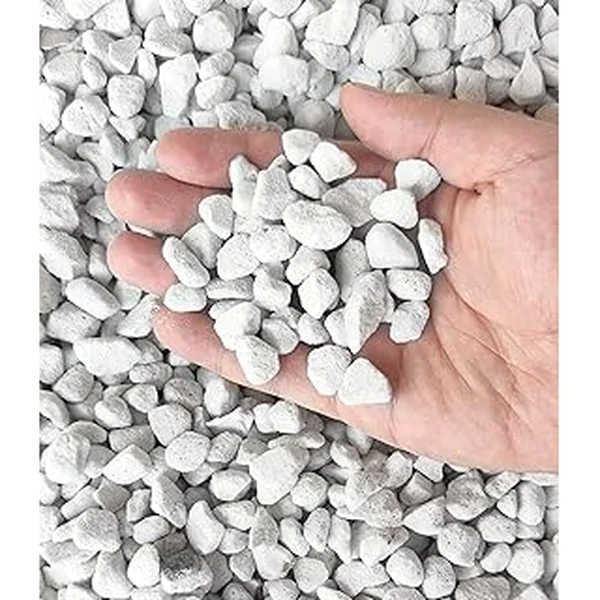
English ivy needs a well-draining, slightly acidic to neutral mix (pH 6.0–7.0). A standard indoor potting compost works, but improve it with 20–30% perlite or coarse grit to ensure fast drainage.
Avoid dense, peat-heavy mixes that stay wet for days. Ivy roots need air between waterings.
Pot choice: Unglazed terracotta is ideal because the porous walls allow moisture to evaporate from the sides, keeping the root zone drier for longer. Plastic and glazed ceramic pots retain moisture — they work fine, but you’ll need to water less frequently.
Pot size: Never pot ivy into a container more than 3–5 cm (1–2 in) larger than its current root ball. Excess soil volume stays wet long after the roots have used the moisture in their immediate zone, which is a direct path to root rot.
Repotting: Repot every 1–2 years when roots start circling the inside of the pot or emerging from the drainage hole. Spring is the best time. Go up one pot size only.
Temperature
English ivy is cooler-growing than most tropical houseplants. Its ideal indoor temperature range is 10–21°C (50–70°F) — it genuinely prefers a cool room.
It will survive short periods down to around 4–5°C (40°F) and up to about 27°C (80°F), but performance suffers at the extremes.
Cold draughts: Not a problem for Hedera helix the way they are for tropical plants. A cool hallway or an unheated spare room in mild climates can actually be a good spot.
Hot dry heat: This is where problems start. Radiators, forced-air heating vents, and sunny south-facing windowsills in summer push temperatures and dry the air simultaneously — the perfect setup for spider mite explosions. Keep ivy away from heat sources.
Algerian ivy (H. algeriensis) is less cold-tolerant and prefers the warmer end of the range: 15–24°C (59–75°F).
Feeding
Feed ivy with a balanced liquid fertiliser at half the recommended dose every 3–4 weeks from March through September.
Do not feed in October through February. Ivy’s growth slows significantly in low winter light, and feeding during dormancy pushes soft leggy growth that is highly attractive to spider mites and aphids.
An NPK of roughly 10-10-10 or 20-20-20 at half strength works well. Avoid high-nitrogen formulas — too much nitrogen produces lots of soft watery growth and very little structure.
Spider mite prevention — the #1 indoor ivy killer
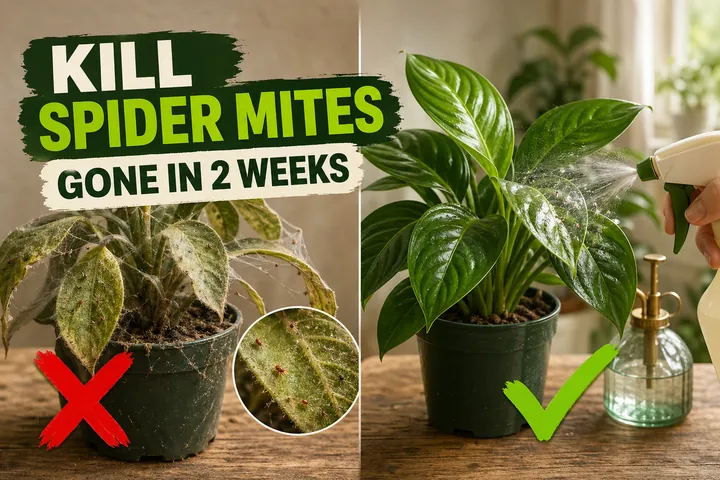
Spider mites (Tetranychus urticae) are the single greatest threat to indoor ivy. The University of Minnesota Extension rates English ivy as one of the most mite-susceptible common houseplants. An unchecked infestation can defoliate a plant in 10–14 days.
Why ivy is so vulnerable: Spider mites prefer plants under stress in hot, dry conditions. Ivy kept in warm centrally-heated homes with low humidity ticks every box on the mite’s wish list.
How to spot them early:
- Tiny pale stippling (pinprick dots) on the upper leaf surface — each dot is a feeding wound.
- Fine webbing on the undersides of leaves and between stems — often the first clearly visible sign.
- Leaves gradually bronzing, then dropping.
Hold a white sheet of paper under a suspect branch and shake it gently. If tiny moving specks fall onto the paper, you have mites.
Prevention routine (does the most work):
- Keep humidity above 50% year-round.
- Rinse the entire plant under a cool shower once a month — this physically removes mites and eggs before they establish.
- Inspect the undersides of leaves every time you water.
- Keep the plant away from hot, dry heat sources.
- Quarantine any new plants for 2 weeks before placing near your ivy.
Treatment if you find mites:
- Move the plant away from other houseplants immediately.
- Rinse thoroughly under cool water to reduce the population.
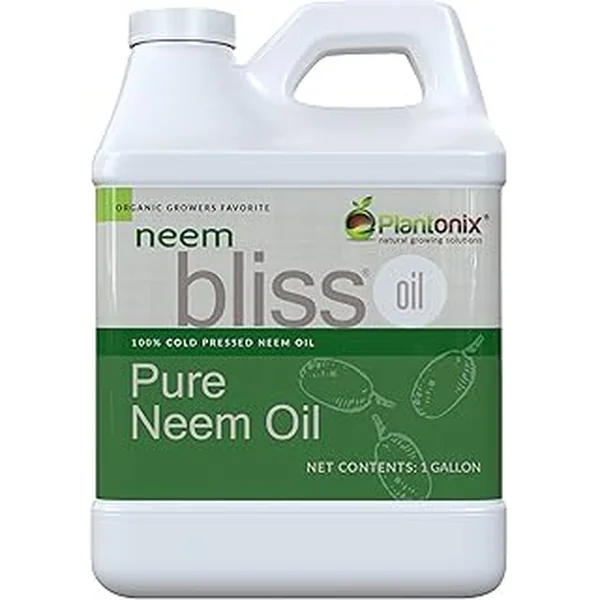
- Apply diluted neem oil (follow label dilution, typically 5 ml / 1 tsp per litre / quart of water with a drop of dish soap) to all leaf surfaces, top and bottom.
- Repeat every 7 days for 3 consecutive applications to break the egg-to-adult life cycle.
- Check for reinfestation weekly for the following month.
See our full guide on how to get rid of spider mites for a complete treatment protocol.
Trailing and training tips
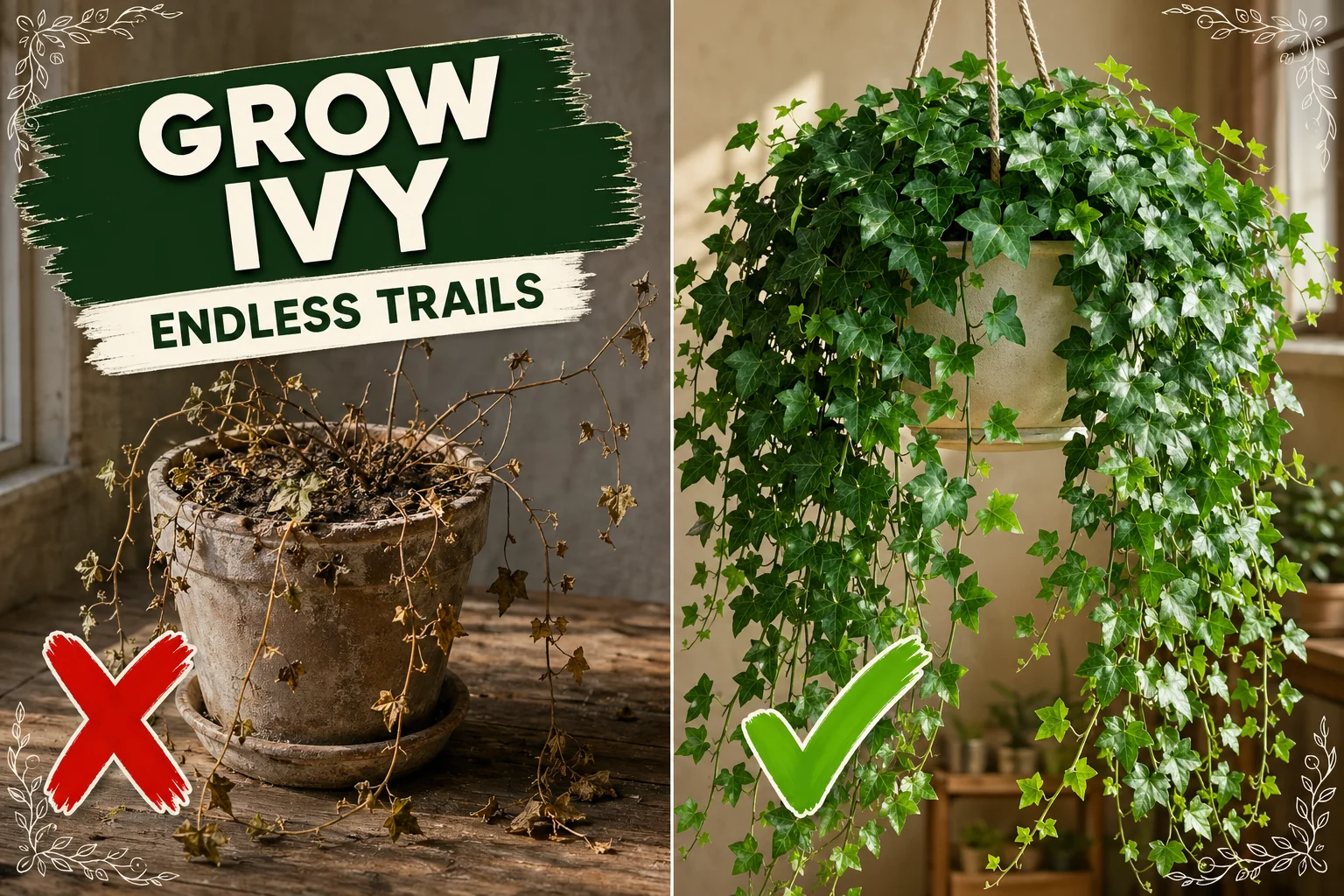
English ivy is naturally a climbing and trailing plant. Indoors, you can let it trail from a shelf or hanging basket, or train it upward on a small trellis or moss pole.
For maximum trail length:
- Bright indirect light is the biggest driver of dense, long vines. Low light = long bare stems with few leaves.
- Feed regularly in spring and summer — a well-fed plant pushes new growth faster.
- Don’t let the roots get severely pot-bound. A slightly snug pot is fine, but a root-bound plant diverts all energy to survival rather than new growth.
For denser, bushier growth:
- Pinch the growing tips back regularly. When you remove the lead tip, the plant redirects energy to two or three side shoots, producing branching rather than a single long vine.
- Pinch 3–5 cm (1–2 in) from the tip, just above a node. The cutting you remove can go straight into water to root.
Training on a trellis or frame:
- Use soft plant ties or twist ties to secure vines loosely to the frame as they grow.
- Ivy produces small aerial rootlets that grip rough surfaces (brick, bark, rough wood) — smooth surfaces need tie assistance.
Hanging baskets: Use a pot with good drainage. Dry out faster than shelf pots due to airflow, so check moisture more frequently.
Propagation overview
Ivy is one of the easiest houseplants to propagate. The basic method:
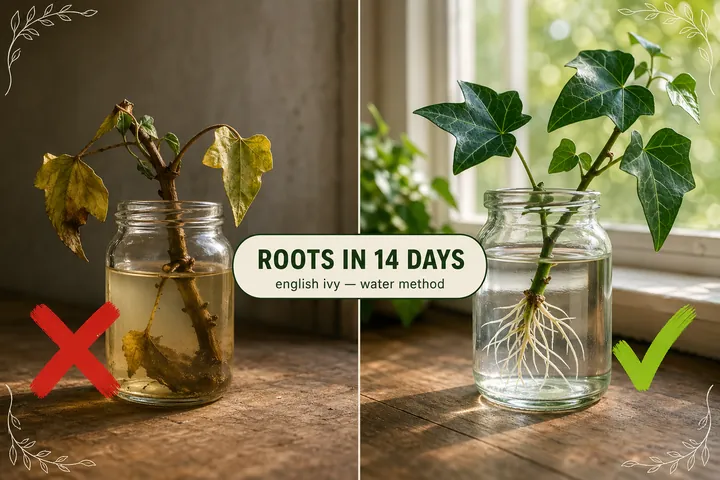
- Take a cutting 10–15 cm (4–6 in) long, cutting just below a node (the bump where a leaf joins the stem).
- Remove the bottom 2–3 leaves to expose bare stem.
- Place in a glass of water with the nodes submerged but leaves above the waterline.
- Keep in bright indirect light at room temperature.
- Roots appear in 3–4 weeks. Once they reach 3–5 cm (1–2 in), pot into a well-draining mix.
You can also root directly in moist perlite or a 50/50 perlite and potting mix blend — this skips the water-to-soil transition, which can sometimes cause temporary wilt.
For a detailed step-by-step with troubleshooting, see our full guide on how to propagate English ivy.
Toxicity warning
English ivy is toxic to cats, dogs, and humans.
Hedera helix contains triterpenoid saponins throughout its leaves and stems, as well as falcarinol in its sap. Ingestion by cats or dogs causes drooling, vomiting, diarrhoea, abdominal pain, and in severe cases, difficulty breathing. Even small quantities can be dangerous.
The sap can also cause contact dermatitis (skin rash, blistering) in sensitive people. Always wear gloves when pruning or propagating.
If you have cats or dogs that chew plants, choose a pet-safe alternative: pothos (Epipremnum aureum) is similarly trailing and low-maintenance, though its toxicity level for pets is milder (it causes oral irritation rather than systemic effects — check with your vet). Spider plants (Chlorophytum comosum) are a genuinely pet-safe trailing option.
Keep ivy on high shelves, in hanging baskets, or in rooms your pets cannot access.
Common mistakes
Watering on a fixed schedule. Ivy’s water needs vary with season, pot size, light level, and temperature. Always check the soil before watering — never water by the calendar.
Putting ivy in a warm spot to “help it grow.” Ivy actively prefers cooler conditions. A warm sunny windowsill speeds up water evaporation, dries the air, and creates the perfect spider mite habitat.
Ignoring variegated cultivars’ light needs. Glacier, Kolibri, and Buttercup ivy all need genuinely bright indirect light to hold their variegation. In low light they revert to plain green and grow poorly.
Never checking the undersides of leaves. Spider mites live on the undersides. By the time you see obvious webbing on the top surface, the infestation is already advanced. Build a habit of checking under leaves every time you water.
Skipping monthly showers. Rinsing the plant regularly is the single most effective spider mite prevention step. It physically removes mites and eggs before they build into a problem. Five minutes once a month saves a lot of heartache.
Over-potting. Putting a small ivy into a large pot drowns the roots in soggy soil. Go up one size at a time.
Troubleshooting table
| Symptom | Most likely cause | Fix |
|---|---|---|
| Yellow lower leaves, soggy soil | Over-watering / root rot | Let dry completely; repot into fresh well-draining mix; cut off mushy roots |
| Yellow leaves, dry soil | Under-watering | Water thoroughly; increase frequency |
| Long bare vines, few leaves | Insufficient light | Move to brighter indirect light within 1–2 m (3–6 ft) of a window |
| Pale stippling on leaf tops, fine webbing under leaves | Spider mites | Rinse, then neem oil spray every 7 days × 3 |
| Crispy brown leaf edges | Dry air and/or direct sun | Move away from heat source; raise humidity above 50% |
| Variegated leaves reverting to plain green | Too little light | Move closer to a bright window |
| Drooping despite moist soil | Root rot, or temperature shock from cold draught | Check roots; ensure pot has drainage; move away from cold draughts |
| White cottony fluff on stems | Mealybugs | Dab with 70% isopropyl alcohol on a cotton bud; repeat weekly |
| Sticky residue on leaves | Aphids or scale | Rinse under water; treat with insecticidal soap spray |
Watch: English ivy care guide
This video gives a visual walkthrough of English ivy care indoors — it pairs well with the watering and spider mite sections above.
Practical care checklist
Use this to build a routine:
- Every watering visit: Check top 2.5 cm (1 in) of soil before watering. Inspect undersides of leaves for stippling or webbing.
- Every month (spring/summer): Feed with balanced liquid fertiliser at half strength. Give the plant a full shower rinse to remove dust and any early mite activity.
- Every month (autumn/winter): Skip feeding. Check humidity — run a humidifier if your home drops below 50%.
- Every spring: Consider repotting one pot size up if roots are circling the base. Refresh the top layer of soil if not repotting.
- As needed: Pinch growing tips for bushier growth. Take cuttings and propagate — you’ll always want more ivy.
A note on conditions
All care guidelines in this post reflect typical indoor conditions in a temperate home. Your ivy’s exact needs will vary based on your local climate, the season, the size of the pot, your home’s heating and ventilation, and the specific cultivar you’re growing. Use the numbers here as a starting point and adjust based on what the plant shows you.
Related reading
- How to propagate English ivy — step-by-step with photos
- How to get rid of spider mites (fast fix)
- Pothos plant care — the easiest trailing houseplant
Sources
- Royal Horticultural Society. Hedera helix (English Ivy). rhs.org.uk
- Missouri Botanical Garden. Hedera helix — plant profile. missouribotanicalgarden.org
- University of Minnesota Extension. Spider mites on houseplants. extension.umn.edu
- NC State Extension. Hedera helix — English ivy. plants.ces.ncsu.edu
Highly recommended
The supplies that make this guide work

Tazart is an Amazon Associate — we earn from qualifying purchases at no extra cost to you. Thank you for helping us keep these guides free.
Frequently asked questions
How often should I water an ivy plant indoors?
Water when the top 2.5 cm (1 in) of soil feels dry — usually every 5–7 days in spring and summer, and every 10–14 days in autumn and winter. Always test the soil with your finger before watering. Ivy is more drought-tolerant than most people expect; over-watering causes root rot far more often than under-watering.
What light does English ivy need indoors?
Bright indirect light is ideal — within 1–2 m (3–6 ft) of an east- or west-facing window. Ivy tolerates medium indirect light but grows noticeably slower. It will not thrive in deep shade or direct harsh sun: deep shade causes sparse leggy growth; direct midday sun scorches the leaves and makes the plant more vulnerable to spider mites.
Why does my indoor ivy keep getting spider mites?
Spider mites thrive in hot, dry air — exactly the conditions most homes have in winter when the heating is on. Indoor ivy is the single most mite-prone common houseplant. The fix is preventive: keep humidity above 50%, give the leaves a cool mist every few days, and rinse the foliage under a shower once a month. Once you see webbing, treat immediately with diluted neem oil on three consecutive 7-day intervals.
Is English ivy toxic to cats and dogs?
Yes. Hedera helix contains triterpenoid saponins and falcarinol, which are toxic to cats, dogs, and humans. Ingestion causes drooling, vomiting, diarrhoea, and in severe cases, difficulty breathing. Skin contact with the sap can also cause contact dermatitis in sensitive people. Keep ivy out of reach of pets and children, and wear gloves when pruning.
How do I make my ivy trail longer?
Give it bright indirect light, consistent watering, and monthly liquid feeding in spring and summer. Long bare vines usually mean poor light — the plant drops lower leaves when it cannot photosynthesise efficiently. Move it closer to a window and the lower internodes will start pushing new foliage within 3–4 weeks. You can also pinch the growing tips to encourage side branching and denser growth.
How do I propagate English ivy?
Take a 10–15 cm (4–6 in) stem cutting just below a node, strip the bottom two leaves, and place in water or moist perlite. Roots appear in 3–4 weeks at room temperature. Once roots reach 3–5 cm (1–2 in) long, pot into a well-draining mix. Ivy propagates so readily that even beginners rarely fail.
Why are my ivy leaves turning yellow?
The most common causes are over-watering (yellowing starts at lower leaves, soil stays soggy), under-watering (leaves yellow then crisp at the edges), or insufficient light. Check the soil first. If it's waterlogged, let it dry completely and improve drainage. If it's bone dry, water thoroughly and increase frequency. If the soil is fine, move the plant to a brighter spot.
Can ivy grow in low light indoors?
Ivy tolerates low to medium indirect light but will not thrive — growth becomes very slow, vines get leggy, and the plant becomes more susceptible to pests. All-green varieties handle lower light better than variegated cultivars like Glacier, which need more light to maintain their white-and-green pattern. For genuinely low-light spots, a pothos or Chinese evergreen will outperform ivy.