Flowers
Hyacinth Plant Care: Bulbs, Blooms & Forcing Guide
Hyacinth plant care: fall planting, full sun to part shade, deadhead, leave foliage to feed the bulb, and force indoors with 12-13 weeks of chill.
On this page
Watch the visual walkthrough
Five Mistakes to Avoid Growing Hyacinths - Hyacinthus orientalis
10% YouGarden discount Code - AFWALKYG Link for YouGarden Shop ...
Hyacinths are one of the most fragrant flowers you can grow at home — a single spike can perfume an entire room. They’re also one of the easiest spring bulbs once you understand two things: they need autumn planting and a deep winter chill to bloom, and the bulb is highly toxic to dogs, cats, and curious children.
This guide covers the full lifecycle: choosing bulbs, planting depth, light, soil, watering, deadheading, dormancy, indoor forcing, pet safety, and the realistic expectation that even a perfectly cared-for hyacinth declines after 4-6 years.
Quick answer
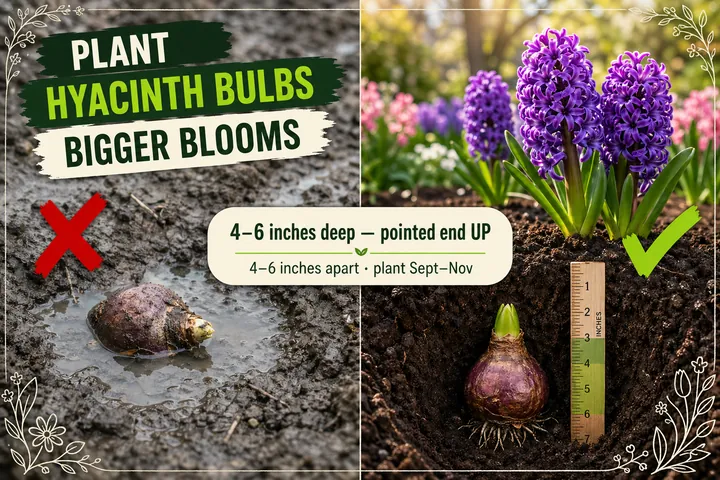
Plant hyacinth bulbs in autumn (September-November), 10-15 cm (4-6 in) deep, 10-15 cm apart, in full sun to part shade with well-drained soil at pH 6.0-7.0. They need 12-13 weeks below 7°C (45°F) to bloom. Deadhead after flowering, leave foliage to yellow naturally, and feed with low-nitrogen bulb fertilizer in spring. Highly toxic to dogs and cats — keep bulbs out of reach. Hardy USDA zones 4-8.
Table of contents
- Meet the hyacinth
- Buying bulbs
- When and where to plant
- Light
- Soil and pH
- Watering
- Fertilizing
- Deadheading and post-bloom care
- Forcing hyacinths indoors
- Pet and child safety
- Troubleshooting
- FAQ
Meet the hyacinth
Hyacinthus orientalis is a perennial geophyte (bulb) in the Asparagaceae family, native to the eastern Mediterranean from southern Turkey through northern Iran. The dense flower spike — technically a raceme of 30-80 individual florets — sits on a stout stem 20-30 cm (8-12 in) tall. Bloom colours range across white, cream, soft pink, deep magenta, blue, purple, peach, and pale yellow.
Don’t confuse the true hyacinth with grape hyacinth (Muscari armeniacum), which is a separate genus with tiny urn-shaped flowers on shorter spikes. The care notes for Muscari overlap (autumn planting, full sun, well-drained soil) but Muscari multiplies aggressively whereas true hyacinths decline.
Hyacinths are reliably hardy in USDA zones 4-8, marginal in zone 9 (insufficient natural chill in warm winters means failure to bloom), and unsuitable as garden plants in zones 10-11.
Buying bulbs
Bulb size matters more for hyacinths than for almost any other spring flower:
- Top-size bulbs (18 cm+ circumference): the big ones grocery and bulb specialists sell. Produce the tallest, densest spikes.
- Standard (16-18 cm): good for garden mass plantings; slightly smaller flowers.
- Forcing-grade (17 cm+, pre-chilled): sold for indoor forcing; chill is already done at the supplier.
Buy from a reputable nursery — bulbs that have been stored too warm or too long are dehydrated and bloom poorly. Firm, heavy bulbs with intact papery tunic skin are good; soft, light, mouldy, or sprouting bulbs are not. Order in August-September for autumn shipment.
When and where to plant
Timing: plant 6-8 weeks before the first hard frost, when soil at 10 cm (4 in) depth has cooled to 13°C (55°F) or below. By USDA zone:
- Zones 3-4: September
- Zones 5-6: late September to mid-October
- Zones 7-8: October to mid-November
- Zone 9 (marginal): late November to early December, pre-chilled bulbs only
Depth and spacing:
- 10-15 cm (4-6 in) deep, measured from base of bulb to soil surface.
- 10-15 cm (4-6 in) apart.
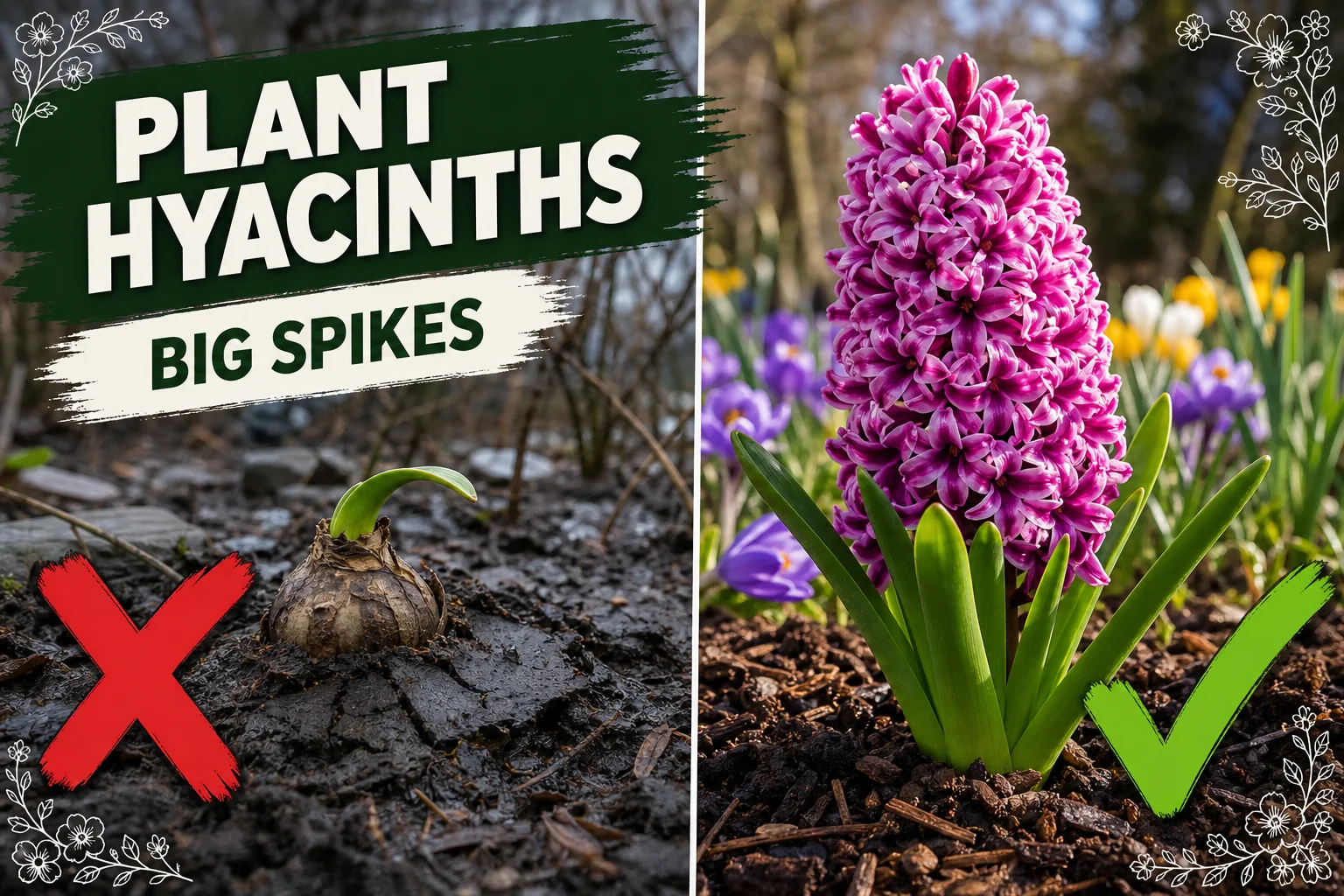
- Pointy nose up, flat base down.
For full step-by-step planting, see how to plant hyacinth bulbs — the depth chart and spacing recommendations are slightly different for tight clumps versus naturalised drifts.
If you missed the autumn window and the ground is workable, plant immediately. Bulbs planted in early winter will still bloom but the spike may be shorter the first year.
Light
Hyacinths flower in full sun to part shade. Full sun (6+ hours) gives the tallest, sturdiest spikes with the longest bloom life. Light afternoon shade is fine in zones 7-8, where it actually extends bloom life by reducing heat stress on the flowers.
A spot under a deciduous tree works well — the canopy is bare during the hyacinth’s spring active phase, then leafs out and shades the dormant bulb during summer dormancy. This mimics the bulb’s natural Mediterranean habitat.
Deep shade reduces flower count and size and gradually depletes the bulb over 2-3 years. Move shaded hyacinths to a brighter spot in early summer when foliage has died back.
Soil and pH
Target pH: 6.0-7.0 — slightly acidic to neutral. Most garden soils fall in this range without amendment.
The non-negotiable is drainage. Hyacinths from winter-wet, poorly drained beds rot. Symptoms include failure to emerge in spring, mushy lifted bulbs, or single floppy leaves with no flower. Improve drainage at planting:
- Dig the bed to 25 cm (10 in).
- Mix in 5-7 cm (2-3 in) of coarse compost or aged manure.
- Add a handful of coarse sand or horticultural grit per hole if soil is heavy clay.
- Plant on a slight mound or in a raised bed if the bed sits wet in winter.
A tablespoon of bone meal scratched into each planting hole provides slow-release phosphorus for root development.
Watering
Hyacinths follow the natural Mediterranean cycle — wet in winter and spring, dry in summer.
- At planting (autumn): water once thoroughly after planting to settle the soil around the bulbs. Don’t water again unless the soil dries out completely before winter rains arrive.
- Winter: natural rainfall handles it in most of zones 4-8.
- Spring growing season: if dry weather, water deeply once a week — about 2.5 cm (1 in) — until the foliage starts to yellow.
- Summer dormancy: keep dry. Bulbs that sit in irrigated summer beds (alongside thirsty annuals) rot at a far higher rate than bulbs left dry.
Mulch with 5 cm (2 in) of bark in autumn to moderate winter soil temperature and conserve early-spring moisture.
Fertilizing
A low-nitrogen, phosphorus-rich bulb fertilizer is ideal. 5-10-10 or a dedicated bulb formula. Apply:
- At planting: a tablespoon of bone meal or low-N bulb feed mixed into the bottom of each hole.
- Early spring (shoots emerging): a light scratch-in dose around the clump.
- Right after flowering: a second light feed to support next year’s flower formation inside the bulb.
Skip late-spring and summer feeding — the bulb is heading into dormancy and absorbs little. Avoid high-nitrogen lawn-style fertilizers, which push leaves at the expense of flowering. Our starter fertilizer guide covers the broader principles.
Deadheading and post-bloom care
This phase determines whether hyacinths return well next year.
- Deadhead as soon as florets fade. Cut the spent flower spike off where it joins the stem — but leave the stem and all foliage intact. Seed production drains energy that should go back into the bulb.
- Let the foliage yellow naturally. Resist the temptation to braid, fold, or cut leaves while they’re still green. The leaves are actively photosynthesising and feeding the bulb for next year’s flower.
- Cut foliage to the ground only when it has fully yellowed — typically 6-8 weeks after bloom.
- Mark the spot so you don’t dig into dormant bulbs when planting summer annuals.
Skipping any of these — especially early leaf removal — is the most common reason for shrinking spikes year after year.
Forcing hyacinths indoors
Indoor forcing turns a hyacinth bulb into a fragrant midwinter centrepiece. There are three approaches.
Method 1: pre-chilled bulbs in soil
Easiest. Buy bulbs labelled “pre-chilled” or “prepared” — the supplier has already given them the 12-13 weeks of cold. Pot in well-drained mix with the bulb noses just above the soil surface. Water lightly, place in a cool bright spot (15°C / 60°F), and expect flowers in 3-4 weeks.
Method 2: chill your own bulbs
Buy regular bulbs in autumn. Pot or bag them in barely-damp peat. Refrigerate at 4-7°C (40-45°F) for 12-13 weeks — keep them away from ripening fruit, which releases ethylene that aborts flowers. After chill, bring to a cool bright spot and grow on.
Method 3: forcing vase (water culture)
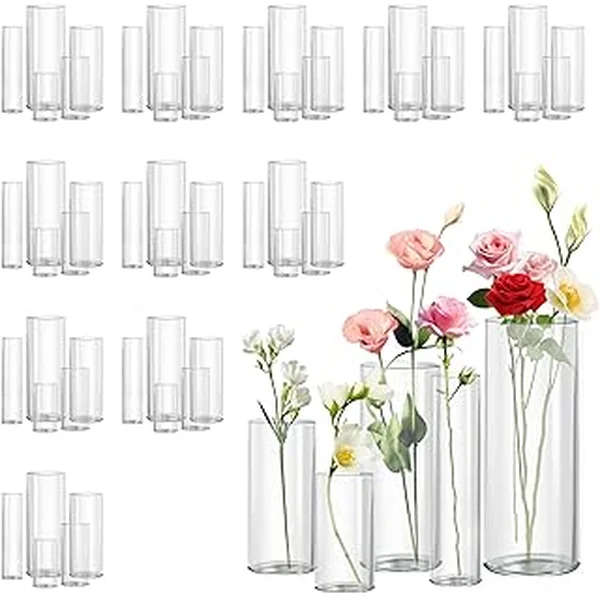
The classic glass hourglass vase. Fill the lower bulb with water so the level just touches the base of the bulb (not above — wet bases rot). Place a pre-chilled bulb in the upper cup. Keep cool and dark (a cupboard at 7-10°C / 45-50°F) for 4-8 weeks until roots fill the lower bulb and a shoot emerges. Move to bright cool light to flower.
Forced bulbs are usually spent — most gardeners compost them after bloom. They rarely flower well a second year.
Pet and child safety
Hyacinth bulbs are highly toxic to dogs and cats. The bulb is the most dangerous part — far more concentrated than the leaves or flowers. The toxins are calcium oxalate crystals and alkaloids that cause:
- Intense drooling and vomiting
- Diarrhea (sometimes bloody)
- Tremors and weakness
- Severe gastrointestinal distress
A small chew is unpleasant; ingesting a whole bulb can be serious. Plant bulbs in beds your pets don’t dig, store unplanted bulbs in sealed containers, and call your vet or poison control immediately if ingestion is suspected.
Skin contact with bulbs causes contact dermatitis (“hyacinth itch”) in sensitive people — wear gloves when planting and lifting.
For non-toxic alternatives, see our cat-safe houseplants and dog-safe houseplants guides.
Troubleshooting
| Symptom | Likely cause | Fix |
|---|---|---|
| No emergence in spring | Bulbs rotted in wet soil or wrong-side up | Improve drainage; plant noses up next year |
| Single leaf, no flower | Bulb too small or insufficient chill | Replace with top-size bulbs; ensure 12-13 weeks below 7°C (45°F) |
| Short, stunted spike | Insufficient depth or shade | Plant 10-15 cm (4-6 in) deep in full sun |
| Floppy stem | Wet soil and over-fed, or too warm during forcing | Reduce nitrogen; force at 15-18°C (60-65°F) |
| Smaller flowers each year | Natural decline of forced commercial bulbs | Expect 4-6 year run; replace as needed |
| Foliage cut too early | Premature leaf removal | Wait until full yellow; mark spot to avoid disturbance |
| Bulbs mouldy in storage | Stored too warm or damp | Store at 13-17°C (55-63°F) in mesh bags |
| Brown floret tips | Frost damage post-emergence | Mulch shoots in unseasonable cold |
| Pet vomiting after exposure | Bulb ingestion | Call vet or poison control immediately |
Related reading
- How to plant hyacinth bulbs — depth, spacing, and orientation walked through step by step.
- How to plant tulip bulbs — same autumn window, deeper planting depth, different aftercare.
- How to plant crocus bulbs — earlier-flowering companion that extends the spring bulb display.
- Peony plant care — long-lived perennial that takes over the cutting border just as hyacinths finish.
- Cat-safe houseplants — non-toxic options for homes with pets.
Track planting depth, autumn watering, spring deadheading, and post-bloom foliage timing with the free Tazart plant care app — the post-bloom phase is where most hyacinths get killed by impatience.
A note on conditions
Soil drainage, zone, microclimate, and bulb source all shift the numbers. The constants are: plant in autumn, give them a real winter chill, full sun, well-drained soil, deadhead immediately, and let the leaves die back naturally. Everything else you adjust based on year-two performance. Hyacinths tell you exactly what’s wrong: no flower means insufficient chill; short stem means too shallow; small spike means depleted bulb.
Highly recommended
The supplies that make this guide work
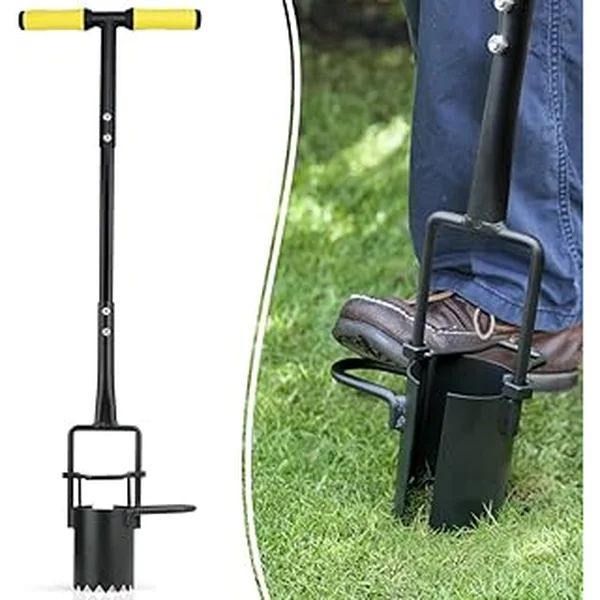

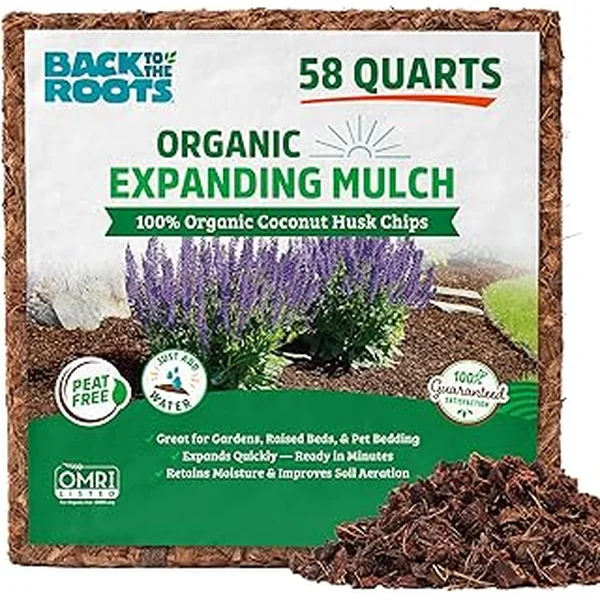
Tazart is an Amazon Associate — we earn from qualifying purchases at no extra cost to you. Thank you for helping us keep these guides free.
Frequently asked questions
When should I plant hyacinth bulbs?
Plant hyacinth bulbs in autumn, 6-8 weeks before the first hard frost — typically September to early November in USDA zones 4-8. Soil temperature at 10 cm (4 in) depth should be 13°C (55°F) or cooler. Bulbs planted too early in warm soil rot; bulbs planted after the ground freezes can't root and may fail to bloom. If you missed the window, plant as soon as the ground is workable and accept smaller first-year flowers.
How much sun do hyacinths need?
Hyacinths flower best in full sun (6+ hours per day) but tolerate light afternoon shade, especially in zones 7-8. The bulb does most of its energy capture before deciduous trees fully leaf out, so a spot under a tree that's bare in March is fine even if it's shadier in summer. Shade-grown hyacinths produce shorter stems and fewer florets per spike — same bulb, lower performance.
How do I force hyacinths indoors?
Buy pre-chilled bulbs or chill your own in a refrigerator at 4-7°C (40-45°F) for 12-13 weeks in late summer. Pot them in well-drained mix with the nose tip just above the soil, or use a hyacinth glass vase with the base just kissing the water. Keep cool (10°C / 50°F) and dark until the shoot is 5 cm (2 in) tall, then move into bright cool light to bloom. Total time: about 14-16 weeks from start of chill.
Are hyacinths toxic to dogs and cats?
Yes — hyacinth bulbs are highly toxic to dogs and cats, with the bulb itself being the most dangerous part. They contain calcium oxalate crystals and toxic alkaloids that cause intense drooling, vomiting, diarrhea, and tremors. Ingested bulbs can cause severe gastrointestinal distress. Plant bulbs where pets cannot dig, and store unplanted bulbs in sealed containers out of reach. If a pet ingests a bulb, call your vet or poison control immediately.
Do hyacinths come back every year?
Yes, hyacinths are reliable perennials in USDA zones 4-8 but they decline gracefully — flower spikes get progressively smaller each year as the original bulb spends its energy and produces small offset bulbs. Most gardeners treat them as 4-6 year plants, then replace. The trick to extending the run: deadhead immediately after bloom, leave foliage to yellow naturally (don't braid or cut early), and feed with a low-nitrogen bulb fertilizer.
How long do hyacinths bloom?
Each hyacinth spike blooms for 10-14 days in the garden, slightly less in warm springs and longer in cool weather. Total flowering across all bulbs in a planting is typically 2-3 weeks because individual bulbs open over a window. Indoor forced hyacinths bloom for 7-10 days in a typical warm living room. Cool placement (15-18°C / 60-65°F) extends both garden and forced bloom by several days.
Why are my hyacinth flowers smaller this year?
Hyacinth spikes shrink each year as the original commercial bulb depletes its stored energy from the grower. The bulbs you buy in autumn have been hot-water-treated and force-grown to maximum size — that performance can't be sustained at home. Smaller second- and third-year spikes are normal. To slow the decline: full sun, low-nitrogen bulb fertilizer in spring, deadhead immediately, and let leaves yellow naturally.