Houseplants
How to Water a Monstera (Stop the Yellow Leaves)
Stop overwatering your Monstera deliciosa. Learn exactly when, how often, and how deeply to water — plus how to fix yellow leaves and root rot for good.
On this page
- Quick answer
- Why most Monsteras die from overwatering, not under
- How to test if your Monstera needs water
- Watering technique: deep and slow
- What kind of water to use
- Seasonal adjustment
- Pot and soil drainage requirements
- Common mistakes to avoid
- Troubleshooting
- Watch: how to water a Monstera
- Related reading
- A note on conditions
Watch the visual walkthrough
7 MONSTERA Plant Care Tips You Need to KNOW : Monstera Deliciousa
I want to help you grow beautiful Monstera's, which is Super-Easy. Here are 7 Plant Care Tips on how I care and make sure that ...
Most indoor Monsteras don’t die from neglect — they drown. If your Monstera deliciosa has yellowing leaves, droopy stems and damp soil that never quite dries out, you’re watering it too often. It’s the single most common mistake, and the fix is small: stop watering by the calendar, start watering by the soil.
This guide covers exactly when, how, and how much to water a Monstera through every season — plus how to read the warning signs before yellow leaves turn into root rot.
Quick answer
Water your Monstera deliciosa when the top 2–3 cm (1 in) of soil is dry to the touch — usually every 7–14 days indoors. Water deeply until it runs out of the drainage holes, then tip the saucer empty. Use room-temperature filtered or distilled water. In winter, cut watering frequency by about 50%. Skip the schedule and check the soil every time — overwatering is what kills most Monsteras, not under-watering.
Why most Monsteras die from overwatering, not under
Monstera deliciosa is a tropical aroid from the rainforests of Central America. In the wild it climbs tree trunks as a hemi-epiphyte, with thick aerial roots that grip bark and a small rootball that drains the moment a downpour ends. Those roots are built for high humidity around the leaves and oxygen around the roots — never standing water.
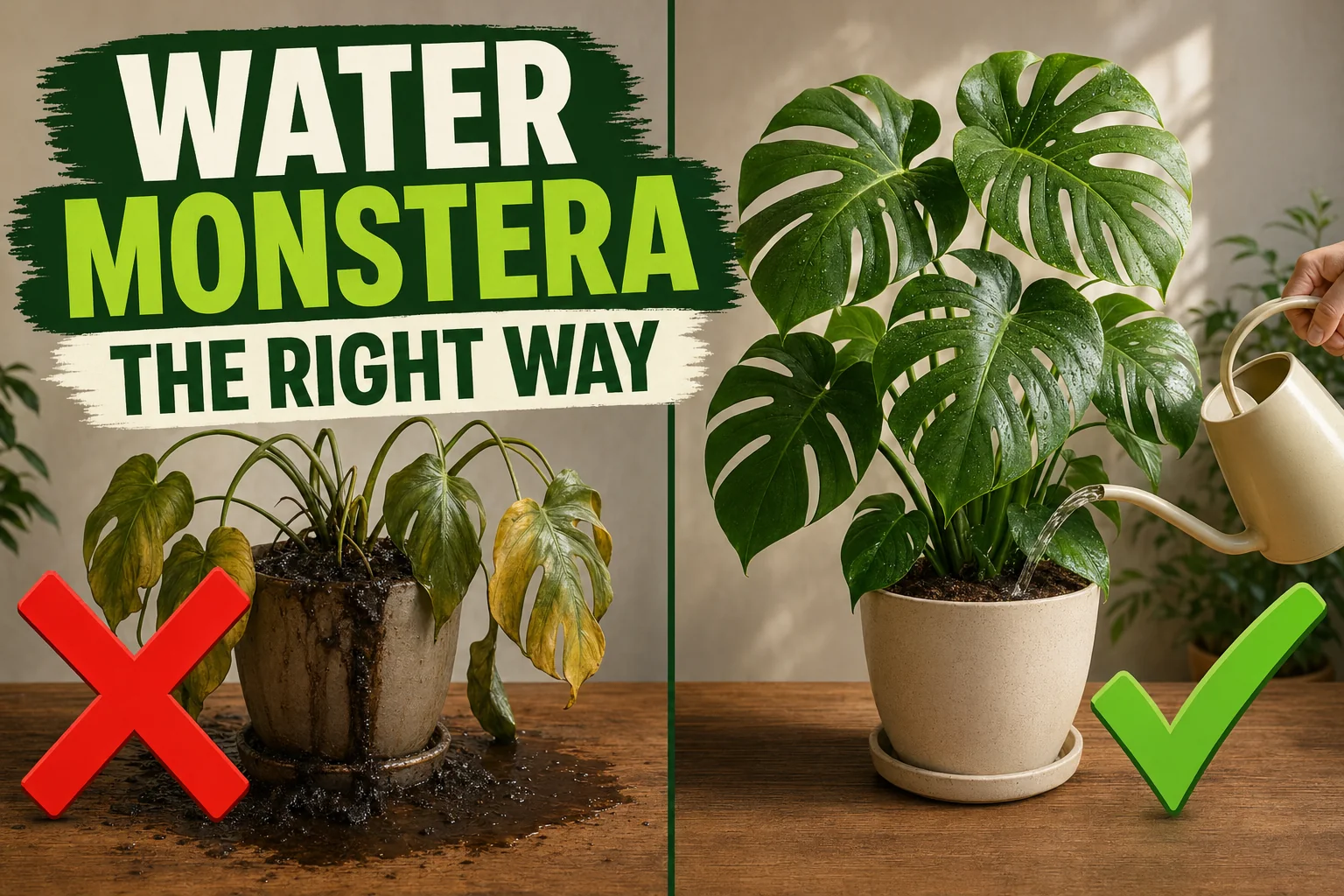
When you water on a fixed weekly schedule indoors — 250 ml (about 1 cup) every Sunday no matter what — the lower roots stay constantly wet. Without oxygen, they suffocate, then Pythium and Phytophthora fungi move in. The first sign is yellow lower leaves. By the time you notice, the rootball is already mushy. Underwatering, by comparison, mostly just curls the leaf edges; it almost never kills a healthy Monstera in under a month.
The takeaway: when in doubt, wait a day. A slightly thirsty Monstera recovers in an hour. A waterlogged one takes weeks of repotting and root pruning to save.
How to test if your Monstera needs water
You only need two tools, and one is your finger.
The finger test
Push your index finger 3–4 cm (1.5 in) straight down into the soil, near the edge of the pot so you don’t damage the main rootball. If it comes out dry and crumbly, water. If it comes out cool and damp, wait 2–3 days and check again. This is the test most experienced growers actually use.
A moisture meter
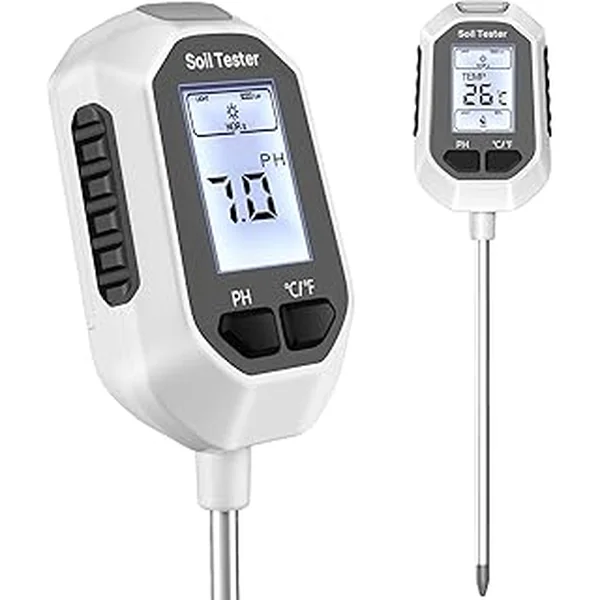
For deeper pots — 25 cm (10 in) and up — your finger can’t reach where the roots actually are. A cheap probe-style soil moisture meter pushed 5–10 cm (2–4 in) into the rootball gives you the answer in two seconds. Water when it reads “dry” or 1–2 on a 1–10 scale. Don’t water at “moist” or higher. If you want a tool that delivers water slowly and precisely without disturbing the soil surface, a plant water dropper or bulb stake is a handy complement to the finger-test routine.
What the leaves tell you
- Soft drooping with dry soil → thirsty, water now.
- Soft drooping with wet soil → root rot starting, do NOT water.
- Yellow lower leaves, soggy soil → overwatering, let dry fully and check roots.
- Brown crispy edges → underwatered or low humidity, water and raise humidity.
Watering technique: deep and slow
Once the soil is dry enough, water properly. Most people pour a small amount and stop — that wets only the top of the rootball and leaves the lower roots dry, which is how plants get both overwatered AND underwatered at the same time.
The right method:
- Take the pot to the sink or a tray.
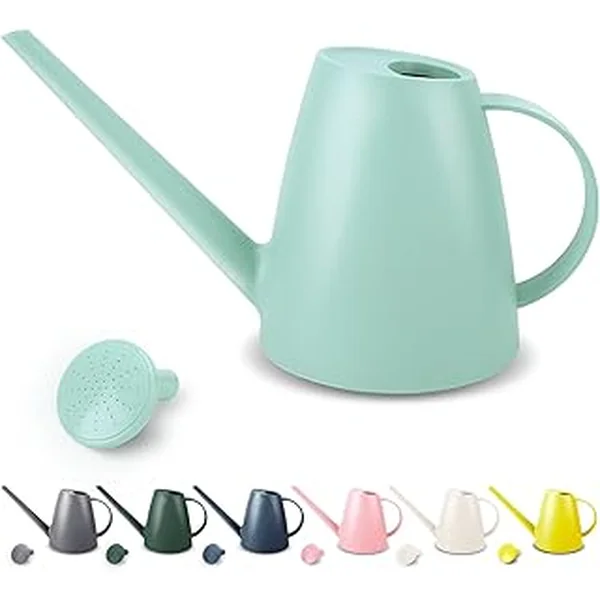
- Pour room-temperature water slowly around the soil surface, under the canopy, using a long-spout watering can.
- Keep pouring until water runs out of the drainage holes for at least 10 seconds.
- Let the pot drain fully for 5–10 minutes.
- Tip the saucer empty. Never let the pot sit in standing water.
Aim for roughly 20–25% of the pot’s volume — for a 20 cm (8 in) pot that’s about 500–700 ml (17–24 fl oz). The drainage runoff is your real signal: if nothing comes out, you didn’t use enough.
What kind of water to use
Tap water works for most Monsteras, but not all. The two things to watch for:
- Chlorine. Dissipates within 24 hours if you let tap water sit out uncovered. If your tap is heavily chlorinated and you see white edges on new leaves, switch.
- Fluoride. Many municipal supplies fluoridate water at 0.7–1 mg/L, and Monstera deliciosa is mildly fluoride-sensitive. The classic symptom is brown leaf tips on otherwise healthy leaves. If that’s happening, use filtered, distilled, or rainwater.
Rainwater is ideal — slightly acidic, mineral-light, and free. Filtered water from a basic carbon filter handles chlorine and most fluoride. Avoid softened water entirely; the sodium burns roots.
Always bring water to room temperature, around 20°C (68°F), before pouring. Cold water shocks tropical roots and slows growth for days.
Seasonal adjustment
A Monstera’s water need tracks light and temperature, not the calendar.
| Season | Frequency | Why |
|---|---|---|
| Spring (Mar–May) | Every 7–10 days | Days lengthen, growth accelerates |
| Summer (Jun–Aug) | Every 5–9 days | Peak growth, soil dries fastest |
| Autumn (Sep–Nov) | Every 10–14 days | Light drops, growth slows |
| Winter (Dec–Feb) | Every 14–21 days | Roughly 50% less than summer |
In winter, indoor heating dries leaves but also slows root activity. Cut watering by about half versus summer and check the soil before every pour — the schedule above is a starting point, not a rule.
Pot and soil drainage requirements
You can water perfectly and still kill a Monstera if the pot and mix don’t drain. Three non-negotiables:
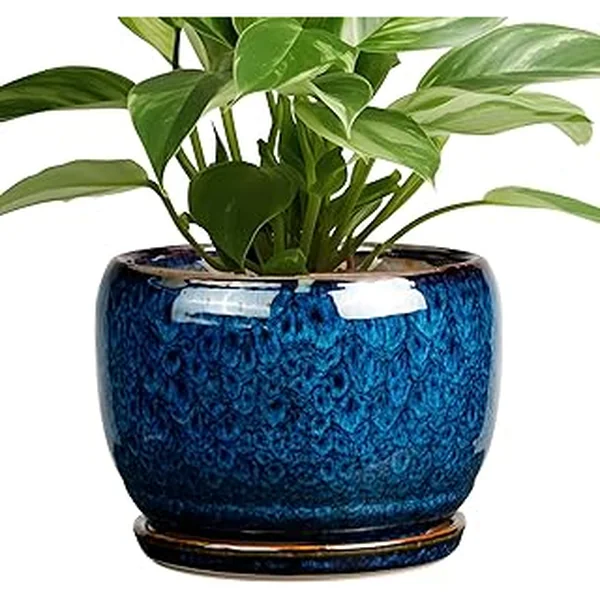
- Drainage holes. A pot without holes is a death sentence for an aroid. If you love a decorative pot without holes, use it as a cachepot — slip the plastic nursery pot inside, and lift it out to water.
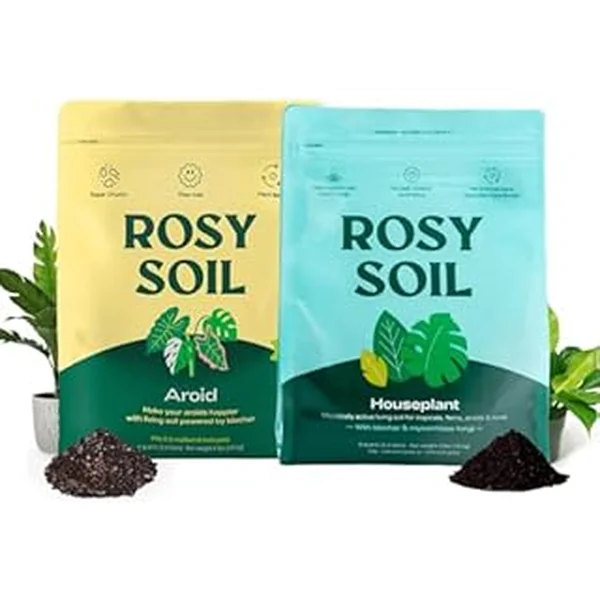
- Chunky aroid mix. Standard houseplant compost is too dense — it holds water in a tight matrix the roots can’t breathe through. Use roughly 40% bark, 30% peat-free potting mix, 20% perlite, 10% coco coir or charcoal. Water should drain through in under 30 seconds.
- Right pot size. Only 2–3 cm (1 in) wider than the rootball. A pot that’s too big holds wet soil far from the roots — that soil never dries and rots the rootball from the outside in.
A free plant care app like Tazart tracks the watering window for your specific pot size, light level, and local weather, and pings you on Apple Watch when it’s time — handy if you’re juggling several aroids alongside your Monstera.
Common mistakes to avoid
- Watering on a fixed schedule. “Every Sunday” ignores light, season, humidity, and pot size. Always check the soil first.
- Using cold water straight from the tap. Shocks tropical roots and slows growth for several days. Let it warm to 20°C (68°F).
- Leaving runoff in the saucer. Roots sitting in 1 cm (½ in) of water rot within 48 hours. Tip the saucer empty after every watering.
- Watering little and often. Wets only the top, leaves lower roots dry, encourages shallow rooting. Always water deeply.
- Misting the leaves to “help” between waterings. Doesn’t reach the roots, encourages bacterial spotting on the leaves. Aim humidity at the air, not the foliage.
- Ignoring drainage when repotting into a decorative pot. Even one watering in a pot without holes can drown a Monstera.
Troubleshooting
| Symptom | Likely cause | Fix |
|---|---|---|
| Yellow lower leaves, soggy soil | Overwatering / root rot starting | Stop watering, let mix dry fully, check roots — repot into chunky aroid mix if any are mushy |
| Brown crispy leaf edges | Underwatering, fluoride in tap water, or low humidity | Water deeply, switch to filtered/rainwater, raise humidity to 50–60% |
| Drooping leaves despite wet soil | Root rot — roots can’t take up water | Unpot immediately, cut off mushy black roots with sterile shears, repot in fresh dry mix |
| New leaves small with no fenestrations | Not enough light, sometimes paired with overwatering stress | Move to brighter indirect light (1 m / 3 ft from a south/east window) and water consistently |
| Mushy stems at the base | Advanced root rot reaching the crown | Take a healthy top cutting and propagate; the parent is unlikely to recover |
| Sour or swampy smell from the pot | Anaerobic soil, root rot in progress | Repot now into fresh chunky mix; do not water for 5–7 days after to let cut roots callus |
Watch: how to water a Monstera
A short visual walkthrough pairs well with the steps above. If you’re a visual learner, watch a quick Monstera deliciosa watering tutorial on YouTube and then come back to use the soil-test method here every time you reach for the watering can.
Related reading
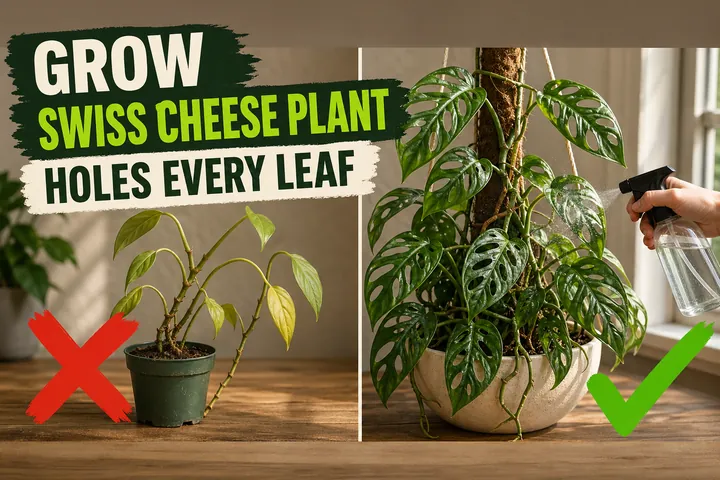
- Swiss cheese plant care (Monstera adansonii) — same family, same watering principles, smaller leaves with closed holes.
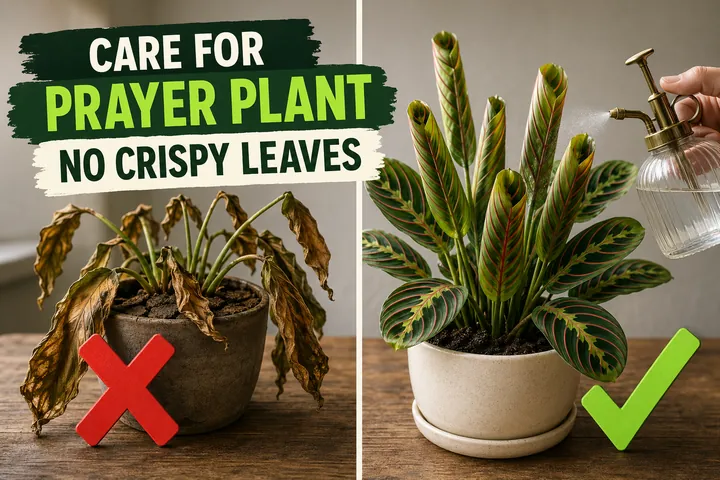
- How to take care of a prayer plant — pairs well with Monstera in a humid jungle corner.
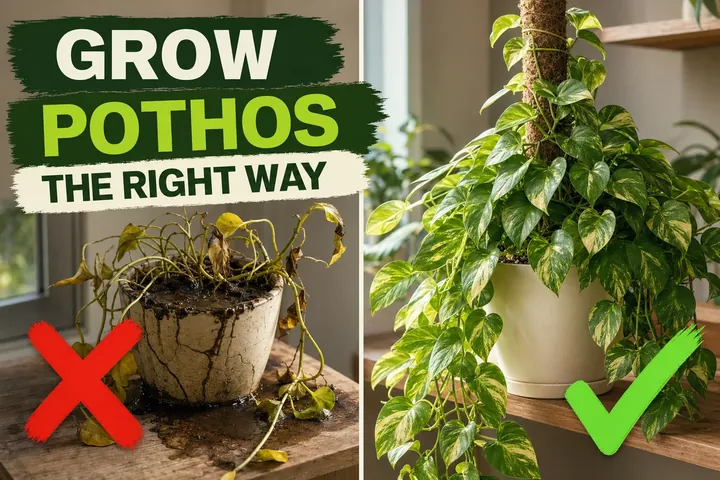
- Pothos plant care — even more forgiving aroid, perfect first plant to practice the dry-then-deep watering rhythm.
- Scan any new aroid you bring home with the free Tazart plant identifier and let it set up the watering schedule for you automatically.
A note on conditions
Every home is different. Light intensity, pot size, mix composition, season, humidity, and your local weather all change how fast a Monstera dries out and how often it needs watering. Use the windows above as a starting point, then adjust based on what your soil actually does in week two — that’s how every confident aroid grower learns.
Highly recommended
The supplies that make this guide work
Tazart is an Amazon Associate — we earn from qualifying purchases at no extra cost to you. Thank you for helping us keep these guides free.
Frequently asked questions
Should I bottom water my Monstera?
Bottom watering works well for Monstera deliciosa once a month, especially if the top of the rootball is hydrophobic and water keeps running straight down the sides. Sit the pot in 5–8 cm (2–3 in) of room-temperature water for 15–25 minutes until the surface darkens, then lift it out and let it drain fully for 10 minutes. Don't bottom water every time — top watering once a month flushes salts and fertilizer build-up out of the drainage holes, which bottom watering cannot do.
How do I water a Monstera without soaking the leaves?
Use a watering can with a long, narrow spout — 25–30 cm (10–12 in) — and aim it at the soil, under the canopy. Tip the spout about 1 cm (½ in) above the soil so water lands gently and doesn't splash up onto the petioles. Wet leaves are not dangerous, but droplets sitting overnight on cool leaves can trigger bacterial spotting. If you do splash a leaf, dab it dry with a soft cloth.
Can I use ice cubes to water my Monstera?
No. Monstera deliciosa is a tropical aroid from Central American rainforests — its roots evolved for warm 21–27°C (70–80°F) water. Ice cubes shock the roots, slow nutrient uptake, and can cause leaf yellowing within a week. Always water with room-temperature water (around 20°C / 68°F). The ice-cube trend started for orchids in tight bark mix and even there it's controversial; for Monstera it's actively harmful.
Do Monstera aerial roots need misting?
Aerial roots don't need misting to survive, but a damp moss pole helps them latch on and triggers bigger fenestrated leaves. If you have a moss pole, mist the pole itself every 2–3 days, not the leaves. If you don't have a pole, you can either tuck longer aerial roots back into the potting mix (they'll absorb water and nutrients) or leave them — they're not a problem either way. Never cut healthy aerial roots; they're the plant's climbing system.
When should I repot my Monstera?
Repot every 18–24 months in spring, or sooner if you see roots circling the bottom of the pot, water running straight through without absorbing, or the plant tipping over from being top-heavy. Go up only one pot size — 2–3 cm (1 in) wider in diameter. A pot that's too big holds too much wet soil around the roots and leads straight to root rot. Use fresh chunky aroid mix and water lightly for the first two weeks while new roots establish.
Why are my Monstera fenestrations small?
Small or absent fenestrations almost always come down to light, not water. Monstera deliciosa needs bright indirect light — about 200–400 PPFD at the leaf surface, or 1 m (3 ft) from a south- or east-facing window — to push out big holed leaves. Watering only matters here in the negative: chronically overwatered plants stress, drop the lower leaves, and produce smaller new ones. Get the light right, water consistently, give it a moss pole, and the next 2–3 leaves will come in larger and more split.