Houseplants
How to Take Care of a Succulent Plant (Beginner-Proof Guide)
The simple, fail-safe way to care for succulents — Echeveria, jade, Sedum, Haworthia. Light, gritty soil, watering rhythm, and the mistakes that kill them.
On this page
- Quick answer
- Table of contents
- What counts as a “succulent”
- Light: the most underrated rule
- Watering: the soak-and-dry method
- Soil and pot choice
- Temperature and humidity
- Fertilizing
- Repotting
- Common mistakes that kill succulents
- Troubleshooting
- Watch: succulent care for beginners
- Care checklist
- Related reading
- A note on conditions
Watch the visual walkthrough
Succulent Tips for Beginners // Garden Answer
A short visual walkthrough that pairs with the steps above.
Succulents are some of the easiest plants on the planet to keep alive — if you stop treating them like regular houseplants. The biggest beginner mistakes are watering too often, planting in soil that holds water like a sponge, and parking them in a dim corner.
This guide covers the rules that apply across the whole succulent family — Echeveria, Sedum, Crassula (jade), and Haworthia — plus the signs that something is going wrong and exactly how to fix it.
Quick answer
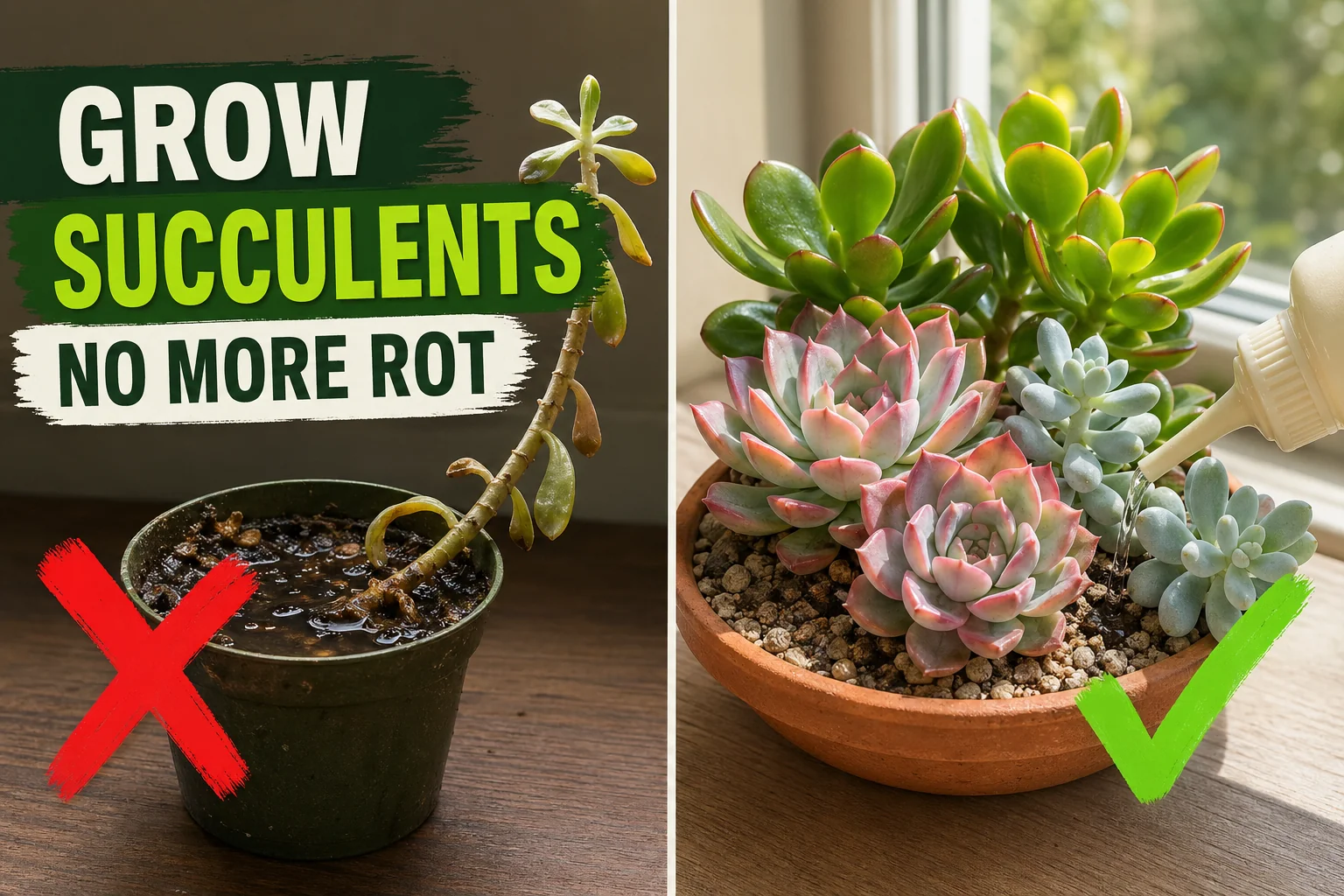
Plant your succulent in a gritty cactus mix in a pot with drainage, give it 4 to 6 hours of direct or very bright indirect light per day, and only water when the soil is bone-dry to the bottom — about every 10 to 14 days in summer and every 3 to 4 weeks in winter. That’s 90% of succulent care.
Table of contents
- What counts as a “succulent”
- Light: the most underrated rule
- Watering: the soak-and-dry method
- Soil and pot choice
- Temperature and humidity
- Fertilizing
- Repotting
- Common mistakes
- Troubleshooting
- FAQs
What counts as a “succulent”
“Succulent” isn’t a single plant — it’s a broad group of species that store water in their leaves, stems, or roots.
One member of this family worth knowing is the mother of thousands (Kalanchoe daigremontiana), which produces tiny plantlets along its leaf edges — the mother of thousands plant care guide covers how to manage its prolific self-spreading habit alongside the standard succulent care rules. The four most common ones in homes:
- Echeveria — flat rosettes in pastel colours; the classic “succulent” look
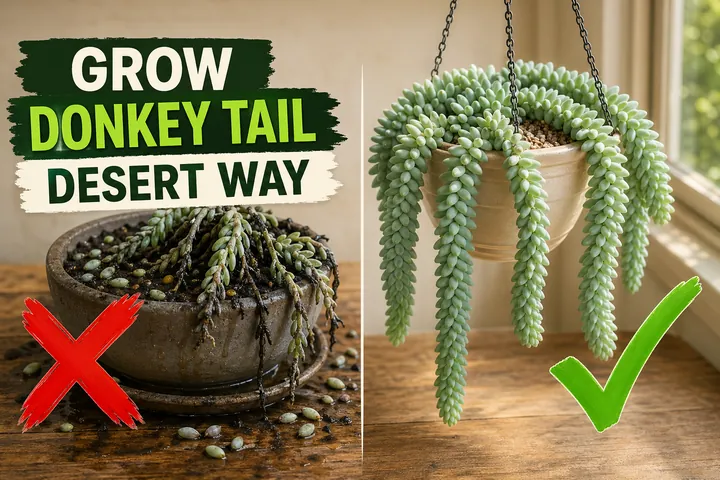
- Sedum — small bead-like or spike-like leaves; includes jelly bean and donkey tail (we have a dedicated donkey tail care guide)
- Crassula ovata (jade plant) — woody stems with thick teardrop leaves; nearly indestructible
- Haworthia — small spiky rosettes that tolerate lower light than the others
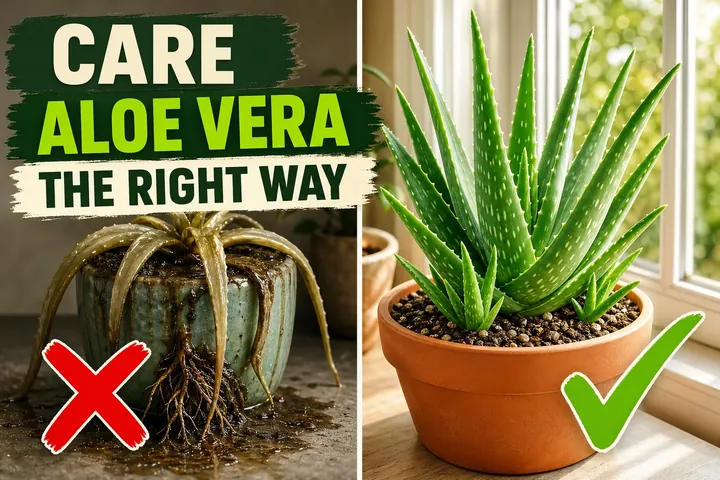
Two popular plants are also succulents but have their own rules and get their own guides: Aloe vera (full aloe care guide here) and snake plant. Bookmark those separately if that’s what you have — the watering rhythm in this guide still works, but their light tolerance is different.
Light: the most underrated rule
More succulents die from too little light than too much water. Without sun, they etiolate — the stem stretches, the colour fades, and leaves space apart instead of forming a tight rosette.
Target light by location:
- Indoors: south- or west-facing window with no curtain, within 30 cm (12 in) of the glass
- Outdoors: 4 to 6 hours of direct sun, sheltered from harsh afternoon heat in summer if temperatures climb above 32°C (90°F)
- Low-light alternative: if you only have a north window, choose Haworthia or jade — both tolerate brighter indirect light
If you bought a succulent from a supermarket, it was likely grown in a greenhouse and will need to be acclimated to direct sun gradually over 7 to 10 days, or its leaves will sunburn (white or brown patches that don’t recover).
Watering: the soak-and-dry method
This is the one technique that prevents almost every succulent problem. The rule is simple:
- Wait until the soil is completely dry to the bottom of the pot — not just the top.
- Water deeply until water runs out the drainage holes.
- Empty any saucer underneath after 10 minutes.
- Don’t water again until step 1 is true again.
How long that takes depends on pot size, light, season, and how dry your home is. As a starting point:
| Season | Indoor watering frequency | Outdoor watering frequency |
|---|---|---|
| Spring (active growth) | every 10–14 days | every 7–10 days |
| Summer (peak growth) | every 7–14 days | every 5–10 days |
| Autumn (slowing) | every 14–21 days | every 10–14 days |
| Winter (dormancy) | every 3–4 weeks or less | every 4 weeks or less |
Use these as a ceiling, not a schedule. If the soil isn’t dry yet, skip the watering — the plant doesn’t care that 7 days have passed.
Two reliable “is it time?” tests
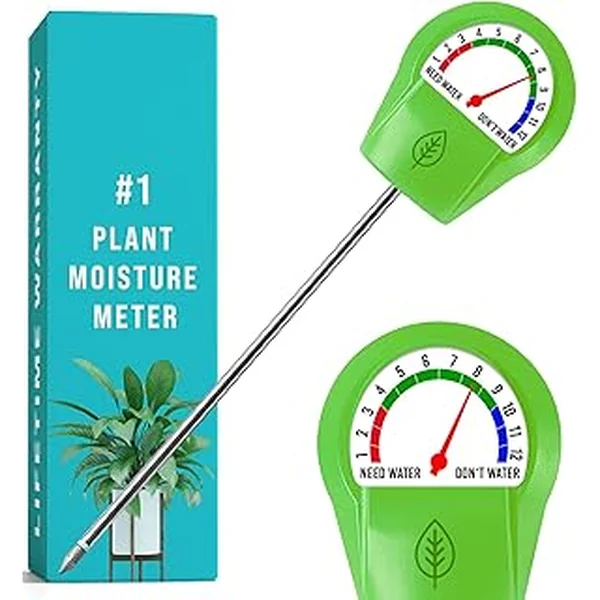
- Skewer test: push a wooden skewer 5 cm (2 in) into the soil. If it comes out clean and dry, water. If any soil sticks, wait.
- Pot weight test: lift the pot. A bone-dry pot feels noticeably lighter than a freshly watered one. Once you do this a few times you’ll just know.
A simple free plant care app like Tazart can hold the watering schedule for you, adjust it for your local weather, and ping you on Apple Watch when each plant is actually due — useful once you have more than two or three pots going.
Soil and pot choice
Succulent roots rot in days when they sit in wet soil. Two non-negotiables:
Gritty soil
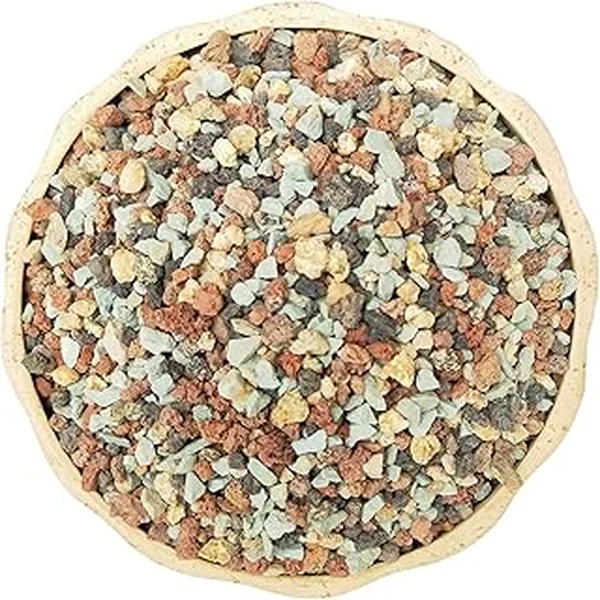
Use a bagged cactus and succulent mix, or make your own:
- 2 parts general potting mix
- 1 part coarse perlite or pumice
- 1 part coarse sand (not play sand — it compacts)
The mix should look chunky, with visible white perlite chunks. If you can squeeze a handful into a tight ball that holds its shape, it’s too dense — add more perlite.
A pot with drainage
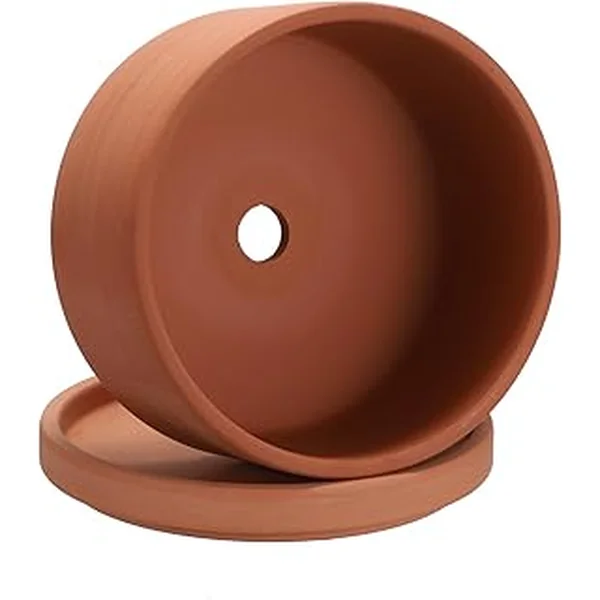
A drainage hole is mandatory. Decorative pots without holes will kill your succulent within a season. If you want a pretty cover pot, plant in a plain nursery pot with holes and slip it inside.
Best pot material: unglazed terracotta. It’s porous, so it pulls moisture out of the soil between waterings — exactly what succulents want. Glazed ceramic or plastic also works, but you’ll need to water even less often.
Best pot size: snug. Pot 1 to 2 cm (½ to ¾ in) wider than the root ball. Oversized pots hold too much wet soil far from the roots.
Temperature and humidity
Most household succulents are happiest in:
- Temperature: 18–27°C (65–80°F) during the day, no lower than 10°C (50°F) at night
- Humidity: 30–50% — average dry indoor air is fine. They don’t need misting.
Cold tolerance varies a lot by species. Most Echeveria die below 4°C (40°F). Sempervivum (hens and chicks) and some Sedum survive freezing. Always check the species name before leaving one outside in winter.
Fertilizing
Succulents barely need it. Over-fertilizing makes them stretch and weakens the leaves.
- When: during active growth only — spring through early autumn
- What: a balanced liquid fertilizer (something like 10-10-10 or a dedicated cactus formula) at quarter strength
- How often: once a month, max
- Skip entirely: late autumn and winter (dormancy)
If you’re not sure, don’t fertilize at all. A succulent in fresh soil has enough nutrients for a year.
Repotting
Repot every 2 to 3 years, in spring, when:
- Roots are coming out the drainage hole
- The soil dries within 1 to 2 days of watering (it’s used up)
- The plant has clearly outgrown the pot
How to repot:
- Stop watering for 5 to 7 days first — dry soil falls away from roots cleanly.
- Gently lift the plant out, brush off old soil, and inspect roots. Snip away any black, mushy, or rotted ones.
- Let the plant air-dry for 1 to 2 days if you cut roots, so cuts callous over.
- Plant in fresh dry gritty mix in a pot only 1 to 2 cm (½ to ¾ in) larger than the root ball.
- Don’t water for 7 to 10 days. Let it settle in dry. Then resume the soak-and-dry routine.
Common mistakes that kill succulents
- Watering on a schedule. “Every Sunday” kills succulents. Water by soil dryness, not by the calendar.
- Using regular potting soil. It holds far too much moisture. Always use a gritty cactus mix.
- A pot with no drainage hole. No exceptions. Even a tiny amount of trapped water rots roots.
- Misting the leaves. Succulents don’t absorb water through their leaves and trapped moisture in the rosette causes rot.
- Too little light. A dim corner causes etiolation. Stretched succulents never go back to compact form — you have to behead and re-root the top.
- Overcrowding tiny terrariums. Closed glass containers trap humidity. Succulents need open, airy planters.
- Fertilizing strong or often. Quarter strength, monthly at most, growing season only.
Troubleshooting
| Symptom | Likely cause | Fix |
|---|---|---|
| Leaves are mushy, translucent, falling off easily | Overwatering — root rot starting | Stop watering. Tip plant out, inspect roots, cut away rot, replant in dry gritty mix, wait 7 days before next water. |
| Leaves are wrinkled and shriveled, but firm | Underwatering | Water deeply once. The leaves should plump back up within 24–48 hours. |
| Stem stretches tall, leaves spaced out and pale | Etiolation — not enough light | Move to brighter spot. Existing growth won’t compact again — behead the top, callous 3 days, root as new cutting. |
| White or brown crispy patches on leaves | Sunburn from sudden direct sun | Move to dappled light for a week, then re-acclimate gradually over 10 days. Damaged leaves don’t recover. |
| Tiny black flying gnats around the pot | Soil staying too wet, fungus gnats breeding | Let soil dry out fully. Top with a 1 cm (½ in) layer of dry sand or gravel to block egg-laying. |
| White cottony fluff in leaf joints | Mealybug infestation | Dab each one with a cotton swab dipped in 70% rubbing alcohol. Repeat weekly until clear. |
| Black or yellow soft patch at the base | Stem rot — too late to save the bottom | Cut the rot away well above the affected area. Callous 3–5 days. Root the healthy top as a new plant. |
| Bottom leaf or two dies naturally | Normal aging — not a problem | Gently pull off the dried leaf. New growth at the top is what matters. |
Watch: succulent care for beginners
A short visual walkthrough pairs well with the steps above. If you’re a visual learner, watch a beginner-friendly tutorial like Succulent Care for Beginners on YouTube and then come back to follow the rhythm in this guide.
Care checklist
- Pot has drainage hole — ideally terracotta
- Soil is a gritty cactus mix (not regular potting soil)
- Spot gets 4–6 hours of direct or very bright indirect light
- Water only when soil is dry to the bottom
- Empty saucer 10 minutes after watering
- No misting
- Fertilize quarter strength, monthly, growing season only
- Repot every 2–3 years in spring
Related reading
- How to care for an aloe vera plant — aloe is technically a succulent but has its own quirks worth knowing.
- Donkey tail (Sedum morganianum) care guide — the same gritty soil and soak-and-dry rules apply, with extra notes on its fragile leaves.
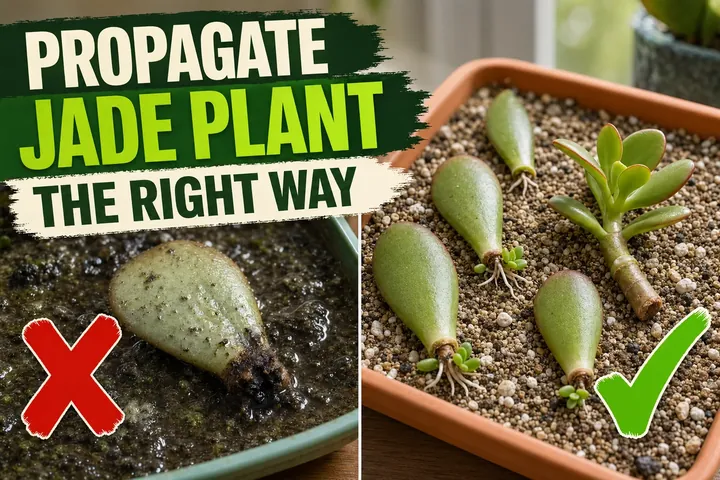
- How to propagate a jade plant — multiply your favourite succulent from leaf or stem cuttings.
- Snap a photo of any unidentified succulent with the free Tazart plant identifier and let it set up a watering schedule that adjusts to your local weather.
A note on conditions
Every home is different. Pot size, soil mix, season, indoor humidity, the strength of your sun, and how warm your home runs all change how often a succulent actually needs water. Use the numbers above as a starting point and adjust based on what your plant does in week two — that’s how every good succulent grower learns.
Highly recommended
The supplies that make this guide work
Tazart is an Amazon Associate — we earn from qualifying purchases at no extra cost to you. Thank you for helping us keep these guides free.
Frequently asked questions
How often should I water a succulent?
Water when the soil is bone-dry all the way to the bottom of the pot — usually every 10 to 14 days in spring and summer, and every 3 to 4 weeks in autumn and winter. Never water on a fixed schedule. Stick a finger or a wooden skewer 5 cm (2 in) into the soil; if it comes out clean and dry, water deeply. If it's even slightly damp, wait.
Do succulents need direct sunlight?
Most succulents need at least 4 to 6 hours of direct or very bright indirect light per day. A south- or west-facing window is ideal indoors. Without enough light they etiolate — the stem stretches and pales, and leaves space out instead of staying tight in a rosette. A few species like Haworthia tolerate medium light, but Echeveria, jade, and Sedum need real sun.
What kind of soil do succulents need?
A gritty, fast-draining mix. Use a bagged cactus and succulent soil, or make your own with 2 parts potting mix, 1 part coarse perlite or pumice, and 1 part coarse sand. Regular potting soil holds far too much water and is the fastest way to kill a succulent.
How do you know when to water a succulent?
Three reliable signs: the soil is completely dry to the bottom, the pot feels noticeably lighter when you pick it up, and the lower leaves look slightly soft or wrinkled. If any one of these is true, it's time to water. If none are, wait.
Why are my succulent leaves falling off?
Leaves that drop off mushy and translucent mean overwatering — the roots are rotting. Leaves that drop off shriveled and dry mean severe underwatering. A few bottom leaves dying naturally as the plant grows is normal. If the central rosette stays firm and colourful, the plant is fine.
Can succulents live indoors permanently?
Yes, as long as they get enough light. A south- or west-facing window or a small grow light makes indoor succulent care possible year-round. Without enough light they survive but stretch out and lose their compact shape. Outdoors in summer (above 10°C / 50°F) gives them their best growth.
How do I save an overwatered succulent?
Tip the plant out of the pot, brush off the wet soil, and inspect the roots. Cut away any black, mushy, or smelly roots with clean scissors. Let the plant air-dry on a paper towel for 1 to 2 days, then replant in fresh dry gritty mix. Don't water for at least a week. If the stem is rotted, behead the top, callous it for 3 days, and root it as a new cutting.