Houseplants
How to Take Care of a Spider Plant (Complete Beginner's Guide)
The complete spider plant care guide — light, water, soil, brown tips, and how to keep your Chlorophytum comosum lush, full, and pumping out baby pups.
On this page
Watch the visual walkthrough
Best TIPS For Spider Plant 🌱 Complete Care For Spider Plant
A short visual walkthrough that pairs with the steps above.
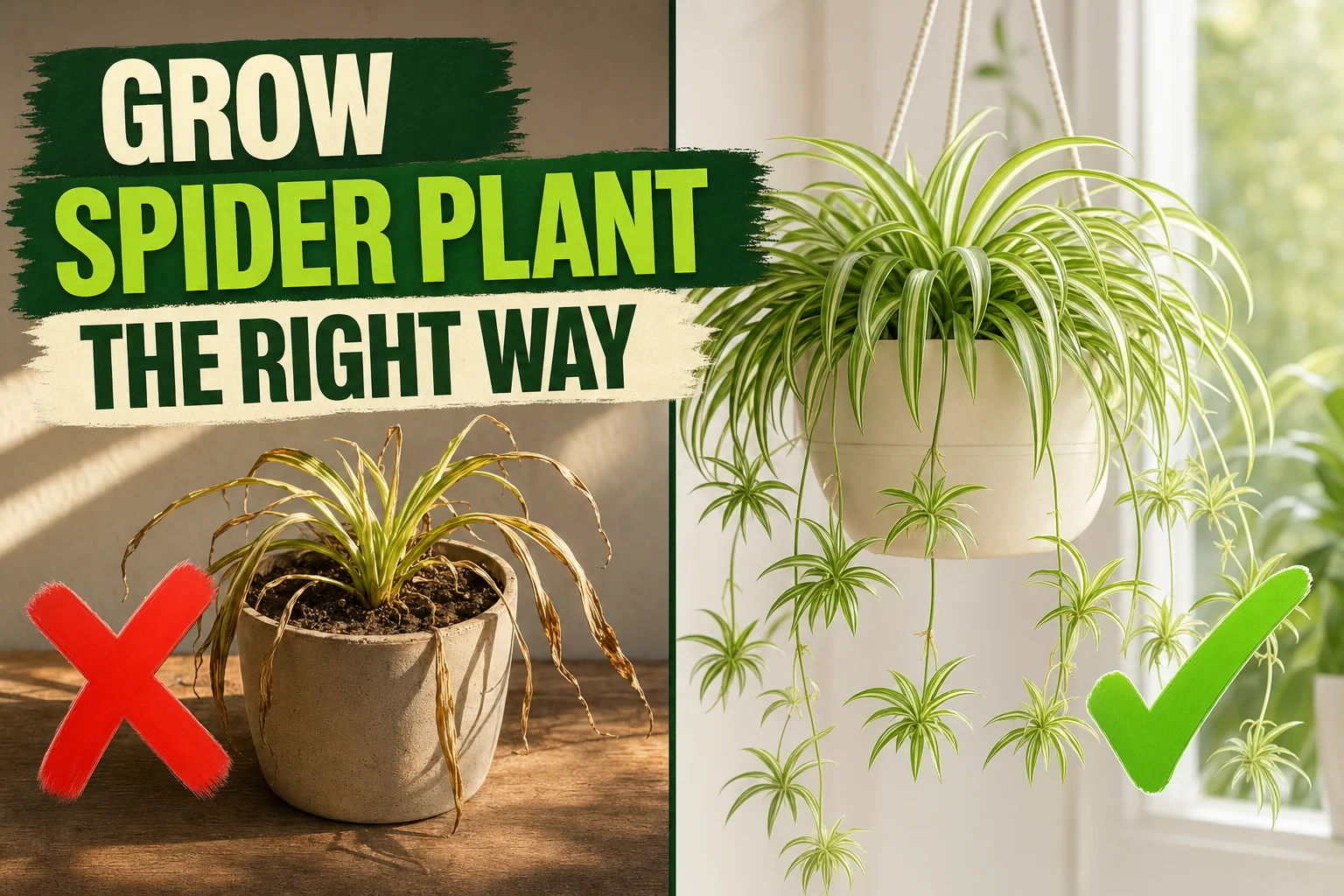
Spider plants (Chlorophytum comosum) are some of the easiest houseplants you can own. They tolerate forgetful watering, low light, average humidity, and just about every container you stick them in. They reward you with cascading green-and-white striped leaves and dozens of baby pups dangling from runners.
But almost every owner runs into the same complaint: brown crispy leaf tips. It’s not a disease, it’s not a watering schedule problem — it’s almost always your tap water. This guide covers everything: light, water, soil, the brown-tip fix, repotting, fertilizing, and exactly what to do when something looks wrong.
Quick answer
Place your spider plant in bright indirect light, water when the top 3 cm (1 in) of soil is dry, and use rainwater or distilled water to avoid fluoride brown tips. Keep the room between 18 and 24 °C (75°F), fertilize monthly at half strength in spring and summer, and propagate the baby pups (spiderettes) once they have aerial roots.
Light
Spider plants want bright indirect light. Think: a meter back from a sunny window, or right next to an east-facing one. They will survive in low light, but you’ll get fewer pups, less variegation, and slower growth.
What to avoid:
- Direct afternoon sun. It bleaches the white stripes and burns leaf tips within days.
- Deep shade. Leaves stay solid green and the plant rarely flowers or produces babies.
If your only spot is a low-light corner, the plant will still live — just don’t expect spiderettes. A free plant care app like Tazart can identify the variety from a photo and suggest the closest matching window in your home.
Water
The “top 3 cm (1 in) dry” rule beats any fixed schedule. Stick a finger in the soil up to the second knuckle — if it feels dry, water deeply until water drains out the bottom. If it’s still moist, wait.
Two specifics that matter for spider plants:
- Water type. Tap water in most cities contains fluoride and chlorine. Spider plants are one of the few houseplants genuinely sensitive to fluoride, and it’s the single biggest cause of those classic brown tips. Use rainwater, distilled water, or tap water you’ve left sitting uncovered for 24 hours so the chlorine evaporates.
- Winter watering. Cut frequency by roughly a third in winter. The plant grows much more slowly and stays moist longer.
Spider plants store water in fleshy tuberous roots, so they’re far more tolerant of going slightly dry than of sitting in soggy soil. Overwatering kills more spider plants than underwatering.
Soil and pot
Use a regular general-purpose potting mix — nothing fancy. The only non-negotiable is drainage holes.
A slightly snug pot is actually better than a roomy one. Spider plants flower and produce more babies when they’re a little root-bound. When you do move up, go just one pot size at a time (about 2–3 cm (0.75–1 in) wider in diameter).
If the soil compacts or stops draining well after a year, top-dress with fresh mix or repot.
Temperature and humidity
- Temperature: 18–24 °C (64–75°F) is the sweet spot. Avoid sustained temps below 10 °C (50°F) — leaves will yellow.
- Humidity: Average household humidity is fine. If your home runs under 30 percent (very dry winter heating), a light mist twice a week or a pebble tray helps. Don’t bother with a humidifier just for this plant.
Keep it away from cold drafts (winter windows) and hot drafts (radiators, heating vents).
Fertilizer
Feed once a month in spring and summer with a balanced liquid houseplant fertilizer at half strength. Skip fertilizer entirely in fall and winter — the plant isn’t actively growing and the salts will build up and worsen brown tips.
Less is more here. Overfertilized spider plants get long pale leaves with very tipped ends and surprisingly few pups.
Brown tips: the #1 problem and how to actually fix it
If you only fix one thing, fix this. Brown crispy tips on a spider plant come from three causes, in this order of likelihood:
- Fluoride and chlorine in tap water. Spider plants accumulate these chemicals in their leaf tips, which burn and die back. This is the cause for the vast majority of brown-tip cases.
- Fertilizer salt buildup. Even when you fertilize correctly, salts collect in the soil over time.
- Sustained dry soil. Letting the plant go bone-dry for weeks at a time damages tip cells.
The fix is the same for all three:
- Switch to rainwater, distilled water, or 24-hour-rested tap water going forward.
- Flush the soil monthly. Run plain water through the pot for a full minute — about 2–3× the pot’s volume — until water runs clear out the bottom. This rinses out accumulated fluoride and fertilizer salts.
- Trim the brown tips off at an angle with clean scissors. They won’t grow back, but the trimmed leaves will look fresh — and new growth will come in clean.
You’ll see new tip-burn stop within 4–6 weeks of switching water.
When and how to repot
Repot every 2 years, or sooner if you see:
- Roots pushing the entire plant up out of the pot
- Soil drying out within a day of watering
- Cracked or bulging plastic pot
Move up just one pot size. Use fresh potting mix, gently tease out any tightly circling roots, and water in well. Don’t fertilize for 4 weeks afterward.
Resist the urge to “give it room.” Spider plants flower and pup more reliably when slightly root-bound.
Common mistakes to avoid
- Watering with unfiltered tap water. The single biggest cause of brown tips. Switch to rain or distilled.
- Putting it in direct sun. Variegated leaves bleach and crisp within days.
- Overwatering. Soggy soil rots the tuberous roots faster than almost any other houseplant.
- No drainage holes. A decorative pot without drainage holds water at the bottom — guaranteed root rot.
- Repotting into a huge pot. Stalls flowering and dramatically reduces baby pup production.
- Fertilizing year-round at full strength. Salt builds up, tips burn, growth gets leggy.
Troubleshooting
| Symptom | Likely cause | Fix |
|---|---|---|
| Brown crispy leaf tips | Fluoride/chlorine in tap water or salt buildup | Switch to rain/distilled water; flush the soil monthly |
| Pale, washed-out leaves | Too much direct sun, or chronic underwatering | Move out of direct sun; water more consistently when the top 3 cm (1 in) is dry |
| No baby pups appearing | Pot too large, light too low, or plant too young | Keep snug in current pot; move to brighter indirect light; wait for maturity (1–2 years) |
| Mushy crown or rotting base | Overwatering / no drainage | Repot into dry potting mix with drainage holes; trim any black mushy roots |
| Long, leggy, floppy leaves | Not enough light, or overfertilizing | Move closer to a bright window; cut fertilizer to monthly at half strength |
| Tiny black flying insects in soil | Fungus gnats from staying too wet | Let the soil dry fully between waterings; top with 1 cm (0.5 in) of dry sand |
Watch: spider plant care
A short visual walkthrough pairs well with the steps above. If you’re a visual learner, watch a quick spider plant care tutorial on YouTube and then come back to follow the timing — especially the brown-tip fix and the right way to flush soil.
Related reading
- How to propagate a spider plant from pups — the easiest free way to multiply your collection.
- How to water a Monstera the right way — the same “let the top dry first” rule applies.
- Pothos plant care for beginners — another nearly indestructible trailing houseplant that pairs beautifully with a spider plant.
- Arrowhead plant care: Syngonium podophyllum made simple — a beginner-friendly aroid with variegated arrow-shaped leaves that loves the same bright indirect light as a spider plant.
- Scan your spider plant with the free Tazart plant identifier and let it set up the watering and fertilizing schedule for you.
A note on conditions
Every home is different. Light, pot size, humidity, season, and your local water all change how a spider plant behaves week to week. Use the numbers above — top 3 cm (1 in) dry, 18–24 °C (64–75°F), monthly half-strength fertilizer in growing season, repot every 2 years — as your starting point, then adjust based on what your plant actually does. That’s how every good plant grower learns.
Highly recommended
The supplies that make this guide work
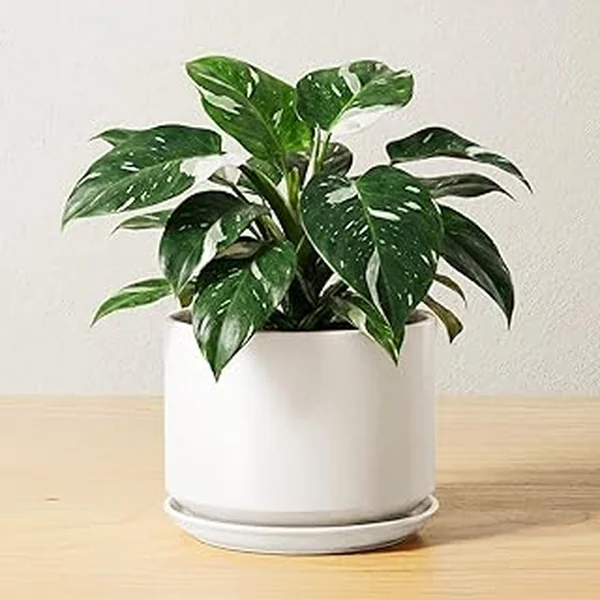
Tazart is an Amazon Associate — we earn from qualifying purchases at no extra cost to you. Thank you for helping us keep these guides free.
Frequently asked questions
How often should I water a spider plant?
Water when the top 3 cm (1 in) of soil feels dry. For most homes that's once every 7 to 10 days in spring and summer, and every 10 to 14 days in winter. Spider plants store water in fleshy white tuberous roots, so they tolerate going slightly dry far better than sitting wet.
Why does my spider plant have brown tips?
The number one cause is fluoride and chlorine in tap water. Spider plants are unusually sensitive to these chemicals, which build up in the leaf tips and burn them. Switch to distilled water, rainwater, or tap water you've left out uncovered for 24 hours, and flush the soil with extra water once a month.
Do spider plants need direct sunlight?
No. Spider plants thrive in bright indirect light. Direct afternoon sun bleaches the variegated stripes and crisps the leaves. A spot a meter or two back from a south- or west-facing window, or right next to an east-facing window, is ideal.
How do I get my spider plant to make babies?
Mature spider plants flower and send out baby pups (spiderettes) when they're slightly root-bound, getting plenty of bright indirect light, and on a natural day-length cycle. Stop repotting into bigger pots, give it 12+ hours of bright light per day, and feed it monthly in spring and summer.
Should I mist my spider plant?
Misting isn't necessary in average household humidity. If your home is very dry — under 30 percent humidity — a light mist a couple of times a week or a pebble tray helps. Don't mist if the room is cold or poorly ventilated; it invites fungal spots.
How often should I repot a spider plant?
Every 2 years, or when you see roots pushing the whole plant up out of the pot. Spider plants like being slightly snug — repotting into a much larger pot delays flowering and slows pup production. Move up just one pot size at a time.