Houseplants
How to Take Care of a Prayer Plant (Complete Maranta Guide)
Learn exactly how to care for a prayer plant: light, watering, humidity, soil, and why its leaves fold up at night. No more crispy brown edges.
On this page
Watch the visual walkthrough
Easy Prayer Plant Care / Grow Miraculous Maranta Prayer Plants
A short visual walkthrough that pairs with the steps above.
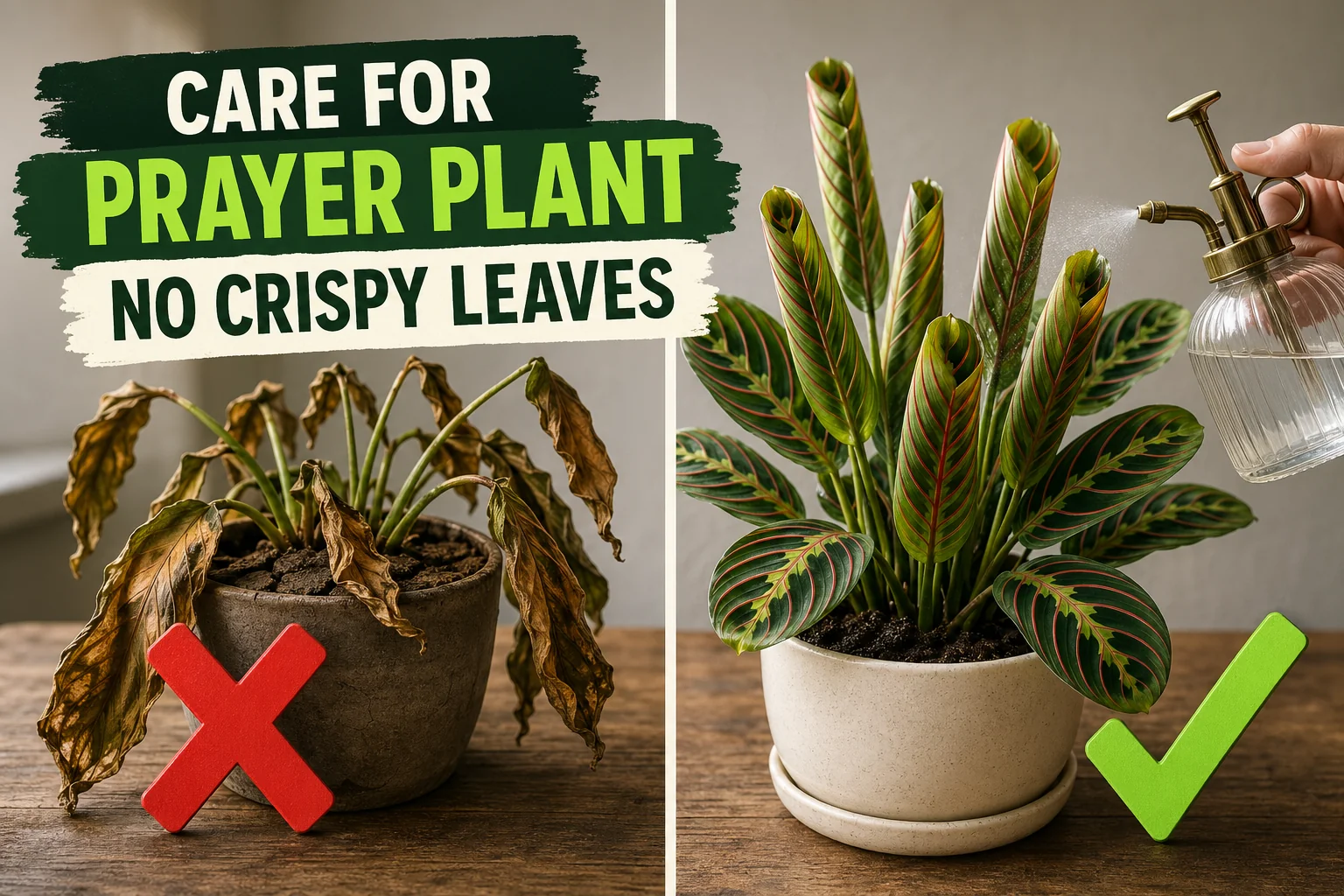
Prayer plants are some of the most visually dramatic houseplants you can own — oval leaves painted with dark-green herringbone stripes and vivid red veins, and a daily leaf movement that folds them up every evening like hands in prayer. They are also one of the most misunderstood.
Most of the crispy brown edges, limp stems, and faded patterns you see on prayer plants come down to two things: water quality and humidity. Get those two right and the rest is straightforward. This guide covers everything you need to know about caring for a Maranta leuconeura indoors.
Quick answer
Prayer plants need bright indirect light (no direct sun), water when the top 2 cm (0.75 in) of soil is dry using room-temperature filtered or rainwater, 50–60% humidity, temperatures of 18–27°C (64–81°F), and a peat-based or peat-free moisture-retentive potting mix. Repot every 2 years. Fertilize monthly in spring and summer. Avoid fluoride-heavy tap water — it is the #1 cause of brown leaf tips.
What is a prayer plant?
The prayer plant most people buy is Maranta leuconeura, a low-growing tropical plant native to the rainforests of Brazil. It belongs to the family Marantaceae, which also includes the popular Calathea genus (now largely reclassified as Goeppertia). You will often see Calatheas described as “prayer plants” in garden centres — the care requirements are nearly identical, though Calatheas tend to be slightly more sensitive to low humidity and irregular watering.
The defining feature of the Maranta is nyctinasty: the daily folding of leaves in response to light changes. Each evening, the oval leaves fold upward along their midrib. In the morning, they open flat again. This movement is driven by changes in water pressure in specialised cells at the base of each leaf stalk — the same process that drives transpiration throughout the day.
Light
Prayer plants want bright indirect light — never direct sun. Direct sunlight bleaches and scorches the leaf markings in a matter of days.
The ideal position indoors:
- 1–2 metres back from a south- or west-facing window
- Right beside a north- or east-facing window where direct rays never reach the leaves
- On a well-lit desk or shelf where natural light reaches but no sun beam falls directly on the foliage
A prayer plant will survive in lower light, but growth slows and the vivid leaf patterns fade to dull green. If your plant has stopped moving its leaves or the markings have gone flat, move it to a brighter spot first before doing anything else.
No grow lights needed unless your home is genuinely dark in winter. If you do use a grow light, run it on a 12–14 hour cycle and turn it off at night so the plant still experiences a light/dark cycle for its nyctinastic movement.
Watering
Water when the top 2 cm (0.75 in) of soil feels dry to your finger. In summer that is roughly every 7–10 days; in winter, every 10–14 days. The exact interval does not matter — the soil signal does.
When you water:
- Water slowly and evenly across the whole surface of the pot.
- Keep going until water drains freely from the drainage holes.
- Empty the saucer 30 minutes after watering so the roots are never sitting in standing water.
Water type matters more for prayer plants than for almost any other common houseplant. Maranta leuconeura is highly sensitive to fluoride and chlorine. The salt build-up from tap water causes the crispy brown tips that most people blame on humidity alone.
Use one of:
- Filtered water
- Rainwater
- Tap water left in an open container overnight (this lets chlorine off-gas, though fluoride remains)
- Distilled water (good, but strips minerals — use sparingly or alternate)
Water temperature should be room temperature. Cold water shocks the roots.
pH: Aim for 6.0–6.5. Most rainwater and filtered water lands in this range naturally.
Humidity
Prayer plants come from tropical rainforests where relative humidity sits above 70%. Your home probably runs at 30–40% — which is enough to cause brown edges within weeks.
Target: 50–60% relative humidity.
Ways to raise humidity:
- A small ultrasonic humidifier placed 30–50 cm (12–20 in) from the plant is the most reliable solution.
- A pebble tray: fill a tray with pebbles, add water to just below the pebble surface, and set the pot on top. As the water evaporates, humidity rises around the leaves.
- Misting with a fine-mist spray bottle every 1–2 days. This helps but is the least consistent option — it raises humidity briefly rather than maintaining it.
- Grouping plants together raises the local humidity slightly through their collective transpiration.
Avoid placing a prayer plant near radiators, air-conditioning vents, or draughty windows. These dry the air and cause rapid moisture loss through the leaves.
Temperature
Keep the plant between 18–27°C (64–81°F) year-round. Prayer plants are tropical and have no cold tolerance.
- Do not let temperatures drop below 15°C (59°F) — chilling causes leaf damage and root rot risk.
- Do not place the plant near cold windows in winter, even if the room is warm. The air directly against a cold pane can be 5–8°C (41–46°F) colder than the centre of the room.
- Avoid sudden temperature swings — a prayer plant near a door that opens to cold air will protest with brown patches.
Soil and potting
Prayer plants need a moisture-retentive but well-draining potting mix. A peat-based mix (or a peat-free alternative using coco coir) works well. Standard houseplant potting compost blended with a little extra perlite (roughly 70:30) is a reliable DIY option.
What to avoid:
- Dense garden soil or compost alone — holds too much moisture and restricts airflow around roots.
- Purely cactus or succulent mix — drains too fast and leaves the roots too dry.
- Soil with heavy fertilizer pre-loading — prayer plants are sensitive to salt build-up.
Repot every 2 years, or sooner if roots are circling the bottom or pushing out of drainage holes. Move up only one pot size (2–3 cm (0.75–1 in) wider). Spring is the best time to repot.
Always use a pot with drainage holes. A prayer plant in a pot without drainage is a prayer plant that will eventually rot.
Feeding
Feed with a balanced liquid fertilizer (such as 10-10-10 or similar) diluted to half the recommended strength every 4 weeks during spring and summer. Do not fertilize in autumn or winter — the plant is in a slow-growth phase and excess fertilizer salts will burn the roots.
Signs of over-fertilizing: white salt crust on the soil surface, brown leaf edges that are different from humidity-burn (more irregular, with a yellowish halo). If this happens, flush the soil thoroughly with plain water several times to wash out the salt build-up.
The “praying” leaf movement
If you are new to prayer plants, the daily folding is the feature people notice first — and sometimes panic about.
Here is what is normal:
- Leaves fold upward in the late afternoon or early evening as light fades.
- Leaves open flat again in the morning as light returns.
- The movement should be visible and smooth. A healthy prayer plant moves every single day.
Here is what is not normal:
- Leaves that stay folded all day (too dark, or severely stressed).
- Leaves that never fold at night (grow light running 24/7, or the plant is too stressed to move).
- Leaves that fold and then curl at the edges (low humidity or drought stress on top of the normal movement).
The technical name for this behaviour is nyctinasty — from the Greek nyx (night) and nastos (pressed close). It is driven by a turgor pressure change in specialised motor cells called pulvini at the base of each leaf petiole. It is entirely separate from wilting, and seeing it every day is a sign your plant is healthy.
Pruning
Prayer plants do not need heavy pruning. Trim with clean, sharp scissors or secateurs when:
- A leaf is fully brown or yellow and not recovering.
- Stems have become leggy and bare at the base.
- You want to encourage bushier growth — cut just above a leaf node and the plant will branch from that point.
Always sterilise your tools before cutting to avoid introducing bacteria or fungal spores. Wipe blades with rubbing alcohol or a diluted bleach solution.
Common mistakes
- Using tap water without any treatment. Fluoride and chlorine build up in the soil over months and cause persistent brown tips that no amount of humidity correction will fix. Switch to filtered or rainwater.
- Placing the plant in direct sun. Even 30 minutes of direct afternoon sun can bleach and scorch the leaf markings permanently.
- Watering on a fixed weekly schedule. A prayer plant in a hot bright room in July needs water every 5–6 days. The same plant in a cool room in December may need water every 14 days. Always check the soil.
- Ignoring humidity. The single fastest path to a thriving prayer plant is raising the humidity to 50–60%. Most people try every other fix first.
- Repotting into an oversized pot. A pot that is too large holds too much damp soil around the roots and causes root rot. Go up only one size at a time.
- Fertilizing in winter. Fertilizer during the dormant slow-growth season leads to salt burn and root damage. Stop feeding in October and resume in March.
Troubleshooting
| Symptom | Likely cause | Fix |
|---|---|---|
| Brown crispy leaf tips and edges | Low humidity and/or fluoride in tap water | Raise humidity to 50–60%; switch to filtered or rainwater; flush soil to remove salt build-up |
| Yellowing leaves, soggy soil | Overwatering or poor drainage | Let soil dry out; check drainage holes are clear; reduce watering frequency |
| Faded leaf patterns, dull colour | Too little light | Move to a brighter spot with bright indirect light; no direct sun |
| Leaves folded up all day, not opening | Too dark, or severe stress | Increase light; check for root rot; check temperature is above 18°C (64°F) |
| Curling leaves with dry soil | Underwatering or very low humidity | Water thoroughly; raise humidity; move away from heating vents |
| White crust on soil surface | Fertilizer salt or mineral build-up from tap water | Flush soil with plain water 3–4 times; switch to filtered water; pause fertilizing for 4–6 weeks |
Watch: prayer plant care
A visual walkthrough can make the watering and misting technique clearer than text alone. Search for Maranta leuconeura care on YouTube for a practical step-by-step demo — look for videos from established plant care channels that show the leaf movement in real time and demonstrate how to check soil moisture before watering.
Related reading
- How to care for a Pothos plant — another low-light tropical that shares the prayer plant’s preference for indirect light and well-draining soil.
- How to take care of a spider plant — another humidity-tolerant houseplant that also benefits from filtered water to avoid tip burn.
- How to care for an aloe vera plant — for when you want a drought-tolerant contrast to your moisture-loving prayer plant collection.
- Arrowhead plant care: Syngonium podophyllum made simple — another variegated aroid that loves the same indirect light and humidity range as a prayer plant.
- Caladium plant care guide — show-stopping pink-and-white veined heart-shaped foliage that thrives in the same humid warm conditions as a prayer plant.
- Fiddle leaf fig care (stop the brown spots) — Ficus lyrata wants the same 40–60% humidity range your prayer plant loves, plus bright indirect light.
- Track your prayer plant’s watering schedule and get humidity alerts with the free Tazart plant care app — it adjusts reminders based on your local weather and season.
A note on conditions
Every home is different. A prayer plant in a bright humid kitchen will need water more often and less humidity intervention than one on a dry shelf near a radiator. The numbers in this guide — 18–27°C (64–81°F), 50–60% humidity, water when top 2 cm (0.75 in) is dry — are solid starting points. Watch your plant for the first 4 weeks and adjust based on what it tells you: crispy tips mean humidity or water quality, yellowing means too much water, fading patterns mean not enough light. That feedback loop is how every good plant grower learns.
Highly recommended
The supplies that make this guide work
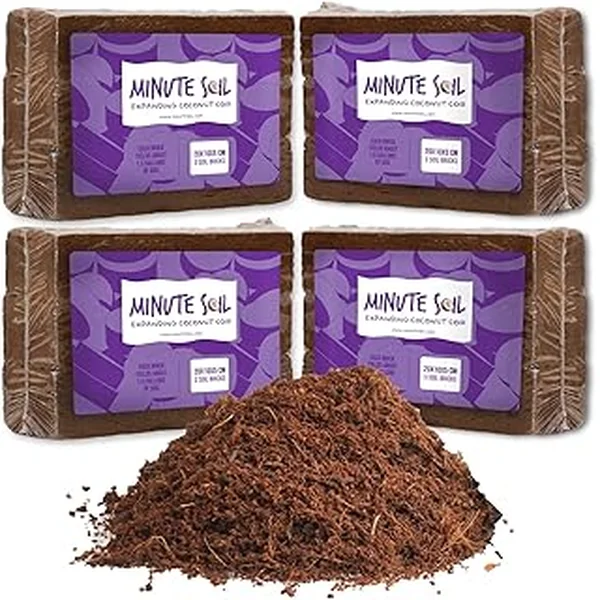

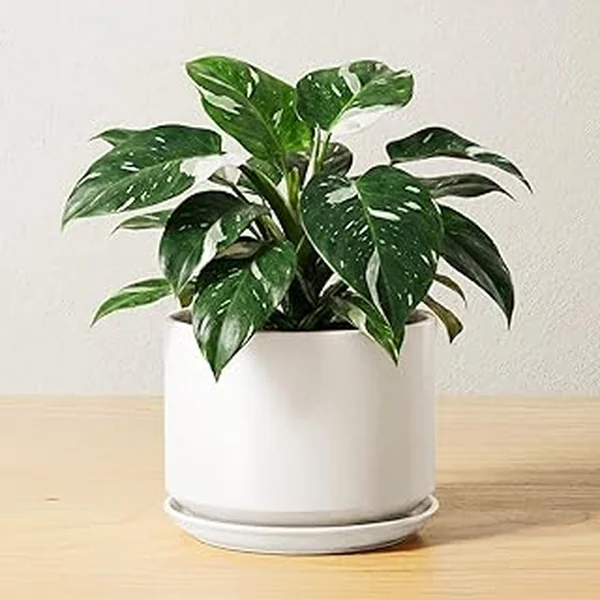

Tazart is an Amazon Associate — we earn from qualifying purchases at no extra cost to you. Thank you for helping us keep these guides free.
Frequently asked questions
How often should I water a prayer plant?
Water when the top 2 cm (0.75 in) of soil feels dry to the touch — usually every 7 to 10 days in summer and every 10 to 14 days in winter. Prayer plants hate sitting in soggy soil and are equally unhappy when left completely dry. Stick your finger 2 cm (0.75 in) into the soil; if it comes out clean and dry, water thoroughly.
Why are my prayer plant leaves curling?
Curling leaves almost always mean the plant is too dry — either the soil has been dry too long, the humidity is too low, or both. Move the plant away from vents, increase ambient humidity to 50–60%, and check whether the soil has gone bone-dry. Overwatering can also cause soft droopy curling, so check whether the soil is wet or dry before acting.
Why does my prayer plant fold its leaves at night?
This is nyctinasty — a daily light-driven leaf movement that is completely normal and healthy. As light fades in the evening, the Maranta folds its oval leaves upward into a prayer-hands shape to reduce moisture loss overnight. Come morning, the leaves flatten open again. If your prayer plant stops moving, it usually means the light level is too consistent (e.g., under grow lights 24/7) or the plant is stressed.
Does a prayer plant need humidity?
Yes. Prayer plants come from tropical Brazil and prefer 50–60% relative humidity. Most homes run at 30–40%, which is low enough to cause brown leaf edges. A small room humidifier nearby, a pebble tray filled with water under the pot, or regular misting (every 1–2 days) all raise humidity effectively.
Why are my prayer plant tips turning brown?
The two most common causes are low humidity and tap water. Prayer plants are sensitive to fluoride and chlorine, which build up in the soil over time and burn the leaf tips. Switch to filtered water, rainwater, or water that has been left out overnight. Also raise the humidity to 50–60%. If you have both problems, fix both at the same time for the fastest recovery.
Can a prayer plant grow in low light?
A prayer plant tolerates lower light better than most tropical houseplants, but it will not thrive. In low light, growth slows, the vibrant leaf patterns fade, and the plant becomes more prone to overwatering. Bright indirect light (a metre or two back from a north- or east-facing window, or right beside a shaded south-facing window) is the sweet spot.