Flowers
How to Propagate Wisteria from Cuttings (3 Methods)
Propagate wisteria from softwood or hardwood cuttings, layering, or seeds. Step-by-step guide with realistic bloom timelines: 3–5 years from cuttings, 8–15 from seed.
On this page
- Quick answer
- Softwood vs hardwood cuttings — which should you take?
- Step-by-step: softwood cuttings
- Hardwood cuttings
- Layering — the highest success rate
- Seeds — honest timeline
- Transplant care after rooting
- Why buying a grafted plant is faster than propagating
- Common mistakes
- Related reading
- A note on invasiveness
Watch the visual walkthrough
Wisteria propagation from cuttings (with updates)
Wisteria is a vining plant with blueish purplish cascading flowers. They are strong growers and can easily take over your garden.
Wisteria is one of the most dramatic flowering vines in any garden — and one of the slowest to reward you. The good news: if you propagate from cuttings rather than seed, you can cut that wait down to 3–5 years instead of a decade or more.
This guide covers every proven method for propagating wisteria: softwood cuttings in summer, hardwood cuttings in late winter, ground layering, and seeds (with a frank timeline warning). Follow the steps exactly and you’ll have rooted plants by late summer.
Quick answer
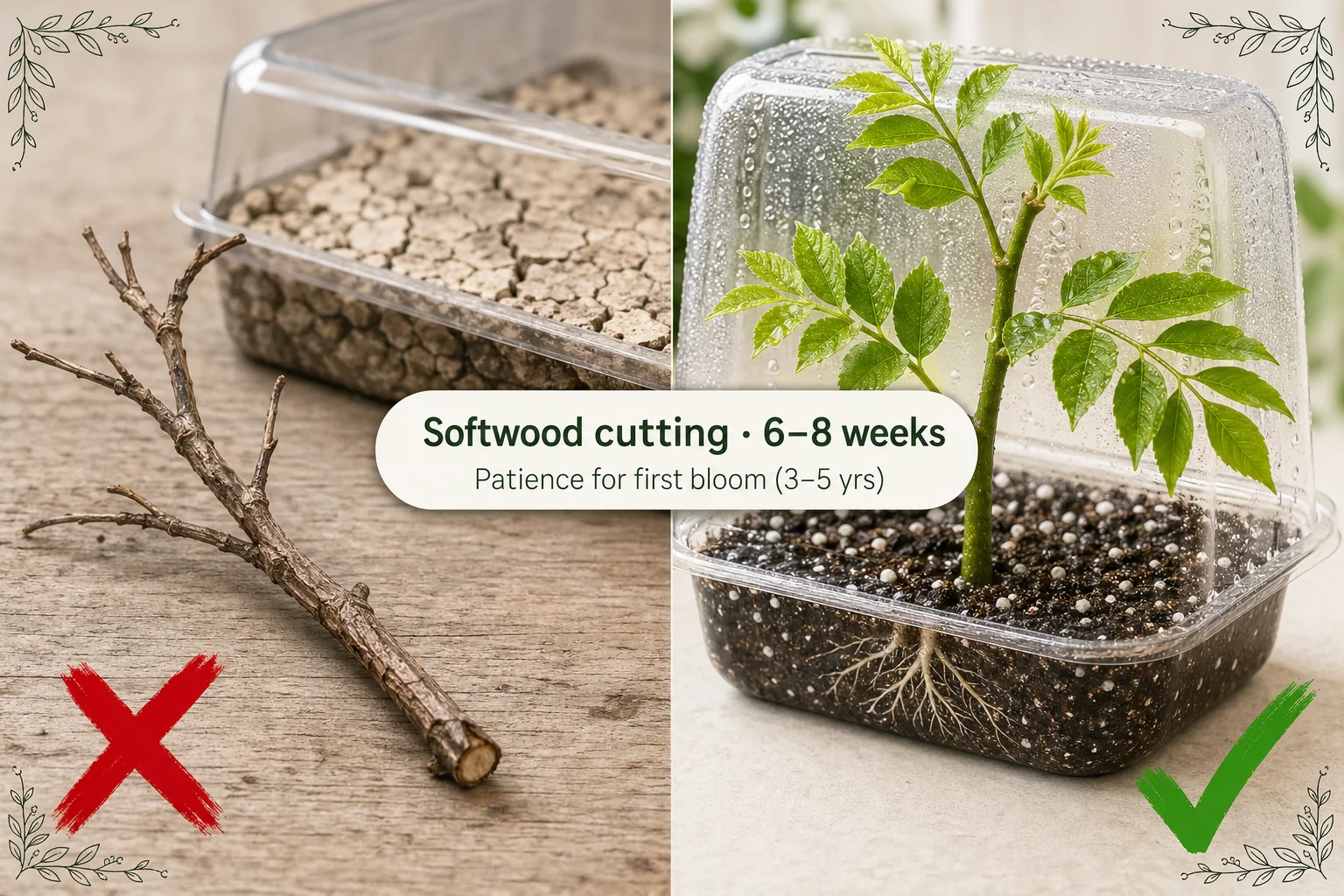
Take 8–12 cm (3–5 in) softwood cuttings in June or July, strip the lower leaves, dip the cut end in rooting hormone gel, insert into a perlite/compost mix, cover with a humidity dome, and put on a heat mat at 18–21°C (65–70°F). Most cuttings root in 6–8 weeks. Expect the first flowers 3–5 years after planting out. Growing from seed takes 8–15 years to first bloom.
Softwood vs hardwood cuttings — which should you take?
Both methods work, but they suit different gardeners and different times of year.
Softwood cuttings (June–July)
- Fastest to root: 6–8 weeks
- Easiest to tell when rooted (active growth resumes)
- More vulnerable to wilting — humidity dome is essential
- Best for gardeners who can monitor daily
Hardwood cuttings (late winter, January–February)
- Slower to root: 8–12 weeks
- More forgiving of neglect — dormant tissue is robust
- No leaves to wilt, so humidity management is easier
- Better if you’re away in summer
For most gardeners, softwood cuttings in June or July are the practical choice. The rooting rate is higher and the cuttings establish faster heading into their first winter.
Step-by-step: softwood cuttings
1. Time it right
The softwood window is narrow — roughly four to six weeks in June and July when new side shoots are 10–15 cm (4–6 in) long. The stem should flex without snapping (too soft = too early) and hold its shape without being rigid (too woody = too late). Take cuttings first thing in the morning when the plant is fully hydrated.
2. Choose your shoot
Pick a vigorous side shoot growing from a main branch, not a flowering shoot. You want pure vegetative growth — a stem with leaves, no flower buds. Pencil-thickness is ideal; anything thicker than 6 mm (0.25 in) roots more slowly.
3. Make the cut
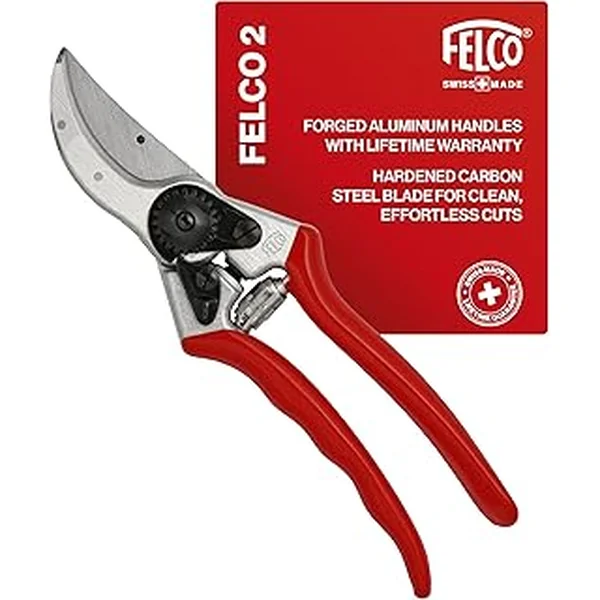
Sterilise your bypass pruning shears with rubbing alcohol. Cut 8–12 cm (3–5 in) of stem just below a leaf node, at a 45-degree angle. Each cutting should have 2 to 3 nodes with leaves attached.
4. Prepare the cutting
Strip off the bottom pair of leaves — any leaf that would sit at or below the soil level will rot. If the remaining leaves are large, cut them in half crosswise to reduce moisture loss.
Dip the bottom 2 cm (0.75 in) of stem into rooting hormone gel (IBA 0.3%). This is the single step most amateur propagators skip — and the most important one for wisteria, which roots slowly without it. Tap off excess if using powder.
5. Fill and insert
Fill a propagation tray or 8 cm (3 in) pot with a 50:50 mix of perlite and peat-free compost. Water it until it drains. Make a small hole with a pencil and insert the cutting 3–4 cm (1–1.5 in) deep so the lowest node is below the surface. Firm gently.
6. Cover and apply bottom heat
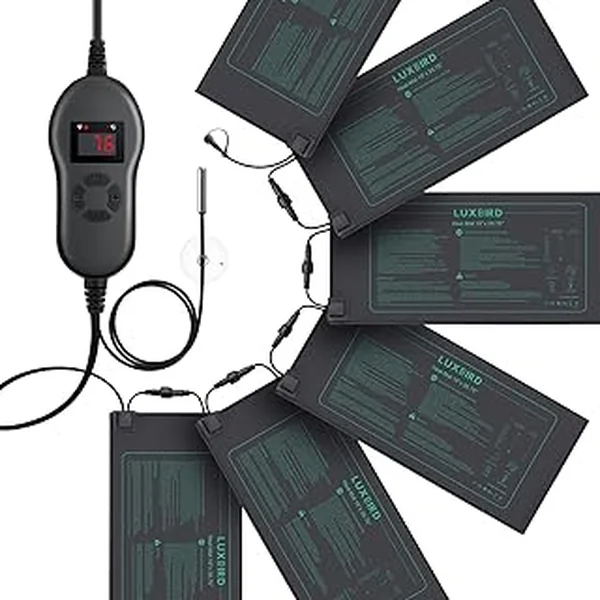
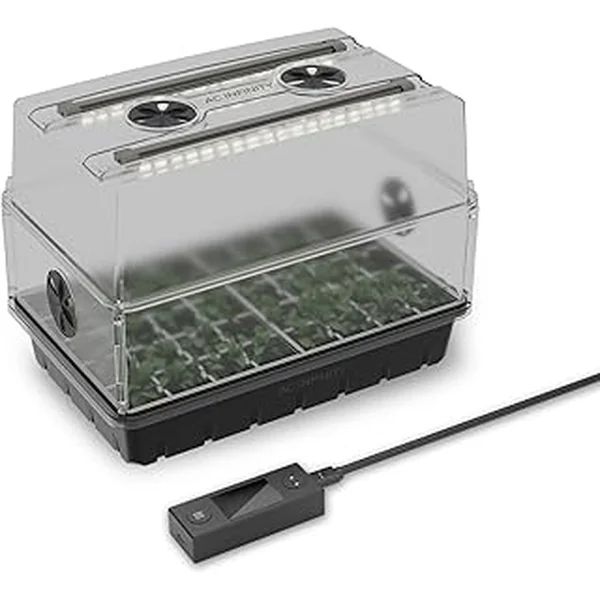
Place the tray in a humidity dome or cover loosely with a clear plastic bag. Seal the bottom of the bag around the pot but leave a small gap at the top for air exchange. Set on a propagation heat mat at 18–21°C (65–70°F). Wisteria roots poorly at room temperature below 16°C (61°F).
Place in bright indirect light — a north- or east-facing windowsill, or a greenhouse bench shaded from direct afternoon sun. Direct sun through the dome heats the cuttings to a damaging temperature.
7. Maintain and check
Mist the inside of the dome every 2 to 3 days. Check the mix — it should feel just damp, never sodden. Open the dome for 10 minutes daily to prevent fungal issues.
After 5 weeks, tug each cutting gently. Resistance means roots have formed. If there is no resistance, re-cover and check every week. Most softwood cuttings root by week 8. Any cutting still unrooted at week 10 has failed — discard and take fresh cuttings next season.
Hardwood cuttings
Hardwood cuttings are cut from fully dormant stems in January or February, after at least two hard frosts.
- Select pencil-thick stems from the previous season’s growth.
- Cut sections 20–25 cm (8–10 in) long with 3 to 4 nodes, cutting straight across at the base and at an angle at the tip (so you remember which end is up).
- Bundle cuttings loosely and store in slightly damp sand or compost in a cool shed for 4 weeks to callous.
- In late February or early March, dip the base in IBA 0.8% powder, insert 10 cm (4 in) deep into pots of gritty compost, and place in a cold frame or unheated greenhouse.
- Roots typically form by late April to May as soil temperatures rise. Pot on individually once you see new leaf growth.
Hardwood cuttings have a lower success rate than softwood (roughly 40–60% vs 60–80%) but require far less daily attention.
Layering — the highest success rate
Layering works by rooting a stem while it is still attached to the parent plant. Success rates exceed 90%, and the resulting plant is established and vigorous.
When to layer: Late spring to early summer (May–June).
How to do it:
- Select a long, flexible stem that can be bent to the ground without breaking. It should be 60–90 cm (24–36 in) long with at least one growing tip.
- About 30 cm (12 in) from the tip, make a shallow upward cut into the stem — cutting about halfway through, not all the way. Alternatively, use a knife to remove a ring of bark 2 cm (0.75 in) wide (this is called ring-barking or girdling).
- Dust the wound with rooting hormone powder.
- Dig a shallow trench 8–10 cm (3–4 in) deep at the wound site. Bend the stem down and pin the wounded section into the trench with a U-shaped wire staple or a bent piece of wire.
- Fill the trench with a mix of topsoil and compost. Water thoroughly.
- Stake the growing tip upright with a small cane.
- Keep the soil moist throughout the summer. Roots typically form in 8–12 weeks.
- In autumn, check for roots by gently scraping the soil. Once you see a root ball developing, sever the stem from the parent plant.
- Leave the new plant in place over winter and transplant the following spring to its permanent position.
Seeds — honest timeline
Growing wisteria from seed is possible but rarely recommended for gardeners who want flowers in their lifetime planning horizon.
Scarification: Wisteria seeds have a hard coat. Nick each seed with a nail file or soak in warm water for 24 hours before sowing.
Sowing: Sow in spring at 15–18°C (59–65°F) in a 50:50 peat-free compost and perlite mix, 1 cm (0.4 in) deep. Germination takes 2 to 4 weeks.
The problem: A wisteria grown from seed must pass through a long juvenile phase before it will flower. This takes 8 to 15 years — and unlike a cutting, the seedling does not carry the known genetics of the parent plant. The flowers may be smaller, paler, or less fragrant. Seedlings are unpredictable.
If you want to grow from seed as an experiment or for rootstock, go ahead. If you want flowers, take cuttings or buy a named grafted variety.
Transplant care after rooting
Once your cutting or layer has a good root ball:
- Pot into a 15 cm (6 in) pot of loam-based John Innes No. 2 compost (or equivalent).
- Grow on in a cold frame or sheltered spot for the first winter — young wisteria plants are frost-tender.
- In spring, harden off over two weeks by gradually increasing outdoor exposure.
- Plant out in a sunny, sheltered position (at least 6 hours of direct sun) against a strong wall or sturdy pergola. Wisteria can reach 9–12 m (30–40 ft) and weighs considerably when mature — the structure must be robust.
- Water in well and mulch the root zone with 5 cm (2 in) of organic material, keeping the mulch away from the stem.
Do not feed with high-nitrogen fertiliser in the first year — it promotes leaves at the expense of the roots and flowers. A balanced feed in spring from year two onwards is sufficient.
Why buying a grafted plant is faster than propagating
It is worth being honest: propagating wisteria yourself is deeply satisfying but not the fastest route to flowers.
A grafted wisteria from a reputable nursery will typically flower within 2 to 3 years of purchase. The rootstock is mature, the scion is selected for reliable bloom, and the plant hits the ground running.
Your home-propagated cutting will flower in 3 to 5 years — one to two years behind a grafted plant — and there is propagation risk along the way.
Propagation makes sense when:
- You want several plants from a known parent
- You cannot find a named variety in your local nurseries
- You enjoy the propagation process itself
- You want to grow American wisteria (Wisteria frutescens), which is easier to propagate than Asian species
For most gardeners planting their first wisteria, a good grafted nursery plant is the practical choice. For gardeners who already have a wisteria and want more, cuttings or layering from your own plant are excellent.
A free plant tracker like Tazart can remind you when to take cuttings each June, when to check for roots at week 6, and when to pot up — useful when you are juggling multiple propagation trays at once.
Common mistakes
- Cutting too late in summer. By August, most wisteria shoots have begun to harden. You miss the softwood window and the cuttings callous rather than root.
- Skipping rooting hormone. Wisteria is a slow-rooting woody plant. Rooting hormone is not optional — it is the single most reliable way to improve your strike rate.
- No bottom heat. Room temperature below 16°C (61°F) all but stops rooting in wisteria. A heat mat is worth the cost.
- Overwatering the propagation mix. Soggy compost rots the base of cuttings before roots form. The mix should feel like a wrung-out sponge.
- Planting too soon. A cutting with roots 1 cm (0.4 in) long is not ready to pot. Wait until the root ball fills the propagation cell — usually week 8.
- Planting against a weak structure. A mature wisteria can pull down a fence or trellis that seemed solid. Plan the support structure before you plant.
Related reading
- Azalea plant care — another slow-to-establish flowering shrub with similar patience requirements.
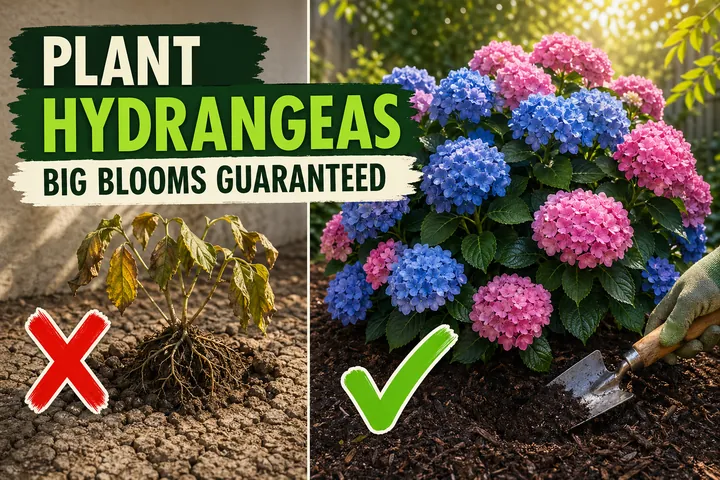
- How to plant hydrangeas in the ground — the companion planting guide for large flowering shrubs.
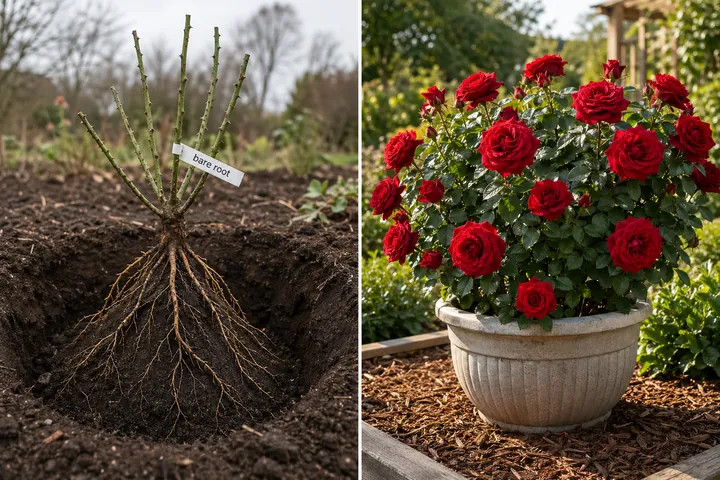
- How to plant a rose bush — roses and wisteria are often grown together; learn the planting depth and spacing rules.
- Track your wisteria cuttings with the free Tazart plant care app — set rooting-check reminders and log which cuttings struck.
A note on invasiveness
Chinese wisteria (Wisteria sinensis) and Japanese wisteria (Wisteria floribunda) are classified as invasive in parts of the eastern United States. If you are in North America, consider American wisteria (Wisteria frutescens) or Kentucky wisteria (Wisteria macrostachya) — both are native, equally beautiful, and slightly easier to propagate. The methods in this guide apply to all species.
Highly recommended
The supplies that make this guide work

Tazart is an Amazon Associate — we earn from qualifying purchases at no extra cost to you. Thank you for helping us keep these guides free.
Frequently asked questions
How long does wisteria take to flower from cuttings?
A wisteria grown from a cutting typically takes 3 to 5 years to produce its first flowers. This is because the plant must reach maturity before it blooms, but a cutting already carries the adult genetics of the parent plant — so it skips the juvenile phase that seeds go through. Buying a grafted nursery plant is the fastest route to flowers: grafted plants often bloom within 2 to 3 years.
When is the best time to take wisteria cuttings?
Take softwood cuttings in June or July when new growth is flexible but not completely floppy. Take hardwood cuttings in late winter (January to February) when the plant is fully dormant and no leaves are present. Both windows work — softwood cuttings root faster (6–8 weeks) while hardwood cuttings are more forgiving if you miss the exact timing.
Does wisteria need rooting hormone?
Rooting hormone is strongly recommended, not optional. Wisteria is a slow-rooting woody vine and the extra auxin in rooting hormone gel or powder can cut rooting time by 2 to 4 weeks. Use a gel formula (IBA 0.3%) for softwood cuttings and a stronger powder (IBA 0.8%) for hardwood cuttings.
Can you grow wisteria from seed?
Yes, but it is a very long process. Wisteria seeds require scarification (nicking or soaking in warm water for 24 hours) and stratification before germination. Even after a seedling establishes, it takes 8 to 15 years from seed to first bloom. Seedlings also show highly variable flower quality — they rarely match the parent plant. Propagating from cuttings or layering is almost always a better choice.
How do you layer wisteria?
Choose a long, flexible stem close to the ground. In spring or early summer, wound the stem 30 cm (12 in) from the tip by making a shallow upward cut or removing a ring of bark 2 cm (0.75 in) wide. Dust the wound with rooting hormone powder, then pin the wounded section into the soil 10 cm (4 in) deep using a U-shaped wire staple. Stake the tip upright. Keep the soil moist. Roots form in 8 to 12 weeks; sever from the parent in autumn and transplant the following spring.
Why are my wisteria cuttings not rooting?
The four most common causes: (1) cutting taken too late in summer when the stem has hardened beyond the softwood stage; (2) no rooting hormone used; (3) propagation mix is too wet and the base has rotted; (4) no bottom heat — wisteria roots best with soil temperature of 18–21°C (65–70°F). Re-cut just above any rotted tissue, apply rooting hormone, and place on a heat mat to recover.
What is the difference between Japanese and Chinese wisteria for propagation?
Both Japanese wisteria (Wisteria floribunda) and Chinese wisteria (Wisteria sinensis) propagate by the same softwood and hardwood cutting methods. American wisteria (Wisteria frutescens) is slightly easier to root from cuttings and is also less invasive — a good choice if you are in North America. The propagation timelines are similar across all species.