Houseplants
How to Propagate Pothos (Free Plants in 3 Weeks)
Propagate pothos cuttings in water or soil and get rooted plants in about 3 weeks. Step-by-step nodes, jars, water changes, and troubleshooting that actually works.
On this page
- Quick answer
- Why pothos is the easiest plant to propagate
- What you’ll need
- How to identify a node (the most important step)
- Step-by-step: water propagation
- How to propagate pothos in soil (alternative method)
- When and how to pot up water-rooted cuttings
- Care after potting
- Common mistakes to avoid
- Troubleshooting
- Watch: pothos propagation walkthrough
- Related reading
- A note on conditions
Watch the visual walkthrough
How to Propagate Pothos in Water
A short visual walkthrough that pairs with the steps above.
You can propagate pothos from a single stem cutting in about 3 weeks — no greenhouse, no fancy tools, no special skill. Pothos (Epipremnum aureum) is the easiest houseplant on Earth to clone, which is why a single $10 plant can become a whole shelf of free pothos for friends.
This guide shows you exactly where to cut, how to root in water (or soil), how often to change the water, and when to pot up.
Quick answer
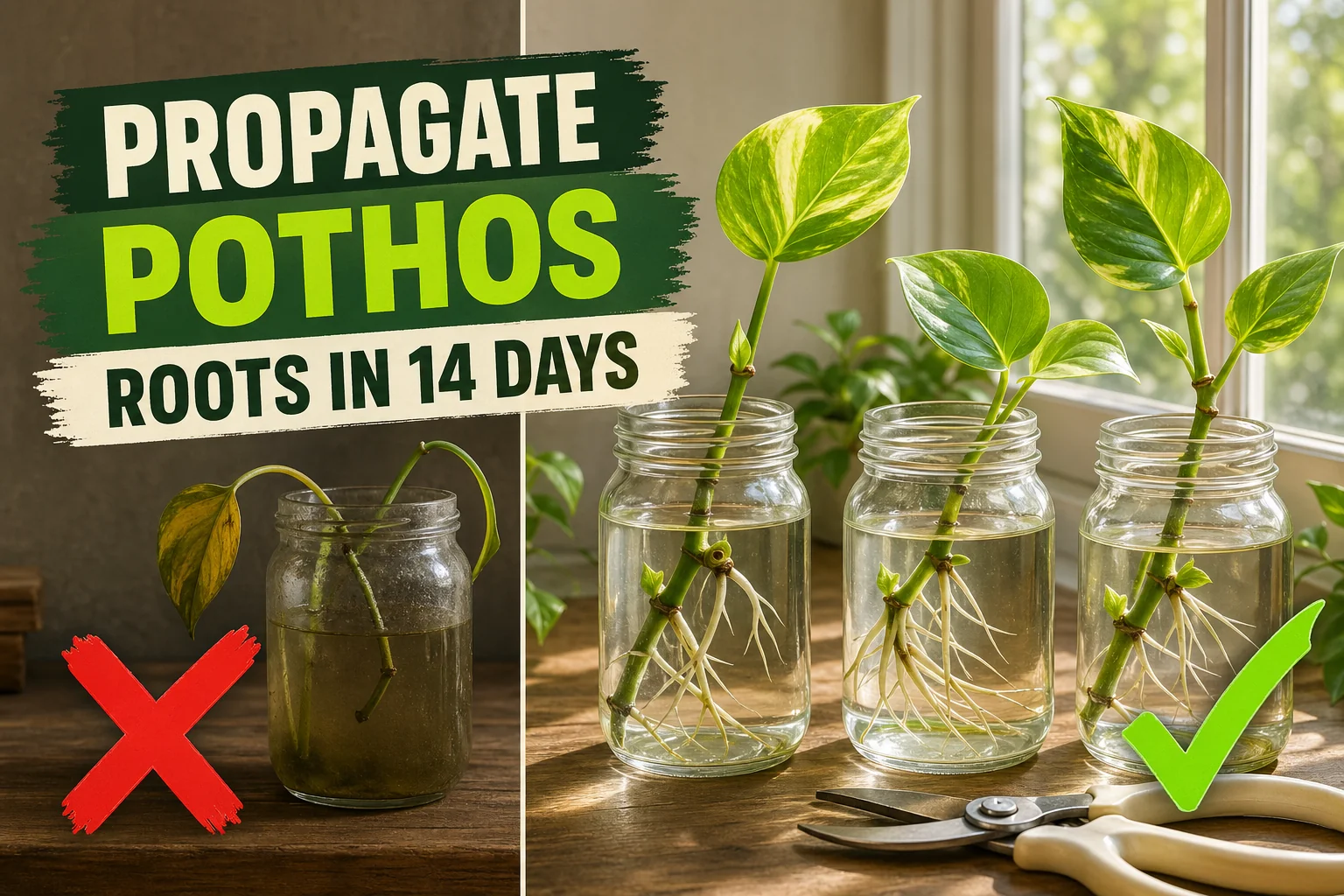
Cut a 10–15 cm (4–6 in) section of pothos vine just below a node, drop it in a glass of clean room-temperature water with the node submerged and any leaves above water, and place it in bright indirect light. White roots appear in 7 to 14 days. Pot up in soil once the roots are 5–8 cm (2–3 in) long, around 3 weeks in.
Why pothos is the easiest plant to propagate
Pothos vines already have aerial roots — the tiny brown nubs you see along the stem. Each one is a node, and each node is a pre-built rooting site. The plant is biologically primed to grow new roots the moment it senses moisture there.
That’s why pothos roots in plain tap water faster than almost any other houseplant. You’re not forcing it to do something new — you’re letting it do what it already wants to do.
It works for every variety:
- Golden pothos (the classic green-and-yellow)
- Marble Queen
- Neon
- N’Joy
- Manjula
- Pearls and Jade
Variegated cuttings root just as fast as plain green ones, but variegated leaves need more light to keep their pattern after they’re potted.
What you’ll need
- One healthy pothos plant with vines at least 30 cm (12 in) long
- Clean, sharp scissors or pruning snips (sterilize with alcohol if you’ve used them on a sick plant)
- A clear glass jar, vase, or propagation tube
- Room-temperature filtered or dechlorinated tap water
- A spot with bright indirect light (no direct afternoon sun)
That’s it. Soil, rooting hormone, and a fancy propagation station are all optional.
How to identify a node (the most important step)
A node is the small brown bump on the vine where a leaf joins the stem. It’s usually the same width as the stem, slightly raised, and often already has a tiny aerial root sticking out.
If you cut between two nodes (on the smooth section of vine), the cutting will sit in water for weeks and never root. No node = no roots. Ever.
Run your finger along the vine. Every 5–10 cm (2–4 in) you’ll feel a bump — that’s the node. Cut just below it, leaving the node on the cutting (not on the parent plant).
Step-by-step: water propagation
1. Choose a healthy vine
Pick a long vine with at least 4 to 6 leaves and visible nodes. Avoid yellowing leaves or stems that feel limp — sick cuttings rarely recover.
2. Make the cut
Identify your node. With clean scissors, cut 0.5–1 cm (0.25–0.4 in) below the node at a slight angle. Each cutting should have:
- 1 to 2 nodes
- 2 to 4 healthy leaves
- A total length of 10–15 cm (4–6 in)
A single 60 cm (24 in) vine usually gives you 4 to 6 cuttings.
3. Strip the bottom leaf
Pinch off any leaf that would sit underwater. Submerged leaves rot, cloud the water, and kill the cutting before it roots.
4. Place in water
Drop the cutting in a clear glass jar with enough room-temperature water to cover the node by at least 2 cm (0.75 in). Leave the upper leaves above the waterline.
5. Set it in bright indirect light
Place the jar near a window that gets bright light all day but no direct hot sun (an east-facing windowsill is perfect). Aim for room temperature 21–24°C (70–75°F). Cooler than 18°C (65°F) and rooting slows dramatically.
6. Refresh the water every 5–7 days
Pour out the old water, give the jar a quick rinse, and refill with fresh room-temperature water. This is the single biggest difference between propagators who succeed and those whose cuttings rot.
7. Watch for roots
You’ll see tiny white nubs at the node within 7 to 14 days. By 21 days they’re 5–8 cm (2–3 in) long with side branches. That’s your green light to pot them up.
How to propagate pothos in soil (alternative method)
Soil propagation skips the “transfer from water to soil” step but you can’t see the roots, so it requires more faith.
- Take the same node-bearing cutting (10–15 cm / 4–6 in, 1–2 nodes, lower leaf removed).
- Dip the cut end and the node in rooting hormone powder, tap off the excess.
- Push the node 2–3 cm (1 in) into moist peat-free potting mix.
- Water lightly and place in bright indirect light at 21–24°C (70–75°F).
- Cover loosely with a clear plastic bag for the first 10 days to hold humidity (don’t let the bag touch the leaves).
- Keep the soil consistently damp — never soggy. Roots typically form in 3 to 4 weeks.
You’ll know it has rooted when you see new leaf growth. Tug gently — if the cutting resists, roots have formed.
When and how to pot up water-rooted cuttings
Pot up once roots are 5–8 cm (2–3 in) long with at least 2 or 3 visible side branches. Don’t wait until the roots are tangled — long water roots have a hard time switching to soil and the plant can stall for weeks.
- Use a pot 10–15 cm (4–6 in) wide with drainage holes.
- Fill loosely with peat-free indoor potting mix.
- Make a deep hole, gently lower the cutting in so the roots sit naturally (don’t ram them in).
- Backfill, firm lightly, water until it drips from the drainage holes.
- Keep the soil slightly more moist than usual for the first 2 weeks while the roots adapt.
A free plant care app like Tazart can hold the watering schedule for you, adjust it for your local weather, and remind you when to pot up — useful if you’re propagating multiple cuttings at once.
Care after potting
| Task | When |
|---|---|
| Water | When the top 2–3 cm (0.75–1 in) of soil is dry — roughly every 7–10 days indoors |
| Light | Bright indirect — at least 4–6 hours, no direct afternoon sun on variegated varieties |
| Fertilize | Start 4 weeks after potting, balanced liquid feed at half strength every 2 weeks in spring/summer |
| Temperature | Keep above 13°C (55°F) — pothos hates cold drafts |
Once new leaf growth appears (usually within 4 to 6 weeks of potting), you officially have a brand new pothos plant.
Common mistakes to avoid
- Cutting between nodes. No node, no roots. Always cut just below a node.
- Leaving leaves underwater. They rot in days and contaminate the water.
- Never changing the water. Stagnant water suffocates the cutting before it can root.
- Using cold water. Cold water shocks the cutting. Always use room-temperature water.
- Placing the jar in direct sun. Direct sun heats the water, kills the roots, and grows algae on the glass.
- Waiting too long to pot up. Roots over 15 cm (6 in) struggle to switch to soil. Pot up at 5–8 cm (2–3 in).
Troubleshooting
| Symptom | Likely cause | Fix |
|---|---|---|
| Cutting sits for 3+ weeks with no roots | No node included, or room too cold (under 18°C / 65°F) | Re-cut just below the next visible node; move to a warmer spot at 21–24°C (70–75°F) |
| Stem mushy below the waterline | Stagnant water, or a leaf was submerged | Snip off the rotted section above the rot, refresh the water, change every 4 days |
| Water turns cloudy/yellow within 2 days | Bacteria from a submerged leaf or unclean jar | Wash the jar, refill with fresh water, strip every leaf below the waterline |
| Roots form but cutting wilts after potting | Roots were too long (over 15 cm / 6 in) when potted | Slightly tent with a clear bag for 7–10 days to raise humidity while it adapts |
| Variegated leaves turn solid green after potting | Not enough light | Move to brighter indirect light — variegation needs more lumens than plain green pothos |
| Tiny black flying insects around the jar/pot | Fungus gnats from over-damp soil after potting | Let the top 2 cm (0.75 in) of soil dry fully; top with a 1 cm (0.5 in) layer of dry sand |
Watch: pothos propagation walkthrough
A short visual walkthrough pairs well with the steps above. If you’re a visual learner, look up a quick tutorial like How to Propagate Pothos in Water on YouTube and pair it with the timing in this guide.
Related reading
- Pothos plant care: light, water, and soil — once your cuttings are rooted, this is the long-term care playbook.
- How to propagate a spider plant — spider plants make pups instead of needing nodes; the rooting timeline is similar.
- How to propagate jade plant — jade roots in soil, not water, but the “cut, callous, plant” rhythm is a useful contrast.
- Want a free reminder when your cuttings are due for a water change? The free Tazart plant care app sends one straight to your phone.
A note on conditions
Every home is different. Light, room temperature, water hardness, and the variety of pothos you’re growing all change how fast roots appear. Use the steps above as a starting point and adjust based on what you see in week one — that’s how every propagator gets faster, healthier rooting over time.
Highly recommended
The supplies that make this guide work


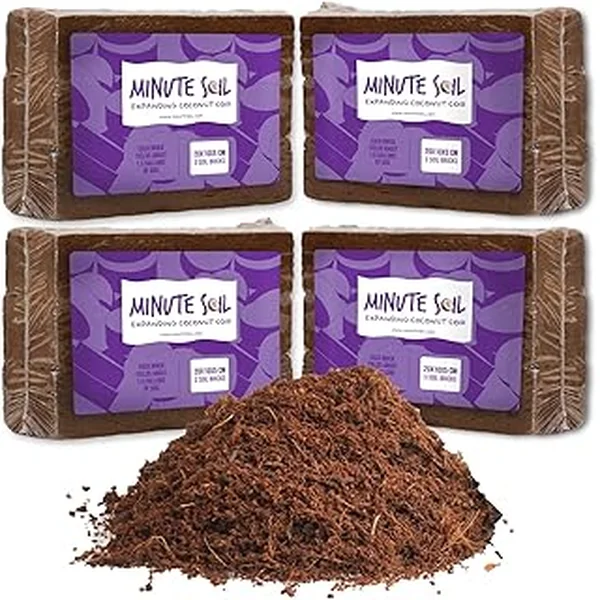

Tazart is an Amazon Associate — we earn from qualifying purchases at no extra cost to you. Thank you for helping us keep these guides free.
Frequently asked questions
How long does it take pothos to root in water?
Most pothos cuttings show first white roots in 7 to 14 days, with roots long enough to pot up in soil at around 3 weeks. Warmer rooms (21–24°C / 70–75°F) and bright indirect light speed it up; cool, dim corners can stretch it to 4–5 weeks.
Can pothos root without a node?
No. The node — the small brown bump on the vine where a leaf meets the stem — is the only place roots can emerge. A leaf with no node attached will stay green for weeks but will never grow roots. Always include at least one node per cutting.
Should I change the water on pothos cuttings?
Yes — top up or fully change the water every 5 to 7 days. Stagnant water loses oxygen and grows bacteria, which is the #1 reason cuttings rot before rooting. Use room-temperature filtered or dechlorinated tap water.
When should I move pothos cuttings to soil?
Pot them up once the white roots are 5–8 cm (2–3 in) long with a few side branches. Roots that are too short get lost in the soil; roots over 15 cm (6 in) struggle to adapt and often suffer transplant shock.
Can you propagate pothos in soil directly?
Yes. Dip the freshly cut node in rooting hormone, push the cutting 2–3 cm (1 in) into moist peat-free potting mix, and keep the soil consistently damp (not soggy) for 3 to 4 weeks. You won't see the roots forming, but new leaf growth means it has rooted.
Why are my pothos cuttings not rooting?
The four most common reasons: (1) no node included in the cutting, (2) cloudy / never-changed water, (3) cold room below 18°C (65°F), or (4) too little light — propagation needs bright indirect light, not a dim shelf. Fix the offending one and most cuttings recover within a week.