Houseplants
How to Propagate Philodendron (Stem Cutting Guide)
Learn how to propagate philodendron from stem cuttings in water, sphagnum moss, or perlite. Roots in 2–4 weeks. Step-by-step guide with air layering tips.
On this page
- Quick answer
- Why nodes are non-negotiable
- What a philodendron node looks like
- What you need
- Method 1 — Water propagation (easiest)
- Method 2 — Sphagnum moss (best for transplant success)
- Method 3 — Perlite or direct soil
- Method 4 — Air layering (for thick-stemmed varieties)
- Light, temperature, and humidity
- Troubleshooting table
- Common mistakes
- When and how often to propagate
- Watch: Philodendron Propagation Video Guide
- Conclusion
Watch the visual walkthrough
Philodendron gloriosum - repot & propagate
Hi all, In todays video I am repotting my philodendron gloriosum & showing you a handy propagation tip #crawler #repot ...
Philodendrons are one of the easiest houseplants to propagate — and one of the most forgiving when you make small mistakes. A single healthy stem cutting can give you a brand-new plant in under a month, and a mature vine can produce ten or more cuttings without missing a beat.
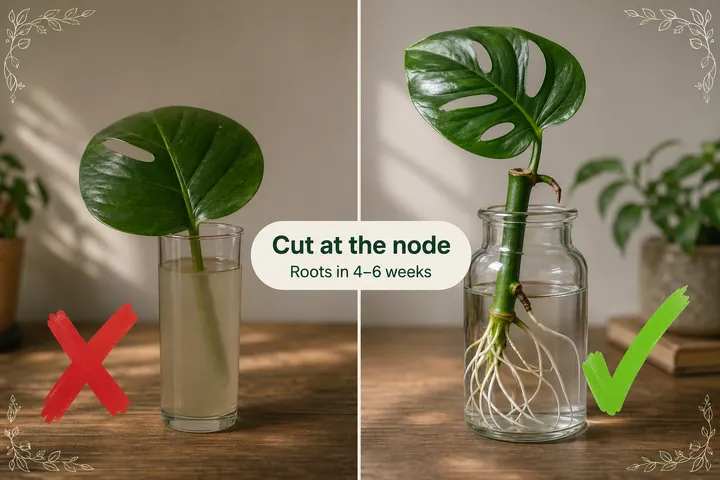
But there is one rule that decides every propagation attempt: you need a node. Skip it, and your cutting will sit pretty in water for two months before slowly turning to mush.
This guide covers exactly what a node looks like, three rooting media that all work, the air-layering trick for thick-stemmed varieties, and every common mistake to avoid.
Quick answer
Take a stem cutting with at least one node and one leaf — cut 1–2 cm (0.5 in) below the node. Root in clean room-temperature water, damp sphagnum moss, or moist perlite at 21–24°C (70–75°F) in bright indirect light. First roots appear in 10–14 days. Transplant to soil when roots are 5–8 cm (2–3 in) long, around 3–4 weeks in.
Why nodes are non-negotiable
Philodendrons belong to the Araceae family — the same group as monsteras, pothos, and anthuriums. Like all aroids, they can only produce new roots from one anatomical structure: the node.
Nodes contain meristematic tissue — undifferentiated stem cells that can become roots, new shoots, or even flowers. A leaf, no matter how perfect, has no meristematic tissue in its petiole. It will stay green in water, look full of promise, and never grow a single root.
The rule is absolute: no node = no new plant.
What a philodendron node looks like
On a heartleaf philodendron (Philodendron hederaceum) or any other vining variety, the node is a slightly thickened ring or bump on the stem, often a shade darker than the surrounding green. It sits exactly where each leaf petiole attaches to the vine.
The most reliable visual cue is the aerial root — a small brown nub on younger stems, or a longer woody tendril on older sections. If you see an aerial root, a node is right behind it.
Between two nodes is the internode — the smooth, lighter-colored stretch of stem. Cutting here gives you nothing rootable.
On a typical mature philodendron vine:
- Nodes are spaced 5–10 cm (2–4 in) apart
- Each node sits just below one leaf
- One node is enough for a viable cutting; two gives faster, denser rooting
What you need
- A healthy philodendron mother plant with vines at least 20–30 cm (8–12 in) long
- Sharp clean scissors or bypass pruning shears, sterilized with 70% alcohol
- A clear glass jar or propagation tube (water method)
- Long-fiber sphagnum moss (optional, for moss method)
- Coarse horticultural perlite or fresh potting mix (optional, for perlite or soil method)
- Room-temperature filtered or dechlorinated tap water
- Optional: rooting hormone powder for thick-stemmed varieties
Method 1 — Water propagation (easiest)
Water propagation is the most popular method because you can watch the roots grow. It works on virtually every philodendron, from heartleaf to brasil to micans.
- Cut a stem section 10–15 cm (4–6 in) long with at least one node and one leaf, snipping 1–2 cm (0.5 in) below the lowest node.
- Trim away any leaf that would sit in the water — only the upper leaf stays.
- Drop the cutting into a clear glass jar with the node submerged 2–3 cm (1 in) deep and the leaf clear of the waterline.
- Place near an east- or north-facing window in bright indirect light at 21–24°C (70–75°F).
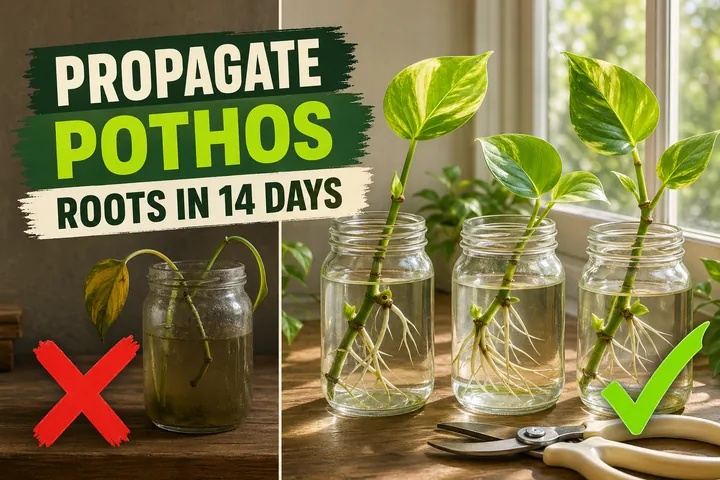
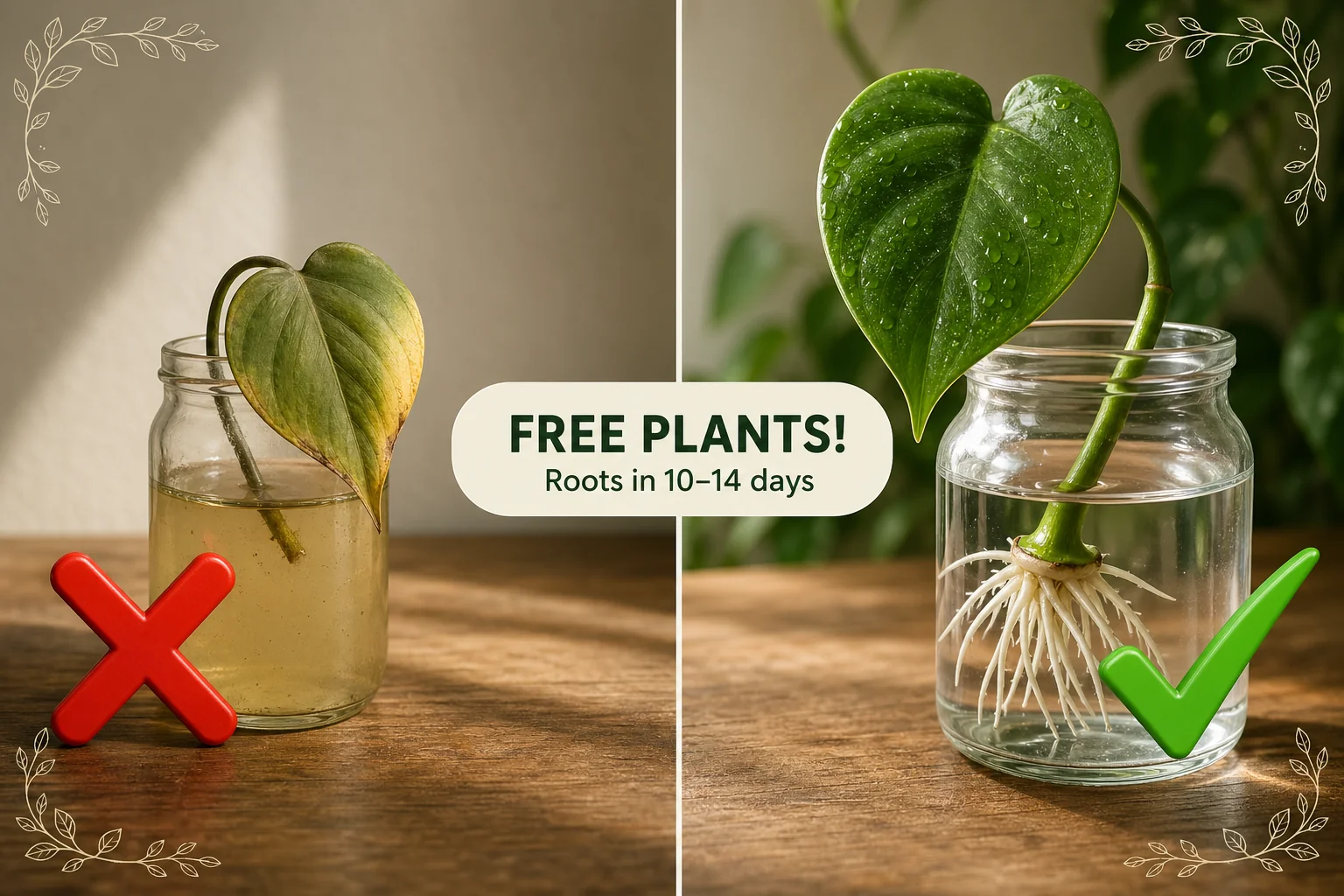
- Change the water every 5–7 days or whenever it looks cloudy. Stagnant water is the number one cause of failed water props.
- First white root nubs appear at the node in 10–14 days. Roots reach transplant size (5–8 cm / 2–3 in) in 3–4 weeks.
Watch for: mushy, brown, or translucent stems below the waterline. That is rot, not rooting — recut above the damage and start over with fresh water.
Method 2 — Sphagnum moss (best for transplant success)
Sphagnum-rooted cuttings transition to soil far more cleanly than water-rooted ones because the roots are already adapted to a soil-like environment. This is the method professional growers prefer.
- Soak long-fiber sphagnum moss in water for 10 minutes, then squeeze out excess so it is damp but not dripping.
- Take your node cutting (same shape as the water method).
- Wrap the node in a small ball of damp moss, leaving the leaf exposed.
- Place the wrapped cutting in a clear container or zip bag and seal — humidity is the key.
- Open the bag every 3–4 days to swap out stale air; mist if the moss starts feeling dry.
- Roots appear in 14–21 days. Transplant once they reach 3–5 cm (1.2–2 in) — sphagnum-grown roots adapt to soil at shorter lengths than water-grown roots.
Method 3 — Perlite or direct soil
Direct propagation skips the transplant step entirely. The cutting roots straight into its long-term medium.
- Fill a small pot or cup with moist coarse perlite, or a 1:1 mix of potting soil and perlite.
- Optional: dust the cut node with rooting hormone powder.
- Push the node 2–3 cm (1 in) into the medium, leaf above the surface.
- Cover with a clear plastic bag or propagation dome to hold humidity.
- Open the cover for 5 minutes daily to swap air and prevent mold.
- Roots form in 3–4 weeks. You will know they have rooted when the cutting resists a gentle tug.
Method 4 — Air layering (for thick-stemmed varieties)
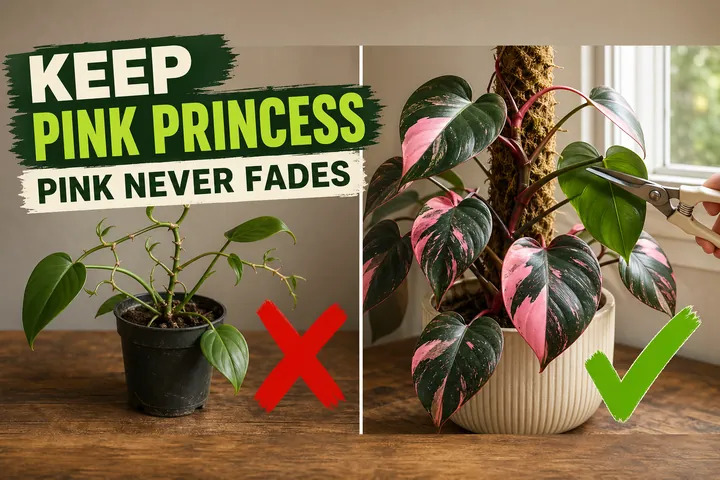
For Philodendron gloriosum, pink princess, white knight, or any variety with thick, slow-growing stems, air layering is more reliable than cutting and waiting. You let the cutting root while still attached to the mother plant — so it never goes through transplant shock.
- Choose a stem section with a healthy node, ideally with an aerial root nub already showing.
- Use a clean blade to make two shallow cuts 2 cm (0.75 in) apart just below the node, removing a thin ring of bark — never more than halfway through the stem.
- Dust the wound with rooting hormone powder.
- Pack damp sphagnum moss tightly around the wound and node.
- Wrap clear plastic film around the moss, securing both ends with twist ties or tape so the moss stays moist.
- Roots will become visible through the plastic in 4–8 weeks. Once roots are 5 cm (2 in) long, cut the stem just below the new root ball and pot it up.
Light, temperature, and humidity
- Light: bright indirect — east or north-facing window. Direct sun cooks unrooted cuttings.
- Temperature: 21–24°C (70–75°F) is optimal. Below 18°C (65°F) rooting slows dramatically; above 27°C (80°F) increases rot risk in water props.
- Humidity: 60–80% for moss and soil props. Water props are forgiving — even 40% room humidity works because the leaf has constant access to water through the stem.
Troubleshooting table
| Problem | Likely cause | Fix |
|---|---|---|
| Stem mushy and brown below waterline | Bacterial rot from old water | Recut 2 cm (0.75 in) above damage, fresh water, change weekly |
| Two months in water, no roots | No node in cutting OR water below 18°C (65°F) | Inspect for node; warm the room; restart if no node |
| Leaf yellowing on cutting | Normal nutrient depletion if 4+ weeks in water | Transplant to soil to provide nutrients |
| Roots brown and slimy | Water rarely changed; low oxygen | Switch to sphagnum or change water every 5 days |
| Cutting wilted in soil prop | Humidity too low after transplant | Cover with clear bag for 7–10 days |
| Mold on sphagnum surface | Sealed bag not vented | Open bag for 5 minutes daily |
Common mistakes
- Taking a leaf with no stem. A leaf only ever produces a leaf. Always include at least 1–2 cm (0.5 in) of stem with a node.
- Cutting at the internode. The smooth section between nodes has no rooting tissue. Find the node and cut just below it.
- Submerging the leaf. Submerged leaves rot in days and contaminate the water. Trim them off before propagating.
- Tap water with chlorine. Chlorine slows rooting in some varieties. Either let tap water sit 24 hours or use filtered water.
- Direct sun. Unrooted cuttings cannot replace water lost through the leaves fast enough. Bright indirect only.
- Refusing to change the water. Stagnant water below 18°C (65°F) becomes a bacterial soup in 2 weeks. Change weekly.
When and how often to propagate
Spring and early summer give the fastest rooting because the mother plant is in active growth and cuttings respond accordingly. A philodendron rooted in May will often double in size by autumn.
You can propagate year-round indoors, but expect rooting to take 50–100% longer in winter when light is dim and indoor temperatures dip.
A healthy mother plant can give up 1 cutting every 4–6 weeks during active growth without losing vigor. Tracking each cutting’s start date, medium, and root progress is exactly the kind of thing the Tazart plant care app is built for — set a reminder for water changes, track root length over weeks, and get a transplant alert when the roots cross your target length.
Watch: Philodendron Propagation Video Guide
Reading is one thing — seeing the node identified, the cut made, and the rooting setup in real time is another. The video below walks through a heartleaf philodendron propagation start to finish and pairs well with the steps above.
Conclusion
Philodendron propagation comes down to three things: a node, clean room-temperature water (or damp moss), and bright indirect light at 21–24°C (70–75°F). Get those three right and most cuttings root in 2–4 weeks with no extra equipment.
Once you have rooted one cutting, you can multiply your collection indefinitely — every new plant becomes a future mother plant. For thick-stemmed varieties like pink princess or gloriosum, air layering is worth the extra setup time. For everything else, water or sphagnum moss is hard to beat.
For more aroid propagation methods, see our pothos propagation guide, the monstera deliciosa node cutting walkthrough, and the pink princess philodendron care guide.
Highly recommended
The supplies that make this guide work
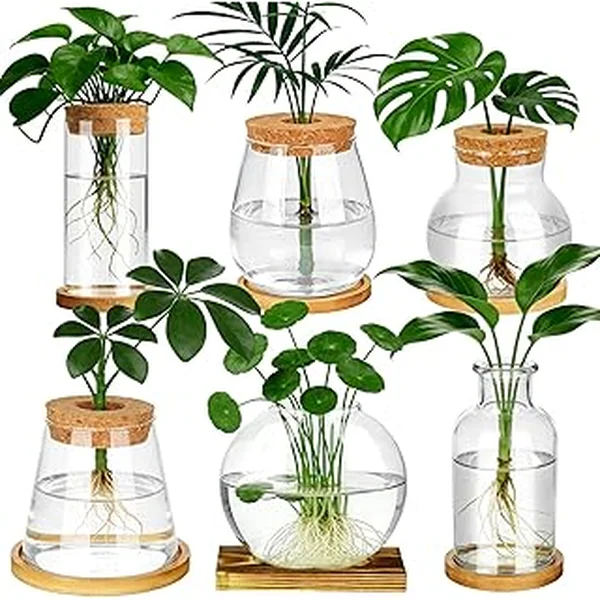
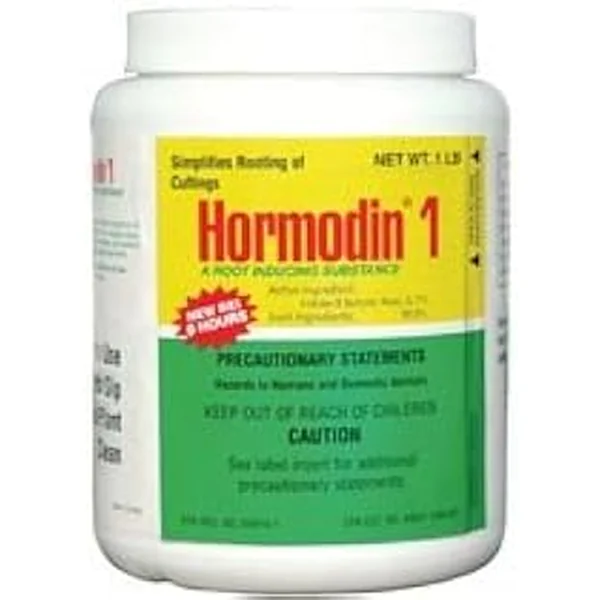
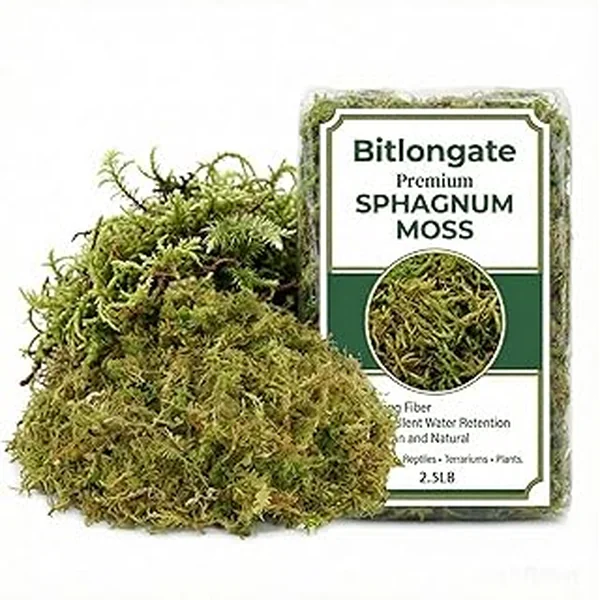

Tazart is an Amazon Associate — we earn from qualifying purchases at no extra cost to you. Thank you for helping us keep these guides free.
Frequently asked questions
Can you propagate philodendron without a node?
No. A philodendron leaf with no node attached will stay green in water for weeks but will never root. The node — the small bump on the stem where each leaf petiole meets the vine — is the only place new roots can emerge. Always include at least one node with a short stem section in your cutting.
How long does it take philodendron to root in water?
Most philodendron cuttings show first white roots at the node within 10 to 14 days at 21–24°C (70–75°F) in bright indirect light. Full transplant-ready roots 5–8 cm (2–3 in) long usually take 3 to 4 weeks. Cool rooms below 18°C (65°F) or low light can stretch this to 6–8 weeks.
What does a philodendron node look like?
A philodendron node is a slightly raised ring or bump on the stem, often with a small brown nub (an aerial root) emerging from it, located right below where each leaf petiole attaches. Between two nodes is the smooth internode — a section that cannot produce roots no matter how long it sits in water.
Can I propagate philodendron directly in soil?
Yes. Dip the cut node in rooting hormone, push it 2–3 cm (1 in) deep into a moist mix of potting soil and perlite (1:1), and keep it covered with a clear bag or dome to hold humidity. Roots form in 3–4 weeks. Soil-rooted cuttings skip the transplant shock that water-rooted cuttings often experience.
When should I move a philodendron cutting to soil?
Transplant once roots are 5–8 cm (2–3 in) long with visible side branches. Roots shorter than 5 cm (2 in) are fragile and tear easily; roots longer than 15 cm (6 in) have fully adapted to water and often stall when switched to soil. Sphagnum moss-rooted cuttings can move into soil at 3–5 cm (1.2–2 in) since their roots are already soil-tolerant.
Do philodendron cuttings need rooting hormone?
No, but it speeds things up. Philodendrons root willingly without hormone in water or moss — usually in 2–3 weeks. A light dusting of rooting hormone powder on the cut node before going into soil or moss can shorten that to 10–14 days and reduce rot risk on weaker stems. It is most useful for thick-stemmed varieties like Philodendron gloriosum or pink princess.
Why is my philodendron cutting not rooting?
The four most common causes: (1) no node was included — only a leaf or internode was cut, (2) water below 18°C (65°F) — philodendrons stall in cool water, (3) stagnant water not changed for 2+ weeks — low oxygen rots the stem before roots form, (4) deep shade — bright indirect light is required. Fix the cause and most cuttings respond within 7 days.