Edible
How to Propagate Lemongrass (3 Methods That Work)
Propagate lemongrass from store-bought stalks, divide mature clumps, or start from seed. Step-by-step methods, rooting timeline, and common failures to avoid.
On this page
- Quick answer
- Buying the right stalks
- Water rooting method
- Transplanting rooted stalks to soil
- Division method — splitting mature clumps
- Seed propagation (rare)
- Light, water, and temperature for new starts
- Outdoor transplant timing
- Common failures
- Watch: lemongrass propagation
- Related reading
- A note on conditions
Watch the visual walkthrough
5 Tips How to Grow a Ton of Lemongrass at Home
In this video, I give you my 5 top tips on how to grow lemongrass at home. But not just "some" lemongrass a LOT, in fact, a TON of ...
Lemongrass is one of the few culinary plants you can propagate directly from the grocery store. A bundle of stalks from the produce section — the same ones used in Thai curries and lemongrass tea — can become a full living plant in about two weeks if the base is still intact.
This guide covers three propagation methods: water rooting from store-bought stalks (the fastest and most reliable), division of established clumps, and seed starting. It also covers what goes wrong and why.
Quick answer
Buy lemongrass stalks with the intact swollen base node still attached. Stand them in 2–3 cm (1 in) of clean room-temperature water, place in a warm bright spot at 22–27°C (72–80°F), and change the water every 3–5 days. White roots appear in 7–10 days; transplant to soil once roots are 5–10 cm (2–4 in) long, around 14–21 days in.
Buying the right stalks
Not every bundle of lemongrass from the grocery store can root. The key is the base node — the slightly swollen, pale-green or yellowish bulb at the very bottom of each stalk. That node is the only place roots can emerge from. If the base is shaved completely flat, the node is gone and the stalk cannot root no matter how long you leave it in water.
What to look for when buying:
- Firm, intact base — the bulb should feel solid, not mushy
- Pale green or yellowish colour at the base — not brown, not slimy
- Fragrant when you snap a leaf — fresh stalks root faster than old dry ones
- At least 20–25 cm (8–10 in) total length — very short trimmings often had the node removed
Asian grocery stores, international supermarkets, and farmers markets typically have better node retention than large chain supermarkets, where stalks are often trimmed harder for a uniform look. If your first bundle fails, try a different store before assuming the method doesn’t work.
Water rooting method
This is the fastest, most beginner-friendly way to propagate lemongrass. You can watch the roots form and know exactly when the stalk is ready for soil.
Step 1 — Trim the top leaves
Before placing stalks in water, cut the leafy tops down to 15–20 cm (6–8 in) above the base. This is not strictly necessary but it reduces water loss through the leaves and lets the stalk focus on root growth rather than keeping foliage alive.
Step 2 — Set up the water jar
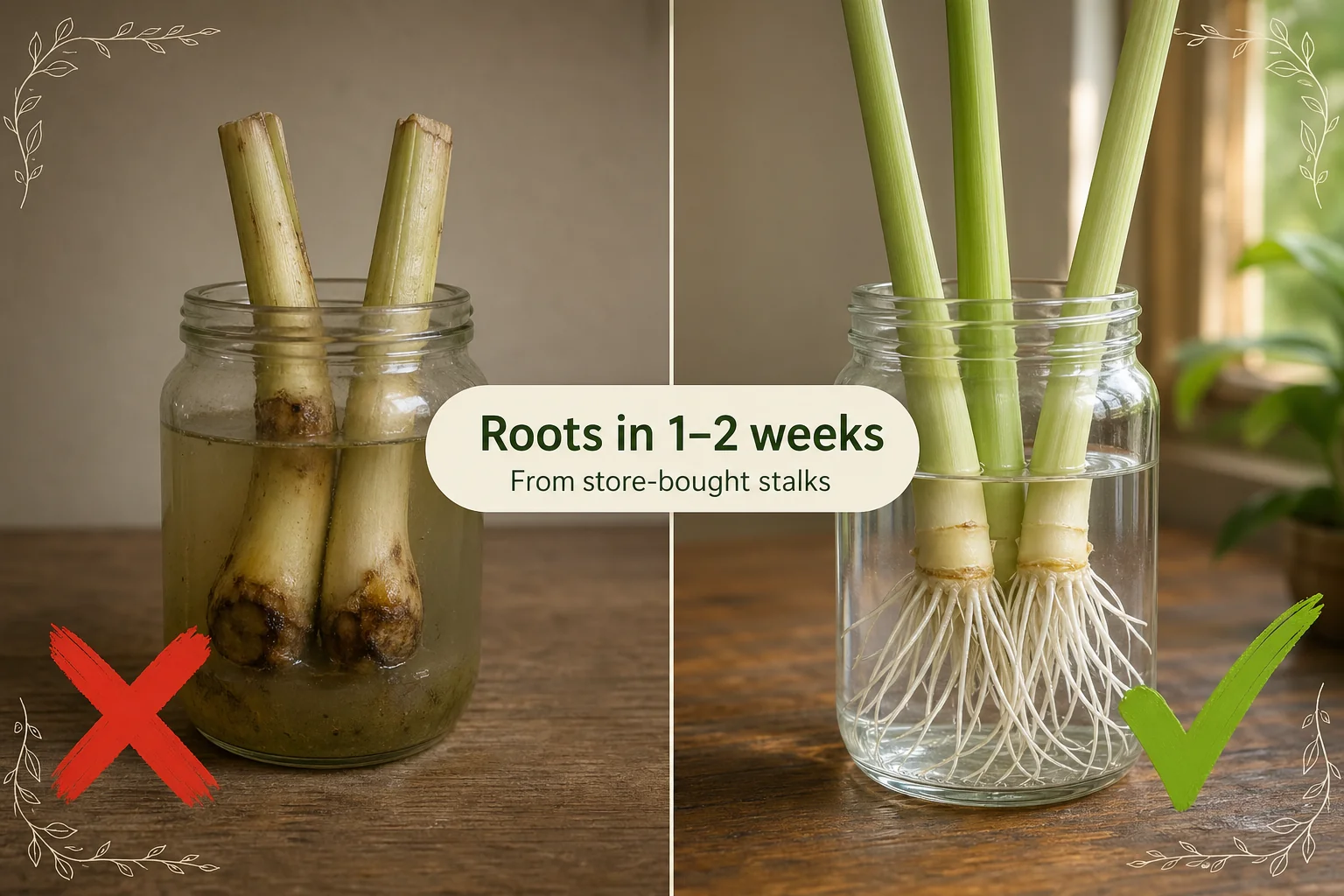
Stand 2–4 stalks in a clear glass jar. Add room-temperature water to cover only the bottom 2–3 cm (1 in) of each stalk — the base node needs moisture, but submerging the whole stalk creates rot. A clear jar lets you see the roots forming without disturbing the stalks.
Step 3 — Find the right spot
Place the jar in a warm, bright location:
- Temperature: 22–27°C (72–80°F) is ideal. Below 18°C (65°F) rooting slows dramatically or stops entirely.
- Light: Bright indirect light, or a warm sunny windowsill with no direct hot afternoon sun (which heats the water and grows bacteria).
- Avoid: Cold windowsills in winter, air conditioning vents, or dark shelves.
Step 4 — Change the water every 3–5 days
This is the most important maintenance step. Stagnant water loses oxygen, builds up bacteria, and turns the base slimy before roots can form. Every 3–5 days, pour out the water, give the jar a quick rinse, and refill with fresh room-temperature water.
Step 5 — Watch for roots, then transplant
Tiny white root tips appear at the base node within 7–10 days. Leave them to grow until they’re 5–10 cm (2–4 in) long with visible side branching — usually 14–21 days total. At that length the roots are flexible and resilient enough to handle without breaking.
Roots shorter than 3 cm (1 in) get lost in soil and struggle to establish. Roots over 15 cm (6 in) become fragile and tangle easily during transplanting.
Transplanting rooted stalks to soil
Once roots hit 5–10 cm (2–4 in):
- Choose a 20–25 cm (8–10 in) pot with drainage holes — lemongrass roots aggressively and will exhaust a small pot within months.
- Fill with a well-draining potting mix. Add 20–30% perlite by volume if your mix feels heavy — lemongrass hates waterlogged roots.
- Make a deep hole in the centre with your finger or a dibber, wide enough that the roots can sit naturally without folding.
- Lower the stalk in so the base node sits just at or slightly below the soil surface.
- Backfill, firm gently around the stalk, and water until drainage runs freely from the holes.
- Move the pot to full sun — at least 6 hours per day. Indoors, a south-facing window or a full-spectrum LED grow light on a 14-hour timer is the minimum.
Water when the top 2–3 cm (1 in) of soil is dry. New green shoots emerging from the centre of the stalk signal successful establishment — typically within 2–4 weeks of transplanting.
Division method — splitting mature clumps
If you already have an established lemongrass plant — or a neighbour does — division is faster than water propagation and produces large, immediately productive plants.
When to divide: Early spring, just as new growth begins. Avoid dividing in summer heat or during flowering.
How to do it:
- Dig up the entire clump. Lemongrass forms tight, fibrous root masses — use a sharp spade and expect some resistance.
- Brush off excess soil so you can see the root crown clearly.
- Use a sharp, clean knife, pruning saw, or hori-hori to slice through the root mass. Each division should have at least 3–5 stalks with an attached root crown. Lone single stalks rarely establish well after division.
- Trim the leaves on each division to 15–20 cm (6–8 in) above the base to reduce transplant stress.
- Replant each division immediately — don’t let the root crowns dry out. Plant at the same depth the original clump was growing at.
- Water deeply right after planting and keep soil consistently moist for 2–3 weeks while the divided roots re-establish.
In-ground spacing: allow 60–90 cm (24–36 in) between divisions — mature lemongrass clumps reach 1–1.5 m (3–5 ft) tall and spread wide.
A free plant care app like Tazart can track watering reminders for newly divided clumps and flag when to check for new growth — useful if you’re running multiple divisions at once.
Seed propagation (rare)
Seed-grown lemongrass is possible but rarely the practical choice. Use it when neither store stalks nor divisions are available.
What you need:
- Fresh lemongrass seeds from a specialist herb seed supplier — seeds are rarely available in garden centres
- Seed-starting mix, shallow tray, and a heat mat if your room is below 20°C (68°F)
Method:
- Fill a tray with moist seed-starting mix. Scatter seeds on the surface and cover with 3 mm (⅛ in) of mix.
- Mist the surface. Keep the soil temperature at 18–24°C (65–75°F) — a heat mat speeds this significantly.
- Cover the tray with a clear dome or plastic wrap to hold humidity. Seeds germinate in 14–21 days.
- Once seedlings have 3–4 true leaves and are 8–10 cm (3–4 in) tall, pot up individually into 10 cm (4 in) pots.
- Grow on in full sun or under a strong grow light. Expect 3–4 months before the plant is large enough for kitchen harvest.
Seed germination rates for lemongrass can be inconsistent — always sow 2–3× more seeds than you need plants.
Light, water, and temperature for new starts
Getting these three right is what separates a thriving newly propagated plant from one that stalls and sulks for months.
| Factor | Optimal range | Consequences outside range |
|---|---|---|
| Light | 6+ hours direct sun per day outdoors; 14 hr grow light indoors | Under 4 hours — plant goes dormant, no new shoots |
| Water | Top 2–3 cm (1 in) of soil dry between waterings | Soggy soil — root rot; bone-dry soil — tips brown fast |
| Temperature (air) | 22–30°C (72–86°F) for active growth | Below 10°C (50°F) — growth stops; frost kills the plant |
| Humidity | Tolerates low humidity but prefers 50–60% | Very dry air — leaf tip browning |
Lemongrass is a tropical grass. It does not tolerate frost. In USDA zones 8b and below, treat it as an annual or bring pots indoors before the first frost date.
Outdoor transplant timing
Wait until night temperatures consistently stay above 10°C (50°F) before moving propagated lemongrass outdoors. In most of the UK and northern US, this means late May to early June.
Harden off indoor-propagated plants over 7–10 days: start with 2–3 hours of outdoor morning sun, increasing daily exposure until the plant is in full sun all day. Skipping hardening off often causes leaf scorch and sets growth back by 3–4 weeks.
Common failures
Stalk has no roots after 3+ weeks in water. Almost always a node problem — either the base was trimmed flat before purchase, or the bottom was submerged too deeply and rotted instead of rooted. Inspect the base: if it’s firm and pale, just wait longer; if it’s slimy and brown, discard and start with new stalks.
Base turns slimy and brown within a few days. Water wasn’t changed frequently enough, or the room is too cold. Refresh the water every 3–5 days without fail and move to a warmer spot above 20°C (68°F).
Roots formed but plant stalls in soil. The most common cause is insufficient light — lemongrass needs real direct sun, not just bright indirect light. Move the pot to the sunniest spot in the house or add a grow light. The second cause is overwatering right after transplant — let the top centimetre of soil dry before each watering.
Leaves turn brown at the tips. Normal on the outer older leaves after transplanting — the plant is redirecting water to new root growth. Trim the browned tips with scissors and wait for new green shoots from the centre.
Division doesn’t re-shoot. Division too late in the season (summer or autumn), or the division was too small (fewer than 3 stalks). Large clumps divided in early spring with 5+ stalk divisions almost always recover within 4–6 weeks.
No germination from seed after 3 weeks. Soil temperature was below 18°C (65°F), seeds were old, or the tray dried out during the germination window. Use a heat mat and mist the surface daily to maintain moisture without waterlogging.
Watch: lemongrass propagation
A short visual walkthrough pairs well with the water-rooting steps above. If you’re a visual learner, search for a tutorial on lemongrass propagation from store-bought stalks on YouTube and use it alongside the timing in this guide.
Related reading
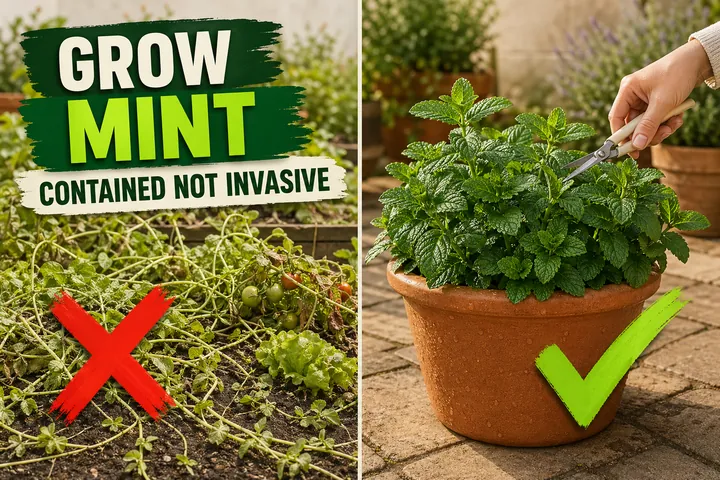
- How to grow mint — another vigorous edible that thrives in pots with consistent moisture and regular harvesting.
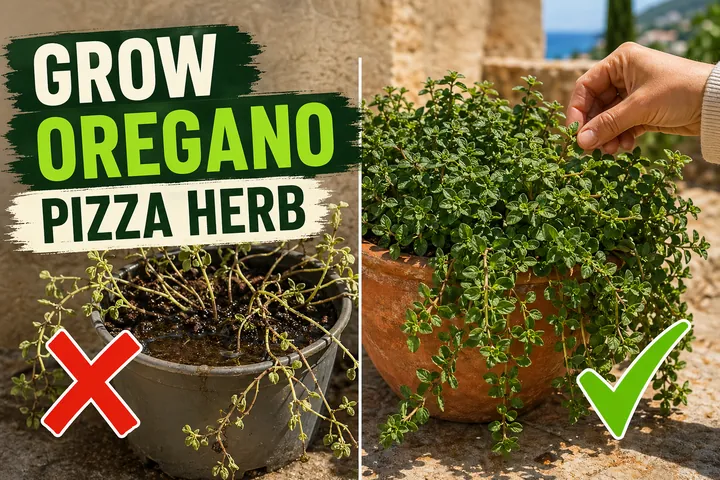
- How to grow oregano — drought-tolerant Mediterranean herb that pairs well with lemongrass in a sunny herb collection.
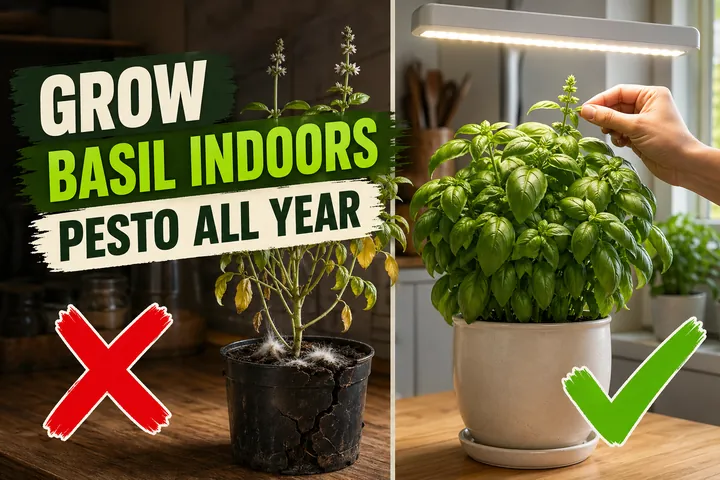
- How to grow basil indoors — basil and lemongrass share a love of warmth and full sun; this guide covers indoor growing through all seasons.
- Track every newly propagated plant’s watering schedule in one place with the free Tazart plant care app — it adjusts the reminder frequency based on your local weather and pot size.
A note on conditions
Every kitchen, windowsill, and climate is different. Node quality varies between stalk batches. Water temperature, light intensity, and ambient humidity all affect rooting speed. The 14–21 day window is a reliable average — some stalks root in 7 days, others take 28. Use the water clarity and firmness of the base as your daily signal, not just the calendar.
Highly recommended
The supplies that make this guide work


Tazart is an Amazon Associate — we earn from qualifying purchases at no extra cost to you. Thank you for helping us keep these guides free.
Frequently asked questions
How long does lemongrass take to root in water?
Most stalks with an intact base node show first white roots in 7 to 10 days. By 14 days the roots are long enough to see clearly; by 14–21 days they're 5–8 cm (2–3 in) long with side branches and ready to pot up in soil. Warmer rooms — 22–27°C (72–80°F) — and bright indirect light speed it up noticeably. Cool, dim spots can stretch the timeline to 3 weeks or more.
Can you grow lemongrass from a store-bought stalk?
Yes, reliably — as long as the stalk still has its base node (the swollen, slightly pale-green or yellowish bulb at the bottom). That node is where every root emerges. If the base was cut completely flat or is slimy and decomposing, the stalk cannot root. Look for stalks where the base is firm, intact, and tapered rather than shaved flat. Asian grocery stores usually have better node retention than large supermarkets.
How do you divide lemongrass clumps?
Dig up the whole clump in early spring, then use a sharp spade, pruning saw, or hori-hori knife to slice through the root mass. Each division needs at least 3–5 stalks attached to a visible root crown. Trim the top leaves to 15–20 cm (6–8 in) to reduce water stress on the newly cut roots. Replant each division immediately at the same depth it was growing before, water deeply, and keep the soil consistently moist for the first 2–3 weeks.
Why is my lemongrass stalk rotting in water?
The most common reasons are: (1) the stalk was trimmed so short that no node remains, (2) water wasn't changed for more than 3–4 days and bacteria built up, (3) the stalk was fully submerged — only the bottom 2–3 cm (1 in) should be in water, or (4) the room is too cold (below 18°C / 65°F). If the base turns slimy and brown above the waterline, the stalk is gone — start fresh. Change water every 3–5 days to prevent it.
When should I transplant lemongrass from water to soil?
Transplant once the white roots are 5–10 cm (2–4 in) long with visible side branching — usually 14–21 days after placing in water. Roots shorter than 3 cm (1 in) struggle to establish in soil. Roots longer than 15 cm (6 in) are fragile and easily damaged during transplanting, which causes stall. At 5–10 cm (2–4 in) the roots are flexible enough to handle without breaking.
Can lemongrass be grown from seed?
Yes, but it's slow and less reliable than stalk propagation or division. Seeds need 18–24°C (65–75°F) soil temperature and take 14–21 days to germinate. Seedlings grow slowly — expect 3–4 months before a transplant-ready plant. Seeds are also rarely available at garden centres; you'll usually need an online specialist herb seed supplier. For a single plant or two, store-bought stalk propagation is far faster and more practical.
What is the best pot size for newly propagated lemongrass?
Start rooted stalks in a 20–25 cm (8–10 in) pot filled with a well-draining potting mix (add 20–30% perlite by volume). Lemongrass grows fast — a pot that's too small will stunt it within the first season. Outdoors in warm climates, plant directly in the ground with 60–90 cm (24–36 in) spacing between plants. Each mature clump can reach 1–1.5 m (3–5 ft) tall.
How much light does newly propagated lemongrass need?
Newly propagated lemongrass needs at least 6 hours of direct sun per day to establish well. Indoors, place pots in a south- or west-facing window, or under a full-spectrum grow light on a 14-hour timer. Insufficient light is the main reason indoor-propagated plants stall after transplanting — the grass goes dormant rather than growing new shoots.