Flowers
How to Propagate Azaleas (Semi-Hardwood Cuttings That Root)
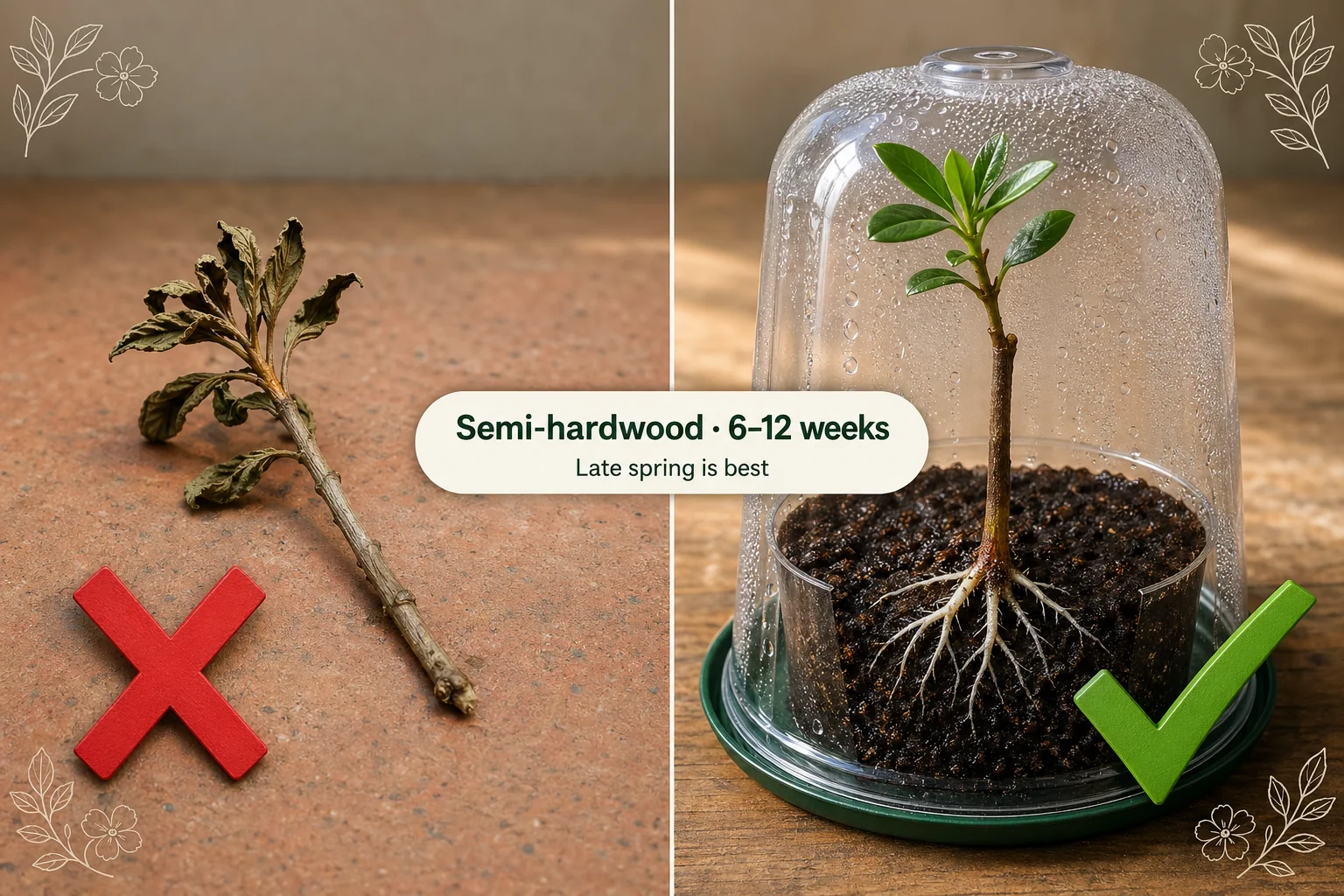
Propagate azaleas from semi-hardwood cuttings in late spring — wound the base, dip in rooting hormone, and root in acidic mix under a humidity dome in 6–12 weeks.
On this page
- Quick answer
- Semi-hardwood vs softwood — which method to use
- Selecting the right stem
- Wounding the base lightly
- Rooting hormone application
- Acidic rooting medium — the detail most guides miss
- Humidity tent — non-negotiable for success
- Transplanting rooted cuttings
- Ground layering — the low-effort alternative
- Seed — only for species azaleas
- Common mistakes
- Troubleshooting
- Related reading
- A note on conditions
- Rooting speed varies with temperature, the exact growth stage when you took the cutting, and the particular cultivar. Deciduous azaleas (such as Knap Hill and Exbury hybrids) can be slower to root than evergreen Japanese types. If your first batch takes the full 12 weeks, that is normal — not a failure. Adjust your timing one week earlier next season and the results typically improve.
Watch the visual walkthrough
How to Grow Azaleas from Cuttings | Propagating Rooted Cuttings of Azalea Plants
It's finally time to do a video about rooting azalea cuttings. I'm going to show you how to grow azaleas from cuttings and what to do ...
Azaleas can be propagated reliably from stem cuttings — but only if you hit the right window and control two things most gardeners skip: the rooting medium pH and the humidity. Get those right and you can turn one healthy azalea into a dozen new plants over a single summer.
This guide covers every method — semi-hardwood cuttings (the most reliable), softwood cuttings, ground layering, and seed — with exact timing, medium recipes, and troubleshooting for the most common failures.
Quick answer
Take 10–15 cm (4–6 in) semi-hardwood tip cuttings in late spring or early summer, just after flowering. Strip the lower leaves, wound the base lightly with a knife, dip in IBA rooting hormone gel, and insert into a 50:50 mix of perlite and ericaceous compost (pH 4.5–5.5). Cover with a clear humidity dome. Roots form in 6 to 12 weeks at 18–24°C (65–75°F) in bright indirect light.
Semi-hardwood vs softwood — which method to use
The most important decision in azalea propagation is when you take the cutting, because it determines which type of stem you’re working with and how forgiving the process will be.
Semi-hardwood cuttings (late spring to early summer) — recommended
Semi-hardwood is the sweet spot. The current season’s growth has firmed up just enough to hold moisture through the long rooting period, but the tissue is still juvenile enough to form roots readily.
Practical timing: aim for roughly 4 to 6 weeks after the last flower fades. In the UK this is usually May to July; in the warmer US Southeast, April to June. Press your thumbnail into the stem — it should bend slightly without snapping and resist a little. That slight resistance is the “semi-hardwood” feel.
Success rate with good conditions: 60–80%.
Softwood cuttings (early spring) — secondary option
Softwood — taken from the tender new growth just as it emerges — roots faster when it works, but it wilts almost instantly after cutting and needs even more careful humidity control. It is worth trying if you’ve missed the semi-hardwood window or want an early start, but expect more failures.
Success rate without perfect humidity: 30–50%.
Hardwood cuttings (autumn/winter) — not recommended for azaleas
Azaleas rarely root from fully hardened autumn wood. Unlike roses or currants, they lack the ready callus response of deciduous hardwood shrubs. Skip this window entirely.
Selecting the right stem
Not every stem on the plant is suitable. Choose growth that:
- Comes from this year’s new shoots, not old woody branches
- Has 3 to 5 small healthy leaves near the tip — not flowers, not buds
- Is free from pest damage, powdery mildew, or mechanical injury
- Measures 10–15 cm (4–6 in) from tip to cut point
Avoid stems that have already flowered (they put energy into seed rather than roots) and the thickest, most woody shoots at the base of the plant. The ideal cutting is a pencil-thickness tip shoot.
Cut in the early morning when the plant is fully turgid — stems with good water content root faster and collapse less.
Wounding the base lightly
This step is skipped by most beginners and makes a measurable difference.
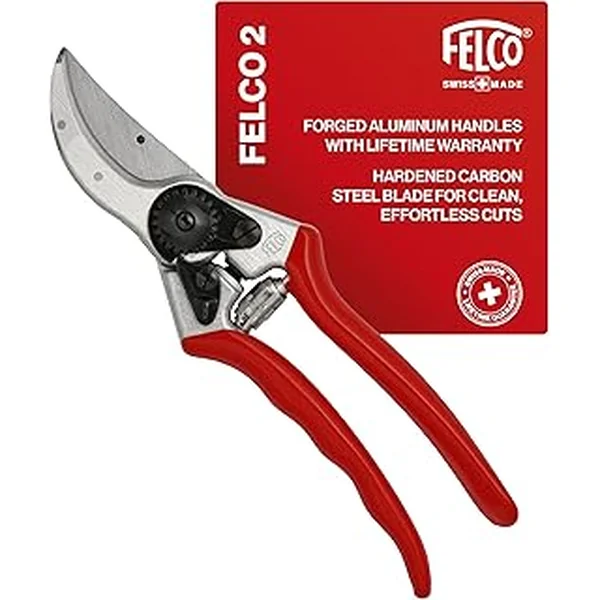
After cutting, use the tip of a clean knife to scrape two shallow wounds on opposite sides of the base of the stem — about 2–3 cm (1 in) long, just deep enough to reveal the pale green cambium layer under the bark. Do not slice deeply into the white wood beneath.
Why it works: azalea stems have a tough bark layer that limits contact between the rooting hormone and the active tissue. Wounding exposes the cambium, where cells are actively dividing, and dramatically increases the surface area that the hormone can penetrate. Studies on Ericaceae propagation consistently show wounded-and-hormone-treated cuttings outperforming either technique alone.
Rooting hormone application
Rooting hormone is optional but strongly recommended for azaleas.
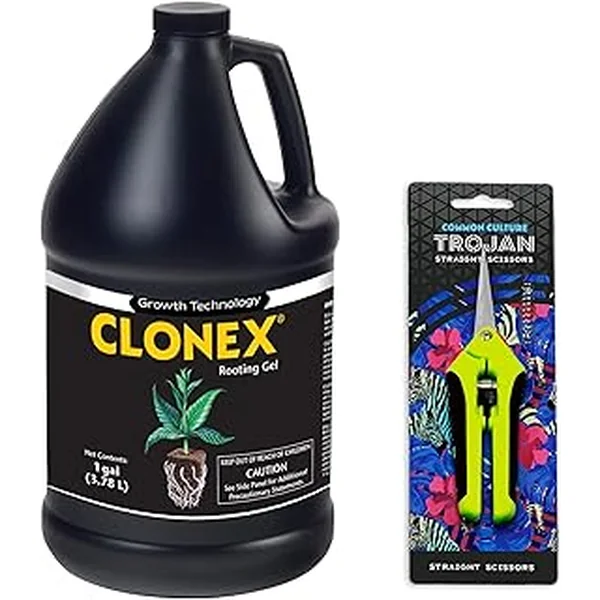
Azaleas are slow rooters compared with most popular houseplants. Without hormone, even a well-timed semi-hardwood cutting can sit for 10 to 12 weeks before showing roots. With IBA (indole-3-butyric acid) gel at 3,000–8,000 ppm, many cuttings root at the 6 to 8 week mark instead.
Gel vs powder: Gel is superior for woody stems because it adheres to the wounded surface and stays in contact as the cutting is inserted into the medium. Powder tends to fall off in the planting hole. If you only have powder, wet the stem tip very lightly before dipping.
How to apply:
- Pour a small amount of gel into a separate container — never dip directly into the stock jar (contamination kills the whole bottle).
- Dip the bottom 2 cm (0.75 in) of the wounded stem into the gel.
- Coat the scraped areas evenly.
- Insert into the medium immediately — do not let the hormone-coated tip dry out or touch other surfaces.
Acidic rooting medium — the detail most guides miss
Standard potting compost will kill your cuttings before they root. Azaleas are Ericaceae — the roots cannot absorb nutrients (or initiate rooting callus efficiently) at neutral or alkaline pH.
Target pH: 4.5 to 5.5.
The most reliable mix:
| Component | Proportion | Role |
|---|---|---|
| Coarse perlite | 50% | Drainage, aeration, prevents waterlogging |
| Ericaceous compost | 50% | Correct pH, light nutrient buffer |
Do not use:
- Multipurpose or general-purpose compost (pH 6.5–7.0)
- Garden soil (compacts, wrong pH, pathogens)
- Pure peat (increasingly restricted; retains too much water)
- Pure coir (too water-retentive alone, can become anaerobic)
Moisten the mix before use — it should feel like a wrung-out sponge, damp throughout but with no water dripping when squeezed. A dibber or pencil makes the planting hole to avoid smearing the rooting hormone off the stem as you push it in.
Humidity tent — non-negotiable for success
Azalea cuttings have no roots. No roots means no way to replace water lost through the leaves. Left in open air, even a healthy semi-hardwood cutting wilts and dies within 24 to 48 hours.
The solution is a humidity tent — any enclosure that keeps relative humidity near 100% around the cutting while still allowing gas exchange.
Options:
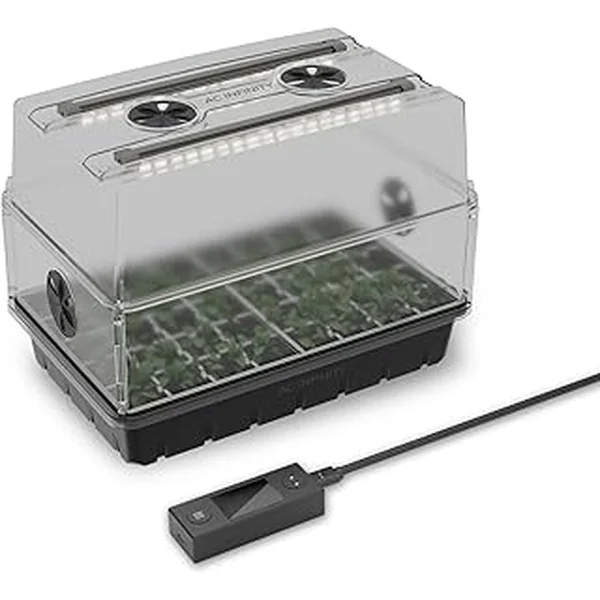
- Propagation tray with tall clear vented dome — the best option. Vents let you control the humidity reduction rate as cuttings approach rooting.
- Clear plastic bag over a pot — effective and free. Use short bamboo sticks or a wire hoop to stop the bag touching the leaves (leaf contact = rot).
- Mini unheated propagator — works well; check that the lid seals tightly.
Dome management over the 6–12 week period:
- Weeks 1–4: Keep the dome fully closed. No ventilation. Mist the inside lightly every 4 to 5 days if condensation drops below a visible layer on the walls.
- Week 5–6: Open vents for 1 to 2 hours per day. Gradual humidity reduction prevents transplant shock when you eventually remove the dome.
- Week 7+: If the cutting shows no signs of wilt when vented, remove the dome for progressively longer periods. A cutting that stands firm with the dome off has likely rooted.
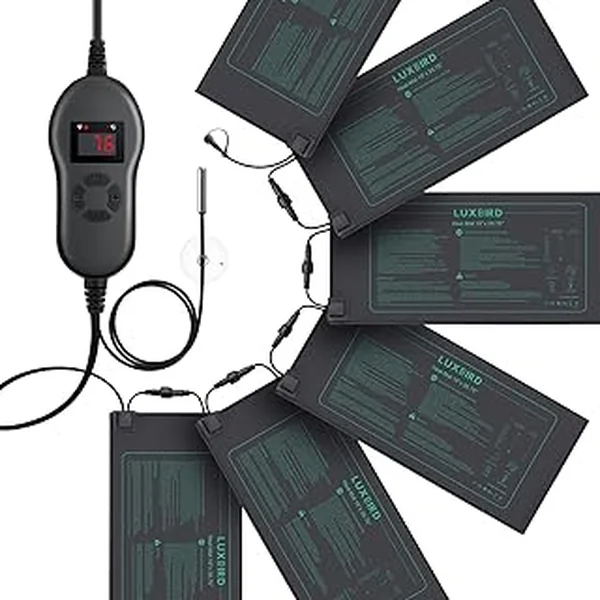
Temperature: 18–24°C (65–75°F) at the rooting zone. A seedling heat mat set to 21°C (70°F) accelerates rooting significantly, especially if propagating in a cool garage or greenhouse in spring.
Transplanting rooted cuttings
Do not transplant by the calendar — transplant by root evidence.
How to check for roots without uprooting:
- After 6 weeks, tug the cutting very gently (no more than 1–2 cm / 0.5 in of lift). Resistance means roots are anchoring into the medium.
- Alternatively, look for new leaf growth at the tip — metabolic activity in the leaves means the cutting has a functioning root system.
- If unsure, wait another 2 weeks. Premature transplanting is a leading cause of late failure.
Potting up:
- Fill a 9–10 cm (3.5–4 in) pot with fresh ericaceous compost.
- Tip the rooted cutting out gently — the perlite/compost ball should hold together.
- Plant at the same depth, firm lightly, water in with plain water (rainwater preferred).
- Keep in bright indirect light for 2 weeks while roots adjust; no fertilizer for the first 4 weeks.
Ground layering — the low-effort alternative
Ground layering suits established outdoor azaleas where you have a low, flexible stem that reaches the ground.
How to layer:
- In late spring, identify a young, flexible stem that can be bent to the ground without snapping.
- At the point where it will touch the soil — roughly 30 cm (12 in) from the tip — make a shallow 3–5 cm (1–2 in) tongue cut through the underside of the stem, going about one-third of the way through. Keep it open with a matchstick or small pebble.
- Dust the cut surface with rooting hormone powder.
- Pin the wounded section into a shallow depression in the soil using a bent wire peg.
- Mound 8–10 cm (3–4 in) of moist ericaceous compost over the pinned section.
- Water the mound regularly; keep it from drying out.
Roots form in 8 to 16 weeks. Once you feel resistance when you tug the tip, sever the layered stem from the parent plant close to the mound. Leave it in place for another 2 to 3 weeks before digging up and potting into ericaceous compost.
Seed — only for species azaleas
Growing azaleas from seed is possible but rarely practical for garden use.
- Hybrid cultivars (the majority of garden azaleas) do not come true from seed — seedlings will be genetically different from the parent.
- Seeds are tiny and need light to germinate — sow on the surface of moist ericaceous seed compost, do not cover.
- Germination takes 4 to 8 weeks at 18–21°C (65–70°F).
- Seedlings take 3 to 5 years to reach flowering size.
Reserve this method for species azaleas (such as Rhododendron luteum or Rhododendron calendulaceum) where you want genetic diversity, or for plant breeding. For garden propagation, always use cuttings or layering.
Common mistakes
- Taking cuttings from fully hardened summer or autumn wood. This is the most frequent failure. Hard wood has virtually no rooting capacity in azaleas. Stick to late spring semi-hardwood.
- Skipping the humidity dome. Even one day without humidity control and the cutting wilts past recovery. The dome is not optional.
- Using alkaline potting compost. Standard compost at pH 6.5–7.0 inhibits root initiation in Ericaceae. Always use ericaceous mix.
- Overwatering the medium. Moist and well-draining is the target. Saturated mix = stem rot within a week.
- Tug-testing too early. Testing before 6 weeks risks snapping young roots. Wait.
- Placing the dome in direct sun. Sun through a clear dome cooks the cuttings. Bright indirect light only.
- Cutting stems that have already flowered. Post-flower stems prioritise seed production, not vegetative growth. Take cuttings from non-flowering shoots.
Troubleshooting
| Symptom | Likely cause | Fix |
|---|---|---|
| Cutting wilts and collapses within 48 hours | No humidity dome, or dome gap letting air in | Seal the dome; mist the inside to restore humidity |
| Stem turns black/mushy at the base | Overwatered medium, or stem rot from a fungal pathogen | Allow medium to dry slightly; remove affected cutting; treat others with a light copper fungicide drench |
| No roots after 12 weeks | Wrong cutting stage (too woody), wrong pH medium, or too cold | Take fresh cuttings in correct window; switch to ericaceous mix; add a heat mat |
| Leaves drop but stem stays green | Normal stress response if dome is in place and stem is firm | Wait — leaf drop without stem collapse often precedes root emergence |
| New leaf growth at the tip | Cutting has rooted | Begin dome ventilation; pot up within 2 weeks |
| White fuzzy mould on leaves or medium surface | High humidity + poor airflow | Open vents briefly each day; remove affected leaves; reduce misting frequency |
| Roots visible but cutting wilts after transplanting | Transplanted before roots were established, or transplant shock | Tent loosely with clear plastic for 7 days after transplanting to ease transition |
Related reading
- Azalea plant care guide — once your cuttings are rooted and growing on, this is the full long-term care playbook: soil pH, watering with rainwater, ericaceous feeding, and pruning timing.
- How to plant hydrangeas in the ground — another acid-tolerant flowering shrub; the soil prep and spacing principles complement azalea planting well.
- How to plant a rose bush — if you’re building out a flowering shrub border alongside your azaleas, the planting depth and soil amendment steps here apply directly.
Track your propagation schedule — dome check dates, week-6 tug-test reminder, and potting-up window — with the free Tazart plant care app. Set a recurring check every 5 days so the medium never dries out during the critical first 6 weeks.
A note on conditions
Rooting speed varies with temperature, the exact growth stage when you took the cutting, and the particular cultivar. Deciduous azaleas (such as Knap Hill and Exbury hybrids) can be slower to root than evergreen Japanese types. If your first batch takes the full 12 weeks, that is normal — not a failure. Adjust your timing one week earlier next season and the results typically improve.
Highly recommended
The supplies that make this guide work
Tazart is an Amazon Associate — we earn from qualifying purchases at no extra cost to you. Thank you for helping us keep these guides free.
Frequently asked questions
When is the best time to take azalea cuttings?
Late spring to early summer — just after flowering finishes — is the best window for semi-hardwood cuttings. The current season's growth has firmed up slightly but has not yet fully hardened into woody tissue. In practical terms this means roughly May to July in the UK and Northern Europe, or April to June in warmer US zones. Softwood cuttings taken in early spring (before firming) root less reliably and need more careful humidity management.
Do azalea cuttings need rooting hormone?
Not strictly required, but strongly recommended. Azaleas are notoriously slow to initiate roots compared with easier plants like pothos or spider plants, and rooting hormone — especially an IBA gel formulation — can reduce the time to first roots by 2 to 4 weeks. Gel products outperform powders on woody stems because they make better contact with the wounded surface. Without hormone, expect the upper end of the 6–12 week window; with hormone, the lower end.
How long do azalea cuttings take to root?
Typically 6 to 12 weeks under good conditions: humidity dome in place, rooting medium kept moist but not wet, temperatures around 18–24°C (65–75°F), bright indirect light. Semi-hardwood cuttings taken in late spring are the fastest; softwood cuttings can be quicker but more prone to collapse. Don't tug-test before 6 weeks — disturbing the cutting before roots have anchored causes more failures than anything else.
What rooting medium is best for azalea cuttings?
A mix that is free-draining, low in nutrients, and mildly acidic — pH 4.5 to 5.5. The most reliable recipe is 50% perlite and 50% ericaceous (acidic) potting compost. Straight peat works but is increasingly restricted; coir alone retains too much water. Avoid standard multipurpose compost (pH 6.5–7.0) — even a short stint in alkaline medium slows root initiation on Ericaceae.
Can you propagate azaleas by layering?
Yes — ground layering is an excellent method for established garden azaleas, especially if you want a rooted plant with no fuss. In late spring, bend a low flexible stem to the ground, wound the underside lightly with a knife, dust with rooting hormone, pin the wounded section into the soil with a wire peg, and mound moist ericaceous compost over it. Keep the mound watered. Roots form in 8 to 16 weeks; sever from the parent plant once well rooted and pot up.
Why are my azalea cuttings not rooting?
The four most common causes: (1) Cuttings taken at the wrong time — fully mature summer or autumn wood roots very poorly; stick to late spring semi-hardwood. (2) No humidity dome — azalea cuttings have no roots to draw up water and will desiccate in open air within days. (3) Wrong rooting medium — alkaline multipurpose compost inhibits Ericaceae root initiation. (4) Overwatering — the medium must stay moist, not waterlogged; saturated perlite/compost causes stem rot before roots form.
Can azaleas be grown from seed?
Yes, but it is the slowest method by far and only worth attempting for species azaleas or breeding experiments. Hybrid cultivars do not come true from seed. Azalea seeds require light to germinate (sow on the surface, do not cover), need a cool period first in some species, and take 1–2 months to germinate followed by several years of growth before flowering. For garden-use purposes, cuttings or layering are always the better choice.