Houseplants
How to Propagate Aloe Vera (Pups, Not Leaf Cuttings)
Learn the real way to propagate aloe vera from cuttings — hint: it's pups, not leaves. Leaf cuttings rot. Here's the step-by-step pup division and seed method that
On this page
Watch the visual walkthrough
How To Plant Aloe vera from Leaf Cuttings
This video will show you how to plant Aloe vera leaf cuttings the right way. If you are new to this channel, please don't forget to ...
If you searched “how to propagate aloe vera from cuttings,” you’ve already run into the same advice repeated across hundreds of gardening blogs: stick a leaf in soil, wait, get a new plant. That advice is wrong for aloe, and following it costs you months of waiting for a cutting that will simply rot.
This guide tells you what actually works — and why the leaf-cutting method that succeeds with jade, echeveria, and other succulents fails specifically with aloe every time.
Quick answer
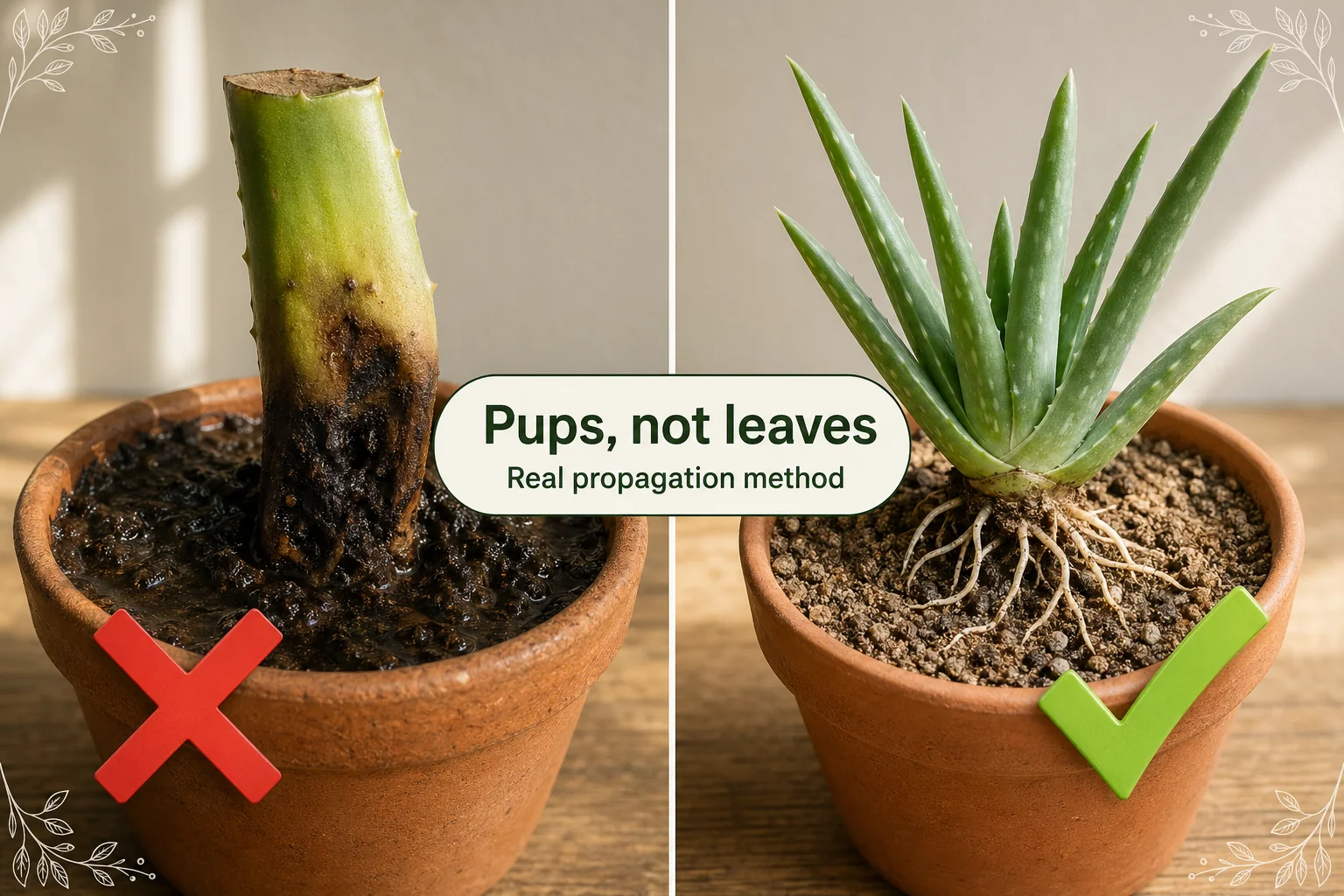
Aloe vera propagates reliably from pups (offsets) — small baby aloe plants that emerge at the base of a mature mother plant. Seeds also work but take 6–12 months. Leaf cuttings do not propagate aloe vera. A detached aloe leaf will rot before any roots form.
If your aloe hasn’t produced pups yet, the fix is almost always more direct light. Strong sun is what triggers offset production.
The leaf-cutting myth — and why it fails
Most popular succulents — jade (Crassula ovata), echeveria, sedum, haworthia — can produce new plants from a single detached leaf. You’ve probably seen the photos: a leaf laid flat on dry cactus mix, and a tiny rosette pushing out from the base weeks later.
That works because those plants have meristem tissue distributed throughout their leaf base — cells capable of differentiating into roots and new shoots.
Aloe vera (Aloe barbadensis) does not work this way. An aloe leaf stores gel, water, and carbohydrates, but it does not carry the tissue architecture needed to generate a new plant. When you detach a leaf and place it in soil, one of two things happens:
- The cut end rots before any callus can form, and the rot travels up the leaf within 1–3 weeks.
- The cut end calluses, the leaf survives for a few more weeks drawing down its moisture reserves — and then dies, having produced no roots whatsoever.
This isn’t a technique problem. No amount of rooting hormone, well-draining soil, or humidity adjustment changes the biology. The meristem tissue simply isn’t there.
The confusion happens because “succulent leaf propagation” is taught as a universal rule when it only applies to specific genera. Aloe vera is an exception.
Where new aloe plants actually come from: pups
A mature aloe vera plant produces offsets — called pups — from its base. These are genetically identical baby aloe plants that share the mother’s root system until separated.
Pup production is one of the clearest signs a plant is genuinely thriving. If your aloe is in strong direct light, slightly root-bound, and on a proper dry-out watering cycle, it will push pups reliably once it’s 2–3 years old.
How to identify a ready-to-separate pup
A pup is ready to separate when it:
- Is at least 10 cm (4 in) tall
- Has at least 4–6 leaves of its own
- Has some visible separation from the mother’s main stem base
Smaller pups can be separated in an emergency (root damage to the mother plant, repotting) but they have limited reserves and a lower survival rate. Patience here pays off.
Step-by-step: separating aloe pups
1. Unpot the mother plant
Water the mother plant 24 hours before you plan to separate pups — this softens the root ball and makes it easier to tease apart without breaking roots. Then tip the pot and gently slide the whole plant out.
2. Expose the connection point
Brush soil away from the base of each pup until you can see how it connects to the mother plant. Some pups attach at the crown; others connect via a short underground stem a few centimetres below the surface.
3. Cut cleanly with a sterilised blade
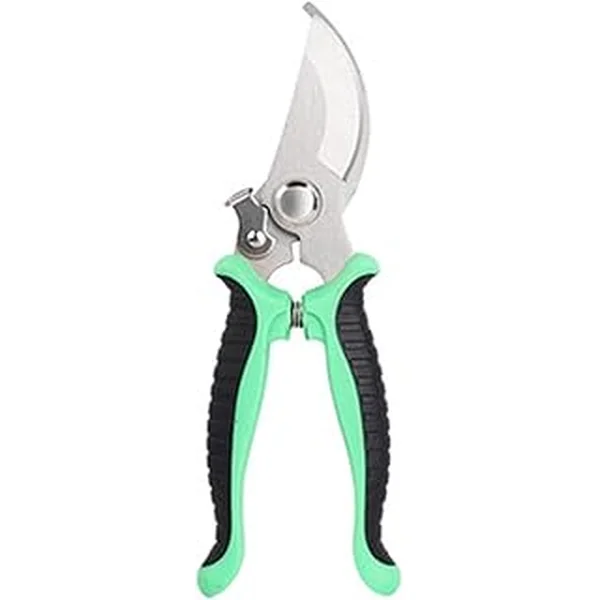
Use a sharp knife or bypass pruning shears wiped with rubbing alcohol. Sever the pup from the mother in one confident cut, keeping as much of the pup’s own root system intact as possible.
If the pup has no roots of its own yet, that’s fine — it will grow them once potted.
4. Callus for 48–72 hours
This is the step most guides skip, and it’s the difference between a pup that roots and one that rots.
Set the pup (and the mother plant, which also has a fresh wound) in a shaded, dry spot — not in soil — for two to three days. The cut surface will dry out and harden into a callus. The wound closes. Only then is the plant ready for soil.
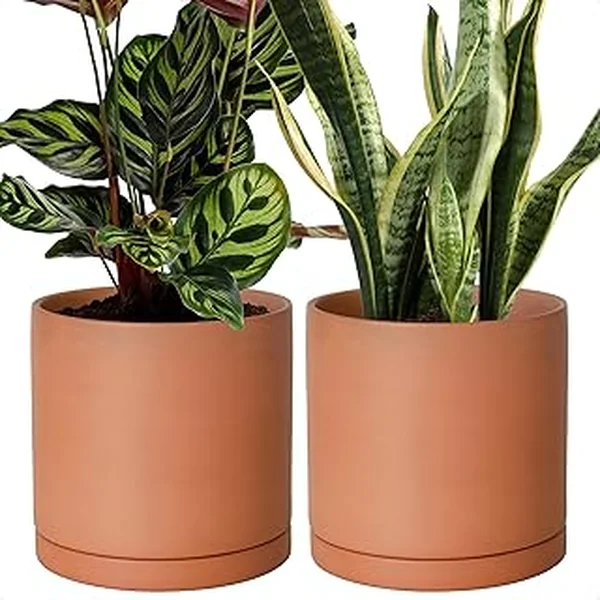
5. Plant in dry cactus mix in a terracotta pot
Fill a small terracotta pot — just large enough to hold the root system with 2–3 cm of clearance — with dry cactus and succulent mix. Plant the pup so the base sits at soil level.
Do not water for the first 7 days. The pup needs to sense dryness and push roots outward in search of moisture. Wet soil at this stage rots the fresh cut.
6. Establish in bright indirect light
Keep the new pup in bright indirect light — not direct sun — for the first two weeks. Direct sun too early stresses a plant that can’t yet replace moisture through transpiration. After two weeks, move it to the same bright direct sun you’d give the mother.
7. Begin normal watering once rooted
After 2–3 weeks, give the pup a gentle tug. If it resists, it has anchored. Begin the standard aloe watering rhythm: soak the soil deeply, then let it dry out completely before watering again — typically every 2–3 weeks indoors.
The callus step for the mother plant too
Don’t neglect the mother. After you remove pups, the mother plant has one or more fresh wounds at its crown or root zone. Let it sit unpotted in a shaded dry spot for the same 48–72 hour callus period, then repot in fresh cactus mix. Hold off watering the mother for a week as well.
Soil and pot: the non-negotiables
The same rules that apply to aloe care apply to new pups, but with even less margin for error:
- Soil: dry cactus and succulent mix, or a 50/50 blend of regular potting mix and perlite. No regular potting soil — it holds too much water for a plant with a fresh wound.
- Pot: terracotta. Porous walls wick moisture out between waterings. A glazed ceramic or plastic pot requires even more careful watering restraint.
- Drainage holes: non-negotiable. A pot without drainage will rot a new pup within one watering.
- Pot size: slightly snug. An oversized pot holds excess soil moisture that a small new root system can’t dry out fast enough.
Propagating from seed
Seeds are the second reliable propagation method — slower, but useful if you want a large number of plants or want to try breeding crosses.
Aloe vera seed germinates in 2–4 weeks at 21–27°C (70–80°F). Here’s how:
- Fill a shallow tray with well-draining seedling mix or fine cactus mix.
- Sow seeds on the surface and barely cover with a thin layer of perlite or fine sand — aloe seeds need light to germinate.
- Mist gently to dampen the surface without soaking.
- Cover with a humidity dome or cling film until germination, then remove.
- Keep in bright indirect light and mist every few days to keep the surface barely moist.
Seedlings are slow. Expect 6–12 months before they’re large enough to pot up individually into their own containers. Because commercial aloe seed quality varies widely, buy from a reputable seed supplier and check the harvest year — old seed has poor germination rates.
Common mistakes
- Trying to root a leaf cutting. The biology doesn’t support it. The leaf will rot. Skip it entirely.
- Separating pups too early. A pup under 10 cm with fewer than 4 leaves has low reserves. Give it another month on the mother.
- Skipping the callus step. A fresh, wet cut placed directly into soil rots before it can form roots. Two to three days of air-drying is not optional.
- Watering too soon after potting. Even if the soil looks bone dry, hold off for a week. The pup needs to push roots outward; wet soil at planting removes that incentive and introduces rot risk.
- Using regular potting soil. It holds too much water. Always use cactus mix or a perlite-heavy blend.
- Potting in too large a container. Excess soil stays wet too long around a small new root system.
- Keeping the pup in low light. Bright indirect light for the first two weeks, then full direct sun. A pup in dim conditions roots slowly and often stalls entirely.
Related reading
- How to care for an aloe vera plant — the light, watering, and soil basics that keep your mother plant producing pups consistently.
- How often to water an aloe vera plant — the soak-and-dry watering schedule that keeps both mother plants and new pups thriving.
- How to take care of a succulent plant — the wider rules that apply to all succulents, including aloe pups once they’re established.
- How to propagate a jade plant — jade is a succulent that does root from leaf cuttings, so you can see exactly why the technique works there and not in aloe.
- Track your new pup’s watering schedule in the free Tazart plant care app — it adjusts the dry-out reminder to your room temperature and season, which matters most in the first few months after separation.
A note on conditions
Room temperature, pot material, soil mix, and the time of year all affect how quickly aloe pups callus and root. The timelines above — 48–72 hours callus, 7 days before first watering, 2–3 weeks to anchor — are guidelines for typical indoor conditions at 18–24°C (64–75°F). A cooler room or more humid climate will slow things down; a warmer room will speed them up. What doesn’t change: the callus step, the dry soil requirement, and the fact that leaf cuttings simply don’t work.
Highly recommended
The supplies that make this guide work
Tazart is an Amazon Associate — we earn from qualifying purchases at no extra cost to you. Thank you for helping us keep these guides free.
Frequently asked questions
Can you propagate aloe vera from a leaf cutting?
No — not reliably. Aloe vera leaves lack the vascular architecture that lets succulents like jade root from a leaf. When you stick an aloe leaf in soil, it draws down its moisture reserves for a few weeks and then rots from the cut end inward. Very rarely a thick, healthy leaf will callus without rotting, but no new plant ever forms from the leaf itself because the meristem tissue needed to produce roots and shoots simply isn't present there. The method you've read about works for jade (Crassula ovata) but not for aloe.
How do you propagate aloe vera?
The two methods that reliably work are pup (offset) division and seeds. Pups are the small aloe plants that push up at the base of a mature mother plant — once they are at least 10 cm (4 in) tall and have 4–6 leaves of their own, you can separate them with a clean knife, let the cut surface callus for 2–3 days, and pot them up in dry cactus mix. Seeds are slower (6–12 months to a transplant-ready seedling) and require fresh seed, but they work well if you want a large number of new plants.
How do I separate aloe vera pups from the mother plant?
Unpot the mother plant and brush away soil until you can see where the pup's stem connects to the parent. Use a clean, sharp knife or pruning shears to cut the pup away from the mother, keeping as much of the pup's own root system intact as possible. If the pup has no roots yet, that's fine — it will grow them once potted. Let the cut surfaces on both plants dry in a shaded spot for 48–72 hours before repotting.
How long do aloe vera pups take to root?
Pups that already have their own roots when separated establish in a new pot within 2–4 weeks. Rootless pups take 4–8 weeks to push out their first roots in dry cactus mix. Either way, don't water for the first week after potting — the pup needs to seek moisture downward, and a wet pot will rot the fresh cut.
Why is my aloe vera cutting rotting?
If you tried a leaf cutting, rotting is the expected outcome — aloe leaf tissue does not have the meristem cells needed to produce roots, so the leaf simply exhausts its water reserves and breaks down. If you're propagating a pup and it's rotting, the cut was not allowed to callus before planting, or the soil is too wet. Pull it, cut back to firm tissue, let it air-dry in shade for 3 days, and replant in fresh dry cactus mix.
Can aloe vera be grown from seed?
Yes. Aloe vera seed germinates in 2–4 weeks at 21–27°C (70–80°F) in barely moist, well-draining seedling mix. Sow seeds on the surface and barely cover with a thin layer of perlite or fine sand. Keep in bright indirect light and mist gently every few days until germination. Seedlings are slow — expect 6–12 months before they're large enough to pot up individually. Because commercial aloe seed is sometimes old or mislabeled, buying fresh seed from a reputable source matters.
When does aloe vera produce pups?
A healthy, mature aloe that is receiving strong direct light, proper watering, and is slightly root-bound will typically push pups within its first 2–3 years. If your aloe has never produced pups, the most common reasons are insufficient light (bright indirect light keeps it alive but doesn't trigger offset production), a pot that's too large (roots need to be snug), or inconsistent watering. A slight root stress — being slightly pot-bound — is actually what encourages pup production most reliably.