Flowers
How to Plant Wildflower Seeds (For a Meadow That Actually Blooms)
Scatter wildflower seeds on prepared, weed-free soil, press into the surface, and water gently. Full guide: timing, site prep, seed-to-sand ratio.
On this page
- Quick answer
- Table of contents
- Why most wildflower sowings fail
- Choose the right seed: native vs generic
- When to sow: fall vs spring by zone
- How to prepare the site
- Seed-to-sand ratio for even spread
- Sowing method step by step
- Watering wildflower seeds
- What NOT to do
- Troubleshooting
- Watch: how to plant wildflower seeds
- FAQ
- Related reading
- A note on conditions
Watch the visual walkthrough
Sow Flower Seeds Outside in Fall
Starting native plants and perennial flowers is often best done outside in fall. The seeds typically require cold stratification and ...
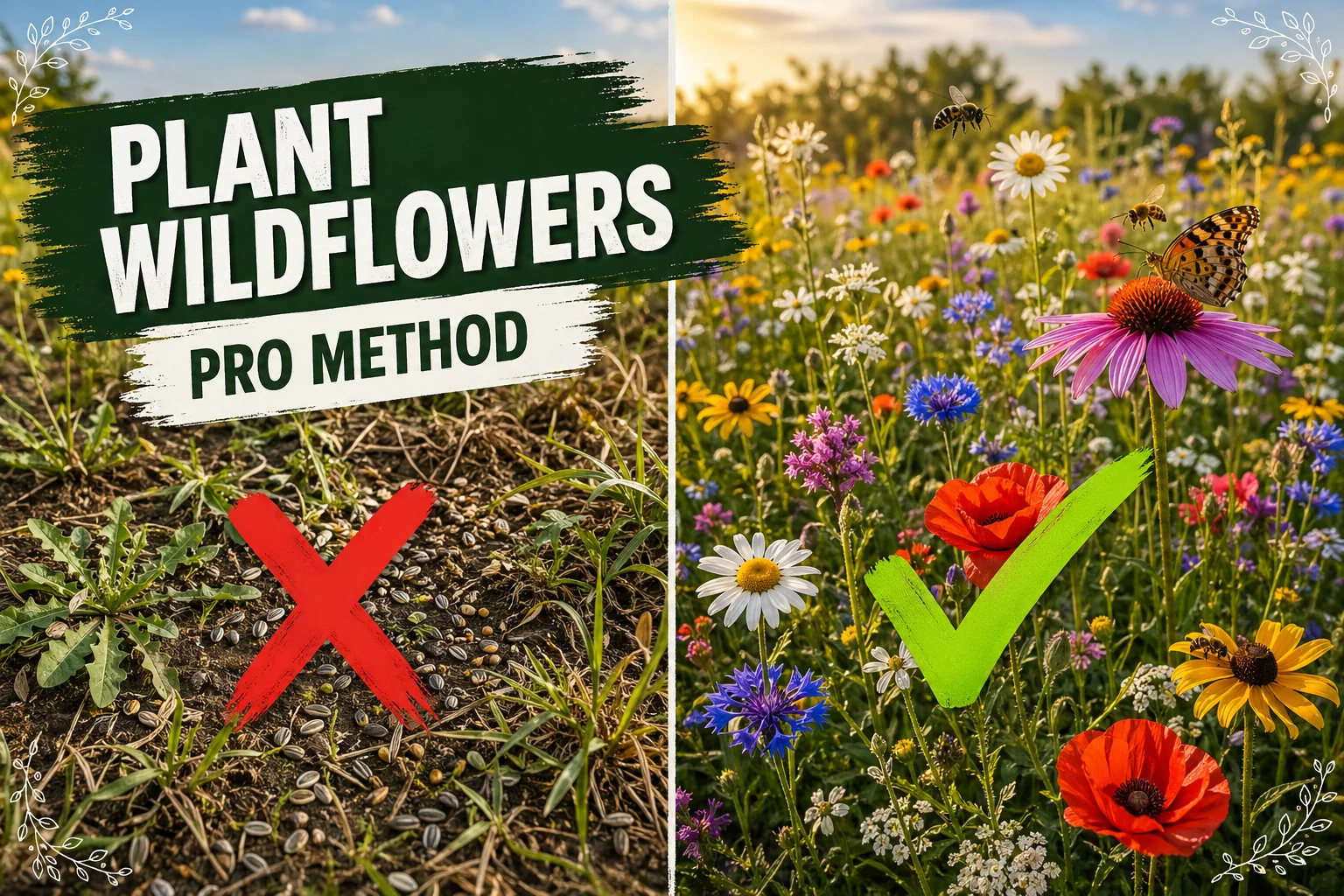
The secret to a wildflower meadow that actually blooms is embarrassingly simple: scatter seed on bare, prepared soil, press it into the surface, and keep it moist. That’s the whole method. The reason most wildflower sowings fail is not the seed — it’s skipping the site prep and scattering over existing grass or weeds.
This guide covers everything in order: when to sow, how to kill existing turf, the seed-to-sand mixing trick for even coverage, the right sowing depth (shallower than you think), and the most common mistakes that lead to a green patch of weeds instead of a meadow.
Quick answer
Prepare bare soil by removing all grass and weeds (4–6 weeks before sowing). Mix wildflower seeds with coarse sand at 1:5 ratio. Scatter at 1 g per m² (¼ oz per 10 sq ft), press into the surface without burying, and water with a fine mist. Fall sowing (September–November) or spring sowing 2 weeks before last frost are the two reliable windows. Do NOT add compost or fertilizer — wildflowers prefer low-nutrient soil.
Table of contents
- Why most wildflower sowings fail
- Choose the right seed: native vs generic
- When to sow: fall vs spring by zone
- How to prepare the site
- Seed-to-sand ratio for even spread
- Sowing method step by step
- Watering wildflower seeds
- What NOT to do
- Troubleshooting table
- FAQ
- Related reading
Why most wildflower sowings fail
Walk into any garden center in spring and you’ll find packets of “wildflower mix” seeds. Most buyers scatter them on an existing lawn or an untouched patch of ground — and then wonder why they get a few scraggly stems at best.
Here’s why it fails:
- Existing grass and weeds outcompete wildflower seedlings immediately. A wildflower seedling is tiny and slow-growing. Established grass roots are not.
- Most wildflower species need light to germinate. Seeds buried even 2 cm (¾ in) deep simply don’t sprout.
- Generic “wildflower” mixes often contain non-native annuals that bloom once, set no viable seed in your climate, and disappear. Year two the “meadow” is just weeds.
- Rich soil favors coarse weeds, not wildflowers. Adding compost and fertilizer before sowing is the opposite of what wildflowers want.
Fix those four things and your success rate jumps dramatically.
Choose the right seed: native vs generic
A regional native wildflower mix is the single biggest upgrade you can make over a generic packet.
Native species — purple coneflower (Echinacea purpurea), black-eyed Susan (Rudbeckia hirta), wild bergamot (Monarda fistulosa), lance-leaf coreopsis (Coreopsis lanceolata), blue wild indigo (Baptisia australis) — evolved in your region’s soils, rainfall patterns, and temperature swings. They:
- Establish 3–4× more reliably than imported species in their native range
- Return as perennials year after year once established
- Actively feed local pollinators — native bees, monarch butterflies, and hummingbirds rely specifically on native species
- Outcompete weeds once established because they’re matched to local conditions
The Xerces Society and USDA NRCS both publish regional plant lists for pollinators — use these as your shopping guide when selecting a seed mix.
If your mix includes annuals (poppies, cornflowers, phacelia), these bloom the first year and fill gaps while perennials establish. A good native mix includes both.
When to sow: fall vs spring by zone
Fall sowing (September – November) — the preferred method
Fall is the professional’s choice for most of North America and the UK. Here’s why: many native wildflower seeds require cold stratification — a period of cold, moist conditions — before they’ll germinate. In fall, you do that work for free by letting the seeds overwinter naturally in the soil.
Seeds sown in fall sit dormant all winter and germinate with the first warm soil in spring — often producing stronger, deeper-rooted plants than spring-sown seeds.
Timing by zone:
- USDA zones 3–5: sow September through October, before hard frost
- USDA zones 6–7: sow October through November
- USDA zones 8–10: sow November through December; mild winters still provide adequate stratification
Spring sowing — the reliable alternative
If you miss the fall window, spring sowing works well for most annual species and some perennials.
Timing by zone:
- USDA zones 3–5: sow after last frost, typically May through early June, when soil temperature reaches 10°C (50°F)
- USDA zones 6–7: mid-April through May
- USDA zones 8–10: February through March
The key spring trigger is soil temperature, not calendar date. Most wildflower seeds germinate when daytime soil temperature at 2 cm (¾ in) depth is consistently 10–15°C (50–60°F). A cheap soil thermometer takes the guesswork out of it.
Avoid mid-summer sowing. Hot, dry soil desiccates ungerminated seeds within days, and the competition from established weeds at that time of year is overwhelming.
How to prepare the site
This is the step most people skip — and it’s the most important one.
Wildflower seeds need bare soil contact to germinate. If you scatter seeds onto grass or existing weeds, the seeds rest on the vegetation, never touch soil, and either dry out or blow away. The existing plants also shade out any seedlings that do emerge.
Allow 4–6 weeks for site preparation before your target sowing date.
Option 1: Smother method (easiest, no digging)
- Mow or cut existing grass and weeds as short as possible.
- Lay overlapping sheets of plain cardboard (remove tape and staples) directly on top of the cut vegetation. Overlap edges by at least 15 cm (6 in) to prevent grass from pushing through.
- Cover cardboard with 10 cm (4 in) of wood chip mulch or straw.
- Leave for 4–6 weeks. Lift the cardboard: the vegetation underneath will be dead. The cardboard will have started to decompose. Rake the surface to expose the soil.
Option 2: Solarization (best for summer prep)
In summer months, clear plastic sheeting traps heat and kills vegetation and weed seeds in the top few centimetres of soil.
- Mow vegetation low.
- Lay 4–6 mil clear plastic sheeting over the area, weighted at the edges.
- Leave in full sun for 4–6 weeks. Soil temperature under the plastic will reach 50–60°C (122–140°F) — enough to kill most weed seeds.
- Remove plastic, rake lightly, and sow without disturbing the soil further.
Option 3: Mechanical removal
Strip turf with a flat spade, fork, or sod cutter. Remove all root material from the site. Rake to a rough tilth.
What NOT to add to the soil
Once the ground is bare, do not add compost, fertilizer, or topsoil. Wildflowers evolved in poor, low-fertility soils. High-nutrient soil tilts the competition in favor of annual weeds like chickweed, fat hen, and dock — exactly what you’re trying to get rid of. Rake lightly to break up the surface crust, and that’s all.
For compacted clay soil, a single light pass with a fork to break up the surface (without turning deeply) is acceptable. But do not bring in fresh topsoil.
If you’re linking this project to an existing composting effort, save the finished compost for your vegetable garden instead — your wildflowers will actually do better without it.
Seed-to-sand ratio for even spread
Wildflower seeds are tiny. A typical native mix contains hundreds or thousands of seeds per gram. Scattering them dry is almost impossible to do evenly — you’ll get thick clumps and bare patches.
The solution: mix seeds with dry coarse sand at a 1:5 ratio by volume.
The sand does three things:
- Gives the tiny seeds bulk so you can spread them by hand at walking pace
- The white or silver color shows up against dark soil so you can see where you’ve already sown — no double-coverage, no bare strips
- Locks in a consistent spread density without clumping
Calculating seed quantity
The standard sowing rate for most native wildflower mixes is 1 g per m² (approximately ¼–½ oz per 100 sq ft). This sounds impossibly sparse — but wildflower seeds are small, and a denser sowing creates competition between seedlings.
Example for a 10 m² (108 sq ft) meadow patch:
- Seeds needed: 10 g (⅓ oz)
- Sand to mix in: 50 g (1¾ oz) dry coarse sand
- Total mix weight: 60 g (2 oz)
For a larger 50 m² (540 sq ft) area:
- Seeds: 50 g (1¾ oz)
- Sand: 250 g (8¾ oz)
Divide the total mix into two equal halves before you go outside — you’ll use one half in each sowing pass.
Sowing method step by step
Step 1: Rake the surface
Rake the prepared bare soil lightly to create a fine, crumbly tilth — not fluffy or loose, but not crusty either. You want good seed-to-soil contact across the whole area.
Step 2: Sow in two cross-hatch passes
Take the first half of your seed-sand mix and walk slowly across the area in parallel north-to-south strips, scattering evenly from your hand or a seed shaker.
Then take the second half and walk the same area east-to-west. This cross-hatch pattern gives even coverage and eliminates bare strips that single-pass sowing always leaves.
Step 3: Press — do NOT rake
This is the most critical moment: do not rake the seeds in.
Most wildflower seeds need light to germinate. Raking them under even 1–2 cm (½ in) of soil blocks the light signal they need to break dormancy. Buried seeds often fail entirely.
Instead, press the seeds firmly into the soil surface. Use one of these methods:
- Walk slowly across the area with flat-soled boots, overlapping footprints
- Lay a flat board on the soil and stand on it, moving it across the whole area
- Roll with a garden roller
The goal is firm contact between seed and soil surface, with seeds sitting on or barely below the surface — maximum depth 1 cm (¼ in) after pressing.
Step 4: Optional thin mulch
In very exposed or windy sites, a very light scattering of weed-free straw over the sown area — just enough to cover 20–30% of the surface — reduces surface drying between waterings without blocking light. Do not use hay (it contains weed seeds) and do not apply thick enough to shade the seeds.
Watering wildflower seeds
Immediately after sowing
Water right after sowing using a fine mist setting on your hose or a rose head on a watering can. A strong jet or heavy stream washes seeds into puddles and clumps — undoing your careful even spread. Aim to wet the top 3–4 cm (1–1½ in) of soil without eroding the surface.
During germination
Keep the top 2 cm (¾ in) of soil consistently moist until you see seedlings emerging. In warm weather this means watering once a day; in cool cloudy weather every 2–3 days is enough. Annual wildflowers typically germinate in 7–21 days at 10–18°C (50–65°F). Perennials can take 4–6 weeks or longer.
Never let the surface dry out completely during this period — a single dry day when seeds are just cracking open can kill the whole cohort.
After germination
Once seedlings are 2–3 cm (1 in) tall, reduce watering. Water deeply once a week during dry spells — let the top 2 cm (¾ in) dry slightly between waterings to encourage deep rooting. Established wildflowers are drought-tolerant, but young seedlings in their first 6–8 weeks are vulnerable.
What NOT to do
These are the most common wildflower-sowing mistakes, roughly in order of how often they happen:
Don’t sow on existing turf or weeds. This is the #1 failure mode. Grass roots and weed competition kill wildflower seedlings before they get established. Bare soil is non-negotiable.
Don’t bury seeds deeper than 1 cm (¼ in). Most wildflower species need light to trigger germination. Raking seeds into the soil or covering them with more than 1 cm (¼ in) of earth suppresses germination dramatically.
Don’t add compost or fertilizer to the soil before sowing. Rich soil tilts competition in favor of weeds. Wildflowers evolved in lean, poor soil — they genuinely do better without amendments.
Don’t expect blooms in 4 weeks. Annual species take 8–12 weeks from germination to first bloom. Perennials bloom in year two, not year one. The first season often looks like nothing much — that’s normal.
Don’t use a generic non-native mix if you want a self-sustaining meadow. Most “wildflower” seed packets sold in supermarkets contain non-native annuals that look great the first summer and then fail to return in most climates. Invest in a regional native seed mix from a specialist supplier.
Don’t mow during the first growing season. Even if the patch looks weedy, leave it alone until late fall. Cutting during the growing season removes seedlings along with the weeds.
Don’t water with a heavy jet. Seeds wash into clumps and low spots. Use a mist or fine rose head at every watering until plants are at least 5 cm (2 in) tall.
Troubleshooting
| Problem | Likely cause | Fix |
|---|---|---|
| No germination after 4 weeks | Sown on grass/weeds; seeds buried too deep; soil too dry; soil too cold | Prepare bare soil; press rather than bury seeds; keep moist; check soil temp — needs ≥ 10°C (50°F) |
| Weeds outcompeting seedlings | Site prep incomplete; existing weed seed bank in soil; soil too rich | Learn to identify seedlings early; hand-weed weed seedlings only; do not fertilize |
| Leggy, pale seedlings | Too much shade or sown too densely | Choose a site with 6+ hours of direct sun; thin to 15–20 cm (6–8 in) if severely overcrowded |
| Patchy, uneven germination | Seeds not mixed with sand; sown in one direction only | Always use 1:5 seed-to-sand ratio; sow in two cross-hatch passes |
| Lots of foliage, no flowers | Perennial species in year 1; or annuals were never there | Normal for perennials — they bloom in year 2; check mix includes true annuals for year-1 color |
| Seedlings emerging then dying | Surface drying out; damping off fungus | Keep top 2 cm (¾ in) moist; water in morning only; ensure good air circulation; reduce overhead watering |
| No return in year 2 | Non-native annuals used; plants not allowed to set seed | Switch to native perennial-led mix; leave seed heads through fall so plants self-sow |
Watch: how to plant wildflower seeds
A visual walkthrough pairs well with the steps above — seeing the seed-to-sand mixing technique and the pressing method makes the process much clearer than text alone. Look for a tutorial that covers site preparation and sowing technique, then come back and follow the timing and zone guidance in this guide.
FAQ
When is the best time to plant wildflower seeds?
Fall sowing (September through November in most of North America) is ideal — seeds cold-stratify naturally over winter and germinate with the first warm spring soil. Spring sowing also works: wait until 2 weeks before your last frost date when daytime soil temperatures reach 10°C (50°F). Avoid midsummer sowing — hot, dry soil kills ungerminated seeds before they can establish.
Do you just scatter wildflower seeds on the ground?
No. Scattering seeds on unprepared ground — especially over existing grass or weeds — almost never works. Wildflower seeds need bare soil contact to germinate. You must remove or kill all existing vegetation first, then scatter seeds on the exposed surface. The seeds should rest on the soil surface, not be buried.
How do you prepare soil for wildflower seeds?
Remove existing turf and weeds completely. Options: smother with cardboard and 10 cm (4 in) of wood chips for 4–6 weeks; solarize with clear plastic for 4–6 weeks in summer; or strip turf mechanically. Once bare, rake lightly so the surface is crumbly but not fluffy. Wildflowers prefer low-fertility soil — do not add compost or fertilizer.
How do you spread wildflower seeds evenly?
Mix your wildflower seeds with dry coarse sand in a 1:5 ratio (1 part seed to 5 parts sand by volume). Divide the mix in half and walk rows in two directions — first north-to-south, then east-to-west — for even coverage. The white sand makes sown areas visible against dark soil.
Do wildflower seeds need to be covered with soil?
Most wildflower species need light to germinate and must NOT be buried. Press seeds gently into the soil surface using a board, roller, or the flat of your boot. Cover with a maximum of 1 cm (¼ in) of finely raked soil or a very light scattering of weed-free straw. Burying deeper than 1 cm (¼ in) suppresses germination for most species.
How long does it take wildflower seeds to bloom?
Annual wildflowers (poppies, cornflowers, phacelia) typically bloom 8–12 weeks after germination in spring. Perennial wildflowers (coneflower, black-eyed Susan, wild bergamot) usually produce only foliage in year one and bloom in year two and beyond. A mixed native wildflower planting generally shows its first real bloom show in the second growing season.
Why are my wildflower seeds not germinating?
The three most common causes: sowing on unprepared ground with existing turf, sowing too deep (buried seeds don’t get the light they need), and dry soil during the germination window. Also check that soil temperature is at least 10°C (50°F). Some native perennials need cold stratification and may not germinate until after their first winter — this is normal.
Related reading
A wildflower meadow works beautifully alongside traditional garden planting. These guides cover other flowering plants that complement native wildflowers:
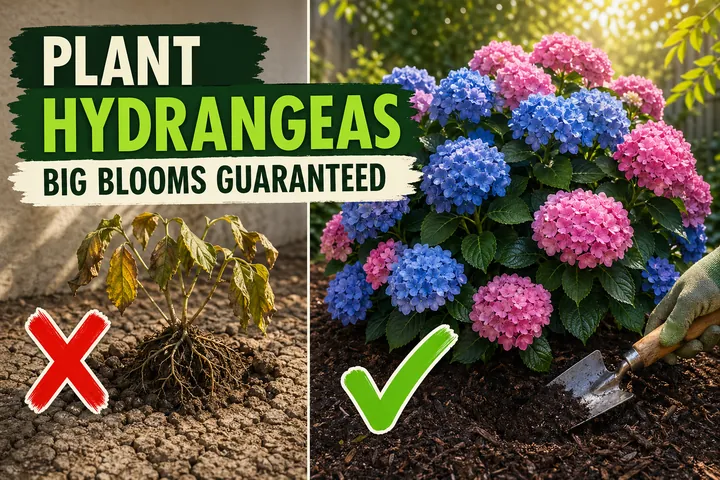
- How to plant hydrangeas in the ground — another plant where site prep and planting depth make or break the result.
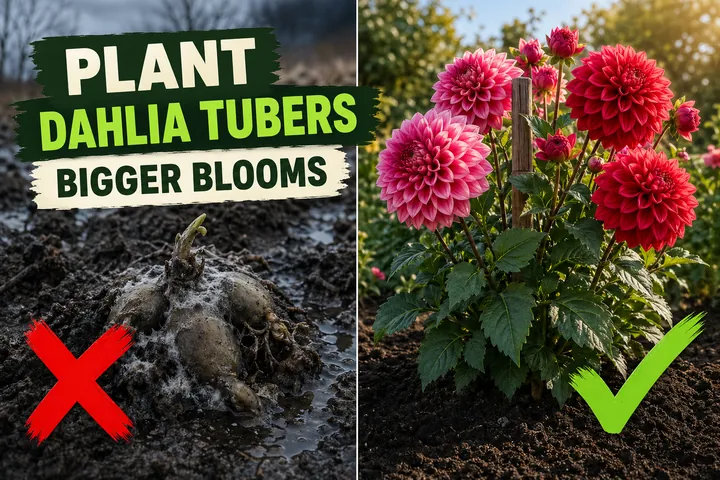
- How to plant dahlia tubers — a summer-flowering bulb that pairs well at the edges of a wildflower meadow where more formal planting meets the meadow.
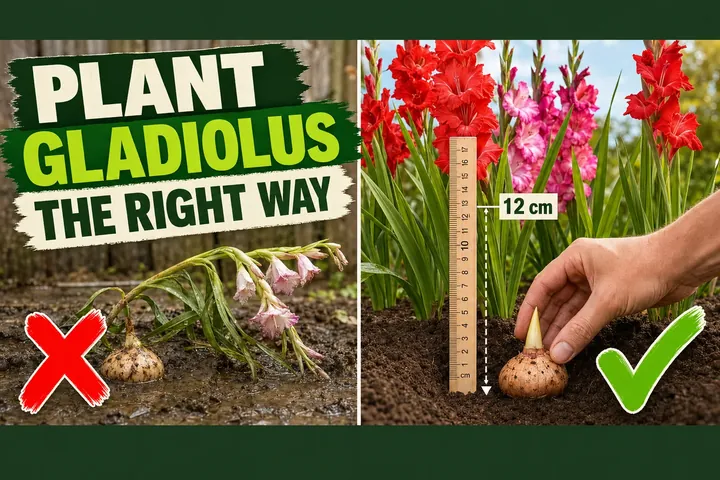
- How deep to plant gladiolus bulbs — if you want tall spikes behind your meadow patch, gladiolus depth and timing follow similar logic to wildflower site prep.
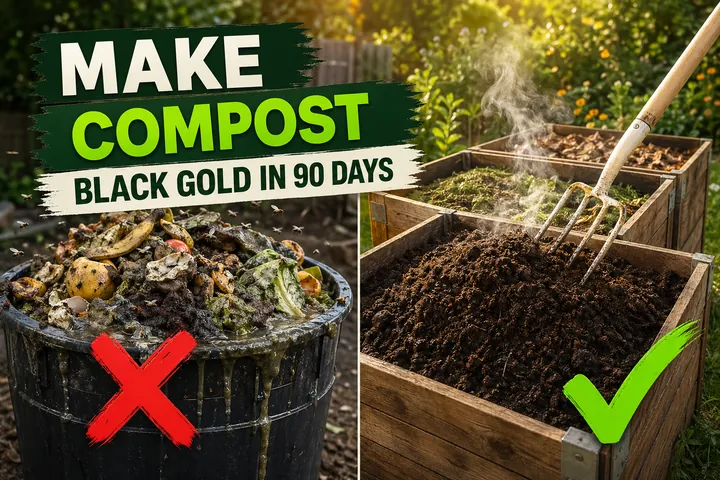
- How to make compost at home — remember: don’t use compost in a wildflower bed, but your vegetable and shrub borders will love it.
The free Tazart plant care app can log your sowing date, set germination check reminders, and track your first-bloom timeline — useful when you’re managing both an annual and perennial wildflower mix that have different bloom windows.
A note on conditions
Every garden and climate is different. USDA zone, soil texture, local weed pressure, and your rainfall all change how a wildflower meadow establishes. Use the sowing rate, depth rules, and timing windows in this guide as a starting point. The patch may look weedy and sparse in year one — that’s almost always normal. Year two, with the perennials hitting their stride, is when the meadow pays you back.
Highly recommended
The supplies that make this guide work

Tazart is an Amazon Associate — we earn from qualifying purchases at no extra cost to you. Thank you for helping us keep these guides free.
Frequently asked questions
When is the best time to plant wildflower seeds?
Fall sowing (September through November in most of North America) is ideal — seeds cold-stratify naturally over winter and germinate with the first warm spring soil. Spring sowing also works: wait until 2 weeks before your last frost date when daytime soil temperatures reach 10°C (50°F). Avoid midsummer sowing — hot, dry soil kills ungerminated seeds before they can establish.
Do you just scatter wildflower seeds on the ground?
No. Scattering seeds on unprepared ground — especially over existing grass or weeds — almost never works. Wildflower seeds need bare soil contact to germinate. You must remove or kill all existing vegetation first, then scatter seeds on the exposed surface. The seeds should rest on the soil surface, not be buried.
How do you prepare soil for wildflower seeds?
Remove existing turf and weeds completely. Options: smother with cardboard and 10 cm (4 in) of wood chips for 4–6 weeks; solarize with clear plastic for 4–6 weeks in summer; or cut turf short and remove mechanically. Once bare, rake lightly so the surface is crumbly but not fluffy. Wildflowers prefer low-fertility soil — do not add compost or fertilizer, which feeds weeds more than wildflowers.
How do you spread wildflower seeds evenly?
Mix your wildflower seeds with dry building sand in a 1:5 ratio (1 part seed to 5 parts sand by volume). The white or silver sand makes the seed visible against soil so you can see where you've already sown. Divide the mix in half and walk rows in two directions — first north-to-south, then east-to-west — for even coverage.
Do wildflower seeds need to be covered with soil?
Most wildflower species need light to germinate and must NOT be buried. Press seeds gently into the soil surface using a board, roller, or the flat of your boot. Cover with a maximum of 1 cm (¼ in) of finely raked soil or a very light scattering of weed-free straw. Burying deeper than 1 cm (¼ in) suppresses germination for most species.
How long does it take wildflower seeds to bloom?
Annual wildflowers (poppies, cornflowers, phacelia) typically bloom 8–12 weeks after germination in spring. Perennial wildflowers (coneflower, black-eyed Susan, wild bergamot) usually produce only foliage in year one and bloom in year two and beyond. A mixed native wildflower planting generally shows its first real bloom show in the second growing season.
Why are my wildflower seeds not germinating?
The three most common causes are sowing on unprepared ground with existing turf, sowing too deep (buried seeds don't get the light they need), and dry soil during the germination window. Check also: soil temperature below 10°C (50°F) will stall most species. Some native perennials need a cold stratification period and may not germinate until after their first winter.