Flowers
How to Plant Tulip Bulbs (Spring Bloom Insurance)
Plant tulip bulbs the right way — pointed end up, 15–20 cm (6–8 in) deep, in fall, in well-drained soil. Here's the exact depth, spacing, and timing for a guaranteed.

On this page
Watch the visual walkthrough
Growing Tulips in the Fall - How to Plant Tulip Bulbs | Kelly Lehman
A short visual walkthrough that pairs with the steps above.
If you’ve ever planted tulip bulbs and ended up with sad floppy stems — or no flowers at all — the cause is almost always one of three things: shallow planting, soggy soil, or planting too late. Tulips are forgiving about variety and colour, but they are strict about depth, drainage, and timing.
This guide walks through it the way a tulip bulb actually wants — pointed-side up, 15–20 cm (6–8 in) deep, in well-drained soil, planted in fall. Get those four things right and you’ll wake up to a vivid drift of red, pink, and yellow blooms next spring.
Quick answer
Plant tulip bulbs in fall, six to eight weeks before the ground freezes, in a sunny spot with well-drained soil. Set each bulb pointed-side up at a depth of three times its own height — about 15–20 cm (6–8 in) for a standard bulb — and space them 10–15 cm (4–6 in) apart. Mulch with 5–8 cm (2–3 in) of bark, water once at planting, and leave them alone until the first green shoots push through in early spring.
Why depth and timing matter so much
A tulip bulb is a tiny pre-packed plant — leaves, flower bud, and food are already inside. Your job is to give it cold, dark, well-drained conditions for 12–14 weeks so it can set roots and trigger bloom hormones. Two things ruin this:
- Shallow planting (less than 10 cm / 4 in): the bulb freezes and thaws repeatedly, gets eaten by squirrels, or pushes out of the ground in heavy frost.
- Wet soil: Tulipa species evolved on dry mountain slopes in Central Asia. They rot fast in soggy clay or low-lying beds.
Get the depth and drainage right and tulips usually look after themselves.
What you’ll need
- Firm, papery-skinned tulip bulbs (skip soft, mouldy, or hollow ones)
- A sunny spot — at least 6 hours of direct sun
- Well-drained soil; if you have heavy clay, mix in 5 cm (2 in) of coarse sand or grit
- A bulb planter or a regular trowel
- Organic bone meal (a small handful per hole)
- 5–8 cm (2–3 in) of organic mulch (shredded bark or leaf mould)
- A watering can
Step-by-step: planting tulip bulbs
1. Choose the right bulbs
Pick bulbs that feel firm and heavy for their size, with intact papery brown skins. The bigger the bulb, the bigger the flower — for show beds, look for bulbs at least 5 cm (2 in) wide.
Reject any bulb that is:
- Soft or squishy when squeezed
- Showing fuzzy white or blue mould
- Hollow or rotted at the basal plate
- Already sprouting more than 2 cm (¾ in) of green growth
2. Pick the right spot and timing
Tulips need full sun, well-drained soil, and a fall planting window. Aim for soil temperatures around 10–13°C (50–55°F) — usually:
- Cool / cold zones (USDA 3-6): late September to early November
- Mild zones (USDA 7-8): late October to early December
- Warm zones (USDA 9-10): late November to mid-December (with pre-chilled bulbs)
If a hard frost has already arrived, you can still plant — the bulbs will just root a little later.
3. Prepare the soil
Loosen the soil to a depth of 25–30 cm (10–12 in) and remove rocks and roots. If your soil is heavy clay, mix in coarse sand, grit, or compost so water moves through. If it’s pure sand, mix in compost so the soil holds enough moisture for root growth.
Work a small handful of organic bone meal into the bottom of each hole. Phosphorus is what bulbs actually use — it fuels root and flower development through fall.
4. Dig to the right depth
The standard rule: plant a bulb three times as deep as it is tall. For most tulip bulbs, that means a hole 15–20 cm (6–8 in) deep. Use the deeper end (20 cm / 8 in) in sandy soil or cold zones, and the shallower end (15 cm / 6 in) in heavy clay or mild winters.
A long-handled bulb planter cuts a clean cylinder fast — useful when you’re planting 50 or 100 bulbs. A regular trowel works too if you only have a handful.
5. Set the bulb pointed-side up
Place the bulb in the hole with the pointed tip facing up and the flat basal plate (where roots emerge) facing down. If you can’t tell which way is up, plant it on its side — the shoot will correct itself toward the light.
Space bulbs 10–15 cm (4–6 in) apart for a natural drift, or 5–8 cm (2–3 in) apart in a tight container display. Don’t let bulbs touch — touching bulbs invite rot.
6. Backfill, water once, and mulch
Cover the bulbs with the soil you removed, firm gently, and water once to settle the soil and start root growth. Don’t water again unless the autumn is unusually dry for more than three weeks.
Top with 5–8 cm (2–3 in) of organic mulch — shredded bark or leaf mould both work. Mulch insulates the bulbs against frost heave, locks in moisture, and helps hide their scent from squirrels.
7. Walk away until spring
This is the easiest step. Tulips don’t need fertilizer, pruning, or watering through winter. The first green shoots usually push through in late winter or early spring, with flowers 6–10 weeks later.
Care after planting
Once tulips are in the ground, they’re nearly self-sufficient. The four things that matter.
For a spring bulb that blooms slightly earlier and fills the garden with scent while tulips are still rising, the hyacinth plant care guide is worth reading before you finalise your bulb order.
| Task | When |
|---|---|
| Water | Only if winter is unusually dry; resume light watering when shoots emerge |
| Fertilize | A light scatter of bone meal in early spring as buds form |
| Deadhead | Snap off spent flowers so the plant feeds the bulb, not seeds |
| Let foliage yellow | Don’t cut leaves until they yellow naturally — that’s the bulb refilling for next year |
A free plant care app like Tazart tracks bulb planting dates, the cold-chill window, and your local frost timing, then pings you when it’s time to plant or apply mulch — useful if you’re planting more than one bed.
Protecting bulbs from squirrels
Squirrels and chipmunks love tulip bulbs. Three things help:
- Plant deep. A bulb at 18–20 cm (7–8 in) is rarely worth digging up.
- Cover the bed with mulch or chicken wire. Mulch hides the scent. A panel of chicken wire pinned over the bed in fall stops digging — pull it off in spring before shoots emerge.
- Mix in daffodils. Daffodil bulbs are toxic to rodents, and animals quickly learn to avoid the whole patch.
Tulips in containers
Tulips do beautifully in pots if you treat the pot like a slightly colder version of the ground:
- Use a deep pot — at least 30 cm (12 in) tall — with drainage holes
- Fill the bottom 5 cm (2 in) with gravel for drainage
- Plant the bulbs 10–15 cm (4–6 in) deep, almost shoulder-to-shoulder
- Move the pot to an unheated garage or shed for the 12–14 week chill if winters are mild
- Bring it back outside in late winter once green shoots appear
Containerized tulips are usually one-season displays — replace the bulbs each fall instead of trying to rebloom them.
Common mistakes to avoid
- Planting upside-down. A bulb that has to flip itself uses energy it needs for blooms. Pointed end up, flat plate down — or on its side if you can’t tell.
- Planting too shallow. Less than 10 cm (4 in) and bulbs get eaten, frost-heaved, or grow weak floppy stems.
- Wet, low-lying soil. Tulips rot in soggy ground. Plant on a slight slope or amend clay with sand and compost.
- Skipping the cold period. Without 12–14 weeks at 4–9°C (40–48°F) the bulb won’t trigger a flower. In warm zones, pre-chill in the fridge.
- Cutting leaves before they yellow. Green leaves are recharging the bulb. Cut early and you’ll get fewer (or no) blooms next year.
Troubleshooting
| Symptom | Likely cause | Fix |
|---|---|---|
| All leaves, no flowers | Planted too shallow, too little chilling, or bulb too young | Plant at 15–20 cm (6–8 in); pre-chill bulbs in warm zones; replace small bulbs with bigger ones |
| Bulbs rotted before spring | Waterlogged soil or upside-down planting | Improve drainage with sand/grit; orient pointed-side up; lift the bed if it sits in a low spot |
| Stems are floppy and weak | Not enough sun, or planted too shallow | Move to a 6+ hour sun spot; replant deeper next fall |
| Bulbs disappeared before spring | Squirrels or chipmunks | Plant 18–20 cm (7–8 in) deep; cover with chicken wire over winter; mix with daffodils |
| Flowers smaller every year | Bulbs splitting; competition; tired soil | Lift and divide every 2–3 years; top-dress with bone meal in early spring |
| Buds form but turn brown and shrivel | Late frost or fungal disease | Mulch in early spring to buffer temperature swings; remove and bin affected bulbs |
Watch: planting tulip bulbs
A short visual walkthrough pairs well with the steps above. If you’re a visual learner, watch a quick tutorial like How to Plant Tulip Bulbs on YouTube and then come back to follow the timing in this guide.
Related reading
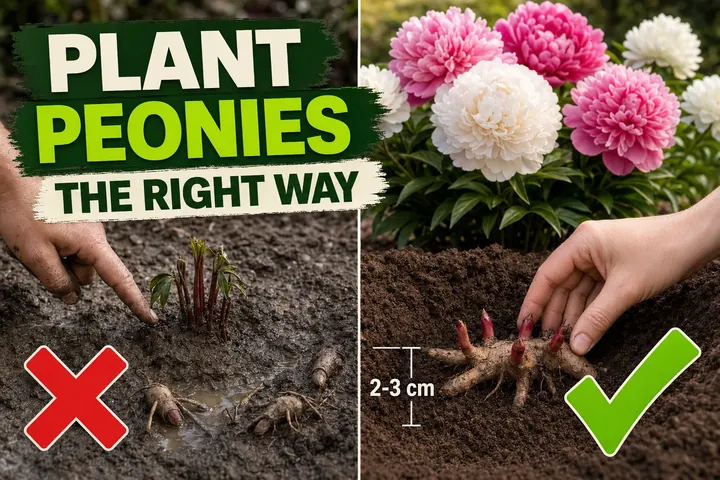
- How to plant peony bulbs the right way — another fall-planted perennial where depth makes the difference between flowers and just leaves.
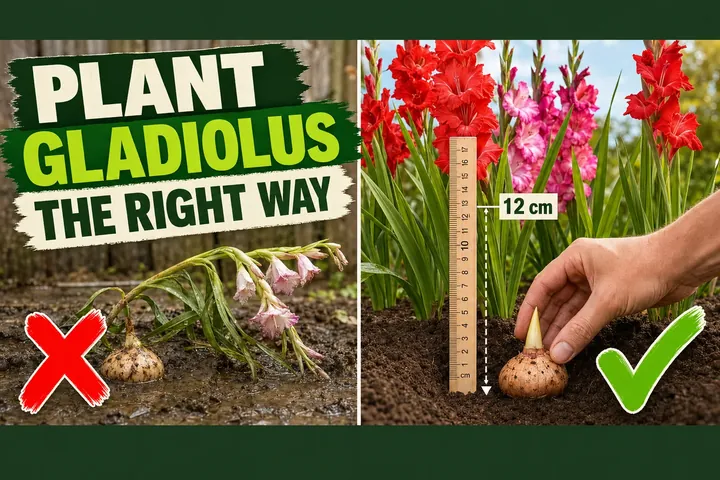
- How deep to plant gladiolus bulbs — spring-planted bulb timing that complements your fall tulip schedule.
- How to plant hydrangeas in the ground — pair shrubs with your tulip drift for layered spring colour.
A note on conditions
Every garden is different. USDA zone, soil type, fall rainfall, mulch depth, and squirrel pressure all affect how tulips perform. Use the depth, spacing, and timing above as a starting point and adjust based on how your bulbs come up in their first spring — that’s how every good bulb gardener learns.
Highly recommended
The supplies that make this guide work
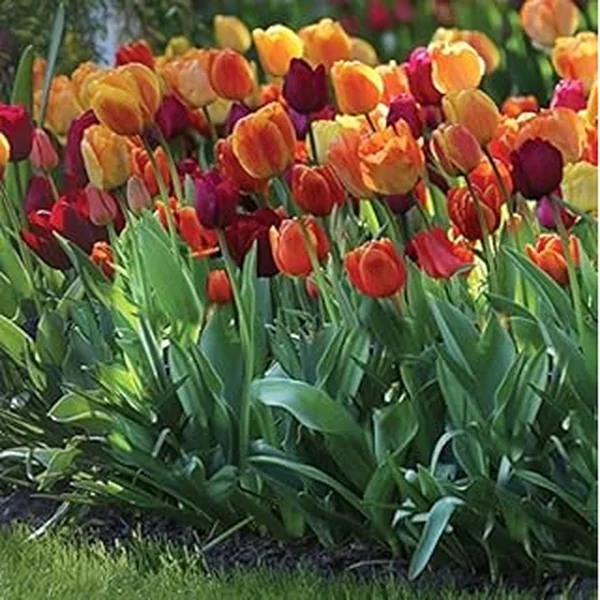

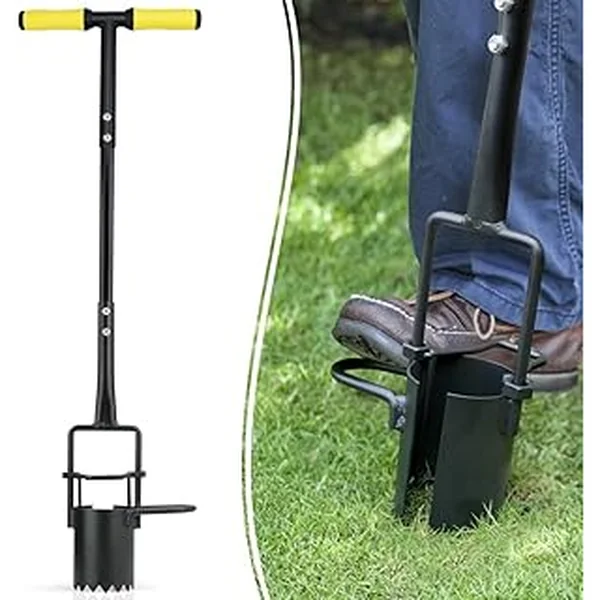

Tazart is an Amazon Associate — we earn from qualifying purchases at no extra cost to you. Thank you for helping us keep these guides free.
Frequently asked questions
How deep do you plant tulip bulbs?
Plant tulip bulbs about three times their own height — for a standard 5 cm (2 in) bulb that's roughly 15–20 cm (6–8 in) of soil above the basal plate. Shallow planting (less than 10 cm / 4 in) leaves bulbs exposed to frost heave, squirrels, and weak stems. Go to the deeper end (20 cm / 8 in) in sandy soil or cold zones; stay closer to 15 cm (6 in) in heavy clay.
When should you plant tulip bulbs?
Plant in fall, six to eight weeks before the ground freezes — typically late September to early November in cool climates, and late November to mid-December in mild zones. Bulbs need 12–14 weeks of cold soil at 4–9°C (40–48°F) to set flowers. Miss the fall window and you can refrigerate the bulbs for 12 weeks and plant in late winter as a backup.
Which way is up on a tulip bulb?
The pointed tip goes up, and the flat or slightly concave basal plate (where the roots emerge) goes down. If a bulb is shaped so that orientation is unclear, plant it on its side — the shoot will turn itself upward toward the light. Upside-down bulbs waste energy correcting course and often rot before they reach the surface.
Do tulip bulbs need full sun?
Yes — at least 6 hours of direct sun per day for stocky stems and saturated colour. Tulips planted under deciduous trees usually do well because they bloom and bank energy before the canopy leafs out. Deep shade gives you weak stems, faded petals, and a plant that fades after one season.
Can you plant tulip bulbs in spring?
Only if the bulbs have already received their cold treatment — 12–14 weeks at 4–9°C (40–48°F) in a refrigerator (away from ripening fruit). Without that chill, an unrefrigerated bulb planted in spring will produce leaves but rarely a flower. Most gardeners treat spring-planted tulips as a one-season annual.
How far apart should tulip bulbs be planted?
Space bulbs about 10–15 cm (4–6 in) apart for a natural drift, or as close as 5 cm (2 in) apart for a dense container display where you want a solid block of colour. Tighter spacing looks lush in year one but means you'll need to lift and divide every 2–3 years to keep the bulbs from competing.