Edible
How to Plant Strawberries (Crowns, Bare Roots & Plugs)
Plant strawberry crowns at soil level, 30–45 cm (12–18 in) apart, rows 90–120 cm (36–48 in) apart. Guide for bare-root, plug, and runner methods.
On this page
Watch the visual walkthrough
Pro Grow Strawberry Tips to For The BEST Most Productive Plants Ever!
We do more than, JUST, YouTube! Check more MIgardener below: Start growing! Visit our online store for $2 heirloom seeds, ...
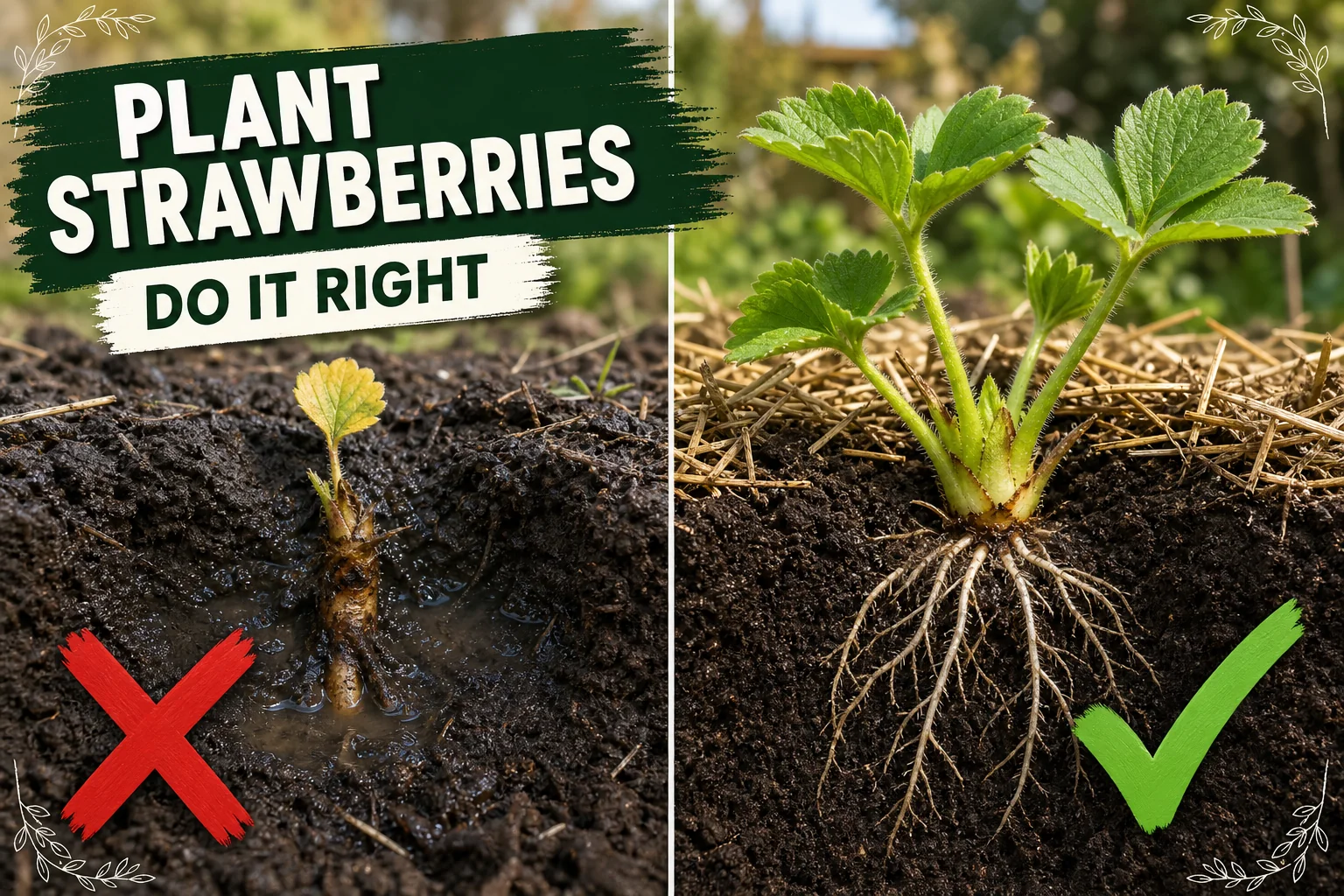
A well-planted strawberry bed can produce fruit for 4–5 productive years, which makes the planting day worth getting right. The single biggest mistake is depth — buried even 1 cm (½ in) too deep and the crown rots; sat 1 cm (½ in) too high and the roots dry out and the plant dies. Get the depth right and almost everything else can be fixed later.
This guide walks through bare-root crown planting (the most common method), plugs, and runner-grown plants, with the spacing system, soil prep, and first-month care that makes the difference between a thriving patch and a stunted one.
Quick answer
Plant strawberry crowns at exactly soil level — roots fully buried, growing point just at the surface. Space 30–45 cm (12–18 in) apart in rows 90–120 cm (36–48 in) apart. Plant in early spring or 6–8 weeks before first frost. Pinch first-year flowers from June-bearing varieties to force a heavier crop the second year.
Table of contents
- Choosing your variety type
- When to plant
- Preparing the bed
- How to plant bare-root crowns
- How to plant plugs
- How to plant runner-rooted plants
- Spacing systems — matted row vs hill
- First-month care
- Common mistakes
- Troubleshooting
- FAQ
Choosing your variety type
Strawberries come in three flowering types, and the type determines your harvest pattern.
| Type | Flowering | Fruiting | Best for |
|---|---|---|---|
| June-bearing | Spring | One big crop, June (3–4 weeks) | Preserving, big-batch harvests |
| Everbearing | Spring + late summer | Two crops (early summer + autumn) | Spread harvest |
| Day-neutral | Continuous | Continuous fruiting through summer | Fresh eating all season |
Popular June-bearing varieties: ‘Allstar’, ‘Honeoye’, ‘Earliglow’. Day-neutrals: ‘Albion’, ‘Seascape’, ‘Tristar’. Everbearers: ‘Quinault’, ‘Ozark Beauty’.
For most home gardeners growing fresh fruit, day-neutrals are the easiest — they fruit the first year and don’t need first-year flower pinching for the full 3–4 months.
When to plant
Early spring — the most common window. Plant 4–6 weeks before your last frost date, as soon as the soil can be worked. Bare-root crowns are dormant at this stage and tolerate light frost.
Autumn (zones 6–10) — 6–8 weeks before first hard frost. Crowns root in over winter, often outperforming spring-planted siblings the next year. In colder zones (3–5), the freeze-thaw cycle heaves crowns out of the soil unless heavily mulched.
Avoid mid-summer planting. Heat stress on a freshly planted crown is the #1 cause of summer planting failure.
Preparing the bed
Strawberries are heavy feeders and slightly acid-loving. The bed prep matters more than for most edible crops because the plants stay in place for 3–5 years.
1. Site selection. Pick a spot with 6–10 hours of direct sun. Avoid frost pockets — strawberry blossoms are damaged by late spring frost.
2. Avoid solanaceous predecessors. Don’t plant strawberries where tomatoes, potatoes, peppers, or eggplant grew in the past 3 years — verticillium wilt is a shared disease that lingers in soil.
3. Loosen the soil. Dig or fork to 30 cm (12 in) deep. Strawberry roots are wide and shallow but need loose ground to spread.
4. Amend with compost. Work 5–8 cm (2–3 in) of well-rotted compost into the top 20 cm (8 in) of soil.
5. Adjust pH to 5.8–6.5. Strawberries prefer slightly acidic soil. If your test reads above 7.0, add elemental sulphur per the package rate; if below 5.5, add lime. Test 2–3 weeks before planting so amendments can react.
6. Add a starter fertiliser. A balanced organic fertiliser (5-10-10 or similar) at 60 g per m² (2 oz per sq yd) gives crowns a boost without burning roots.
How to plant bare-root crowns
Bare-root crowns are dormant strawberry plants with no soil — typically shipped in spring. They’re cheap, ship well, and outperform plugs once established.
Step 1 — Soak the roots
Submerge crowns in cool water for 1–2 hours before planting. The roots rehydrate, swell slightly, and become much easier to spread when planting.
Step 2 — Trim if needed
Snip any blackened or shrivelled root tips back to firm white tissue. Trim long roots to about 15 cm (6 in) — overly long roots are hard to fan out properly and can curl underground.
Step 3 — Dig wide planting holes
Open holes 15 cm (6 in) wide and 15 cm (6 in) deep. The hole should be wide enough that the roots fan out sideways without bending or crowding.
Step 4 — Form a small soil cone
Mound a small cone of soil in the centre of the hole. The cone supports the crown at the right height and the roots drape down its sides.
Step 5 — Set the crown at exactly soil level
Place the crown on the cone with roots fanning down its sides. Adjust until the midpoint of the crown — the line between roots and growing point — sits exactly at soil level.
A useful trick: set a pencil or thin stick across the hole as a reference line. The midpoint of the crown should touch the pencil.
- Too deep (growing point buried): rot is almost guaranteed
- Too high (roots exposed): the crown dries out within days
- Exactly right: roots buried, growing point just visible
Step 6 — Backfill and firm
Backfill with the soil-compost mix. Firm gently around the crown — enough that a tug on the leaves doesn’t lift the plant, but not packed solid.
Step 7 — Water in deeply
Soak each plant with 500 ml (17 fl oz) of water immediately after planting. This settles soil around the roots and removes air pockets.
How to plant plugs
Plugs are small pre-rooted strawberry plants in 5–7 cm (2–3 in) pots. They’re more expensive than bare-roots but skip the dormant-root recovery period and establish 1–2 weeks faster.
1. Soak the rootball briefly in water for 5–10 minutes if the soil feels dry.
2. Dig holes the size of the rootball. No deeper.
3. Set the plug so the soil line of the rootball matches the surrounding bed soil. The growing point should sit at the same height it sat in the pot.
4. Backfill, firm, water.
Plugs can be planted any time the bed is workable, including late spring and early summer in mild climates. They’re the easier choice for inexperienced growers because the depth-judgement is automatic — match the soil line.
How to plant runner-rooted plants
Free strawberry plants — propagated from runners off your existing plants. Best done in summer for autumn planting.
1. In summer, identify daughter plants (small plantlets) on runners from the parent. Pick robust ones with 3+ leaves.
2. Pin the daughter plant into a small pot of moist potting mix while it’s still attached to the runner. A bent piece of wire or a stone holds it in place.
3. Wait 4–6 weeks for the daughter to root into the pot. Roots fill the pot when ready.
4. Sever the runner between parent and daughter.
5. Transplant the rooted daughter into the new bed at the same depth it grew in the pot.
This method is best for autumn-planting (zone 6+) or for filling gaps in an established bed.
Spacing systems — matted row vs hill
Two systems dominate home strawberry growing. See how far apart to plant strawberries for the full spacing chart.
Matted row (most common)
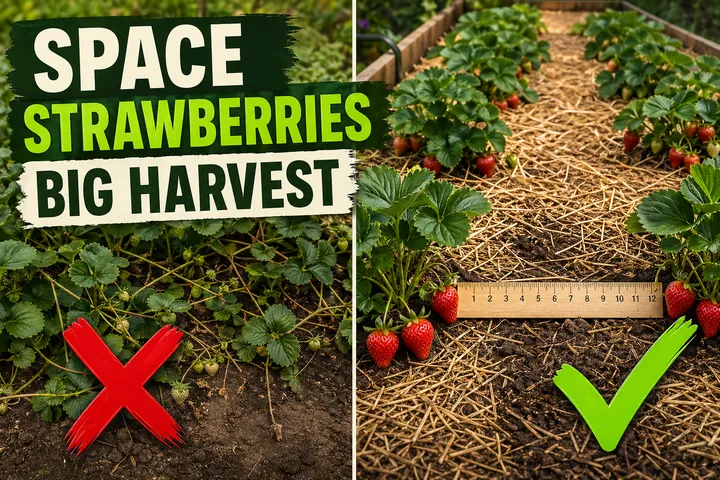
- Plants 30–45 cm (12–18 in) apart in single rows
- Rows 90–120 cm (36–48 in) apart
- Allow runners to fill the row to a final width of 45 cm (18 in)
- Best for June-bearing varieties
Hill system
- Plants 25–30 cm (10–12 in) apart in double rows 30 cm (12 in) apart
- 60 cm (24 in) walking path between bed pairs
- Remove all runners (force energy into berries)
- Best for day-neutral and everbearing varieties
For container or raised-bed growers, see how to grow strawberries in containers.
First-month care
The first 4 weeks after planting determine whether the plant establishes or fails.
- Water: Keep soil consistently moist — not soggy. About 2.5 cm (1 in) of water per week, more in heat.
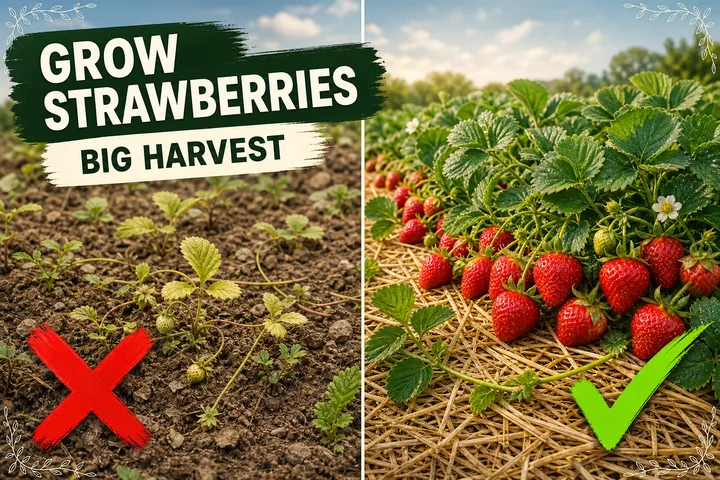
- Mulch: A 5 cm (2 in) layer of straw or pine needles around plants suppresses weeds, retains moisture, and keeps berries off bare soil.
- Pinch flowers: For June-bearers, pinch every flower for 3–4 months. For day-neutrals/everbearers, pinch only for the first 6 weeks.
- Watch for slugs: New strawberry foliage is a slug magnet. Set beer traps or apply iron phosphate granules.
- Don’t fertilise heavily. The starter fertiliser at planting is enough for the first 6 weeks. Heavy nitrogen now produces leafy plants with no roots.
Common mistakes
- Wrong planting depth. The single most common failure. Bury the roots, not the crown.
- Letting the roots dry during planting. A 5-minute air exposure on a hot day can kill bare roots. Keep them covered or in water until they go in the hole.
- Planting in former tomato/pepper beds. Verticillium wilt persists in soil for 3+ years.
- Not pinching first-year flowers (June-bearing). Cuts second-year yield by 50–70%.
- Skipping mulch. Strawberries on bare soil rot at the lowest fruit and harbour slugs.
- Letting runners root unmanaged. A matted row turns into a chaotic 1.2 m (4 ft) wide mess in two seasons. Train runners into the row, not the path.
- Watering overhead. Wet leaves at evening invite leaf spot and grey mould. Use drip or soaker hoses.
Troubleshooting
| Symptom | Likely cause | Fix |
|---|---|---|
| New leaves wilt and die within a week | Crown buried too deep — rot | Replant remaining crowns at correct depth |
| Crown survives but doesn’t grow | Crown set too high — roots drying | Mound a thin layer of soil over exposed roots; water deeply |
| Yellow leaves with green veins | Iron deficiency from high pH | Acidify with elemental sulphur or pine-needle mulch |
| Plants spindly, few flowers | Too much nitrogen, not enough sun | Stop high-N feeds; ensure 6+ hrs sun |
| Slug damage on new leaves | Standard for new strawberry beds | Iron phosphate granules; beer traps |
| Crowns heaved out of soil after winter freeze | Insufficient mulch or shallow planting | Press back gently; mulch heavily |
| Runners everywhere, few berries | First-year flower pinching skipped | Pinch flowers next year; remove excess runners now |
| Wilting despite wet soil | Verticillium wilt from previous tomato/pepper beds | Move bed to fresh ground; choose resistant varieties |
Final notes
Get the depth right, water consistently for the first month, mulch heavily — and your strawberry bed will thank you with fruit for years. Most strawberry-bed failures trace back to that one detail: crown set at exactly soil level.
For more strawberry guidance:
- How to grow strawberries — full lifecycle from planting to harvest
- How far apart to plant strawberries — matted row vs hill spacing
- How to grow strawberries from seed — the slow-but-rewarding route
- How to grow strawberries in containers — pots and hanging baskets
- How long does a strawberry plant take to produce fruit — full timeline by variety
Track first-year flower-pinching, mulch dates, and harvest windows with the free Tazart plant care app.
A note on conditions
Climate zone, soil type, and variety all shift these numbers slightly. The practices above are well-tested averages from university extension trials — adjust based on your specific cultivar’s instructions and local growing conditions.
Highly recommended
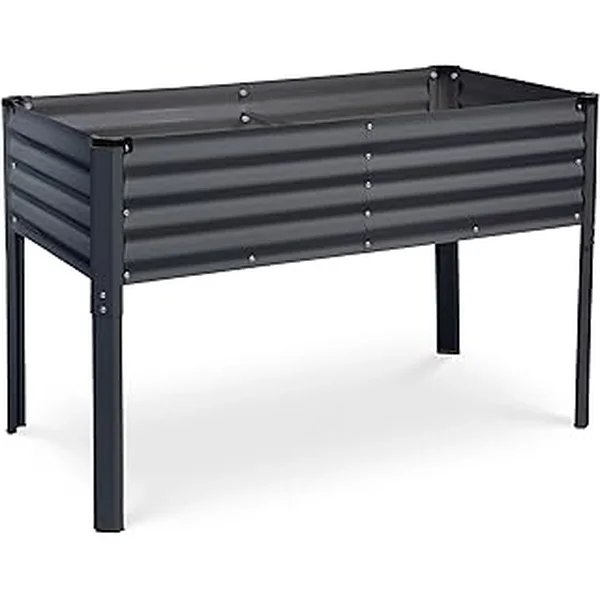
The supplies that make this guide work



Tazart is an Amazon Associate — we earn from qualifying purchases at no extra cost to you. Thank you for helping us keep these guides free.
Frequently asked questions
How deep do you plant strawberry crowns?
Plant strawberry crowns so the midpoint of the crown sits exactly at soil level — the white roots fully buried, the growing point (where new leaves emerge) just at or barely above the surface. Buried too deep and the crown rots. Planted too high and the roots dry out and die. This is the single most critical detail when planting strawberries.
When is the best time to plant strawberries?
Early spring (as soon as soil is workable, 4–6 weeks before last frost) is the most common planting window. Autumn planting (6–8 weeks before first frost) also works well in zones 6 and warmer — autumn-planted crowns root in over winter and produce a small first crop the following spring. Avoid planting in the heat of summer.
How far apart do you plant strawberries?
Standard matted-row spacing: 30–45 cm (12–18 in) between plants in rows 90–120 cm (36–48 in) apart. Plants will fill the row over time via runners. Hill-system spacing: 25–30 cm (10–12 in) apart in double rows 30 cm (12 in) apart, with 60 cm (24 in) between bed pairs. See [how far apart to plant strawberries](/blog/how-far-apart-to-plant-strawberries) for the full chart.
Should I plant strawberries from runners or crowns?
Both work. Bare-root crowns (dormant plants sold in spring) are the most economical — typically 25 plants for the price of 5 potted plugs. Plugs (small pre-rooted plants) establish faster and skip the dormant-root recovery period. Runners harvested from established plants are free — pin runner tips into pots in summer to root them, then transplant the new daughter plants in autumn.
Can you plant strawberries in autumn?
Yes, in mild climates (USDA zones 6–10). Autumn-planted strawberries develop strong roots over winter and produce earlier and heavier the following spring. Plant 6–8 weeks before your first hard frost so crowns root in before the ground freezes. Mulch heavily after a hard frost to prevent crown heaving. In cold zones (3–5), spring planting is safer.
How long until strawberry plants produce fruit?
It depends on the type. June-bearing strawberries planted in spring should have all flowers pinched off the first year, with the first real harvest the following June (12–14 months later). Day-neutral and everbearing varieties can produce a small harvest in their first autumn — about 4–5 months after spring planting. See [how long strawberries take to produce fruit](/blog/how-long-does-a-strawberry-plant-take-to-produce-fruit) for the full timeline.
Should I pinch off the first year's flowers?
For June-bearing varieties — yes, pinch every flower for the first 3–4 months. This forces energy into roots and runners, producing a much heavier crop the second year. For day-neutral and everbearing types, pinch flowers only for the first 6 weeks after planting, then let them fruit through autumn.
How do I prepare the soil for strawberries?
Loosen soil to 30 cm (12 in) deep and work in 5–8 cm (2–3 in) of well-rotted compost. Aim for pH 5.8–6.5 (slightly acidic). Add a balanced organic fertiliser at planting (typically 60 g per m² / 2 oz per sq yd of 5-10-10). Avoid beds where tomatoes, potatoes, peppers, or eggplant grew in the past 3 years — they share verticillium wilt with strawberries.