Flowers
How to Plant Peony Bulbs (Tubers) for Big Spring Blooms
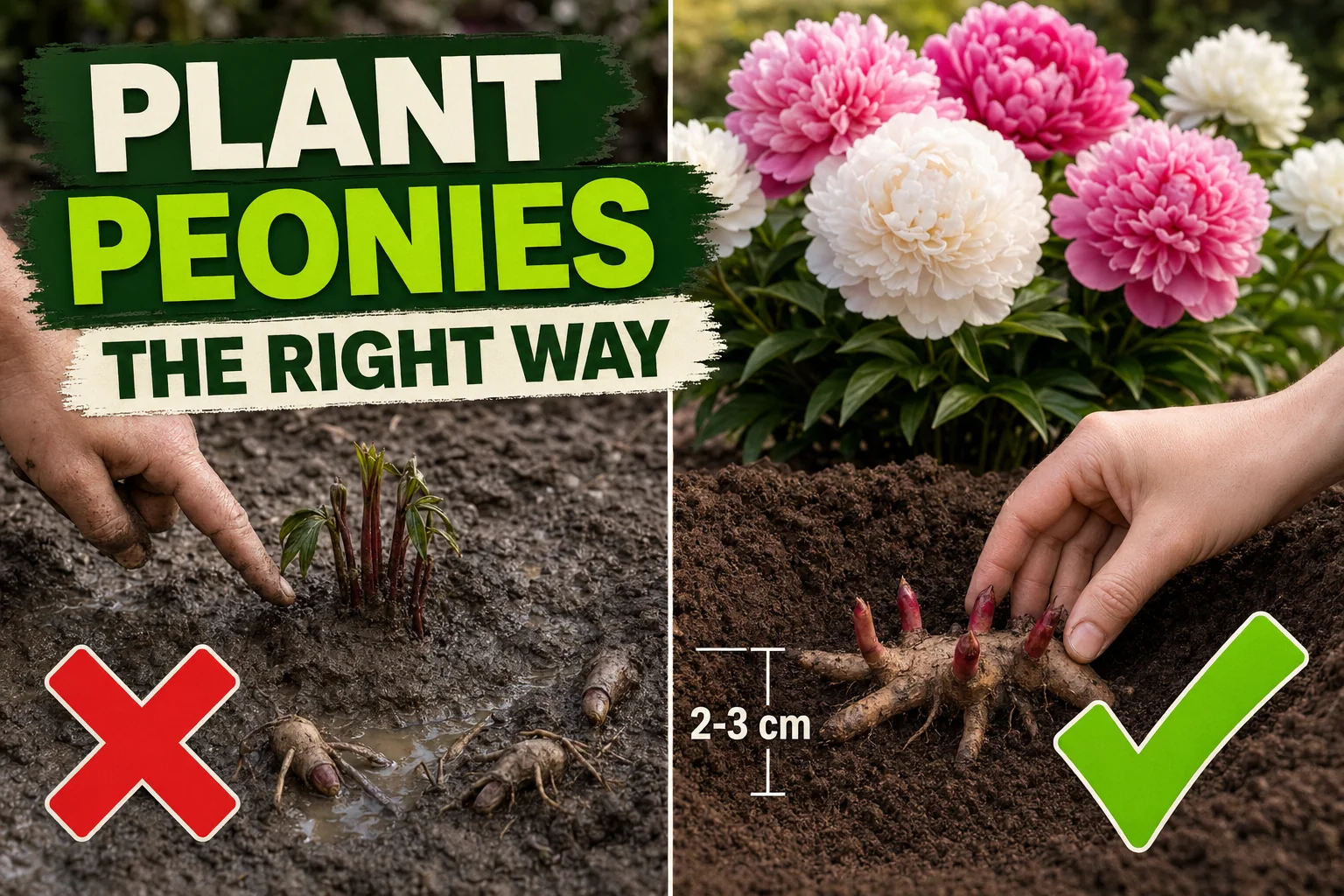
Plant peony bulbs the right way — eyes only 2-3 cm (0.75–1 in) deep, in fall, in full sun. Here's the exact depth, soil, and timing for huge spring blooms in year 2-3.
On this page
Watch the visual walkthrough
Peony Growing Guide!!! How to Plant, Grow, Harvest, Divide, & Transplant Peonies
A short visual walkthrough that pairs with the steps above.
If you’ve ever wondered why a peony grows beautiful leaves but refuses to flower, the answer is almost always one thing: planting depth. Peonies are forgiving about soil and feeding, but they are ruthless about depth. Bury the eyes more than 5 cm (2 in) down and the plant will sulk for years.
This guide walks you through it the way a peony actually wants — bare-root tuber, eyes 2-3 cm (0.75–1 in) under the soil, in fall, in full sun. Get those four things right and you’ll be cutting armloads of pink and white blooms by year 2 or 3.
Quick answer
Plant peony tubers in early-mid fall, in a permanent full-sun spot with well-draining loamy soil. The eyes (small red buds on top of the tuber) must sit only 2-3 cm (0.75–1 in) below the soil surface — no deeper. Expect a few flowers in year 1, a real show in year 2-3, and a mature bush that lives 50+ years.
Why people call them “peony bulbs”
Most garden centres sell them as “peony bulbs,” but botanically they’re not bulbs at all. A peony is a herbaceous perennial that grows from a tuberous root crown with visible eyes — the small pink-red growth points on top.
A few quick definitions, because the depth rule depends on them:
- Tuber / crown: the thick fleshy storage root the plant grows from
- Eye: a single bud on top of the crown that becomes a stem in spring
- Bare-root: how peonies are sold in fall — no soil, dormant, with 3-5 visible eyes
You’ll see the words bulb, tuber, crown, and root used interchangeably online. They all refer to the same thing for Paeonia lactiflora (the common garden peony).
Best time to plant
Fall is the right time. Aim for early to mid fall, about six weeks before your ground freezes. Cool soil and steady autumn rain let the tuber grow new roots before winter dormancy. By spring it’s already wired in and ready to push buds.
Spring is the backup. If you got your tubers late, plant as soon as the ground is workable — but expect to wait an extra year for proper blooms. Summer planting almost always fails because the tuber dries out before it can root.
What you’ll need
- One bare-root peony tuber with 3-5 visible eyes (more eyes = faster blooms)
- A permanent sunny spot with 6+ hours of direct sun
- Loose, well-draining loamy soil — peonies hate soggy feet
- A shovel and a hand trowel
- A few handfuls of compost
- Optional: a small amount of bonemeal for slow-release phosphorus
- A watering can
That’s the whole list. No fertilizer, no rooting hormone, no fancy mix.
Step-by-step: planting peony tubers
1. Pick the right tuber
Look at the crown. A good bare-root peony has:
- 3-5 fat eyes (small red or pink buds) on top
- Firm, fleshy roots that aren’t shriveled or soft
- No mould, no slimy patches, no broken main root
Skip tubers with only 1-2 eyes — they’ll take an extra 1-2 years to bloom. If your tuber arrives looking dry, soak it in cool water for an hour before planting.
2. Choose a permanent sunny spot
This is the most important non-depth decision you’ll make. Peonies dislike being moved, and a happy plant can live in the same spot for 50 years or more. Pick the location like you mean it.
The spot should have:
- 6+ hours of direct sun (8 hours is better)
- Shelter from strong wind that snaps the heavy flower stems
- Well-draining soil — no puddles after rain
- Space: peonies grow into bushes 90 cm (35 in) wide, so leave room
Avoid planting close to large trees or shrubs. Peonies lose to tree roots every time.
3. Dig a wide, deep hole
Dig a hole roughly 30 cm (12 in) wide and 30 cm (12 in) deep. Wider matters more than deeper — peony roots spread sideways more than down. Loosen the soil at the bottom with your hand fork.
4. Amend with compost
Mix the soil you removed with about 2-3 handfuls of compost. If your soil is heavy clay, add a handful of coarse sand to improve drainage. If you’re using bonemeal, sprinkle a tablespoon into the bottom of the hole and stir it in. Refill the hole with the amended soil until you have a small mound about 5 cm (2 in) below the surrounding ground level.
5. Place the tuber — eyes 2-3 cm (0.75–1 in) below surface ONLY
This is the rule everyone gets wrong. Sit the tuber on the mound with the eyes facing up. Then check the depth with a ruler or with two fingers laid flat: the eyes must end up only 2-3 cm (0.75–1 in) below the final soil surface. About one inch. No more.
If you’re in a cold climate (USDA zone 3-4), you can go a bit deeper at 4-5 cm (1.5–2 in). In warm climates (zone 7-8), keep it at 2 cm (0.75 in) — shallower is safer than deeper.
If the eyes are 5 cm (2 in) down, your peony will grow leaves and never flower. If they’re 8 cm (3 in) down, you’ve planted a green bush. Re-read this step before you backfill.
6. Backfill and water in
Gently pull soil over the crown until only the very tops of the eyes are barely covered. Don’t pack it down hard — peony roots want air. Water slowly with about 5 litres until the soil settles. If the eyes get exposed after settling, sprinkle a thin layer of soil back over them — but never more than 3 cm (1 in) total.
Mark the spot with a stake or label. The tuber stays underground all winter, and it’s easy to forget exactly where you planted.
Care after planting
Peonies are famously low-maintenance once they’re in the ground. The first year is mostly about leaving them alone.
| Task | When |
|---|---|
| Mulch lightly | First winter only — 5 cm (2 in) of straw or shredded leaves |
| Remove mulch | Pull it back in early spring as soon as red shoots appear |
| Water | Only in dry spells in year 1 — about once every 10 days |
| Fertilize | Not in year 1. Year 2 onward: light compost in spring |
| Support | Add a peony cage in year 2-3 before stems get tall |
A free plant care app like Tazart can hold the watering schedule for you, remind you when to mulch in late fall and remove it in spring, and ping you on Apple Watch — useful if you’re planting more than one or two peonies.
When you’ll see blooms
Peonies are slow to start and unbeatable once they get going. Here’s a realistic timeline:
If you’re also planting dahlias in the same border for a summer-to-fall cutting relay, the dahlia spacing guide walks through how to stagger those tubers around established peony crowns without crowding either plant.
- Year 1: a few short stems and maybe 1-2 small blooms — or none at all
- Year 2-3: the real show begins — full-sized flowers on most stems
- Year 5-10: mature bush, 90 cm (35 in) wide, 30+ blooms per season
- Year 50+: still going. Peonies routinely outlive the gardeners who plant them.
If year 2 still gives you only leaves, double-check the depth before doing anything else. Most “non-blooming peony” problems are solved by digging up the crown in fall and replanting it shallower.
Common mistakes to avoid
- Planting too deep. Eyes more than 5 cm (2 in) down = leaves but no flowers, sometimes for a decade.
- Planting in too much shade. Less than 6 hours of sun = a sulking, leafy plant with weak stems.
- Moving a mature peony. A 5+ year old plant resents transplanting and may skip blooms for 2-3 years afterwards.
- Soggy or compacted soil. Peonies rot in standing water. Always plant on a slight mound if drainage is iffy.
- Over-fertilizing — especially with high-nitrogen feed. It pushes leaves at the expense of flowers. Compost is plenty.
- Cutting back foliage in summer. The leaves feed next year’s blooms. Leave them until they yellow in fall.
Troubleshooting
| Symptom | Likely cause | Fix |
|---|---|---|
| Plenty of leaves, no flowers | Planted too deep, or too much shade | Dig up in fall and replant with eyes 2-3 cm (0.75–1 in) deep; or move to full sun |
| Buds form but never open (“blind buds”) | Late frost, drought stress, or botrytis (grey mould) | Water deeply during dry spring spells; remove and bin any buds with brown fuzz |
| Stems flop over under flower weight | Heavy double blooms with no support | Install a peony cage in early spring before stems reach 30 cm (12 in) |
| Ants crawling all over the buds | Normal — ants eat the sweet nectar on the buds | Do nothing. Ants are harmless and don’t help or hurt the bloom. Shake them off cut flowers. |
| Brown or black spots on leaves | Botrytis or peony leaf blotch in damp weather | Cut affected stems to the ground and bin them — never compost. Improve airflow around the plant. |
| First-year plant looks tiny | Normal — peonies put energy into roots in year 1 | Be patient. Year 2 is usually 3x bigger; year 3 is the first real bloom year. |
Watch: planting peony bulbs
A short visual walkthrough pairs well with the steps above. If you’re a visual learner, watch a quick tutorial like How to Plant Peony Tubers at the Right Depth on YouTube and then come back to follow the timing in this guide.
Related reading
- How to plant morning glory seeds the right way — another flower where timing and depth decide whether you get blooms.
- How to plant onions that have sprouted — same “don’t bury too deep” rule applies to most bulbs and tubers.
- How to water a Monstera the right way — the well-draining-soil principle that keeps peony tubers from rotting also runs the rest of your garden.
- Azalea plant care (acid-loving beauty done right) — if you’re pairing peonies with shrubs in a mixed border, azaleas need acid soil while peonies prefer neutral, so plan the bed accordingly.
- Plumeria plant care (frangipani tropical bloom guide) — for a fragrant tropical companion in pots if you garden in zones 9–12 or have a sunny patio for summer display.
- Scan the next plant you bring home with the free Tazart plant identifier and let it set up the watering and feeding schedule for you.
A note on conditions
Every garden is different. Climate zone, soil type, sun exposure, drainage, and your local fall length all change how a peony establishes. Use the steps above as a starting point — especially the 2-3 cm (0.75–1 in) depth rule — and adjust based on what your plant does in year 2. Peonies reward patience more than any other flower in the garden.
Highly recommended
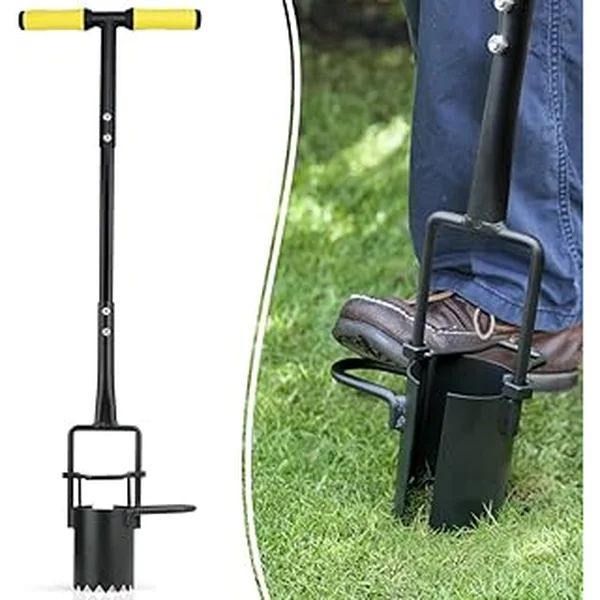
The supplies that make this guide work



Tazart is an Amazon Associate — we earn from qualifying purchases at no extra cost to you. Thank you for helping us keep these guides free.
Frequently asked questions
How deep do you plant peony bulbs?
The eyes (the small red or pink buds on top of the tuber) should sit only 2-3 cm (0.75–1 in) (about 1 inch) below the soil surface — no deeper. Planting too deep is the #1 reason peonies grow leaves but never flower. In colder zones (USDA 3-4) you can go to 4-5 cm (1.5–2 in); in warm zones (7-8) keep it shallow at 2 cm (0.75 in).
When is the best time to plant peony bulbs?
Early to mid fall, roughly six weeks before the ground freezes. Fall planting lets the tuber grow roots in cool moist soil before winter, so it's ready to push leaves and buds in spring. Spring planting works as a backup but usually delays the first real bloom by a year.
Why are my peonies not blooming?
The most common reason is that they're planted too deep — bury the eyes more than 5 cm (2 in) down and a peony will produce leaves indefinitely without flowering. Other causes are too much shade (less than 6 hours of sun), recent transplanting, over-fertilizing with nitrogen, or a plant that's still too young. A 1-3 year old tuber often blooms sparsely or not at all.
Do peonies need full sun?
Yes — at least 6 hours of direct sunlight per day for strong stems and big flowers. They tolerate a little afternoon shade in hot climates, but deep shade gives you a leafy plant with no blooms. Pick a permanent sunny spot before you plant; peonies dislike being moved.
How long does it take a peony to bloom after planting?
Expect a few small flowers in year 1, a real show in years 2-3, and a fully mature bush by years 5-10. Once established, a peony can live and bloom in the same spot for 50+ years with almost no intervention.
Can you plant peony bulbs in spring?
Yes, but it's the second-best option. Plant as soon as the ground is workable, keep the eyes 2-3 cm (0.75–1 in) deep, and water through the first summer. A spring-planted peony usually skips its first season of strong blooms and catches up in year 2.