Edible
How to Plant Okra (Direct Sow Guide for Warm Gardens)
Learn how to plant okra the right way — soak seeds overnight, direct sow 1 inch deep in warm soil, space 12-18 inches apart, and harvest pods young at 3-4 inches.
On this page
Watch the visual walkthrough
5 Tips How to Grow a Ton of Okra in a Raised Garden Bed
If you would like to know how to grow a big harvest of okra watch this video for my five top tips on okra growing! Support me on ...
Okra is one of the easiest warm-season vegetables to grow once the soil is warm enough — and one of the easiest to ruin by harvesting even a day too late. This guide covers everything from soil temperature to the daily harvest rhythm that keeps pods tender all season.
Quick answer
Direct sow okra seeds 1 inch deep, 12-18 inches apart, in rows 3 feet apart. Soil must be at least 65°F. Soak seeds overnight first to cut germination time. Full sun, well-draining soil. Harvest pods at exactly 3-4 inches — check daily in peak summer heat or they turn woody overnight.
When to plant okra (soil temperature is everything)
Okra (Abelmoschus esculentus) is a tropical plant. Unlike cool-season crops you can push into early spring, okra punishes impatience with rotting seeds and stalled seedlings.
The hard rule: soil temperature must reach 65°F (18°C) at 2-3 inches deep before you sow a single seed. The ideal window is 70-85°F (21-29°C), which coincides with air temperatures well into the 80s.
| Region | Typical sow window |
|---|---|
| Gulf Coast / Florida | March – April |
| Mid-South (Texas, Georgia, Carolinas) | Late April – May |
| Mid-Atlantic / Midwest | Late May – early June |
| Pacific Northwest / Northern states | June (if at all — short season) |
Use a cheap soil thermometer at planting depth. Do not guess by air temperature — spring air warms weeks before soil catches up.
Soaking seeds overnight
Okra seeds have a notoriously tough seed coat. Left untreated, they can take 2-3 weeks to germinate even in warm soil. Soaking cuts that down dramatically.
How to soak:
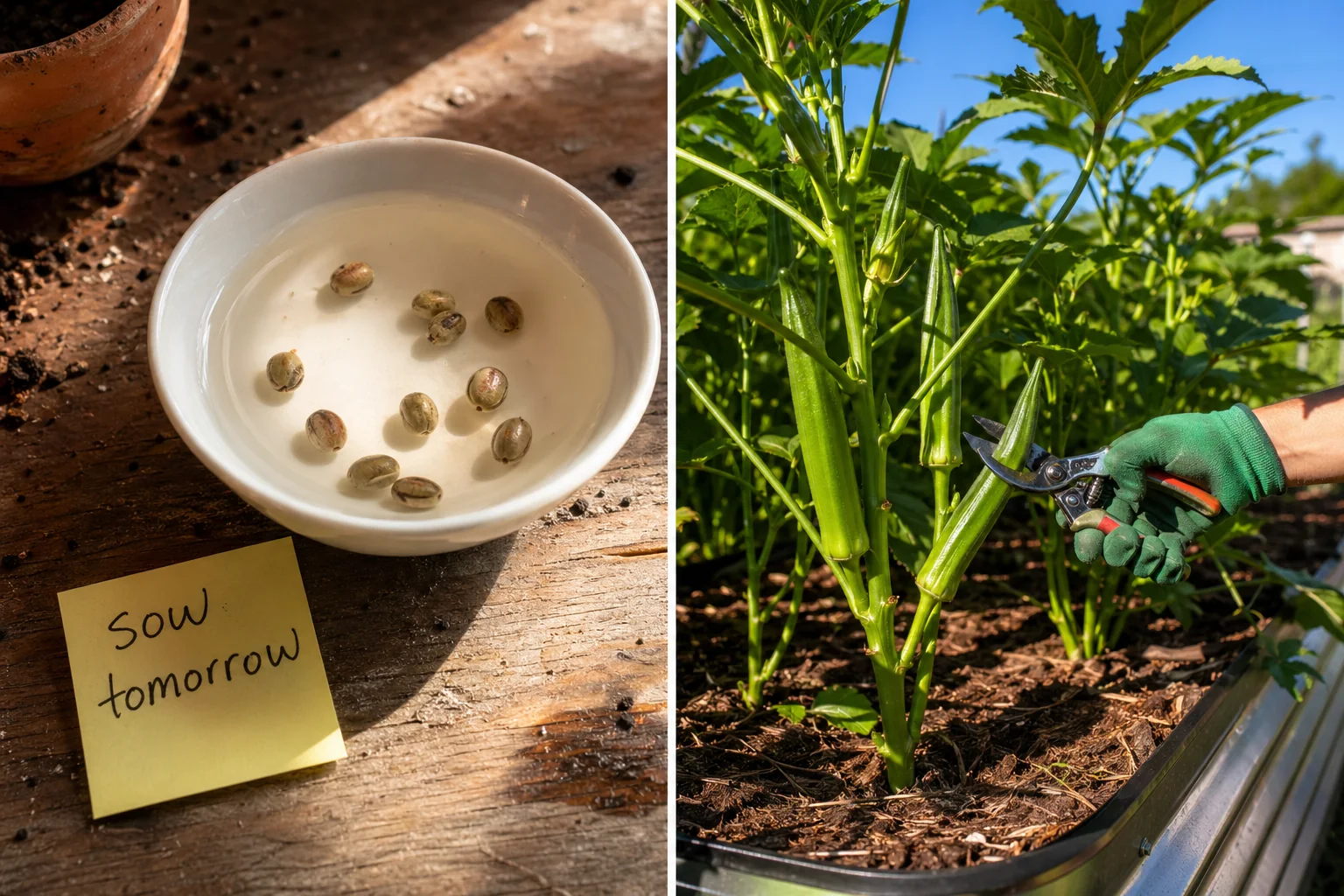
- Place seeds in a small bowl of room-temperature water the evening before you plan to sow.
- Leave for 8-12 hours — overnight is ideal.
- Drain in the morning and sow immediately. Soaked seeds that dry back out lose most of the benefit.
Optional but effective: before soaking, gently nick each seed with a nail file or fine sandpaper on one side (avoid the small scar where the seed attaches). This scarification lets water in faster and speeds germination even further. One pass on the file is enough — you are barely scratching the surface, not cutting into the seed interior.
Direct sow vs transplant
Okra has a long taproot and does not transplant well. Disturbing the root system stalls growth by 2-3 weeks — longer than the germination advantage transplanting might give you.
Direct sowing is the correct method for okra in almost every situation. The only case for starting in cells is if you have a very short growing season (fewer than 120 frost-free days) and need every day of head start. In that case, use soil-block transplants or paper pots that go into the ground intact to avoid disturbing roots.
For most gardeners in USDA Zones 6-11: sow directly in the bed, every time.
Spacing and depth
Getting spacing right sets up yield, airflow, and ease of harvest.
| Parameter | Measurement |
|---|---|
| Planting depth | 1 inch (2.5 cm) |
| Spacing within row | 12-18 inches (30-45 cm) |
| Row spacing | 3 feet (90 cm) |
| Seeds per hole | 1 (soaked) |
At 12 inches you get more plants per bed — good for compact varieties like ‘Clemson Spineless’ or ‘Jambalaya’. At 18 inches, taller open-pollinated varieties like ‘Cow Horn’ or ‘Alabama Red’ have room for their bushy spread without shading each other.
For a full breakdown of how variety height, raised beds, and row layout affect the spacing decision, the dedicated okra spacing guide covers every scenario.
Three feet between rows sounds generous but it matters: mature okra plants hit 4-6 feet tall and need that corridor for airflow, and you need to walk the row daily at harvest without damaging plants.
Soil preparation
Okra is forgiving of mediocre soil but rewards investment in soil structure.
What okra needs:
- pH 6.0-6.8 — slightly acidic to neutral
- Loose, deep, well-draining — the taproot goes straight down; compact or waterlogged soil stunts it
- Moderate fertility — too much nitrogen early gives you foliage with few pods
How to prepare:
- Work 2-3 inches of finished compost into the top 8-10 inches of soil.
- If your soil is heavy clay, add coarse perlite or aged bark to open it up.
- If you’re using a raised bed, a standard vegetable mix with good drainage is sufficient.
- Do not add high-nitrogen fertilizer at planting — wait until first flower buds appear.
A soil pH test is worth doing if you’ve never tested your bed. Okra in soil below 6.0 shows poor pod set and yellow lower leaves even with adequate watering.
Watering okra
Okra is more drought-tolerant than most vegetables once established, but it needs consistent moisture during germination and the first 4-6 weeks after sprouting.
Rules of thumb:
- Keep the top inch of soil moist until germination (5-14 days).
- After establishment, water deeply 1-2 times per week — aim for 1-2 inches (2.5-5 cm) per week including rain.
- In peak summer heat above 90°F (32°C), increase to every 4-5 days if rain is absent.
- Avoid overhead watering once plants are flowering. Wet flowers and foliage in heat promote fungal issues. Drip irrigation or a soaker hose at the base is ideal.
Signs of water stress in okra: leaf edges curling inward in the afternoon, flower buds dropping before opening, short stubby pods. These all reverse quickly with a deep soak.
Fertilizing
Okra is a moderate feeder. Too much nitrogen early produces spectacular foliage and almost no pods. The timing of feeding matters as much as the product.
Feeding schedule:
| Stage | Action |
|---|---|
| At planting | Compost only — no added fertilizer |
| First flower buds visible (~50-60 days) | Side-dress with balanced organic granular (e.g. 5-5-5 or 10-10-10) |
| Every 4-6 weeks through harvest | Repeat side-dress, water in well |
If leaves are uniformly pale yellow (nitrogen deficiency) early in the season before flowering, a light liquid fish emulsion drench will green them up within a week without triggering excessive vegetative growth.
Harvesting young pods
This is where most first-time okra growers make the expensive mistake. Okra pods grow extremely fast in warm weather — a pod that is 2 inches today may be 4 inches tomorrow and 6 inches the day after that.
The harvest window is 3-4 inches (7-10 cm). At this size:
- Seeds inside are small and tender
- The pod snaps cleanly when bent
- Texture after cooking is silky, not slimy or fibrous
- The plant reads the harvest signal and sets new buds
Past 5 inches, pectin breaks down differently and the pod becomes tough and stringy. Past 6 inches it is essentially inedible and its only value is as a seed pod if you want to save seeds for next year.
Harvest protocol:
- Check plants every day during peak growing season (July–August in most of the US)
- Use bypass shears or a sharp knife — pulling can snap branches
- Wear gloves and long sleeves: okra stems and pod exteriors have fine bristles that irritate skin
- Remove every pod larger than 4 inches, even ones you don’t want to eat — leaving them signals the plant to slow production
A tracking app like Tazart can send you a daily harvest reminder so you don’t lose a day’s check during a busy week.
Common problems
Slow germination or no germination
The most common cause is cold soil. If soil is below 65°F, seeds sit without germinating and often rot before conditions improve. Pull them after 3 weeks of no emergence and re-sow into warmer soil. Always soak next batch and confirm soil temperature before sowing.
Secondary cause: planting too deep. More than 1.5 inches in heavy soil is enough to prevent seedlings from pushing through.
Aphids and stinkbugs
Okra attracts both. Aphids cluster on new growth and the undersides of leaves — blast with a strong stream of water early in the morning, or spray with diluted insecticidal soap. A heavy aphid infestation in a small garden can be knocked back in one treatment.
Stinkbugs (especially the brown marmorated stinkbug) pierce pods and leave corky, discoloured patches. Hand-pick adults and egg masses (look under leaves — flat, barrel-shaped eggs in rows). Row cover during early growth keeps them out, but remove it once flowering starts for pollination access.
Powdery mildew (late season)
White powdery coating on upper leaf surfaces appears as nights cool below 65°F in late summer. It rarely kills established plants but reduces pod set. Improve airflow (trim lower leaves), avoid overhead watering, and apply potassium bicarbonate spray as needed.
Pods turning woody overnight
Temperature-related — not a disease. In air temperatures above 90°F, pod growth accelerates sharply. The only fix is daily harvesting. You cannot slow pod growth; you can only keep pace with it.
Related reading
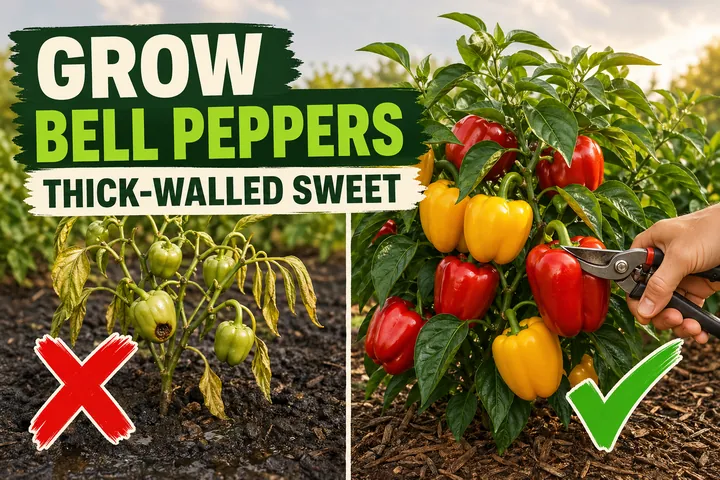
- How to grow bell peppers — another warm-season crop that rewards the same soil prep and full-sun siting.
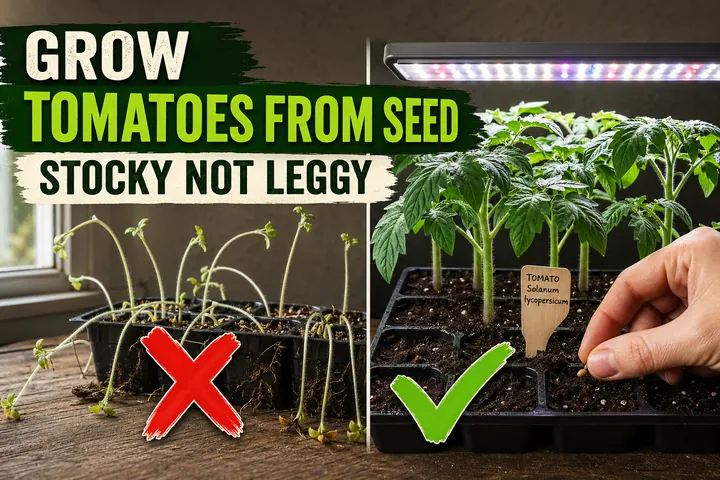
- How to grow tomatoes from seed — a warm-season companion that shares okra’s preference for heat, deep soil, and consistent watering.
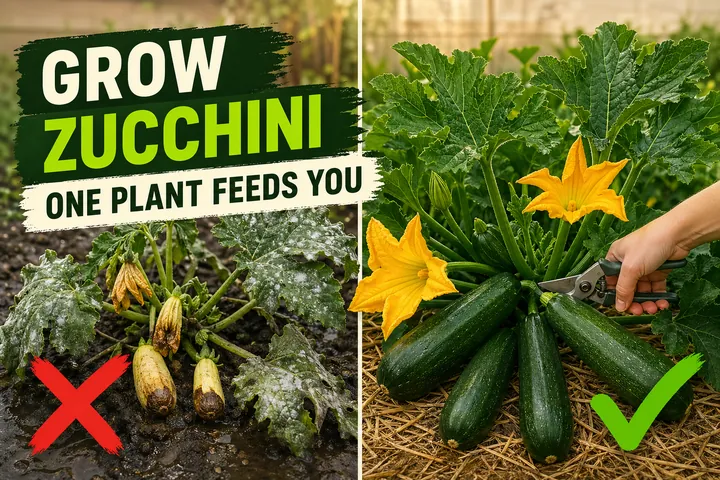
- How to grow zucchini — fast-producing summer vegetable with similar harvest-timing discipline (pick young or lose quality).
- Track your daily okra harvest schedule with the free Tazart plant app — set pod-check reminders so you never miss the 3-4 inch window.
A note on conditions
Okra growing conditions vary widely by region, variety, and season. Soil temperature at sowing time, local humidity, and whether you’re growing in ground or raised beds all affect germination speed and pod production. Use this guide as your baseline and adjust based on what your plants show you in the first few weeks — that is how every experienced vegetable gardener calibrates their garden.
Highly recommended
The supplies that make this guide work

Tazart is an Amazon Associate — we earn from qualifying purchases at no extra cost to you. Thank you for helping us keep these guides free.
Frequently asked questions
How deep should okra seeds be planted?
Plant okra seeds exactly 1 inch (2.5 cm) deep in warm, well-drained soil. Shallower than that and seeds dry out before germinating; deeper and they struggle to push through, especially in heavy soil. Cover gently and firm the soil lightly so there are no air pockets around the seed.
When is okra ready to harvest?
Harvest okra pods when they are 3-4 inches (7-10 cm) long — typically 4-6 days after the flower drops. At this size the pods are tender, the seeds are small, and the texture is silky. Leave pods past 5-6 inches and they turn fibrous and woody within 24-48 hours. Check plants every day in peak summer heat.
How far apart should okra be planted?
Space okra plants 12-18 inches (30-45 cm) apart within rows, with rows 3 feet (90 cm) apart. Tighter spacing gives you more plants per row but reduces airflow and increases disease pressure. In raised beds, 12-inch spacing works well. In open ground, 18 inches is safer for tall varieties that hit 5-6 feet.
What soil temperature does okra need to germinate?
Okra needs soil temperature of at least 65°F (18°C) to germinate reliably — ideally 70-85°F (21-29°C). Below 65°F seeds sit in the ground, rot, or germinate so slowly that seedlings are weak. Use an inexpensive soil thermometer at 2-3 inches deep before direct sowing. In most of the US South this is mid-April to May; further north, late May to June.
Should you soak okra seeds before planting?
Yes — soaking okra seeds overnight (8-12 hours) in room-temperature water softens the hard seed coat and can cut germination time from 2-3 weeks down to 5-7 days. Some growers also nick the seed coat gently with a nail file (scarification) before soaking for even faster results. Drain and plant the same morning you sow — don't let soaked seeds dry back out.
How much sun does okra need?
Okra needs full sun — at least 6-8 hours of direct sunlight per day, and it genuinely thrives with 8-10 hours. It is a tropical plant that runs on heat and light. Partial shade produces tall, leggy plants with few pods. Site the bed on the south or west side of your garden where it will not be shaded by taller crops like corn or trellised tomatoes.
Why are my okra pods woody and tough?
Woody pods are almost always harvested too late. Okra goes from perfect to fibrous in 24-48 hours during hot weather. Set a daily harvest schedule and pick every pod at 3-4 inches — even if you can't use them all, removing oversize pods keeps the plant producing. A single forgotten large pod signals the plant to slow new bud formation.
Can okra be grown in raised beds?
Yes, raised beds are excellent for okra because they warm up faster in spring (useful for hitting the 65°F soil-temp threshold earlier) and drain well, which okra prefers. Use a bed at least 12 inches deep for root room. Space plants 12 inches apart. Be aware that tall varieties can hit 5-6 feet — site the bed where height won't shade shorter neighbors.