Flowers
How to Plant Hosta Seeds (For Patient Gardeners)
Hosta seeds rarely come true to type, but they're the cheapest way to grow new shade plants. Step-by-step guide to germinating hosta seeds indoors and growing them on.
On this page
- Quick answer
- Should you grow hostas from seed at all?
- What you’ll need
- When to plant hosta seeds
- Step-by-step: germinating hosta seeds indoors
- Care after germination
- Hardening off and planting out
- Common mistakes to avoid
- Troubleshooting
- Watch: hosta seed germination
- Related reading
- A note on conditions
Watch the visual walkthrough
How to Grow Hostas from Seed: From SEEDS to Germination!
A short visual walkthrough that pairs with the steps above.
Hosta seeds are the slow lane of shade gardening, but they’re also the cheapest. A single seed pod holds dozens of viable seeds, a packet costs less than a coffee, and once you understand the trick — moist surface, steady warmth, patience — they’re not actually difficult. The catch is that they almost never grow into the parent plant.
This guide covers when seeds make sense, when division is smarter, and exactly how to germinate, grow on, and plant out hosta seedlings.
Quick answer
Sow tiny black hosta seeds on the surface of moist, sterile seed-starting mix at 18–24°C (65–75°F), press in lightly, cover with a humidity dome, and place under a grow light. Most seeds germinate in 14 to 30 days. Pot on at the third true leaf and plant out the following spring. Expect a recognisable plant in year 2 and a full-size clump in year 5.
Should you grow hostas from seed at all?
For most gardeners, the honest answer is: only if you can’t get a division.
Hostas (Hosta spp.) cross-pollinate freely. The seedlings from a fancy variegated ‘Patriot’ or ‘Frances Williams’ will almost all come up plain green, because variegation is held in the parent’s leaf tissue, not its seed. So if you want the plant you saw at the nursery, division is faster, free, and exact. A 5-year-old hosta crown lifted in early spring or autumn yields 3–6 instant plants that already look like the parent.
Seeds make sense when:
- You want a lot of plain green or blue hostas to mass-plant a shaded slope on a tight budget
- You enjoy the genetic-lottery side of hybridising — every seed is a potential new cultivar
- You’re saving seed from a wild Hosta sieboldiana or H. plantaginea, which come fairly true
- Division stock isn’t available where you live
If none of those apply, scroll to the related guides at the bottom and divide an existing clump instead.
What you’ll need
- Fresh hosta seeds — ideally harvested the same season, since viability drops fast after a year
- A seed-starting tray with cells 5 cm (2 in) deep, plus a clear humidity dome
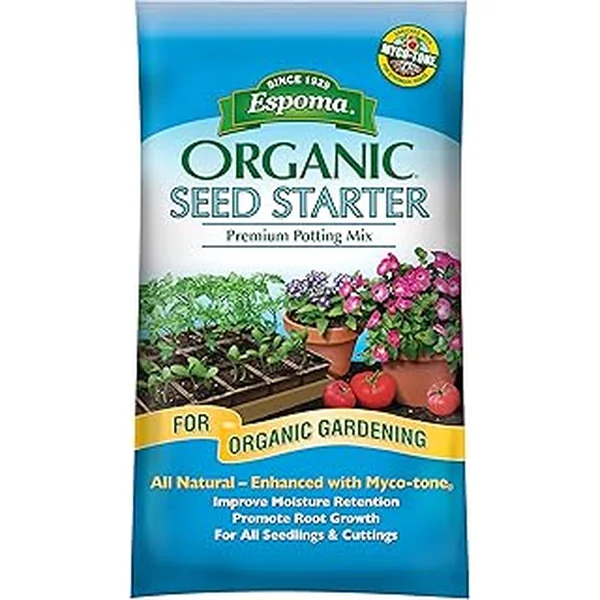
- Sterile peat-free seed-starting mix (garden soil and reused mix carry damping-off fungus)
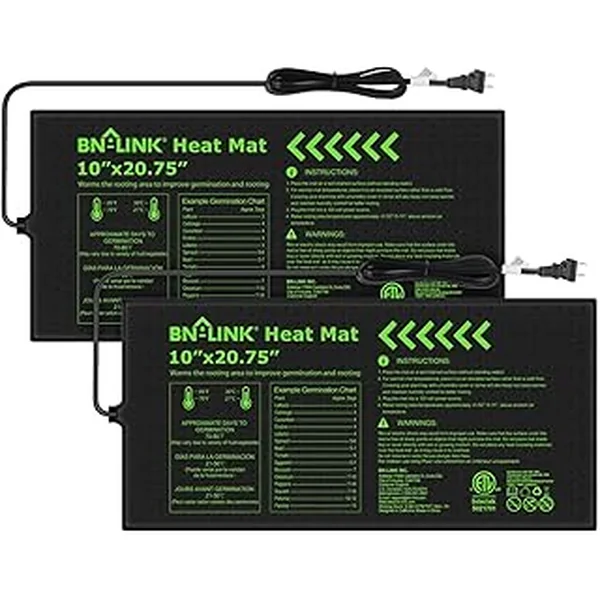
- Heat mat (optional but evens out germination)
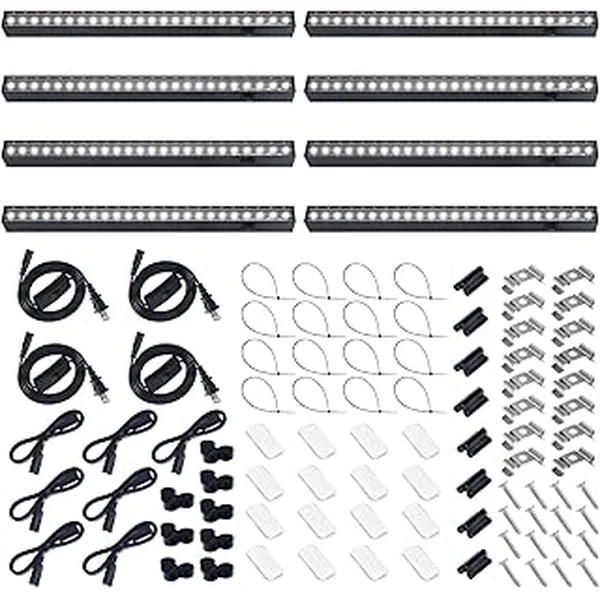
- Basic full-spectrum LED grow light — a windowsill alone gives leggy seedlings
- A spray bottle of clean water
- Labels and a pencil — every batch looks identical until they leaf out
When to plant hosta seeds
Indoors, sow 8–12 weeks before your last frost date so seedlings have enough time to bulk up before they go outside.
Outdoors, sow in autumn directly into a sheltered nursery bed. Winter cold stratifies the seeds for free, and they germinate in spring with the soil temperature.
Avoid mid-summer sowing. Hot soil triggers dormancy and the seedlings that do come up rarely make it through their first winter at a usable size.
Step-by-step: germinating hosta seeds indoors
1. Check the seeds
Tip the seeds onto a sheet of white paper and hold a few up to a bright light. Plump black seeds with a visible dark embryo inside the papery wing are viable. Empty, translucent, or rattling-light seeds aren’t — discard them. With most hosta seed packets, expect 50–70% to be filled.
2. (Optional) Cold stratify for 4 weeks
For older seed, bargain-bin packets, or wild Hosta sieboldiana, fold the seeds into a slightly damp paper towel, slip into a labelled zip-top bag, and refrigerate at 2–4°C (35–40°F) for 4 weeks. This isn’t strictly required for most modern hosta seed but it bumps germination rates noticeably and tightens the window.
3. Fill the tray
Fill cells with sterile peat-free starting mix to within 1 cm (0.4 in) of the top. Tap the tray once on the bench to settle the mix — don’t pack it. Water from below by setting the tray in a shallow tray of water for 10 minutes, then drain.
4. Sow on the surface
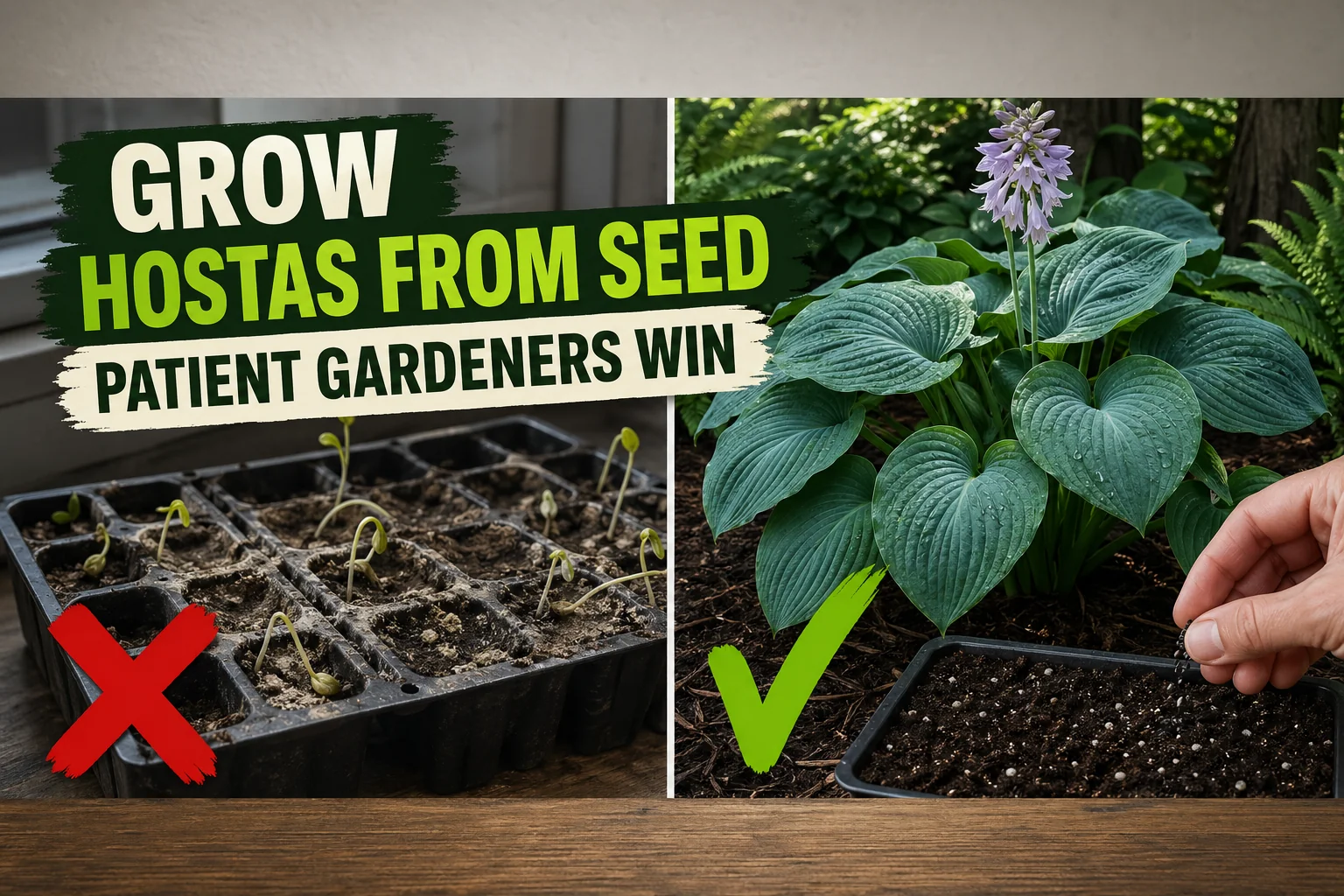
Hosta seeds need light to germinate, so don’t bury them. Drop 2–3 seeds per cell on the surface, then press them into the mix with a fingertip — just enough contact, not buried. Mist the surface with the spray bottle.
5. Cover and warm
Slide the humidity dome on. Set the tray on a heat mat targeting 18–24°C (65–75°F) at the soil. Place under a grow light running 14 hours a day, with the light 20–25 cm (8–10 in) above the dome.
6. Wait 14 to 60 days
Most seeds break the surface in 14–30 days as a single grass-like cotyledon leaf. Slow seeds — especially from variegated parents — can take 6 to 8 weeks. Keep the surface lightly moist (mist daily) and don’t lift the dome until at least half the cells have sprouted.
7. Vent the dome
Once roughly half the cells have a sprout, prop the dome open about 1 cm (0.4 in) for two days, then remove it entirely. This hardens the cotyledons against fungal damping-off, which is the #1 killer of hosta seedlings.
Care after germination
Hosta seedlings are slow. Plan on holding them in cells for 8–12 weeks before potting on.
| Task | When |
|---|---|
| Water | When the surface goes from glossy to matte — usually every 3–4 days indoors |
| Fertilise | Quarter-strength balanced liquid feed, every 2 weeks from the 3rd true leaf |
| Pot on | When the third true heart-shaped leaf appears — into a 9 cm (3.5 in) pot |
| Light | 14 hrs/day under a grow light at 20–25 cm (8–10 in) above the leaves |
A free plant care app like Tazart can hold the watering and feeding schedule for the whole tray, adjust it for indoor humidity, and remind you on Apple Watch when each batch is due — especially useful if you’re germinating multiple species in parallel.
Hardening off and planting out
The seedlings spend their first full year in pots. Don’t be tempted to plant them out in summer of year one — they’re too small to compete with established perennials and slugs will find them in a single night.
In late spring of year two, after the last frost:
- Harden off pots over 7–10 days. Start in deep shade for 1–2 hours a day, working up to a full day in dappled shade.
- Plant into a shaded bed enriched with compost. Spacing 30–45 cm (12–18 in) apart for medium varieties, 60–90 cm (24–36 in) for large.
- Set the crown so the leaf bases sit just at soil level — never buried.
- Mulch with 5 cm (2 in) of leaf mould or bark to lock in moisture.
- Water deeply once, then weekly until established.
Common mistakes to avoid
- Burying the seeds. Hosta seeds need light. Surface-sow and press in lightly — that’s it.
- Letting the surface dry out. A single dry day after sowing kills most of a tray. Mist daily until germination.
- Skipping the dome too early. Pulling the cover off before seedlings have hardened cotyledons exposes them to dry air and damping-off.
- Reusing old potting soil. Garden soil and last year’s mix carry the fungi that wipe out seedlings overnight. Use fresh sterile starter mix.
- Expecting variegated parents to give variegated babies. It almost never happens. If that’s the goal, divide the parent.
- Planting out in year one. They’re too small. Slugs and competition win every time.
Troubleshooting
| Symptom | Likely cause | Fix |
|---|---|---|
| No germination after 8 weeks | Empty seeds or temperature too low | Hold a seed to light to confirm it has an embryo; warm the tray to 21°C (70°F) on a heat mat |
| Seedlings flop and rot at the soil line | Damping-off fungus | Vent the dome earlier, reduce watering, mist with chamomile tea, replace the mix |
| Pale leggy seedlings stretching upward | Light too far away | Drop the grow light to 15–20 cm (6–8 in) above the leaves |
| Tiny holes chewed in seedling leaves | Fungus gnat larvae or slugs | Let surface dry between waterings; use yellow sticky traps; pellet slugs in nursery beds |
| Seedlings stalled at one or two leaves | Cold roots or no feed | Bottom heat to 21°C (70°F); start quarter-strength liquid feed from the 3rd true leaf |
| Year-2 seedlings all plain green | Variegated parent — expected | Normal. Variegation is rarely seed-stable. Keep the best seedlings or divide the parent |
Watch: hosta seed germination
A short visual walkthrough of harvesting hosta seed pods, surface-sowing, and growing on under a grow light pairs well with the steps above. Search YouTube for hosta seed germination and pick a tutorial from a credible perennial nursery channel, then come back and follow the timing here.
Related reading
- How to plant peony bulbs — another patience perennial. Same shaded-bed prep, very different planting depth.
- How to plant hydrangeas in the ground — pairs beautifully with mature hostas under part-shade.
- How to plant morning glory seeds — if you want quick seed-to-bloom satisfaction while your hostas slowly mature.
- Identify any unknown hosta cultivar with the free Tazart plant identifier before you decide whether to seed-save or divide.
A note on conditions
Every garden is different. Light levels under your trees, soil drainage, summer humidity, and slug pressure all change how fast hosta seedlings grow and how reliably they survive their first winter. Treat the timings above as a baseline and adjust based on what your seedlings actually do in week 8 — that’s how every shade gardener calibrates the next batch.
Highly recommended
The supplies that make this guide work
Tazart is an Amazon Associate — we earn from qualifying purchases at no extra cost to you. Thank you for helping us keep these guides free.
Frequently asked questions
How long do hosta seeds take to germinate?
Most hosta seeds germinate in 14 to 30 days at 18–24°C (65–75°F) on a moist seed-starting mix. Older seeds, dark-coated seeds, or seeds from variegated parents can take 6 to 8 weeks. Don't give up before week 8 — keep the surface evenly moist and the temperature steady.
Do hosta seeds need cold stratification?
Most named-cultivar hosta seeds don't strictly need cold stratification, but a 4-week chill at 2–4°C (35–40°F) in a damp paper towel inside a sealed bag noticeably improves and evens out germination. For wild Hosta sieboldiana or seed harvested late in the season, stratification gives the most reliable results.
Will hosta seeds grow true to the parent plant?
Almost never. Hostas cross-pollinate freely with whatever is flowering nearby, and most modern cultivars are sterile or produce variable seedlings. Variegated parents almost always give plain green seedlings. Plant from seed if you're curious about the surprise; divide the parent crown if you want an exact copy.
When should you plant hosta seeds?
Sow indoors in late winter or very early spring (8–12 weeks before your last frost) to give seedlings the longest first growing season. Outdoor sowing works in autumn directly into a protected nursery bed, where the winter cold stratifies the seeds naturally and they germinate in spring.
How long until a hosta from seed looks like a real plant?
Year 1: a single grass-like leaf, then 2–3 small juvenile leaves. Year 2: a small clump of true heart-shaped leaves around 15–20 cm (6–8 in) wide. Year 3–4: recognisable mature foliage. Year 5–6: full-size clump with flowers. This is why most gardeners propagate hostas by division instead — it skips the slow years entirely.
Are hosta seed pods worth saving?
Yes, if you want free plants and don't mind the surprise. Wait until the green seed pods turn brown and just start to split, then cut the whole stalk and finish drying it indoors on paper. Each pod holds 20–60 papery black seeds. Only the seeds with a visible dark embryo (hold one up to the light) are likely to germinate.