Flowers
How to Plant Daffodil Bulbs (Naturalize for Decades)
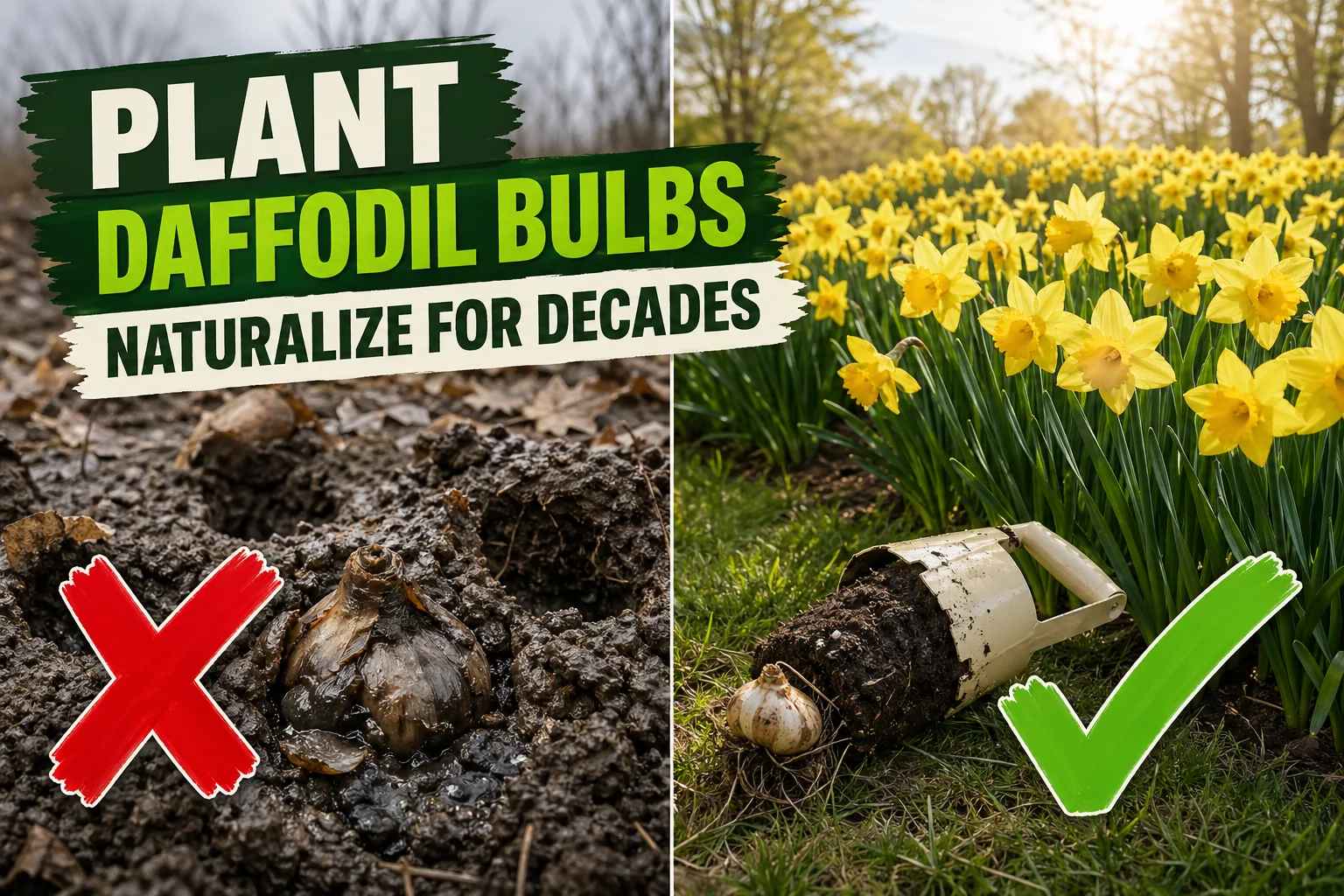
Plant daffodil bulbs the right way — 15 cm (6 in) deep, in fall, in well-drained sun. Here's the exact depth, spacing, and timing for blooms that return for 20+ years.
On this page
- Quick answer
- Daffodils are true bulbs (and that matters)
- When to plant daffodil bulbs
- What you’ll need
- Step-by-step: planting daffodil bulbs
- Spacing and planting density
- Care after planting
- Daffodils in pots
- Common mistakes to avoid
- Troubleshooting
- Watch: planting daffodil bulbs
- Related reading
- A note on conditions
Watch the visual walkthrough
Planting Daffodils: 5 Simple, Easy Tips for Success
A short visual walkthrough that pairs with the steps above.
Daffodils are the easiest spring flower you’ll ever plant — but only if you get the depth and timing right. Plant them shallow and squirrels eat the bulbs over winter. Plant them in soggy soil and they rot before spring. Get those two things right once, and the same bulbs will bloom for 20 years and multiply on their own.
This guide walks you through it the way a daffodil actually wants — true bulb, 15 cm (6 in) deep, in fall, in free-draining soil with a long stretch of spring sun.
Quick answer
Plant daffodil bulbs in mid-to-late fall, pointy end up, 15 cm (6 in) deep and 10-15 cm (4-6 in) apart, in well-drained soil with at least 6 hours of spring sun. Water once after planting, mulch with 5 cm (2 in) of bark, then leave them alone — they’ll bloom every spring for 20+ years and slowly multiply into drifts.
Daffodils are true bulbs (and that matters)
Unlike peonies (tubers) or dahlias (tuberous roots), a daffodil is a true bulb — a tightly packed stack of fleshy leaves around a flower bud, with a flat basal plate at the bottom where roots grow.
A few quick definitions, because the planting rules depend on them:
- Basal plate: the flat brown disk at the bottom — roots come from here
- Pointy tip: the top — the shoot pushes out from here
- Tunic: the papery brown skin — leave it on, it protects the bulb
- Offsets: small bulblets attached to the parent — these are how a clump multiplies
True bulbs are deer- and rodent-resistant because every part of Narcissus contains lycorine, a bitter alkaloid. That’s why daffodils are the one spring bulb you can plant near a hungry deer trail and still see in bloom every April.
When to plant daffodil bulbs
The window is wider than most people think, but the key signal is soil temperature, not the calendar.
- Plant once the soil is around 10°C (50°F) — usually 4-6 weeks before the ground freezes
- Cold zones (USDA 3-5): mid-September to mid-October
- Cool/temperate zones (6-7): mid-October to late November
- Mild zones (8-9): November to early December
- Warm zones (9-10): pre-chill the bulbs in the fridge for 12-14 weeks first, then plant in December-January
Why fall? The bulb needs a long stretch of cool-but-not-frozen soil to grow roots before winter. A bulb planted in spring can flower the first year if it’s been pre-chilled, but it won’t bloom as strongly and rarely naturalizes well.
If you forgot until December and the ground isn’t yet frozen, plant anyway — late-planted daffodils still do better than bulbs left in a paper bag in a warm garage until spring.
What you’ll need
- A bag of firm, plump daffodil bulbs — skip any that feel soft, light, or moldy
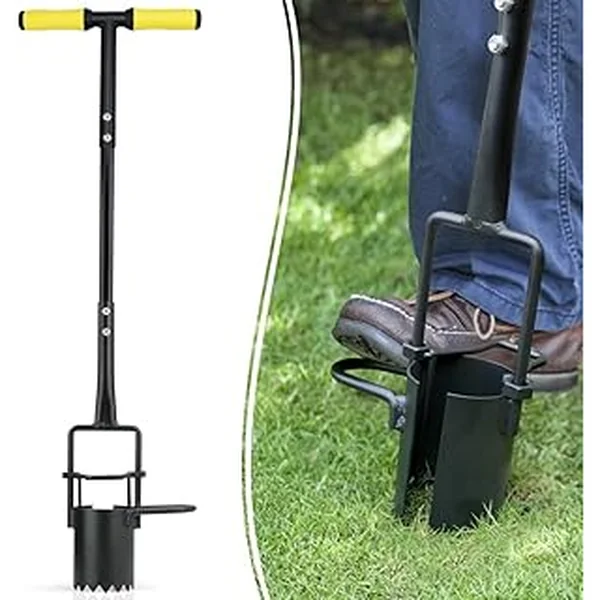
- A spade or a long-handle bulb planter
- Compost or well-rotted leaf mold (a handful per bulb)
- Bone meal or a slow-release bulb fertilizer (optional but useful)
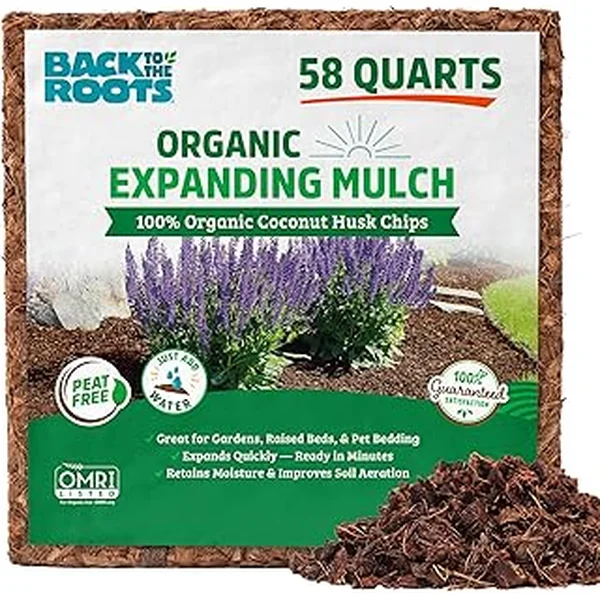
- A shredded bark or leaf mulch
- A spot with at least 6 hours of spring sun and free-draining soil
If your soil puddles after rain or feels sticky in your hand, daffodils will rot. Either pick a different spot or build a small raised mound 15 cm (6 in) high and plant into that.
Step-by-step: planting daffodil bulbs
1. Pick the right spot
Daffodils need three things from the location:
- Sun in spring (6+ hours while the leaves are green)
- Well-drained soil (water shouldn’t pool after rain)
- A spot you can leave undisturbed for at least 5 years
The classic naturalizing spot is the lawn edge under a deciduous tree — full sun in March-April when daffodils bloom, dappled shade once the tree leafs out in May, and the bulbs go dormant before the lawn needs heavy mowing.
2. Dig to 15 cm (6 in) — the universal depth
The rule of thumb is three times the bulb’s height. For a standard daffodil bulb that’s 5 cm (2 in) tall, that’s 15 cm (6 in) deep — measured from the base of the bulb to the soil surface.
Adjust by soil type:
- Sandy soil: 18 cm (7 in) — sand drains fast and bulbs settle
- Loam: 15 cm (6 in) — the textbook depth
- Heavy clay: 12-15 cm (5-6 in) — any deeper and waterlogging risk goes up
Skip “shallow planting for bigger blooms” advice. Shallow daffodils get heaved out by freeze-thaw cycles or dug up by squirrels in October.
3. Mix in a handful of compost and bone meal
In the bottom of the planting hole, drop a handful of compost mixed with about a teaspoon of bone meal. Stir it into the soil at the bottom — don’t let the bulb sit directly on undiluted bone meal.
The phosphorus in bone meal feeds root growth, not leaf growth, which is exactly what a fall-planted bulb needs.
4. Set the bulb pointy end up
Sit the bulb on the prepared soil with the pointy tip facing up and the flat basal plate facing down. If a bulb has obvious roots already starting from the basal plate, that’s the bottom — point the other end up.
For naturalizing drifts, scatter the bulbs by hand and plant them where they fall. Random spacing of 10-15 cm (4-6 in) apart looks more natural than a tidy grid.
5. Backfill, firm gently, water once
Cover with the soil you dug out, firm it lightly with your palm, and water in once with a slow soak — about 4-5 L (1 gallon) per square foot. That first watering closes air gaps around the basal plate so the roots can grow.
You won’t water again. Fall and winter rain handles it from here.
6. Mulch on top with 5 cm (2 in) of bark
A 5 cm (2 in) layer of shredded bark, leaf mulch, or pine straw does three things:
- Keeps soil temperature stable through freeze-thaw cycles
- Locks in moisture so the bulbs don’t dry out before spring
- Hides the disturbed soil so squirrels can’t smell where you just dug
In very cold zones (USDA 3-4) double the mulch to 10 cm (4 in) the first winter, then pull half of it back in spring.
Spacing and planting density
How far apart you plant depends on the look you want:
| Style | Spacing | Bulbs per m² (sq yd) |
|---|---|---|
| Tight border / cutting bed | 8-10 cm (3-4 in) | 80-100 |
| Mixed perennial bed | 12-15 cm (5-6 in) | 40-60 |
| Naturalized lawn drift | 15-20 cm (6-8 in) | 25-40 |
For drifts, a useful trick: throw the bulbs gently across the area and plant them where they land. Real wildflower drifts are uneven, and your eye will read the irregular pattern as natural rather than landscaped.
Care after planting
Daffodils are one of the lowest-maintenance bulbs you can grow. The whole annual cycle:
| Task | When | Why |
|---|---|---|
| Skip watering | Fall and winter | Dormant bulb in cold soil rots if irrigated |
| Let the leaves turn yellow naturally | After bloom, 6 weeks minimum | Leaves recharge the bulb for next year — cutting them early kills future blooms |
| Deadhead spent flowers | Petals brown | Stops the plant putting energy into seeds |
| Top-dress with compost | Once a year, after foliage dies | Replaces nutrients so the clump keeps multiplying |
| Divide the clump | Every 3-5 years, in early summer | Crowded bulbs stop blooming — replant immediately, pointy end up |
A free plant care app like Tazart can hold the bloom-recharge timeline for you and remind you when it’s safe to cut the foliage back — useful if you’ve planted multiple varieties that flower in sequence.
Daffodils in pots
Daffodils grow well in pots if you commit to the right depth and drainage:
- Use a pot at least 25 cm (10 in) deep with drainage holes
- Fill the bottom third with a free-draining mix (potting soil + 30% perlite or grit)
- Plant the bulbs 10 cm (4 in) deep — slightly shallower than in the ground because pots warm and chill faster
- Stand the pot outside in a sheltered, cool spot for the winter chill — bulbs in a heated room won’t bloom
- Move into bright light when shoots reach 5 cm (2 in)
Container daffodils usually bloom for 1-2 years and then weaken. Plant them out into the garden after the second spring and start a fresh pot.
Common mistakes to avoid
- Planting too shallow. Anything under 8 cm (3 in) is squirrel buffet. Stick to 15 cm (6 in).
- Planting in soggy soil. Daffodils tolerate cold; they don’t tolerate wet feet. Drainage decides survival.
- Cutting the foliage right after blooming. Wait 6 weeks for the leaves to yellow on their own. Cut early and the bulb starves.
- Tying the leaves in neat bundles. Looks tidy, blocks sunlight, weakens the bulb. Leave the foliage loose.
- Skipping fall and planting in spring. Spring-planted dry bulbs almost never bloom that year and often skip the next.
- Fertilizing with high nitrogen. Nitrogen drives leaves, not flowers. Use bone meal or a low-nitrogen bulb fertilizer.
Troubleshooting
| Symptom | Likely cause | Fix |
|---|---|---|
| Lots of leaves, no flowers | Clump too crowded, or too shallow | Lift in early summer once foliage yellows, divide, replant 15 cm (6 in) deep |
| Bulbs disappear over winter | Squirrels dug them up | Replant deeper (15-18 cm / 6-7 in) and mulch heavily; or plant in wire baskets |
| Soft, mushy bulbs in spring | Waterlogged soil rotted them | Switch to a raised bed or well-drained slope; never irrigate dormant bulbs |
| Yellow streaked leaves | Possible narcissus virus | Lift and discard infected bulbs; don’t replant in the same spot for 3 years |
| Tall floppy stems that snap | Too much shade or over-fertilizing | Move to sunnier spot; switch to bone meal only |
| Blooms shrink each year | Foliage cut back too early in past seasons | Let leaves die back fully; top-dress with compost; expect recovery in year 2 |
Watch: planting daffodil bulbs
A short visual walkthrough pairs well with the steps above. If you’re a visual learner, watch a quick tutorial like How to Plant Daffodil Bulbs on YouTube and then come back to follow the timing in this guide.
Related reading
- How to plant tulip bulbs — same fall window, slightly deeper depth, and a few extra rules to keep the deer away.
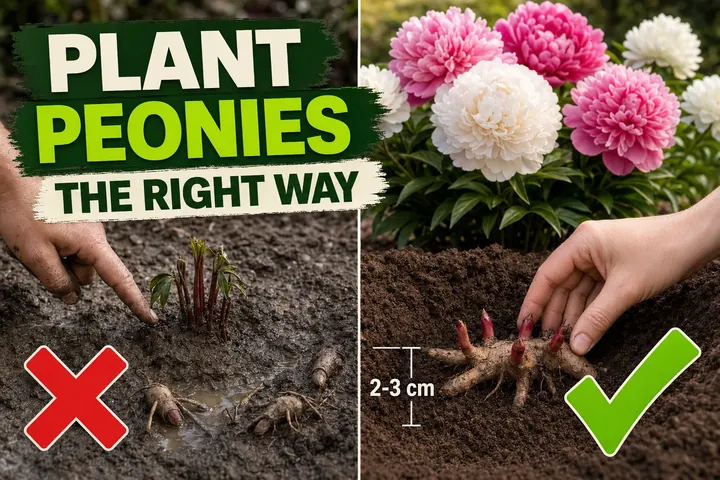
- How to plant peony bulbs (tubers) — the depth rule flips for peonies, which want eyes only 2-3 cm (0.75-1 in) under the soil.
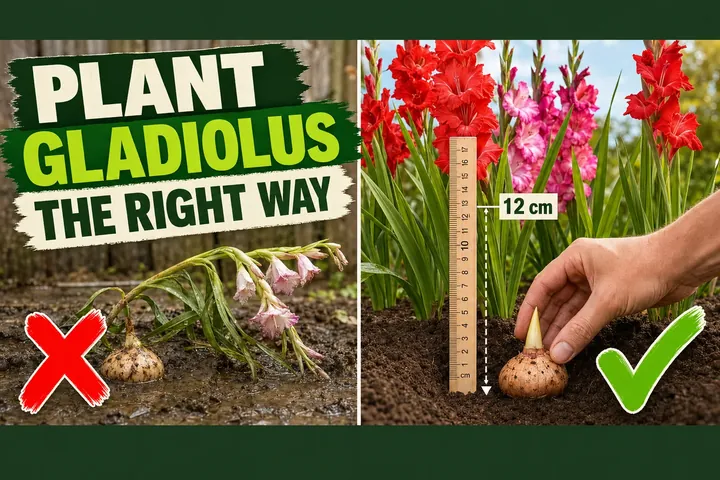
- How deep to plant gladiolus bulbs — a spring-planted bulb with a totally different schedule, useful if you want summer flowers after the daffodils finish.
A note on conditions
Every garden is different. Soil texture, drainage, snow cover, USDA zone, and how much sun reaches your bulbs in March all change how a daffodil performs. Use the depth, timing, and spacing above as a starting point and adjust based on what your bulbs actually do in year two — that’s how every long-lived daffodil drift gets its character.
Highly recommended
The supplies that make this guide work

Tazart is an Amazon Associate — we earn from qualifying purchases at no extra cost to you. Thank you for helping us keep these guides free.
Frequently asked questions
How deep do you plant daffodil bulbs?
Plant daffodil bulbs about three times as deep as the bulb is tall — for most standard bulbs that's 15 cm (6 in) from the base of the bulb to the soil surface. In sandy soil go a touch deeper, around 18 cm (7 in); in heavy clay stay at 12-15 cm (5-6 in). Too shallow and squirrels dig them up; too deep and the bulb spends all its energy reaching the surface and skips a bloom year.
When is the best time to plant daffodil bulbs?
Mid-to-late fall, when the soil has cooled to about 10°C (50°F) but is still 4-6 weeks before the ground freezes. That's roughly September-October in cold zones and October-November in mild zones. Fall planting lets the bulb grow a full root system before winter, which is why it can flower so early in spring.
Which way up do you plant daffodil bulbs?
Pointy end up, flat (root) end down. The pointy tip is where the shoot will emerge; the flat basal plate is where the roots grow from. If you genuinely can't tell, lay the bulb on its side — the shoot will still find its way up, it just costs the bulb a little energy.
Do daffodils need full sun?
They prefer full sun (6+ hours) while the leaves are green in spring, but they tolerate light shade well — especially under deciduous trees that leaf out after the daffodils have already bloomed. Deep shade all season weakens the bulbs and they slowly stop flowering.
How long do daffodil bulbs live?
A correctly planted daffodil bulb lives and blooms for 20+ years and multiplies into a clump every 3-5 years. Some heirloom drifts in old gardens are 50-100 years old. They're one of the longest-lived bulbs you can plant.
Why aren't my daffodils blooming?
Five common causes: planted too shallow (squirrels dug them), planted too deep (over 20 cm / 8 in), foliage cut back too early last year (bulb didn't recharge), too much shade, or a mature clump that needs dividing. If the leaves are lush but no flowers come up, divide the clump in early summer once the foliage yellows.