Edible
How to Plant Creeping Thyme Seeds (Living Lawn Alternative)
Step-by-step guide to plant creeping thyme seeds for a fragrant walkable lawn — soil prep, sowing depth, watering, and bloom timing for Thymus serpyllum.
On this page
Watch the visual walkthrough
Growing Creeping Thyme: How to Propagate from Cuttings (Simple & Easy)
A short visual walkthrough that pairs with the steps above.
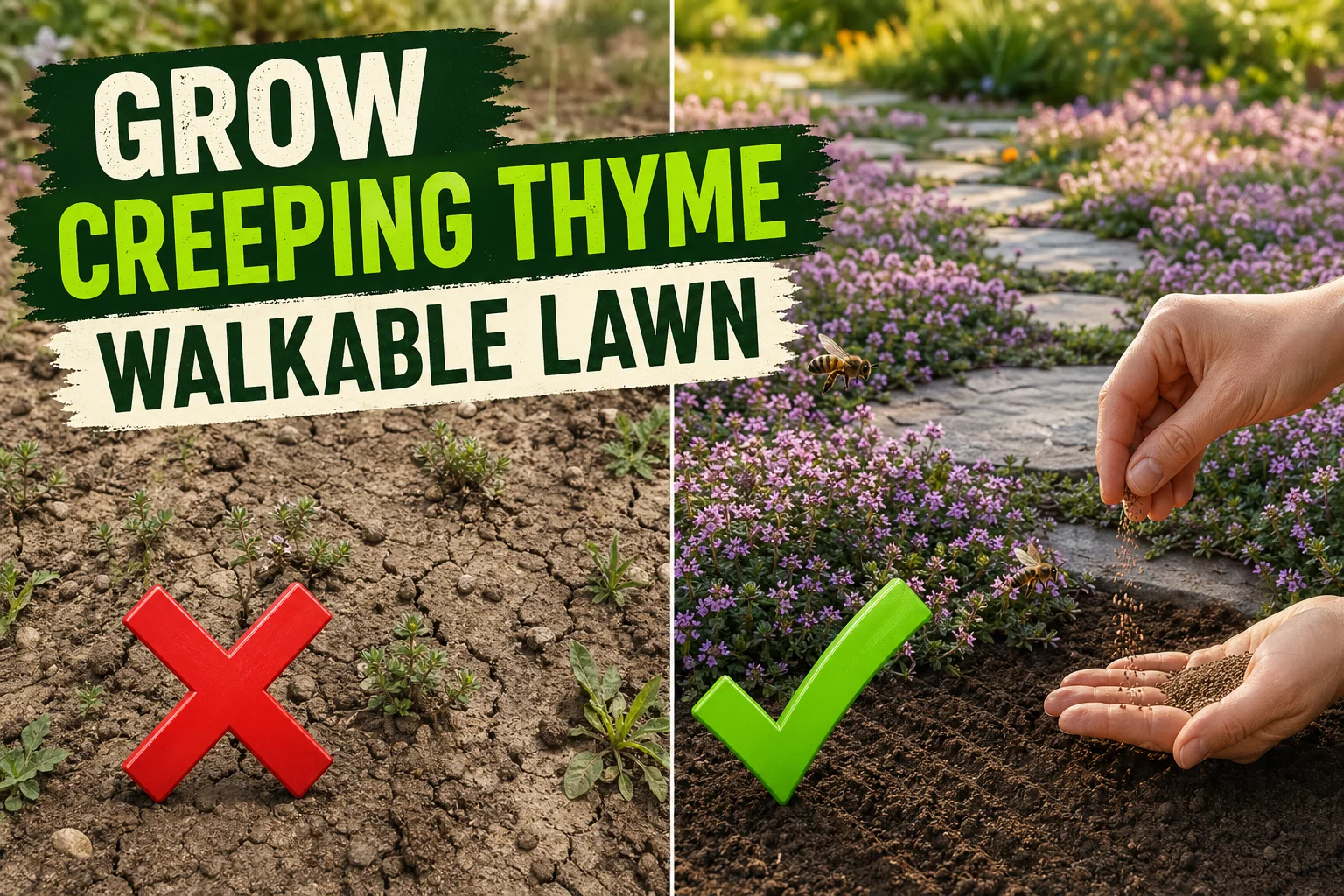
Creeping thyme is the one groundcover that does almost everything: it stays under 5–10 cm (2–4 in) tall, smells amazing when you brush it, draws bees and butterflies all summer, takes light foot traffic, never needs mowing, and the leaves and flowers are edible. The catch — it’s slow from seed. Get the first 6 weeks right and you’ll have a flowering carpet by next summer.
This guide walks you through the whole process: choosing the right thyme species, prepping a weed-free seedbed, surface-sowing the dust-fine seeds, watering without washing them away, and exactly when to expect blooms.
Quick answer
Surface-sow creeping thyme seeds (Thymus serpyllum) on a smooth, weed-free seedbed in spring after the last frost. Press the tiny seeds in for contact but do NOT cover them — they need light to germinate. Mist gently to keep the surface moist, sow about 0.25 g per 0.1 m² (1/8 tsp per sq ft), and place in full sun (6+ hours). Sprouts appear in 14–28 days, plants knit together in one season, and the first flush of pink-purple flowers opens in early summer of year two.
Why creeping thyme as a lawn alternative?
Traditional turf grass needs mowing every 7–10 days, drinks 2.5 cm (1 in) of water a week, and feeds nothing. Creeping thyme replaces that with:
- A 5–10 cm (2–4 in) tall mat that never needs mowing
- A canopy of pink-purple flowers from late spring through midsummer that pollinators flock to
- Roughly half the water of cool-season turf once established
- A spicy herbal scent every time you walk on it
- An edible perennial — leaves and flowers can be used like culinary thyme
It’s not a perfect drop-in replacement (it can’t take a kid’s soccer game), but for paths, low-traffic lawns, slopes, and the strip between flagstones, nothing beats it.
Pick the right thyme species
Not every “creeping thyme” is created equal. Three to know:
| Species | Common name | Height | Best for |
|---|---|---|---|
| Thymus serpyllum | Wild / mother-of-thyme | 5–10 cm (2–4 in) | Walkable lawn alternative |
| Thymus praecox “Coccineus” | Red creeping thyme | 5 cm (2 in) | Brightest pink-red flowers, between pavers |
| Thymus serpyllum “Elfin” | Elfin thyme | 2–5 cm (1–2 in) | Tightest mat, between stepping stones |
For a true walkable lawn alternative, start with Thymus serpyllum — that’s what this guide is calibrated for.
What you’ll need
- 1 packet of creeping thyme seeds (a 1 g (0.04 oz) packet covers about 4 m² (40 sq ft))
- A rake or stiff garden trowel
- A bag of fine dry sand (for mixing with seed)
- A spray bottle or hose with a fine mist setting
- Cardboard or burlap (optional cover during germination)
- A sunny spot with 6+ hours of direct sun and free-draining soil
That’s the whole list — no fertilizer or amendments unless your soil is heavy clay (more on that below).
Step-by-step: planting creeping thyme seeds
1. Time it right
Sow outdoors in late spring after your last frost date, when soil temperatures stabilize at 18–21°C (65–70°F). Spring sowing gives the seedlings a full season to root before winter.
For zones 4–6, that’s mid-May to early June. For zones 7–9, late April to mid-May. Avoid summer sowing — the surface dries out faster than tiny seeds can root.
2. Prep a smooth, weed-free seedbed
This is the step most people rush, and it’s the difference between success and a patchy mess. Creeping thyme is slow at first — any existing weed will outpace it.
- Clear the area completely. Hand-pull weeds, roots and all.
- Loosen the top 5 cm (2 in) of soil with a rake or trowel.
- If your soil is heavy clay, mix in a 2.5 cm (1 in) layer of coarse sand or gritty compost. Thyme rots in waterlogged ground.
- Rake the surface flat and break up any clumps larger than a pea.
The finished seedbed should look like a fine crumbly tabletop — not fluffy, not packed.
3. Mix seeds with sand
Creeping thyme seeds are nearly dust-fine — about 3,000–4,000 seeds per gram (~85,000–110,000 seeds per ounce). Sown straight from the packet, you’ll dump 100 in one spot and zero a hand-width away.
The fix: in a small bowl, stir together 1 part seed to 4 parts dry fine sand. The sand bulks up the mix and shows you where you’ve already sown.
4. Surface-sow the seed/sand mix
Walk slowly across the bed and sprinkle the mix from a low height (15–20 cm / 6–8 in above the soil) so a sudden gust doesn’t carry it away.
Aim for roughly 0.25 g of pure seed per 0.1 m² (about 1/8 teaspoon per sq ft), which works out to 1.5–2.5 kg per 100 m² (3–5 lb per 1000 sq ft) for a full lawn-alternative coverage. Sow half the mix going north–south, then the other half going east–west to even it out.
5. Press in — do NOT bury
Lightly tamp the seeds into the soil with the back of the rake or your gloved hand. You want seed-to-soil contact so they don’t blow away or wash off, but you do not want to bury them.
Creeping thyme needs light to germinate. Anything thicker than a 3 mm (1/8 in) dusting of sand will block sprouting. If you must protect from wind or birds, lay a single layer of burlap loosely on top — light still passes through.
6. Mist gently — never blast
Switch your hose to fine mist or use a spray bottle. Water just enough to darken the soil surface, not enough to puddle. A heavy spray will float the tiny seeds into clumps or wash them off the bed entirely.
For the first 2–3 weeks until you see sprouts, mist the surface once or twice a day so it never fully dries out. After germination, you can taper to every other day, then once every 3–4 days as the seedlings root in.
7. Patience — sprouts appear in 14–28 days
Don’t panic. Creeping thyme germinates slowly and unevenly compared to grass seed. You’ll see the first thread-thin sprouts at about day 14, with new ones appearing through day 28.
Once seedlings have two true leaves (about 4–5 weeks in), thin to roughly one plant every 5–7 cm (2–3 in) by snipping (don’t pull — you’ll uproot the neighbours).
Care after sowing
Creeping thyme is famously low-maintenance once it gets going. Your job in year one is just to keep it watered enough to root deep, and weed it ruthlessly.
| Task | When | Notes |
|---|---|---|
| Water | Every 3–4 days for the first 6 weeks, then every 7–10 days | Cut back hard once plants are 2.5 cm (1 in) tall — overwatering rots crowns |
| Weed | Weekly all of year one | Hand-pull only — herbicides will kill thyme |
| Fertilize | Never, unless soil tests very poor | Thyme thrives on lean Mediterranean soil; rich soil makes it leggy |
| Trim | Light shear after the first bloom in year two | Encourages a denser mat |
A free plant care app like Tazart can hold the watering schedule for you, adjust it for your local weather, and remind you when it’s time — useful for the first 6-week establishment window when missing a day matters.
When you’ll see flowers
Creeping thyme typically does not bloom in year one. The plants spend that first season building roots and a low foliage mat.
- Year 1: Foliage spreads, knits together by autumn. No flowers (occasionally a few late stragglers).
- Year 2: First major bloom flush — pink-purple flowers cover the mat from late May to early July.
- Year 3+: Reliable yearly blooms, full coverage, and tolerates light foot traffic.
Common mistakes to avoid
- Burying the seeds. Creeping thyme is a light-germinator. Anything thicker than a fine sand dusting blocks sprouting.
- Heavy watering. Tiny seeds and seedlings wash away in seconds. Mist only.
- Planting in shade. Less than 6 hours of direct sun = thin, leggy plants that never form a mat.
- Heavy clay or boggy ground. Mediterranean roots rot fast in wet soil. Amend with sand/grit or pick a different groundcover.
- Walking on it in year one. Wait until plants are knit together (start of year two) before any foot traffic.
- Fertilizing. Rich soil makes thyme floppy and shortens its lifespan. Lean is best.
Troubleshooting
| Symptom | Likely cause | Fix |
|---|---|---|
| No sprouts after 4 weeks | Soil too cold (under 15°C / 59°F) or seeds buried | Wait for warmer weather, or re-sow on the surface |
| Sprouts appear, then die overnight | Surface dried out; seedling roots too shallow | Mist twice daily until roots reach 2.5 cm (1 in) deep |
| Plants are leggy and pale | Too much shade or too much fertilizer | Move location or stop feeding — thyme prefers lean soil |
| Patchy coverage in year two | Uneven sowing or weed competition | Overseed bare patches in early spring; weed thoroughly |
| Brown, dying patches in year three+ | Crown rot from overwatering or wet winter | Cut back to healthy growth; amend with grit; reduce watering |
| No flowers in year two | Not enough sun, recent shearing, or too rich soil | Move to a sunnier spot; stop trimming until after bloom |
Watch: planting creeping thyme
A short visual walkthrough pairs well with the steps above. If you’re a visual learner, watch a quick tutorial like How to Plant Creeping Thyme Seeds on YouTube and then come back to follow the timing in this guide.
Related reading
- How to take care of a rosemary plant — same Mediterranean herb, same lean-soil-and-full-sun rules apply.
- Cilantro plant care — another easy edible to grow alongside your thyme lawn.
- How to plant morning glory seeds — another seed-starting guide where prep makes the difference.
- Scan the next plant you bring home with the free Tazart plant identifier and let it set up the watering schedule for you.
A note on conditions
Every yard is different. Sun exposure, soil drainage, regional climate, slope, and rainfall all change how fast creeping thyme establishes from seed. Use the steps above as a starting point and adjust based on what your patch actually does in week three — that’s how every good garden grower learns.
Highly recommended
The supplies that make this guide work

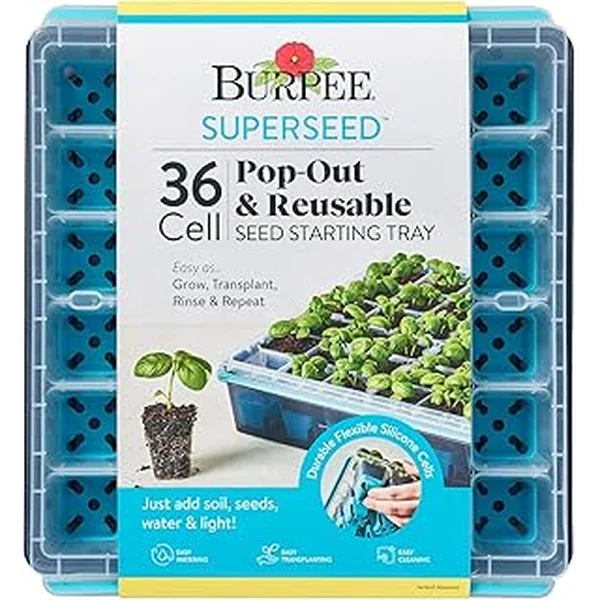

Tazart is an Amazon Associate — we earn from qualifying purchases at no extra cost to you. Thank you for helping us keep these guides free.
Frequently asked questions
How long does creeping thyme take to germinate?
Creeping thyme seeds (Thymus serpyllum) typically sprout in 14 to 28 days at soil temperatures of 18–21°C (65–70°F). Germination is uneven — expect a slow, scattered start over 3 to 4 weeks rather than a single flush. Keep the surface consistently moist; a dry afternoon can kill freshly sprouted seedlings in hours.
Do you need to cover creeping thyme seeds with soil?
No — creeping thyme seeds need light to germinate. Press them gently into the soil surface for good contact, but do not bury them. A very thin dusting of fine sand (less than 3 mm (1/8 in)) is the most you should add, and only to stop the seeds blowing away.
When is the best time to plant creeping thyme seeds?
Sow outdoors in late spring once soil has warmed to 18°C (65°F) and the last frost has passed. In USDA zones 4–9, that's typically late April through early June. You can also start seeds indoors 6 to 8 weeks before last frost in trays under a grow light, then transplant out after hardening off.
How much creeping thyme seed do I need per square foot?
Use about 0.25 g per 0.1 m² (1/8 teaspoon per sq ft) for a fast-filling lawn alternative — roughly 1.5–2.5 kg per 100 m² (3–5 lb per 1000 sq ft). Mixing the tiny seeds with dry sand at a 1:4 ratio makes them much easier to spread evenly.
Can you walk on creeping thyme?
Yes — Thymus serpyllum is the most foot-traffic-tolerant of the creeping thymes and handles light to moderate walking once established (typically by the second growing season). It is not built for heavy daily traffic like a sports field, but works perfectly between flagstones, along garden paths, and as a low-mow lawn replacement.
Why isn't my creeping thyme spreading?
The three usual culprits are heavy clay or wet soil (thyme rots in poor drainage), too much shade (it needs 6+ hours of direct sun per day), and overwatering established plants. Creeping thyme is a Mediterranean native that thrives on lean, gritty soil and minimal water once rooted in.