Edible
How to Plant Cilantro Seeds (Beat the Bolt with Succession)
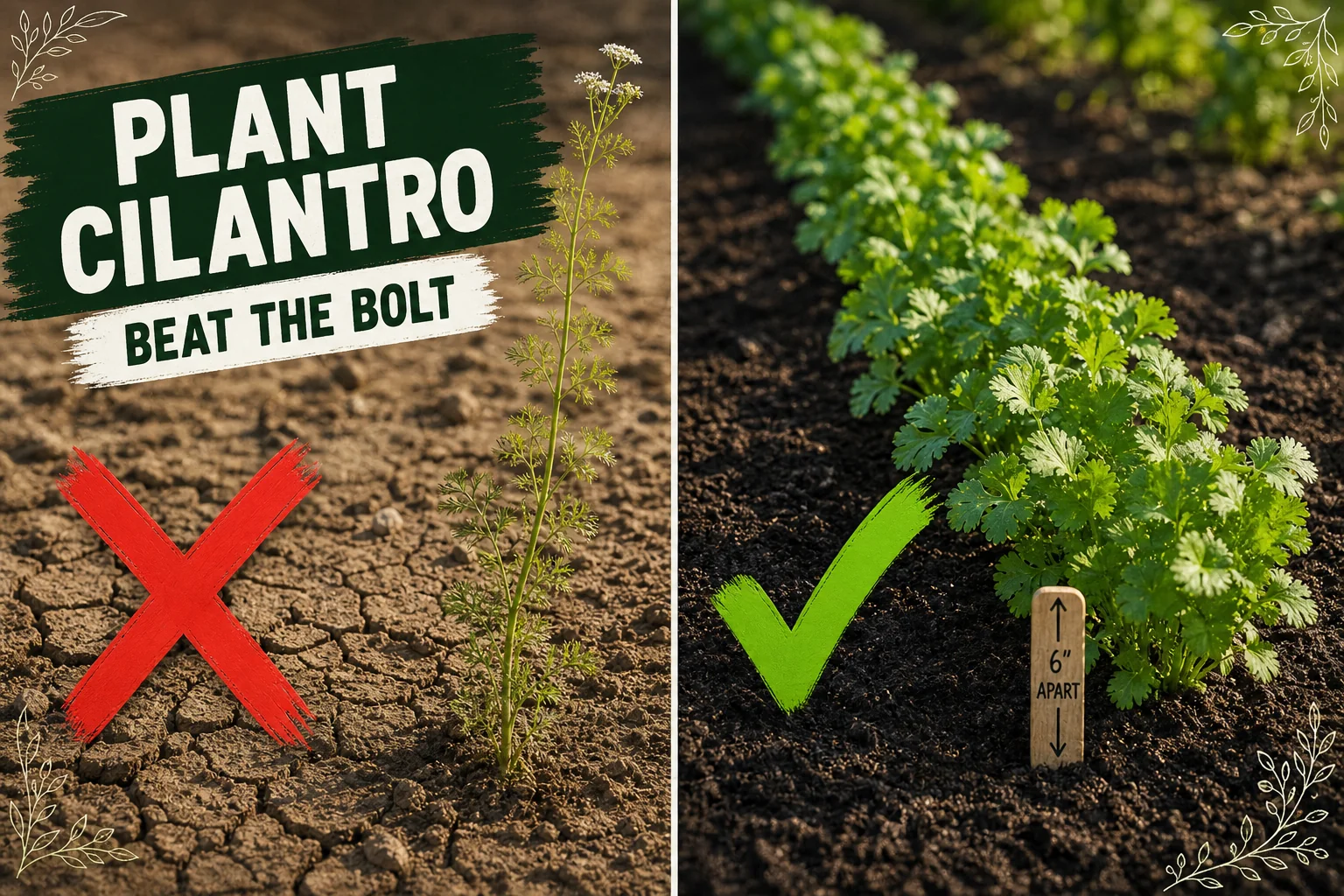
Plant cilantro seeds 1/4 to 1/2 inch deep, 6 inches apart, in cool soil. Succession sow every 2–3 weeks because cilantro bolts fast in summer heat — beat the bolt.
On this page
- Quick answer
- Cilantro is two herbs in one plant
- Cilantro bolts. Get used to it.
- The exact depth: 1/4 to 1/2 inch
- Soil temperature is the make-or-break variable
- Spacing for leaves vs. seeds
- Succession sowing is mandatory
- Direct sow only — never transplant
- Watering and feeding
- Harvesting before the bolt
- Indoor cilantro year-round
- Common mistakes
- Troubleshooting table
- Related reading
- A note on conditions
Watch the visual walkthrough
How to Grow Cilantro...And Stop It From BOLTING!
Get free seeds, shipping, and returns: https://www.epicgardening.com/greenhouse/ Check out more herb guides: ...
Cilantro is the herb that frustrates more gardeners than any other. You plant a row, harvest beautifully for three weeks, and then almost overnight the plant shoots up a flower stalk, the leaves change shape, and the harvest is over.
This isn’t a problem you solve by picking a better variety, watering more carefully, or feeding the plant. Cilantro is a short-lived cool-season annual that’s genetically programmed to flower and set seed within 6–8 weeks of germination. The only real strategy is to outsmart the lifecycle: sow shallow, sow often, and stop fighting the bolt.
This guide covers the exact planting depth, why succession sowing is non-negotiable, soil temperature, watering, and the harvest timing that maximizes leaves before the inevitable flowering happens.
Quick answer
Plant cilantro seeds 0.5–1.25 cm (1/4 to 1/2 in) deep, 5–8 cm (2–3 in) apart, then thin to 15–20 cm (6–8 in) spacing once seedlings have 3–4 true leaves. Sow only in cool soil at 13–24°C (55–75°F) — early spring or early fall in most climates. Germination takes 7–14 days. Succession sow every 2–3 weeks during cool weather because each planting produces leaves for only 4–6 weeks before bolting. Direct sow only — cilantro hates transplanting. Provide afternoon shade in warm climates to extend the harvest window.
Cilantro is two herbs in one plant
Cilantro and coriander are the same plant at different stages.
- Cilantro = the fresh leaves and stems harvested before the plant flowers
- Coriander = the dried seeds harvested after the plant flowers and sets seed
This guide covers planting cilantro for leaves. The same seed grown for coriander seed harvest follows different spacing rules (wider, 30 cm / 12 in apart) and you actually want the plant to bolt — exactly what we’re trying to prevent for leaf production.
Cilantro bolts. Get used to it.
The bolting problem is built into cilantro’s biology. As an annual cool-season crop native to the Mediterranean, it evolved to grow rapidly during cool spring weather, flower as days lengthen and temperatures rise, then set seed before summer drought. That lifecycle is hardcoded — modern “slow-bolt” varieties extend the leaf phase by maybe 2–3 weeks but don’t change the fundamental schedule.
The triggers that push cilantro into bolting:
- Long day length (more than 14 hours of light)
- Soil temperature above 24°C (75°F) at root level
- Air temperature above 27°C (80°F) sustained
- Transplant shock disrupting the taproot
- Drought stress at any point in the growth cycle
Once any of these triggers fire, the plant initiates flowering. The central stem elongates, leaf shape changes from broad and lobed to narrow and feathery, and within 2 weeks small white flower umbels appear. Leaf harvest is over.
You can’t stop bolting once it starts. The strategy is to outpace it with succession plantings and time sowings to the cool windows in your climate.
The exact depth: 1/4 to 1/2 inch
Cilantro seeds are unusually shaped — what looks like a single round seed is actually two seeds fused inside a rough corky husk. This double-seed structure means each “seed” can produce two seedlings, which is why cilantro often emerges in clumps.
The husk is a moisture barrier that needs consistent wet soil to soften and split. This shapes the planting depth:
- 0.5 cm (1/4 in) deep in fine moisture-retentive soil that stays consistently damp
- 1.25 cm (1/2 in) deep in regular garden soil where the surface dries faster
- Never deeper than 2 cm (3/4 in) — the seedling can’t push through
Some growers crush the husk lightly with a rolling pin before sowing to speed germination by 3–5 days. This works but isn’t necessary if you keep the soil consistently moist for the full 14-day germination window.
Soil temperature is the make-or-break variable
Cilantro is one of the few common garden vegetables that prefers cool soil for germination. Hot soil literally suppresses cilantro germination — and pushes any seedlings that do emerge straight into bolting.
| Soil temperature | Germination rate | Notes |
|---|---|---|
| 7–13°C (45–55°F) | Slow but reliable | 14–21 days to emerge |
| 13–18°C (55–65°F) | Optimal | 10–14 days, healthy plants |
| 18–24°C (65–75°F) | Acceptable | 7–10 days, watch for early bolting |
| 24–27°C (75–81°F) | Poor | Erratic, bolts within 4 weeks |
| Above 27°C (81°F) | Very poor | Fails or bolts immediately |
This temperature preference is why cilantro thrives in early spring and fall, and consistently fails in midsummer plantings everywhere except the coolest mountain or coastal climates.
A probe soil thermometer at 5 cm (2 in) depth tells you when to sow. Don’t trust the calendar — soil warms unevenly depending on aspect, mulch, and rainfall patterns.
Spacing for leaves vs. seeds
Spacing depends on what you’re growing for.
Leaf production (the most common goal):
- Sow seeds 5–8 cm (2–3 in) apart
- Thin seedlings to 15–20 cm (6–8 in) apart at 3–4 true leaves
- Plants reach 30 cm (12 in) tall before bolting
- Each plant yields 30–60 g (1–2 oz) of leaves over 4 weeks
Cut-and-come-again micro-leaf:
- Broadcast or sow 2.5 cm (1 in) apart
- No thinning needed
- Cut at 10 cm (4 in) tall with scissors, like microgreens
- Higher density per area, smaller individual yields
Coriander seed production:
- Sow 5–8 cm (2–3 in) apart
- Thin to 30 cm (12 in) apart at 3–4 true leaves
- Let plants flower and set seed
- Harvest dry brown seed heads in late summer
For most gardeners, leaf production at 15–20 cm (6–8 in) spacing is the right answer.
Succession sowing is mandatory
A single planting of cilantro produces usable leaves for 4–6 weeks. To have fresh cilantro for an entire season, you must sow new short rows every 2–3 weeks throughout the cool windows.
Spring schedule (US zones 5–8):
| Sow date | First harvest | Bolts by |
|---|---|---|
| 4 weeks before last frost (early March) | Mid-April | Late May |
| 2 weeks before last frost (mid-March) | Late April | Mid-June |
| Last frost date (early April) | Early May | Late June |
| 2 weeks after last frost (mid-April) | Mid-May | Early July |
Stop succession sowing in late spring once consistent daytime temperatures hit 24°C (75°F).
Fall schedule:
| Sow date | First harvest | First frost kills (zone 6) |
|---|---|---|
| 8 weeks before first frost (early August) | Mid-September | Mid-November |
| 6 weeks before first frost (mid-August) | Late September | Mid-November |
| 4 weeks before first frost (early September) | Mid-October | Mid-November |
The fall schedule gives the longest leaf-harvest window of the year because cool nights and shortening days dramatically slow bolting. Many gardeners skip spring cilantro entirely and focus on fall.
This same succession-sowing strategy works for arugula, scallions, and bok choy — all cool-season crops that bolt or toughen in summer heat.
Direct sow only — never transplant
Cilantro grows a long delicate taproot from the moment it germinates. Disturbing that taproot during transplanting causes severe shock that often pushes the plant into immediate bolting — even when conditions are otherwise perfect.
This is a hard rule:
- Do not start cilantro seeds in cell trays for transplanting
- Do not buy cilantro seedlings from a nursery (they bolt within weeks)
- Do not move volunteer cilantro seedlings that pop up where you don’t want them
The only exceptions are:
- Biodegradable peat or coir pots planted intact (taproot undisturbed)
- Self-watering deep cells (4 cm / 1.5 in deep minimum) with no root disturbance during transplant
- Indoor seed-starting in deep individual containers
For 95% of gardeners, the simple rule is direct sow into the final growing position.
Watering and feeding
Cilantro needs consistent moisture but hates soggy soil — its taproot rots quickly in poorly drained conditions.
Germination phase (days 1–14):
- Mist daily to keep top 2.5 cm (1 in) of soil moist
- Use a fine spray nozzle, never a heavy stream
- Cover bed with row cover or thin straw if surface dries fast
Active growth (days 14–60):
- Water deeply 2–3 times per week
- Soak the top 10 cm (4 in) of soil at each watering
- Mulch with 2.5–5 cm (1–2 in) of straw or shredded leaves to hold moisture
- Drought stress accelerates bolting — never let cilantro wilt
Fertilizing:
- Cilantro doesn’t need much fertilizer
- A single application of half-strength liquid balanced fertilizer 2 weeks after thinning is sufficient
- High-nitrogen feeds push fast leaf growth but produce milder flavor and earlier bolting
Harvesting before the bolt
Maximum leaf yield comes from harvesting outer leaves consistently while the plant is still in its leaf phase.
Single-leaf harvest:
- Snip individual outer leaves at the base when plants are 15 cm (6 in) tall
- Leave the central crown and inner leaves intact
- Plant continues producing for another 2–4 weeks
Cut-and-come-again:
- Cut all leaves at 5 cm (2 in) above soil with scissors when plants are 20 cm (8 in) tall
- Plant regrows for one more cut, sometimes two, before bolting
- Better for high-density plantings
Pre-bolt full harvest:
- When you see the central stem elongating with feathery narrow leaves, the plant is bolting
- Pull the entire plant immediately — harvest everything usable
- Use the next succession planting from this point
The first sign of bolting is a change in leaf shape from broad lobed leaves to narrow feathery ones. Once you see this, you have about 1 week before flower stalks form. Don’t try to stop it — pull the plant, use the leaves, and rely on your next succession sowing.
Indoor cilantro year-round
Indoor growing sidesteps most of the bolting problem because you control temperature and partial day length.
Setup:
- 15–20 cm (6–8 in) deep pot with drainage holes
- Free-draining herb potting mix
- South-facing window or grow light 30 cm (12 in) above the plant
- 16–22°C (60–72°F) room temperature, cooler nights ideal
Sowing:
- Direct sow 8–10 seeds per 20 cm (8 in) pot
- Plant 1.25 cm (1/2 in) deep, water with mist
- Thin to 4–5 plants per pot at 3–4 true leaves
Care:
- Water when the top 2.5 cm (1 in) of soil dries
- Half-strength liquid fertilizer monthly
- Succession sow new pots every 3 weeks for continuous supply
Indoor harvests per pot are smaller than outdoor (typically 15–30 g / 0.5–1 oz of leaves per pot per cycle), but year-round availability and zero bolting frustration make it worthwhile for serious cilantro users.
Common mistakes
- Sowing in midsummer. Hot soil suppresses germination and pushes any survivors into immediate bolting. Sow only in cool windows.
- Transplanting cilantro seedlings. Disturbed taproots trigger immediate bolting. Direct sow only.
- Single planting expectation. Cilantro doesn’t keep producing all season like basil. Succession sow every 2–3 weeks.
- Planting too deep. Anything more than 1.25 cm (1/2 in) delays germination and reduces emergence rates.
- Letting plants wilt. Drought stress accelerates bolting. Keep soil consistently moist.
- Buying nursery seedlings. Pre-grown cilantro plants bolt within 2–3 weeks of purchase. Always start from seed.
- Skipping the thinning step. Crowded cilantro produces small weak plants and bolts faster. Thin to 15–20 cm (6–8 in) spacing.
- Trying to stop the bolt. Once a plant initiates flowering, you can’t reverse it. Move on to the next succession.
Troubleshooting table
| Symptom | Likely cause | Fix |
|---|---|---|
| Seeds don’t germinate | Hot soil, dry surface, or old seed | Sow in cooler weather, keep soil moist, use fresh seed |
| Plants bolt within 4 weeks | Hot weather, transplanting, drought | Sow in cool window, direct sow only, water consistently |
| Small weak plants | Crowding or poor soil | Thin to 15–20 cm (6–8 in), add compost |
| Yellow lower leaves | Overwatering or nitrogen deficiency | Improve drainage; apply half-strength fertilizer |
| Leaves become narrow/feathery | Bolting starting | Harvest immediately, start next succession |
| Plants flop sideways | Too much nitrogen or wind | Reduce feed; provide windbreak |
| Bitter or soapy flavor | Bolting in progress or genetic | Harvest younger leaves; some varieties taste different |
Related reading
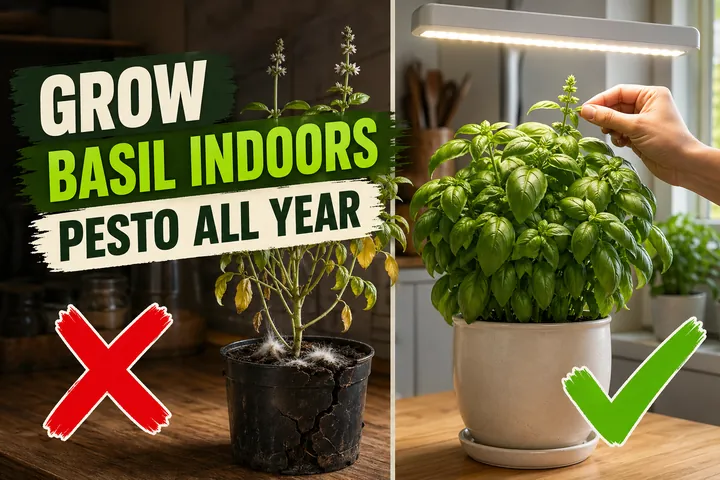
- How to grow basil indoors — basil is the warm-weather counterpart to cilantro: thrives in heat, hates cool soil. Pair them for year-round herb harvest.
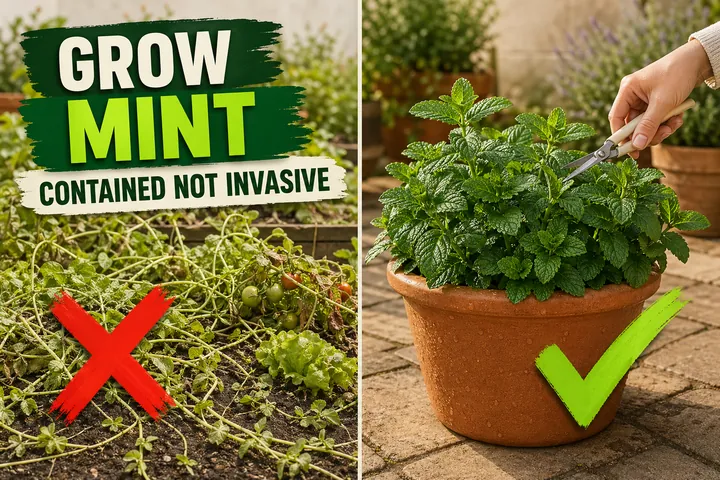
- How to grow mint — vigorous perennial herb with the opposite “problem”: it grows too aggressively, while cilantro disappears too fast.
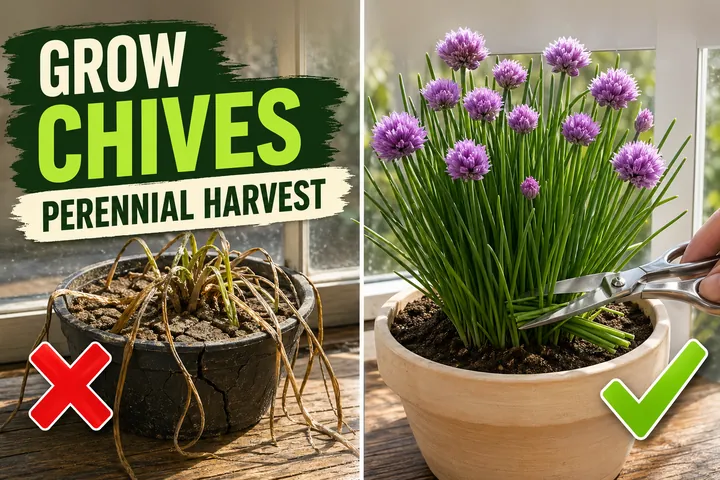
- How to grow chives — perennial onion-flavored herb that produces leaves for years from one planting, complementing the short-lived cilantro succession workflow.
- How to grow arugula indoors — another cool-season leaf crop with the same succession-sowing requirement as cilantro.
- How to grow scallions — pair with cilantro in salsa beds; both prefer cool weather and benefit from succession sowing.
- Track every sowing date and bolt timing with the free Tazart plant care app — it adjusts succession-sowing reminders for your local frost dates and current temperatures.
A note on conditions
Cilantro success depends almost entirely on timing. Climate, variety, and soil all matter, but they’re secondary to “cool soil + succession sowing + direct sow only.” In hot southern climates (zones 8–10), spring cilantro often fails entirely because soil heats up too fast — focus on fall and winter sowings instead. In cool northern climates (zones 4–6), the spring window is short but reliable, and fall plantings extend through October. Adapt the succession schedule to your local cool windows and accept that cilantro is a sprint, not a marathon. That mindset shift is most of the battle.
Highly recommended
The supplies that make this guide work


Tazart is an Amazon Associate — we earn from qualifying purchases at no extra cost to you. Thank you for helping us keep these guides free.
Frequently asked questions
How deep do you plant cilantro seeds?
Plant cilantro seeds 0.5–1.25 cm (1/4 to 1/2 in) deep in well-drained soil. The seeds are actually two seeds fused inside one rough husk — at 1.25 cm (1/2 in) depth in cool moist soil they germinate reliably in 7–14 days. Shallower planting risks drying out before germination; deeper planting delays emergence and reduces germination rates.
How often should you succession sow cilantro?
Succession sow cilantro every 2–3 weeks throughout the cool seasons (early spring and fall) to keep fresh leaves coming all season. Each individual planting produces usable leaves for only 4–6 weeks before bolting to seed. In hot summer climates, take a break from sowing during the hottest 6–8 weeks and resume in late summer for a fall harvest.
Why does my cilantro bolt so fast?
Cilantro bolts (sends up a flower stalk and stops producing leaves) when triggered by long days, hot temperatures above 24°C (75°F), or transplant shock. It's a cool-season annual genetically programmed to flower and set seed quickly when conditions warm. Beat bolting by direct sowing in cool soil at 13–18°C (55–65°F), succession sowing every 2–3 weeks, and providing afternoon shade in warm climates.
What temperature does cilantro need to grow?
Cilantro thrives at 16–24°C (60–75°F) with cool nights below 18°C (65°F). Germination is best at 13–24°C (55–75°F) — cilantro actually germinates poorly in hot soil above 27°C (80°F). The plant tolerates light frost down to -4°C (25°F) once established. Hot summer weather above 27°C (80°F) triggers fast bolting regardless of variety.
How far apart do you space cilantro seeds?
Space cilantro seeds 5–8 cm (2–3 in) apart at sowing, then thin to a final spacing of 15–20 cm (6–8 in). Tighter spacing of 10 cm (4 in) works for cut-and-come-again leaf harvesting at small size. For coriander seed production (letting plants flower), space wider at 30 cm (12 in) for full umbel development.
Can you grow cilantro indoors year-round?
Yes — indoor growing largely sidesteps the bolting problem because you control temperature and day length. Place pots in a south-facing window or under a grow light, keep temperature 16–22°C (60–72°F), water when the top 2.5 cm (1 in) of soil is dry, and succession sow new pots every 3 weeks. Indoor harvests are smaller per plant than outdoor but continuous year-round.