Flowers
How to Plant Caladium Bulbs (Tubers) for Massive Leaves
Plant Caladium bulbs the right way — knobby side up, 4 cm (1.5 in) deep, in warm soil above 21°C (70°F). Exact depth, soil, and timing for huge leaves.
On this page
Watch the visual walkthrough
How to grow caladiums from bulbs - De eyeing caladium bulbs - Planting caladium
A short visual walkthrough that pairs with the steps above.
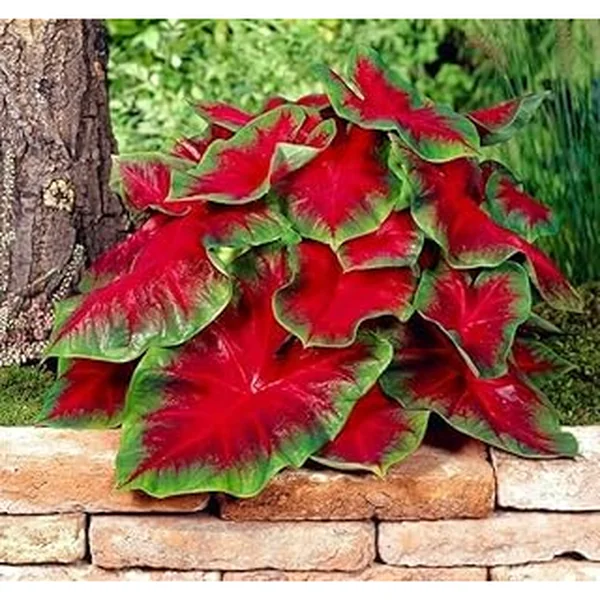
Caladium bulbs are not actually bulbs — they’re tubers, the chunky, knobby roots of Caladium bicolor. Plant them right and you’ll get those huge heart-shaped pink, white, red, and green leaves that turn a shady corner into a tropical scene. Plant them wrong and you’ll spend the summer wondering why nothing came up.
This guide walks you through it the way a caladium actually wants — knobby side up, 4 cm (1.5 in) deep, in warm soil above 21°C (70°F), in dappled shade. Get those four things right and you’ll see leaves in 2–3 weeks.
Quick answer
Plant Caladium tubers knobby (eye) side up, 4 cm (1.5 in) deep, in loose well-draining soil. Wait until soil is above 21°C (70°F) — usually 2–3 weeks after last frost. Space tubers 20–30 cm (8–12 in) apart in dappled shade, water in, and mulch with 5 cm (2 in) of bark. Expect shoots in 2–3 weeks and full-size leaves in 6–8 weeks.
Caladium “bulbs” are actually tubers
You’ll see them sold as bulbs everywhere, but botanically they’re tubers — flat, knobby chunks of storage tissue with growth points (eyes) on the top. The distinction matters because it changes how you plant them.
A few quick definitions:
- Tuber: the round, slightly flattened storage root the leaves grow from
- Eye: a small bump or pink-purple growth point on top — each eye becomes a stem
- Knobby side: the side covered in eyes — this faces up
- Smooth side: the underside with old root scars — this faces down
The number and size of eyes is the single best predictor of how impressive the plant will be. A jumbo (#1) tuber with 5–8 visible eyes will out-perform a discount #3 tuber every time.
What you’ll need
- Caladium tubers — jumbo (#1) or mammoth size if you want big plants
- A pot at least 25 cm (10 in) wide with drainage holes, OR a prepared shade bed
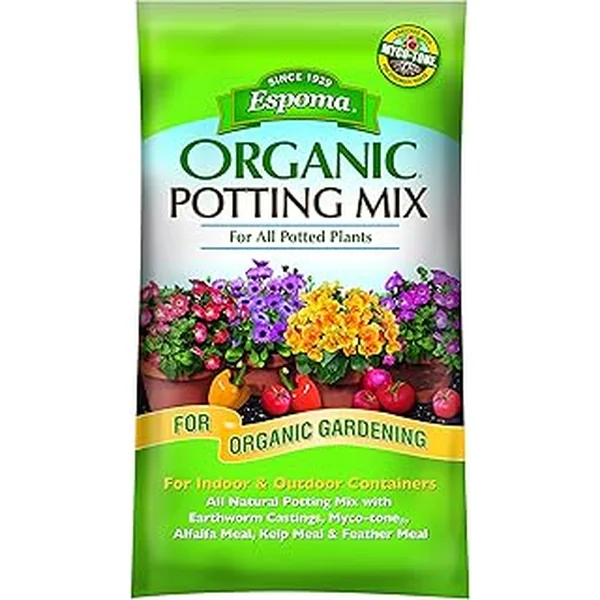
- Loose, peat-free potting mix (or garden soil amended with compost for in-ground)
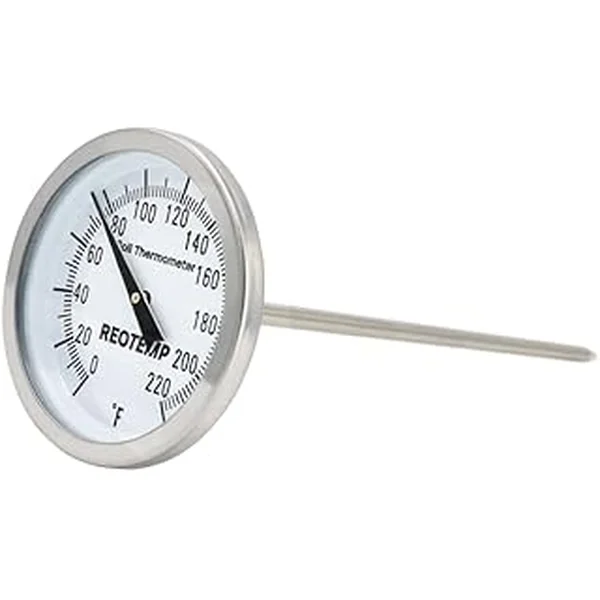
- A soil thermometer (the only reliable way to know if your soil is warm enough)
- 5 cm (2 in) of organic mulch — shredded bark or leaf mould
- Watering can
- Optional: a seedling heat mat for 1–2 week earlier emergence
That’s the entire shopping list. No special fertilizer for the first 6 weeks — the tuber has all the energy it needs to push out the first flush of leaves.
Step-by-step: planting Caladium bulbs
1. Wait for warm soil
Caladium bulbs do nothing — or worse, rot — in cold wet soil. Use a soil thermometer pushed 10 cm (4 in) into the planting site at 9 AM:
| Soil temperature | What happens |
|---|---|
| Below 18°C (65°F) | Tubers stay dormant, often rot |
| 18–21°C (65–70°F) | Slow emergence — 4–6 weeks |
| 21–24°C (70–75°F) | Healthy emergence in 2–3 weeks |
| 24–27°C (75–80°F) | Fast emergence in 10–14 days, biggest leaves |
In most US zones 6–8 that means mid-May to early June. In zones 9–11 you can plant March–April. Indoor pots can be started 4–6 weeks earlier on a heat mat.
2. Pick the right tubers
Squeeze each tuber gently. It should feel firm, not soft or hollow. Look for:
- 4–8 visible eyes on the knobby top side
- No mould, mushy spots, or sour smell
- Skin slightly papery, like an onion — that’s normal
Reject any tuber that feels squishy or rattles in its packet (a sign of dehydration).
3. Wake them up (optional but worth it)
Caladium tubers planted “as-is” can sit dormant for weeks if soil cools. To pre-sprout them, set the tubers eyes-up on a tray of barely-damp peat or coir, cover loosely with a plastic dome, and place on a seedling heat mat at 24°C (75°F). After 5–10 days you’ll see pink-purple shoots starting on the eyes. Plant them once shoots are 1–2 cm (0.5 in) tall.
4. Position the tuber knobby side up
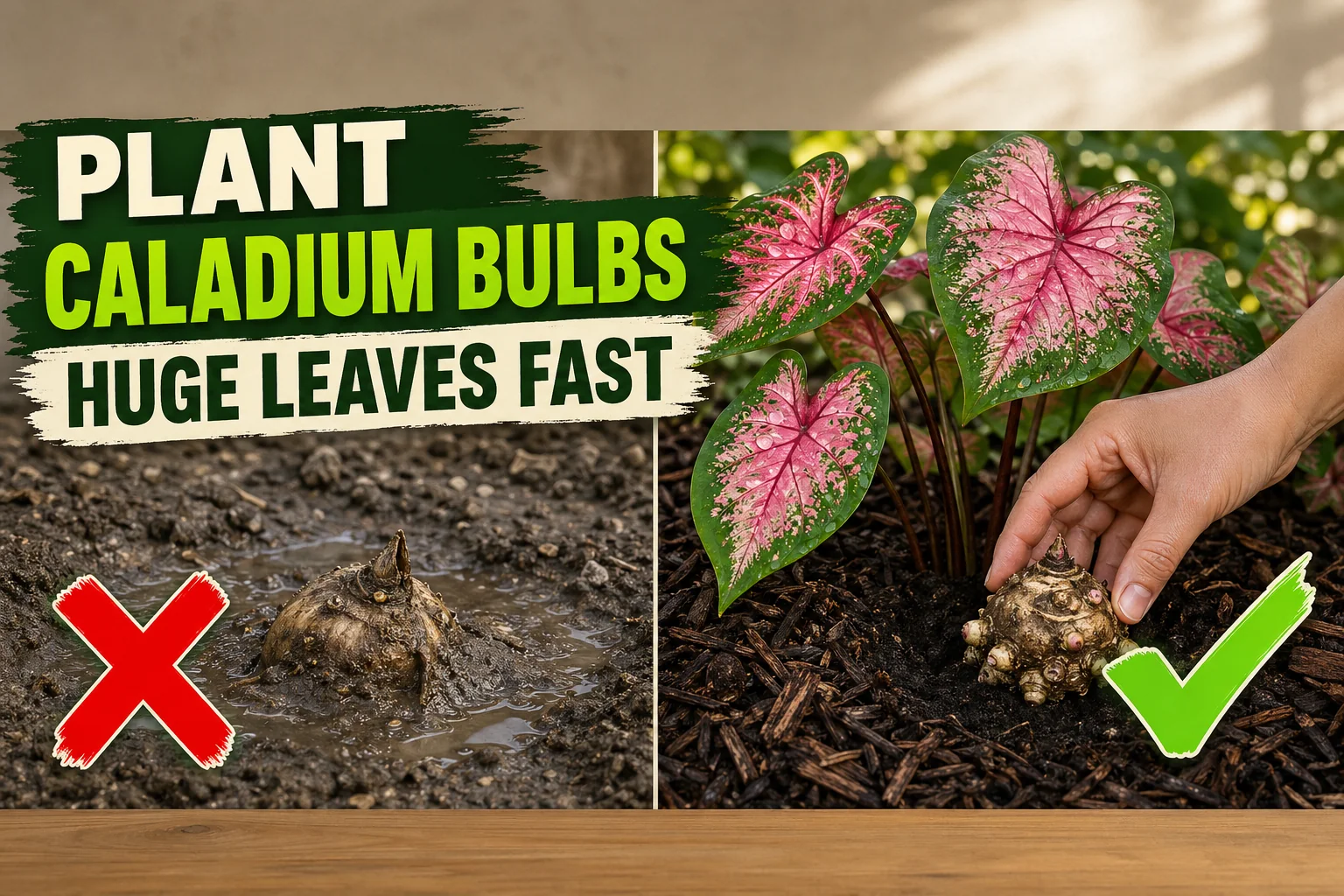
Make a hole 4 cm (1.5 in) deep — measured from the top of the tuber to the soil surface. Set the tuber eyes/knobby side up, smooth side down. If you genuinely can’t tell which side is which, plant it on its side; the shoots will reorient themselves within a week.
For mammoth (#2 or larger) tubers, go a touch deeper at 5 cm (2 in). For containers, depth still applies — measure from the top of the tuber, not the rim.
5. Space and backfill
Space jumbo tubers 20–30 cm (8–12 in) apart for a full bed. In a 25 cm (10 in) pot, plant one jumbo tuber centered. In a 35 cm (14 in) pot, plant three tubers in a triangle 12 cm (5 in) apart.
Cover with loose soil. Don’t pack it down — caladium roots need air pockets and break easily through fluffy soil.
6. Water in and mulch
Water slowly until you see drips out of the drainage holes (or 2–3 cm / 1 in deep in a bed). Then top with 5 cm (2 in) of organic mulch — shredded bark, leaf mould, or pine fines work well. Mulch is non-negotiable: it locks in the warmth and even moisture caladiums need.
After this first watering, let the top 2–3 cm (1 in) of soil dry between waterings until shoots emerge. A waterlogged dormant tuber rots within a week.
7. Place in dappled shade
Most fancy-leaf caladiums burn in direct afternoon sun. Pick a spot with:
- 2–4 hours of morning sun, shade the rest of the day, OR
- All-day dappled shade under a high tree canopy, OR
- Bright indirect indoor light (1–2 m / 3–6 ft from a north or east window)
Sun-tolerant strap-leaf cultivars (e.g. ‘Florida Sweetheart’, ‘Red Flash’) handle up to 6 hours of direct sun if you keep the soil consistently moist.
Care after planting
Once shoots emerge, switch from “barely water” to “consistent moisture”:
| Task | When |
|---|---|
| Water | When the top 2–3 cm (1 in) of soil is dry — usually every 3–5 days in summer |
| Fertilize | Start 6 weeks after planting — half-strength balanced liquid feed every 2–3 weeks |
| Mulch | Top up to keep 5 cm (2 in) — caladiums hate hot dry soil |
| Deadhead | Cut off the small green-white flower stalks — they steal energy from the leaves |
A free plant care app like Tazart can hold the watering and feeding schedule for you, adjust it for your local weather, and ping you on Apple Watch when it’s time — useful if you’re growing more than a few tubers.
When and how to lift tubers for next year
In USDA zones 9–11, leave them in the ground — they’ll come back on their own.
In zones 8 and colder, you have to lift the tubers before the first frost or you lose them:
- Wait until leaves naturally yellow and flop over in autumn (around September–October).
- Stop watering for a week so the soil dries.
- Dig the tubers carefully with a fork — they’re brittle.
- Brush off most of the soil but don’t wash them; cure at 18–24°C (65–75°F) for 7–14 days.
- Store in a paper bag with vermiculite or dry peat at 18–24°C (65–75°F) — never below 13°C (55°F), or they die. A bedroom closet works better than a basement.
- Replant in spring when soil hits 21°C (70°F) again.
Common mistakes to avoid
- Planting upside-down. The knobby side faces up. Smooth side down. Get this wrong and shoots use most of their stored energy reorienting.
- Planting too early. Cold soil rots tubers — wait for 21°C (70°F). The calendar lies; the soil thermometer doesn’t.
- Planting too deep. Beyond 5 cm (2 in) and the shoots exhaust themselves. The “deeper is safer” instinct from peony bulbs is wrong here.
- Skipping mulch. Bare soil dries and cools fast. A 5 cm (2 in) mulch layer is what holds the warm-and-moist conditions caladiums need.
- Direct hot afternoon sun. Most fancy-leaf cultivars scorch in 4+ hours of midday sun. Match the cultivar to the spot.
- Overwatering before emergence. Until shoots are up, the tuber doesn’t drink much. Soggy soil = rot.
Troubleshooting
| Symptom | Likely cause | Fix |
|---|---|---|
| 6+ weeks and no shoots | Cold soil, upside-down, or rotted tuber | Dig one up. If firm, replant knobby up in warmer soil. If soft, compost. |
| Shoots emerged then collapsed | Late frost or cold snap below 13°C (55°F) | Cover overnight with a cloche or fleece; warmth restarts growth |
| Leaves small and pale green | Too much shade or low temperatures | Move to brighter dappled light; keep soil at 21–27°C (70–80°F) |
| Leaves bleached or brown-edged | Too much direct sun | Move to dappled shade or morning-only sun |
| Leaves yellow in mid-summer | Underwatering or nutrient depletion | Water deeply; start half-strength liquid feed every 2–3 weeks |
| Leaves yellow in late summer | Natural dormancy | Stop watering; let foliage die back; lift tubers to store |
| Tuber rotted in storage | Stored too cold (below 13°C / 55°F) or damp soil | Discard rotted ones; store survivors at 18–24°C (65–75°F) with dry vermiculite |
Watch: planting Caladium bulbs
A short visual walkthrough pairs well with the steps above. If you’re a visual learner, watch a quick tutorial like How to Plant Caladium Bulbs on YouTube and then come back to follow the timing in this guide — especially the soil-temperature check, which is the single most-skipped step.
Related reading
- Caladium plant care: light, water, humidity, and dormancy — once your tubers sprout, this is the day-to-day care guide that keeps the leaves vivid through summer.
- How deep to plant gladiolus bulbs — different bulb, same depth-and-timing principles for big summer flowers.
- How to plant peony bulbs — another tuber sold as a “bulb” with strict depth rules; useful if you’re building a shaded perennial bed.
- Track every tuber, watering, and fertilizing date with the free Tazart plant care app so the next growing season is even easier.
A note on conditions
Every garden is different. Soil temperature, the cultivar you’re planting, pot size, mulch depth, season, humidity, and your local weather all change how fast a Caladium tuber sprouts and how big the leaves get. Use the steps above as a starting point and adjust based on what you see in week three — a tuber’s first response to your conditions is the best signal for what to tweak next.
Highly recommended
The supplies that make this guide work

Tazart is an Amazon Associate — we earn from qualifying purchases at no extra cost to you. Thank you for helping us keep these guides free.
Frequently asked questions
How deep do you plant caladium bulbs?
Plant Caladium tubers about 4 cm (1.5 in) deep — measured from the top of the tuber to the soil surface. Smaller jumbo-size tubers (#1) take 4 cm (1.5 in); larger mammoth tubers (#2 and bigger) can sit a touch deeper at 5 cm (2 in). Too deep and the shoots burn energy reaching the surface; too shallow and the tuber dries out before it roots.
Which side of a caladium tuber goes up?
The knobby, bumpy side faces up — those bumps are the eyes that produce the leaves. The smooth, slightly flat side with old root scars faces down. If you genuinely can't tell, plant the tuber on its side — the shoots will turn upward on their own. Planting upside-down is the #1 reason home-planted caladiums never sprout.
When is the best time to plant caladium bulbs?
Plant only when soil temperatures are reliably above 21°C (70°F) — usually 2–3 weeks after your last frost date. In cool soil below 18°C (65°F), tubers sit dormant or rot. To get a head start, plant indoors in pots 4–6 weeks before last frost and move outside once nights stay above 16°C (60°F).
How long does it take caladium bulbs to sprout?
In warm soil at 24–27°C (75–80°F), expect leaves to push through in 2–3 weeks. In cooler soil at 18–21°C (65–70°F), it can take 4–6 weeks. Bottom heat from a seedling mat speeds this up dramatically — most growers see shoots in 10–14 days with a heat mat.
Do caladiums need full sun or shade?
Most fancy-leaf caladiums prefer dappled or partial shade — 2–4 hours of morning sun and shade the rest of the day. A few newer cultivars (the strap-leaf and sun-tolerant varieties like 'Florida Sweetheart' or 'Red Flash') handle 4–6 hours of direct sun if kept well watered. Deep shade still grows leaves but they'll be smaller and greener.
Can you plant caladium bulbs in pots?
Yes — pots are actually the easiest way to start them. Use a container at least 25 cm (10 in) wide with drainage holes. Plant 1 jumbo tuber per 25 cm (10 in) pot, or 3 tubers per 35 cm (14 in) pot. Pots warm up faster than ground soil, so they sprout 1–2 weeks earlier than in-ground plantings.
Do caladium bulbs come back every year?
In USDA zones 9–11 they live as perennials and return on their own. Anywhere colder, you have to lift the tubers in autumn before frost, dry them for 1–2 weeks, and store them in a paper bag at 18–24°C (65–75°F) — never below 13°C (55°F). Replant in spring when soil warms again.