Edible
How to Plant Beets (Depth, Spacing, and Thinning Guide)
How to plant beets: sow seeds 1/2 inch deep, 3-4 inches apart, rows 12-18 inches apart. Cool-season crop with multigerm clusters that need thinning for big roots.
On this page
Watch the visual walkthrough
5 TOP TIPS How to Grow a TON of Beetroot
In this video, I give you my five top tips on how to grow lots of beetroots in your home garden. Beets are a very healthy vegetable ...
Beets are one of the most underrated cool-season vegetables — fast to germinate, tolerant of light frost, productive in small beds, and useful from root to leaf. But they have one quirk that trips up most first-time growers: what looks like a single seed is actually a multigerm cluster containing 2–5 seeds. Sow them without knowing this, skip the thinning, and you’ll harvest a row of golf-ball-sized, misshapen roots no matter how carefully you watered and fed them.
This guide covers exactly how to plant beets from seed, when to sow for spring and fall crops, why thinning is non-negotiable, and how to get smooth 2–3 inch globes instead of crowded stunted ones.
Quick answer
Sow beet seed clusters 1/2 inch (1.25 cm) deep, 1 inch apart, in rows 12–18 inches apart, when soil temperature is at least 50°F (10°C). Thin in two stages to a final spacing of 3–4 inches between plants. Beets are a cool-season crop — best at 50–65°F (10–18°C). Each “seed” is a multigerm cluster: multiple seedlings will sprout from every spot and must be thinned to one.
When to plant beets
Spring planting
Beets are cold-tolerant enough to go in the ground 4–6 weeks before your last expected frost — soil temperature needs to reach at least 50°F (10°C) for reliable germination. Most spring plantings happen between late February and early April depending on your region.
The sweet spot for beet growth is air temperatures of 50–65°F (10–18°C). Consistent warmth above 75°F slows root development and can cause internal white zoning — pale rings inside the root — which reduces sweetness and texture.
Spring planting windows by region:
| Region | Approximate sow window |
|---|---|
| Pacific Northwest | Late February – March |
| Mid-Atlantic / Southeast | March – April |
| Midwest / Great Plains | April – early May |
| Northeast | April – May |
| Mountain West | May |
Fall planting
Fall is often the better beet season. Cooling temperatures as roots approach maturity trigger starch-to-sugar conversion — fall beets are measurably sweeter than spring ones. Sow your fall crop 8–10 weeks before the first expected frost. Beets tolerate light frosts (down to about 28°F / -2°C) and actually taste better after a cold snap, but they won’t survive a hard freeze in the ground.
In mild climates (USDA zones 8–10), beets can be grown through winter as a cool-season crop with no protection.
Seed depth and spacing
Depth: 1/2 inch
Plant beet seeds 1/2 inch (1.25 cm) deep. This is shallow enough for fast germination but deep enough to keep the seed cluster in consistently moist soil. Shallower than 1/4 inch risks drying out before the seed sprouts; deeper than 3/4 inch delays emergence and produces weak, leggy seedlings.
To make a furrow, press the edge of a board, dowel, or your finger along the row to a depth of about 1/2 inch. This gives a consistent trench and makes it easy to drop seeds at even intervals.
In-row spacing: 1 inch apart (before thinning)
Sow seed clusters 1 inch apart along the furrow. This sounds tight — and it is — but because every cluster will produce multiple seedlings, you will thin down significantly. Starting at 1 inch makes the thinning work manageable; starting at 3–4 inches often leaves gaps where germination fails.
Cover seeds with fine soil or sieved compost, press gently with the back of your hand, and water with a fine spray.
Row spacing: 12–18 inches apart
Space rows 12–18 inches apart. Twelve inches works for compact round varieties like Detroit Dark Red, Red Ace, or Chioggia. Eighteen inches suits larger-rooted cylindrical varieties like Cylindra or Forono, which need more room for their foliage and make harvesting easier.
In a raised bed you can use 12-inch row spacing across the board — the deep, loose soil compensates for the tighter rows.
Why thinning matters: the multigerm cluster explained
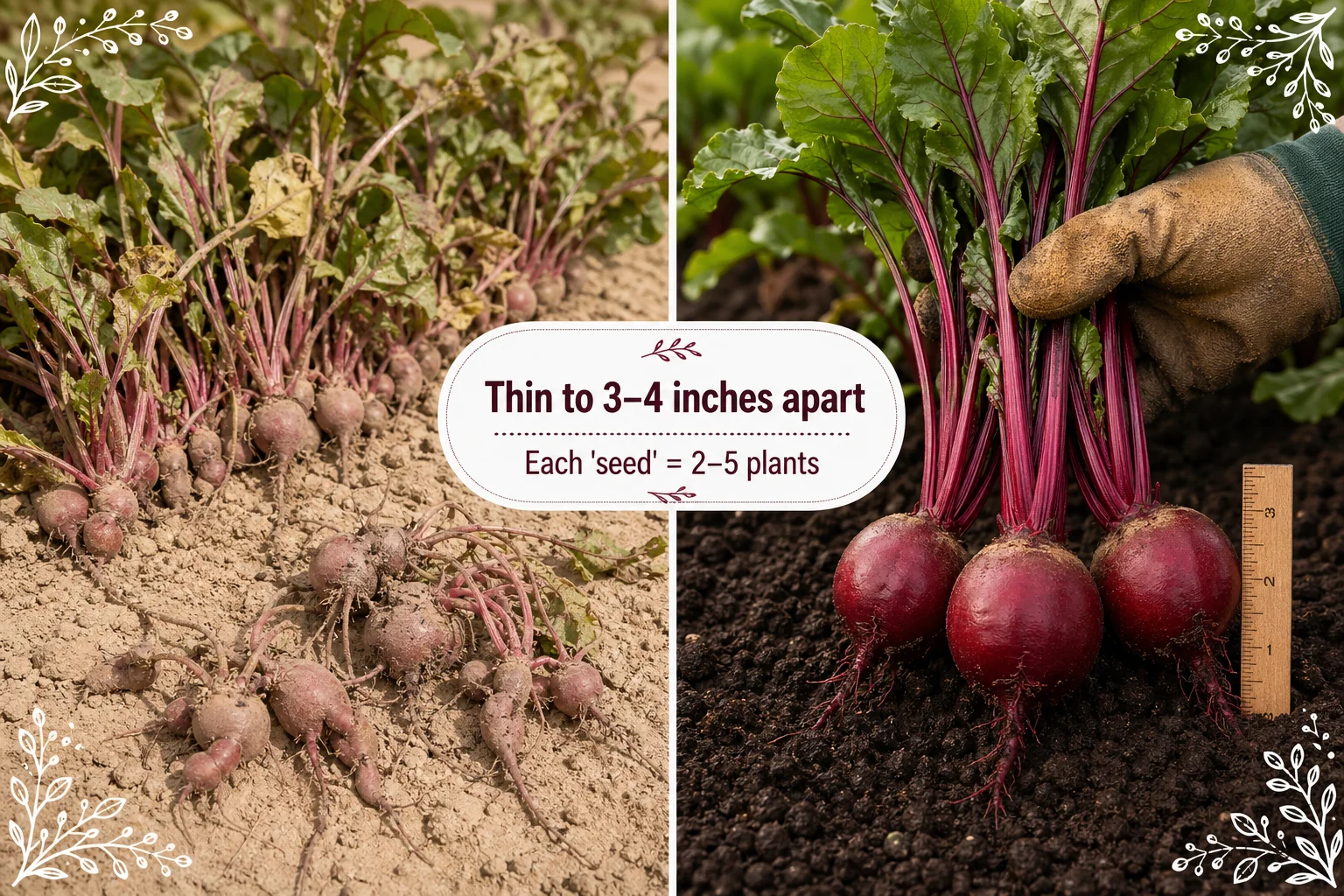
This is the most important fact about growing beets: a beet “seed” is not a single seed. It is a dried, corky fruit — a multigerm cluster — containing 2–5 actual seeds. When you sow one cluster, two to five seedlings will emerge from that single spot within a few days of each other.
Those seedlings look healthy. Growers who do not know about the multigerm cluster often leave them all in, thinking they have excellent germination. What actually happens is that the roots compete for water, nutrients, and physical space in the soil. The result is a tangle of small, angular, misshapen roots — sometimes fused together — that never develop the smooth globe shape or the sweet flavour of properly thinned beets.
Thinning is not correcting a mistake. It is a required step baked into the biology of beet seed. Even certified organic pelleted beet seeds are typically monogerm varieties bred specifically to eliminate this step. If you are using standard beet seed — which almost every home packet is — plan to thin.
Step-by-step: thinning beets correctly
First thin at 2 inches tall
When seedlings reach about 2 inches (5 cm) tall, thin each cluster down to one seedling per spot. At this stage, overall spacing will still be roughly 1–2 inches between plants — this is intentional. You are eliminating the cluster competition first.
Always snip at soil level with scissors — never pull. Pulling disturbs the shallow roots of the seedlings you want to keep, and beet roots disturbed at this stage often fork or stay misshapen.
The thinnings are edible. Baby beet greens at 2 inches tall are mild, tender, and excellent in salads.
Final thin at 4 inches tall
Two weeks later, when plants are about 4 inches (10 cm) tall, thin to a final spacing of 3–4 inches between plants. This is the spacing that determines root size:
- 3 inches apart: produces 2-inch diameter globes — standard size for roasting and pickling
- 4 inches apart: produces 3-inch globes — larger roots with more flesh per plant
Again, snip at soil level. The thinnings now have small beet roots attached — wash them and roast the whole plant, roots and greens together.
Soil preparation
Beets grow best in loose, deep, well-drained soil with a pH of 6.0–7.0. Below 6.0, beets cannot absorb boron efficiently, which causes internal browning and cracking of the root. A pH meter or inexpensive test kit is worth the investment before you sow.
Before planting:
- Loosen soil to at least 10 inches deep — enough for the root plus space below it. For large varieties like Cylindra, aim for 12 inches.
- Remove stones, clods, and root debris. Anything larger than a marble will deflect the root and cause forking.
- Work in 2–3 inches of finished compost for drainage, moisture retention, and mild nutrition.
- Add a balanced low-nitrogen organic fertilizer (look for a formula like 5-10-10 or similar, where phosphorus and potassium are higher than nitrogen). Too much nitrogen pushes leafy top growth and small, fibrous roots.
- If your soil test shows pH below 6.0, work in garden lime 2–4 weeks before planting and retest.
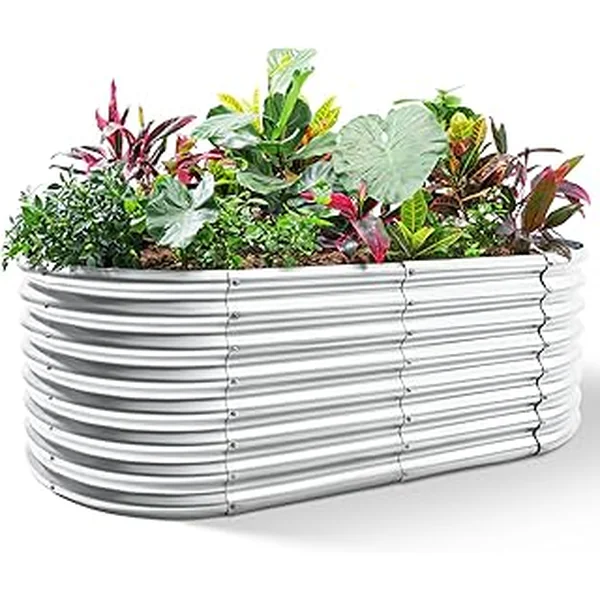
Heavy clay soil benefits most from raised bed growing. Fill a 12-inch-deep raised bed with a blend of topsoil and compost and you sidestep most beet problems in one move.
Watering
Beets need consistent, even moisture from germination through harvest. The target is about 1 inch of water per week, delivered steadily — not in a single heavy soak after the soil has dried out.
Uneven watering causes:
- Internal zoning (white rings inside the root) — the beet grows in spurts instead of steadily
- Cracked or split roots — rapid uptake after a dry spell
- Tough, woody texture — drought stress at any stage
Water in the morning with a drip hose or soaker hose so the foliage dries before evening. In hot weather, check soil moisture every 2–3 days — the top 2 inches should never be bone-dry.
A free plant tracking app like Tazart can hold your watering schedule and adjust it for local rainfall, which matters more for beets than most crops — the even-moisture rule is strict.
Fertilizing
Beets are light to moderate feeders. The main nutrient split to understand is phosphorus and potassium matter more than nitrogen:
- Nitrogen (N): needed for leafy growth — too much gives you huge tops and small, fibrous, pithy roots
- Phosphorus (P): supports root development — more important for beets than for most leaf vegetables
- Potassium (K): drives sugar and starch accumulation in the root — critical for flavour and sweetness
At planting, work in a balanced fertilizer with moderate P and K. At 5–6 weeks, a light side-dress of finished compost or a half-strength liquid fertilizer (with low N) is enough to carry beets to harvest. Skip high-nitrogen feeds entirely once plants are past the seedling stage.
Boron deficiency is specific to beets and shows up as internal browning, cracked crowns, or hollow spots in the root. If your soil is naturally low in boron (common in sandy soils of the Southeast), a single foliar spray of diluted borax solution (1 tablespoon per 3 gallons of water) applied once at the 4-week mark prevents most deficiency symptoms.
Harvesting
Most round spring beet varieties mature 50–70 days from sowing. Cylindrical varieties take 55–70 days. Check the shoulder — when the top of the beet globe bulges 1.5–3 inches above the soil line, it’s time to test.
Loosen the soil with a garden fork beside the row — never jam the fork directly under the root. Grip the greens near the base and lift straight up. If the root resists, loosen more. Yanking breaks the root and causes the intense red pigment (betalain) to bleed out heavily during cooking.
Cut the tops immediately after harvest. Leave 1 inch of stem attached — cutting flush causes heavy bleeding during cooking or storage. Removing the tops stops them from drawing moisture out of the root in storage.
Do not wash roots before storing.
Storage
Beets store exceptionally well:
- Refrigerator: unwashed roots in a sealed plastic bag or container last 2–4 weeks
- Root cellar / cool basement (32–40°F, 90–95% humidity): packed in boxes of damp sand or sawdust, beets keep 2–5 months
- Freezer: blanch cubed or sliced beets for 3–5 minutes, cool, and freeze in bags — lasts up to 1 year
Beet greens do not store well — use them within 2–3 days of harvest. Wash, blanch briefly, and freeze if you have more than you can eat fresh.
Common mistakes to avoid
- Not thinning. The single biggest reason home beets fail. Every cluster must be thinned to one plant. No exceptions.
- Pulling instead of snipping thinnings. Disturbs roots of the plants you want to keep. Scissors only.
- Planting in acidic soil. pH below 6.0 blocks boron uptake and causes internal browning. Test before you sow.
- Too much nitrogen fertilizer. Drives leafy growth and pithy, fibrous roots. Use a balanced or low-N formula.
- Planting too late in spring. Beets in sustained heat above 75°F develop white rings and lose sweetness. Sow early or sow for fall.
- Inconsistent watering. Wet-dry cycles cause zoning, cracking, and woody texture. Even moisture every week.
- Harvesting too late. Beets left in the ground past 3 inches diameter become tough, woody, and fibrous. Harvest on time.
Troubleshooting
| Symptom | Likely cause | Fix |
|---|---|---|
| White rings inside the root | Heat, pH below 6.0, or boron deficiency | Plant earlier; lime to pH 6.0–7.0; foliar borax if sandy soil |
| Forked or misshapen roots | Stones, clods, or roots touching | Prepare soil more deeply; thin to final spacing |
| Small, dense cluster of tiny beets | Not thinned | Thin — clusters never produce full-size roots |
| Cracked or split roots | Uneven watering | Water evenly, 1 inch per week |
| Pithy, fibrous texture | Harvested too late or too much nitrogen | Harvest at 2–3 inches; reduce N in fertilizer |
| Poor germination | Soil too cold or too dry | Wait for 50°F soil; keep surface moist daily during germination |
| Huge leafy tops, tiny roots | Excess nitrogen | Switch to low-N or balanced fertilizer |
| Yellowing older leaves | Magnesium or potassium deficiency | Side-dress with compost; use a balanced fertilizer |
Related reading
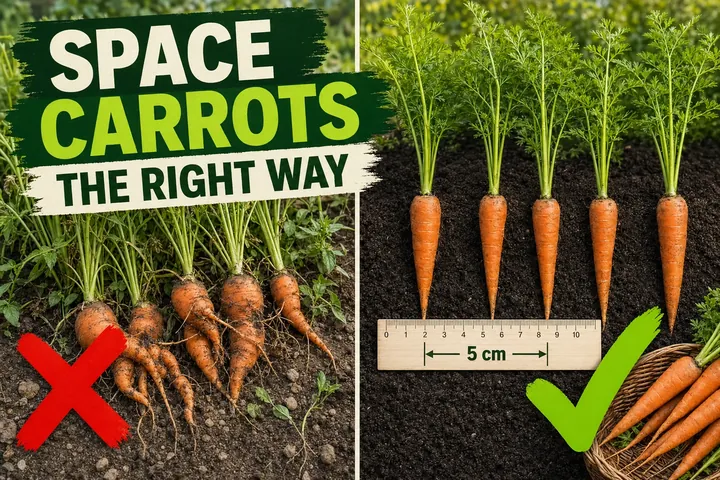
- How far apart to plant carrots — the same deep, loose, stone-free soil rule applies to every root crop, and thinning matters just as much.
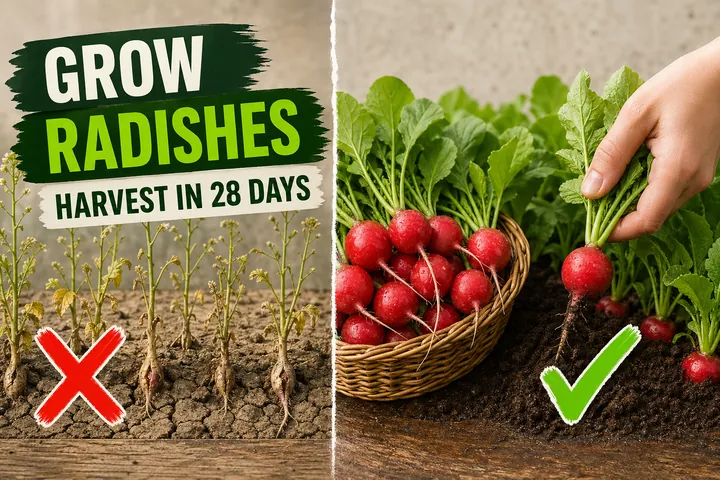
- How to grow radishes — another cool-season root you can succession-sow alongside beets for a continuous spring and fall harvest.
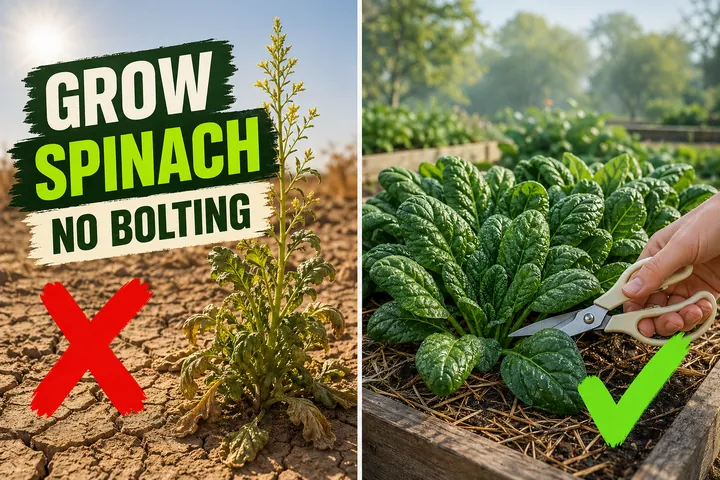
- How to grow spinach — beets and spinach are in the same plant family (Amaranthaceae) and share nearly identical growing conditions.
- Track beet watering schedules, succession sowing dates, and harvest reminders with the free Tazart plant care app — it adjusts to your local weather so you don’t have to.
A note on conditions
Every garden is different. Soil texture, local heat, rainfall, bed depth, and the specific variety you choose all affect how your beets develop. Use the spacing and depth numbers above as strict starting points — the 1/2-inch depth and 3–4 inch final spacing are not negotiable — then watch what your row does at weeks three and six. Cool, cloudy springs are easy mode for beets. Hot, dry springs require earlier sowing and consistent irrigation. Fall crops are often the most rewarding of all.
Highly recommended
The supplies that make this guide work
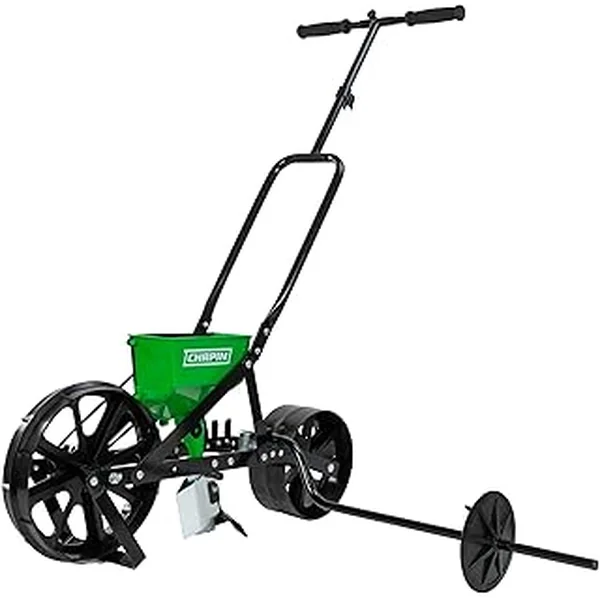
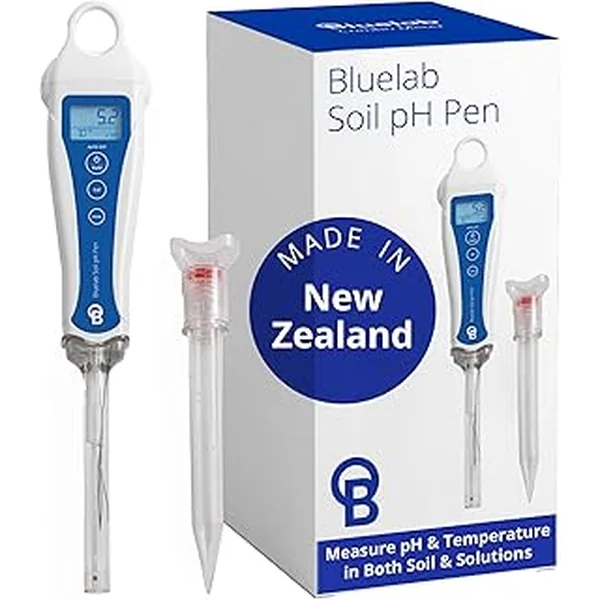
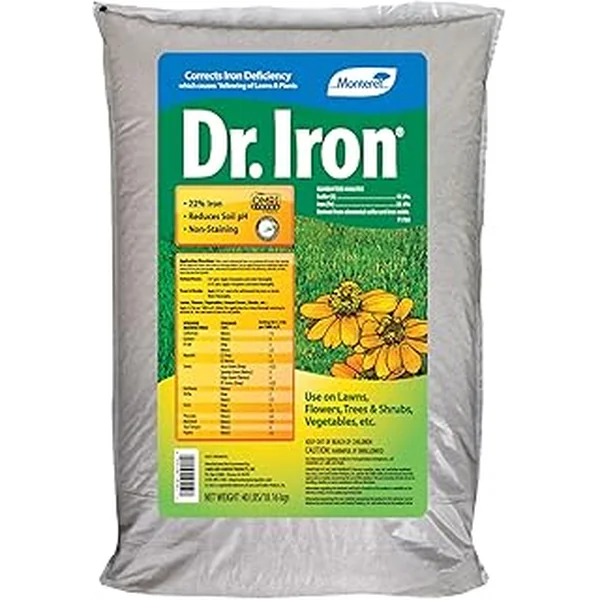
Tazart is an Amazon Associate — we earn from qualifying purchases at no extra cost to you. Thank you for helping us keep these guides free.
Frequently asked questions
How deep do you plant beet seeds?
Plant beet seeds 1/2 inch (1.25 cm) deep. Cover with fine soil or sieved compost and press gently so the seed makes contact with moist soil. Deeper than 3/4 inch slows germination; shallower than 1/4 inch lets the surface dry out before the seed can sprout. Germination takes 5–10 days at 50–85°F (10–29°C).
How far apart should beets be planted?
Sow beet seeds 1 inch apart and thin in two stages to a final 3–4 inches between plants, with rows 12–18 inches apart. The wider row spacing (18 inches) is for large-rooted varieties like Cylindra; compact types like Detroit Dark Red do fine at 12 inches. Final plant spacing of 3 inches gives 2-inch roots; 4 inches gives 3-inch globes.
Why do beets need thinning if I spaced the seeds correctly?
Because what looks like a single beet seed is actually a multigerm seed cluster — a dried fruit containing 2–5 seeds bundled together. Even if you sow clusters 3–4 inches apart, multiple seedlings sprout from each cluster and compete fiercely. Thinning to one seedling per spot is not optional; unthinned beets stay small, misshapen, and cork-like no matter how well you water or feed them.
When should I plant beets?
Beets are a cool-season crop that performs best at 50–65°F (10–18°C). In spring, sow 4–6 weeks before your last frost date — soil temperature should be at least 50°F (10°C). For fall, count back 8–10 weeks from your first expected frost. Beets tolerate light frost (down to about 28°F / -2°C) and actually sweeten after a cold snap, but prolonged hard freezes kill them.
How long do beets take to germinate?
Beet seeds germinate in 5–10 days when soil is 50–85°F (10–29°C). Germination slows significantly below 50°F and nearly stops above 95°F. Soaking the seed clusters in warm water for 1–2 hours before sowing softens the outer coat and can cut germination time to 3–5 days. Keep the soil surface consistently moist the entire time — a dry crust halts germination.
Can I grow beets in a raised bed?
Yes — raised beds are ideal for beets. They warm up faster in spring, drain well (beets hate waterlogged roots), and give you full control over soil texture. Fill to at least 12 inches deep with a blend of topsoil and compost. Avoid pure potting mix, which tends to compact and dry out unevenly. A 4×8 ft raised bed can hold four rows of beets at 18-inch row spacing.
How do I know when beets are ready to harvest?
Check the shoulder. When the top of the beet globe pushes up above the soil line and measures 1.5–3 inches wide, gently loosen the soil with a fork and lift one to test. Detroit Dark Red is best at 2–3 inches across; Chioggia at 2–2.5 inches; Cylindra when the cylinder is 6–8 inches long and 2 inches thick. Most spring beets mature 50–70 days from sowing.