Flowers
How to Plant Bare Root Roses (Soak, Set Graft, Mulch)
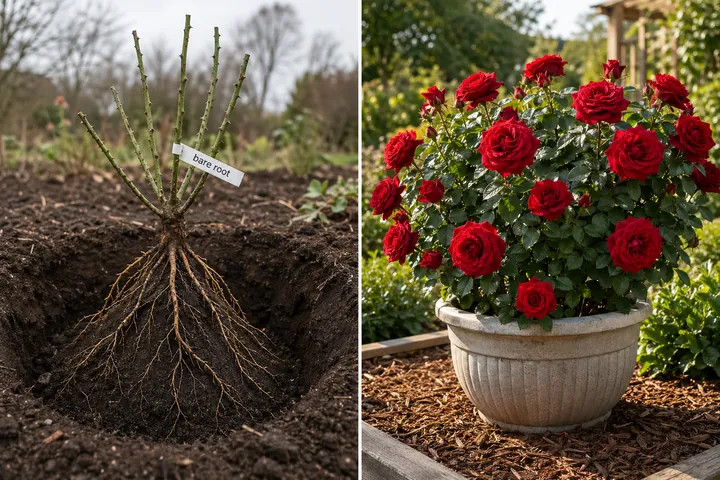
Plant bare root roses in early spring while dormant — soak roots 24 hours, set the graft union 2 in (5 cm) below soil in cold zones, level with soil in warm zones.
On this page
- Quick answer
- When to plant bare root roses
- The 24-hour soak
- The graft union: where everything lives or dies
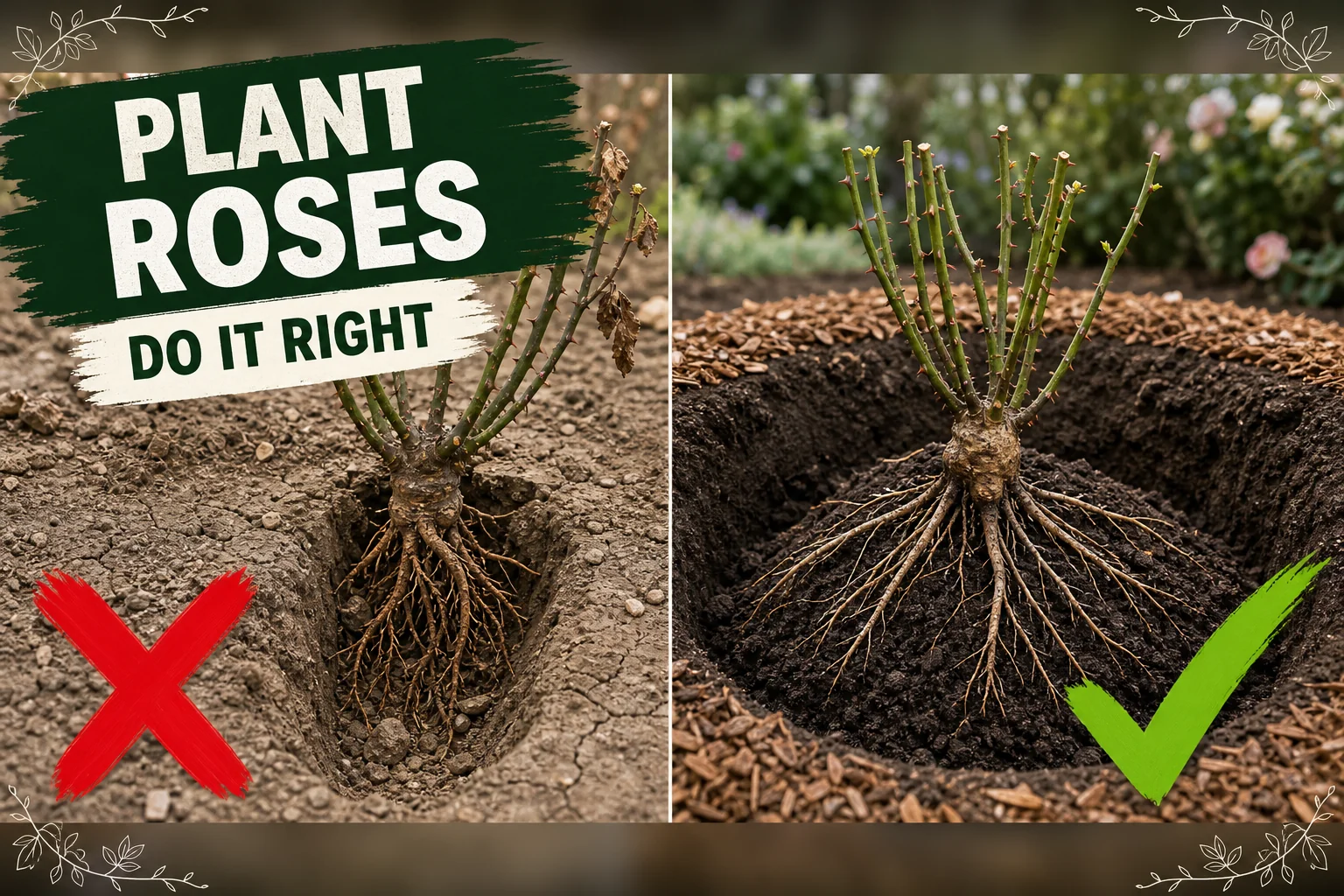
- Hole preparation: wider than deep
- Setting the depth: the stick test
- Backfilling without air pockets
- Mounding and mulching
- First-season watering
- Common mistakes
- Troubleshooting table
- Related reading
- A note on conditions
Watch the visual walkthrough
Planting A Few Bare Root Roses! 🌹😊// Garden Answer
Affiliate/Sponsored Links Watering Cans - https://bit.ly/2JyHbkH Bio-tone Starter Plus - http://bit.ly/3cDoYzO The Impatient ...
Bare root roses look like dead twigs in a bag — and that’s exactly what makes them a bargain. You’re buying a fully grown two- or three-year-old rose for less than half the price of a potted version, and if you plant it correctly during dormancy, it will outperform container-grown roses by year two.
The catch: there are about six things you have to get right, and skipping any one of them turns a $25 rose into compost by July. The biggest of those things is the graft union depth — and the correct depth depends entirely on what climate you live in.
This guide covers the full bare-root planting workflow: timing, soaking, hole preparation, the zone-specific depth rule, mulching, and the first-season watering schedule.
Quick answer
Plant bare root roses in early spring while still dormant. Soak the entire root system in cool water for 12–24 hours. Dig a hole 45–60 cm (18–24 in) wide. Set the graft union 5 cm (2 in) BELOW soil in USDA zones 5 and colder, LEVEL with soil in zones 6–7, and 2.5–5 cm (1–2 in) ABOVE soil in zones 8 and warmer. Mound canes with soil for 4–6 weeks, then mulch with 5–8 cm (2–3 in) of bark. Water deeply every 5–7 days for the first 6 weeks.
When to plant bare root roses
Bare root roses must go in the ground while they are still fully dormant — meaning the canes have no buds beginning to swell or leaf out.
Cold climates (USDA zones 3–6): Plant from late March through April, as soon as the ground thaws and is workable. The soil should be cool but not frozen. Most reputable nurseries ship to your zone at the right time — don’t store the rose for weeks waiting for “perfect” weather.
Warm climates (USDA zones 7–10): The window is wider: November through March. Many southern growers prefer late fall planting, which gives roots a chance to establish over a mild winter before the rose breaks dormancy in February.
The hard rule: if your bare root rose has begun to leaf out before you can plant it, plant it immediately and protect from any remaining frost. The leaves will lose moisture rapidly through transpiration, and the limited root system can’t keep up — every day of delay reduces survival odds.
This is the opposite logic of container roses, which can be planted any time the soil is workable because their root system is intact in the pot.
The 24-hour soak
The first thing to do when your bare root rose arrives — even before you read the label — is unwrap the roots and submerge them in a bucket of cool clean water.
Why it matters: Bare root roses are dug, washed, and cold-stored at near-freezing temperatures for weeks or months. The roots dry out at the surface during shipping, and a dry root cannot resume growth no matter how good your soil is.
How to do it:
- Use a 19 L (5 gallon) bucket of cool tap water
- Submerge the entire root system, plus the bottom 8–10 cm (3–4 in) of canes
- Soak for 12–24 hours, no longer
- Plant the same day you remove from the soak
If you can’t plant the day you finish soaking — bad weather, frozen ground, work emergency — wrap the roots in damp newspaper or bury them temporarily in damp soil, sawdust, or compost (“heeling in”). They’ll keep this way for up to a week without losing viability.
The graft union: where everything lives or dies
Almost every rose you’ll buy as a bare root plant is grafted — the named cultivar (the rose you actually wanted: Knockout, Mr. Lincoln, Iceberg) is budded onto a hardier rootstock variety (commonly Dr. Huey or Rosa multiflora).
The graft union is the visible swollen knob where the two parts join. Its position relative to the soil line is the single most important variable in bare root rose planting — and the correct depth changes by climate.
| USDA Zone | Graft union depth | Why |
|---|---|---|
| Zones 3–5 | 5–7.5 cm (2–3 in) BELOW soil | Buried graft survives extreme winter freeze |
| Zone 6 | 2.5 cm (1 in) BELOW soil | Mild zone — buried graft adds insurance |
| Zone 7 | LEVEL with soil | Transition zone — neither extreme needed |
| Zones 8–9 | 2.5 cm (1 in) ABOVE soil | Buried graft suckers heavily in heat |
| Zones 10–11 | 5 cm (2 in) ABOVE soil | Maximum air exposure prevents rootstock takeover |
Zone 5 example: A buried graft survives -29°C (-20°F) winter lows that would kill the cultivar above ground. Without burying, you’d lose the named variety to freeze and only the rootstock — usually Dr. Huey, a magenta-red landscape rose nobody picked — would regrow. This is why so many “Knockout roses” mysteriously become magenta after a hard winter.
Zone 9 example: A buried graft in warm soil pushes up rootstock suckers from below the union all season. The suckers are vigorous and will outcompete the cultivar within 2–3 years. Keeping the graft above soil makes suckers visible and easy to remove.
If you don’t know your USDA zone, look it up at planthardiness.ars.usda.gov before planting — guessing here costs roses.
Hole preparation: wider than deep
Bare root rose roots fan outward, not downward. The hole shape matters more than the volume.
Target dimensions:
- Width: 45–60 cm (18–24 in)
- Depth: 30–45 cm (12–18 in)
- Shape: saucer or shallow bowl, not a vertical pit
Soil amendments:
- Mix one-third finished compost into the soil you removed
- For heavy clay: also add a handful of coarse perlite or gypsum
- For sandy soil: add extra compost (up to 50%) for moisture retention
- Skip high-nitrogen fertilizer at planting — it pushes leaf growth before roots can support it. A small handful of bone meal or a slow-release rose food worked into the bottom of the hole is fine.
The cone trick: Mound a cone of amended backfill soil in the center of the hole. The cone gives you a structure to drape the roots over, fans them naturally outward, and lets you set the crown at the correct height by adjusting the cone’s height.
Setting the depth: the stick test
After building the soil cone, use this simple test to confirm correct depth before backfilling.
- Place the rose’s crown on the cone with roots draped over the slopes.
- Lay a straight stick or trowel handle across the hole at ground level.
- Look at where the graft union sits relative to the stick.
- Adjust by adding or removing soil from the cone until the graft is at your zone’s correct depth.
This sounds finicky but takes 30 seconds and prevents the most common planting mistake — eyeballing the depth, getting it wrong, and not noticing until winter kills the rose six months later.
Backfilling without air pockets
Air pockets around bare root rose roots dry the roots and kill them within days. Two-stage backfilling eliminates pockets.
Stage 1: Fill the hole halfway with amended soil. Tap gently around the roots with your hands to settle the soil between root strands.
Stage 2: Slowly fill the hole with water and let it drain completely (5–10 minutes). The water settles the soil tightly around the roots and shows you where remaining pockets are — you’ll see depressions form as soil collapses into them.
Stage 3: Top up with the rest of the amended soil and firm gently with your hands. Do not stomp — that compacts soil and damages roots. The final soil should be at the correct height for your zone’s graft union depth.
Mounding and mulching
Two mulch operations happen at planting: a temporary cane mound and a permanent root-zone mulch ring.
Temporary cane mound (4–6 weeks): Hill loose soil or shredded bark up around the canes 15–20 cm (6–8 in) tall — high enough to cover most of the pruned-back canes. This protects the canes from drying winds while the limited root system catches up. Once buds break and shoots are 5–8 cm (2–3 in) long, gently brush away the mound.
Permanent mulch ring: Apply 5–8 cm (2–3 in) of shredded hardwood bark, composted leaves, or straw in a 60 cm (24 in) wide ring around the rose. Keep mulch 5 cm (2 in) away from the canes themselves — mulch piled against bark holds moisture against the cambium and invites disease.
In zones 5 and colder, an additional 15–20 cm (6–8 in) of “winter hilling” of mulch over the crown for the first winter dramatically improves survival. Pull it back in early spring before bud break.
First-season watering
The biggest mistake in bare root rose care is treating new plantings like established roses. They need far more water than a 5-year-old rose because the root system is tiny relative to the canes.
Weeks 1–6:
- Water deeply once the top 5 cm (2 in) of soil dries — typically every 5–7 days
- Apply 8–10 L (2 gallons) per plant per watering
- Water at the base only, never overhead
- In hot dry weather, this may mean every 3–4 days
Weeks 6–12:
- Reduce to weekly deep watering
- Apply 12–15 L (3–4 gallons) per plant
- Continue base watering only
After year one:
- Established roses need a deep soak weekly (about 4 cm / 1.5 in of water) during active growth, less in cool overcast weather
- A drip line or soaker hose is far more efficient than overhead spraying
Common mistakes
- Planting after the rose has leafed out. Once buds break, the rose can’t be planted bare root without high losses. Plant immediately on arrival or heel in until ready.
- Skipping the soak. Dry roots don’t resume growth. The 12–24 hour soak is non-negotiable.
- Wrong graft union depth for your zone. Burying in zone 9 causes suckering; not burying in zone 4 causes freeze death of the cultivar.
- Hole too narrow. Bare root roses need horizontal root spread room. A 30 cm (12 in) hole is too small — go 45–60 cm (18–24 in) wide.
- High-nitrogen fertilizer at planting. Forces leaf growth before roots can support it. Use bone meal or slow-release rose food only at planting.
- Mulch piled against canes. Holds moisture against the bark and invites disease. Always leave a 5 cm (2 in) gap.
- Underwatering in weeks 1–6. Newly planted bare root roses dry out fast. Check the top 5 cm (2 in) of soil weekly and water before it dries fully.
- Over-pruning the first season. Cut back to 3–5 buds at planting, then let the rose recover for the first full year. Heavy pruning starts in year two.
Troubleshooting table
| Symptom | Likely cause | Fix |
|---|---|---|
| Canes shrivel after planting | Too much sun, too little water, or dry roots | Mound canes with soil/bark, water deeply, shade for 1 week |
| No bud break by 6 weeks | Roots damaged or rose was dead on arrival | Scratch a cane — green inside is alive, brown is dead |
| Magenta flowers appear (not the variety bought) | Rootstock taking over (Dr. Huey suckering) | Trace sucker to below graft union, cut flush, monitor for more |
| Yellowing leaves in summer | Underwatering or iron deficiency | Water deeply weekly, test soil pH (roses prefer 6.0–6.8) |
| Black spots on leaves | Black spot fungus (Diplocarpon rosae) | Remove infected leaves, apply fungicide, water at base only |
| Cane dies back after winter | Cold damage above graft union | If graft was buried correctly, prune dead wood — new shoots will push from below in spring |
Related reading
- How to plant a rose bush (container-grown) — for potted roses already in active growth, the planting workflow is different. This is the companion guide.
- How to plant blueberry bushes — another acid-loving woody plant with similar bare-root and graft considerations.
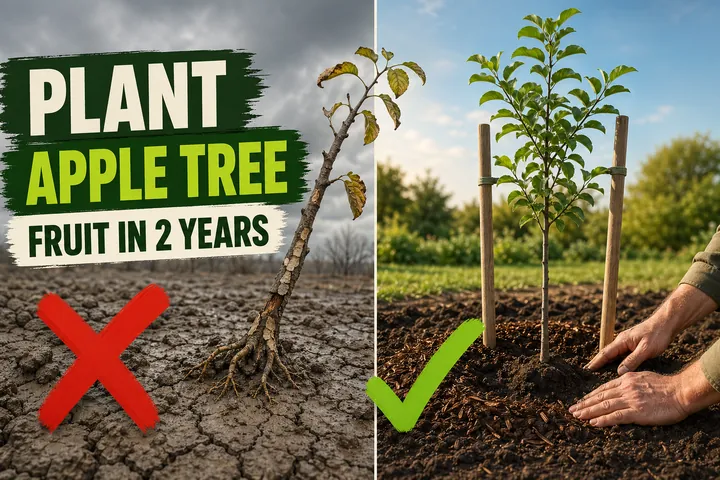
- How to plant an apple tree — bare root planting workflow for fruit trees, also dependent on dormancy timing and graft union placement.
- How to plant a tree — general bare root and B&B tree planting principles that apply to most woody perennials.
- How to fix root rot — overwatering newly planted bare root roses can drown them. This guide covers signs and recovery.
- Track every soak time, planting date, and watering schedule with the free Tazart plant care app — it adjusts new-plant care reminders for your local frost dates and rainfall.
A note on conditions
Bare root rose success depends on getting timing, soaking, depth, and watering all roughly right — not perfection on any one factor. Soil drainage matters more than soil type: a heavy clay soil with good drainage outperforms a sandy soil that bakes dry in July. Roses planted in afternoon shade in hot zones (8+) often outperform those in unshaded full sun. Adapt the technique to what your climate and soil actually offer, and a properly planted bare root rose will outlive most of the perennials around it — many roses live 50+ years.
Highly recommended
The supplies that make this guide work


Tazart is an Amazon Associate — we earn from qualifying purchases at no extra cost to you. Thank you for helping us keep these guides free.
Frequently asked questions
When should you plant bare root roses?
Plant bare root roses in early spring while they are still dormant — typically February through April depending on your zone. The window opens once the ground is workable (no longer frozen) and closes once buds begin to swell and leaf out. In USDA zones 7 and warmer, you can also plant in late fall (November) for an early-spring root start.
How long do you soak bare root roses before planting?
Soak the entire root system in cool clean water for 12–24 hours before planting. This rehydrates roots dried from cold storage and shipping. Don't soak longer than 24 hours — extended submersion deprives roots of oxygen and can encourage rot. If you can't plant immediately after soaking, heel the rose into damp soil or sawdust to keep roots moist for up to a week.
How deep do you plant a bare root rose?
Depth depends on your climate and the graft union — the visible knobby junction between the cultivar (top) and the rootstock (bottom). In USDA zones 5 and colder, set the graft union 5 cm (2 in) BELOW the soil surface for winter freeze protection. In zones 6–7, plant level with the soil. In zones 8 and warmer, set the graft 2.5–5 cm (1–2 in) ABOVE the soil to discourage rootstock suckering.
Where should the graft union sit in the soil?
The graft union is the swollen knob where the named rose variety was budded onto the hardy rootstock — usually 2.5–5 cm (1–2 in) above the original root crown. Its position relative to the soil line determines winter survival in cold zones and sucker behavior in warm zones. See the depth answer above for zone-specific guidance — there is no universal correct depth.
How often do you water newly planted bare root roses?
Water deeply at planting (about 8–10 L / 2 gallons per plant), then water deeply once the top 5 cm (2 in) of soil dries — typically every 5–7 days for the first 6 weeks, less in cool overcast weather. After 6 weeks the rose is establishing roots and you can shift to weekly deep watering. Always water at the base, never on the foliage.
Do bare root roses need mulch?
Yes — apply a 5–8 cm (2–3 in) layer of shredded bark, straw, or composted leaves around the planted rose, keeping mulch 5 cm (2 in) away from the canes themselves. Mulch holds moisture (essential while roots establish), moderates soil temperature, and suppresses weeds. In cold zones, mound an extra 15–20 cm (6–8 in) of mulch over the entire crown for the first winter, then pull it back in spring.