Edible
How to Plant an Apple Tree (Backyard Orchard for Beginners)
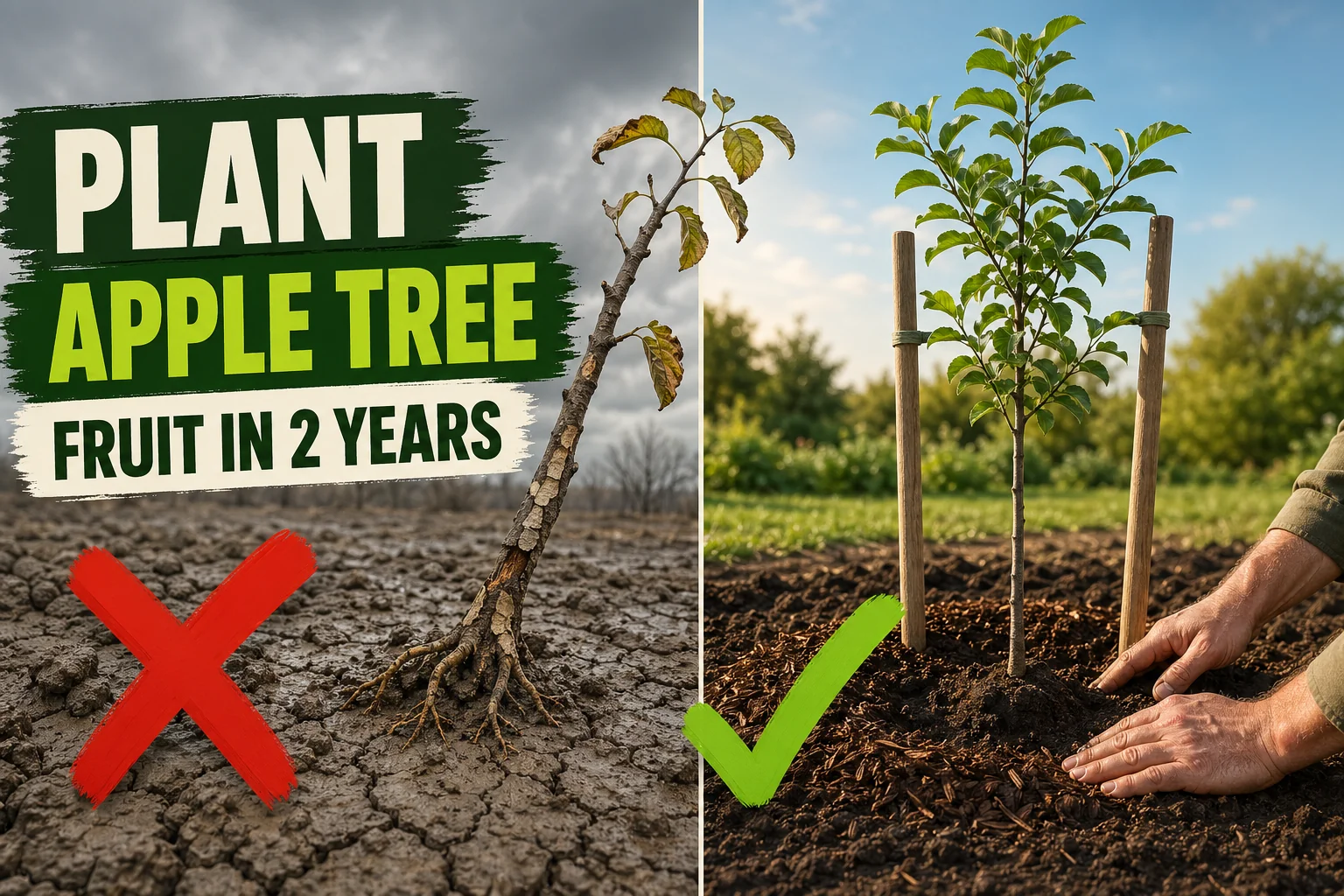
Plant an apple tree the right way: choose a rootstock, pick two pollination partners, dig the hole, stake it, and harvest fruit in 2 years. Step-by-step guide.
On this page
Watch the visual walkthrough
How-To Plant an Apple Tree (Everything you need to know!)
A short visual walkthrough that pairs with the steps above.
Planting an apple tree is one of the most rewarding things you can do in a backyard — one tree, planted properly, can feed a family for 30+ years. The trick is getting the first day right: rootstock, pollination partner, hole depth, and a stake that actually holds.
This guide walks you through it step by step, from the bare-root tree on the doormat to the first apples in roughly two years.
Quick answer
Plant your apple tree (Malus domestica) in late winter or early spring while it’s dormant. Dig a hole twice as wide as the roots and just deep enough that the graft union sits 5–8 cm (2–3 in) above the finished soil. Backfill with the native soil, water deeply, stake it, mulch a 60 cm (24 in) ring around the trunk — and plant a second compatible variety within 15 m (50 ft) for pollination. Expect a small first crop in 2–3 years on dwarf rootstock.
Choose the right apple tree
Pick a rootstock that fits your space
Almost every apple tree sold is grafted: a named variety (the bit that makes the apples) joined to a rootstock (the bit that controls size and vigour). The rootstock matters more than most beginners realise.
| Rootstock type | Mature size | Fruit in | Needs staking | Best for |
|---|---|---|---|---|
| Dwarf (e.g. M9, M27) | 2–3 m (6–10 ft) | 2–3 years | Yes, permanent | Small yards, patios, espalier |
| Semi-dwarf (e.g. M26, MM106) | 3.5–4.5 m (12–15 ft) | 3–5 years | First 3–5 years | Most home orchards |
| Standard (seedling) | 6–9 m (20–30 ft) | 5–8 years | Optional | Large rural plots, longevity |
For a typical suburban backyard, semi-dwarf is the sweet spot — manageable height, strong roots, and reliable fruiting in year 4 or so.
Pick two compatible varieties
Apples are not reliably self-fertile. You need at least two varieties whose bloom periods overlap so bees can move pollen between them. Plant them within about 15 m (50 ft) of each other.
A simple pairing rule:
- Match early bloomers with early bloomers, mid with mid, late with late.
- A flowering crabapple counts as a pollination partner and blooms over a long window.
- Avoid ‘triploid’ varieties (like ‘Bramley’ or ‘Jonagold’) as your only pair — they don’t produce viable pollen, so you actually need three trees if you start with one.
If you only have room for one tree, ask the nursery for a self-fertile variety like ‘Granny Smith’ or ‘Golden Delicious’, or get a “family tree” with multiple varieties grafted onto one rootstock.
When to plant
Late winter to early spring while the tree is still dormant is ideal in most climates — typically February to April once the ground can be worked but before bud break. The roots get a head start before the leaves wake up.
In mild-winter zones (USDA 8 and warmer) you can also plant in late autumn, giving the tree several months of cool, moist soil before its first summer.
Avoid planting:
- During a hard freeze (the roots can’t make contact with frozen soil)
- In waterlogged ground (a hole that holds standing water = root rot)
- In peak summer heat with bare-root trees (potted trees are more forgiving)
What you’ll need
- Two compatible apple trees on the rootstock you chose
- A spade and a digging fork
- One or two sturdy tree stakes — at least 1.8 m (6 ft) long
- A soft, flexible tree tie (never wire or thin string)
- A bucket of water for soaking bare-root roots
- Compost (a few handfuls, optional — see below)
- Organic mulch (shredded bark or wood chips), enough for a 60 cm (24 in) ring around the trunk
- Slow-release fruit-tree fertilizer (for year two — not at planting)
Step-by-step: planting an apple tree
1. Soak the roots (bare-root trees only)
If your tree arrived bare-root, set it in a bucket of cool water as soon as you unwrap it and let the roots drink for 2–6 hours before planting. Don’t soak longer than 24 hours — the roots need oxygen too.
For a potted tree, water it well an hour before you plant.
2. Pick the spot and check drainage
Apple trees want 6+ hours of direct sun per day and well-drained soil. Avoid frost pockets at the bottom of slopes and avoid wet, low-lying corners.
Quick drainage test: dig a 30 cm (12 in) deep hole, fill it with water, and let it drain. Refill it. If it drains within 12 hours, you’re fine. If water still sits after 24 hours, pick another spot or build a low mound.
3. Dig the hole
Dig a hole that is twice as wide as the root system but only as deep as the roots. Wider is more important than deeper — fresh feeder roots grow sideways, not down.
Loosen the bottom of the hole with the digging fork. Don’t add compost or fertilizer inside the planting hole. Soft, rich pockets discourage roots from spreading into the surrounding soil and can cause the tree to circle and stunt later. Use the native soil you dug out as your backfill.
4. Set the depth at the graft union
Look for the graft union on the trunk — it’s a slight bulge or kink, usually 10–20 cm (4–8 in) above the roots. The graft union must sit 5–8 cm (2–3 in) above the finished soil line when you’re done.
Place a spade handle across the hole as a level. The original soil mark on the trunk (a faint dark band from the nursery row) is your reference. If the hole is too deep, scoop soil back in and firm it with your boot before lowering the tree.
Burying the graft is the single most common mistake — it lets the variety scion root above the graft, which cancels the rootstock’s dwarfing effect and produces a giant, weak tree decades later.
5. Spread the roots and backfill
For a bare-root tree, fan the roots out evenly across the bottom of the hole. Trim back any dead, broken, or circling roots with clean shears.
Backfill with the native soil in layers, gently firming with your hands every 10 cm (4 in) so there are no big air pockets. Don’t stomp it down — tight, compacted soil chokes new roots.
6. Stake the tree
For dwarf and semi-dwarf rootstocks, drive one stake on the windward side (or two stakes on opposite sides of the trunk) outside the root ball, about 30–45 cm (12–18 in) from the trunk. The stake should sit in firm, undisturbed soil so it doesn’t loosen.
Tie the trunk to the stake with a soft, flexible tie in a figure-eight loop. Allow about 2 cm (¾ in) of slack so the trunk can sway slightly — that movement is what builds trunk strength. Never use wire, twist-ties, or thin string; they girdle the bark within a season.
Remove the stake after 2–3 years, once the tree is anchored. Permanent-stake rootstocks (M9, M27) keep the stake for life.
7. Water it in deeply
Pour about 20–30 L (5–8 gal) of water slowly around the trunk until the soil is fully saturated and any remaining air pockets collapse. This first watering also signals the tree it’s safe to put out new roots.
8. Mulch a wide ring
Spread a 5–8 cm (2–3 in) layer of organic mulch in a circle 60–90 cm (24–36 in) wide around the trunk, but leave a 5 cm (2 in) gap of bare soil right next to the bark — mulch piled against the trunk traps moisture and invites rot, voles, and disease.
The mulch ring is the single highest-return thing you can do for a young tree: it holds moisture, regulates soil temperature, suppresses grass competition, and slowly feeds the soil.
First-year care
Newly planted apple trees only ask for three things in year one.
| Task | When |
|---|---|
| Water deeply | Once a week through the first summer if rain is below 25 mm (1 in) per week |
| Pinch off blossoms | Year 1 — remove most or all flowers so the tree builds roots, not fruit |
| Watch the tie | Loosen or replace the tree tie any time it bites into the bark |
Do not fertilize at planting time. Wait until the spring of year two, then apply a slow-release balanced fruit-tree fertilizer following the label rate. A free plant care app like Tazart can hold the watering and feeding schedule for you and adjust it to your local weather — useful when you have multiple young trees.
When and how to harvest
A dwarf apple tree typically gives a small first crop in year 2 or 3, semi-dwarf in year 3–5, and standard in year 5–8.
An apple is ripe when:
- It twists off the spur with a slight upward lift — no force, no tearing.
- The seeds inside are dark brown rather than pale.
- The background colour (under the red blush) has shifted from green to pale yellow.
Pick early-morning when the fruit is cool, handle gently, and store sound apples in a single layer in a cool dark place. Bruised or pecked apples go to cider or sauce within days.
Common mistakes to avoid
- Burying the graft union. Cancels the rootstock and produces a giant, weak tree.
- Planting only one variety. Most apples need a pollination partner — without one, you’ll get blossom but no fruit.
- Adding compost or fertilizer in the planting hole. Encourages roots to circle the soft pocket instead of pushing into the surrounding soil.
- Skipping the stake. Dwarf rootstocks lean and snap in their first windstorm.
- Mulch volcano against the trunk. Mulch piled against bark causes rot, hides vole damage, and kills young trees.
- Letting it fruit too early. Year-one fruit drains the energy the tree needs for roots — pinch the blossoms off.
Troubleshooting
| Symptom | Likely cause | Fix |
|---|---|---|
| Tree leans heavily after wind | Stake too short, too loose, or in soft soil | Replace with a 1.8 m (6 ft) stake driven into firm soil outside the root ball |
| Lots of blossom, no fruit | No compatible pollination partner within 15 m (50 ft) | Plant a second variety or a flowering crabapple nearby |
| Yellow leaves with green veins | Iron deficiency from waterlogged or alkaline soil | Improve drainage; check soil pH; mulch with composted bark |
| Bark cracking near the soil line | Graft buried too deep, or sunscald | Re-plant with the graft union 5–8 cm (2–3 in) above soil; paint trunk with diluted white latex in winter |
| Strong vertical shoots from below the graft | Rootstock suckers | Cut them flush with the trunk in summer — never let them outgrow the variety |
| Brown spots, scabby fruit | Apple scab fungus | Rake and remove all fallen leaves; choose scab-resistant varieties next time |
Watch: planting an apple tree
A short visual walkthrough pairs well with the steps above. If you’re a visual learner, watch a quick tutorial like How to Plant a Bare-Root Apple Tree on YouTube and then come back to follow the depth and staking detail in this guide.
Related reading
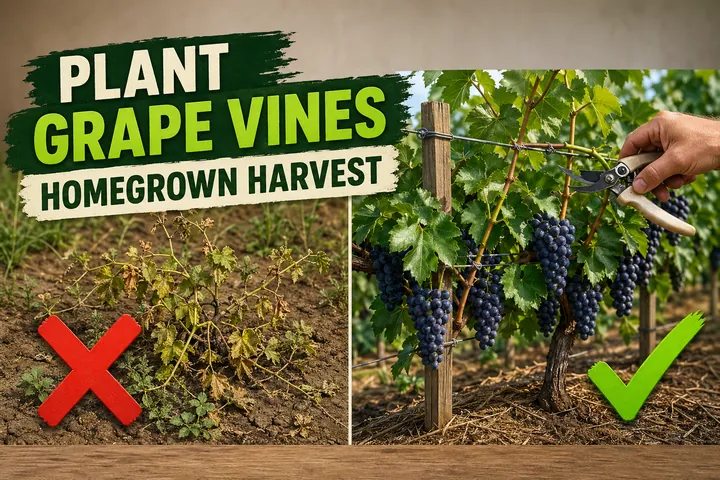
- How to plant grape vines — same dormant-season planting window, same mulching rules.
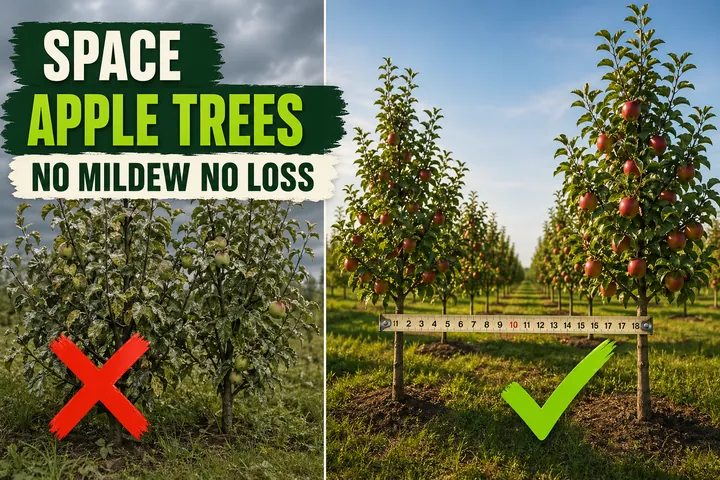
- How far apart to plant apple trees — exact spacing by rootstock for a backyard orchard.
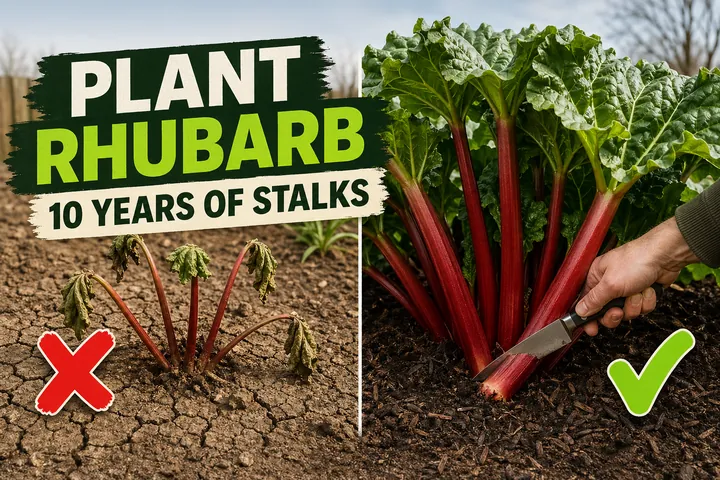
- How to plant rhubarb — another long-lived edible perennial that pairs well with a young orchard.
- How to make compost at home — feed your young apple tree black-gold compost every spring instead of synthetic fertilizer.
- Track watering, pruning, and feeding with the free Tazart plant care app so your young apple trees never miss a deep summer watering.
A note on conditions
Every garden is different. Soil type, drainage, climate zone, the rootstock you chose, and the varieties you paired all change how a young apple tree grows. Use the steps above as a starting point and adjust based on what your tree actually does in its first season — that’s how every good orchard grower learns.
Highly recommended
The supplies that make this guide work
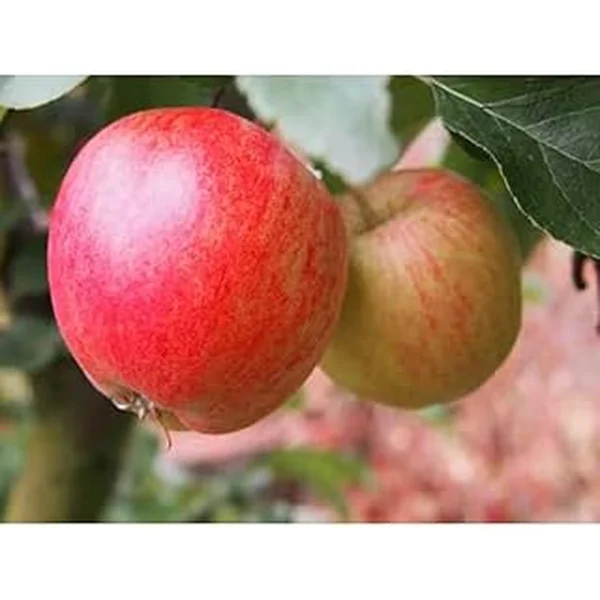
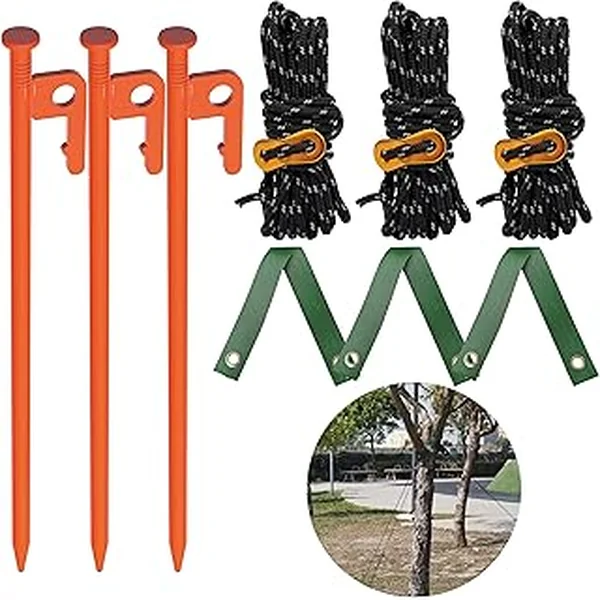
Tazart is an Amazon Associate — we earn from qualifying purchases at no extra cost to you. Thank you for helping us keep these guides free.
Frequently asked questions
When is the best time to plant an apple tree?
Late winter to early spring while the tree is still dormant is ideal in most climates — typically February to April once the ground can be worked but before bud break. In mild winter zones (USDA 8 and warmer) you can also plant in late autumn so the roots establish before summer heat. Avoid planting during a hard freeze or in waterlogged soil.
How deep should I plant an apple tree?
Plant the tree so the graft union — the bulge where the variety meets the rootstock — sits 5–8 cm (2–3 in) above the finished soil line. Burying the graft causes the variety to root above it, which cancels out the rootstock's dwarfing effect and can lead to a much larger, weaker tree. Match the soil mark on the trunk from the nursery as your reference.
Do I need two apple trees to get fruit?
Yes, for nearly all varieties. Apples are not reliably self-fertile — you need two compatible varieties that bloom at the same time, planted within about 15 m (50 ft) of each other so bees can move pollen between them. A few self-fertile cultivars exist (like 'Granny Smith' or 'Golden Delicious'), but even those crop more heavily with a partner. Crabapples count as a pollination partner.
How long until a new apple tree produces fruit?
Dwarf trees usually fruit in 2–3 years, semi-dwarf in 3–5 years, and standard (full-size) trees in 5–8 years. The first year or two of any apple tree should be focused on roots and shape — pinch off most blossoms in year 1 so the tree puts its energy into establishing rather than ripening fruit it cannot support.
Should I stake a young apple tree?
Yes — especially for dwarf and semi-dwarf trees on small rootstocks (like M9 or M26), which have brittle root systems and can blow over in their first 3–5 years. Use one or two sturdy stakes driven into firm soil outside the root ball, with a soft flexible tie that allows a little trunk movement. Remove the stake after 2–3 years once the tree is anchored.
What is the difference between dwarf, semi-dwarf, and standard apple trees?
Dwarf trees (e.g. M9, M27 rootstocks) reach 2–3 m (6–10 ft), need staking for life, and fruit in 2–3 years — perfect for small yards. Semi-dwarf (e.g. M26, MM106) reach 3.5–4.5 m (12–15 ft), are mostly self-supporting, and fruit in 3–5 years. Standard (seedling rootstock) reach 6–9 m (20–30 ft), live the longest, but can take 5–8 years to fruit. Pick based on your space, ladder tolerance, and how soon you want apples.