Guide
How to Plant a Tree Correctly (Survives the First Winter)
Plant a tree the right way — correct depth, hole size, staking, mulch, and watering. Works for bare-root, container, and balled-and-burlapped trees so yours survives
On this page
Watch the visual walkthrough
How to plant a potted tree
A short visual walkthrough that pairs with the steps above.
A newly planted tree lives or dies in the first 12 months. The good news: almost every “tree died on me” story traces back to three avoidable mistakes — planted too deep, smothered by a mulch volcano, or never watered properly. Get those right and your tree sails through year one.
This guide covers exactly how to plant any young tree — ornamental, fruit, or shade — and works for the three forms you’ll find at a nursery: bare-root, container-grown, and balled-and-burlapped (B&B).
Quick answer
Dig a saucer-shaped hole two to three times wider than the root ball but no deeper. Set the tree so the root flare sits 2–5 cm (1–2 in) above the surrounding soil. Backfill with native soil, water deeply with about 38 L (10 gal), then ring (don’t pile) 5–8 cm (2–3 in) of mulch around the base, leaving a 10 cm (4 in) gap from the trunk. Stake only if needed and remove stakes after 12 months.
When to plant a tree
| Climate | Best window | Second-best |
|---|---|---|
| Temperate / cold winters | Early fall — 6 weeks before first hard frost | Early spring after last hard frost |
| Mild / warm winters | Late fall through winter | Early spring |
| Hot / dry summers | Late winter | Early spring |
Fall planting wins because soil is still warm (roots keep growing well after the canopy goes dormant) and rainfall is reliable. Avoid mid-summer planting unless you can water 2–3 times per week for 12 weeks straight.
What you’ll need
- A young tree — bare-root, container, or balled-and-burlapped
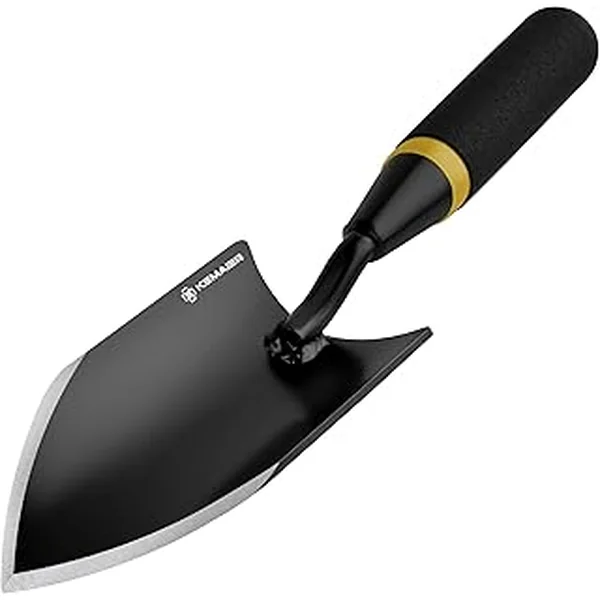
- A flat-bladed garden spade
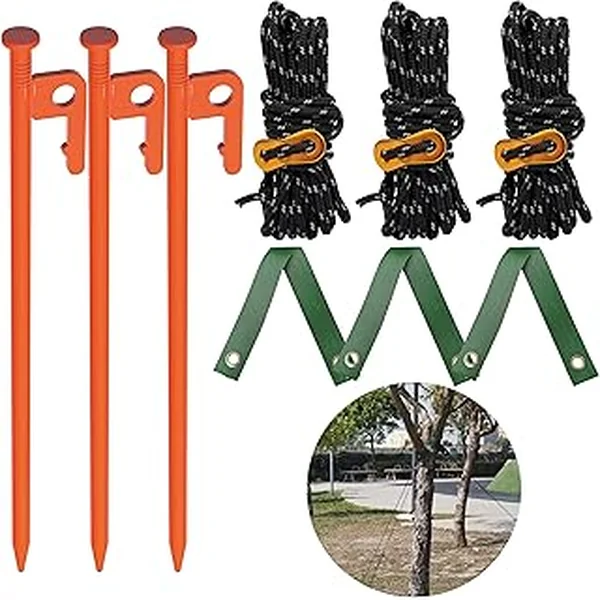
- Two wooden stakes 1.5–1.8 m (5–6 ft) long, plus soft wide tree ties (only if needed)
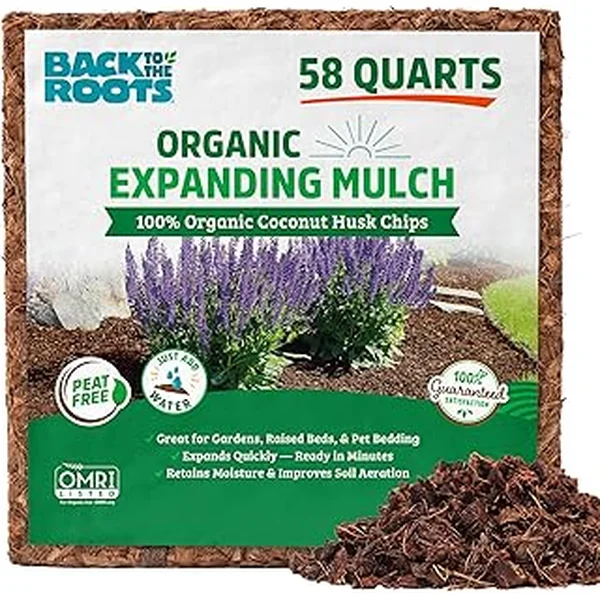
- 5–8 cm (2–3 in) of organic mulch (shredded bark, wood chips) — about a 60 L (16 gal) bag per small tree
- A bucket or hose for water — plan on 38 L (10 gal) per 2.5 cm (1 in) of trunk caliper at planting
- Optional: a soil knife, pruning shears for damaged roots
Skip the bag of compost or “tree planting mix.” You’ll backfill with the native soil you dug out — more on why below.
Step-by-step: how to plant a tree
1. Find the root flare BEFORE you dig
If you’re specifically planting a banana tree, the hole dimensions and backfill approach differ from most woody trees — the banana tree planting guide covers the specific depth, drainage setup, and first-year mulching that banana rhizomes need.
The root flare is where the trunk widens into the major roots. It must sit at or slightly above ground level — not buried.
Brush soil away from the top of the root ball or container until you can clearly see the flare. Nurseries often pot trees too deep, so you might dig 2–8 cm (1–3 in) of soil off the top before you reach the real flare. Measure the depth from the flare to the bottom of the root ball — that’s how deep your hole needs to be, not a centimetre deeper.
2. Dig a wide, saucer-shaped hole
Make the hole two to three times wider than the root ball and only as deep as the root ball measured from the flare down.
The shape matters. A flat-bottomed saucer hole with sloped sides keeps the root ball sitting on undisturbed soil (it won’t sink later) and gives roots loose soil to spread sideways into. Roots grow horizontally — that’s where 90% of feeder roots live anyway.
Score the sides of the hole with the spade so they aren’t smooth and glazed. Glazed walls (common in clay soils) are a wall roots refuse to cross.
3. Prepare the root ball
Handle by the root ball, never the trunk.
- Bare-root tree: soak roots in a bucket of water for 1–2 hours before planting. Trim broken or torn roots with clean shears. Build a small cone of soil in the centre of the hole and drape the roots over it.
- Container tree: slide the tree out and check for circling roots. If you see roots wrapped around the root ball, slice 3–4 vertical cuts 1–2 cm (½ in) deep down the sides, then gently tease the bottom roots outward. Don’t be shy — circling roots will girdle the trunk in 5–10 years if left alone.
- Balled-and-burlapped tree: set the ball in the hole intact, then carefully cut and pull back the top third of the burlap, all twine, and any wire basket so nothing wraps the trunk or upper roots. Leave the bottom of the burlap in place.
4. Position the tree
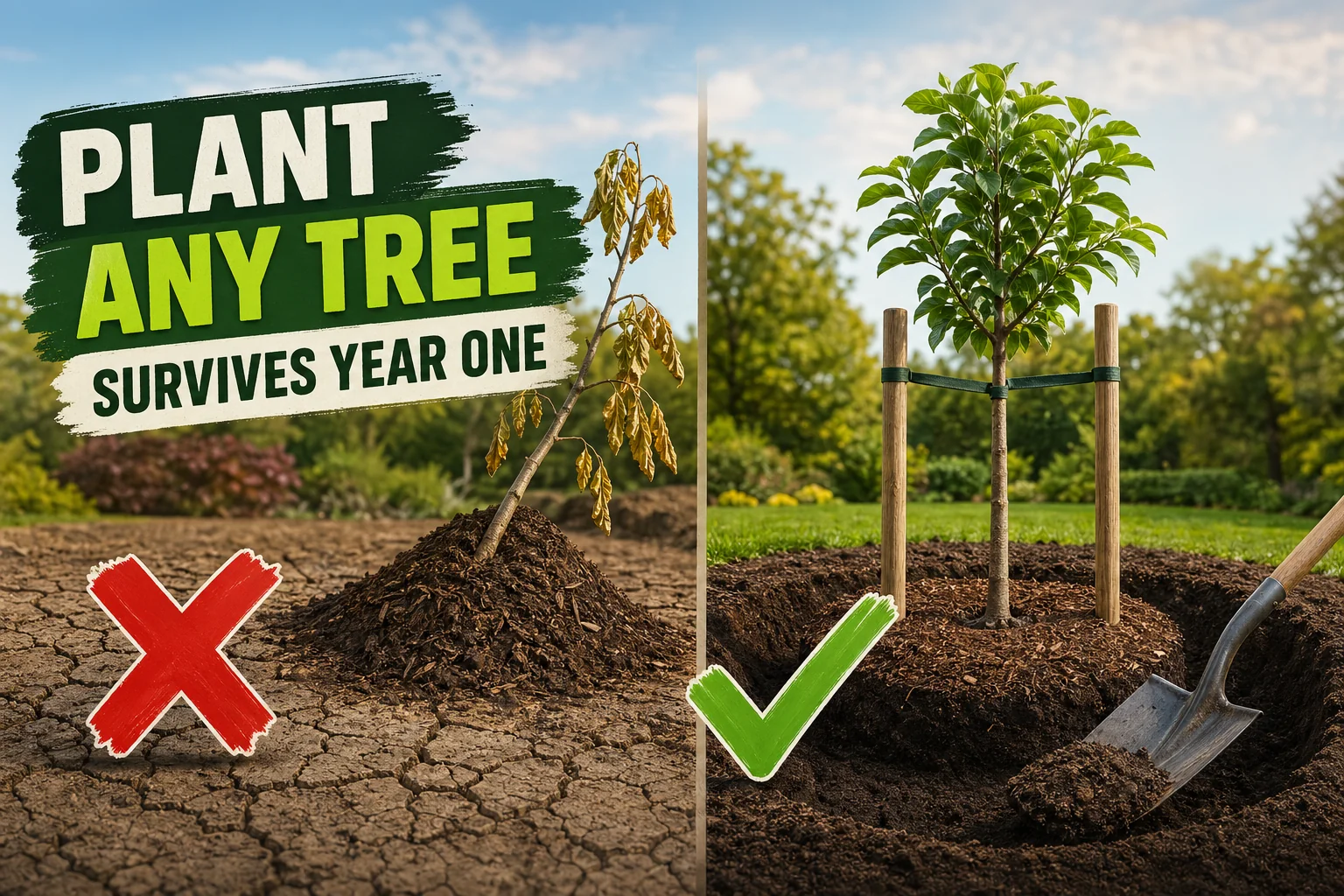
Set the tree in the hole. The root flare should sit 2–5 cm (1–2 in) above the surrounding soil line. Yes — proud of the ground, not flush with it. New planting holes always settle a little, and a slightly high tree settles to grade. A flush tree settles below grade and dies slowly over 2–4 years.
Eyeball it from three sides — straight up, no lean. Spin the tree until the best face is forward.
5. Backfill with native soil
Fill the hole back in with the same dirt you dug out. Do not mix in compost, peat moss, or store-bought “planting mix.” A fertile pocket inside the hole tells roots there’s no reason to leave — they circle the hole, get root-bound, and the tree fails years later.
Backfill in two stages: shovel half the soil in, water it down to settle and remove air pockets, then fill the rest. Tamp gently with the back of the spade — firm enough that the tree won’t rock, loose enough that water drains.
6. Build a watering basin and water deeply
Form a low ring of soil 8–10 cm (3–4 in) tall around the outer edge of the planting hole. This basin holds water over the root ball instead of letting it run off.
Pour 38 L (10 gal) of water per 2.5 cm (1 in) of trunk caliper into the basin and let it soak in fully. This first deep watering is non-negotiable — it removes air pockets that would otherwise dry out the roots.
7. Mulch the right way (the doughnut, not the volcano)
Spread 5–8 cm (2–3 in) of organic mulch over the entire planting area in a wide flat ring — out to 60–90 cm (24–36 in) from the trunk for small trees, wider for bigger ones.
Critical: leave a 10 cm (4 in) bare gap between the mulch and the trunk. Mulch piled against bark traps moisture, invites rot, and lets voles chew the trunk over winter. The “mulch volcano” you see in parking lots is the single biggest reason landscape trees die.
The shape you want is a doughnut, not a cone.
8. Stake only if you need to
Most healthy trees don’t need staking. Stake only if:
- The trunk can’t stand upright on its own
- Your site is exposed to strong wind
- The tree is over 1.8 m (6 ft) tall with a small root ball
- The tree is bare-root with limited initial root anchoring
If you stake, use two stakes driven into solid ground outside the root ball, on opposite sides perpendicular to the prevailing wind. Use soft, wide tree ties (never wire or thin rope) and leave 2–3 cm (1 in) of slack — the trunk needs to flex to build strong wood.
Remove all stakes after 12 months. Trees left staked grow weak, thin trunks that snap in the next storm.
Bare-root vs container vs balled-and-burlapped
| Type | Best planting window | Pros | Watch out for |
|---|---|---|---|
| Bare-root | Late winter to early spring, while dormant | Cheapest, biggest selection, fastest to establish, no circling roots | Roots dry out in minutes — keep wet right up to planting |
| Container | Almost any time the ground isn’t frozen | Available year-round at garden centres | Circling/girdling roots — always inspect and slice the root ball |
| Balled-and-burlapped (B&B) | Fall and early spring | Larger trees available, less transplant shock than bare-root for big specimens | Always remove top third of burlap, all twine, all wire basket |
Care after planting
The first year is about water, not fertilizer.
| Task | Year 1 | Year 2 |
|---|---|---|
| Water | Deep soak 2–3× per week for the first month, then 1× per week through the growing season | Deep soak every 10–14 days during dry spells |
| Mulch top-up | Refresh to 5–8 cm (2–3 in) depth, keeping the trunk gap | Same |
| Fertilize | Skip — no fertilizer in year one | Light spring feed if growth is poor |
| Prune | Remove only dead, damaged, or crossing branches | Light shape pruning in dormant season |
| Check stakes | Loosen ties if they’re cutting in | Remove all stakes |
A free plant care app like Tazart tracks deep-watering schedules for newly planted trees, adjusts them for your local weather, and pings you on Apple Watch when it’s time. Useful when you’ve planted more than one or two — the watering rhythm changes monthly.
Common mistakes that kill new trees
- Planting too deep. The single biggest killer. If the root flare is buried, the tree slowly suffocates over 1–4 years.
- Mulch volcano. Piling mulch against the trunk rots the bark and invites rodents in winter.
- Amended planting hole. A hole filled with rich compost-mix becomes a flowerpot — roots circle and never push out into native soil.
- Shallow daily watering. Light surface watering encourages shallow roots that die in the first dry spell. Always deep soak.
- Stake left on too long. A trunk that never flexes never builds strong reaction wood. Remove after 12 months.
- Buying a root-bound container tree and planting it as-is. Slice and tease the root ball, or it will girdle itself.
- Planting in mid-summer with no watering plan. Heat + small root ball = transplant failure within weeks.
Troubleshooting
| Symptom | Likely cause | Fix |
|---|---|---|
| Leaves wilt 2–4 weeks after planting | Underwatering or root ball drying | Deep soak with 38 L (10 gal); check soil moisture 10 cm (4 in) down before next water |
| Leaves yellow and drop early | Planted too deep, or chronic over-watering | Lift gently, find the flare, replant 2–5 cm (1–2 in) high; cut watering frequency |
| Trunk bark cracking or peeling at the base | Mulch volcano, sunscald, or vole damage | Pull mulch back 10 cm (4 in) from trunk; wrap with white tree guard for first winter |
| Tree leans or rocks in the wind | Insufficient backfill firming or no stake on a windy site | Re-firm soil, add two stakes with soft ties for 12 months |
| Branches die back from the tips | Transplant shock + root damage | Water deeply, do not fertilize, prune only clearly dead wood; most trees recover by year two |
| No new growth in spring of year two | Root flare still buried, or roots never spread out of the hole | Excavate gently, find the flare, raise the tree if needed |
| Dark sunken patch on the trunk near the soil | Crown rot from mulch contact | Pull mulch back; let bark dry; remove any soft tissue with a clean knife |
Watch: planting a tree the right way
A short visual walkthrough pairs well with the steps above. If you’re a visual learner, watch a quick tutorial like How to Plant a Tree the Right Way on YouTube and then come back to follow the depth and watering numbers in this guide.
Related reading
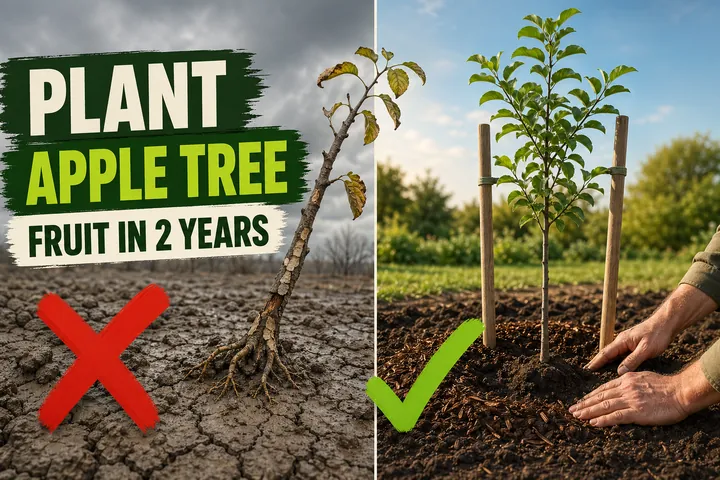
- How to plant an apple tree — the same root-flare and hole-width rules apply, with extra notes on rootstock depth and pollination spacing.
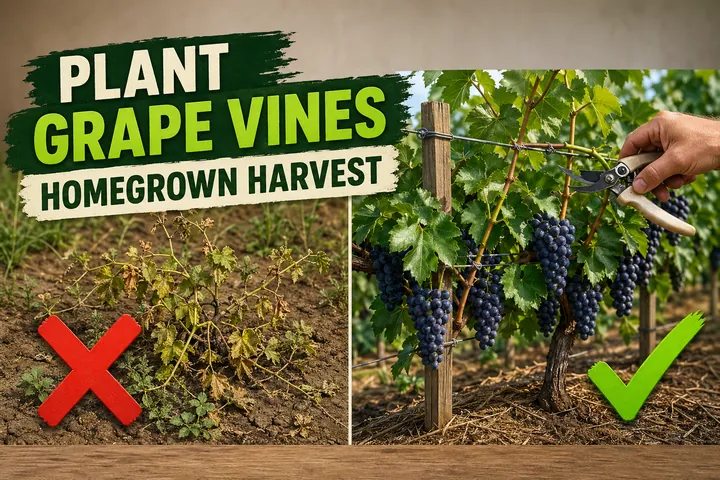
- How to plant grape vines — saucer-hole technique transferred to a smaller perennial; useful if you’re planting a tree-and-vine edible patch in the same season.
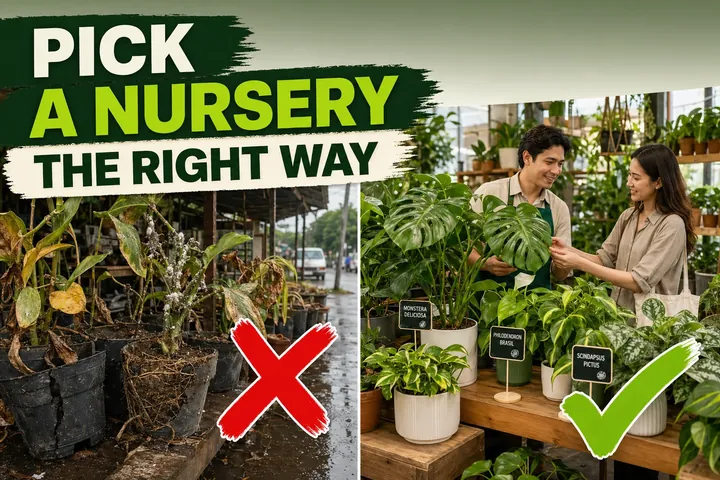
- How to find a good plant nursery near you — the right tree starts with the right nursery; what to look for in a healthy bare-root or container tree before you buy.
- Track your new tree’s first-year watering schedule with the free Tazart plant care app.
A note on conditions
Every yard is different. Soil texture, drainage, slope, exposure, hardiness zone, and your local rainfall all change how fast a young tree establishes and how often it needs water. Use the steps above as a starting point and adjust based on what your tree actually does in week two — that’s how every good arborist learns.
Highly recommended
The supplies that make this guide work

Tazart is an Amazon Associate — we earn from qualifying purchases at no extra cost to you. Thank you for helping us keep these guides free.
Frequently asked questions
How deep should I plant a tree?
Plant the tree so the root flare — the spot where the trunk widens into the roots — sits 2–5 cm (1–2 in) above the surrounding soil line, never below it. Most new trees die because they're planted too deep, which suffocates the roots and rots the trunk. Find the flare by brushing soil away from the top of the root ball before you dig.
How wide should the planting hole be?
Two to three times the width of the root ball, but only as deep as the root ball itself. A wide saucer-shaped hole gives roots loose soil to spread sideways into. A deep hole settles over the next year and pulls the tree down — the most common cause of late planting-depth failure.
When is the best time to plant a tree?
Early fall is ideal in most climates — soil is still warm enough for roots to grow but the canopy is dormant, so all energy goes underground. Early spring (after the last hard frost, before bud-break) is the second-best window. Avoid mid-summer planting unless you can water heavily for 12 weeks.
Do I need to stake a newly planted tree?
Only if the trunk can't stand upright on its own, the site is windy, or the tree is over 1.8 m (6 ft) tall with a small root ball. Use two stakes outside the root ball, soft wide ties, and leave 2–3 cm (1 in) of slack so the trunk can flex. Remove stakes after one year — leaving them on creates a weak trunk.
How often should I water a newly planted tree?
Slowly, deeply, and infrequently. Soak the root ball with about 38 L (10 gal) of water per 2.5 cm (1 in) of trunk caliper, two to three times per week for the first month, then weekly through the first growing season, and once every 10–14 days during dry spells in year two. Skip watering when the top 5 cm (2 in) of soil is still moist.
Should I add compost or fertilizer to the planting hole?
No. Backfill with the native soil you dug out, not amended super-rich soil. Roots that hit a fertile pocket stop spreading outward — they circle the hole and the tree fails 3–5 years later. Topdress with 2–3 cm (1 in) of compost on top of the mulch ring instead, where it can break down naturally.
Why is my newly planted tree dying?
In order of frequency: planted too deep (root flare buried), mulch piled against the trunk (mulch volcano), under- or over-watering, stake left on too long, or the root ball was already dried out at the nursery. Lift the tree gently, find the root flare, and replant if it's buried — many trees recover if caught in the first season.