Edible
How to Plant a Banana Tree (Cold-Hardy & Tropical Varieties)
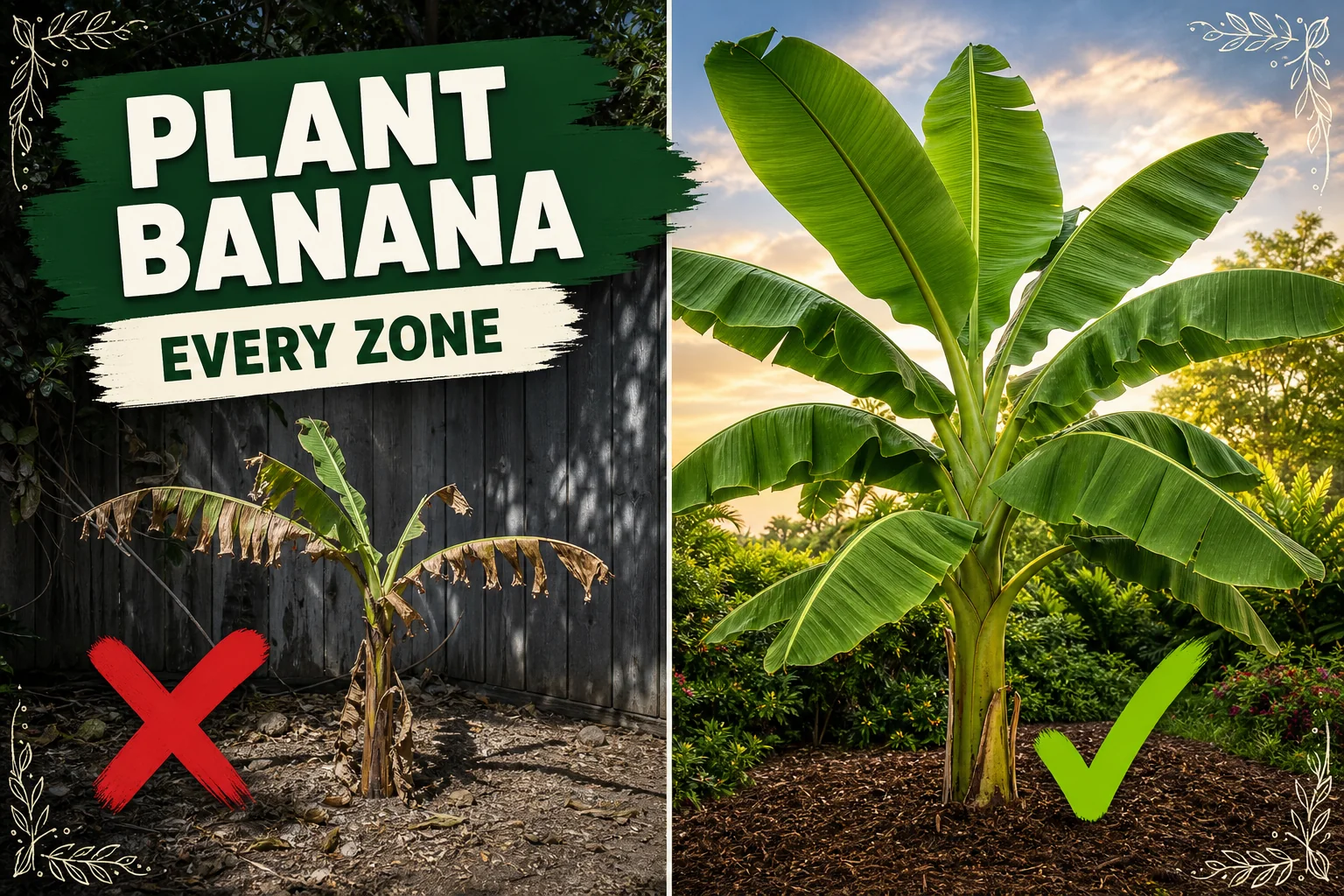
Plant a banana tree in a sunny well-drained spot, dig a hole twice the rootball width, and water deeply. Cold-hardy Musa basjoo survives zone 5 with mulch protection.
On this page
- Quick answer
- Bananas aren’t actually trees
- Choose your variety first
- Site selection: sun, drainage, wind protection
- Soil and planting hole prep
- Watering: heavy and consistent
- Fertilizing the heavy feeder
- Cold-zone winter protection
- Indoor banana trees
- Pup management
- Common mistakes
- Troubleshooting table
- Related reading
- A note on conditions
Watch the visual walkthrough
DON'T GROW BANANAS Until You Watch This!
Are your bananas growing slow or producing tiny bunches? Today I'll show you exactly how to prune banana plants for faster ...
A banana tree growing in your garden looks like a small miracle — those huge paddle leaves, the thick juicy pseudostem, the absolute tropical drama of it. And for a much wider range of climates than most people think, it’s entirely possible.
The trick is matching the variety to your zone. Cold-hardy Musa basjoo survives root-hardy down to USDA zone 5 with mulch protection — leaves die back every winter and regrow every spring, hitting 3 m (10 ft) by late summer. True tropical Cavendish bananas need zones 9–11 for outdoor year-round growth. And dwarf varieties grown in pots can be brought indoors anywhere.
This guide covers variety selection, planting depth, soil prep, watering, the cold-zone winter protection workflow, and what to realistically expect from indoor and outdoor specimens.
Quick answer
Plant a banana corm so the top sits 5–10 cm (2–4 in) below soil surface in a sunny well-drained spot. Dig the hole twice as wide as the root ball, mix in compost and balanced fertilizer, and water deeply at planting. Cold-hardy Musa basjoo survives outdoors year-round in zones 5–10 with heavy mulch over the corm each winter — foliage dies back each fall and regrows each spring. Tropical fruiting Cavendish bananas need zones 9–11. Dwarf varieties grown in 38–60 cm (15–24 in) pots work as indoor tropical houseplants anywhere.
Bananas aren’t actually trees
Despite the name, banana plants are technically the world’s largest herbaceous flowering plants — not trees. The “trunk” is a pseudostem (false stem) made of tightly wrapped leaf bases, not woody tissue. The actual plant is a perennial corm (an underground stem) that sends up new pseudostems from suckers around its base.
This biology shapes everything about how you plant and care for bananas:
- The pseudostem dies after fruiting (or after winter freeze damage)
- New pseudostems grow from the corm to replace the dead one
- A “banana tree” in the ground is really a clump of pseudostems at different ages
- Cold weather kills the pseudostem but the corm (with mulch) survives in many zones
Once you understand the corm-and-pseudostem structure, the whole growing system makes more sense — including why mulching the corm is more important than protecting the visible stem in cold zones.
Choose your variety first
The variety determines everything: hardiness, height, fruit potential, and care.
Cold-hardy ornamental (zones 5–10 root-hardy, foliage dies back each winter):
- Musa basjoo (Japanese Hardy Banana): the gold standard for cold-hardy banana growing. Survives -29°C (-20°F) at the corm with mulch protection. Reaches 3–4.5 m (10–15 ft) by late summer. Rarely fruits.
- Musa sikkimensis (Darjeeling Banana): hardy to zone 7. Slightly more cold-tolerant pseudostem than basjoo. Reaches 3 m (10 ft).
- Musa velutina (Pink Banana): hardy to zone 7 with protection. Smaller at 2–3 m (6–10 ft). Produces small inedible pink fruit.
Tropical fruiting (zones 9–11 outdoor year-round):
- Musa acuminata ‘Cavendish’: the standard supermarket banana. Reaches 3–4.5 m (10–15 ft). Heavy producer.
- Musa ‘Lady Finger’: sweet small bananas, popular in subtropical gardens. Reaches 4–5 m (13–16 ft).
- Musa ‘Plantain’: starchy cooking banana, similar care to Cavendish.
Dwarf indoor varieties (any zone in containers):
- Musa acuminata ‘Super Dwarf Cavendish’: matures at 1.5–1.8 m (5–6 ft) in containers. Can produce edible fruit indoors with bright light.
- Musa ‘Truly Tiny’: matures at 60–90 cm (2–3 ft). Houseplant-sized.
For most home gardeners north of zone 9, Musa basjoo or a dwarf indoor variety is the realistic choice. Outdoor fruiting bananas in zone 8 or colder face winter losses that consistently disappoint.
Site selection: sun, drainage, wind protection
Three factors make or break banana growth.
Sun:
- Minimum 6 hours direct sun daily
- Ideal: 8–12 hours of full sun
- Cold-hardy species tolerate part shade but produce smaller leaves
- Insufficient light produces leggy weak growth and (for tropical types) no fruit
Drainage:
- Bananas hate waterlogged soil but need consistent moisture
- Heavy clay needs amendment with compost and coarse sand
- Sandy soil needs amendment with compost for water retention
- Raised beds or mounded planting beds solve drainage problems in soggy yards
Wind protection:
- Banana leaves shred easily in wind — torn leaves still photosynthesize but look ragged
- South-facing walls (in northern hemisphere) add wind protection AND reflected heat
- Plant against fences, walls, or established hedges for shelter
- Cold winter winds desiccate cold-hardy varieties — windbreaks help with both heat and protection
Soil and planting hole prep
Bananas are exceptionally heavy feeders that demand rich, deep soil to perform.
Soil amendments:
- Mix one-third finished compost into the soil you removed from the hole
- Add a handful of balanced organic granular fertilizer
- For sandy soil: add extra compost (up to 50%) for moisture retention
- For clay soil: add coarse perlite or sharp sand for drainage
Hole dimensions:
- Width: twice the diameter of the root ball or corm
- Depth: equal to the height of the root mass plus 5 cm (2 in) of amended soil at the bottom
- Loosen the hole walls so roots can spread laterally — glazed walls limit root expansion
Planting depth:
- For corms (no leaves yet): top of corm 5–10 cm (2–4 in) below soil surface
- For nursery container plants: same depth as in the original pot
- Never deeper than the original root crown — causes pseudostem rot
This is similar to the planting workflow for other woody perennials — wide hole, native soil amended with compost, plant at correct depth, water in deeply.
Watering: heavy and consistent
Bananas have huge transpiration loads through those massive leaves and need correspondingly heavy watering.
Establishment phase (first 8 weeks):
- Water deeply 3–4 times per week
- 15–20 L (4–5 gallons) per plant per watering
- Maintain consistently moist (but not waterlogged) soil
- Mulch heavily to retain moisture
Established plants (after 8 weeks):
- Outdoor in summer heat: 5–10 L (1–3 gallons) per plant per day
- Drip irrigation is ideal — keeps water at the root zone without wetting the pseudostem
- Reduce watering significantly in fall and winter (especially in cold zones — wet cold soil kills corms)
- Indoor potted plants: water when top 2.5 cm (1 in) of soil is dry
Critical rule: never water the pseudostem itself. Water pooled in the leaf bases invites rot that kills the entire stem. Use drip irrigation, soaker hoses, or hand-watering at the base only.
Fertilizing the heavy feeder
Bananas are nutritional gluttons during the growing season. Underfeeding produces small pale leaves and (for tropical types) reduced or no fruit.
Fertilizer schedule:
- Apply balanced granular organic fertilizer (or banana-specific 8-10-12) monthly from spring through early fall
- Topdress with 2.5 cm (1 in) of compost each spring
- Skip feeding during winter months — pushes weak growth that frosts off
Potassium emphasis: Bananas have unusually high potassium requirements (the fruit itself is famously potassium-rich). A high-potassium banana-specific fertilizer or supplementing with kelp meal/wood ash provides what they need.
Container-grown bananas:
- Need more frequent feeding than ground-planted (every 2 weeks)
- Use half-strength liquid fertilizer
- Switch to slow-release granular at spring repotting for sustained feeding
Cold-zone winter protection
The reason Musa basjoo can survive in zone 5 isn’t because the leaves are hardy — they aren’t. The corm survives below frost line if properly insulated.
Step-by-step winter protection (zones 5–8):
-
After the first hard frost (usually late October to early November), the foliage will blacken and collapse. This is normal.
-
Cut the pseudostem back to 30–60 cm (12–24 in) tall using a sharp pruning saw or loppers. Don’t cut all the way to ground level — the cut surface needs to be above any pooled water.
-
Mound dry mulch 30–60 cm (12–24 in) tall over the cut pseudostem and entire corm zone. Use straw, shredded leaves, pine straw, or wood chips. Avoid materials that pack down and hold water (sawdust, fine bark).
-
In zones 5–7, wrap the mound with burlap, row cover, or even a sheet of plastic with the bottom edge buried — this sheds water away from the corm.
-
In spring, gradually pull mulch back as consistent warm weather returns. New shoots typically emerge in late April to mid-May depending on zone.
The new pseudostems that emerge are not the same as last year’s — those are dead. The corm sends up entirely new shoots each spring. By late summer, a healthy zone-6 Musa basjoo can be 2.5–3.5 m (8–12 ft) tall again.
Zone 5 extreme protection:
- Add 30 cm (12 in) of dry leaves over the mulch mound
- Cover with a tarp or large plastic container weighted down
- Risks: trapped moisture from rain or snow can rot the corm — ventilation matters
Indoor banana trees
Dwarf banana varieties grown in large pots make spectacular indoor tropical foliage plants — and occasionally produce small edible fruit.
Container requirements:
- Minimum 38 cm (15 in) wide pot for dwarf varieties
- 60 cm (24 in) wide for full-sized indoor specimens
- Drainage holes are non-negotiable
- Heavy ceramic or plastic — terracotta dries too fast
Indoor care:
- Brightest possible window (south-facing, no obstructions) or supplemental grow lights
- Temperature: 18–27°C (65–81°F) year-round, never below 13°C (55°F)
- Humidity: 60%+ ideal — group with other plants or use a humidifier
- Water when top 2.5 cm (1 in) of soil is dry — typically every 5–7 days
- Half-strength liquid fertilizer monthly during active growth
Realistic expectations indoors:
- Dwarf Cavendish reaches 1.5–1.8 m (5–6 ft) in 2–3 years
- Fruit is rare indoors but possible with consistent bright light and warmth
- Foliage alone is the main reward — gorgeous tropical drama in any room
This is similar to indoor mango or passion fruit growing — you’re growing for the tropical aesthetic with fruit as a possible bonus.
Pup management
A healthy banana plant produces “pups” — small offshoots from the corm that become next year’s pseudostems. Managing pups is part of long-term banana care.
For maximum fruit (tropical varieties):
- Allow 1 main pseudostem to fruit
- Allow 1 “follower” pup to grow as the next-generation fruiting stem
- Remove all other pups by digging them out cleanly with a sharp spade
For maximum visual mass (cold-hardy ornamentals):
- Allow all pups to grow into a clump
- Result: dense banana grove effect, multiple pseudostems
- Better cold protection because mass holds heat
Transplanting pups:
- Best time: when pup is 30–60 cm (1–2 ft) tall with at least one mature leaf
- Dig down with a sharp spade and cut the connection to the parent corm
- Plant immediately in a new prepared hole — don’t let roots dry
- Treat as a new planting (deep watering, mulch, gradual sun exposure)
Common mistakes
- Wrong variety for your zone. Tropical Cavendish in zone 7 dies the first winter. Match variety to climate honestly.
- Insufficient sun. Less than 6 hours direct sun produces leggy weak plants. Move to full sun if possible.
- Planting too deep. Burying the corm too deep causes rot. Top of corm 5–10 cm (2–4 in) below soil, no deeper.
- Underwatering established plants. Massive leaves transpire heavily. 5–10 L (1–3 gallons) per plant per day in summer is normal.
- Watering the pseudostem. Pooled water in leaf bases invites rot. Water at the root zone only.
- Skipping winter protection in cold zones. Musa basjoo survives zone 5 only with proper mulch protection. Without it, the corm dies.
- Underfeeding. Bananas are heavy feeders. Monthly fertilizer through the growing season is the minimum.
- Expecting indoor fruit. Indoor bananas rarely fruit due to insufficient light intensity. Grow for foliage; treat fruit as bonus.
Troubleshooting table
| Symptom | Likely cause | Fix |
|---|---|---|
| Leaves yellow and droopy | Underwatering | Increase watering frequency, deep soak |
| Brown crispy leaf edges | Low humidity (indoor) or cold damage | Raise humidity; in cold zones, accept some winter damage |
| Pseudostem rotting at base | Water pooled in leaf base or corm planted too deep | Cut away rotted tissue, improve drainage, replant at correct depth |
| Wind-shredded leaves | Exposed location | Plant new specimens with windbreak; existing leaves still photosynthesize |
| No new growth in spring | Corm killed by winter | Wait until June; if no shoots, replant new specimen |
| Pale leaves, slow growth | Underfeeding | Apply balanced organic fertilizer, topdress with compost |
| Fruit doesn’t ripen | Insufficient season length | Wrap fruit cluster with row cover for added warmth; harvest green and ripen indoors |
Related reading
- How to plant a tree (general workflow) — though bananas aren’t technically trees, the planting hole prep and watering principles overlap.
- How to plant an apple tree — bare root and B&B fruit tree planting for temperate climates, the cold-zone counterpart to tropical bananas.
- How to grow passion fruit at home — another tropical fruit project with similar warmth and sun requirements.
- How to plant a mango seed — companion tropical fruit growing project, also primarily a houseplant outside USDA zones 9–11.
- How to grow dragon fruit at home — cactus-family tropical fruit propagation, complements banana growing in warm-zone gardens.
- Track planting dates, fertilizer schedules, and winter protection reminders with the free Tazart plant care app — it adjusts care reminders for your local frost dates and growing season.
A note on conditions
Banana growing varies enormously by climate. In zone 9 Florida, a Cavendish in the ground produces fruit in 12–15 months without any winter protection. In zone 5 Minnesota, a Musa basjoo with proper mulch protection regrows from the corm each spring and reaches 3 m (10 ft) by August — but never fruits and dies back every winter. In zone 7 Pennsylvania, a Musa basjoo behaves like a herbaceous perennial similar to a hardy hibiscus. Adapt your expectations to your zone, pick the right variety, and bananas can thrive in places most gardeners never imagine they’d grow.
Highly recommended
The supplies that make this guide work

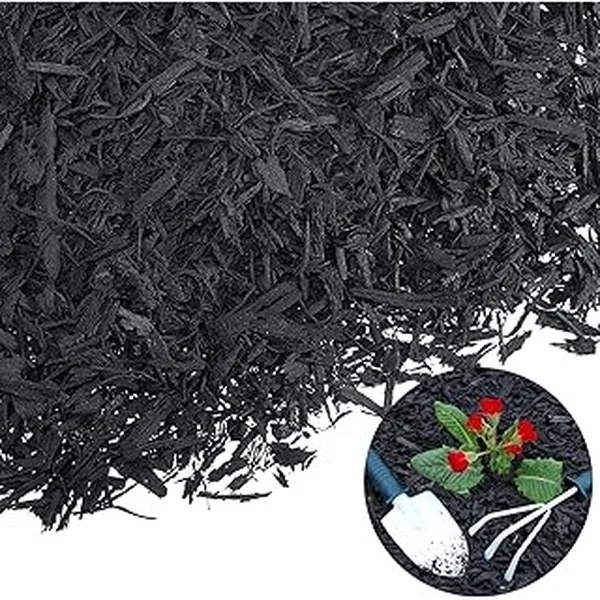


Tazart is an Amazon Associate — we earn from qualifying purchases at no extra cost to you. Thank you for helping us keep these guides free.
Frequently asked questions
How deep do you plant a banana tree?
Plant the corm (the underground bulb-like structure) so the top sits 5–10 cm (2–4 in) below the soil surface. For container-grown plants from a nursery, plant at the same depth as the soil level in the original pot — never deeper, which causes rot. Dig the hole twice as wide as the root ball but only as deep as the existing root mass plus a few inches of amended soil at the bottom.
What zone can grow a banana tree?
Cold-hardy Musa basjoo survives root-hardy down to USDA zone 5 (-29°C / -20°F) with heavy mulch protection — though the leaves die back each winter and regrow each spring. True tropical fruiting bananas like Cavendish need USDA zones 9–11 for outdoor year-round growth. In zones 7–8, dwarf tropical varieties grown in large pots can be brought indoors for winter.
How much sun does a banana tree need?
Banana trees need at least 6 hours of direct sun daily, with 8–12 hours ideal for the largest leaves and (in tropical varieties) fruit production. Cold-hardy species like Musa basjoo tolerate part shade but produce smaller leaves. Indoor specimens need the brightest possible window — south-facing with no obstructions, or supplemental grow lights.
How do you protect a banana tree in winter?
In zones 5–8, after the first hard frost kills the foliage, cut the pseudostem back to 30–60 cm (12–24 in) tall. Mound 30–60 cm (12–24 in) of dry mulch (straw, shredded leaves, or pine straw) over the entire crown. In zones 5–7, also wrap the mound with burlap or row cover to shed water. Pull the mulch back gradually in spring once consistent warm weather returns and new shoots emerge.
Can you grow a banana tree indoors?
Yes, dwarf banana varieties (Musa acuminata Super Dwarf Cavendish, Musa Dwarf Red, Musa velutina) can be grown indoors in large pots — 38–60 cm (15–24 in) wide minimum. They need the brightest possible light, warmth above 18°C (65°F), high humidity (60%+), and moderate watering. Indoor specimens rarely produce fruit due to insufficient light intensity but make spectacular tropical foliage plants reaching 1.5–2.4 m (5–8 ft) tall.
How long until a banana tree fruits?
Tropical banana varieties (Cavendish, Lady Finger, Plantain) take 9–15 months from planting to flowering, then 3–4 more months until fruit ripens — total 12–19 months from a healthy pup to harvest in zones 9–11 with proper care. Each pseudostem fruits only once, then dies and is replaced by suckers from the corm. Cold-hardy ornamental species like Musa basjoo rarely fruit even in their hardiness range — they're grown for the foliage.