Edible
How to Overwinter Pepper Plants (Keep Them Alive for Years)
Overwinter pepper plants indoors to skip the long start-up phase and harvest bigger yields next season. Step-by-step guide: pruning, dormancy, and spring revival.
On this page
- Quick answer
- Why overwintering is worth it
- Step 1 — Know your timing
- Step 2 — Pest inspection before you bring them in
- Step 3 — Hard pruning
- Step 4 — Pot transition (if needed)
- Step 5 — Ideal overwintering conditions
- Step 6 — Managing dormancy through winter
- Step 7 — Reawakening in late winter
- Step 8 — Hardening off before going back outside
- Common overwintering mistakes
- Which pepper varieties overwinter best?
- Watch: How to overwinter pepper plants
- Keep your peppers growing year-round
Watch the visual walkthrough
How to OverWinter Your Pepper Plants... In Any Climate!
You can over winter your peppers. Bell peppers, sweet peppers, hot peppers. It's time to prepare your peppers for winter. Yes, you ...
Most gardeners rip pepper plants out at the end of the season and start over from seed every spring. That is the hard way. Peppers are not true annuals — they are tropical perennials that can live for 5-10 years and produce larger, earlier harvests every single season when you bring them inside before the first frost.
This guide covers everything: when to act, how to prune, how to manage dormancy, and how to wake the plant back up in time for a strong growing season.
Quick answer
Bring pepper plants indoors before the first frost — when nights drop below 10°C (50°F). Hard-prune stems to 7-15 cm (3-6 in) stubs, remove most leaves and all fruit, then keep the plant in a cool 10-18°C (50-65°F) spot with low light. Water every 2-3 weeks only. In late winter, move to warmth and brighter light to reawaken. Harden off outdoors over 7-10 days before the last frost date.
Why overwintering is worth it
Peppers — bell, jalapeño, habanero, cayenne, ghost, and every other Capsicum species — are perennials in USDA zones 9b and above. In those regions they grow as multi-year shrubs with woody trunks. Everywhere else, winter kills them if left outside.
The payoff for bringing them in is real:
- Earlier fruiting. A second-year plant flowers 4-6 weeks ahead of a first-year transplant.
- Bigger yields. An established root system supports more fruit-set per branch.
- Better flavour. Older plants with woody stems produce more complex, concentrated flavours in hot varieties.
- Free plants. No seed cost, no propagation delay, no hardening off from scratch.
Any pepper worth growing is worth overwintering.
Step 1 — Know your timing
Bring peppers inside before the first frost, not after.
The trigger is not air temperature on a single cold day. It is the trend: when overnight lows start consistently dropping below 10°C (50°F), that is your window. A single night below 2°C (35°F) can kill flowers, damage stems, and cause root shock even if the plant looks fine the next morning.
Check your local average first-frost date and plan to move plants inside 1-2 weeks before it. If an unexpected frost is forecast, move plants immediately regardless of schedule.
Leaving peppers out too long is the most common overwintering mistake.
Step 2 — Pest inspection before you bring them in
This step is non-negotiable. One infested pepper plant can seed your entire indoor garden with spider mites, aphids, or whitefly in a matter of weeks.
How to inspect:
- Take the plant to a bright outdoor spot or under strong artificial light.
- Check both sides of every leaf — spider mites appear as fine webbing and tiny moving dots on leaf undersides; aphids cluster at new growth tips; whitefly adults flutter when disturbed.
- Check stem nodes and the top 2-3 cm (1 in) of soil for fungus gnat larvae or soil-dwelling pests.
- Examine the pot exterior and drainage hole for hitchhiking pests.
If you find anything: Spray thoroughly with neem oil solution (5 ml / 1 tsp concentrate per 1 L / 34 fl oz water with a few drops of dish soap) on all leaf surfaces and stems. Wait 48 hours and repeat if needed. Then bring the plant inside.
Even if you find nothing, a precautionary neem spray before moving is a good habit.
Step 3 — Hard pruning
This is the step most people are afraid of. Do it anyway.
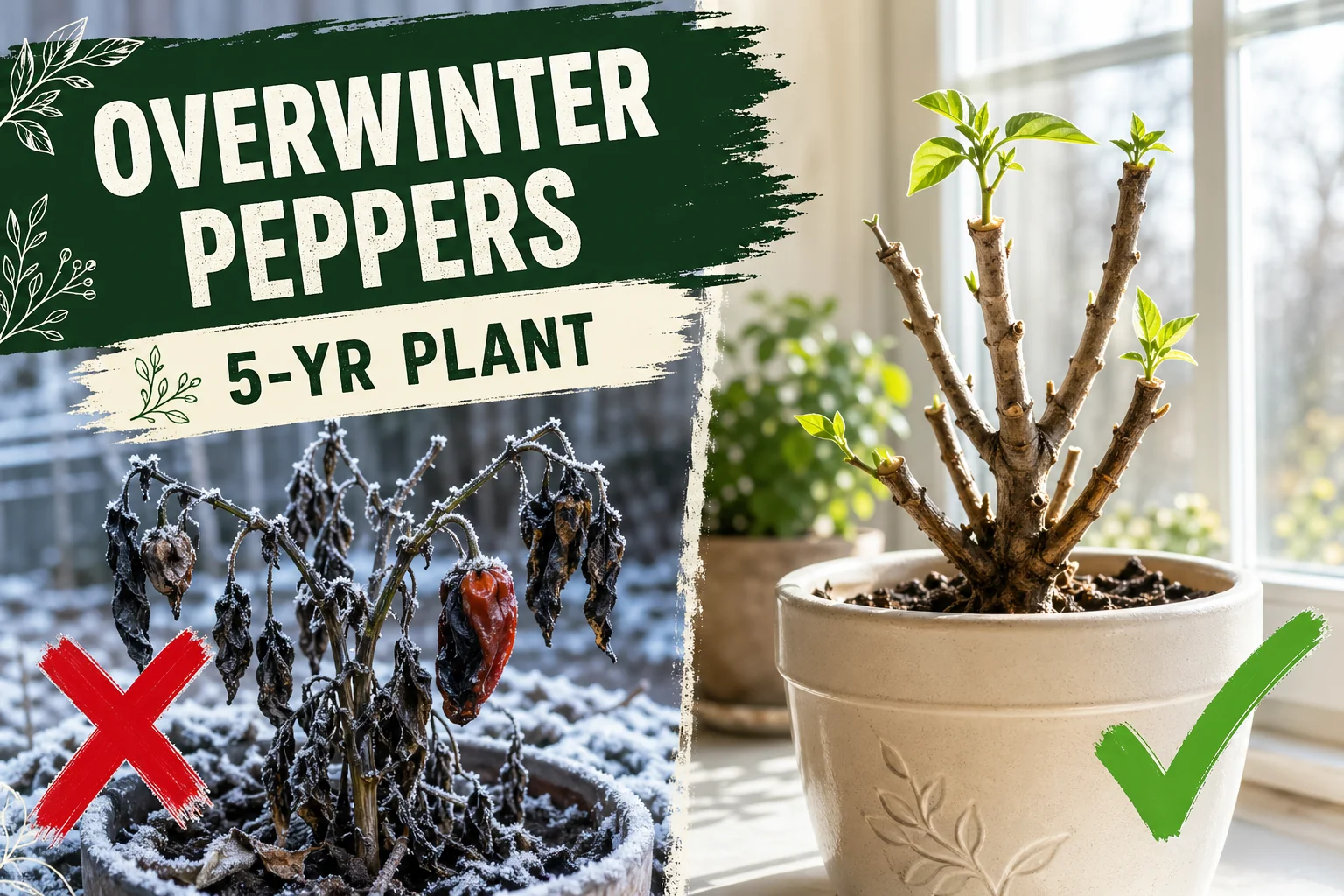
Why hard pruning works: A large leafy plant needs far more energy and water than a stub. In low light and cool temperatures, a big canopy drains the plant faster than it can recover. Hard pruning forces the plant into efficient dormancy and triggers vigorous new branching in spring.
How to prune for overwintering:
- Remove all fruit, flowers, and flower buds — the plant should not waste energy ripening fruit during dormancy.
- Cut each main branch back to a stub of 7-15 cm (3-6 in), leaving 2-3 leaf nodes per stem.
- Remove roughly 70-80% of the leaves. Leave a few small leaves near the stubs — they help the plant photosynthesize just enough to stay alive.
- Use clean, sharp bypass shears. Wipe blades with rubbing alcohol between cuts if you are pruning multiple plants.
- Remove any dead, crossing, or clearly diseased stems entirely at the base.
The result looks brutal — a collection of short woody stubs in a pot. This is correct. New growth will emerge from those nodes in late winter.
What not to cut: Do not cut below the first main branching fork. Preserve the main trunk structure. The existing woody framework is what makes second-year plants so productive.
Step 4 — Pot transition (if needed)
If your pepper is growing in garden soil or a very large container, now is a good time to right-size it.
- Move garden-grown plants into a 7-12 litre (2-3 gallon) pot with fresh potting mix. This gives you control over watering and makes it easier to move the plant in and out of storage.
- If the plant is already in a pot, check drainage holes are clear. Block drainage holes attract fungus gnats and cause waterlogging.
- Do not fertilize at this stage. You are putting the plant to sleep, not waking it up.
Step 5 — Ideal overwintering conditions
Peppers in dormancy need:
| Condition | Target range |
|---|---|
| Temperature | 10-18°C (50-65°F) |
| Light | Low — north window, basement window, or dim room |
| Watering | Every 2-3 weeks, minimal |
| Humidity | 40-60% — average indoor air is fine |
| Fertilizer | None until spring reawakening |
Best locations: A cool basement with a small window, an unheated spare bedroom, a frost-free garage with natural light, or a cool north-facing room. The plant does not need bright light during dormancy — just enough to stay alive.
Avoid: Heating vents (too warm and dry), dark interior rooms with no light at all, cold concrete floors (insulate the pot with a mat or board), and windowsills with drafts from single-pane glass in very cold climates.
Step 6 — Managing dormancy through winter
Dormant peppers require very little care. The rhythm is simple:
Watering: Every 2-3 weeks, water just enough to moisten the root ball — roughly 250-500 ml (8-17 fl oz) for a 7-12 litre (2-3 gallon) pot, never to the point of runoff. Check the soil with a moisture meter or stick your finger 5 cm (2 in) deep — water only when it feels dry at that depth.
Signs of healthy dormancy:
- Leaves drop — this is normal, not a sign the plant is dying
- Stems stay firm and green or light tan under the bark
- No new growth (or very slow, pale new growth)
- No wilting
Signs of trouble:
| Symptom | Likely cause | Fix |
|---|---|---|
| Stems wrinkle or shrivel | Underwatering | Water immediately, then resume 2-3 week cycle |
| Stem base turns black or mushy | Overwatering / root rot | Remove from pot, cut rotted roots, let dry, repot in fresh mix |
| White powdery coating on leaves | Powdery mildew (too humid + stagnant air) | Increase ventilation, treat with diluted neem |
| Small flying insects from soil | Fungus gnats | Let soil dry further between waterings; use BTI granules in soil |
| Plant looks completely dead | May be fine — scratch a stem | Scratch the main stem with a fingernail — green under the bark means alive |
The “scratch test” is the most important overwintering skill: even a plant with no leaves and dry-looking stems may be perfectly alive if the cambium (the green layer just under the bark) is still green.
Step 7 — Reawakening in late winter
6-8 weeks before your last frost date — typically late January through March depending on your climate — begin the reawakening process.
Week 1-2: Move the plant to a warmer, brighter spot. A south- or west-facing window, or directly under a grow light on a 14-16 hour cycle, is ideal. Raise ambient temperature to 18-21°C (65-70°F). Do not fertilize yet.
Week 2-3: When you see the first green buds swelling on stem stubs — usually 5-3 mm (0.2-0.1 in) tiny knobs at the nodes — begin watering more regularly, keeping the soil evenly moist.
Week 3-4: Once the plant has produced 3-5 sets of new leaves, begin feeding. Start with a half-strength balanced fertilizer (roughly 10-10-10 or similar) once per week. As growth accelerates, move to a full-strength dose every 1-2 weeks.
What to expect: Growth is slow at first, then explosive. A healthy overwintered pepper that wakes up well will look like a fully branched, vigorous plant within 4-6 weeks of reawakening — often larger and more established than a first-year transplant ever gets by midsummer.
Step 8 — Hardening off before going back outside
Do not move the plant directly from indoors to full outdoor sun. The transition needs to be gradual over 7-10 days.
Hardening off schedule:
- Days 1-2: Place outdoors in full shade for 1-2 hours, then back inside.
- Days 3-4: Shade for 3-4 hours, including a small amount of indirect sun.
- Days 5-6: Morning sun (1-2 hours) plus shade for the rest of the day.
- Days 7-8: Morning sun 3-4 hours, then move to final position.
- Days 9-10: Full outdoor conditions. Plant is hardened.
Do not harden off until after your last frost date has passed and overnight lows stay reliably above 10°C (50°F). A single late frost after weeks of recovery can kill an overwintered plant more completely than a winter freeze because the new soft growth has no cold hardening.
Common overwintering mistakes
- Bringing in an infested plant. Always inspect and treat before moving indoors.
- Not pruning hard enough. A large canopy drains the plant through the dark months. Go short.
- Overwatering during dormancy. Every 2-3 weeks. Not weekly. Root rot is the number one killer.
- Keeping the plant too warm. A heated living room at 22°C (72°F) prevents proper dormancy and tires the plant out trying to grow with insufficient light.
- Waiting too long in autumn. A frost-hit plant is salvageable but recovers poorly. Move it in on schedule.
- Skipping the spring hardening-off. Putting a soft indoor plant directly into midsummer sun causes leaf scorch and stress that sets the season back by weeks.
Which pepper varieties overwinter best?
All Capsicum species can be overwintered, but some are more rewarding than others:
| Variety type | Overwinter value |
|---|---|
| Superhot (ghost, scorpion, 7-pot) | Excellent — long growing seasons make second-year plants essential |
| Habanero / chinense types | Excellent — slow-maturing, big boost from second-year root system |
| Jalapeño / serrano | Very good — produces weeks earlier in year 2 |
| Bell pepper | Good — yields improve but variety is less dramatic than hots |
| Sweet Italian / banana | Good — mainly for the time savings in spring |
Superhot varieties like ghost pepper and Carolina Reaper especially benefit from overwintering because they need 90-150 days to produce ripe fruit — a second-year root system can cut weeks off that timeline.
Watch: How to overwinter pepper plants
This video gives a practical visual walkthrough of the pruning and dormancy stages covered above — useful if you want to see the correct pruning depth before picking up your shears.
Keep your peppers growing year-round
Once your overwintered pepper is back outside and producing, pairing it with a plant care app makes the whole cycle easier. Tazart lets you log your pepper plants, set custom watering reminders tuned to dormancy vs. active growth, and ask Dr. Afrao — the in-app AI plant assistant — specific questions about your variety’s cold tolerance, pruning timing, and feeding schedule.
You can also use Tazart’s plant identification feature to confirm you have a Capsicum annuum vs. a Capsicum chinense variety, since the two species have slightly different cold sensitivity and dormancy depths.
Overwintering is one of the highest-return habits in edible gardening. One dormant pepper taking up a corner of a cool basement gives you a head start that no amount of early seed-starting can fully replicate. Do it once and you will never go back to pulling plants out in autumn.
For more on growing great peppers, see our guides on how to grow bell peppers, how far apart to plant jalapeños, and how far apart to plant peppers.
Sources and further reading below.
Highly recommended
The supplies that make this guide work

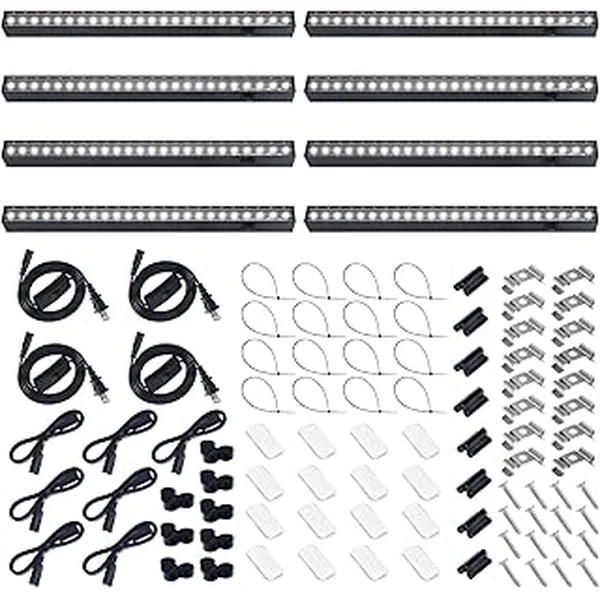
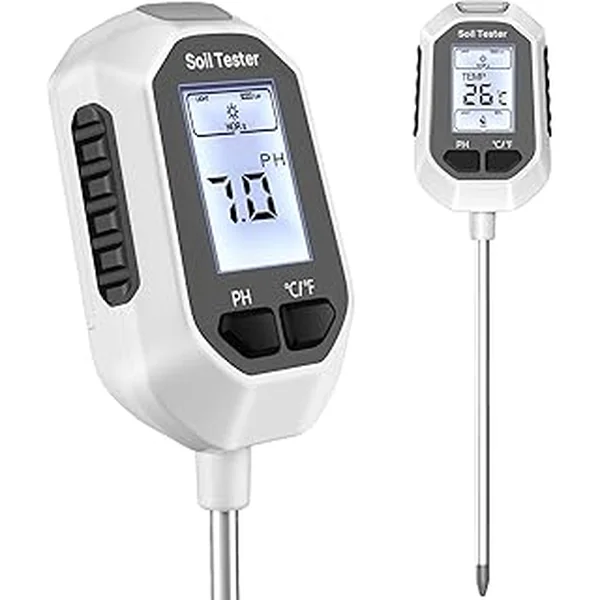
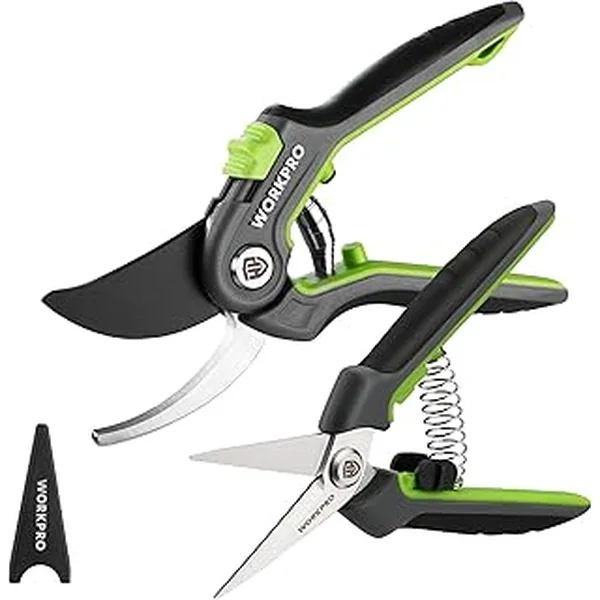
Tazart is an Amazon Associate — we earn from qualifying purchases at no extra cost to you. Thank you for helping us keep these guides free.
Frequently asked questions
Can pepper plants survive winter indoors?
Yes. Peppers are perennials in USDA zones 9b and warmer, and they survive winter indoors in any climate when brought inside before the first frost. They enter a semi-dormant state in low light and cool temperatures — 10-18°C (50-65°F) — dropping most of their leaves and needing minimal water until late winter.
When should I bring pepper plants inside for winter?
Bring them in before your first expected frost — usually when overnight lows consistently drop below 10°C (50°F). Do not wait for frost. Even a light frost can kill stems and damage the root system, making recovery much harder.
How hard should I prune pepper plants for overwintering?
Cut each main branch back to a 7-15 cm (3-6 in) stub, leaving only a few leaf nodes per stem. Remove all fruit, flowers, and most leaves. Hard pruning reduces the plant's energy demands during dormancy and forces strong new growth from the base when temperatures rise in spring.
How often do you water an overwintering pepper plant?
Every 2-3 weeks, just enough to keep the root ball from completely drying out. The goal is to keep roots alive, not to push growth. Overwatering during dormancy is the most common cause of root rot and plant death over winter.
Do overwintered pepper plants produce more the second year?
Yes — significantly more. A second-year pepper plant starts the season with an established root system, a woody branching structure, and stored energy reserves. It flowers and fruits 4-6 weeks earlier than a first-year transplant and typically produces 30-50% more fruit over the full season.
What temperature is too cold for pepper plants indoors?
Below 10°C (50°F) and peppers enter stress. Below 4°C (40°F) the root system can be permanently damaged. Aim for 10-18°C (50-65°F) during dormancy — a cool basement, garage with a window, or spare room works well. Never let pots sit on a cold concrete floor without insulation.
How do I know my overwintered pepper is waking up in spring?
Look for small green buds swelling on the stub ends and along the main stems — usually 6-8 weeks after you move the plant to a warmer, brighter spot. Once you see 3-5 new leaf sets, begin feeding with a balanced fertilizer. This signals the plant is out of dormancy and ready to grow.
Should I check for pests before bringing pepper plants indoors?
Yes — this is critical. Inspect every leaf (both sides), stem, and the topsoil surface before moving the plant inside. Treat any aphids, spider mites, or whitefly with neem oil or insecticidal soap and wait 48 hours before bringing the plant indoors. One infested plant can spread pests to every houseplant in your home.