Edible
How to Grow Watermelon in Containers (Full Guide)
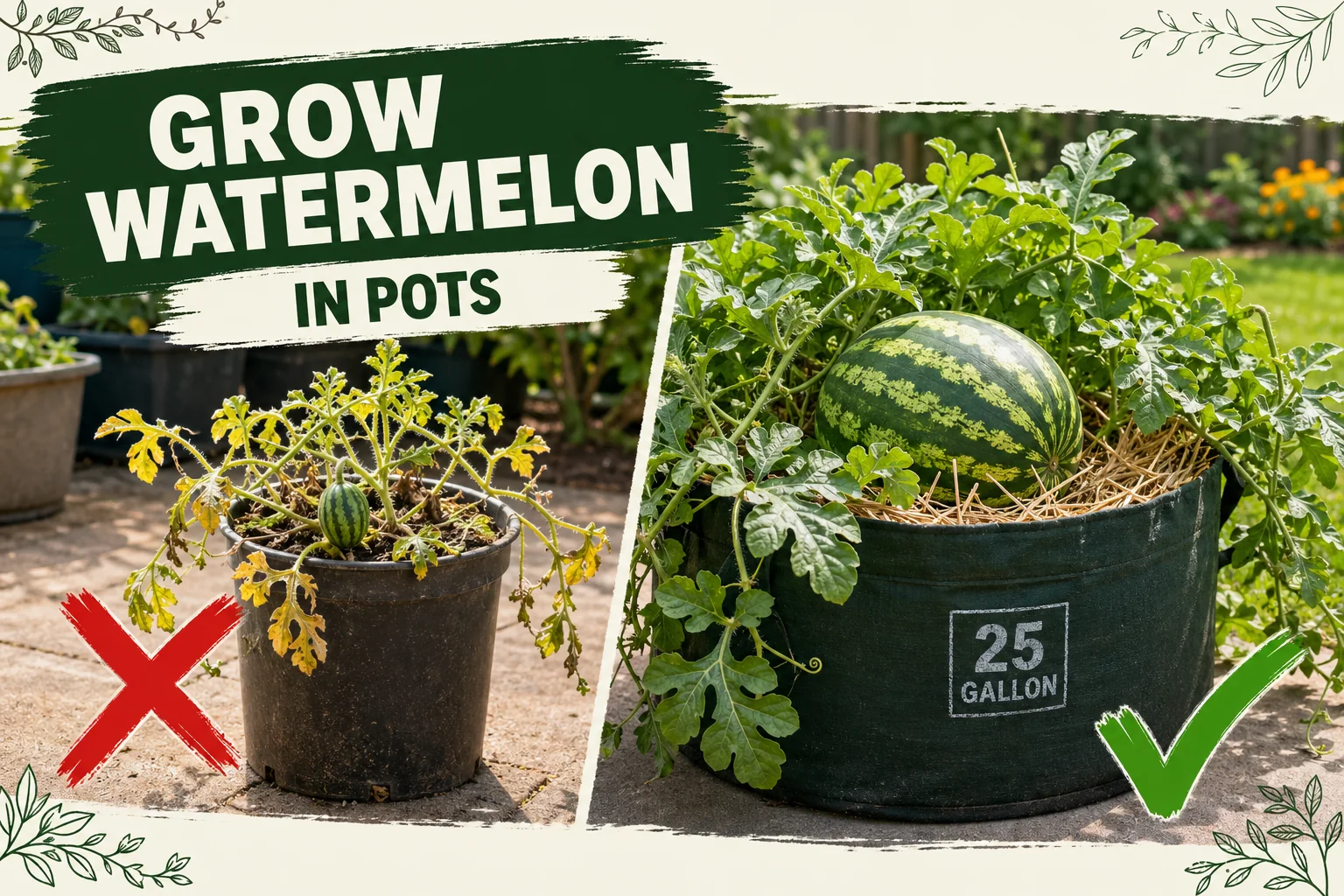
Grow watermelon in containers with compact varieties, 15-25 gallon bags, trellis support, hand pollination, and correct watering. Harvest in 80-90 days.
On this page
- Quick answer
- Table of contents
- 1. Choosing the right compact variety
- 2. Container size and type
- 3. Soil mix
- 4. Sowing and transplanting
- 5. Trellis and vine training
- 6. Hand pollination
- 7. Watering schedule
- 8. Fertilizing
- 9. Harvest signals
- 10. Common mistakes
- 11. Troubleshooting
- Watch: Container watermelon growing guide
- Internal links
- Sources
Watch the visual walkthrough
6 Watermelon Growing Mistakes To Avoid 🍉
Get free seeds, shipping, and returns: https://www.epicgardening.com/greenhouse/ Watermelon take up a LOT of space and ...
Growing watermelon in containers sounds ambitious — and it is, slightly. But get the variety, pot size, and trellis right and a single plant on a balcony or patio will hand you 2-4 ripe melons in a summer.
The key insight most guides miss: container watermelon success is 80% about choosing the right compact variety from day one. Everything else is just good container vegetable care.
Quick answer
Grow watermelon in containers by choosing a compact bush variety (Sugar Baby, Mini Love, Cal Sweet Bush), planting into a 15-25 gallon (57-95 L) grow bag filled with a 60/30/10 compost-perlite-compost mix, and training the main vine up a vertical trellis. Hand-pollinate female flowers each morning. Water deeply every 1-2 days, feed weekly once vines run, and harvest at 80-90 days when the tendril nearest the fruit dries brown.
Table of contents
- Choosing the right compact variety
- Container size and type
- Soil mix
- Sowing and transplanting
- Trellis and vine training
- Hand pollination
- Watering schedule
- Fertilizing
- Harvest signals
- Common mistakes
- Troubleshooting table
- FAQs
1. Choosing the right compact variety
This is the single most important decision. Standard watermelon vines run 2.4-3.6 m (8-12 ft) and are completely unmanageable in a pot. Only compact bush types stay container-friendly.
Proven compact varieties:
| Variety | Fruit weight | Days to harvest | Notes |
|---|---|---|---|
| Sugar Baby | 2-4 kg (4-9 lb) | 75-80 days | Classic container choice, crisp red flesh |
| Bush Sugar Baby | 2-3 kg (4-7 lb) | 75 days | Shorter vines than Sugar Baby |
| Cal Sweet Bush | 2-4 kg (4-9 lb) | 80 days | Open-pollinated, reliable |
| Mini Love | 1.5-2 kg (3-4 lb) | 70-80 days | Multiple fruits per plant, ideal for small spaces |
Mini Love deserves special mention: it sets 3-6 smaller fruits per plant rather than one or two big ones, spreading the trellis load and giving you a longer harvest window over several weeks.
Avoid any variety labelled “vining,” “heirloom vine,” “full-size,” or without an explicit compact/bush designation.
2. Container size and type
Minimum: 15 gallons (57 L). Ideal: 20-25 gallons (76-95 L).
Watermelons are heavy feeders and deep drinkers. A small pot creates a cycle of drought stress — vines wilt, fruit cracks, sugars never concentrate properly.
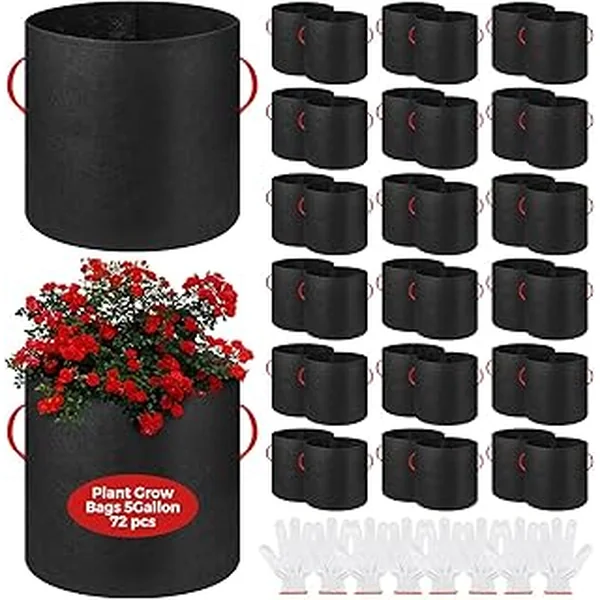
Fabric grow bags are strongly preferred over rigid plastic pots for three reasons:
- Air pruning stops roots from circling and suffocating themselves.
- Better drainage — no waterlogging at the base.
- The breathable sides regulate root temperature in full summer sun.
Use a saucer or tray beneath the bag to catch drainage and prevent balcony staining, but empty it after each watering so roots never sit in standing water.
One plant per container. Do not crowd two compact varieties into one bag hoping to get double the fruit — you’ll get half, with more disease pressure.
3. Soil mix
Fill the grow bag with:
- 60% premium peat-free potting compost
- 30% coarse perlite
- 10% aged compost or worm castings
Straight potting soil compacts in large fabric bags during the season, reducing drainage and suffocating roots by midsummer. The perlite keeps the mix airy right through to harvest.
Target a soil pH of 6.0-6.8 — slightly acidic. Outside this range the plant struggles to absorb calcium and magnesium, which leads to blossom-end rot and pale foliage.
Settle the mix by watering thoroughly before planting. The bag will compress slightly — top up to within 5 cm (2 in) of the rim.
4. Sowing and transplanting
Start seeds indoors 3-4 weeks before your last frost date, in 7-10 cm (3-4 in) biodegradable pots to avoid disturbing the taproot at transplant.
- Sow seeds 2 cm (0.75 in) deep, one per pot.
- Germination: 7-10 days at 24-29°C (75-85°F) soil temperature.
- A heat mat speeds germination significantly in cool climates.
Transplant outside when nighttime temperatures stay reliably above 15°C (59°F) and the seedling has 2-3 true leaves. Watermelon does not tolerate frost — not even a light one.
Harden off seedlings over 7-10 days by setting them outside for a few hours each day, increasing exposure gradually.
Plant the seedling at the same depth it was growing in its starter pot — no deeper. Place the container in a full sun spot receiving at least 8 hours of direct sun daily. Less than 6 hours and the vine grows but fruit sets poorly and stays small.
5. Trellis and vine training
Trellis support is not optional — it is critical.
Without a trellis:
- Vines sprawl across the floor and balcony.
- Fruit rests on soil or concrete, rots or gets eaten by slugs.
- Air circulation collapses, inviting powdery mildew.
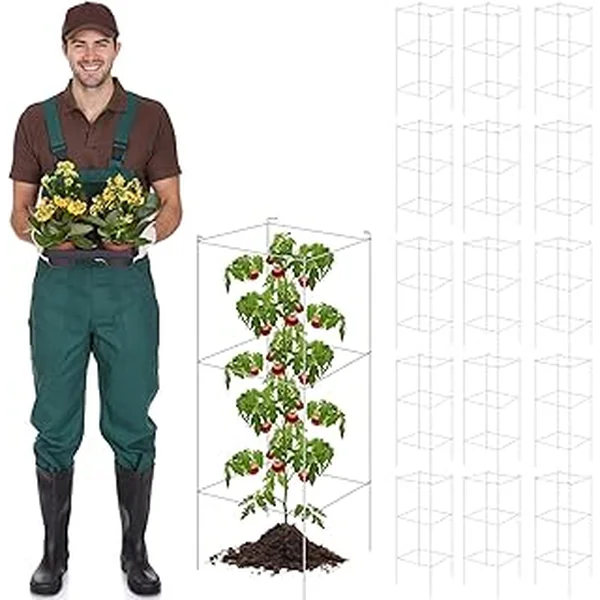
Set up the trellis at transplant time, before the vine needs it. A 1.5-1.8 m (5-6 ft) tall A-frame trellis, cattle panel, or heavy tomato cage works well.
Vine training steps:
- Once the main vine reaches 15 cm (6 in), tie it loosely to the trellis with soft garden twine.
- Redirect it upward weekly as it grows.
- Remove lateral side shoots for the first 30-45 cm (12-18 in) of the main vine — this focuses energy on the main stem early.
- Allow 2-3 lateral shoots above that point to grow and flower — these carry the female flowers.
- Once 1-2 fruits have set and reached tennis-ball size, make a fruit sling from old pantyhose, a mesh produce bag, or fabric offcuts. Tie it to the trellis to support the weight of the developing melon. Without a sling, the fruit’s own weight will snap the stem as it grows.
6. Hand pollination
On a balcony or indoors, bees may not reliably visit. You must hand-pollinate or fruit will not set.
How to identify male vs female flowers:
- Male flowers: appear first, 7-10 days before females, on a thin straight stem.
- Female flowers: have a tiny round swelling at the base of the bloom — the embryonic fruit. This appears once the vine is established, usually around day 35-50.
Hand pollination steps:
- Do it in the morning when flowers are freshly open (they close by midday).
- Pick a fully open male flower or use a small clean paintbrush.
- Rub the paintbrush inside the male flower to collect golden pollen.
- Gently brush pollen onto the sticky central stigma of the female flower.
- Repeat using 2-3 different male flowers to ensure thorough coverage.
- The fruit base will begin to swell within 3-5 days if pollination succeeded. If the tiny fruit yellows and drops, pollination failed — try again with the next female flower.
7. Watering schedule
Watermelons are 92% water by weight, and they are extremely thirsty in a container compared to in-ground plants.
| Growth stage | Watering frequency | Notes |
|---|---|---|
| Seedling / first 2 weeks | Every 2-3 days | Keep moist but not soggy |
| Active vine growth | Every 1-2 days | Soil should never dry below 2.5 cm (1 in) |
| Fruit set and sizing | Daily in heat above 30°C (86°F) | Consistent moisture prevents blossom drop |
| Final 1-2 weeks before harvest | Reduce by 50% | Concentrates sugars; prevents cracking |
Water deeply each time until water runs freely from the base. Shallow watering encourages surface roots that scorch in summer heat.
Check moisture by pushing a finger 5 cm (2 in) into the soil. If it feels dry at that depth, water. If it still feels moist, wait.
8. Fertilizing
Watermelons are heavy feeders. Container plants cannot access nutrients beyond the bag, so you must supply everything.
Three-phase feeding plan:
| Phase | Timing | Fertilizer type | Goal |
|---|---|---|---|
| Phase 1 | Transplant to first flowers | High-nitrogen balanced (10-10-10) | Build vine and foliage |
| Phase 2 | First flowers to fruit set | Low nitrogen, high phosphorus (5-10-10) | Encourage pollination and fruit set |
| Phase 3 | Fruit set to harvest | High potassium (4-8-16 or similar) | Swell fruit and develop sugar |
Apply liquid feeds weekly at half the label rate rather than full rate every two weeks — steady low doses prevent the nutrient spikes that cause blossom drop and cracking.
Side-dress with a slow-release granular fertilizer at transplant to provide a consistent baseline, then top up with liquid feeds as above.
9. Harvest signals
The 80-90 day estimate is a guideline. Let the plant tell you when it’s ready using these five signals:
- Curly tendril dries brown: The tendril located nearest to the fruit (where the fruit stem meets the main vine) turns brown and dries out completely. This is the most reliable single indicator.
- Ground spot turns creamy yellow: The pale patch where the fruit rests in its sling changes from white to warm cream or yellow.
- Skin turns dull: The glossy sheen fades to a flat, slightly waxy matte.
- Thump test: Tap the fruit with your knuckle. A ripe melon produces a deep, hollow thud. An underripe one sounds higher-pitched and tight.
- Skin hardness: Try to dent the skin with your thumbnail — ripe fruit resists firmly; underripe skin gives slightly.
Cut the fruit with a sharp knife or pruning shears, leaving 2-3 cm (0.75-1 in) of stem attached. Do not pull or twist — it can damage the vine and any remaining fruits.
10. Common mistakes
Choosing the wrong variety. The most common failure by far. Any vining cultivar in a container will underperform and exhaust you.
Too small a container. A 5-10 gallon pot is not enough. Root restriction directly limits fruit size and number.
Skipping the trellis. Fruit laying on the floor rots. Vines tangled on the ground get disease. The trellis is non-negotiable.
Inconsistent watering. Alternating drought and flood causes blossom drop, cracking, and blossom-end rot. Steady, deep, regular watering wins.
Not hand-pollinating. Waiting for bees on a 10th-floor balcony is optimistic. Check female flowers every morning and pollinate manually.
Harvesting too early. A watermelon picked even a few days early is watery and flavourless. Wait for the dried tendril. It will not ripen further once cut.
11. Troubleshooting
| Problem | Likely cause | Fix |
|---|---|---|
| Flowers drop, no fruit | Poor pollination; heat above 35°C (95°F) | Hand-pollinate morning flowers; shade plant in peak heat |
| Tiny fruit yellows and falls | Failed pollination | Hand-pollinate next female flower |
| Fruit cracks | Irregular watering or sudden heavy watering near harvest | Maintain steady moisture; reduce water in final 2 weeks |
| Blossom-end rot | Calcium deficiency or inconsistent watering | Water evenly; foliar spray with calcium chloride |
| Pale or yellow leaves | Nitrogen deficiency or overwatering | Feed with balanced fertilizer; check drainage |
| Powdery mildew on leaves | Poor air circulation, overhead watering | Use trellis; water at base; remove affected leaves |
| Vine wilts in afternoon | Normal in heat above 32°C (90°F); or root rot | Check drainage; water deeply; shade in extreme heat |
| No female flowers after 50 days | Too much nitrogen; not enough sun | Switch to low-N fertilizer; ensure 8+ hours direct sun |
Watch: Container watermelon growing guide
This visual walkthrough covers variety selection, trellis setup, and hand pollination in practice — a great companion to the steps above.
Internal links
- Learn how to grow other productive container crops: how to grow lettuce in containers and how to grow blueberries in pots.
- For managing other fruiting vegetables in small spaces, see our guide to growing bell peppers.
- Track your watering schedule and get harvest reminders with Tazart’s plant care app.
Sources
- University of Minnesota Extension — Growing Watermelons in the Home Garden
- University of Georgia Extension — Watermelon Production in Georgia
- Cornell Cooperative Extension — Cucurbit Pollination
- Penn State Extension — Container Vegetable Gardening
Highly recommended
The supplies that make this guide work
Tazart is an Amazon Associate — we earn from qualifying purchases at no extra cost to you. Thank you for helping us keep these guides free.
Frequently asked questions
Can you really grow watermelon in containers?
Yes, but only compact bush varieties — Sugar Baby, Bush Sugar Baby, Cal Sweet Bush, or Mini Love. Standard vining watermelons produce vines 2.4-3.6 m (8-12 ft) long and cannot be managed in a pot. Compact types top out at 90-120 cm (3-4 ft) and produce full-flavored 2-4 kg (4-9 lb) fruits in an 80-90 day season. You still need a big container (15-25 gallons / 57-95 L), a vertical trellis, and consistent heat above 21°C (70°F).
What size container do I need for watermelon?
Use a minimum 15-gallon (57 L) container, and ideally a 20-25 gallon (76-95 L) fabric grow bag. Bigger is always better: more root volume means more water and nutrient uptake, which directly translates to larger fruit. Avoid containers shallower than 30 cm (12 in) — watermelon roots go deep and in a shallow pot they dry out too fast and fruit size suffers.
Do container watermelons need a trellis?
Trellis support is critical for container watermelons. Without a trellis the vines sprawl across your balcony floor, fruit sits on soil and rots, and the plant is far harder to manage. A vertical trellis lets you train the main vine upward, keeps fruit off the ground, improves air circulation, and allows you to support individual fruits with a fabric sling or old pantyhose once they reach the size of a tennis ball.
How do I hand-pollinate watermelon in containers?
Male flowers open about 7-10 days before female flowers. Female flowers have a tiny round swelling (the future fruit) at the base of the bloom. In the morning when both are open, use a small paintbrush or cotton swab to collect pollen from a male flower and transfer it to the center of the female flower. Repeat on 2-3 male flowers for thorough coverage. Outdoors, bees often handle this, but on a balcony or indoors you must do it manually or fruit will not set.
How do I know when a container watermelon is ready to harvest?
The most reliable harvest signal is the curly tendril closest to the fruit drying out and turning brown. Other signs: the underside of the fruit (where it touches the ground or sling) turns from white to creamy yellow; the skin becomes dull and hard rather than glossy; and tapping the fruit produces a deep hollow thud rather than a high-pitched ping. Most compact varieties are ready 80-90 days from transplant.
How often should I water container watermelon?
Water deeply every 1-2 days in hot weather — the goal is to keep the soil consistently moist, never bone-dry or waterlogged. Container plants dry out much faster than in-ground ones, especially in fabric grow bags. Reduce watering by about half once fruits start to ripen (the last 1-2 weeks before harvest) — less water concentrates sugars and intensifies flavour. Always water at the base, never on the foliage, to prevent fungal disease.
What soil mix is best for container watermelons?
Use a well-draining mix of 60% premium potting compost, 30% perlite, and 10% aged compost or worm castings. Straight potting soil compacts in large fabric bags and suffocates roots. The mix should feel loose and airy, drain freely but hold enough moisture that you aren't watering three times a day in peak summer. A slightly acidic pH of 6.0-6.8 is ideal for nutrient uptake.
Which compact watermelon varieties work best in containers?
Sugar Baby (2-4 kg / 4-9 lb, 75-80 days), Bush Sugar Baby (similar size, shorter vines, 75 days), Cal Sweet Bush (a reliable open-pollinated compact), and Mini Love (hybrid, 1.5-2 kg / 3-4 lb per fruit, multiple fruits per plant, 70-80 days) are all proven container performers. Mini Love is particularly well suited to small spaces because it sets multiple smaller fruits rather than one large one, reducing the trellis load.