Edible
How to Grow Tomatoes from Seed (Indoor Start to Harvest)
Grow tomatoes from seed the right way — start indoors 6–8 weeks before last frost, raise stocky seedlings under a grow light, and harvest from July to October.
On this page
- Quick answer
- Pick the right tomato variety
- When to start tomato seeds indoors
- What you’ll need
- Step-by-step: starting tomatoes from seed
- Hardening off (the step everyone skips)
- Transplanting outdoors
- Care after transplant (the short version)
- Watch: starting tomatoes from seed
- Common mistakes to avoid
- Troubleshooting
- Related reading
- A note on conditions
Watch the visual walkthrough
How to Grow Tomatoes from Seed to Harvest | COMPLETE GUIDE
A short visual walkthrough that pairs with the steps above.
Yes — you can grow tomatoes from seed at home, and once you’ve done it once you’ll never buy a $5 four-pack at the garden center again. A single packet costs about the same as one nursery plant and gives you 30 to 50 seedlings, in any heirloom variety you want.
This guide walks you through it step by step: when to start, how deep to sow, lights versus windowsills, potting up, hardening off, and exactly when to transplant outdoors.
Quick answer
Sow tomato seeds 6–8 weeks before your last frost in fine seed starting mix at 5 mm (¼ in) deep. Keep the soil at 21–27°C (70–80°F) until they germinate (5–10 days), then move them under a full-spectrum LED grow light held 7–10 cm (3–4 in) above the leaves for 14–16 hours a day. Pot up to 10 cm (4 in) pots at the first true leaves, harden off over 7–10 days, then transplant outdoors after night temperatures stay above 10°C (50°F).
Pick the right tomato variety
Pick the variety before you order seeds. The wrong type in the wrong space gives you a 2 m (6 ft) jungle in a 30 cm (12 in) pot, or a tidy patio plant when you wanted 50 lbs of canning tomatoes.
| Type | Habit | Best use | Days to harvest |
|---|---|---|---|
| Cherry / grape (Sungold, Sweet 100) | Indeterminate | Fresh eating, kids, snacking | 55–65 |
| Slicer (Brandywine, Cherokee Purple) | Indeterminate | Sandwiches, BLTs | 75–90 |
| Paste (Roma, San Marzano) | Determinate | Sauce, canning, drying | 70–80 |
| Beefsteak (Mortgage Lifter, Big Beef) | Indeterminate | Slicing, fairs, big harvests | 80–95 |
| Patio / dwarf (Tiny Tim, Patio Choice) | Determinate | Containers, balconies | 50–65 |
Indeterminate plants vine all summer and need staking or a cage. Determinate plants stay around 1.2 m (4 ft), set most of their fruit in 2–3 weeks, then stop — the right pick if you want to can sauce in one weekend.
When to start tomato seeds indoors
Count backward from your average last frost date.
- 6–8 weeks before last frost: standard sowing window for most regions
- 8–10 weeks before: very long-season heirlooms or short cool summers
- 4–6 weeks before: dwarfs and patio types — they grow fast and don’t need a head start
If you don’t know your frost date, search for your zip code on the National Weather Service or the Old Farmer’s Almanac. In USDA zone 5 it’s usually around May 15. In zone 7 it’s mid-April. In zone 9 it’s mid-February. Adjust by your local microclimate.
Sowing too early is the most common beginner mistake. A 12-week-old seedling stuck indoors gets root-bound, sets premature flowers, and sulks for a month after transplant — putting it behind a 6-week-old seedling sown later.
What you’ll need
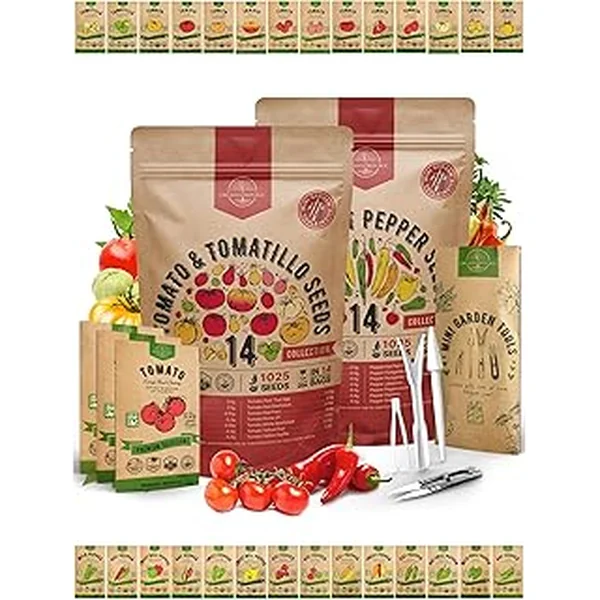
- Tomato seeds (one packet of 30–50 seeds is plenty for a backyard)
- Cell tray with drainage and a clear humidity dome (a 72-cell tray fits a windowsill)
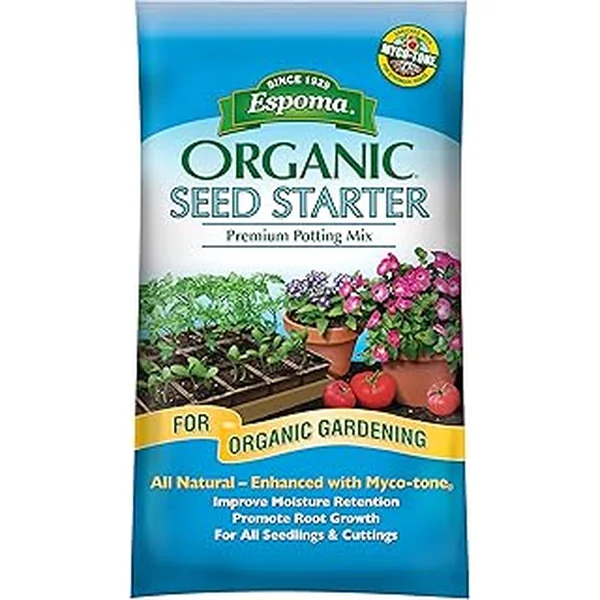
- Bagged seed starting mix — fine, sterile, peat-free if you can find it. Garden soil and chunky potting mix kill seedlings with damping off.
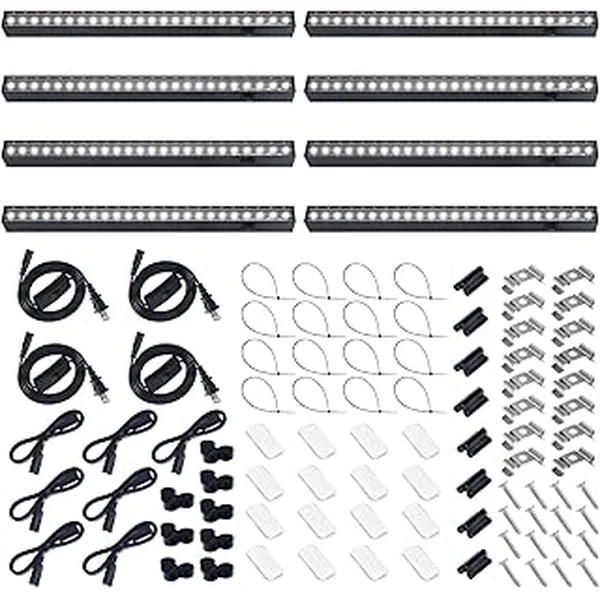
- Full-spectrum LED grow light bar, 30–60 cm (12–24 in) long, hung adjustable
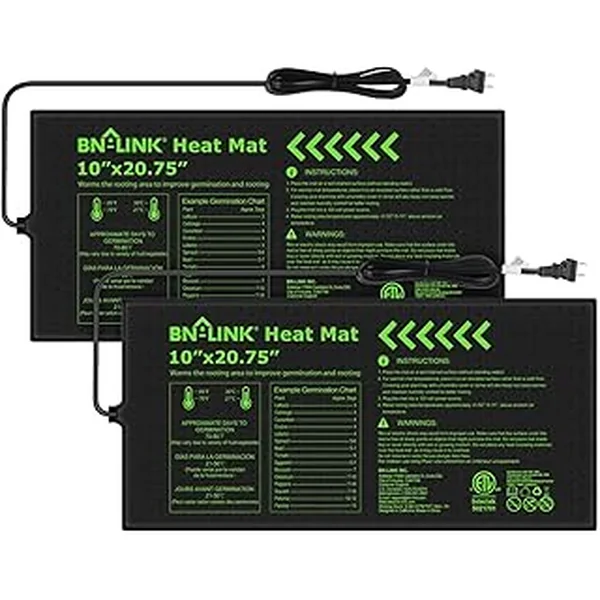
- Seedling heat mat (optional but cuts germination from 14 days to 5–7)
- Spray bottle and a watering can with a fine rose
- Plant labels and a permanent marker
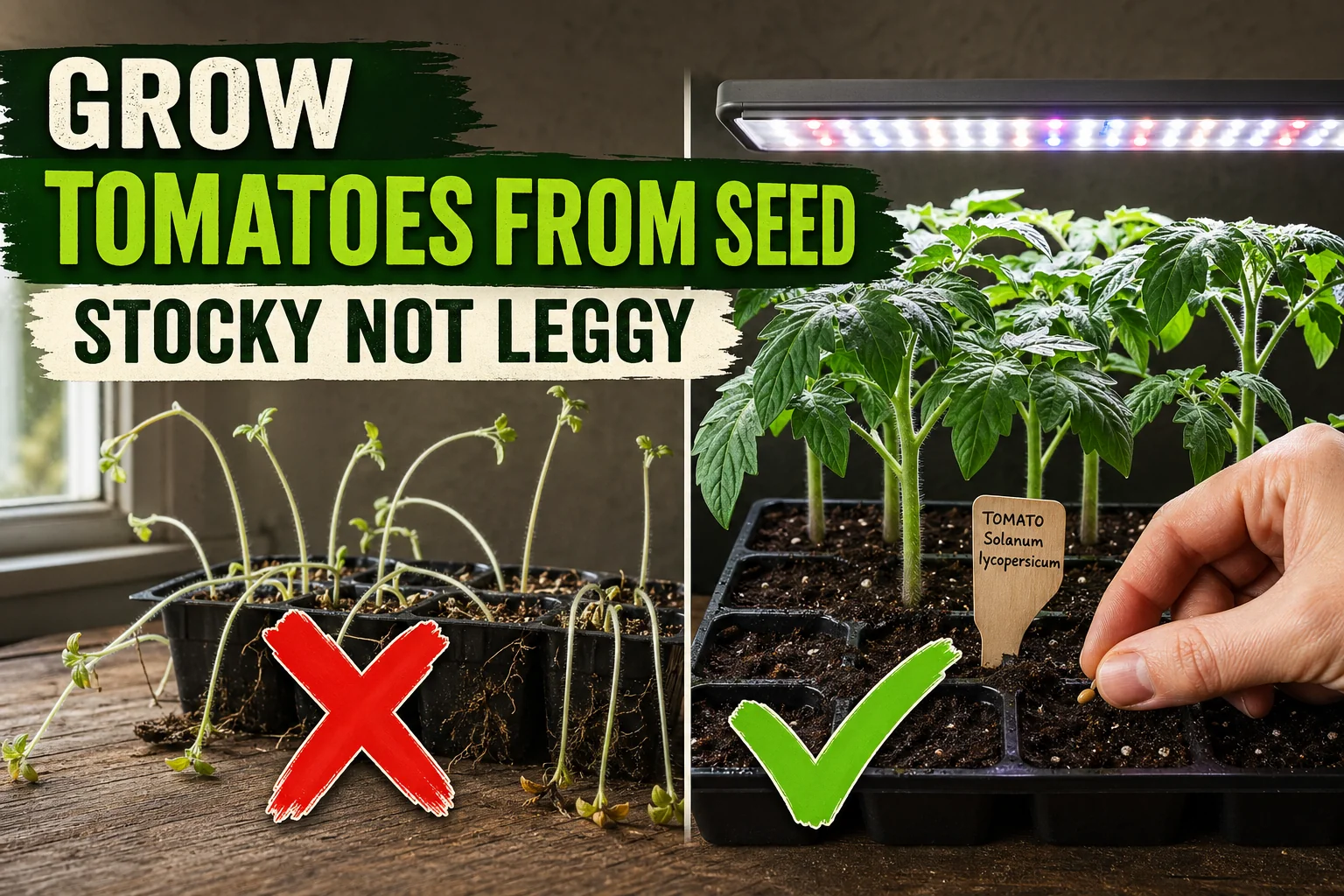
- A small clip-on fan (this is the leggy-prevention secret)
Step-by-step: starting tomatoes from seed
1. Pre-moisten the seed starting mix
Dump the dry mix into a clean bin, add warm water a cup at a time, and squeeze. You want it to feel like a wrung-out sponge — clumps when you squeeze, falls apart when you poke it. Dry mix repels water and seeds float.
2. Fill the cells
Scoop the moistened mix into each cell of the tray. Tap the tray on the table once to settle, then top off so each cell is full to the rim. Don’t compress — roots need air pockets.
3. Sow the seeds
Make a 5 mm (¼ in) divot in the centre of each cell with your fingertip or a pencil eraser. Drop 2 seeds per cell — you’ll thin to the strongest one later. Cover with a light pinch of mix, then mist the surface until it’s evenly damp.
If you have a heat mat, set the tray on it now. Seedling heat mats hold the soil at 24°C (75°F) and germinate tomato seeds in 5–7 days. Without a mat at 18°C (65°F) room temperature, expect 10–14 days.
4. Cover and label
Snap on the humidity dome to keep the surface moist while germinating. Slip a labeled plant marker into each variety so you don’t mix up your Brandywines and Sungolds — they look identical at the seedling stage.
5. Watch for green
Check the tray daily. The moment 50% of the cells show a green hook breaking the surface, remove the dome and turn on the grow light. Leaving the dome on after germination traps humidity and triggers damping off, the white-fuzz fungus that flops seedlings overnight.
6. Position the grow light
Hang the LED bar so it sits 7–10 cm (3–4 in) above the seedling tops. Not 30 cm. Not the windowsill. Tomato seedlings want roughly 200–400 µmol/m²/s of PAR at canopy height — a south window gives about 50–100 in spring. Run the light 14–16 hours a day on a timer.
Raise the light as the plants grow. The 7–10 cm gap is the rule that prevents legginess.
7. Bottom-water from now on
Once the dome comes off, pour water into the tray’s bottom (not on the seedlings) and let the cells wick it up for 10–20 minutes. Pour out anything left. Bottom watering keeps the soil surface dry, which prevents damping off and fungus gnats.
8. Run a fan 4–6 hours a day
A small clip-on fan blowing a gentle breeze across the seedlings does what wind does outdoors: thickens the stems mechanically. This single $15 step is the difference between flopping seedlings and stocky transplants.
9. Pot up at the first true leaves
The first two leaves a seedling shows are cotyledons — round, smooth, and not real tomato leaves. Wait for the first true leaves, the jagged tomato-shaped pair that comes next. That’s the signal to move each seedling into a 10 cm (4 in) pot.
When potting up, bury the stem up to just below the first true leaves. Tomatoes root along any buried stem section, which makes the plant sturdier and saves any seedling that got slightly leggy.
10. Fertilize gently after the first true leaves
Once seedlings have true leaves, water with a half-strength balanced liquid fertilizer (something like 10-10-10) every 10–14 days. Seed starting mix has almost no nutrition, so without feeding, leaves go pale yellow.
Hardening off (the step everyone skips)
Indoor seedlings have never met direct sun, wind, or cool nights. Plant them straight into a sunny garden bed and the leaves white-out in one afternoon.
Over 7–10 days, gradually expose them:
| Day | Time outdoors | Conditions |
|---|---|---|
| 1 | 1 hour | Full shade, no wind |
| 2 | 2 hours | Shade, light breeze OK |
| 3–4 | 3–4 hours | Dappled light |
| 5–6 | 6 hours | Morning sun, afternoon shade |
| 7–8 | All day | Full sun, in pots |
| 9–10 | All day + night (if nights ≥ 10°C / 50°F) | Outside permanently |
Bring them in (or cover with a cloche) on any night below 10°C (50°F). Skip this step and tomato leaves bleach white from sun scald — they survive, but you lose 2–3 weeks of growth recovering.
Transplanting outdoors
Wait until night temperatures stay reliably above 10°C (50°F) and the soil at 10 cm (4 in) deep is at least 16°C (60°F). In most US zones that’s 1–2 weeks after the last frost date.
- Spacing: 60–90 cm (24–36 in) between plants for indeterminates, 45–60 cm (18–24 in) for determinates and patio types
- Depth: again, bury the stem deep — pinch off the lowest 2–3 sets of leaves and plant up to where the new lowest leaves sit just above the soil. The buried stem grows roots all along its length, anchoring the plant against summer wind.
- Cage or stake: install before the plant is 30 cm (12 in) tall. Adding a cage to a 1 m (3 ft) plant tears roots.
- Mulch: 5–8 cm (2–3 in) of straw or shredded bark keeps soil moisture even, which is the single biggest factor in preventing blossom-end rot.
Water deeply — about 2 L (½ gal) per plant — right after transplanting, then back off and let the top 5 cm (2 in) of soil dry between waterings.
Care after transplant (the short version)
| Task | When |
|---|---|
| Water | Deep, slow, 1–2 inches per week. Aim at the soil, never the leaves. |
| Fertilize | Side-dress with compost or a tomato fertilizer (lower N, higher P/K) every 4 weeks once flowers appear. |
| Prune suckers | On indeterminates only — pinch out side shoots in the leaf axils when they’re 5 cm (2 in) long. |
| Mulch | Top up the mulch ring as it breaks down. |
| Watch | Tap each fruit cluster lightly at midday to help pollination if it’s been windless and humid. |
A free plant care app like Tazart holds the watering and feeding schedule for you, adjusts it for your local weather, and pings you on Apple Watch when it’s time. Useful when you’re juggling 6 tomato plants, 2 pepper plants, and a full herb bed.
Watch: starting tomatoes from seed
A short visual walkthrough pairs well with the steps above. If you’re a visual learner, search YouTube for “how to start tomato seeds indoors” and pick a tutorial from a reputable channel like Epic Gardening or MIgardener — then come back and follow the timing in this guide.
Common mistakes to avoid
- Sowing too early. A 12-week seedling stuck indoors does worse than a 6-week one. Count backwards from frost.
- Skipping the grow light. A south window grows leggy seedlings 9 times out of 10. Spend $30 on a real LED bar.
- Light too far away. 30 cm above the canopy is useless. Drop it to 7–10 cm (3–4 in) above the leaves.
- Watering from the top with the dome on. Trapped humidity = damping off. Bottom-water once the dome comes off.
- Using garden soil. It compacts, brings in fungus, and kills seedlings. Use bagged seed starting mix.
- Skipping the fan. This is the cheapest stocky-stem hack on the planet. Skipping it = floppy seedlings.
- Skipping hardening off. Sun-bleached seedlings lose 2–3 weeks of growth.
- Transplanting too early. Cold soil and 5°C (40°F) nights stunt tomatoes for a month. Wait for 10°C (50°F) nights.
Troubleshooting
| Symptom | Likely cause | Fix |
|---|---|---|
| Seeds never sprouted | Soil too cold, seeds buried too deep, or old seed | Re-sow on a heat mat at 5 mm (¼ in) deep with fresh seed |
| Seedlings flopped overnight, stem pinched at soil line | Damping off (fungal) | Improve airflow, bottom water only, restart with fresh sterile mix |
| Long thin pale stems, tiny leaves | Light too weak or too far away | Drop the LED bar to 7 cm (3 in) above the leaves, run 14–16 h/day |
| Purple undersides on leaves | Cold roots or phosphorus lockout | Move off cold floor, raise temp to 18–24°C (65–75°F) |
| Yellowing lower leaves on 4-week-old seedlings | Nutrient deficiency in seed starting mix | Half-strength balanced liquid fertilizer every 10–14 days |
| Tiny black flying insects in the trays | Fungus gnats from wet soil surface | Bottom water only; let surface dry; top with 0.5 cm (¼ in) of dry sand |
| White bleached patches on leaves after going outside | Sunscald — skipped hardening off | Move to shade for 3 days; bleached leaves stay bleached but new growth recovers |
| Flowers drop off without setting fruit | Night temps below 13°C (55°F) or above 24°C (75°F), or low humidity | Wait for the heatwave to pass; gently shake clusters at midday |
Related reading
- How to grow strawberries from seed (for patient gardeners) — same heat-mat + grow-light setup, but with cold stratification and surface-sown seeds that need light to germinate.
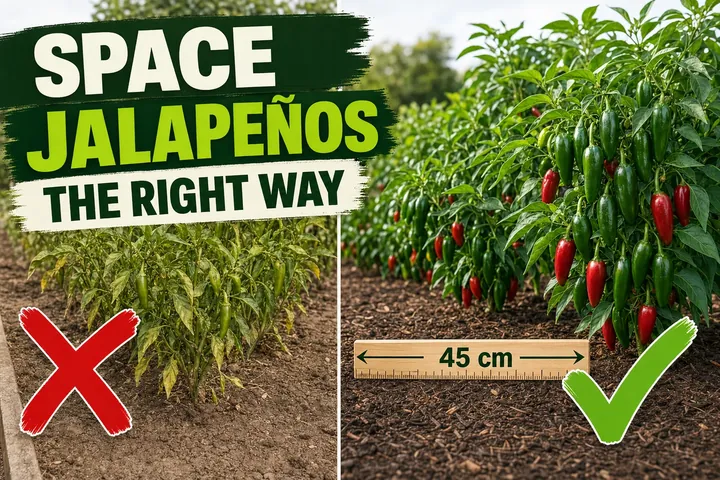
- How far apart to plant jalapeños for best yield — the same warm-season indoor seed start applies to peppers, with one key spacing tweak.
- How to plant pumpkin seeds for a real harvest — direct-sow timing for the other big summer crop, paired well with tomatoes in rotation.
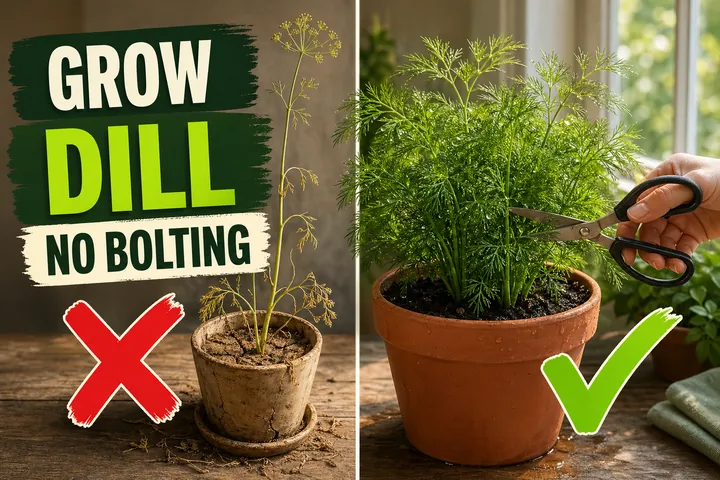
- Dill plant care from seed to harvest — the perfect companion herb for fresh tomato salads, started the same indoor way.
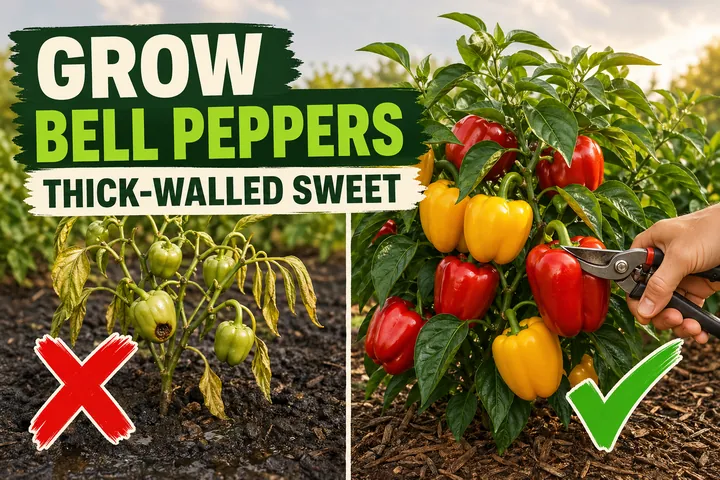
- How to grow bell peppers (thick-walled sweet peppers) — the classic warm-season bedmate for tomatoes, same soil and feeding rhythm.
- Track every transplant date, watering, and harvest with the free Tazart plant care app and let it set up the schedule for you.
A note on conditions
Every garden is different. Light, soil mix, pot size, season, humidity, indoor temperature, and your local last-frost date all change how fast tomato seedlings grow and when you can move them outside. Use the timing above as a starting point and adjust based on what your seedlings actually do in week three — that’s how every good tomato grower learns.
Highly recommended
The supplies that make this guide work
Tazart is an Amazon Associate — we earn from qualifying purchases at no extra cost to you. Thank you for helping us keep these guides free.
Frequently asked questions
When should I start tomato seeds indoors?
Sow indoors 6–8 weeks before your average last frost date. For most US zones that is mid-March to early April; in zone 5 it's around April 1, in zone 9 it's late January. Tomatoes are warm-season annuals — transplanting them outdoors before nights stay reliably above 10°C (50°F) sets them back by weeks.
How long does it take to grow tomatoes from seed?
Seed to first ripe tomato is roughly 100 to 130 days, depending on variety and weather. Germination takes 5 to 10 days at 21–27°C (70–80°F). Indoor seedling stage is 6–8 weeks. After transplant, cherry types fruit in 55–65 days, slicers in 70–80 days, and big beefsteaks 80–95 days.
How deep do you plant tomato seeds?
Plant tomato seeds 5 mm (¼ in) deep — about as deep as the seed itself is long. Cover lightly with seed starting mix, mist the surface, and keep the soil at 21–27°C (70–80°F) until you see green. Buried any deeper, the cotyledons run out of stored energy before they reach the surface.
Do tomato seedlings need a grow light?
Yes — almost always. A south-facing window gives roughly 5,000–10,000 lux of usable light at the seedling level, which is a fraction of what tomatoes want. Without a 30–60 cm (12–24 in) full-spectrum LED bar held 7–10 cm (3–4 in) above the leaves for 14–16 hours a day, you will get leggy stretched seedlings that flop over.
Why are my tomato seedlings leggy?
Leggy means the stem grew long and thin while reaching for a far-off light source — an etiolation response. The fix is more light, closer light, and a small fan blowing across the seedlings 4–6 hours a day. The breeze thickens stems mechanically. If they are already leggy, you can save them at transplant by burying the stem deep — tomatoes root along the buried section.
How do you harden off tomato seedlings?
Over 7–10 days, gradually expose them to outdoor conditions: day 1, 1 hour in shade; day 3, 3 hours in dappled light; day 6, 6 hours in morning sun; day 8 onward, full day outside. Bring them in or shelter them on any night below 10°C (50°F). Skipping this step sunburns the leaves white in a single afternoon.